AMLR Solutions
  AMLR Consultation
 EUDI Wallet
 Onboarding
 Ongoing Monitoring
 FRAML
FRAML KYC
KYC KYB
KYB KYI
KYI Age Assurance
 Workforce IAM
 Candidate Verification
 Account Takeover
 Bonus/ Promotion Abuse
 Chargeback Fraud
 Deepfake
 Document Fraud
 Fraud Networks
 Impersonation Fraud
 Money Mule Activity
 Multi-Accounting
 Party Fraud
 Regulatory & Compliance Risks
 Synthetic Identity Fraud
 Adult Content
 Banking
 Crypto
 Fintech
 Forex
Forex Compliance
 Fraud prevention
 Trust & safety
 Global expansion
 Compliance Officers
 Developers
 Fraud Analysts
 Product Managers
 Journey Builder
  Global Trust Platform
 Customer Profiles
 Vendor Comparison
 IDV Case Management
 AML Case Management
 Regulatory Reporting
 Agentic Rule Builder
  AI Compliance Co-Pilot
  Fraud Analytics
 Fraud Hub
  OCR
OCR Shufti AI
 Bank Account Verification
  Biometric Duplication
 Database Checks
 Document Intelligence
 Government ID
 Mobile Driver's License
 NFC
NFC Selfie Liveness
 Brand Personalisation
 Deployment Options
 Identity Methods
 IDV Modes
 Multi-tenancy
 On-Premise IDV
 Secure Capture
 Shufti MCP












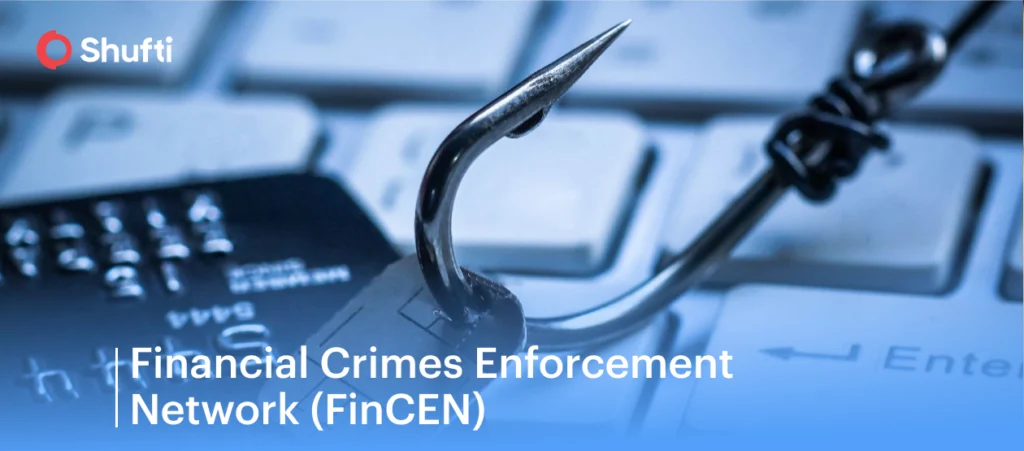

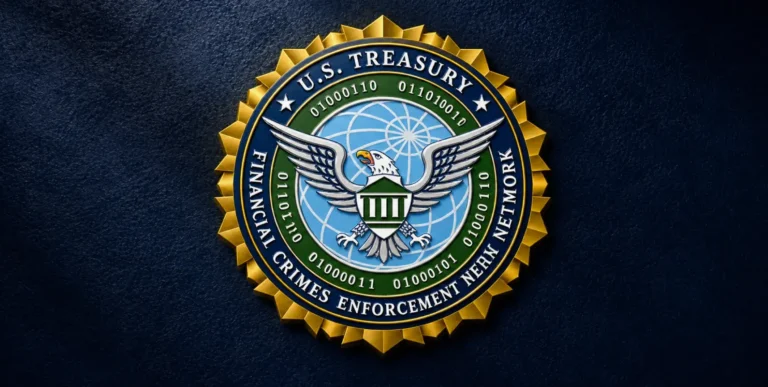
The Financial Crimes Enforcement Network (FinCEN) plays a central role in protecting the United States as well as the global financial system from the illicit activities such as money laundering, terrorism financing, and other financial crimes. Positioned within the U.S. Department of the Treasury, FinCEN collects and analyzes financial intelligence to identify threats, enforce compliance, and promote financial integrity across sectors.
While its jurisdiction is exclusive to the U.S., FinCEN’s influence can be felt around the globe through its regulatory frameworks, international partnerships, and data-sharing initiatives. It has become a key driver of how institutions throughout the world respond to challenges like money laundering, sanctions evasion, and the misuse of emerging technologies in finance.
What Is FinCEN?
Established on 25 April, 1990, FinCEN is the United States’ financial intelligence unit (FIU) and one of the country’s primary financial crime regulators. It was created to prevent and combat money laundering and related crimes by collecting, analyzing, and disseminating financial data.
FinCEN works in tandem with both public and private entities, including banks, credit unions, fintechs, cryptocurrency service providers, and law enforcement agencies. Its mission is to protect the integrity of the financial system while ensuring it remains open, transparent, and secure.
Core Responsibilities of FinCEN
FinCEN’s role has expanded in the years since its creation. Its responsibilities currently include:
- Anti-Money Laundering (AML) and Countering the Financing of Terrorism (CFT): Enforcing compliance with AML/CTF regulations within financial institutions.
- Suspicious Activity Monitoring: Reviewing Suspicious Activity Reports (SARs) that are submitted by financial institutions to identify potentially illicit transactions.
- Information Sharing: Exchanging intelligence with other international Financial Intelligence Units (FIUs) and supporting cross-border investigations.
- Policy Development and Enforcement: Issuing regulatory guidance and enforcement actions in alignment with the Bank Secrecy Act (BSA).
- Risk Analysis: Assessing financial crime threats, both nationally and internationally, to help inform regulatory and policy decisions.
Key FinCEN Requirements for Businesses
FinCEN sets clear expectations for institutions that operate within its jurisdiction. These requirements work to reduce financial crime exposure and ensure transparency in the financial system.
1. Know Your Customer (KYC)
KYC regulations require financial institutions to verify the identity of their clients before initiating a business relationship. This process includes collecting documents, assessing customer profiles, and monitoring transactions to detect anomalies.
2. Customer Due Diligence (CDD) and Enhanced Due Diligence (EDD)
Under FinCEN’s Customer Due Diligence Rule (also called the CDD Final Rule), institutions must perform background checks and risk assessments on their customers. Higher-risk customers, such as politically exposed persons (PEPs) or clients from sanctioned countries, require Enhanced Due Diligence, including more frequent transaction reviews and deeper verification checks.
3. Suspicious Activity Reporting
When suspicious transactions are detected, institutions are required to fill out SARs with FinCEN. These reports help trigger investigations and stop criminal networks.
4. Anti-Money Laundering (AML) Compliance
All financial institutions are required to implement robust AML compliance programs. These include regular employee training, internal controls, independent audits, and designated AML officers.
5. Record-Keeping Obligations
Entities are required to retain customer transaction records and due diligence data for at least five years. These records support investigations and ensure that institutions can respond to official inquiries quickly and effectively.
6. Sanctions Screening
FinCEN enforces sanctions issued by the U.S. Treasury’s Office of Foreign Asset Control (OFAC). Institutions must screen customers and transactions against sanction lists and block or report transactions that involve blacklisted individuals or organizations.
7. Ongoing Monitoring
Continuous monitoring of customer activity is essential. Institutions must flag irregular transactions, update customer profiles regularly, and resasses risk levels when necessary. Monitoring includes screening for links to PEPs, criminal organizations, and sanctioned entities.
Ultimate Beneficial Ownership (UBO) and the Corporate Transparency Act
A major focus of FinCEN’s recent efforts has been to enhance transparency around business ownership. The Corporate Transparency Act (CTA) went into full effect in 2024 and now requires many U.S. companies to report information about their Ultimate Beneficial Owners (UBOs) directly to FinCEN.
UBOs are individuals who ultimately own or control a company or other entity, even if the ownership is indirect or obscured. This requirement aims to close loopholes that allow bad actors to hide behind shell companies and front organizations.
Who Must Report?
Most corporations, LLCs, and similar entities registered in the United States are required to report UBO information unless they meet specific exemptions, such as being heavily regulated or publicly traded.
What Must Be Reported?
Entities must provide:
- Full legal name of each UBO
- Date of birth
- Residential address
- An acceptable government-issued ID
Failure to comply with these requirements can result in significant penalties, including criminal charges.
FinCEN and the Cryptocurrency Sector
In recent years, FinCEN has continued to prioritize digital assets in its oversight. With the rise of cryptocurrencies and blockchain-based transactions, FinCEN has tightened its scrutiny of Virtual Asset Service Providers (VASPs). These include exchanges, wallet providers, and decentralized platforms.
Key Requirements for Crypto Firms:
- Register as a Money Services Business (MSBs)
- Implement AML programs tailored to crypto risks
- File SARs and Currency Transaction Reports (CTRs)
- Verify customer identities
- Monitor for cross-border risks and high-risk wallets
FinCEN has also been working with global organizations like the Financial Action Task Force (FATF) to ensure crypto regulations align internationally.
FinCEN’s Global Reach and Future Outlook
Although FinCEN is an arm of the U.S. Treasury Department, its collaborations with international FIUs and regulatory bodies extends its influence worldwide. FinCEN has increased its efforts to coordinate with global partners, especially in regions facing high levels of financial crime or sanctions evasion.
Looking ahead, FinCEN is expected to:
- Increase its use of artificial intelligence and machine learning to better analyze suspicious behavior
- Expand enforcement actions for non-compliance under the CTA and BSA
- Tighten regulations on emerging technologies like privacy coins, unhosted wallets, and synthetic identities.
Final Thoughts
FinCEN’s expanding footprint reflects a broader shift toward proactive, intelligence-driven oversight in financial regulation. Its influence spans beyond borders, pushing institutions to adopt proactive practices that prioritize transparency, accountability, and risk mitigation in both traditional and digital financial environments.
As illicit finance becomes more adaptive, so too must the systems built to detect and prevent it. Staying aligned with FinCEN’s expectations is not only a regulatory necessity but also a strategic imperative for institutions aiming to maintain trust and resilience in an increasingly complex financial world.