AMLR Solutions
  AMLR Consultation
 EUDI Wallet
 Onboarding
 Ongoing Monitoring
 FRAML
FRAML KYC
KYC KYB
KYB KYI
KYI Age Assurance
 Workforce IAM
 Candidate Verification
 Account Takeover
 Bonus/ Promotion Abuse
 Chargeback Fraud
 Deepfake
 Document Fraud
 Fraud Networks
 Impersonation Fraud
 Money Mule Activity
 Multi-Accounting
 Party Fraud
 Regulatory & Compliance Risks
 Synthetic Identity Fraud
 Adult Content
 Banking
 Crypto
 Fintech
 Forex
Forex Compliance
 Fraud prevention
 Trust & safety
 Global expansion
 Compliance Officers
 Developers
 Fraud Analysts
 Product Managers
 Journey Builder
  Global Trust Platform
 Customer Profiles
 Vendor Comparison
 IDV Case Management
 AML Case Management
 Regulatory Reporting
 Agentic Rule Builder
  AI Compliance Co-Pilot
  Fraud Analytics
 Fraud Hub
  OCR
OCR Shufti AI
 Bank Account Verification
  Biometric Duplication
 Database Checks
 Document Intelligence
 Government ID
 Mobile Driver's License
 NFC
NFC Selfie Liveness
 Brand Personalisation
 Deployment Options
 Identity Methods
 IDV Modes
 Multi-tenancy
 On-Premise IDV
 Secure Capture
 Shufti MCP













TL;DR
- Digital identity verification is growing because fraud, regulation, and digital onboarding all accelerated together.
- Deepfake fraud rose 495% year over year in 2026, breaking single-step checks.
- eIDAS 2.0, the EUDI Wallet, AMLA, and PSD3 are tightening verification rules across the EU.
- AI now sits on both sides, powering attacks and the biometric defences against them.
- Compliance teams should treat verification as core infrastructure, not a procurement afterthought.
The numbers driving this market are not subtle. In 2026, Shufti’s Deepfake Fraud Index recorded a 495% year-over-year rise in deepfake fraud, with attacks using deepfaked identity documents forecast to climb 39-fold over the year (Biometric Update, June 2026). At the same time, the EU’s anti-money-laundering authority opened its doors and a new payments rulebook cleared its final votes. Fraud and regulation are pushing in the same direction, and remote-first businesses have no manual fallback to retreat to. This piece explains the forces behind the growth in digital identity verification, the role AI now plays on both sides, the regulatory changes shaping the market, and what compliance teams should do about it in 2026.
The scale of digital identity verification today
Digital identity verification has moved from a compliance checkbox to core business infrastructure, because the volume of remote onboarding and the sophistication of fraud both crossed a threshold at once. Almost every regulated service now opens accounts without a branch visit, which means the identity decision happens entirely through a camera and an API. That structural shift is what makes verification non-optional rather than a nice-to-have.
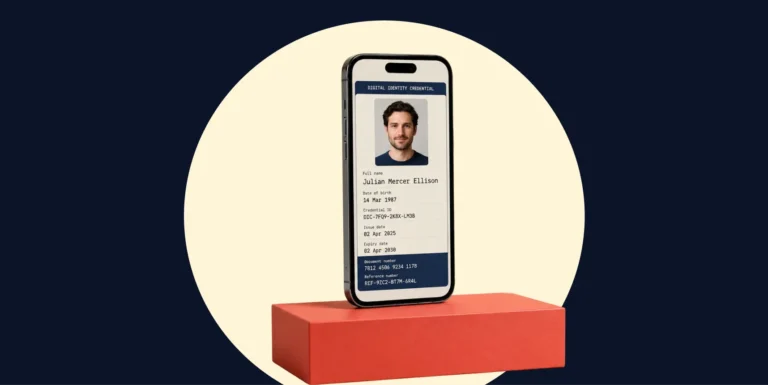
The clearest signal is regulatory. In Europe, the rollout of the European Digital Identity Wallet under eIDAS 2.0 requires every member state to offer citizens a certified wallet by November 2026, with obliged entities required to accept it by December 2027 (European Commission). A government-backed digital identity scheme on that scale reshapes how every regulated business verifies its users, and it is one reason the broader complete guide to identity verification now reads as a board-level concern rather than an operational detail.
Five forces driving growth in digital identity verification
Five forces are driving the growth in digital identity verification, and they reinforce each other rather than acting alone. Any one of them would raise demand. Together they explain why the market is expanding as fast as it is, and they are the identity verification trends shaping vendor selection and compliance budgets in 2026.
Rising fraud from deepfakes and synthetic identities
Generative AI has made convincing fake identities cheap to produce. The Federal Reserve Bank of Boston warned in April 2025 that AI tools now generate realistic fake documents, profile photos, and synthetic behavioural data (Federal Reserve Bank of Boston). Shufti’s own figures show synthetic identity attacks now make up more than 42% of total AI fraud. A selfie check run on its own no longer proves anything.
Tightening anti-money-laundering regulation
The EU’s new anti-money-laundering rulebook is centralising supervision under a single authority. The Authority for Anti-Money Laundering and Countering the Financing of Terrorism (AMLA) began operations on 1 July 2025 and took over AML mandates from the European Banking Authority in January 2026 (AMLA). Harmonised rules mean verification standards that were once interpreted locally are converging.
Digital-first customer onboarding
Neobanks, crypto platforms, and digital marketplaces never had a branch network. For them remote verification is the only verification, so the quality of the digital identity check directly determines who becomes a customer and who abandons the flow.
Open banking and the PSD3 payments rulebook
The EU’s revised payments framework is on its way. The agreed texts for the Payment Services Directive 3 and the accompanying Payment Services Regulation were published in April 2026, with application expected around 2028 (Norton Rose Fulbright). Stronger authentication and fraud-liability rules raise the bar for how payment firms confirm who they are dealing with.
The EUDI Wallet rollout
The European Digital Identity Wallet turns identity verification into a reusable, government-backed credential. As issuance and acceptance deadlines approach, businesses across the EU have to prepare their verification stack to accept wallet credentials alongside traditional documents.
The role of AI and biometrics in modern IDV
AI now sits on both sides of the identity verification problem, powering the attacks and the strongest defences against them. The same generative models that produce deepfakes also train the detection systems that catch them, which is why the market has shifted from static document checks toward dynamic, AI-driven biometric verification.
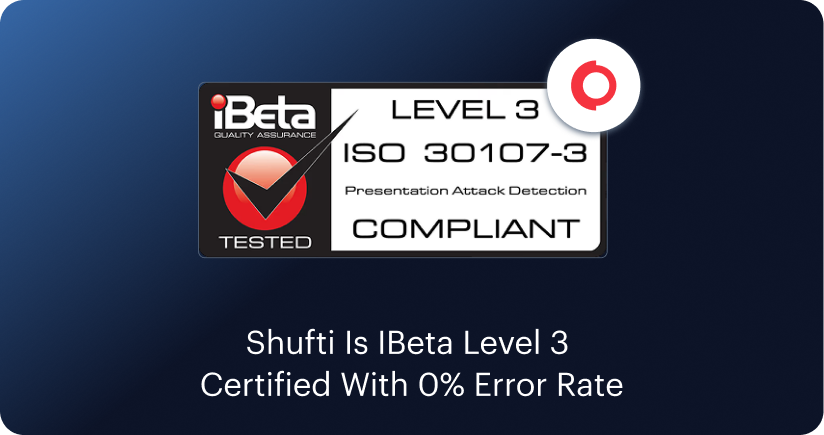
The defensive frontier is liveness detection. Passive liveness runs in the background, analysing micro-expressions, depth signals, and screen-replay artefacts to confirm a real person is present without adding friction. The benchmark that separates serious systems from marketing claims is independent validation. iBeta Level 3 conformance under ISO/IEC 30107-3 is the highest published standard for liveness attack detection, introduced specifically in response to AI-driven fraud, and very few vendors hold it. For a closer look at how this plays out, see how Shufti approaches AI identity verification against deepfake threats.
Regulatory tailwinds shaping the market
Four regulatory developments are actively expanding the digital identity verification market, and compliance teams should track all of them. Each one converts a recommended practice into a hard requirement, which is what turns regulatory change into procurement budget.
The first is eIDAS 2.0 and the EUDI Wallet, which mandate a certified wallet across every member state on a fixed timeline. The second is the EU AML package under AMLA, which harmonises customer due diligence rules that were previously fragmented across national regulators. The third is PSD3 and the Payment Services Regulation, which strengthen authentication and fraud-liability obligations for payment firms. The fourth is the global baseline from the Financial Action Task Force, whose Recommendation 10 still anchors national AML law worldwide by requiring identity verification from reliable, independent sources. The practical implication is consistent across all four. The direction of travel is toward stronger, auditable, biometric-backed verification, covered in depth under AML identity verification.
What this means for compliance teams in 2026
For compliance teams, the growth in digital identity verification changes verification from a procurement afterthought into a core infrastructure decision. The vendor you choose now has to satisfy multiple regulators at once and withstand an AI-driven fraud landscape that did not exist when many existing contracts were signed.
Three priorities follow. First, evaluate vendors on independent validation rather than marketing claims, with iBeta Level 3 conformance as the benchmark for liveness. Second, confirm the solution can accept emerging credential types such as the EUDI Wallet alongside traditional documents, so a 2027 acceptance deadline does not become a 2027 integration scramble. Third, treat global document coverage as a hard requirement, since a verification stack that fails in your growth markets quietly caps expansion. A clear view of digital identity and where it is heading is the starting point for all three.
How Shufti fits into the shift to digital identity verification
If you are watching these forces converge, the practical question is whether your verification stack can keep up with both the regulators and the attackers. Most vendors assembled their stacks from third-party components, which means they wait on someone else when a new attack vector or compliance rule lands. Shufti built and owns its full stack, with document intelligence trained on 10,000+ document types across 240+ countries and territories, proprietary OCR in 150+ languages, and a liveness engine holding iBeta Level 3 conformance under ISO/IEC 30107-3. That ownership is what lets Shufti ship updates on its own timeline as deepfake techniques and EU rules keep moving.
See how Shufti’s platform is built for the accuracy and compliance demands of 2026 — explore the platform.
Frequently Asked Questions
Why is digital identity verification growing so fast?
Digital identity verification is growing because fraud, regulation, and digital-first onboarding accelerated at the same time. Generative AI made fake identities cheap to produce, EU rules like eIDAS 2.0 and the AML package tightened requirements, and remote-first businesses have no manual fallback, so the quality of the digital identity check now directly determines who they can safely onboard.
What is driving adoption of digital identity verification in Europe?
In Europe, adoption is driven mainly by regulation. eIDAS 2.0 mandates a certified EU Digital Identity Wallet across member states, the new AML package centralises supervision under AMLA, and PSD3 strengthens authentication rules for payments. Together they convert recommended verification practices into hard, auditable requirements with fixed deadlines.
How is AI changing identity verification?
AI sits on both sides of identity verification. Generative models produce deepfakes and synthetic identities, while AI-driven biometric systems detect them through passive liveness and media forensics. The benchmark for defensive systems is iBeta Level 3 conformance under ISO/IEC 30107-3, the highest published standard for liveness attack detection, introduced in response to AI-driven fraud.
Which industries are adopting digital identity verification fastest?
Digital-first and heavily regulated sectors adopt fastest, including neobanks, crypto exchanges and virtual asset service providers, online gambling, payments, and digital marketplaces. These businesses onboard remotely at scale and face strict AML, licensing, or payment rules, so a strong digital identity verification process is both a compliance requirement and a growth enabler.