




 AMLR Solutions
 AMLR Consultation
 Onboarding
 Ongoing Monitoring
 FRAML
FRAML KYC
KYC KYB
KYB KYI
KYI Age Assurance
 Workforce IAM
 Candidate Verification
 Bank Account Verification
 Account Takeover
 Bonus/ Promotion Abuse
 Chargeback Fraud
 Deepfake
 Document Fraud
 Fraud Networks
 Impersonation Fraud
 Money Mule Activity
 Multi-Accounting
 Party Fraud
 Regulatory & Compliance Risks
 Synthetic Identity Fraud
 Adult Content
 Banking
 Crypto
 Fintech
 Forex
Forex Compliance
 Fraud prevention
 Trust & safety
 Global expansion
 Compliance Officers
 Developers
 Fraud Analysts
 Product Managers
 Advanced Journey Builder (AJB)
 Global Trust Platform
 Customer Profiles
 Vendor Comparison
 IDV Case Management
 AML Case Management
 Regulatory Reporting
 Agentic Rule Builder
 AI Compliance Co-Pilot
 Fraud Analytics
 Fraud Hub
 OCR
OCR Shufti AI
 Biometric Duplication
 Database Checks
 Document Intelligence
 Government ID
 Mobile Driver's License
 NFC
NFC Selfie Liveness
 Brand Personalisation
 Deployment Options
 Identity Methods
 IDV Modes
 Multi-tenancy
 On-Premise IDV
 Secure Capture


eIDV
Docless Identity Checks Without Coverage Gaps via One Integration
Connect to hundreds of eIDs, government databases, and authoritative data sources through a single Shufti-owned API. From low-friction onboarding to high-assurance bank logins, verify users in seconds, without documents with Shufti eIDV solution.
The World’s Largest Identity Network







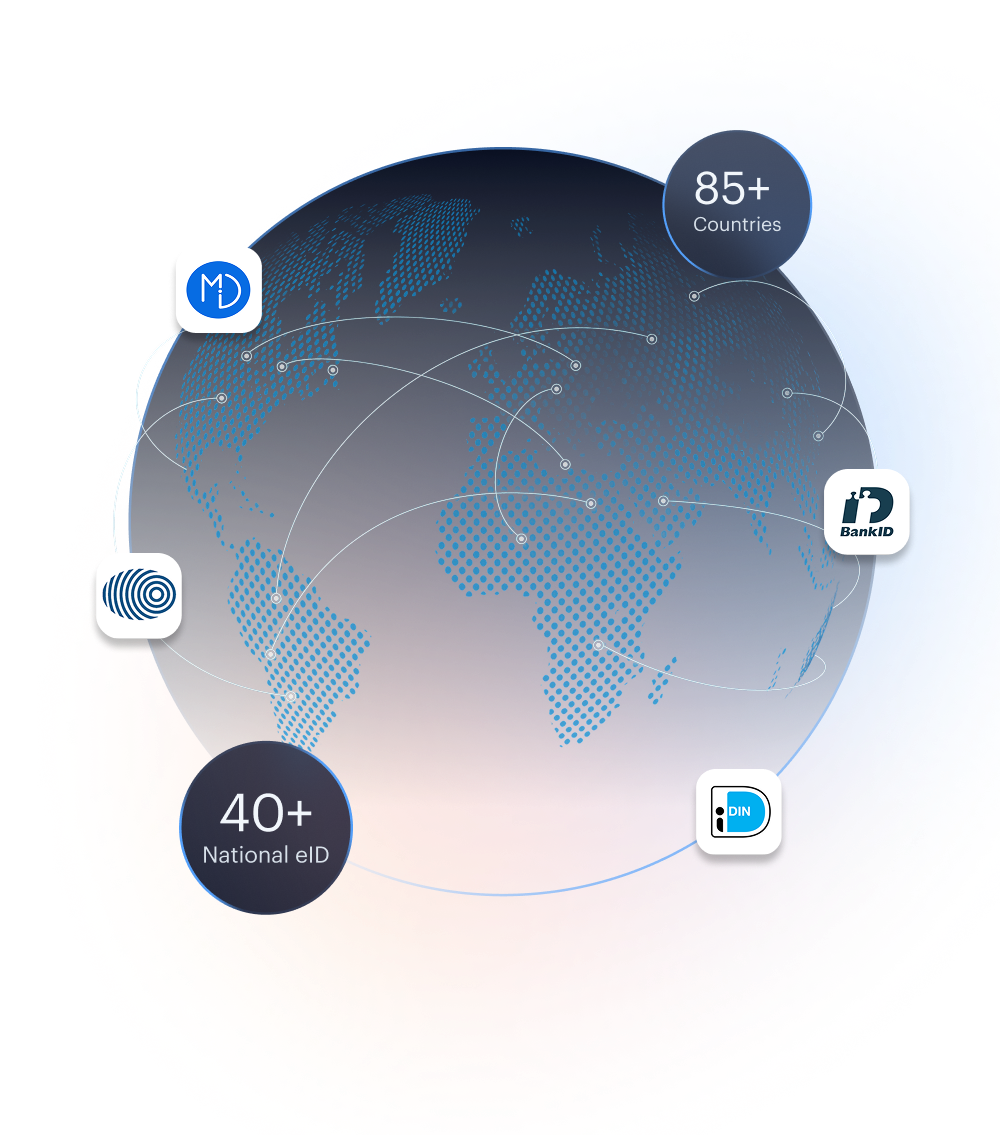
Maximize Global Reach with One Integration Connecting 40+ eID Schemes
The Enterprise Standard For eIDV Verification
Broader Docless Coverage Across Every Market
Shufti's database checks extend into high-growth regions where government eIDs don't yet exist, giving enterprises docless coverage across markets that conventional Electronic Identity Verification providers cannot reach.
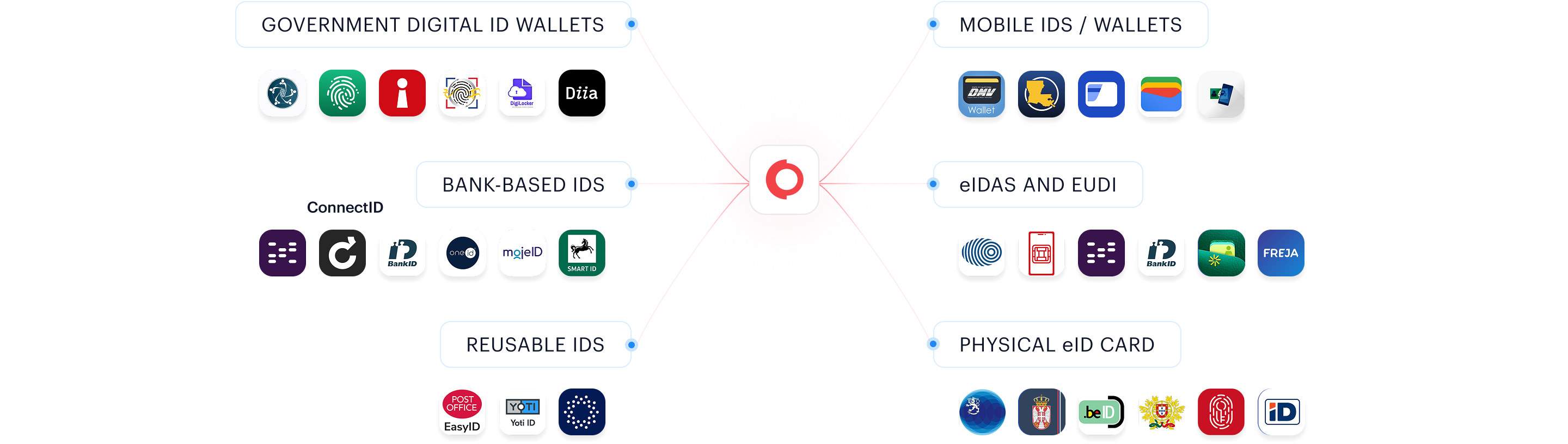
Where high-assurance credentials are available, eID authentication runs natively through BankID, MitID, iDIN, UAE Pass, PhilSys, Singpass, and 35+ others.
Passive and active coverage combined spans Europe, MENA, Asia-Pacific, the Americas, and Sub-Saharan Africa through a single fully owned integration.
Consolidated Verification and Unified Compliance
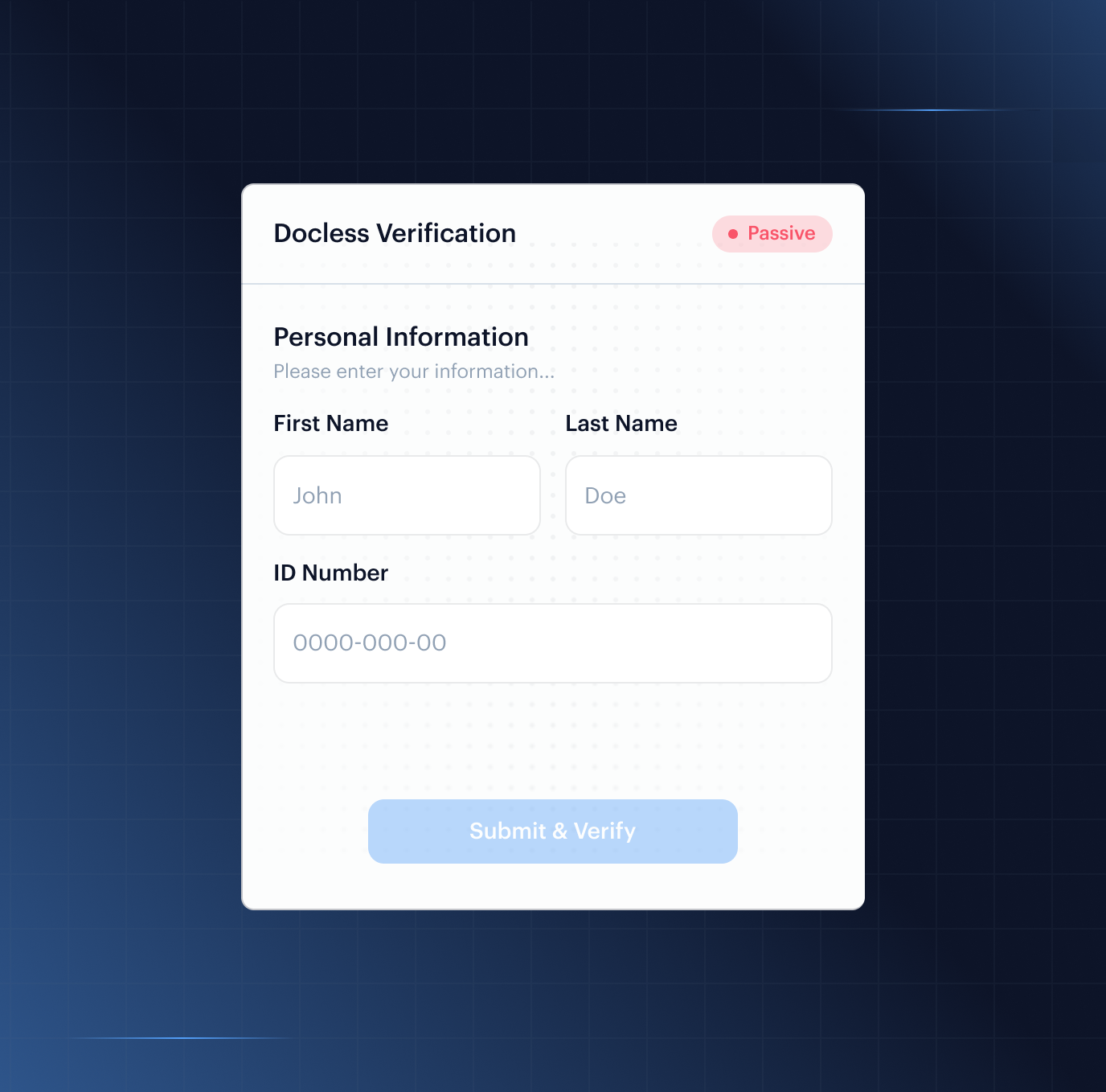
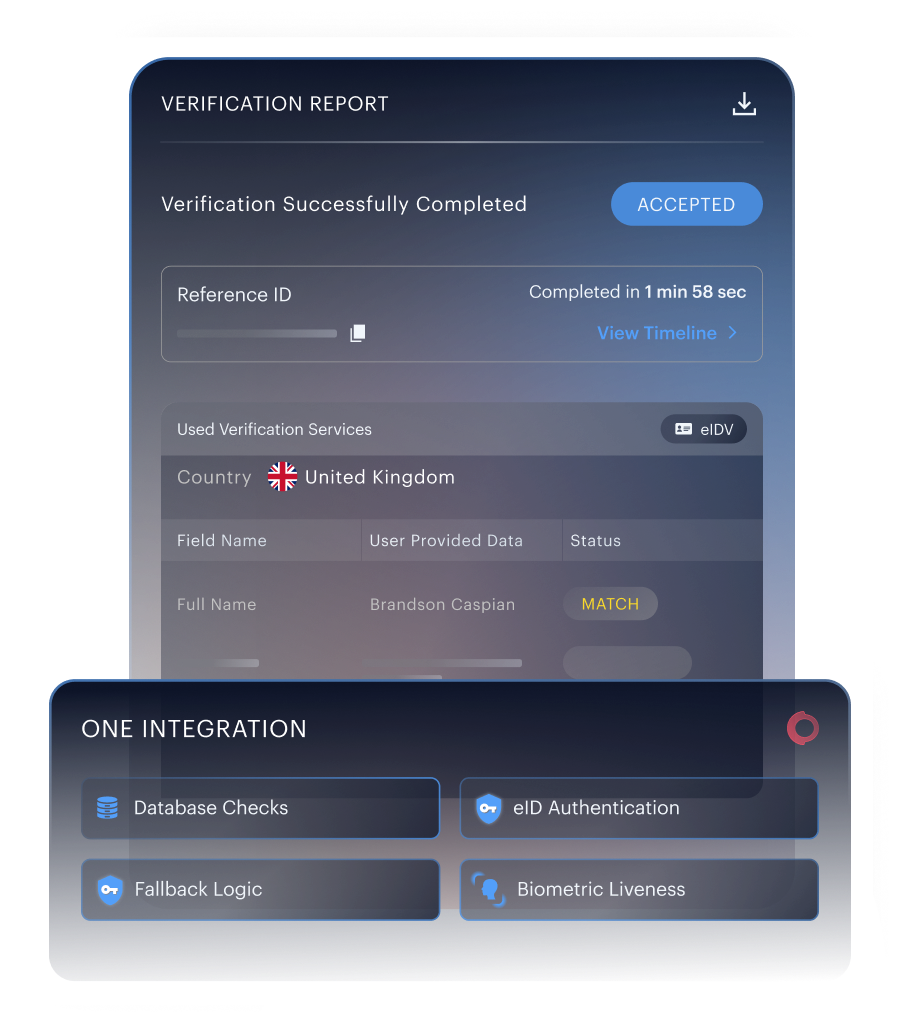
Passive, active, and biometric eIDV route through the same RESTful API without upstream dependency. Tier selection is automatic based on country, risk, or regulatory rule.
Separate vendors mean separate data flows, separate audit trails, and separate breach surfaces. A Shufti-owned consolidated stack removes that overhead.
Ready for the Regulated Markets
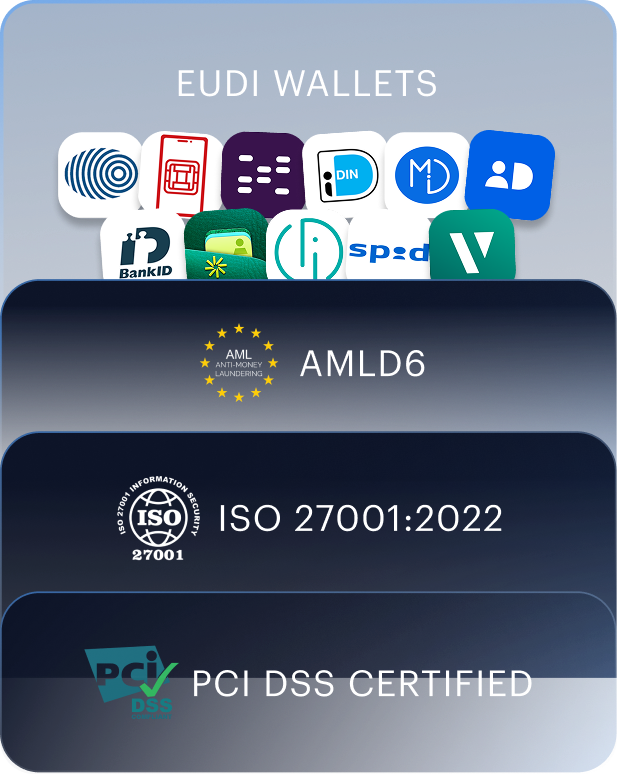
Active eIDV natively authenticates at eIDAS Level of Assurance High. EUDI Wallet compatible ahead of the December 2027 enforcement date.
Meets Substantial and High assurance requirements for ongoing customer due diligence. Configurable verification tiers match regulatory thresholds by market.
Independent certification across data handling, processing, and storage. GDPR Article 28 processor obligations met by default.
Smart Identity Checks That Protect Your Conversion Rates
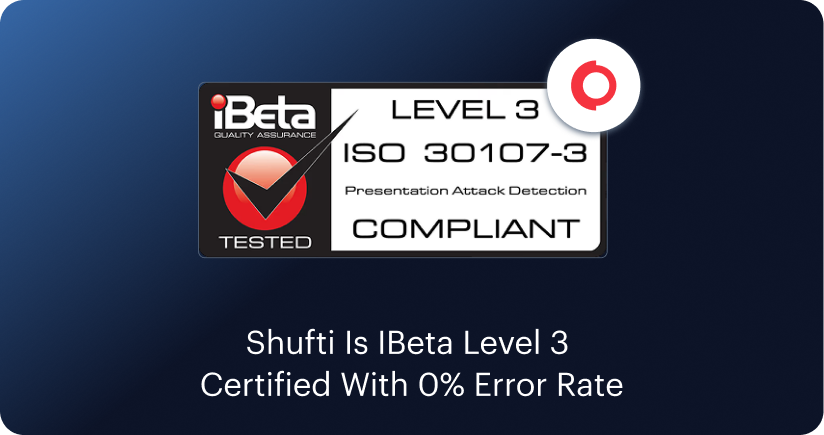
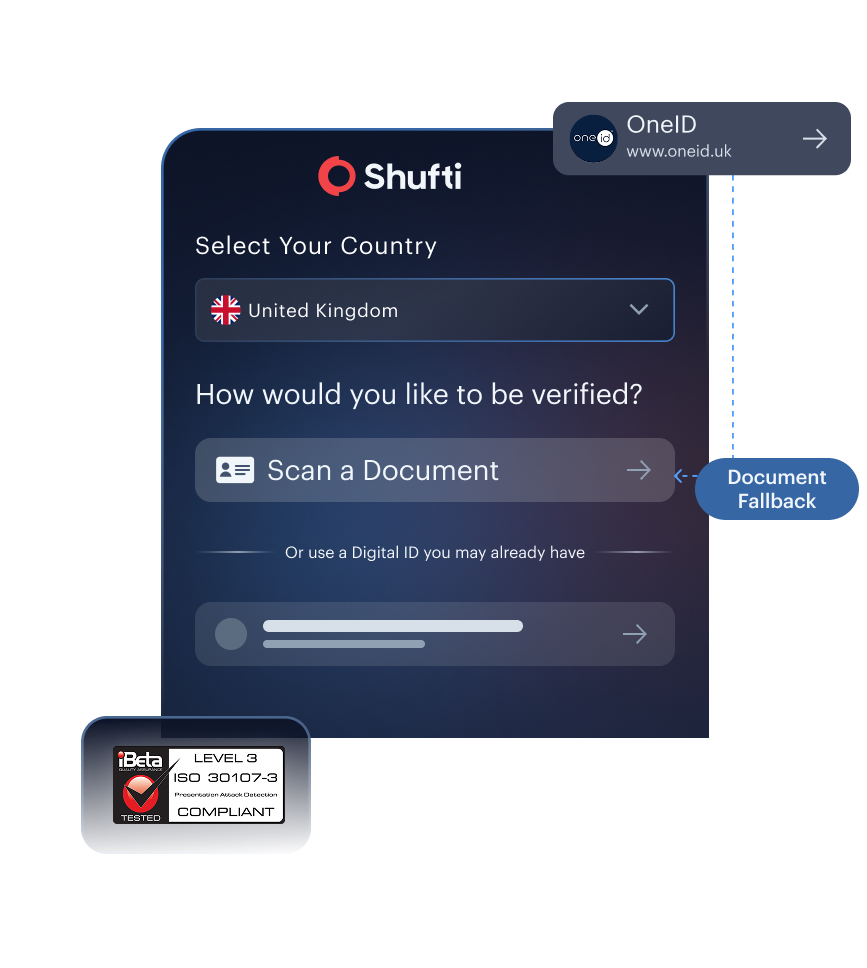
As Europe's first iBeta PAD Level 3 passive liveness provider, Shufti adds independently certified proof of life to database verification when higher assurance is required. Facial matching and liveness run on top of the database check, with identity confirmation, face match, and liveness returned together.
Never lose a good user to missing credentials. Our in-house verification flow automatically pivots to a standard document check, if a user doesn't have a compatible eID. Ensure maximum conversion rates by guaranteeing a verification path for every user.
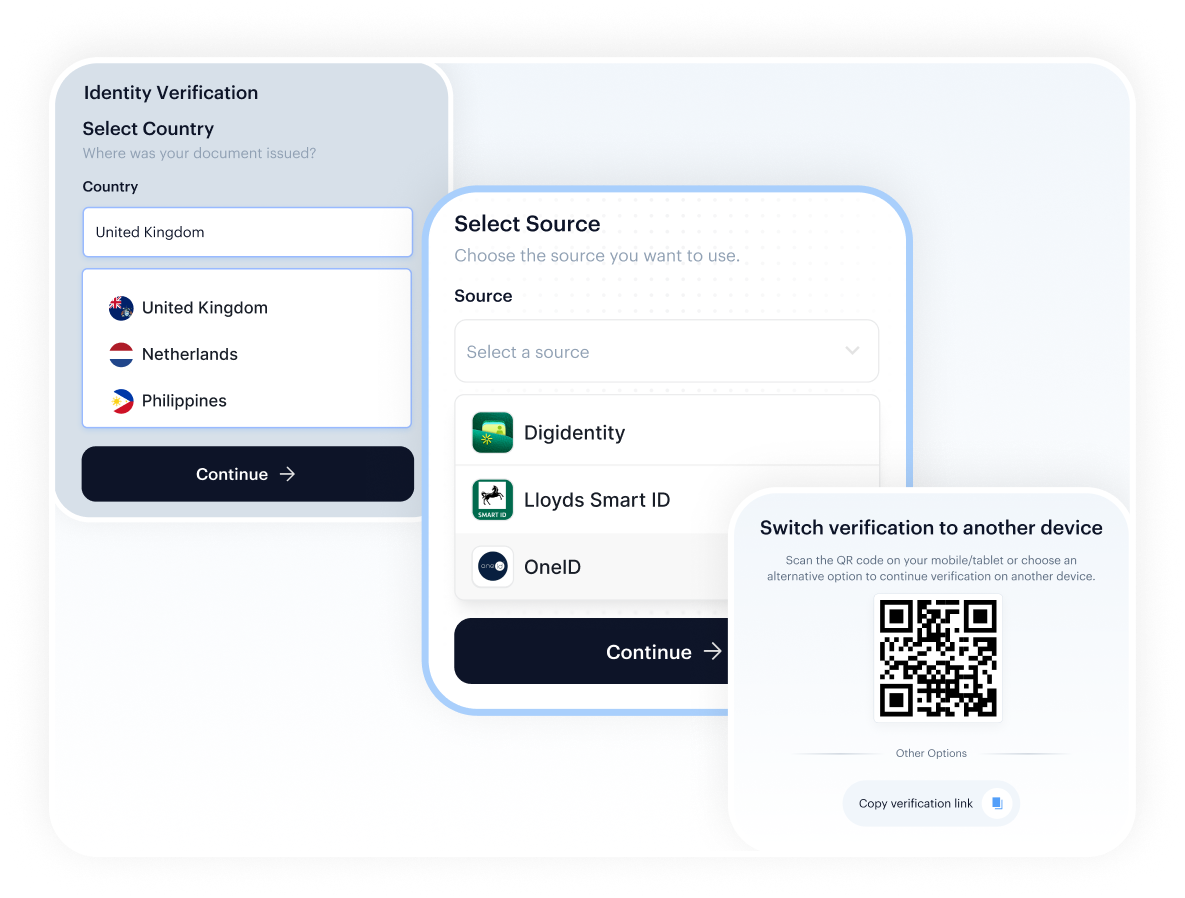
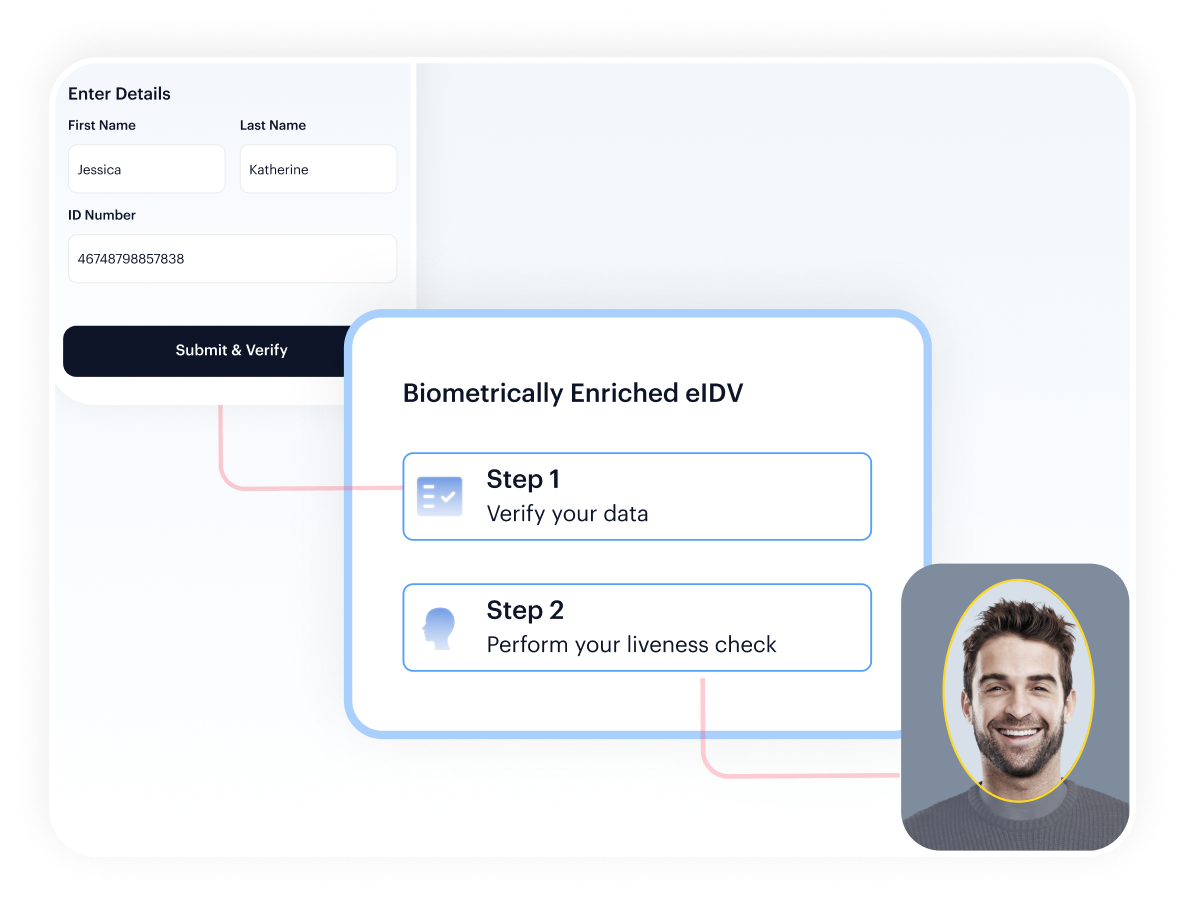
Worldwide Identity Coverage Through a Single Network
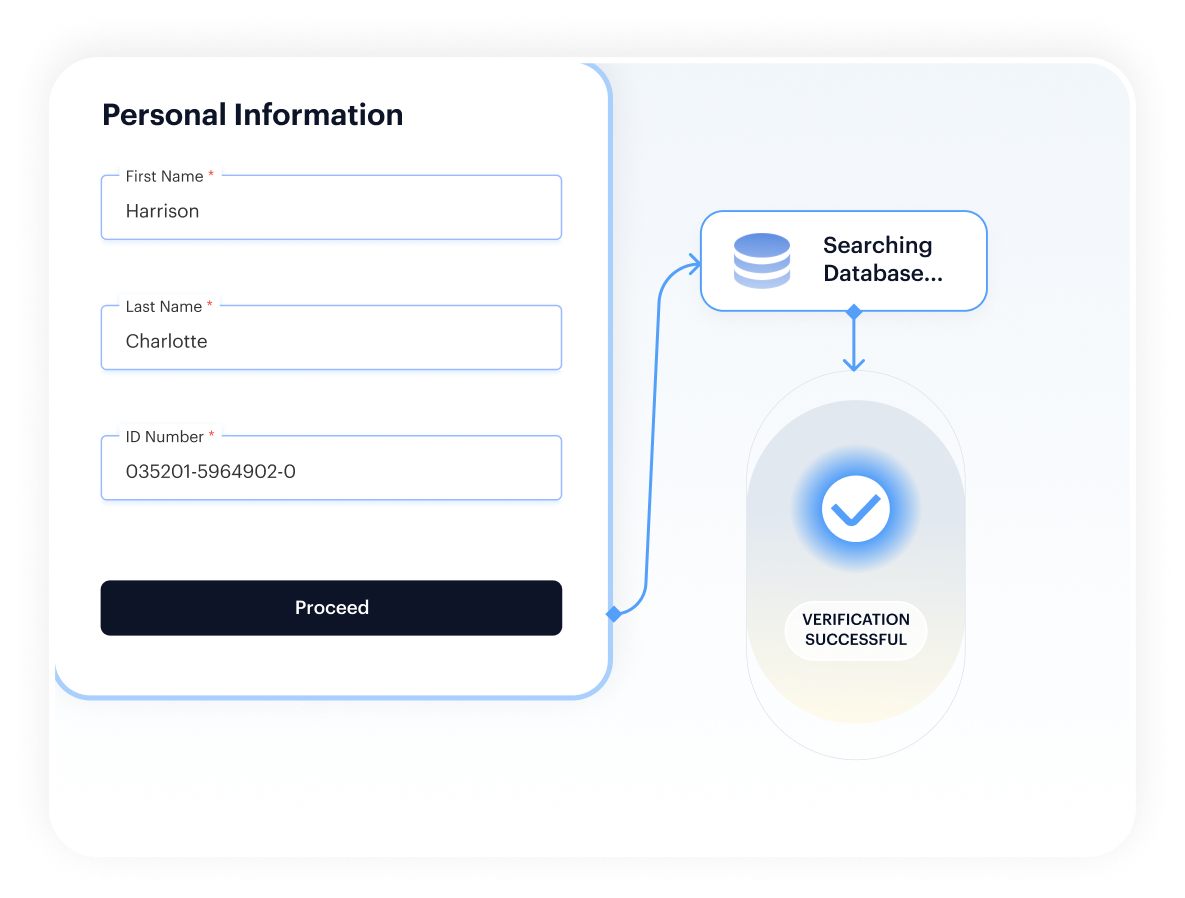
Passive eIDVs
Background checks through authoritative databases.
See all SourcesActive eIDVs
Real-time verification through trusted digital identity providers.
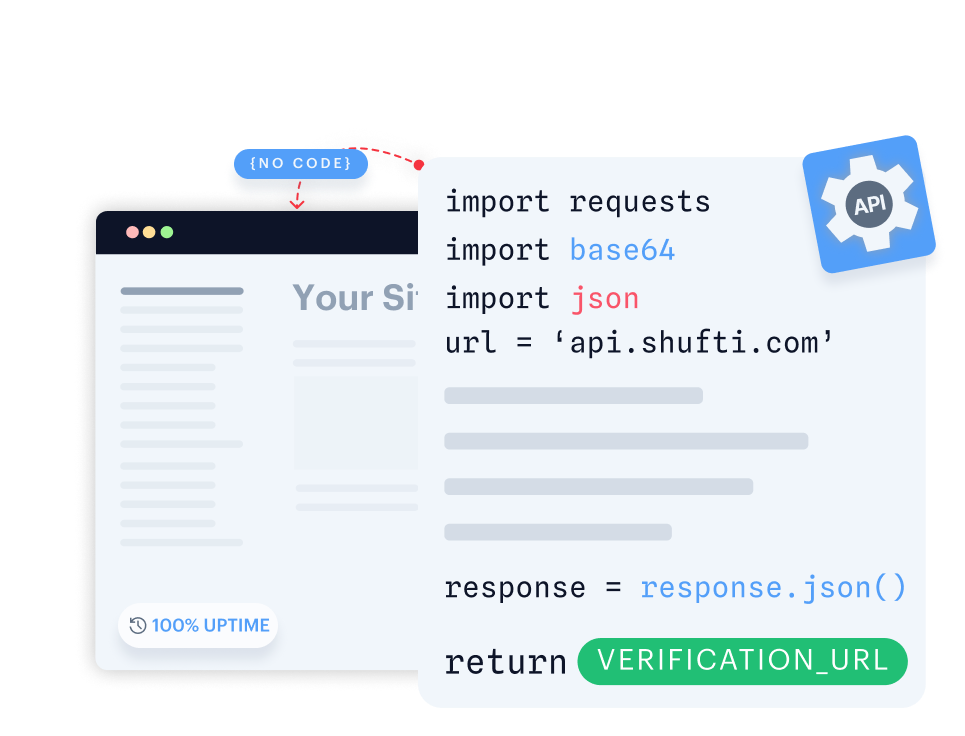
See all ProvidersSingle API, Seamless Integration
Build fully customisable verification flows with seamless backend integration.
- Gain full control by customising verification flows end-to-end.
- Integrate seamlessly with your backend for quick implementation.
- Design flexible verification journeys tailored to your users.
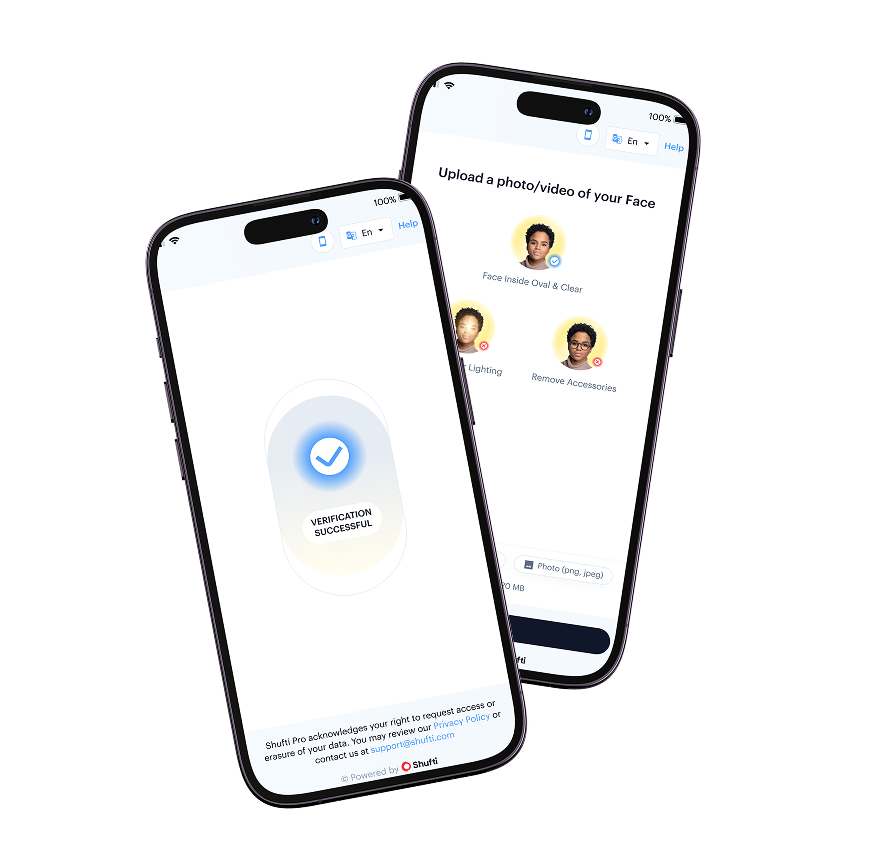
Launch a native verification experience in your mobile app within minutes.
- Launch native verification within minutes on iOS or Android.
- Use ready-made UI with camera, capture, and real-time feedback.
- Customise flows to fit seamlessly into your mobile app.
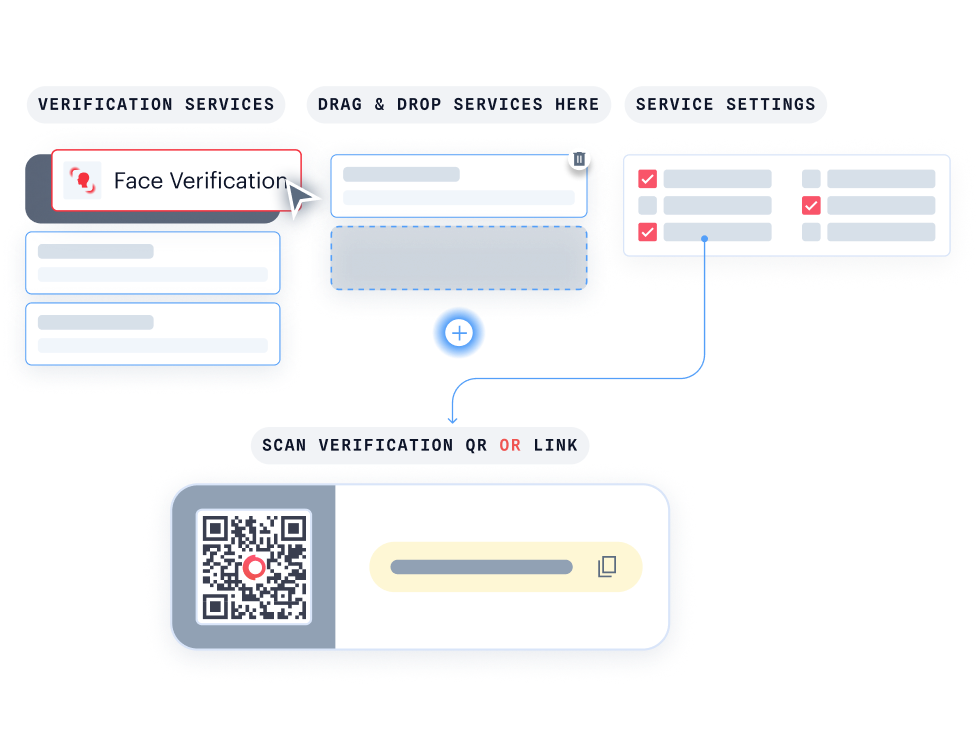
With KYC Journey Builder, create personalised verification journeys without writing a single line of code.
- Customise your journey effortlessly with drag-and-drop functionality.
- Instantly see how your verification flow looks for your users.
- Easily connect with Hosted Verification for a consistent, branded experience.
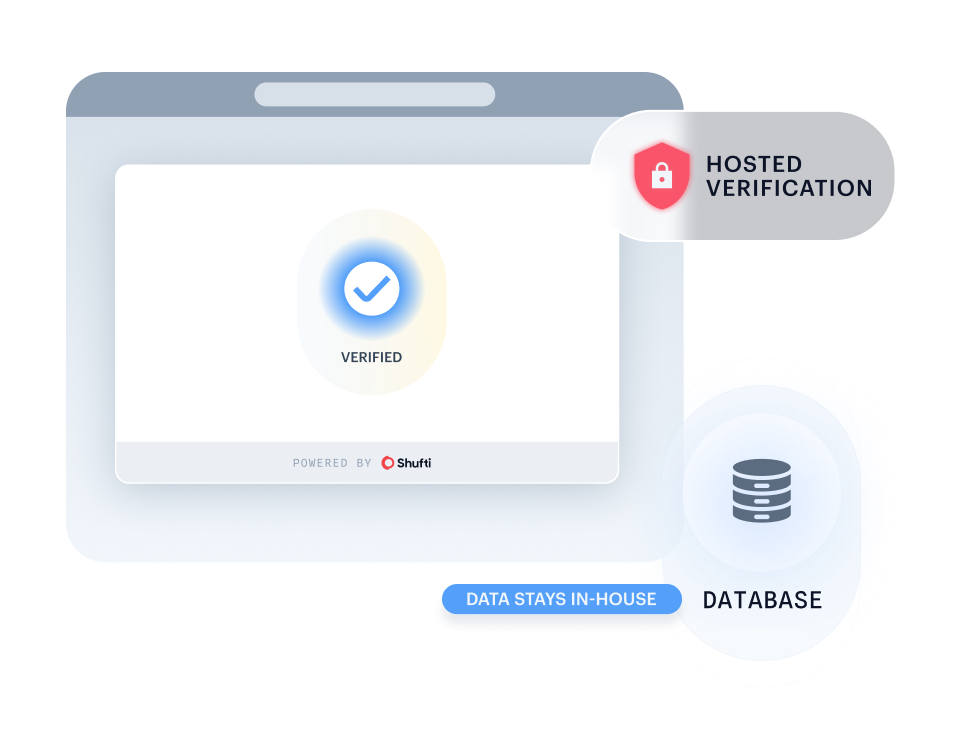
Run Shufti within your own identical-capability infrastructure for maximum data control and privacy.
- Keep all sensitive information in-house to meet strict governance and data residency requirements.
- Keep sensitive information fully private and secure in-house.
- Deploy in highly regulated sectors without compromising compliance.
ATTRIBUTE VERIFICATION
Verify Address and Age Without Documents
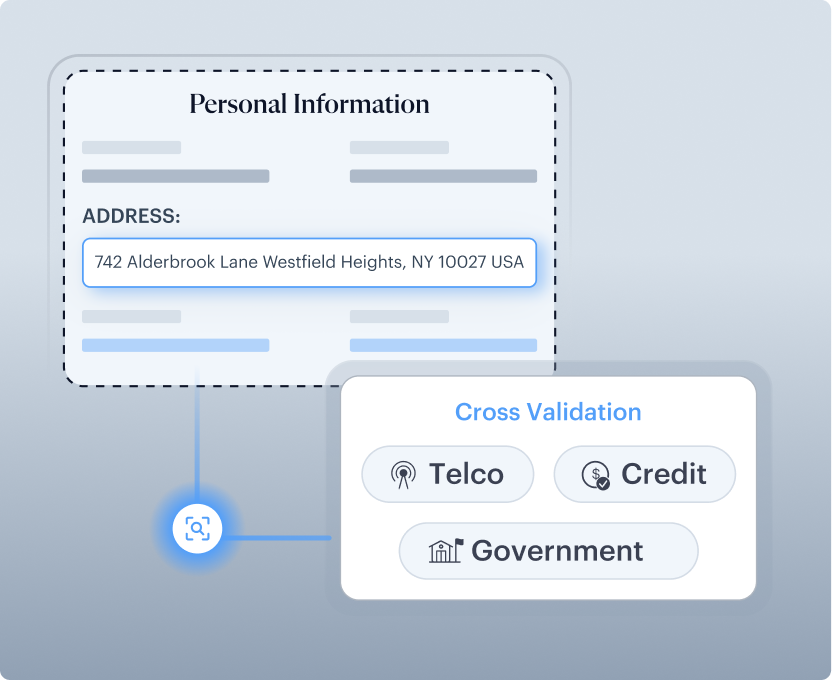
Address Verification
Satisfy Proof of Address Requirements at Source
Verify residency in < 3 seconds by cross-referencing user data against 180+ utility, telecom, and government databases. Satisfies Proof of Address (PoA) mandates across EU, UK, MENA, and APAC jurisdictions, without asking users to upload a document.
Age Verification
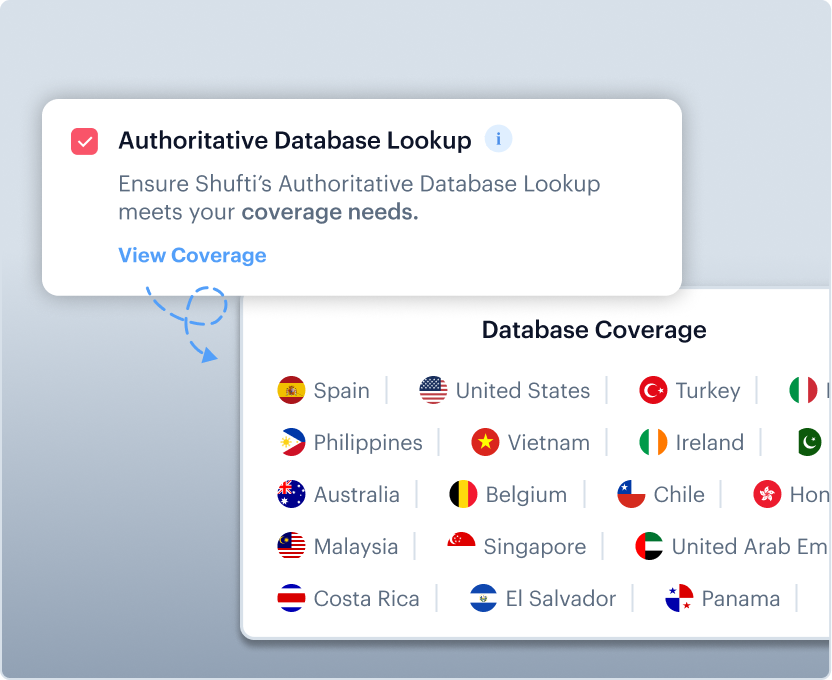
Instant Age Assurance
Protect minors and onboard adults with zero friction. Check DOBs against 160+ authoritative sources to ensure 18+ status while preserving user privacy. Meet global regulatory requirements without demanding a physical ID scan.
Industry-Specific Solutions
Built For Your Business
Secure Identity and Revenue for Platforms
Establish total trust between buyers and sellers. Verify high-value merchants via Active eIDV to prove legitimacy, while using invisible background checks for buyers to prevent chargebacks without killing checkout conversion.

Don’t just take our word for it, hear from our customers
The Confidence Our Clients Share

The future of digital identity is defined by trust, interoperability, and regulatory alignment, so our partnership with Shufti reinforces DevCode Identity’s commitment to supporting our global customers with the most secure, best-in-class, compliant identity verification solutions available today.
Combining our Conversion Driven Compliance Orchestration Platform with Shufti’s global KYC and IDV capabilities allows our customers not only to navigate complex regulatory demands but also to maintain a seamless customer onboarding experience with the highest achievable conversion rates.
We’re proud to continue our partnership with Shufti as we expand into new jurisdictions.
Shufti’s verification technology not only strengthens our compliance framework but also ensures our players enjoy a smooth, secure onboarding experience.
We aim to offer our clients and their traders the very best tools with which to do their jobs, we’re excited to be able to work with Shufti.
They’re a leading company, and we’re looking forward to offering their solutions to our clients through our CRM.
The relationship with Shufti was born out of frustration with an existing provider, so we started our discussion with Shufti.
The response time was excellent, from the start of speaking to sales to getting up and running with the demo.
Frequently Asked Questions
What is electronic identity verification (eIDV)?
Electronic identity verification, also known as an electronic identity verification service or electronic ID verification, confirms a person’s identity by cross-referencing their details against authoritative digital sources, government registries, national eID schemes, credit bureaus, and biometric databases, without requiring physical document uploads. eIDV replaces manual document review with automated, source-level checks that return results in seconds. Shufti offers eIDV solutions as part of its online eIDV services.
How does eIDV work? What are the verification layers?
eIDV operates through three layers. Database verification, a core part of Shufti’s eidv solution, checks user-provided details against government and commercial databases without user interaction beyond data entry. Government eID authentication authenticates users through national eID schemes (BankID, MitID, Singpass), proving they control the credential. Biometric liveness verification adds iBeta-certified facial matching on top of database or eID checks. Shufti combines all layers in its electronic identity verification solutions.
What happens if a country does not have a government eID scheme?
Database verification covers 85+ countries, including markets where national eID schemes have not yet reached adoption. Users in those countries are verified against government databases, credit bureaus, and national registries in under 3 seconds using Shufti’s eIDV solutions. If eID coverage is later added for that market, the upgrade is automatic, ensuring continuous access to online eIDV services.
Which eID providers does Shufti support?
Shufti integrates with 30+ national eID schemes including BankID (Sweden, Norway), MitID (Denmark), iDIN (Netherlands), itsme (Belgium), UAE Pass, Singpass (Singapore), PhilSys (Philippines), DigiLocker (India), Smart-ID (Baltics), SPID (Italy), and more. The full list is available on the interactive coverage map. Shufti is among leading eidv services providers and eidv solutions providers.
How does Shufti handle multi-vendor consolidation?
Shufti replaces the need for separate database, eID, and biometric providers. Database verification, eID authentication, and biometric liveness all run through one API, one contract, and one audit trail, reducing integration complexity and audit overhead. This makes Shufti a complete electronic identity verification solution.
What certifications does Shufti hold eIDV services?
Shufti’s eIDV solutions are backed by ISO 27001:2022 certification, PCI DSS compliance, GDPR data processing compliance, and iBeta Level 3 certification for biometric liveness detection. eID authentication operates at eIDAS Level of Assurance High.
Where is verification data processed?
Verification data is processed through regional AWS infrastructure. eID authentication queries route through encrypted point-to-point connections to national eID providers. Database queries use encrypted API calls to government registries and credit bureaus. PII handling follows GDPR data minimisation requirements, and data retention periods are configurable per client.
What is eIDV vs document verification?
Document verification requires users to photograph and upload a physical ID document. eIDV checks identity directly against authoritative digital sources, government databases, eID schemes, and biometric records, without requiring a document. Shufti’s electronic identity verification solutions are faster (under 3 seconds vs. minutes), have higher completion rates, and eliminate vulnerability to physical document forgery and deepfake-generated document images. Shufti’s fast and secure identity verification is at the core of its reusable digital eIDV solutions.
Evaluate Whether Your Stack Covers the Full Spectrum
Most verification stacks cover one method. Compare passive, active, and biometric coverage across target markets in a single evaluation call.