


 Face Verification
 Address Verification
 Document Verification
 Age Verification
 VideoIdent
 Fast ID
 Docless Verification
 Consent Verification
 NFC Verification
 Business Verification
 Due Diligence
 Investor Verification
 E-Signature

 QES
QES
 AML Screening
 Transaction Monitoring
 Adverse Media
 Business AML Screening
 PEP & RCA
 Sanctions
 Watchlist
 Behavioural Biometrics
 Device Fingerprinting
 Biometric Face Authentication
 MFA
MFA
 Fraud Hub
 Onboarding
 Ongoing Monitoring
 KYC
KYC
 KYB
KYB
 KYI
KYI
 Age Assurance
 Identity Verification
 Workforce IAM
 Candidate Verification
 Compliance
 Fraud prevention
 Trust & safety
 Global expansion
 Product Managers
 Compliance Officers
 Fraud Analysts
 Developers
 Deepfake Detection
 Bonus Abuse / Promotion Abuse
 Account Takeover
 Synthetic Identity Fraud
 Document Fraud
 Impersonation Fraud
 Multi-Accounting
 Fraud Networks
 Chargeback Fraud
 Money Mule Activity
 Party Fraud
 Regulatory & Compliance Risks
 Fintech
 Crypto
 iGaming
 Forex
Forex
 Social Network
 Marketplace
 Banking
 Gig Economy
 Payments
 Ride Hailing
 Adult Content
 Blind Spot Audit
 Deepfake Detector
 Liveness Spoofs
 Document Originality
 Document Deepfake
 Global Trust Platform
 Journey Builder
 Case Management
 Shufti AI
 Fraud Analytics
 Vendor Comparison
 Brand Personalisation
 AI Compliance Co-Pilot
 OCR
OCR
 Secure Capture
 Deployment Options
 Identity Methods
 API Documentation
 Mobile SDKs
 Service Status
 Help Center
 Contact Us
 Technical Support
 Supported Documents
 Supported Countries

 Content library
 Blogs
Blogs
 News
News
 Reports
 Insights
 Knowledgebase
 ROI calculator
 About
About
 Career
 Press Release
 Certifications
 Partnership
 Awards
 Events & Webinar
 Interactive Demo
 Podcast Studio
 Spotlight Studio
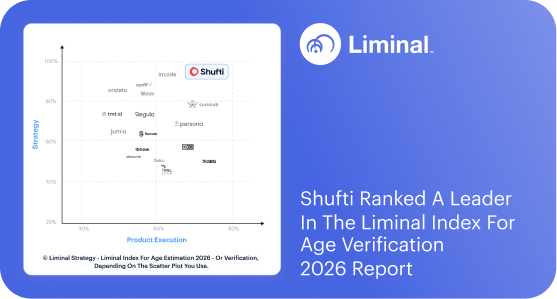
e-IDV | Enhancing Fintech Onboarding, Operations & Compliance
-
Add us as a Preferred Source
- 01 What is E-IDV?
- 02 Challenges in the Fintech Industry
- 03 Risky Business
- 04 Digital Fraud
- 05 Under and Over Regulations
- 06 Overwhelming Compliance
- 07 Data Security
- 08 Striking Balance Between Fintech Industry Trends and Compliance
- 09 Advantages of eID Verification
- 10 How Can Shufti Help?
Fintech is unprecedentedly growing and changing as it responds to the always-changing tech landscape. It still requires sophisticated security infrastructure and laws to keep up with the latest digital developments. Fintech companies are using Anti-Money Laundering (AML) and Electronic Identity Verification (e-IDV) solutions to successfully address underlying security issues whilst remaining compliant and safe. The expedited organisational verification and risk assessment processes streamline Fintech’s operation but it can also present certain obstacles.
So far, financial industries have paid a $321 billion fine and this appears to be continuing into the future. The first step to properly combating digital fraud is realising the scope of security issues that the industry faces on a regular basis. Find out how to successfully address these issues to improve onboarding, ensure safe operations, and uphold compliance.
What is E-IDV?
Electronic identification verification, or eIDV, verify documents to confirm a person’s claim to be who they say they are by using both publicly available data and private databases. Personal data such as name, address, DOB, Social Security number (SSN), and others are used in eIDV. An incomplete match of identity, a fraudulent or stolen identity, or the individual claiming to be who they are could be the outcome of an eIDV.
To reduce the risk of financial fraud and adhere to KYC, AML, and CFT rules, banks, brokerage houses, credit card businesses, lending, wire transfers, and mortgage lenders utilise eIDV.
Challenges in the Fintech Industry
Fintech has had unparalleled growth in 2022; nevertheless, opportunities are accompanied by increased rivalry and regulatory scrutiny. A few of the challenges faced in the industry are:
Risky Business
The huge amounts of money that are being exchanged in the Fintech sector have increased risks. With cutting-edge tech startups entering the market to compete with established organisations and app-based digital financial sectors, competition is fiercer than ever.
In addition, regulatory oversight is at an all-time high, with fines for inadequate Anti-Money Laundering (AML) procedures hitting all-time highs in recent years. During the whole 2008 to 2018, post-financial crisis decade, authorities across various industries gathered a $26 billion fine. But last year, the government collected a $10 billion fine, and there was barely any indication that enforcement would be eased.
Digital Fraud
Artificial Intelligence-driven e-IDV products are proliferating as the Fintech sector experiences a digital revolution. However, as anti-fraud and e-IDV solutions have become more accessible, AI-driven digital fraud has increased. Fraudsters can easily take control of a company account and embezzle all of the funds, costing companies billions of dollars. Apart from that, in the digital realm, it is challenging to verify if the person funding the company and collaborating with businesses is genuine. Now, businesses can use synthetic data for onboarding.
Under and Over Regulations
The regulatory framework in which fintech companies operate is intricate and multifaceted, with excessive or insufficient regulation. It can be costly and time-consuming to obtain the necessary licences, meet compliance standards, and abide by data protection and anti-money laundering (AML) laws.
Regulations are needed to protect the Fintech sector because of the amount of criminal activity that thrives in an unregulated setting. On the other side, making such efforts without exercising caution could result in excessive regulation. This happens when lawmakers erect so many obstacles in the way of companies and suppliers that they are forced to leave regulated markets.
Overwhelming Compliance
Fintech companies may find it difficult to comply with KYB laws, depending on the nature of their operation. Similar to this, laws requiring businesses to “know your customer” enable them to keep an eye out for illicit activity like money laundering and tax evasion. Among the services covered by the regulations are financial consultation, insurance, borrowing, and stock investing. All institutions, however, have to follow certain rules.
The overall number of businesses facing AML fines more than doubled in 2022. A report released by the Financial Conduct Authority (FCA) states that numerous industries have already been assessed penalties totalling £35,167,900 for 2023. The harshest sanctions were still limited to banks; AmBank, a Malaysian financial organisation, was fined $700 million for its role in the 1MDB financial disaster; nevertheless, other Fintech companies were also implicated because of the broader scope of violations.
Data Security
Every industry is affected by cybersecurity issues and Fintech is no different. A company could want to do regular cybersecurity audits, develop a security protocol, periodically back up all internal and cloud-based records, determine who is in charge of what data and why, and encrypt all forms of communication. Any data breach has the potential to ruin a business’s reputation and incur numerous, extremely costly fines and additional costs.
Striking Balance Between Fintech Industry Trends and Compliance
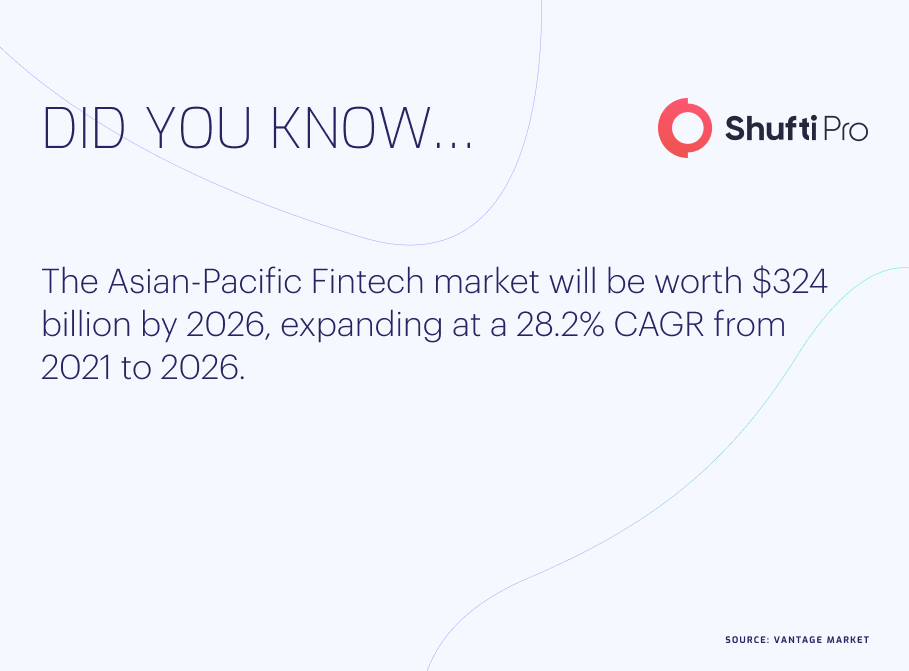
The tension of potential risks has led to the promotion of Fintech, a modern component that has gained popularity worldwide. Fintech refers to any innovation that uses state-of-the-art technology to enhance the financing industry; its products and services are dependent on the speed and convenience of technology. Moreover, worldwide technology distribution is necessary for Fintech to grow quickly.
Putting in place strong e-IDV policies secures organisation’s operations, expands the company’s ability to conduct business, and protects the sector’s reputation. Finding a balance between ease of use and effective integration of e-IDV requirements into the kyc client onboarding process is crucial to effectively oversee this mandatory process.
Despite the challenges it presents, e-IDV has several advantages. It requires less time, is more secure, and might strengthen client relationships. Fintech is evolving quickly, and more and more people and companies are using it to manage their money. Organisations will need a flexible and affordable solution for security as well as verification against other businesses that may want to use their services as Fintech usage grows. For businesses of all sizes, combining e-IDV with Fintech services will result in a stable and secure financial management system.
Advantages of eID Verification
Although confirming someone’s identity has a certain expense, it may end up being far more affordable in the long run to prevent the risk of conducting business with those who use forged or stolen documents.
By checking the customer’s passport to see if they are who they say they are, eID verification can identify fraud. Potential clients’ identities can also be confirmed using e-IDV, as can the presence of any records that might put them at risk for banks and other financial organisations, such as politically exposed individuals, international watchlists, or other lists.
Not only aml electronic identity verification be used to confirm the authenticity of documents and verification of customers, but it can also be utilised to maintain contact with current clients. Companies pay extra for eID verification services that use database cross-checking to validate identification and documents.
How Can Shufti Help?
With the use of centralised e-IDs that are validated by official government databases, Shufti provides an e-IDV solution that allows for remote customer authentication. Our e-IDV solution provides a paperless experience by allowing customers to authenticate themselves using simply their unique IDs, rather than requiring them to submit supporting documentation without standing in queues. We perform both active and passive verification in seconds, with a greater than 99.97% accuracy rate. Our e-IDV solution provides easy integration that raises client satisfaction and conversion rates. Our e-IDV solution not only helps banks and fintech companies deter scammers but also enables them to comply with KYC and AML rules, preventing them from facing severe penalties.
Want to learn how our e-IDV solution enhances customer onboarding, secure operations and compliance for the Fintech industry worldwide?