AMLR Solutions
  AMLR Consultation
 EUDI Wallet
 Onboarding
 Ongoing Monitoring
 FRAML
FRAML KYC
KYC KYB
KYB KYI
KYI Age Assurance
 Workforce IAM
 Candidate Verification
 Account Takeover
 Bonus/ Promotion Abuse
 Chargeback Fraud
 Deepfake
 Document Fraud
 Fraud Networks
 Impersonation Fraud
 Money Mule Activity
 Multi-Accounting
 Party Fraud
 Regulatory & Compliance Risks
 Synthetic Identity Fraud
 Adult Content
 Banking
 Crypto
 Fintech
 Forex
Forex Compliance
 Fraud prevention
 Trust & safety
 Global expansion
 Compliance Officers
 Developers
 Fraud Analysts
 Product Managers
 Journey Builder
  Global Trust Platform
 Customer Profiles
 Vendor Comparison
 IDV Case Management
 AML Case Management
 Regulatory Reporting
 Agentic Rule Builder
  AI Compliance Co-Pilot
  Fraud Analytics
 Fraud Hub
  OCR
OCR Shufti AI
 Bank Account Verification
  Biometric Duplication
 Database Checks
 Document Intelligence
 Government ID
 Mobile Driver's License
 NFC
NFC Selfie Liveness
 Brand Personalisation
 Deployment Options
 Identity Methods
 IDV Modes
 Multi-tenancy
 On-Premise IDV
 Secure Capture
 Shufti MCP






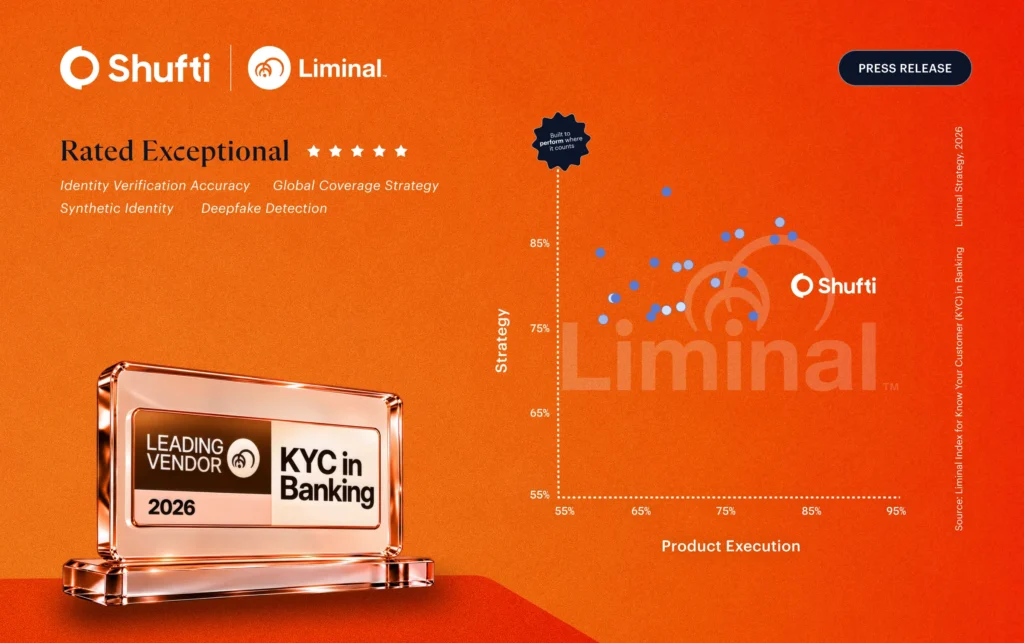







Choose transaction monitoring software based on your risk profile, detection needs, and deployment model. Shufti combines identity, fraud, and AML signals into a single FRAML view, whereas enterprise and fintech tools serve distinct operational needs.
In October 2024, TD Bank pleaded guilty to Bank Secrecy Act failures and agreed to roughly 3 billion dollars in penalties, including a record 1.3 billion dollar fine from FinCEN, after regulators found it had failed to monitor transactions for years. It was the largest US bank ever to plead guilty to such failures; it also served as a reminder that it is in transaction monitoring that AML compliance programmes are judged.
For everyone else, the reality is quieter but related, because US institutions filed 4.7 million suspicious activity reports in fiscal year 2024, roughly 12,870 every working day, and most alerts a system raises lead nowhere while the few that matter cannot be missed. Pick the wrong monitoring software, and you inherit two failures at once: analysts drowning in false positives and a genuine laundering pattern slipping through unread. Regulators have stopped treating that as tolerable.
The EU’s Anti-Money Laundering Authority (AMLA) began operating from Frankfurt on 1 July 2025 and will directly supervise the highest-risk cross-border institutions from 2028, while the FATF standards already require ongoing monitoring of the business relationship, not a one-time check at onboarding. The real question is which software surfaces the right activity, in your industry, at your volume, under your regulator.
The 10 best transaction monitoring software providers in 2026
As the publisher of this guide, we list Shufti first for transparency. The remaining nine vendors are listed alphabetically and described on the same factual basis. Product details are drawn from each vendor’s public documentation, named analyst reports (Chartis and Forrester), public certification records, and verified review platforms, all accurate as of July 2026.
Transaction monitoring software comparison at a glance
| Vendor | Category and architecture | Core monitoring capabilities | Deployment | Product rating (source linked) | Independent analyst signal | Best fit |
| Shufti | Owned identity plus AML stack | Real-time and batch, FRAML composite score, AI rule wizard, case management | SaaS, private cloud, on-premise | G2 4.5 / 5 (151 reviews) | KuppingerCole 2025 technical leader (IDV) | Identity-linked monitoring across the lifecycle |
| AML Watcher | Screening-led, monitoring added | Real-time rules (basic, aggregate, behavioural), risk scoring, 100,000+ data sources | SaaS, cloud | Limited public presence | Gartner Peer Insights | Screening plus monitoring for lean teams |
| ComplyAdvantage | API-first risk intelligence (Mesh) | Real-time monitoring, screening, payment and fraud, case management | SaaS, cloud | G2 4.3 / 5 (96 reviews) | Chartis-recognised | Crypto and fintech API buyers |
| Feedzai | AI-native RiskOps | ML transaction monitoring, unified fraud and AML, link analysis | Cloud | Limited Presence | Chartis RiskTech100 2025 (Best Enterprise Fraud) | Payments and card fraud plus AML |
| NICE Actimize (Xceed) | Enterprise modular suite | Suspicious Activity Monitoring with ML, entity resolution, sanctions, case management | On-premise, cloud | 4.1/5 (25 reviews) | RegTech Insight APAC 2024 (Best Transaction Monitoring) | Tier-one banks and large institutions |
| Napier AI | Modern no-code platform (Continuum) | Configurable monitoring, screening, AI overlays | SaaS, private cloud | 3.8/5 (2 reviews) | Chartis RiskTech100 2025 | Firms modernising legacy monitoring |
| Oracle Financial Services | Enterprise FCCM | Behavioural detection, scenario library, Investigation Hub AI agents | On-premise, OCI cloud | 3.9/5 (14 reviews) | Chartis-recognised | Large banks on Oracle stacks |
| SAS | Enterprise analytics (Viya) | Behavioural analysis, scenario tuning, model customisation | On-premise, cloud | 4.2/5 (78 reviews) | Chartis Category Leader, AML Transaction Monitoring 2024 | High-volume, analytics-led programmes |
| SymphonyAI | AI anti-financial-crime (NetReveal) | Rules plus predictive and generative AI, investigation | On-premise, cloud | 4.4 (99 reviews) | Forrester Wave AML Leader, Q2 2025 | Enterprises blending AI with heritage rules |
| Unit21 | No-code and agentic AI | Monitoring, case management, SAR filing, no-code rules | SaaS, cloud | 4.6/5 (30+ reviews) | Chartis 2026 Category Leader (Enterprise and Payment Fraud) | Fintechs wanting no-code control |
Sources: vendor public product documentation, the Chartis RiskTech Quadrant for AML Transaction Monitoring Solutions 2024, the Chartis RiskTech100 2025 and 2026 RiskTech Quadrants, The Forrester Wave: Anti-Money-Laundering Solutions Q2 2025, KuppingerCole 2025, and the linked G2 and Gartner Peer Insights review profiles. All ratings and analyst placements are accurate as of July 2026, so verify directly with each vendor before procurement. Numeric G2 scores are shown where a product-level profile carries them (Shufti, AML Watcher, ComplyAdvantage); enterprise vendors with thin G2 volume link to their Gartner Peer Insights profile instead, where the analyst placement is the more meaningful independent signal.
A comparison table cannot see your transactions
Detection quality shows up on your own deposits, payouts, and corridors, not on a feature grid. Pilot a monitoring rule set on your real typologies before you sign anything.
What to look for in a transaction monitoring software
The criteria below decide whether a system reduces your workload or adds to it. Weight them against your own segment, then apply the same lens to every vendor on your shortlist.
Detection methodology
The dividing line is rules, machine learning, or both. Rule-based engines are transparent and easy to defend to an examiner, but rigid against new typologies. AI models adapt and cut noise, yet demand explainability so you can show why an alert fired. The strongest tools run both, with governance over every rule change.
False-positive control and alert triage
Most alerts a monitoring system raises are false positives, the single largest operational cost in an AML team. Tunable thresholds, weights, velocity windows, and risk scoring decide whether analysts spend the day on real risk or on noise. Ask how a vendor prioritises alerts, not just how many it generates.
Identity and fraud integration
A transaction is only as trustworthy as the account behind it. Systems that read verified identity, onboarding context, and fraud signals alongside AML typologies catch mule and synthetic-account activity that a standalone monitoring engine, blind to who opened the account, will miss.
Deployment and data residency
SaaS suits fast-scaling fintechs. Regulated institutions under data-residency rules often need private cloud or on-premise so data never leaves the jurisdiction. Confirm the deployment model before anything else, because it silently removes several transaction monitoring software vendors from contention.
Regulatory reporting and audit evidence
Monitoring exists to produce defensible outcomes. Look for suspicious-activity-report workflows aligned to your financial intelligence unit, jurisdiction-specific reporting, and a tamper-proof audit trail that records how each decision was made. This is the evidence examiners now test.
Analyst validation and vendor support
Independent placement in the Chartis RiskTech Quadrant or the Forrester Wave signals durable capability. Support matters just as much for smaller teams, where implementation help and responsive tuning decide whether the tool ever reaches production.
Six criteria, one platform to check them against
Shufti runs AML screening and transaction monitoring on the same owned stack that verifies identity at onboarding, so the customer who clears KYC is the record of your monitoring scores.
How we made our decision
We judged every vendor against the six criteria above, using primary sources in this order. First, each vendor’s own product documentation for capability and deployment claims. Second, public certification and registry records for security posture. Third, dated third-party evidence for market standing. Regulatory context is cited to the regulator itself, meaning FinCEN, the EU AMLA, and FATF. Every vendor claim was re-verified in July 2026, and ratings and analyst placements moved, so treat each as accurate as of that date and confirm before procurement.
Best transaction monitoring software for high-risk industries
High-risk sectors need behavioural detection tuned to fast money movement. Crypto exchanges, foreign-exchange brokers, iGaming operators, and payment firms face structuring, mule networks, and rapid cross-border flows that a generic rule set misses.
ComplyAdvantage is a strong fit for crypto and fintech, with its Mesh platform unifying real-time monitoring, screening, and payment analysis on one API-first risk-intelligence layer.
Feedzai suits payment and card-heavy institutions, applying AI-native models to transaction volumes it reports in the trillions and blending fraud and AML in a single decision. For operators whose highest exposure is fraudulent or synthetic accounts at sign-up.
Shufti fits most naturally, because it treats a new account as unproven until behaviour forms a baseline and scores each transaction against the verified identity behind it. That identity-first posture matters in exactly these verticals, where the laundering attempt usually starts with a fake or stolen identity rather than an unusual transfer.
Best transaction monitoring tools for high-volume banks and enterprise programmes
Tier-one banks buy for scale, model governance, and examiner defensibility, and four incumbents lead here.
NICE Actimize offers a modular suite pairing Suspicious Activity Monitoring with machine learning and entity resolution, widely deployed across large institutions and recognised in the 2024 RegTech Insight APAC awards for transaction monitoring, though reviewers note a steep learning curve and heavy processing at volume.
SAS was named a category leader in the Chartis RiskTech Quadrant for AML Transaction Monitoring Solutions 2024, with an analytics engine built for volume, scenario tuning, and model customisation. Oracle Financial Services anchors financial-crime programmes already standardised on Oracle, and in 2025 added AI agents to its Investigation Hub.
SymphonyAI was named a Leader in The Forrester Wave: Anti-Money-Laundering Solutions Q2 2025, combining heritage NetReveal rules with predictive and generative AI.
Shufti is not built to replace a tier-one bank’s in-house model estate, and we will not pretend otherwise. Its enterprise strength is different, unifying identity, screening, and monitoring under one audit trail for institutions that want fewer vendors in the seam between onboarding and ongoing monitoring.
Best transaction monitoring solutions for fintechs and lean compliance teams
Fast-growing fintechs usually want to run monitoring in-house, without hiring a data-science team, and without a heavy price tag.
Transaction monitoring cost varies widely and is rarely published, running from per-seat or usage-based subscriptions for API-first tools to six-figure enterprise licences for the incumbents, so scope it against your own volume before comparing.
Unit21 gives compliance teams a no-code environment to build and adjust monitoring rules, file SARs, and run investigations, and it was named a Category Leader in the Chartis 2026 RiskTech Quadrants for Enterprise and Payment Fraud Solutions with the highest AI score across the vendors evaluated.
ComplyAdvantage and AML Watcher appeal to teams that want screening and monitoring in one subscription, with AML Watcher drawing on more than 100,000 data sources for screening context. Napier AI suits firms replacing legacy monitoring with a configurable no-code platform.
Where a fintech’s fraud begins at onboarding, Shufti folds identity verification, AML screening, and monitoring into one contract with responsive implementation support, which removes the work of stitching a separate KYC provider to a separate monitoring tool. On which vendors have the best support, treat it as a contract variable, and hold out for named service levels rather than review-site sentiment.
Best transaction monitoring for EU data residency and on-premise deployment
Deployment model is the criterion that quietly disqualifies vendors. Institutions under data-residency regimes, whether EU requirements under AMLA supervision or frameworks in the GCC and Southeast Asia, frequently cannot use a SaaS-only tool, because the data must stay inside the jurisdiction. Enterprise incumbents NICE Actimize, SAS, Oracle, and SymphonyAI have long offered on-premise and private-cloud options, which is part of why they hold tier-one banking relationships.
Among identity-led platforms, Shufti is one of the few offering SaaS, private cloud, and full on-premise deployment for transaction monitoring, so a regulated institution can run detection inside its own environment while keeping the same identity and screening stack. Confirm residency support in writing early, because it reshapes the shortlist before any feature comparison begins.
Data residency rules out most SaaS-only tools
Shufti supports SaaS, private cloud, and on-premise deployment, so monitoring can run inside the jurisdiction your regulator requires.
Where identity-linked monitoring wins
The hardest laundering to catch looks completely normal on the transaction alone. A mule account moving modest sums, a synthetic identity built to pass onboarding, an account takeover that inherits a real customer’s history- none of these trip a threshold designed around amounts and velocity. This is where standalone monitoring, blind to who opened the account, struggles most.
Shufti is built for exactly this gap, bringing fraud and AML signals into one FRAML composite risk score, so account-takeover behaviour, mule patterns, sanctions exposure, and structuring resolve in a single view rather than two disconnected queues. Because the same platform verified the customer at onboarding, a flagged transaction carries the verified identity, KYC status, screening outcome, and beneficiary context into the case, giving an analyst the longitudinal picture that separates a suspicious pattern from an isolated anomaly. For any institution whose real exposure begins with the identity rather than the transfer, that integration is the difference between an alert and an explanation.
A mule account clears monitoring by looking normal
Shufti reads each transaction against the verified identity and its onboarding baseline, so a new account stays unproven until its behaviour earns trust.
How to choose the right transaction monitoring software
Marketing pages do not reveal the right monitoring system. Your own alert queue does. The procurement question is which vendor’s strengths match your reality, meaning the industries you serve, the volume you clear, the regulator you answer to, and how much of your fraud starts with a fake or stolen identity at onboarding. Enterprise banks with dedicated model teams have four credible incumbents in NICE Actimize, SAS, Oracle, and SymphonyAI.
Fintechs that need control without a data-science department have ComplyAdvantage, Unit21, Napier AI, and AML Watcher.
For the many buyers whose laundering risk begins with the account itself, Shufti transaction monitoring stands out as a top provider, because its combination of owned identity verification, AML screening, and transaction monitoring under one audit trail is the broadest single-vendor answer. One platform. Fully owned technology. Global coverage with real local depth.
Run a monitoring pilot on your highest-risk corridors, and benchmark the alerts against any vendor on this list, through a live walkthrough with Shufti.
Frequently Asked Questions
What is the best transaction monitoring software?
There is no single best. The best transaction monitoring software is the one matched to your segment. Enterprise banks favour NICE Actimize, SAS, Oracle, and SymphonyAI, fintechs favour ComplyAdvantage, Unit21, and AML Watcher, and identity-linked buyers favour Shufti's combined KYC, AML, and monitoring stack.
What features should the best transaction monitoring software include?
Real-time and batch monitoring, configurable risk-based rules, behavioural and typology detection (structuring, smurfing, mule activity), sanctions and PEP context, tunable thresholds to control false positives, case management, audit-ready reporting for your financial intelligence unit, and integration with identity and screening data.
How does the best transaction monitoring software detect suspicious activity?
It scores each transaction against rules and machine-learning models, comparing behaviour to the customer's own baseline and known typologies like velocity spikes, structuring, and corridor risk. Anomalies raise alerts that analysts review in a case, with the strongest tools adding verified identity and fraud signals to the decision.
How does the best AML transaction monitoring software help with regulatory compliance?
It enforces the ongoing monitoring required by FATF and regulators like the EU's AMLA, generates suspicious activity reports for your financial intelligence unit, and keeps a tamper-proof audit trail showing how each decision was made, the evidence examiners expect when they test whether your programme actually works.