 Runs On Your Cloud
 No Data Sharing
 No Contract Required
 Explore Now
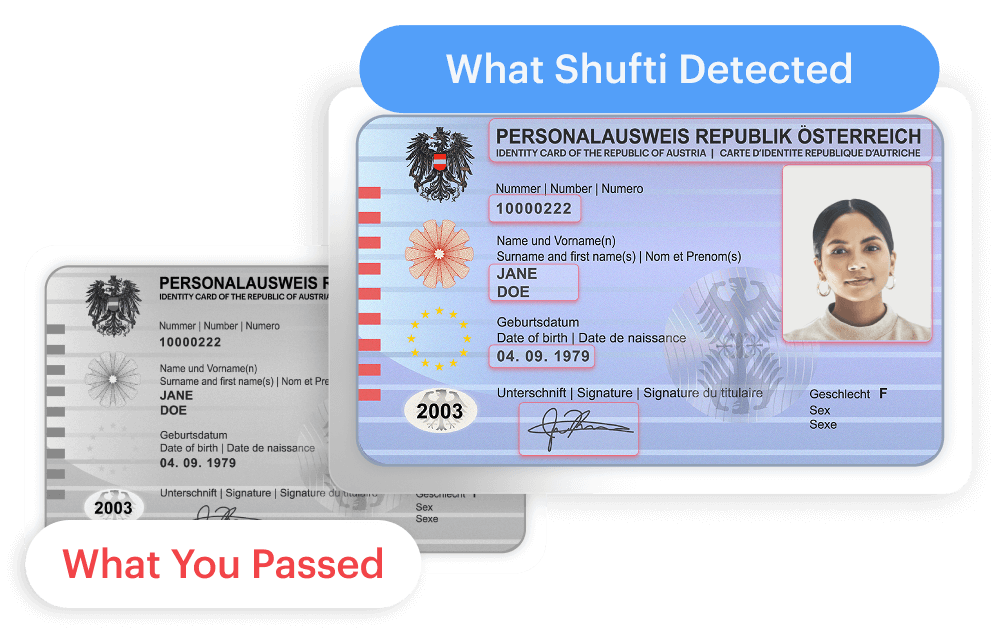





 Face Verification
 Address Verification
 Document Verification
 Age Verification
 VideoIdent
 Fast ID
 eIDV
eIDV
 NFC Verification
 Consent Verification
 Business Verification
 Due Diligence
 Investor Verification
 E-Signature
 Behavioural Biometrics
 Device Fingerprinting
 MFA
MFA
 AML Screening
 Business AML Screening
 User Risk Assessment
 Transaction Screening
 Adverse Media Screening
 Identity Verification
 KYC
KYC
 KYB
KYB
 KYI
KYI
 Bonus Abuse
 Fraud Prevention
 Deepfakes
 Banking
 Crypto
 Fintech
 Forex
Forex
 Gaming
 Gig Economy
 Marketplace
 Social Networks
 Product Managers
 Compliance Officers
 Fraud Analyst
 Global Trust Platform
 Journey Builder
 Vendor Comparison
 Content library
 Blogs
Blogs
 News
News
 Reports
 Insights
 Knowledgebase
 ROI calculator
 Blind Spot Audit
 Deepfake Detection
 Liveness Detection
 Document Originality
 Document Deepfake
 Events & Webinar
 Podcast Studio
 Spotlight Studio
 API Documentation
 Mobile SDKs
 Service Status
 Help Center
 Contact Us
 Technical Support
 Compliance
 Supported Document
 About
About
 Career
 Press Release
 Certifications
 Partnership
 Awards
Deepfake Detection
Detect deepfakes that bypass visual checks
Deepfakes are designed to fool pixels. Shufti analyzes deeper signal artifacts using multi-stream RGB plus frequency-domain (DCT) detection, built to remain effective after compression, screenshots, and re-uploads. High-risk edge cases can be routed to expert review so decisions stay defensible.
Works across onboarding KYC, authentication step-up, account recovery, and agent-assisted verification, with audit-ready outputs.



The Growing Risk
Deepfake fraud is now multi-channel, face, video, and document
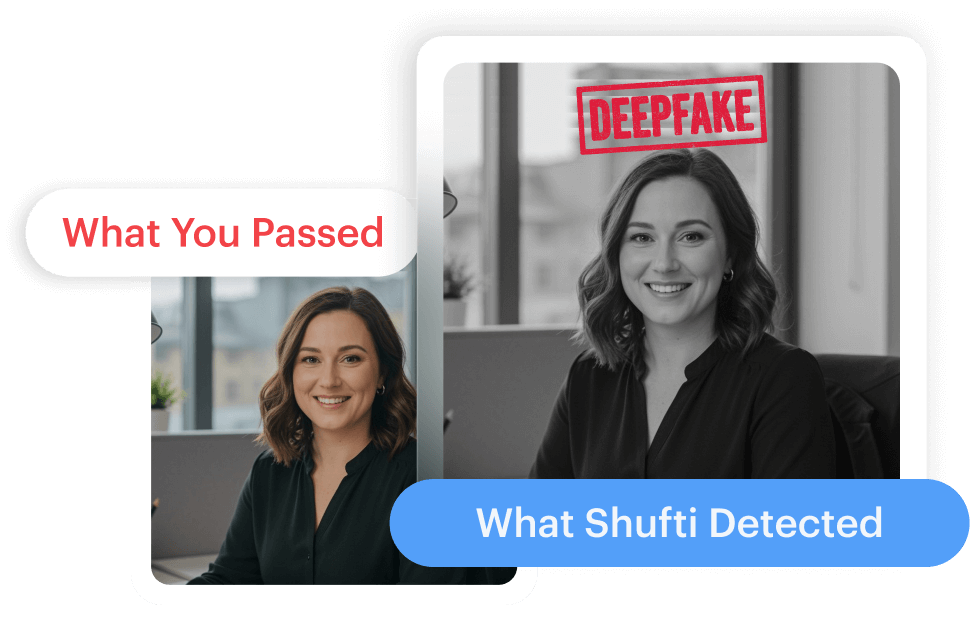
Real-Time Face Manipulation
Synthetic Identity Faces
Injection Attacks
Presentation Attacks
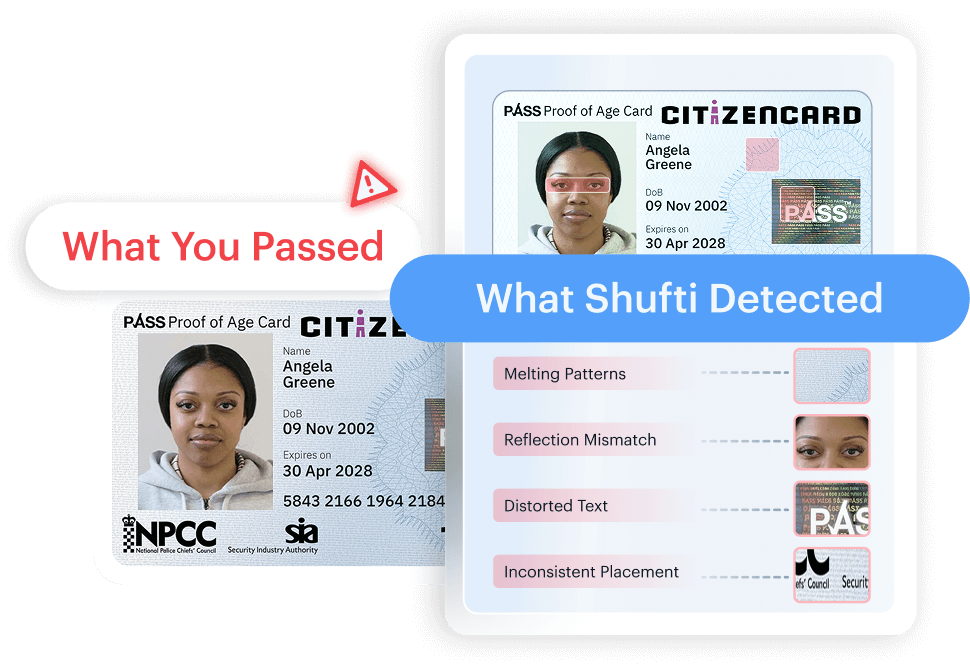
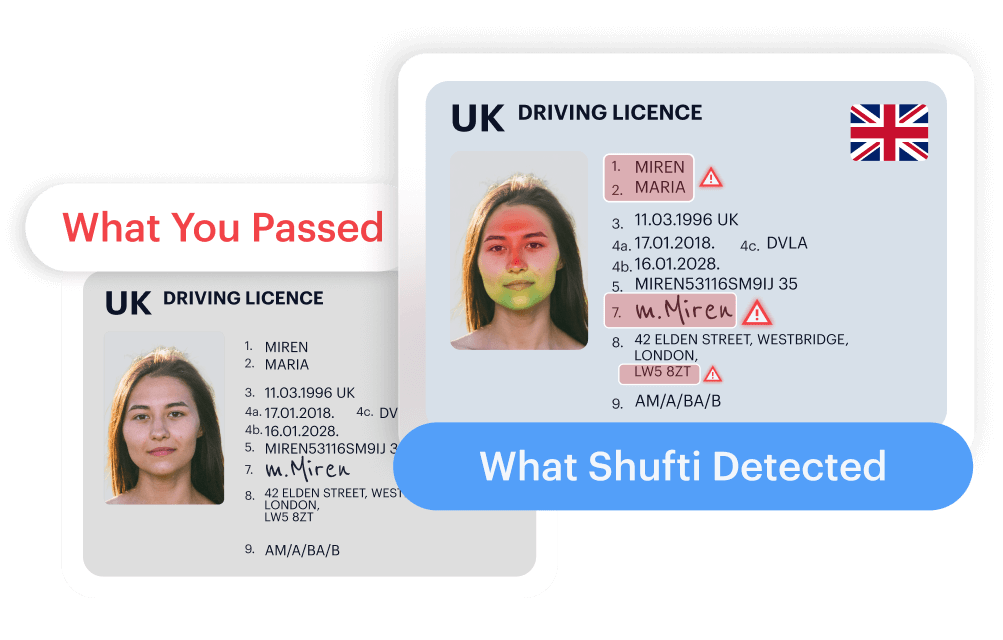
Document Manipulation
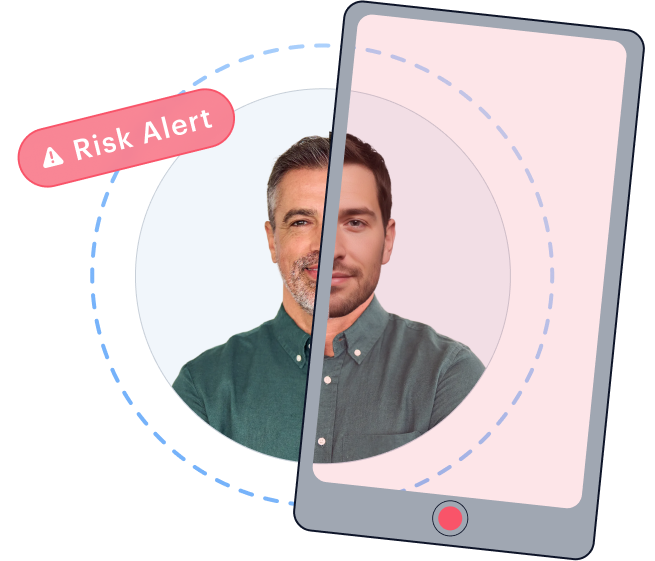
Real-Time Face Manipulation
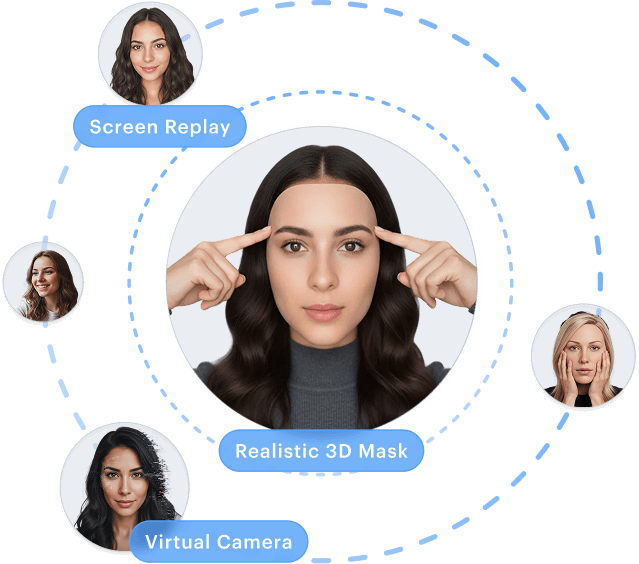
Live face swaps and expression reenactment during video calls and verification. Modern tools track blinking, head motion, and lip movement, adapting dynamically during remote onboarding and agent-assisted verification. Built to fool both humans and visual-only detection.
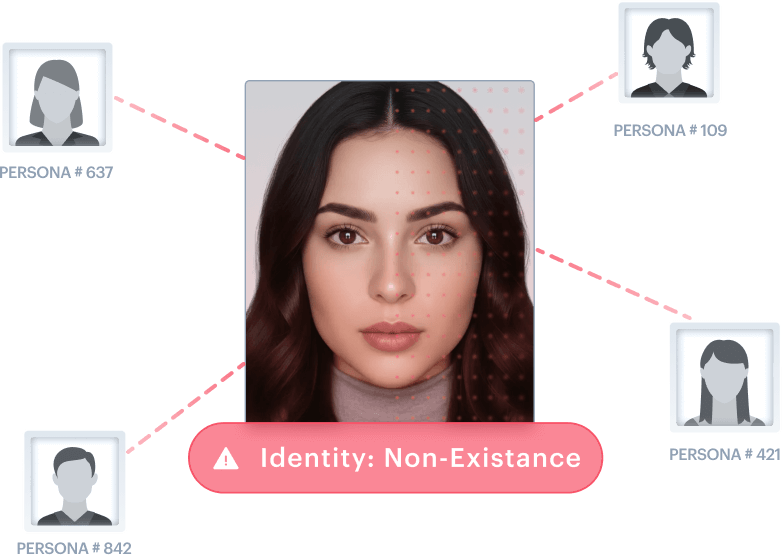
Synthetic Identity Faces
AI-generated faces that never existed. No real person to match against. Paired with fabricated data and documents to create complete synthetic identities that bypass checks assuming a real-world identity exists.
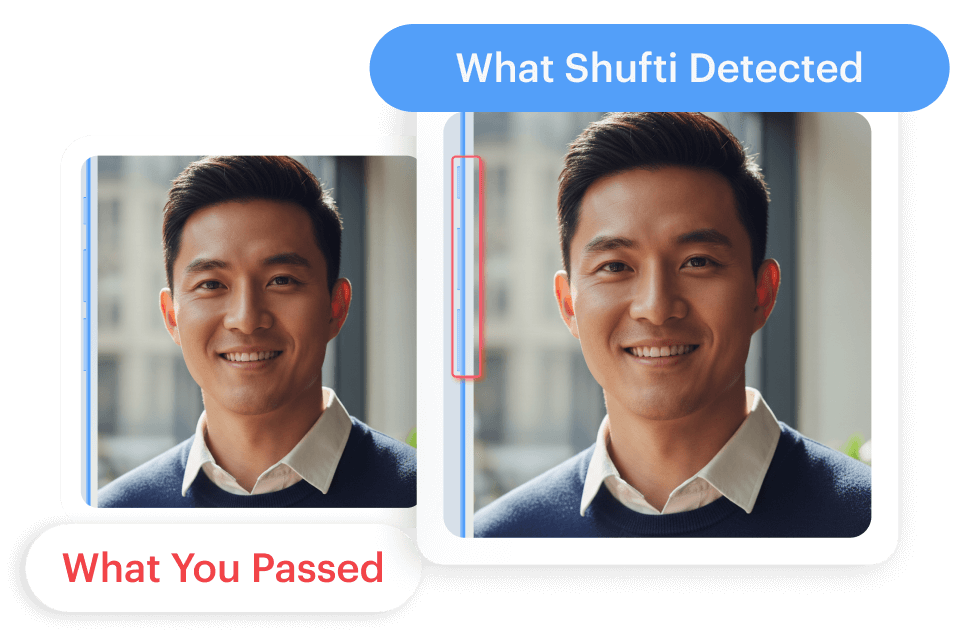
Injection Attacks
Virtual cameras, emulators, or stream substitution feed pre-recorded or AI-generated media directly into verification flows, bypassing physical cameras entirely. The attack targets the capture channel, not just the face.

Presentation Attacks
Screens, printed photos, masks, and video playback held to the camera to mimic a live person. Exploits systems that trust the capture source without validating 3D presence and device authenticity.
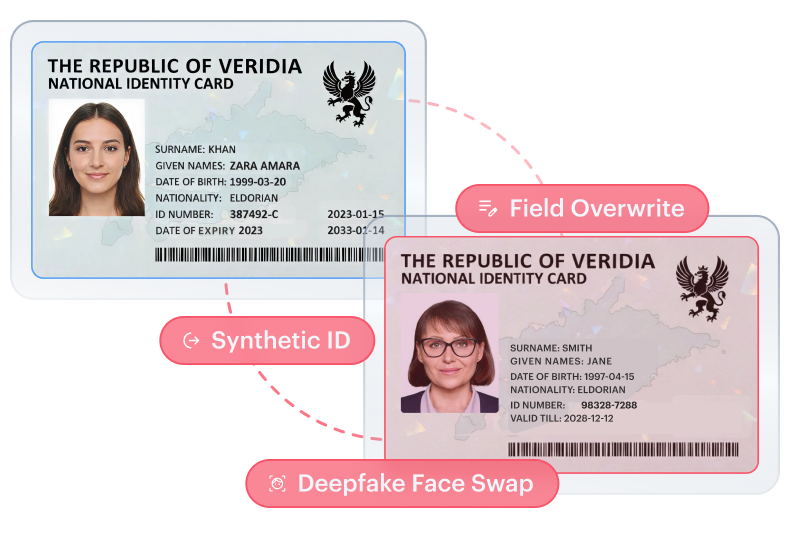
Document Manipulation
Altered or AI-generated documents designed to pass automated verification, data edits, image tampering, template imitation, synthetic creation. Often paired with face manipulation to complete a synthetic identity.
Beyond Visual Analysis
Why Shufti Detects What Others Miss
Multi-stream signal analysis
Shufti analyzes both standard visual signals and frequency-domain representations in parallel to surface manipulation artifacts that often persist after compression, format conversion, screenshots, and re-uploads. This is designed for real-world degraded media, not perfect lab conditions.
Designed for real-world media, not metadata
Detection is not dependent on EXIF, device metadata, timestamps, or file provenance. This reduces the risk of false confidence when attackers strip metadata or move content through social platforms and messaging apps.
Capture integrity for injection defense
Deepfake risk is not only what is in the frame, but how it enters the flow. Shufti adds capture integrity signals to help detect stream substitution patterns typical of virtual cameras and emulators, especially in step-up authentication and account recovery.
Continuous Threat Adaptation
As new generators emerge, detection must evolve. Shufti maintains an update pipeline that supports ongoing evaluation, retraining, and controlled model rollout so defenses keep pace with fast-changing synthesis methods.
Multi-Layered Liveness Architecture
End-to-End Verification Built to Defeat Deepfakes
Smart Liveness Detection
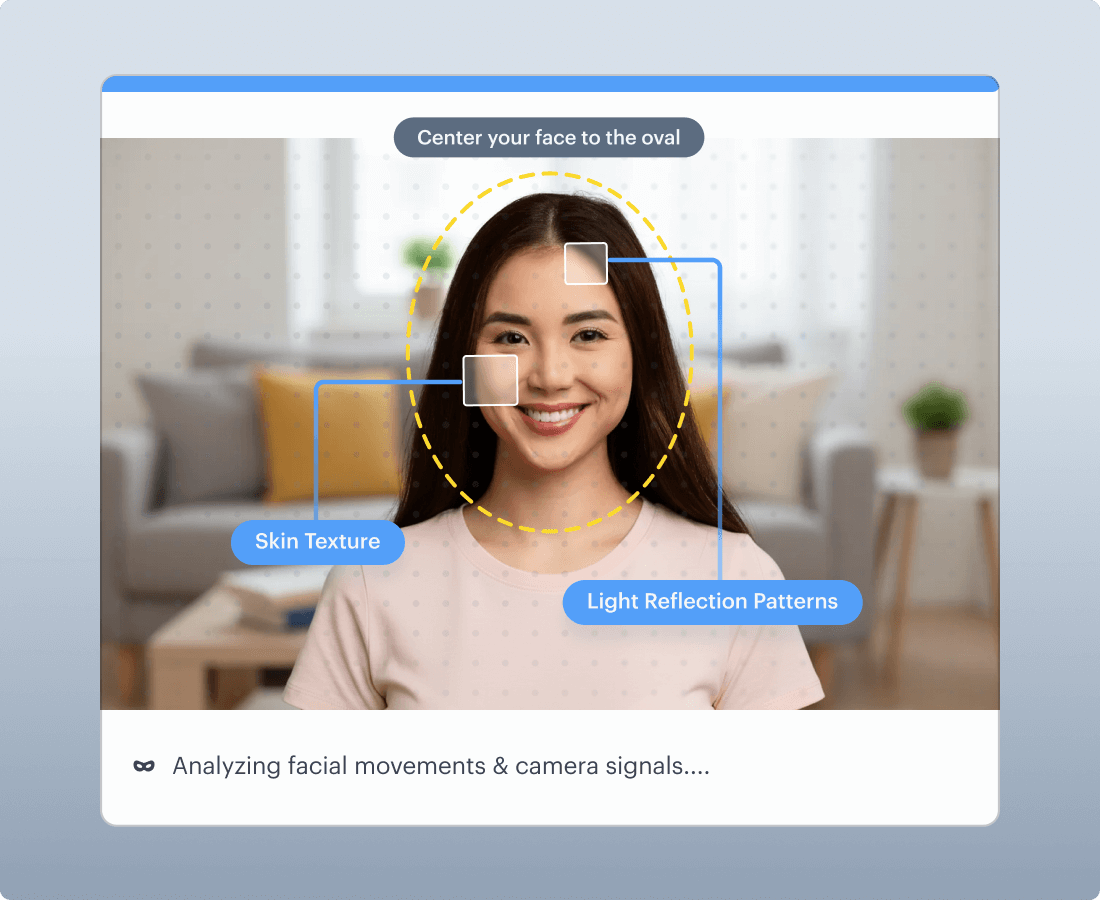
Passive Liveness
Runs in background, assessing light reflection patterns, skin texture, and depth cues to detect photos, screens, and masks. No friction added to verification flow.
Active Liveness
Adds controlled capture steps when risk is higher, such as account recovery, step-up authentication, and suspicious onboarding attempts. This helps reduce replay and scripted media attempts.
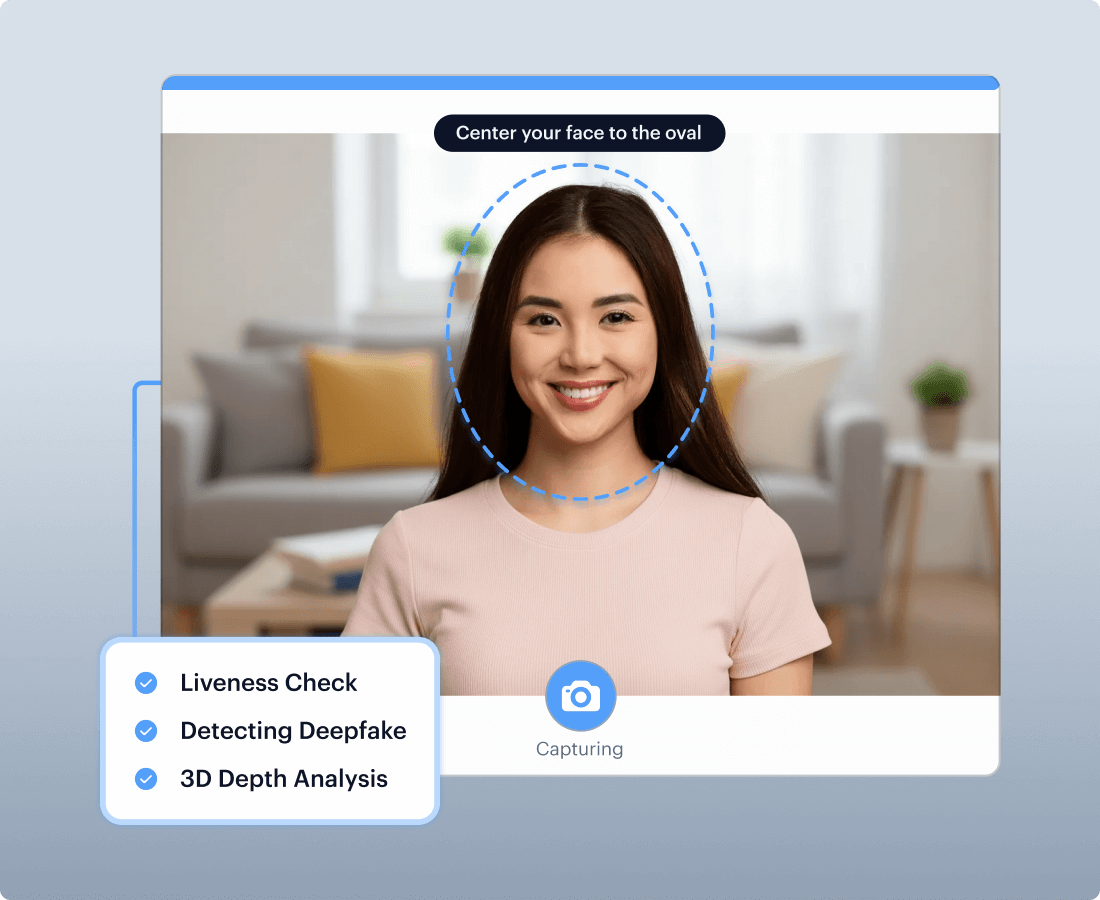
Video deepfake defense
Applies deepfake-focused analysis to video and frames to detect manipulation families such as swaps and reenactment, including patterns that survive compression and re-encoding.
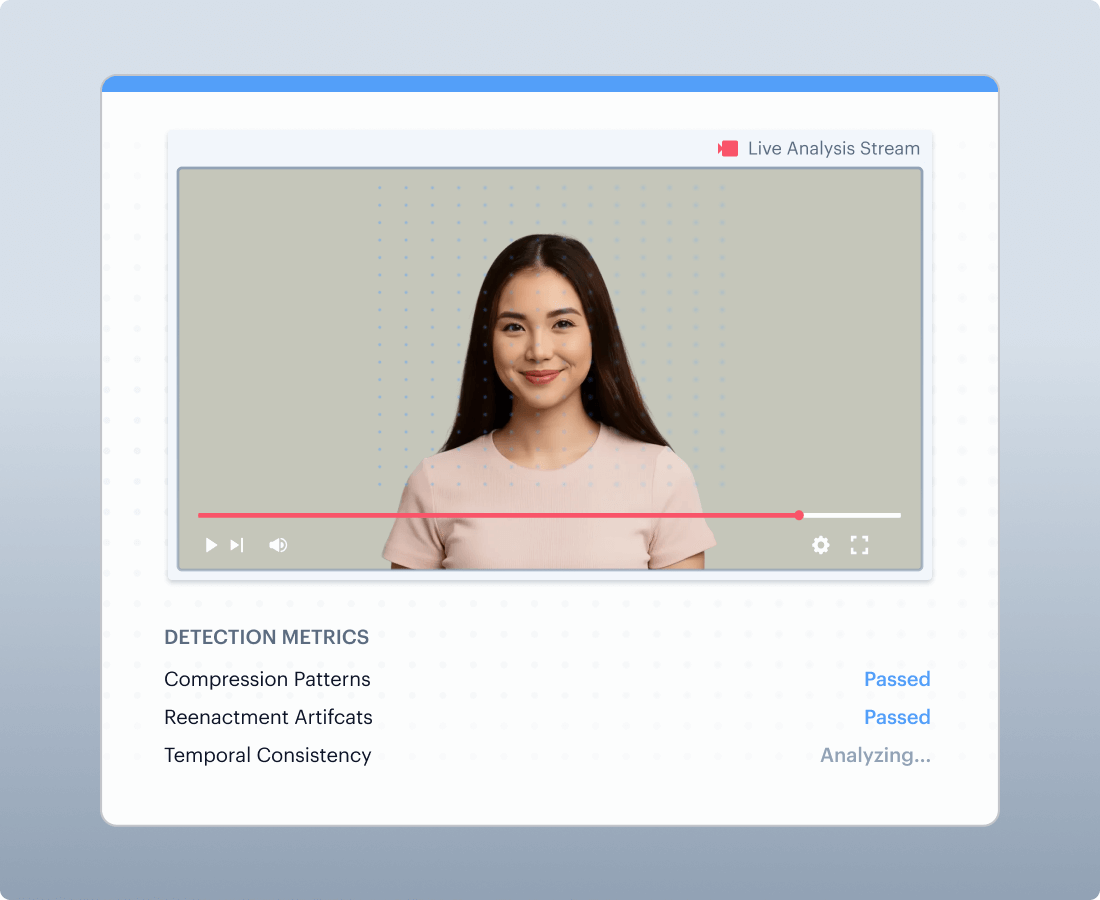
Deepfake & Injection Defense
Multi-stream RGB plus frequency-domain analysis is designed to identify generative artifacts that visual-only systems can miss, with added capture integrity signals for stream substitution risks.

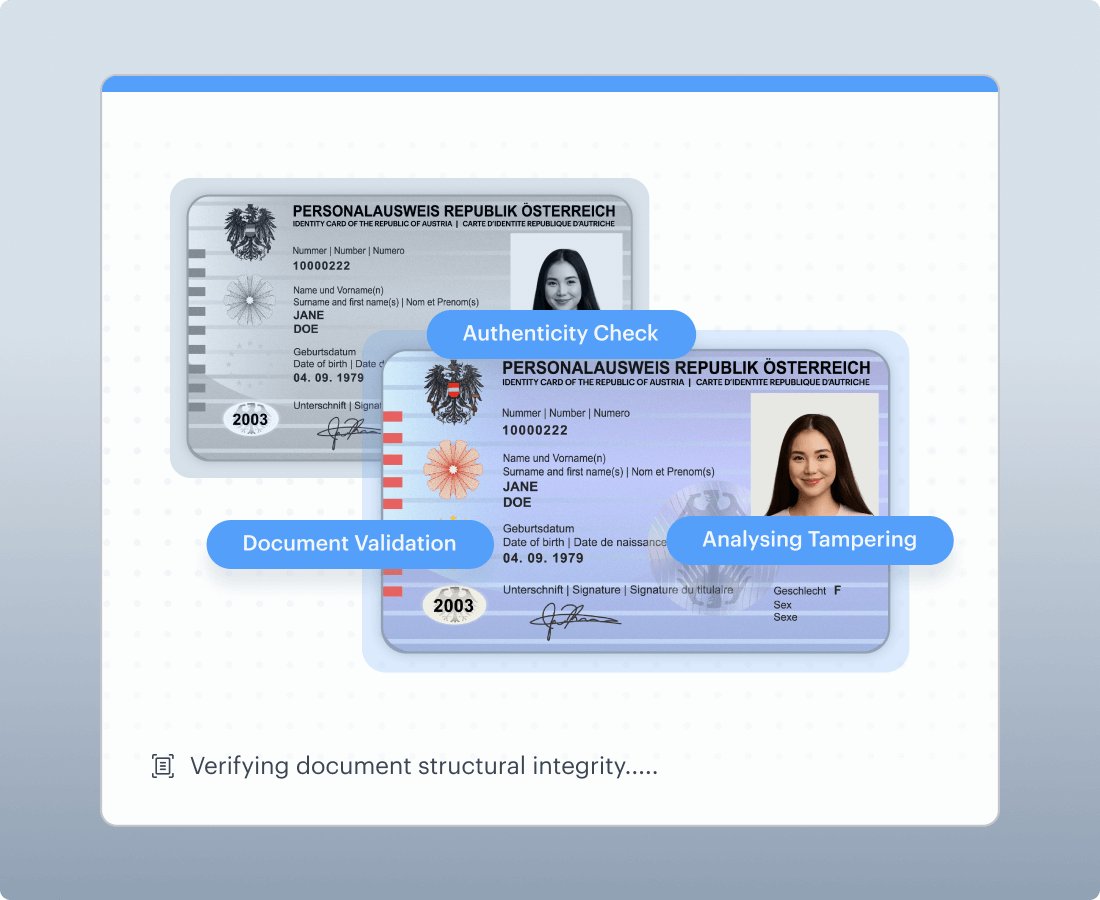
Document deepfake defense
Document verification can be attacked through tampering and synthetic documents. Document deepfake defense should be positioned as authenticity and integrity checks that complement face and video verification to prevent complete synthetic identity construction.
Cross-Session Fraud Intelligence
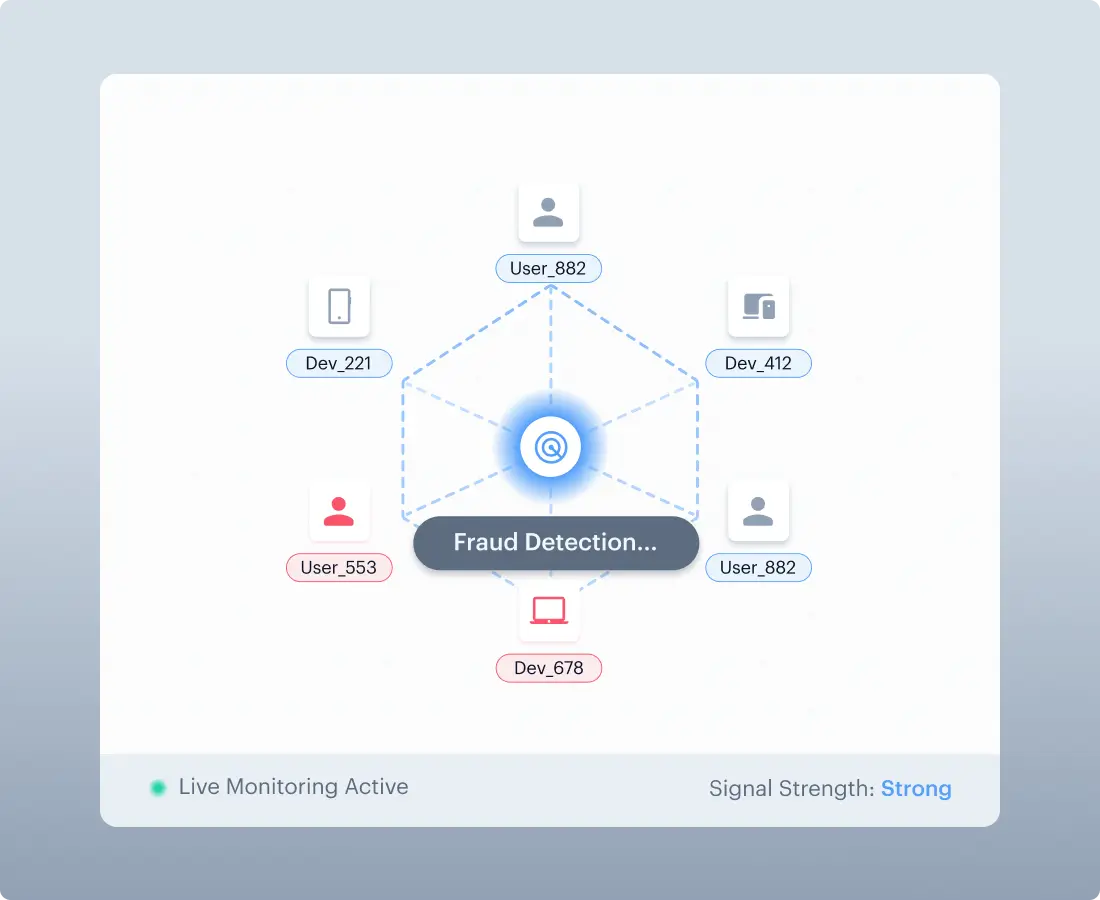
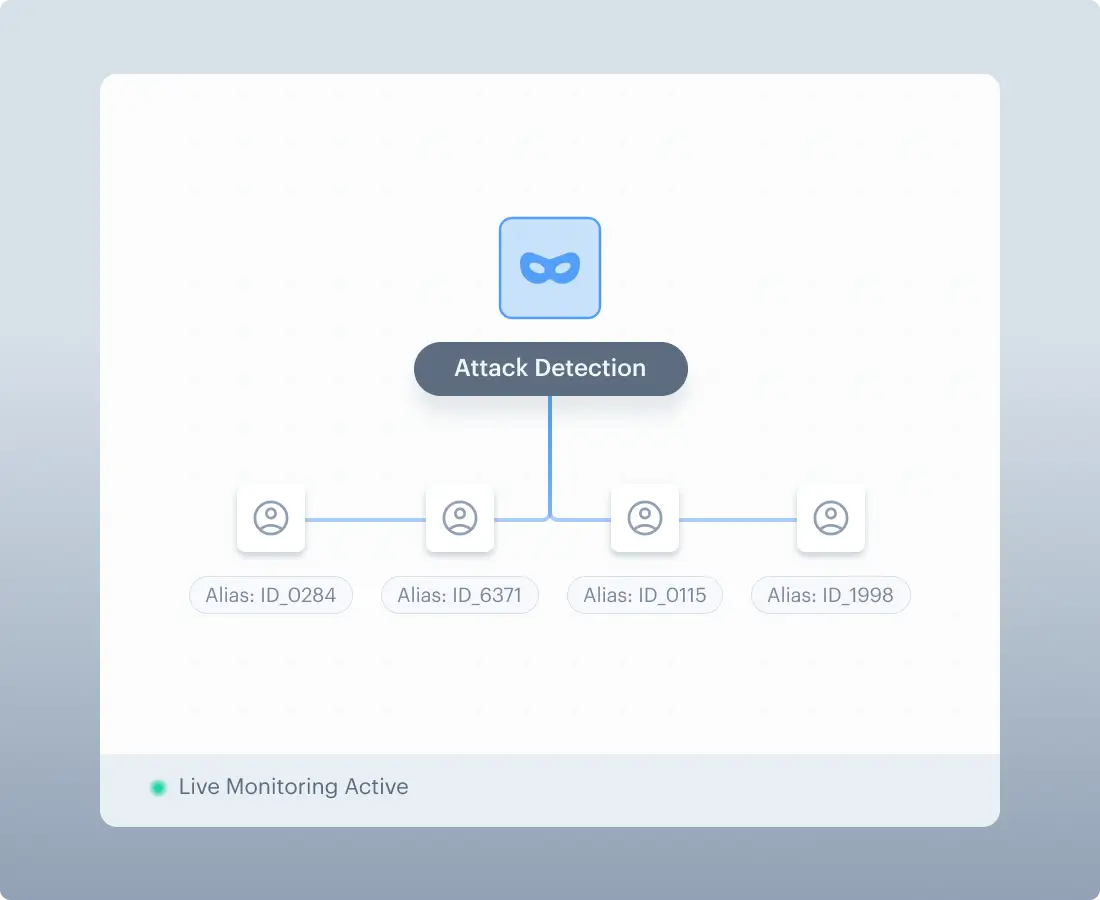
Fraud Ring Detection
Links attacks across users, devices, and sessions. Exposes
co-ordinated fraud operations that session-isolated detection misses.
Repeat Attacker Identification
Flags attackers returning with different identities through pattern correlation.
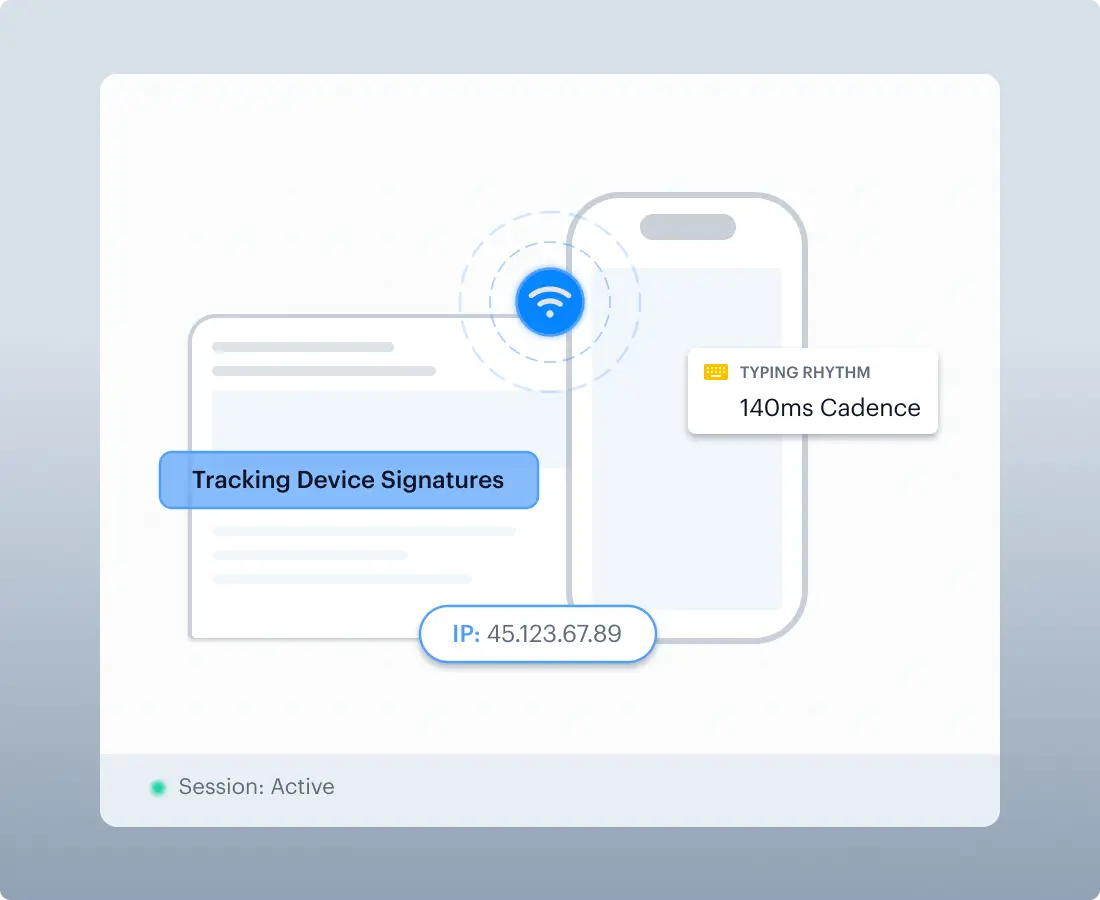
Device & Behavioral Fingerprinting
Tracks device signatures and behavioral patterns across verification attempts.
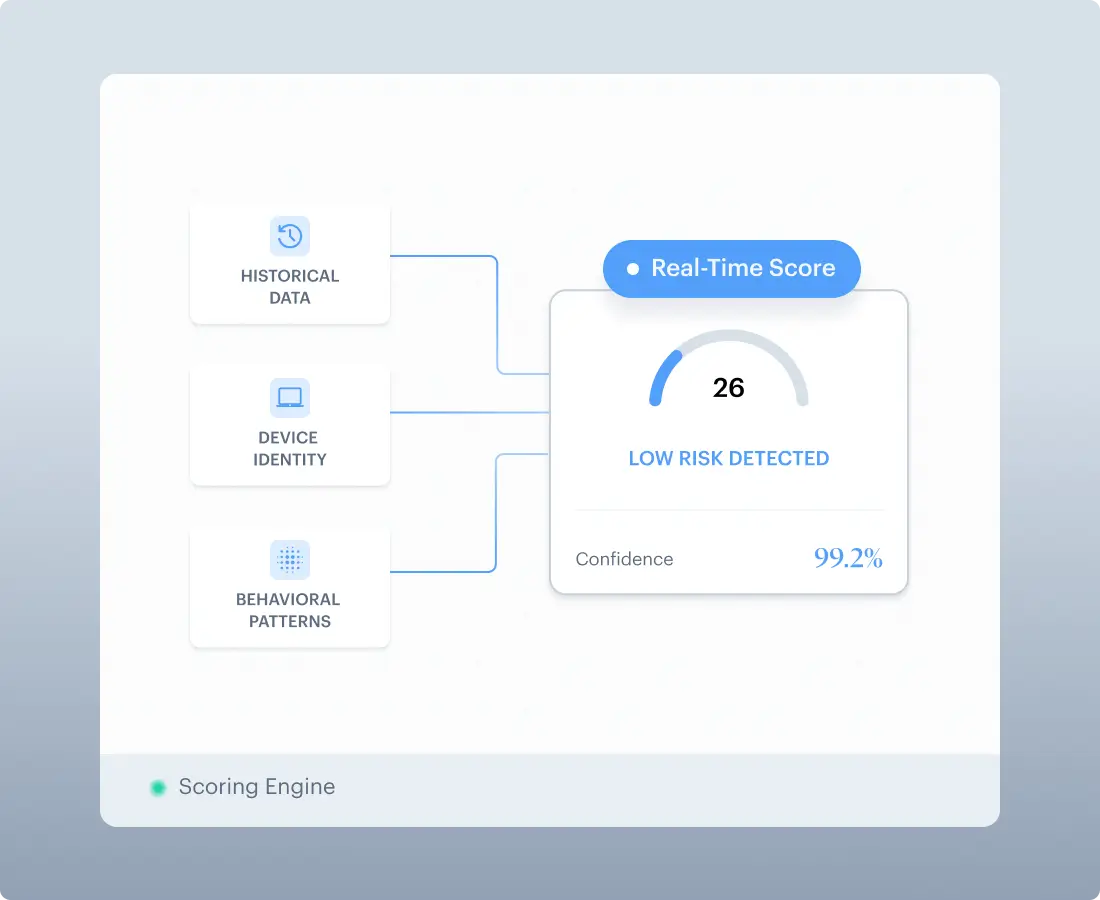
Risk Signal Aggregation
Combines cross-session, behavioral, device, and historical signals into unified fraud scoring.
Flexible Deployment
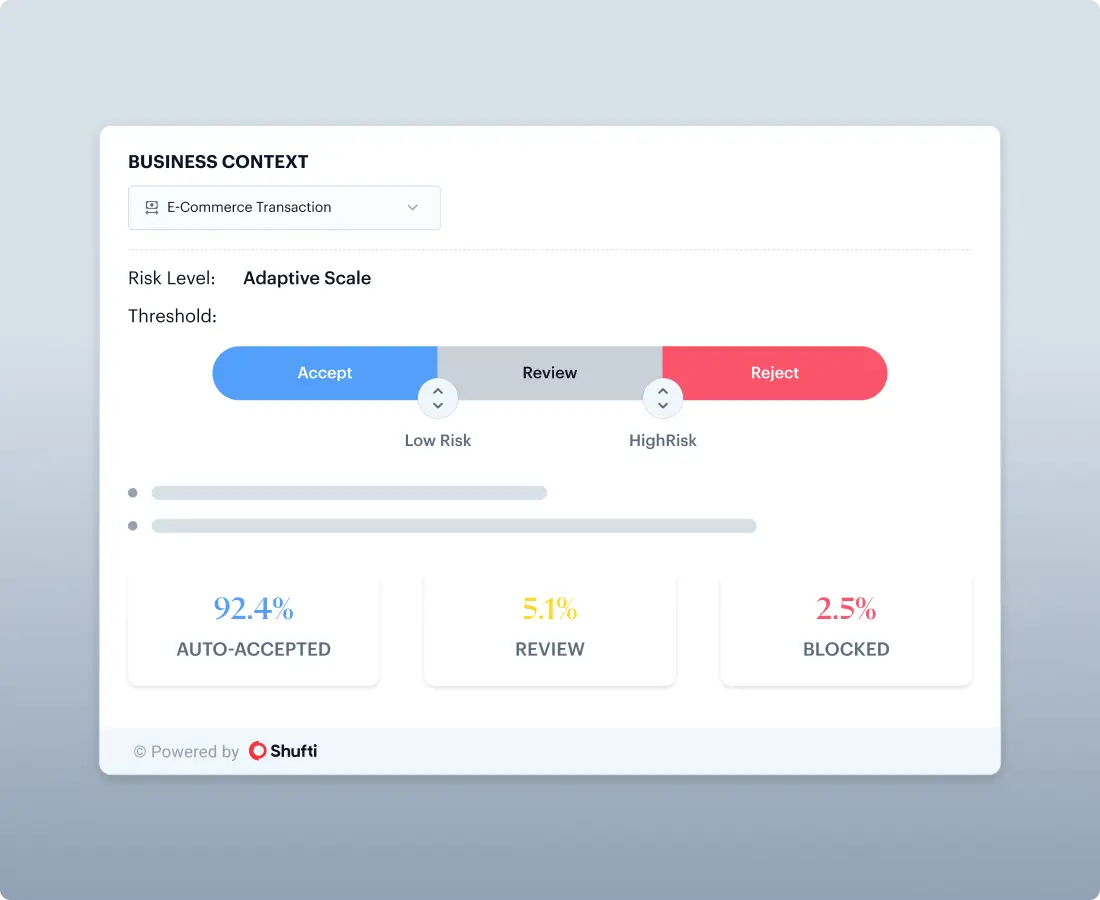
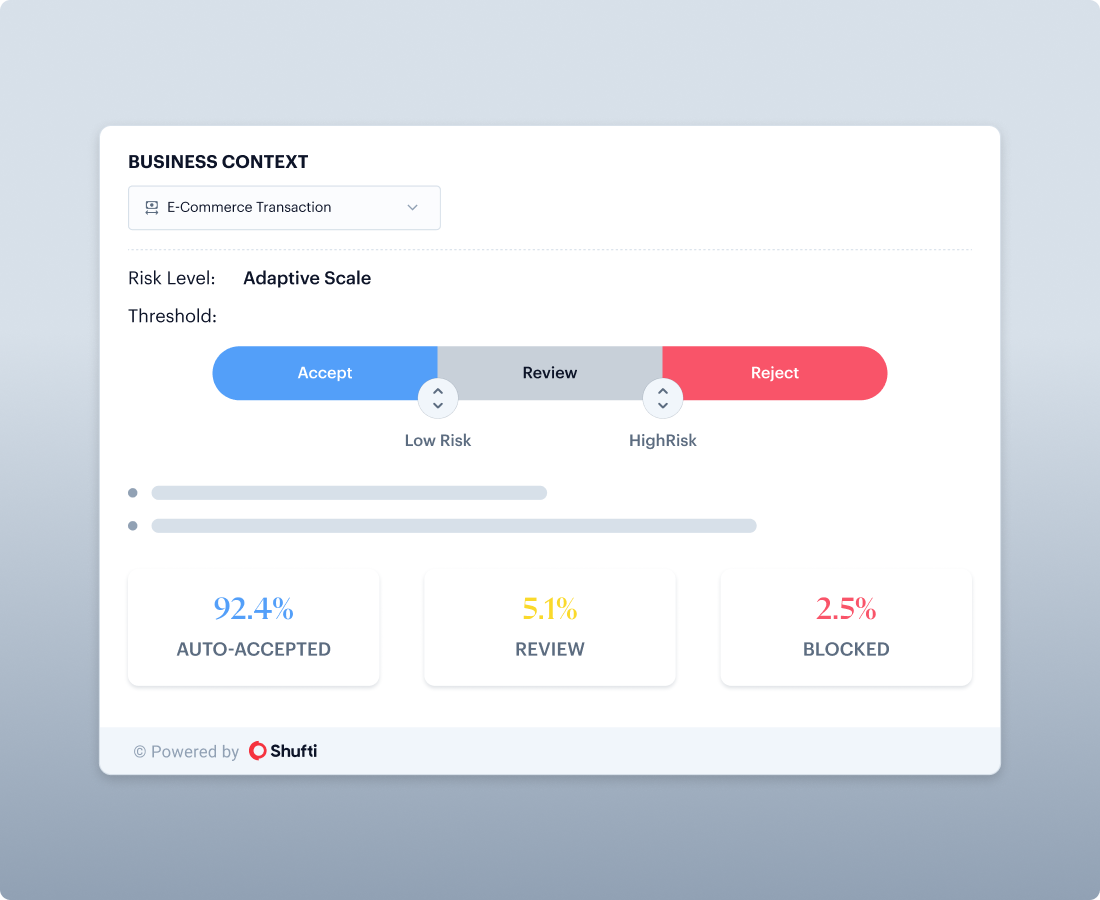
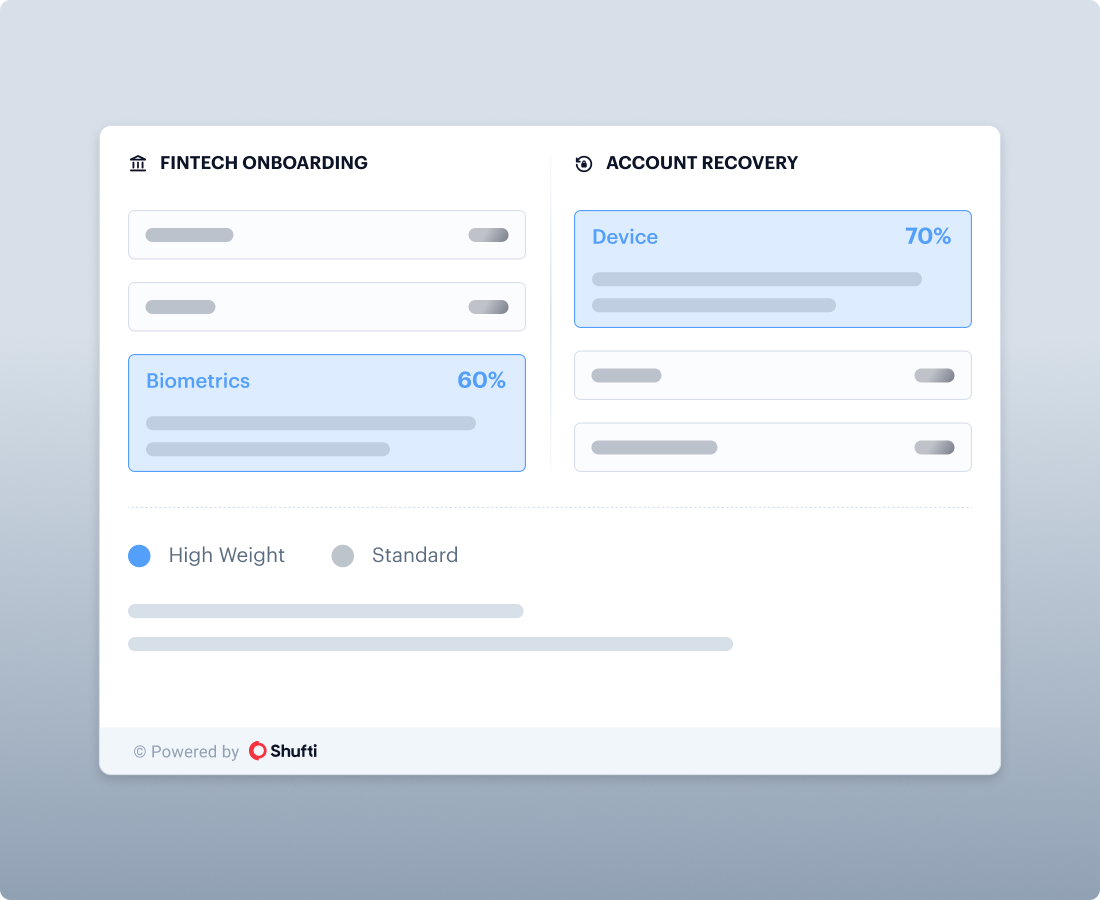
Adaptive Thresholds
Configure accept, review, and reject thresholds by scenario, onboarding versus authentication versus recovery.
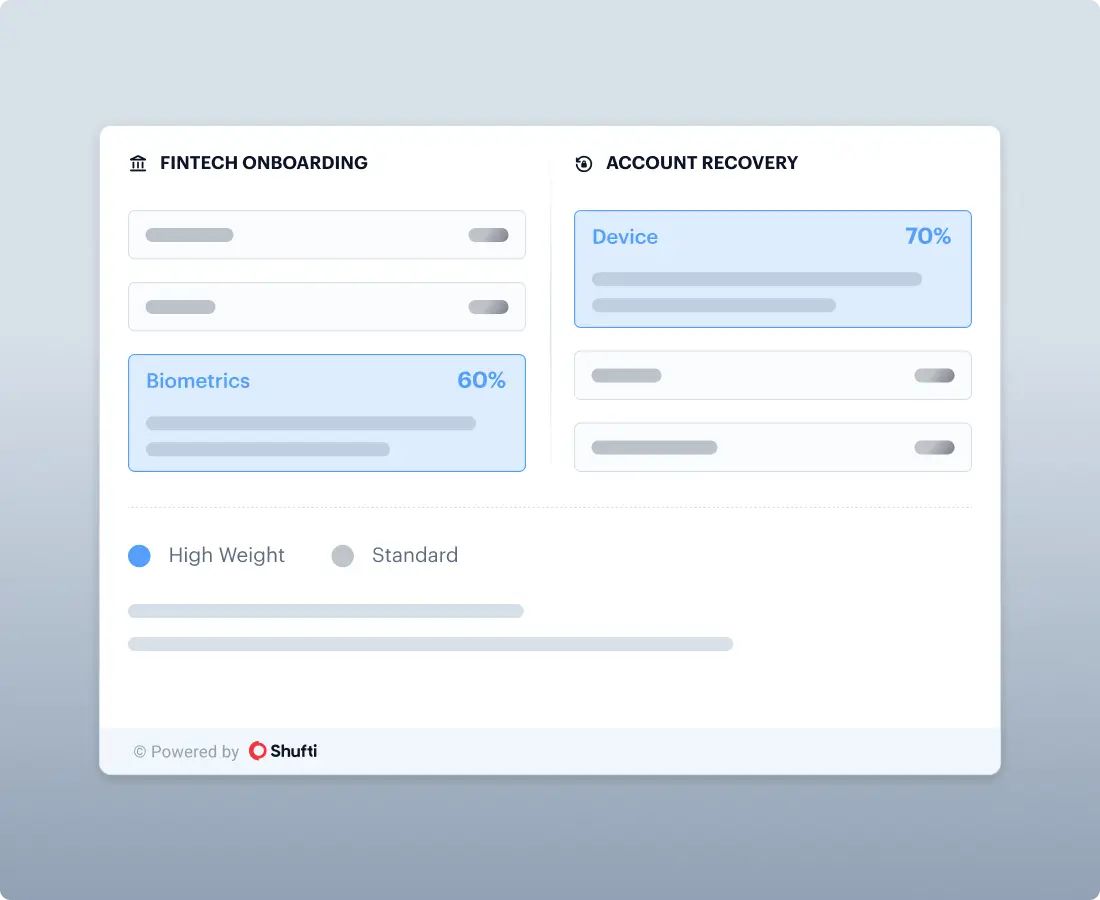
Policy Weighting
Tune which checks matter most per use case, without rebuilding flows.
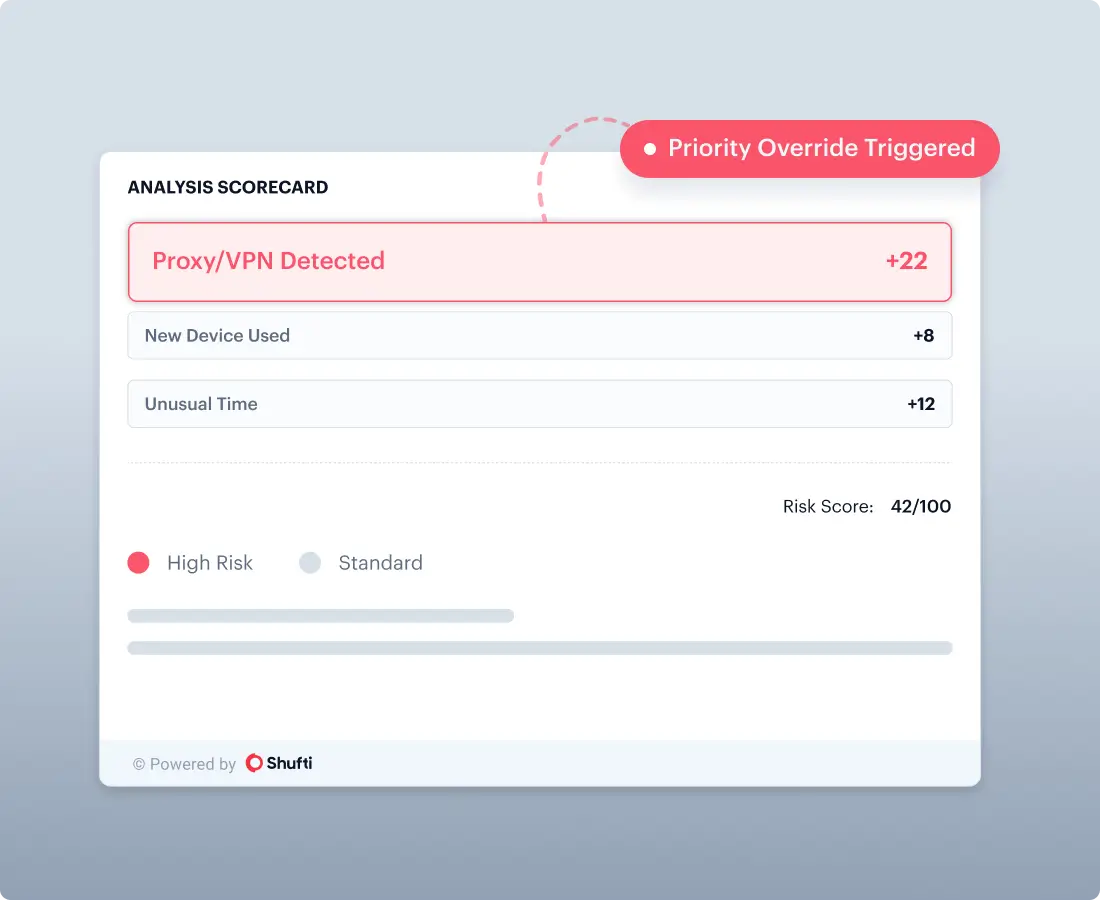
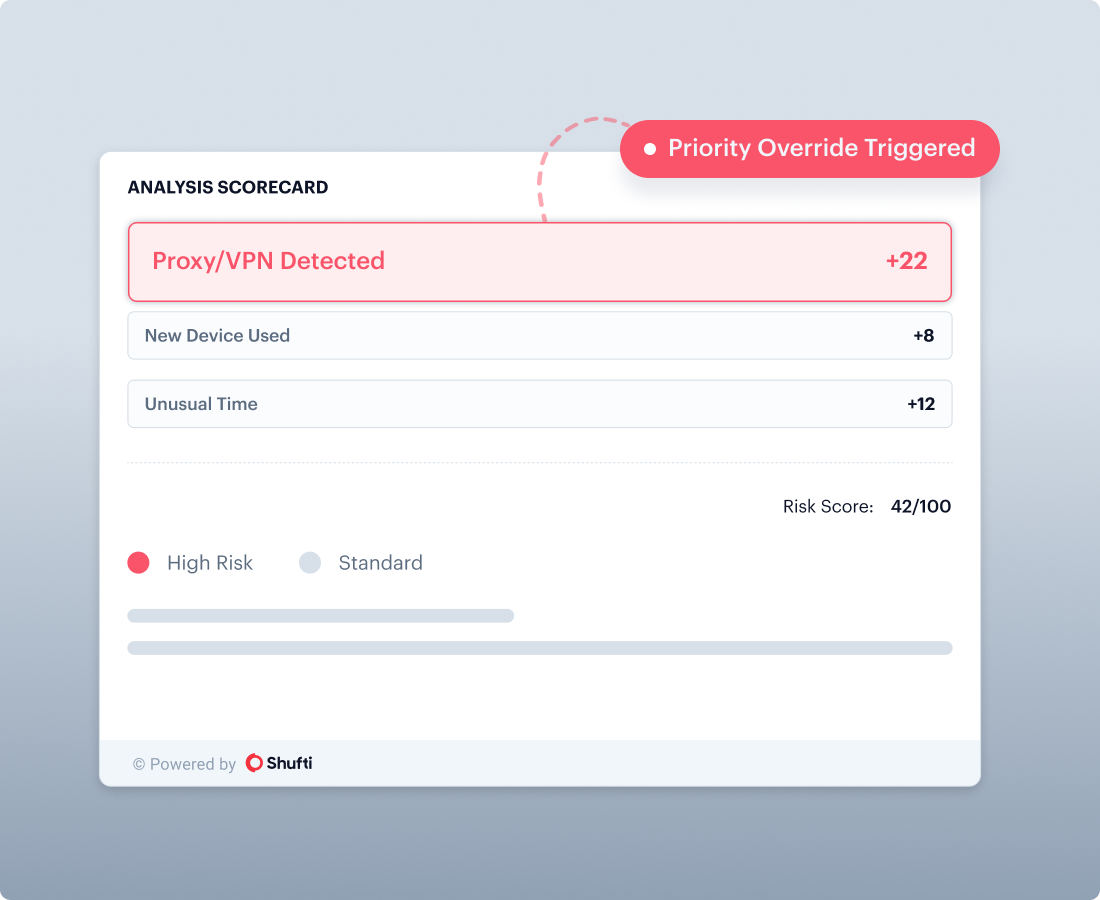
Override Rules
Allow high-risk indicators to force step-up or review based on your risk policy.
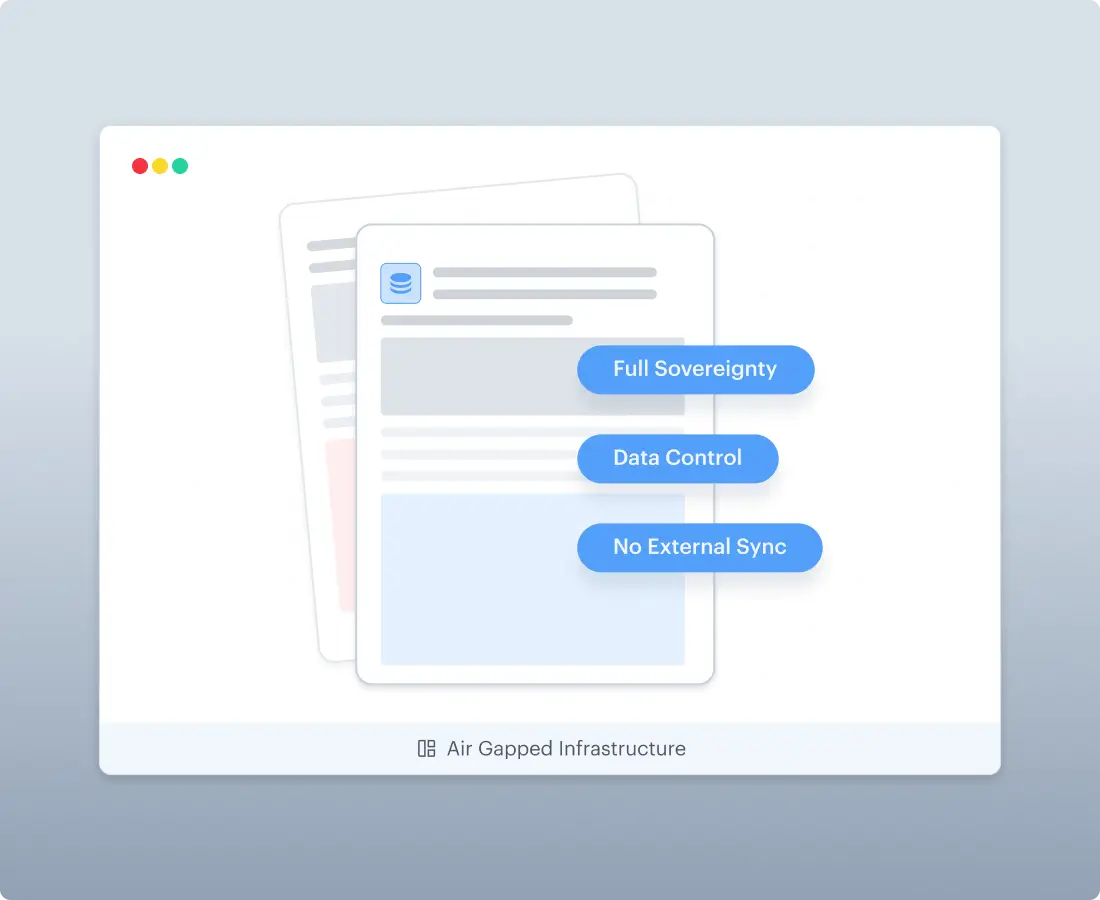
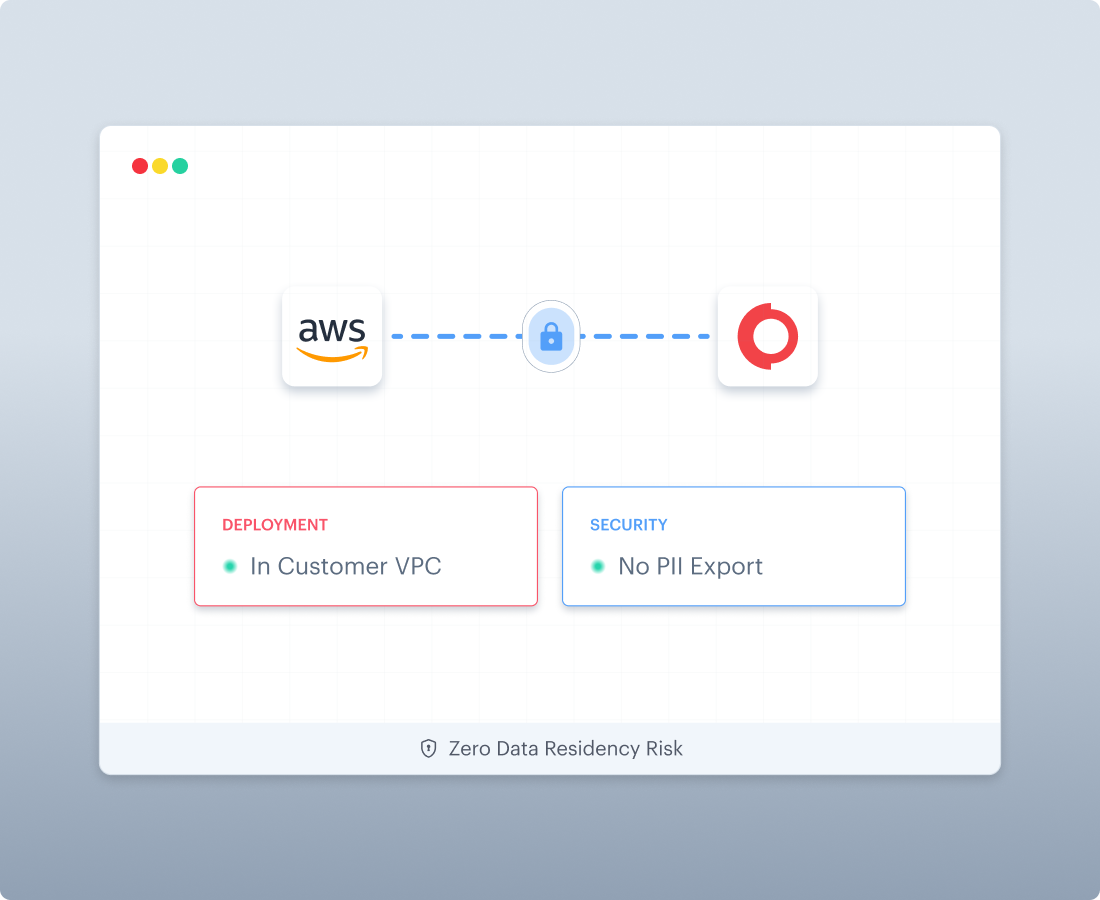
Deployment Options
Cloud, on-premise, and in-cloud deployments to support data sovereignty and operational requirements. AWS Marketplace deployment can support in-VPC processing when required by security teams.
Liveness Verification in Seconds
How Shufti verification detects face, video, and document deepfakes
01
STEP 01
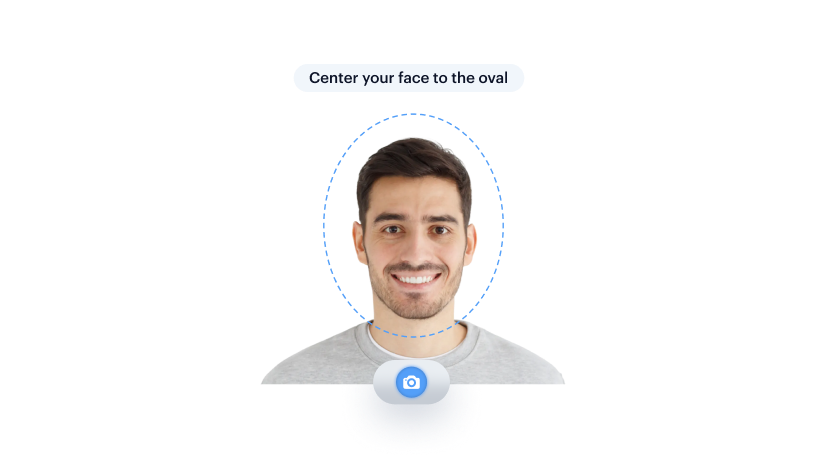
Capture
Users capture a selfie or video via web or mobile, and upload documents when required. Capture guidance supports quality while policy determines passive or active mode.
02
STEP 02
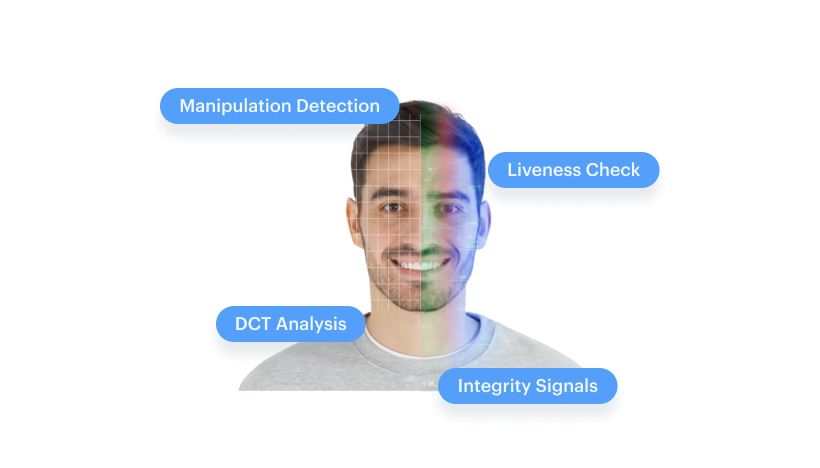
Mulit-Stream Analysis
Parallel analysis runs across visual and frequency-domain representations to detect manipulation artifacts. Video frames can be analyzed for real-time deepfake patterns. Document checks run in parallel to evaluate integrity and authenticity signals.
03
STEP 03
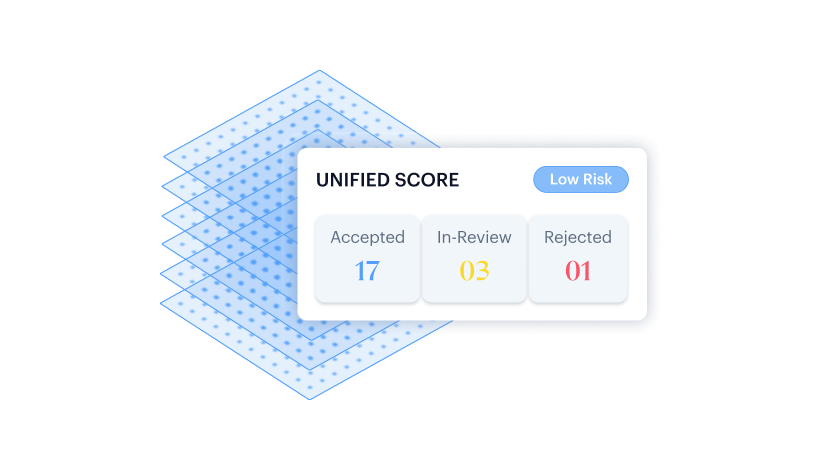
Fusion Scoring
Multiple layers contribute to a unified risk output based on your configured policy. Different thresholds can apply for onboarding, step-up authentication, and account recovery.
04
STEP 04
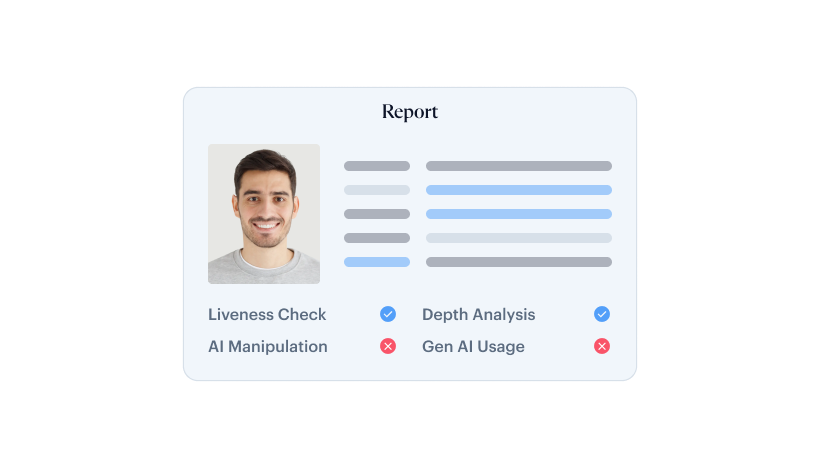
Decision & Evidence
Clear passes can be automated. High-risk attempts can be blocked or routed to review with evidence outputs that support audit and investigation workflows.
Where Deepfake Detection Fits Best
Built For Regulated And High-Risk Onboarding And Authentication
Trusted sellers at onboarding, repeat abuse blocked at re-join
Verify sellers, deter synthetic identities, and add stronger controls for changes in payout or account access.




High-volume onboarding without opening a fraud gap Description
Maintain conversion while detecting manipulation artifacts and injection risks, with policy-based escalation for suspicious flows.




Stop deepfake-enabled fraud before policy issuance and claims
Detect manipulated identity inputs and document fraud signals early, and step up verification on high-risk claim moments.



Block synthetic identities at account opening and high-risk actions
Detect face, video, and document manipulation during onboarding, and add step-up verification for risky actions like payee changes and account recovery.




Prevent multi-accounting and synthetic identities at scale
Detect AI-generated identities at onboarding and block repeat abuse using cross-session intelligence.



Verify real human presence before critical actions Description
Defend onboarding and step-up flows against AI manipulation and stream substitution, with stronger controls for withdrawals and recovery.




Trusted sellers at onboarding, repeat abuse blocked at re-join
Verify sellers, deter synthetic identities, and add stronger controls for changes in payout or account access.
High-volume onboarding without opening a fraud gap Description
Maintain conversion while detecting manipulation artifacts and injection risks, with policy-based escalation for suspicious flows.
Stop deepfake-enabled fraud before policy issuance and claims
Detect manipulated identity inputs and document fraud signals early, and step up verification on high-risk claim moments.
Block synthetic identities at account opening and high-risk actions
Detect face, video, and document manipulation during onboarding, and add step-up verification for risky actions like payee changes and account recovery.
Prevent multi-accounting and synthetic identities at scale
Detect AI-generated identities at onboarding and block repeat abuse using cross-session intelligence.
Verify real human presence before critical actions Description
Defend onboarding and step-up flows against AI manipulation and stream substitution, with stronger controls for withdrawals and recovery.
Trusted sellers at onboarding, repeat abuse blocked at re-join
Verify sellers, deter synthetic identities, and add stronger controls for changes in payout or account access.
High-volume onboarding without opening a fraud gap Description
Maintain conversion while detecting manipulation artifacts and injection risks, with policy-based escalation for suspicious flows.
Stop deepfake-enabled fraud before policy issuance and claims
Detect manipulated identity inputs and document fraud signals early, and step up verification on high-risk claim moments.
Block synthetic identities at account opening and high-risk actions
Detect face, video, and document manipulation during onboarding, and add step-up verification for risky actions like payee changes and account recovery.
Prevent multi-accounting and synthetic identities at scale
Detect AI-generated identities at onboarding and block repeat abuse using cross-session intelligence.
Verify real human presence before critical actions Description
Defend onboarding and step-up flows against AI manipulation and stream substitution, with stronger controls for withdrawals and recovery.
Deepfake defense, liveness, and document integrity
Frequently Asked Questions
What makes frequency-domain detection different from standard liveness?
Standard liveness focuses on visual cues. Frequency-domain analysis examines structure and generative artifacts that can remain detectable even after compression, re-encoding, screenshots, and re-uploads.
Which deepfake types does Shufti address?
Face and video manipulation, synthetic identity media, injection and stream substitution patterns, and presentation attacks. Document deepfake defense should be positioned as document integrity and authenticity checks that complement face and video verification.
How does review work?
High-risk cases can be routed to review with evidence outputs that explain what triggered the decision. Clear passes can remain automated.
What accuracy results can you publish?
Only publish benchmark numbers if you can disclose the dataset scope and protocol. Otherwise state that the system is evaluated using repeatable internal and external test harnesses.
How do you address injection attacks?
Position this as capture integrity signals that help detect stream substitution risks. Avoid camera fingerprint counts unless method and coverage are publishable.
Can attackers evade detection through compression or screenshots?
Design intent is resilience to real-world media degradation, including compression, re-encoding, screenshots, and re-uploads. Use careful wording unless you have a public test report.
How current are models?
State that models are maintained through ongoing evaluation and updates as generators evolve. Avoid exact update counts unless governed and publishable.
Does this help onboarding and authentication?
Yes, the same deepfake defenses can be applied at onboarding, step-up authentication, and account recovery with different thresholds and escalation policies.
How do document deepfakes fit into the flow?
Document integrity signals complement face and video checks to prevent complete synthetic identity construction, especially in regulated onboarding.
What deployment options exist?
Cloud, on-premise, and in-cloud options, including AWS Marketplace deployment when teams require processing inside their environment.
Ready to catch deepfakes that fool visual checks?
Deploy layered deepfake defense across onboarding and authentication, with policy controls and audit-ready outputs.
Designed for Identity, Fraud & Compliance at Scale
Resources

Thanks For Your Submission.
Thanks For Your Submission.