









 AMLR Solutions
  AMLR Consultation
 EUDI Wallet
 Onboarding
 Ongoing Monitoring
 FRAML
FRAML KYC
KYC KYB
KYB KYI
KYI Age Assurance
 Workforce IAM
 Candidate Verification
 Account Takeover
 Bonus/ Promotion Abuse
 Chargeback Fraud
 Deepfake
 Document Fraud
 Fraud Networks
 Impersonation Fraud
 Money Mule Activity
 Multi-Accounting
 Party Fraud
 Regulatory & Compliance Risks
 Synthetic Identity Fraud
 Adult Content
 Banking
 Crypto
 Fintech
 Forex
Forex Compliance
 Fraud prevention
 Trust & safety
 Global expansion
 Compliance Officers
 Developers
 Fraud Analysts
 Product Managers
 Journey Builder
  Global Trust Platform
 Customer Profiles
 Vendor Comparison
 IDV Case Management
 AML Case Management
 Regulatory Reporting
 Agentic Rule Builder
  AI Compliance Co-Pilot
  Fraud Analytics
 Fraud Hub
  OCR
OCR Shufti AI
 Bank Account Verification
  Biometric Duplication
 Database Checks
 Document Intelligence
 Government ID
 Mobile Driver's License
 NFC
NFC Selfie Liveness
 Brand Personalisation
 Deployment Options
 Identity Methods
 IDV Modes
 Multi-tenancy
 On-Premise IDV
 Secure Capture
 Shufti MCP


Gig Economy
Know who applied, know who is working, and have the proof when anyone asks
Onboard couriers, freelancers, clinicians and tradespeople in seconds. Catch banned workers before they re-register. Right-to-work, identity and ongoing verification, across 240+ regions actively processed, on a single audit trail.
Proven Performance
Our impact, by the numbers
- <30sMedian Time-to-Decision
- 4,000+Watchlists Screened
- 240+Regions Actively Processed
Trusted by Leading Digital Enterprises Worldwide






Compliance Without Compromise
Why Gig Platforms Choose Shufti
-
Stay Ahead of New Legislation
The Border Security, Asylum and Immigration Act 2025, Section 48, extends a £60,000-per-worker fine to gig platforms for the first time. Operation Equalise arrested 171 delivery riders in a single week in November 2025. The Home Office then summoned Deliveroo, Uber Eats and Just Eat to mandate facial-recognition controls. Shufti's right-to-work and biometric tooling satisfies those controls and the audit standard they generate.
-
Stop Account Sharing, Not Just Bad Sign-Ups
The Home Office named account sharing as the central compliance gap in gig delivery. Onboarding checks alone do not close it. Shufti's cross-session biometrics match the worker at shift start, not just registration. A verified rider cannot hand their account to someone who was never checked.
-
Onboard Fast, Re-verify Continuously
A median decision under 30 seconds means genuine workers are through before they consider dropping off. Event-driven re-screening then catches sanctions re-listings, expired documents and risk changes without waiting for an annual review batch. One API. One record. No separate ongoing-monitoring vendor.



Secure Every Stage Of The Gig Worker Lifecycle

Sign Up
Bot Account Farming
Scripts flood a courier or ride-hailing platform's driver sign-up flow, harvesting welcome bonuses and referral credits before a single shift is worked. Proprietary Device Fingerprinting catches the shared emulator stack. Behavioural Biometrics kills bot sessions at form completion. No genuine driver submits at machine speed.
Synthetic Identity Registration
A fraudster stitches together stolen NI numbers, fake addresses and borrowed selfies to build a ghost driver profile. eIDV cross-checks the declared identity against government and telco databases in real time. A fabricated worker leaves no matching electronic consolidated footprint.
Multi-Profiling and Duplicate Sign-Up
One person registers multiple driver accounts under name variations or family members' IDs, stacking sign-up bonuses and surge incentives. Facial Deduplication continuously spots the same face across every new application. Device Fingerprinting flags the shared device behind each one.
Stolen Identity Registration
A criminal uses a real person's PII from a data breach to register as a delivery driver, keeping the true owner unaware. eIDV detects the mismatch between declared details and the claimed identity's known data footprint. Face Verification then demands a live selfie the impersonator cannot produce.
Underage Worker Sign-Up
A minor attempts to register as a gig worker by submitting an older sibling's ID, targeting platforms where minimum-age rules are a licensing condition. Age Verification extracts and validates the date of birth from the document. Face Verification confirms the document belongs to the applicant presenting it.
Mass Emulator and Scripted Registration
Headless browsers submit thousands of fake driver and courier registrations to inflate a platform's worker pool and claim referral credits. Behavioural Biometrics distinguishes genuine human interaction from scripted patterns before any document is submitted. Device Fingerprinting surfaces the shared infrastructure behind the flood.

Verify Identity (KYC)
Document Forgery
A prospective courier submits a tampered visa or a fabricated BRP purchased online to pass the right-to-work check. Document Verification runs forensic tamper detection across security features, fonts and structural integrity. NFC Verification reads cryptographic chip data on ePassports and BRPs, bypassing any image-level manipulation entirely.
Deepfake Face Attack
A fraudster submits a deepfake video during the onboarding selfie step, spoofing a legitimate driver's face to pass identity verification. Face Verification (iBETA L3) applies 3D depth mapping and micro-movement analysis that reject synthetic video at the point of capture. No AI-generated face replicates real liveness cues.
Camera Injection Attack
Virtual camera software intercepts the device camera and feeds a pre-recorded or AI-generated image in place of the live feed, allowing someone to present a synthetic face during verification. Shufti's Injection Detection identifies virtual camera drivers and emulator signatures at OS level before biometric capture begins. Device Fingerprinting surfaces the non-standard device configuration that virtual camera tools leave behind. The injected feed never reaches the liveness engine.
Right-to-Work Document Fraud
worker without UK work entitlement submits a forged share code or doctored BRP to pass the right-to-work gate. Shufti's IDSP-eligible flow validates entitlement via the UK Home Office View and Prove service for digital status holders, and via NFC chip-level verification for document-based checks. A forged document fails the chip; a borrowed one fails the biometric match.
Identity Pack Fraud
A fraudster purchases a dark-web identity kit, typically a forged document paired with a matched synthetic selfie, and submits both together as a coordinated package. Shufti's NFC Verification reads the cryptographic chip embedded in genuine travel documents, a check no purchased kit can pass because manufactured documents carry no working chip. Document Verification independently examines the physical and digital security features of the submitted ID. The kit fails at the first of those two checks.
Qualification and Credential Fraud
A worker submits fabricated trade licences, a borrowed DBS certificate or forged professional credentials to unlock higher-rate or restricted-access work categories. Shufti's Document Verification applies the same forensic checks at the credential step as at the identity step, examining document structure and security features for signs of tampering or template fraud. eIDV then cross-references the declared professional status against authoritative data sources where available. A fabricated credential cannot produce a matching authoritative record.
Borrowed ID Age Bypass
A minor submits a genuine ID belonging to an older relative to register as a gig worker, knowing the document itself will pass forgery checks. Face Verification requires a live selfie to match the photo on the document. Age estimation from the biometric capture provides a second, document-independent age signal.

Risk Screening
Sanctions or PEP Onboarding
A sanctioned individual or PEP applies to work on a gig platform using a transliterated name variant, expecting basic string matching to miss the connection. AML Screening applies fuzzy, phonetic and script-aware matching across 4,000+ watchlists and 215+ sanctions regimes. A spelling variant does not escape the match.
Adverse Media Concealment
A worker with relevant criminal history appears only in local-language publications that English-only screening tools never reach. Shufti's AML Screening and Due Diligence cover more than 50,000 adverse media sources across 80+ languages with automated severity classification applied to every result. A conviction reported only in a regional-language newspaper is captured in the same screening pass as a mainstream-media result. Language is not a hiding place.
High-Risk Jurisdiction Misrepresentation
worker based in a sanctioned or high-risk country declares a different residence and runs a VPN to make their IP address match the declared location. Shufti's Address Verification cross-references the declared address against independent authoritative data sources rather than accepting the declaration at face value. Device Fingerprinting flags the VPN connection and surfaces the IP-to-location mismatch in the same session. The declared address and the actual location must agree.
Watchlist Evasion via Name Variant
A previously banned driver re-applies under a misspelled or transliterated name variation, expecting simple string matching to let them through. AML Screening's phonetic and script-aware logic covers the full spelling range a name can take. A variant that looks different on the page still triggers the same match.
False Address Declaration
A gig worker declares a false address to qualify for a city-specific promotion zone or to pass a location-based eligibility check. Address Verification cross-references the declared address against independent data sources. A fabricated address leaves no matching electronic footprint.
Criminal Record Concealment
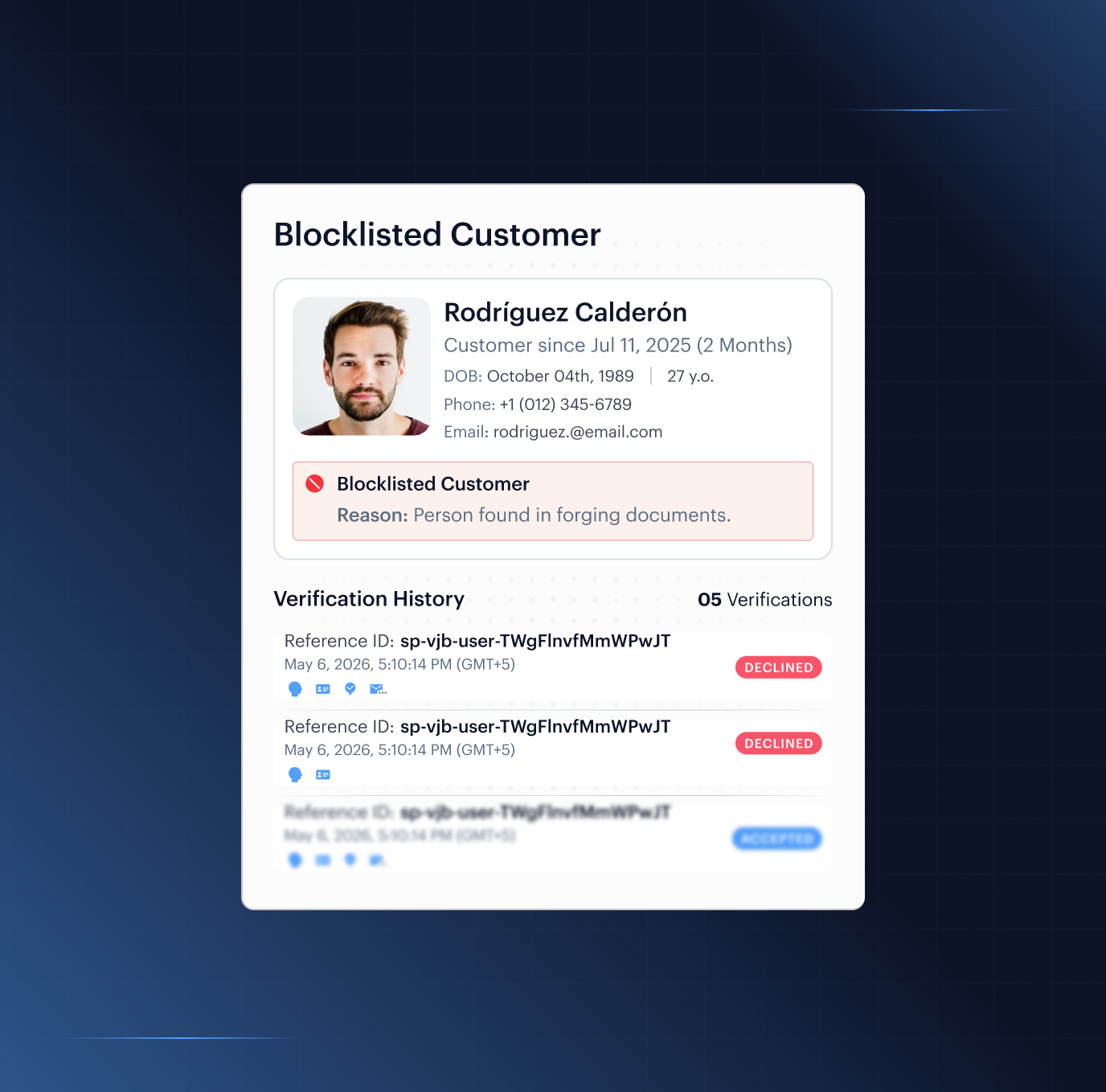
A driver with a disqualifying criminal record re-applies under a name variation or tweaked date of birth, hoping to clear the background screening threshold. Face Verification anchors the check to the person, not the declared details. The face links back to any existing record regardless of what name accompanies it.

Log In
Account Sharing at Shift Start
A verified worker hands their phone and authenticated account to an unverified third party before a shift begins, effectively renting the platform access to someone who was never screened. Shufti's Biometric Face Authentication requires a live selfie matched to the original KYC biometric before shift access is granted. The unverified person cannot produce a face that matches the registered worker's enrolled biometric. Handing the phone over does not pass the check.
Credential Stuffing
Automated tools test leaked credential pairs against a platform's driver login endpoint, aiming to hijack accounts and redirect earnings. Biometric Face Authentication makes a stolen password alone insufficient. A live biometric match is required. Device Fingerprinting flags login attempts from IP ranges associated with stuffing campaigns before the biometric step is reached.
SIM Swap and 2FA Bypass
An attacker SIM-swaps a gig worker's number to intercept SMS login codes and take over their account. MFA (TOTP) removes the SMS attack surface entirely. Biometric Face Authentication adds a biometric gate that no intercepted code can replace.
Session Hijacking
An attacker uses a stolen session token to hijack an active driver account mid-shift without triggering a new login challenge. Behavioural Biometrics monitors swipe patterns, touch dynamics and interaction rhythm continuously. A behavioural mismatch forces re-authentication before any sensitive action completes.
Worker Impersonation at Shift Start
An unverified person holds up a photo of the registered driver to pass the shift-start biometric check, enabling account sharing or proxy work. Face Verification (iBETA L3) applies 3D depth mapping and micro-movement detection that reject photos, masks and injection attacks. Only the registered driver's live face opens the shift. A photograph or mask does not generate the live biometric signal a real face produces.
Phishing and Credential Harvesting
A fake version of the platform login page captures the worker's credentials and any SMS codes in real time, then replays them against the genuine platform before the worker notices. Shufti's biometric authentication is bound to the genuine SDK flow and cannot be proxied through a third-party page. Fast ID provides a frictionless re-verification route for returning workers that does not involve credentials at all. A phishing page can capture a password; it cannot produce the worker's live enrolled face.

Active Work Session
Mid-Shift Account Hand-Off
A verified driver passes the shift-start biometric check, then hands their device to a friend to complete deliveries on their behalf. Biometric Face Authentication triggers random in-shift spot-checks requiring the active user to match the enrolled biometric. A substitute driver fails the first check they encounter.
Account Sub-letting
A registered worker rents their verified account to a third party for a share of the earnings, effectively selling platform access to someone who has never been screened. Shufti's cross-session biometrics compare the face active on the account against the original enrolled biometric every time a high-risk action or a random check is triggered. Device Fingerprinting independently flags a device mismatch when the account is accessed from hardware the registered worker has never used. The sub-letting arrangement collapses the first time the substitute worker faces a check.
Ghost Worker Activity
A courier account logs GPS movement and completed jobs but the registered worker is not physically present. A bot or third party is operating the device. Behavioural Biometrics builds a passive interaction profile per worker. When active behaviour diverges from the enrolled pattern, the system flags it silently without the operator needing to initiate a check. A substitute operator cannot replicate the behavioural signature of the person who built the profile.
Surge Exploitation via Multiple Accounts
One person operates several verified worker accounts simultaneously, cycling through them to claim surge pricing and incentives across all of them at the same time. Shufti's 1:N Facial Deduplication confirms that each real person holds only one verified account, comparing every active session's biometric against the full enrolled population. Device Fingerprinting independently links accounts that share device infrastructure even when different phones are used. One person, one account, regardless of how many devices they carry.
Remote Access Takeover
A remote access trojan gives a fraudster control of a gig worker's device during a live shift, letting them accept jobs and collect payment on the registered worker's behalf. Behavioural Biometrics detects the shift in touch pressure, input cadence and navigation patterns that no remote operator can replicate.
Coordinated Job Completion Fraud
A ring of connected accounts marks deliveries or rides as complete without performing them, exploiting platforms where post-completion verification is light. Fraud Hub surfaces cross-account anomalies in job completion patterns. Accounts completing jobs at implausible rates or in implausible locations are flagged as a network, even when each looks isolated.

Earnings and Payouts
Payout Account Hijacking
An attacker with partial account access adds a new bank account as the payout destination, waiting for the next earnings cycle to drain the worker's wages. Biometric Face Authentication requires a live biometric match for any payout destination change, regardless of how the request was initiated, and Bank Account Verification confirms the new payout account belongs to the verified worker before it is saved.
Bonus and Referral Abuse
A fraudster creates multiple driver or courier profiles to stack first-job incentives, referral payments and sign-up bonuses across a single device. Shufti's Device Fingerprinting assigns a persistent identity to each device that survives app reinstalls and account deletion, linking new sign-ups back to previously seen hardware. 1:N Facial Deduplication confirms each real person holds only one account across the entire platform. The second account is caught before the first bonus is paid.
Money Mule via Worker Account
A legitimate-looking worker account is used to receive funds from external criminal sources and move them through the platform's payout system, using gig earnings as cover for the layering. Shufti's AML Screening runs continuously against the worker's profile, flagging changes in risk status or new watchlist appearances since onboarding. Fraud Hub identifies payout patterns that are inconsistent with the account's verified work history and flags network connections to known mule accounts. Gig earnings and criminal transfers do not look the same to continuous monitoring.
Chargeback Fraud
A customer receives a completed delivery or ride, then disputes the charge with their bank, claiming the transaction was unauthorised. Consent Verification produces cryptographic proof of authorisation at the point of transaction. Fraud Hub flags accounts with elevated dispute rates before the pattern becomes systematic.
Coordinated Referral Ring
A group of connected individuals create fake worker and customer accounts that generate referral payments between themselves without any real services being performed. Shufti's Device Fingerprinting and 1:N Facial Deduplication expose the shared infrastructure behind what appear to be independent registrations. Fraud Hub maps the network connections across accounts that were created in coordinated batches, flagging them before the referral payments are processed. The ring is visible as a structure even when each individual account appears legitimate in isolation.
Payout Redirection via Social Engineering
A driver receives a phishing message directing them to update payout details through a fake portal, rerouting future earnings to an attacker's account. Biometric Face Authentication requires a live biometric match for any payout destination change, regardless of which interface initiated the request. No phishing link can bypass that gate. Bank Account Verification confirms the new account belongs to the worker, and Consent Verification records the confirmed authorisation of the change. A phishing message can deceive a worker into visiting a fake page; it cannot produce the biometric confirmation the change requires.

Profile and Qualification Update
Fake Documents for Higher Work Tier
A courier submits forged professional licences or fake DBS certificates to unlock higher-earning work categories. Document Verification runs the same forensic checks at every profile upgrade. The face on the newly submitted credential must match the biometric enrolled at registration. A forgery fails the forensic check; a borrowed document fails the face match.
Address Fraud for Tier Re-classification
A driver submits a fabricated utility bill to move their account into a higher-limit delivery zone or city tier. Address Verification cross-references the declared address against independent authoritative sources. A fake bill produces no matching data footprint and is flagged before the tier change is processed.
Support Channel Social Engineering
An attacker calls support impersonating a driver, using details from a data breach to request an account tier upgrade. Biometric Face Authentication requires a live biometric match for any tier or limit change regardless of request channel. Personal knowledge about the account holder cannot substitute for the registered worker's live face.
Identity Change to Evade Screening
A flagged gig worker requests a name or date-of-birth change in their profile, hoping the altered details will clear a triggered AML action. Any change to a core identity field triggers full re-verification and an immediate AML re-screening pass before the update is accepted. The biometric enrolled at registration anchors the account regardless of what name is attached. Changing the declared name does not change the face the system recognises.
Re-verification Spoofing at Credential Renewal
During a mandatory credential renewal, a different person attempts the biometric check using a deepfake tool or an injection attack, hoping the platform treats renewal as a lower-security event than initial onboarding. Shufti's Biometric Face Authentication and Face Verification apply iBETA Level 3 liveness detection at every re-verification event, not just at sign-up. The current live selfie must match the originally enrolled biometric to within the system's confidence threshold. Renewal is not a lower-security event; it is the same check with the same standard.
Licence Swap at Renewal
A worker whose trade licence has expired or been suspended attempts to substitute it with a borrowed or stolen credential at the renewal stage, continuing to access high-rate work categories they are no longer qualified for. Shufti's Document Verification checks the submitted renewal credential against the forensic baseline established at the original qualification check. The face on the renewal document must match the biometric enrolled at registration. A credential that belongs to someone else fails the face match before the renewal is processed.

Ongoing Monitoring
Sanctions Re-listing After Onboarding
A driver who was clean at onboarding is subsequently added to a sanctions or watchlist, a change a batch-review system would miss until the next scheduled cycle. Continuous AML Screening triggers an immediate alert the day the re-designation occurs. The platform knows before the worker's next shift.
Risk Profile Drift
A gig worker gradually shifts toward suspicious transaction and behaviour patterns, including inflated mileage claims, unusual job acceptance patterns or irregular payout timing, staying below any single threshold. Fraud Hub monitors the full signal set continuously and surfaces the drift before it becomes an enforcement issue.
Document Expiry Non-compliance
A gig worker's visa, right-to-work permit or trade licence lapses and they continue accepting shifts without submitting updated documents. Document Verification tracks expiry dates from onboarding and triggers re-verification at the expiry date. The worker cannot start shifts until renewed documents clear.
Periodic Review Evasion
A gig worker gaming a scheduled review suppresses suspicious activity in the weeks leading up to the check, then resumes it immediately after. Fraud Hub evaluates the complete account history at every assessment, not just recent activity, making pre-review suppression visible in the risk signal pattern.
Identity Swap at Re-verification
A worker submits entirely different documents at a mandatory re-KYC event, claiming the original ID was lost, hoping to reset their compliance record. Biometric Face Authentication anchors re-verification to the biometric enrolled at original registration. A new ID does not create a new identity if the face is the same.
Post-Deactivation Account Misuse
A deactivated worker allows their account to continue being used by a third party who was never independently verified, exploiting the gap between account closure and the platform's ability to detect ongoing activity. Shufti's cross-session biometric checks confirm that the active user matches the registered worker at every high-risk action and spot-check. A deactivated worker's face triggers a flag on any continued-use attempt. The account being closed does not help if the face check fails first.

Deactivation
Pre-SAR Account Closure
A gig worker under active AML review submits an account closure and GDPR erasure request simultaneously, attempting to destroy the evidence trail before a SAR is filed. Shufti treats regulatory retention obligations as overriding erasure requests. The erasure is logged but not actioned until the regulatory hold is resolved.
Full-Balance Extraction Before Closure
A driver empties their earnings balance immediately after receiving a compliance communication, then submits a closure request before a hold can be applied. Fraud Hub flags the sequence of compliance trigger, full withdrawal and closure request as a single pattern. Biometric Face Authentication adds an additional gate before large withdrawals clear.
Re-application Under a New Identity
A deactivated or banned driver re-applies with different documents or a close associate's ID, expecting a fresh application to pass as a new person. 1:N Facial Deduplication compares every new applicant's selfie against all previous accounts. The same face does not get a new account regardless of the name or documents presented.
Platform-Hopping After a Ban
A banned driver re-registers on a competing gig platform, expecting their biometric record not to follow them. Fraud Hub surfaces cross-platform re-registration attempts. 1:N Facial Deduplication catches the same face applying to any platform that uses Shufti across its network.
Verified Account Sale
A gig worker approaching deactivation sells their fully verified account to an unscreened third party, bypassing onboarding entirely. Cross-session biometric checks require the active user to match the enrolled worker on every high-risk action. The buyer cannot produce the registered worker's face when the next spot-check triggers.
Wrongful Deactivation Dispute
A driver disputes their deactivation as wrongful, seeking compensation despite the decision being based on valid compliance findings. Fraud Hub's tamper-evident audit trail captures every verification check, risk signal and escalation event in a single chronological log. The platform can produce a complete per-worker evidence pack in minutes to defend the decision.
Built For Every Role That Owns The Onboarding Decision
Combine products across identity, compliance and fraud defence to build a verification stack that meets your regulatory requirements without rebuilding the integration each time the rulebook changes.
Compliance Officer
Stop manually reconciling five vendor reports for a single Home Office inspection. Shufti produces a tamper-evident audit log covering right-to-work, identity, biometrics and ongoing screening as one evidence package. Inspector-ready export in under five minutes. Jurisdiction-specific retention configured to UK and EU rules.
Head of Product
Reduce drop-off without weakening the compliance audit. Risk-tier routing keeps low-risk workers moving at under 30 seconds while holding higher-risk applications for deeper checks. Localised pass-rate data is available before a market launches. Cross-session liveness fits into the shift-start UX without a separate integration.
Head of Engineering
Replace the ID vendor, the liveness vendor, the right-to-work vendor and the ongoing-monitoring vendor with one REST API. Mobile and web SDKs. Sandbox access in under five minutes. Signed webhook assertions. Journey Builder handles risk-based routing without custom logic.
Fraud Analyst
Cross-session detection links new sign-up attempts to previously rejected biometrics and device fingerprints. Fraud Hub surfaces network connections across what appear to be unrelated accounts before a case is opened. Device fingerprints survive app reinstalls. Manual review load drops because the system explains the flag before your team opens the file.
Don’t just take our word for it, hear from our customers
The Confidence Our Clients Share

The future of digital identity is defined by trust, interoperability, and regulatory alignment, so our partnership with Shufti reinforces DevCode Identity’s commitment to supporting our global customers with the most secure, best-in-class, compliant identity verification solutions available today.
Combining our Conversion Driven Compliance Orchestration Platform with Shufti’s global KYC and IDV capabilities allows our customers not only to navigate complex regulatory demands but also to maintain a seamless customer onboarding experience with the highest achievable conversion rates.
We’re proud to continue our partnership with Shufti as we expand into new jurisdictions.
Shufti’s verification technology not only strengthens our compliance framework but also ensures our players enjoy a smooth, secure onboarding experience.
We aim to offer our clients and their traders the very best tools with which to do their jobs, we’re excited to be able to work with Shufti.
They’re a leading company, and we’re looking forward to offering their solutions to our clients through our CRM.
The relationship with Shufti was born out of frustration with an existing provider, so we started our discussion with Shufti.
The response time was excellent, from the start of speaking to sales to getting up and running with the demo.
Everything you need to know in one place
Frequently Asked Questions
Section 48 of the Act extends the £60,000-per-worker illegal-working penalty to gig and zero-hours platforms for the first time. Shufti's right-to-work flow uses the Home Office View and Prove service for digital status holders and a Home Office-approved IDSP flow for all others. The check runs inside the same API call as identity verification and produces a timestamped, hashed audit record retained in line with the Immigration Rules.
In-shift biometric spot-checks can be triggered randomly, on a risk schedule, or before high-value actions. Each check completes in seconds, runs against the original onboarded biometric and produces a signed record. This is the control the Home Office named in its December 2025 meetings with Deliveroo, Uber Eats and Just Eat.
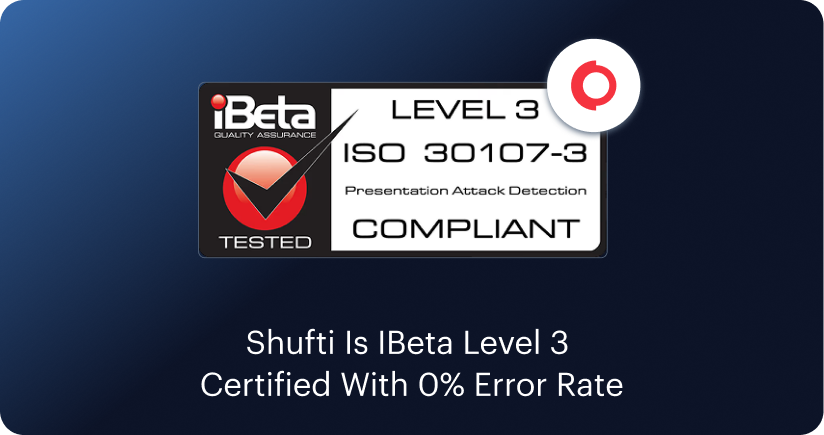
ISO/IEC 30107-3 PAD Level 3 is the highest independent certification tier for presentation attack detection. iBETA tested Shufti's liveness system against physical artefacts, digital injections and synthetic video. The certification is documented, publicly verifiable and directly addresses the facial-recognition standard the Home Office now expects from delivery platforms.
Every verification decision sits on a tamper-evident hash chain covering document hash, biometric capture, liveness result, screening hits, model version, confidence score and reviewer attribution. Per-worker evidence packs export in PDF and JSON in under five minutes. No additional vendor calls are needed to complete the record.
Shufti's right-to-work logic is configurable per jurisdiction. EU work-entitlement verification follows member-state rules. Platform Work Directive evidence requirements are met through Journey Builder's decision log, which records the rule version and verification trail for each worker classification. UK and EU workers can be handled in the same integration with jurisdiction-specific routing.
Sandbox access is available in under five minutes. The single REST API covers document verification, biometric liveness, right-to-work, AML screening and ongoing monitoring, removing the need to integrate separate vendors for each capability. Production timelines are typically two to eight weeks depending on the breadth of capabilities and any custom routing logic required.
Evaluate Shufti Against Your Current Gig Compliance Stack
The Border Security Act 2025 and the EU Platform Work Directive require a verification architecture that connects worker onboarding identity to ongoing shift-level authentication. Point-solution stacks cannot share identity records across those two requirements. Evaluate whether your current stack meets that standard.
Your Go-To for KYC/AML & Fraud
Resources
26 February, 2026
eIDV for Gig Economy
Docless verification for gig platforms, covering fast worker onboarding, the fraud that tends to target these marketplaces, and the checks that hold up against it.
Brochure