 Runs On Your Cloud
 No Data Sharing
 No Contract Required
 Explore Now







 Face Verification
 Address Verification
 Document Verification
 Age Verification
 VideoIdent
 Fast ID
 eIDV
eIDV
 NFC Verification
 Consent Verification
 Business Verification
 Due Diligence
 Investor Verification
 E-Signature
 Behavioural Biometrics
 Device Fingerprinting
 MFA
MFA
 AML Screening
 Business AML Screening
 User Risk Assessment
 Transaction Screening
 Adverse Media Screening

 Identity Verification
 KYC
KYC
 KYB
KYB
 KYI
KYI
 Bonus Abuse
 Fraud Prevention
 Deepfakes
 Banking
 Crypto
 Fintech
 Forex
Forex
 Gaming
 Gig Economy
 Marketplace
 Social Networks
 Product Managers
 Compliance Officers
 Fraud Analyst
 Global Trust Platform
 Journey Builder
 Vendor Comparison

 Content library
 Blogs
Blogs
 News
News
 Reports
 Insights
 Knowledgebase
 ROI calculator
 Blind Spot Audit
 Deepfake Detection
 Liveness Detection
 Document Originality
 Document Deepfake
 Events & Webinar
 Podcast Studio
 Spotlight Studio
 API Documentation
 Mobile SDKs
 Service Status
 Help Center
 Contact Us
 Technical Support
 Compliance
 Supported Document
 About
About
 Career
 Press Release
 Certifications
 Partnership
 Awards
7 Best KYC and Fraud Prevention Tips for Online Businesses
With the explosion of internet and web applications, the online interaction between consumers and businesses is continuously increasing. The digitization of business operations is raising the demand for advanced technological solutions to deal with the growing digital fraud and create trust among consumers to stay ahead of competitors in the market.
With every passing year, the fraud cases are growing eventually resulting in great losses for businesses and individuals. As per the study conducted in 2018, 63% of the business have experienced either the same or increased number of digital frauds. This increased ratio in online frauds is intensifying the need for quick and effective verification processes.
As we are approaching the data-driven market, customer experience is equally important for secure business growth. As per the study by Experian 2018, 75% of the business expressed their interest in acquiring the security measures and authentication processes that have an impact on customer experience as well. No matter what the business domain is, every digital enterprise needs to maintain an effective and compliant KYC (Know your customer) onboarding process.
Understand the Onboarding Process Thoroughly
An effective customer onboarding process plays a significant role in developing a strong and long-lasting relationships with new clients. The streamlined onboarding of clients facilitates businesses in filtering the good clients from suspicious and fraudulent ones. But in order to do so, it is essential to understand the KYC onboarding process in detail.
The process is not much complicated and contains almost the same steps. The foremost is to gather relevant data and identification documents. The collected data and documents are authenticated through in-depth background checks linked to previous employment history, financial transactions, and other activities. The authentication doesn’t end here, further investigation is carried out to get a clear history of the client in terms of fraudulent or criminal activities.
KYC Verification also includes the mapping of client data against fraud prevention and anti-money laundering (AML) protocols to figure out any red flags. Moreover, the customer is also investigated for involvement with Counter Financing Terrorism (CFT). Lastly, based on the findings and resulting information, the businesses assign clients risk rating i.e. low, medium or high.
Once you completely streamline the onboarding process, it would be very easy to meet the regulatory compliance while building a secure customer base.
Collect Extensive data
Know your customer (KYC) and know your business (KYB) processes are specifically designed to curb fraud and financial crimes like terrorist funding and money laundering. Meeting the KYC requirement not only facilitates your business in risk management but also increases overall security and compliance with CFT and AML regulations.
To ensure comprehensive KYC compliance, the collection of relevant data is essential. When you will have inclusive information regarding the client it would be more productive to carry the KYC process seamlessly.
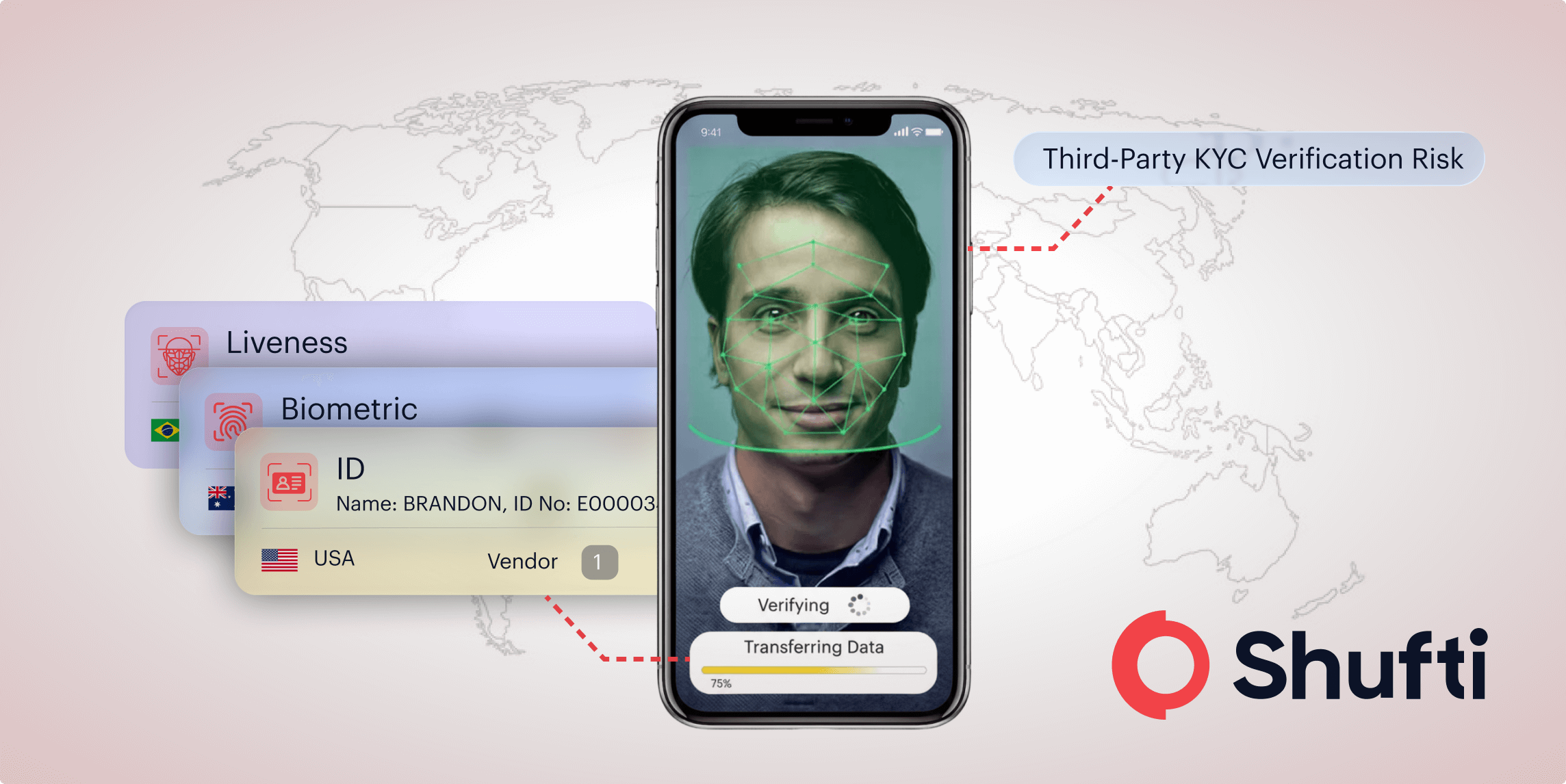
Use Third-Party Identity Verification Services
Digital problems need digital solutions. Manual KYC and verification processes are prone to error, time-consuming, and costly. Multiple SaaS companies are coming up with enhanced digital security measures and services. Outsourcing your identity verification and authentication processes to some third party is quite an effective, convenient and affordable solution.
The security requirements often vary from business to business depending on the type of risks associated. For instance, in the case of financial institutes, the monetary fraud risks are higher as compared to other industries. Various digital identity verification solutions and KYC services decrease the likelihood of online businesses from being targeted meanwhile complying with KYC/AML regulations.
Enhancing Authentication Checks
In online businesses, account takeover fraud and identity theft are significantly cultivating frauds. To prevent such frauds, the best way is to enhance your authentication processes. Cybercriminals and fraudsters have become sophisticated in exploiting user credentials – which means simple password protection is no more reliable. Implementing biometric and multi-factor authentication in your business can keep the attackers at bay.
These technologies verify and authenticate the identities on the basis of their unique biometric features which are nearly impossible to steal or exploit. Moreover, as per Visa Study 2017, 71% of the respondents think biometrics are easier than passwords and 46% find biometrics more secure.
Exercise Common KYC Tests to Combat Identity Fraud
Identity theft is a major concern for online businesses these days. According to the Federal Trade Commission’s (FTC) report, around 1.4 million identity theft fraud reports were processed in 2018 with a total loss of around $1.48 billion. To prevent these frauds, your business can use some common KYC practices every now and then.
Common KYC Checks to Combat Identity Fraud
- Sending confirmation emails or codes to validate the email addresses
- Validating phone numbers through 2-factor authentication, i.e. sending code on mobile through SMS or voice calls.
- Requiring and validating the public records, for example, the utility bills, passports, credit card bills, etc. to verify an individual’s physical address.
- Authenticating the person through video consent verification – for instance, the person can record the live video while holding the identity document or some handwritten verification code sent on the customer’s mobile phone.
These checks are quite imperative for every type of online business. There can be some other tests as well that you can design in a similar way to curb identity theft.
Ensure secure Payment Methods
For the startups, managing a few transactions a day is no big deal. But as you scale to hundreds of transactions per day, throwing caution to the wind can land you in big problem. Whether your organization accepts credit cards, PayPal or Skrill payments, it is essential to be aware of their security policies that are likely to impact your business.
According to Statista 2018 report, US merchants lost around $6.4 billion due to payment card frauds. Among the victims, small businesses suffered most – i.e. an estimated loss of $155,000.
To familiarize yourself with your payment service providers’ policies and applying security measures to secure the payment methods is a great business practice. Doing so prevents fraud while tightening reins on cybercriminals and imposters.
Fight against Chargebacks
Chargebacks are becoming a major issue for online businesses. They are mostly the result of consumer fraud contrary to identity fraud – occurred due to unauthorized payments from customers’ accounts or cards. Different credit card companies have different chargeback policies, so it’s better to go through them thoroughly.
It is better to take precautionary measures than suffer chargeback loss. You can always track your payments. It helps you to claim your proof against chargebacks. By providing the delivery receipts and invoices, you can have the case in your favor and prevent financial loss.