 Runs On Your Cloud
 No Data Sharing
 No Contract Required
 Explore Now







 Face Verification
 Address Verification
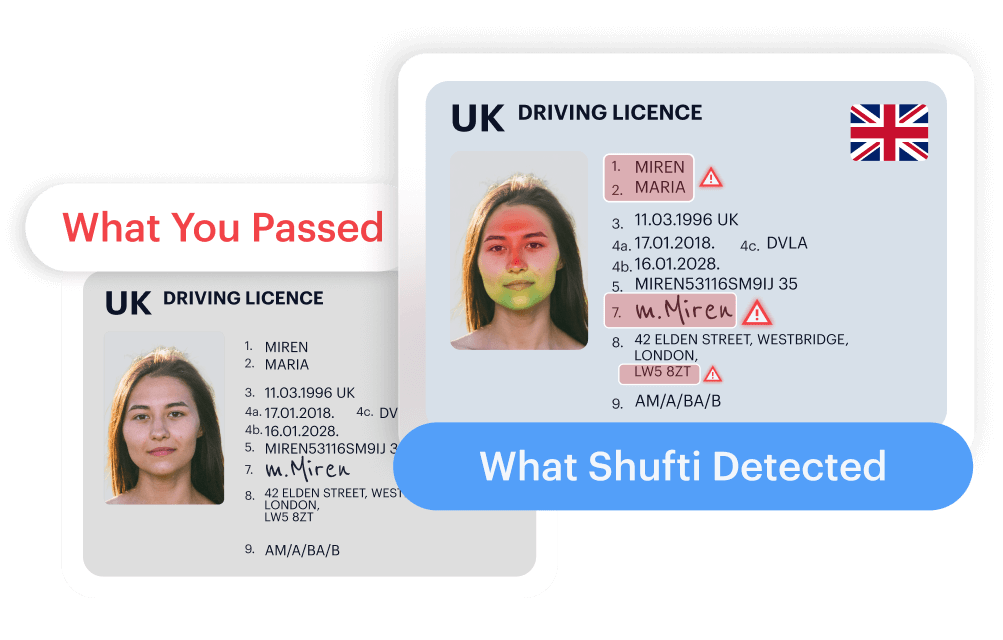
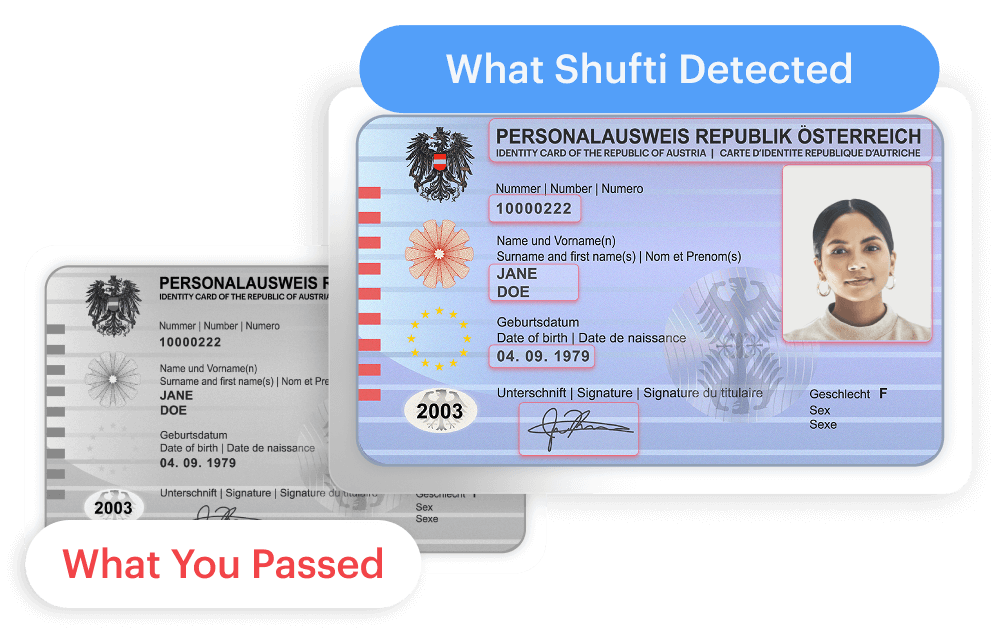
 Document Verification
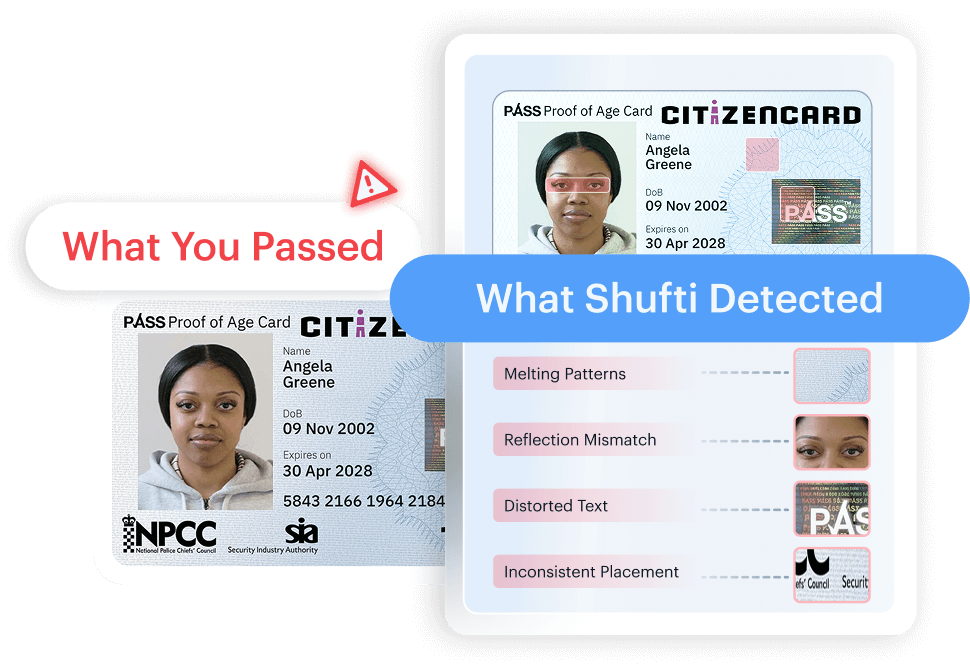
 Age Verification
 VideoIdent
 Fast ID
 eIDV
eIDV
 NFC Verification
 Consent Verification
 Business Verification
 Due Diligence
 Investor Verification
 E-Signature
 Behavioural Biometrics
 Device Fingerprinting
 MFA
MFA
 AML Screening
 Business AML Screening
 User Risk Assessment
 Transaction Screening
 Adverse Media Screening
 Identity Verification
 KYC
KYC
 KYB
KYB
 KYI
KYI
 Bonus Abuse
 Fraud Prevention
 Banking
 Crypto
 Fintech
 Forex
Forex
 Gaming
 Gig Economy
 Marketplace
 Social Networks
 Product Managers
 Compliance Officers
 Fraud Analyst
 Global Trust Platform
 Journey Builder
 Content library
 Blogs
Blogs
 News
News
 Reports
 Insights
 Knowledgebase
 ROI calculator
 Blind Spot Audit
 Deepfake Detection
 Liveness Detection
 Document Originality
 Document Deepfake
 Events & Webinar
 Podcast Studio
 Spotlight Studio
 API Documentation
 Mobile SDKs
 Service Status
 Help Center
 Contact Us
 Technical Support
 Compliance
 Supported Document
 About
About
 Career
 Press Release
 Certifications
 Partnership
 Awards
How Digital IDs Reduce Customer Dropoffs for OSA Compliant Age Assurance
- 01 The Equilibrium Between Age Assurance and Privacy Concerns
- 02 Why Legacy Systems Are Failing Online Safety Goals?
- 03 The Solution: Moving to a Reusable, Privacy-First Architecture
- 04 How Shufti Connects Safety and Seamlessness?
- 05 The Strategic Future – Digital Trust as a Competitive Edge
- 06 Shufti Leading the Era of Accountable Platforms
The UK Online Safety Act (2023) is a new set of laws that protects children and adults online and imposes duties like age assurance on platforms. Platforms that fail to fulfill their duties under this law may face up to £18 million or 10% of a company’s global revenue.
Platforms must implement full age verification instead of relying on users’ self-reporting. Manual checks result in a considerable drop-off during onboarding, reducing engagement and revenue.
Establishing a reusable digital identity that complies with regulations and protects privacy is essential for survival.
The Equilibrium Between Age Assurance and Privacy Concerns
As platforms enter 2026, the pressure to comply with the UK Online Safety Act without isolating users has reached a critical point. Since the verification fatigue is wildfire-spreading, the requirement that users submit passports or government IDs across several services has produced an unfavorable online experience.
At the same time, platforms are subject to a data liability trap. This leaves them in a bind between Ofcom requirements of age assurance that are highly effective, and GDPR regulations that impose data minimization obligations restricting excessive Personally Identifiable Information (PII) collection.
This pressure compels businesses to navigate the tricky balance between privacy and compliance for age assurance, often lacking clear operational guidance. The official site of the UK Government projected that a staggering 8 million deepfakes will be shared in 2025, which is a significant leap from just 500,000 in 2023. As a result, conventional selfie-based checks are becoming less reliable and, in some cases, unsafe.
Organizations must now use a different strategy to meet regulations and keep users’ trust. One that emphasizes reusable, privacy-first digital identities rather than relying solely on transactional verification.
Why Legacy Systems Are Failing Online Safety Goals?
Legacy models and outdated identity verification are increasingly proving inadequate under the UK Online Safety Act. Siloed identity systems treat every platform as a separate entity. This makes users go through the same difficult verification steps multiple times, which can erode their trust and decrease their involvement with the service provider.
Moreover, algorithmic inaccuracies and biases further exacerbate friction, particularly where lighting or image quality is poor. It results in false rejections that create widespread “verification rage” and frustrate legitimate users.
However, beyond user experience, the surveillance state risk looms large. The over-collection of personal data not only invites regulatory scrutiny but also exposes platforms to reputational harm and cyberattacks.
Modern compliance needs a change towards a digital identity. It is easy to reuse and respects privacy. This identity should simplify verification while keeping the service secure and trustworthy.
The Solution: Moving to a Reusable, Privacy-First Architecture
As discussed earlier, the structural answer is to replace fragmented checks with a “verify once, use everywhere” standard built on secure digital credentials.
This will help in a way that, instead of frequent document uploads, users complete a single high-assurance verification for once and reuse that credential across participating services. This will eventually reduce duplication of the IDVs while sustaining regulatory integrity of the system.
Moreover, there is a waterfall approach, which is equally important to friction. This approach states that the platforms can begin with facial age estimation, which requires no document upload, and it processes with minimal data. So, when confidence thresholds are not met only, the system should intensify the user verification to include document and biometric checks.
Finally, zero-knowledge proofs (ZKPs) enable verification of “18+” status without revealing or storing the date of birth, preserving compliance and privacy.
How Shufti Connects Safety and Seamlessness?
Shufti addresses compliance friction by embedding reusable identity into the user journey without adding operational strain. Shufti FastID enables users to authenticate once and securely reuse their verified status for subsequent sessions, with optional re-verification via a face scan and masked profile selection, all within seconds. This reduces onboarding repetition while maintaining high assurance standards.
To deal with more advanced fraud cases, Shufti implements more advanced liveness protection and 3D facial mapping, making it more resistant to deepfakes and synthetic identity attacks. This goes directly against the increase in AI-based spoofing methods.
From an operational standpoint, the platform offers a no-code journey builder, enabling businesses to remain audit-ready with timestamped verification logs that meet regulatory expectations, without rebuilding their infrastructure.
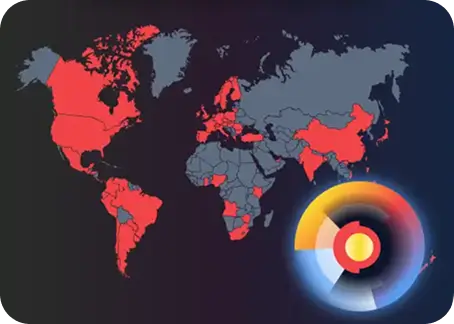
Finally, with support for over 10,000+ document types, Shufti ensures global compliance does not compromise local accuracy or legitimate user inclusion.
The Strategic Future – Digital Trust as a Competitive Edge
Proactive marketplaces are redefining compliance as a quantifiable reputation indicator, as opposed to a compliance cost. Users who are privacy-conscious are increasingly choosing services with data gathering that is as minimal as possible and articulate how identity attributes are handled. Transparent, limited-data verification strengthens brand credibility and reduces churn driven by surveillance concerns.
Decentralized, reusable credentials offer a practical counterpoint. By allowing users to share only necessary attributes, these models enhance individual control rather than expand institutional oversight.
Looking ahead, alignment with eIDAS 2.0 and emerging global interoperability standards will be more critical than ever, as platforms adopt interoperable, standards-based digital identity frameworks. They will be better positioned to meet cross-border regulatory requirements and evolving supervisory expectations.
Shufti Leading the Era of Accountable Platforms
The Online Safety Act 2025 creates an ongoing duty of care for platforms. They must regularly carry out risk assessments, set up appropriate age controls, and ensure good governance. If they fail to comply, they may face regulatory scrutiny and heavy fines.
Meeting compliance alone isn’t enough for long-term success. Businesses need to balance adhering to regulations, protecting privacy, and providing a smooth user experience without driving customers away.
Reusable digital identity offers a scalable path forward. It cuts down on repeated verification, limits data exposure, and ensures that services can be audited.
Request a demo to see how Shufti provides privacy-focused identity verification that meets compliance standards.