 Runs On Your Cloud
 No Data Sharing
 No Contract Required
 Explore Now







 Face Verification
 Address Verification
 Document Verification
 Age Verification
 VideoIdent
 Fast ID
 eIDV
eIDV
 NFC Verification
 Consent Verification
 Business Verification
 Due Diligence
 Investor Verification
 E-Signature
 Behavioural Biometrics
 Device Fingerprinting
 MFA
MFA
 AML Screening
 Business AML Screening
 User Risk Assessment
 Transaction Screening
 Adverse Media Screening
 Identity Verification
 KYC
KYC
 KYB
KYB
 KYI
KYI
 Bonus Abuse
 Fraud Prevention
 Deepfakes
 Banking
 Crypto
 Fintech
 Forex
Forex
 Gaming
 Gig Economy
 Marketplace
 Social Networks
 Product Managers
 Compliance Officers
 Fraud Analyst
 Global Trust Platform
 Journey Builder
 Content library
 Blogs
Blogs
 News
News
 Reports
 Insights
 Knowledgebase
 ROI calculator
 Blind Spot Audit
 Deepfake Detection
 Liveness Detection
 Document Originality
 Document Deepfake
 Events & Webinar
 Podcast Studio
 Spotlight Studio
 API Documentation
 Mobile SDKs
 Service Status
 Help Center
 Contact Us
 Technical Support
 Compliance
 Supported Document
 About
About
 Career
 Press Release
 Certifications
 Partnership
 Awards
Address Verification for Remote Employees to Support Global Workforce Teams
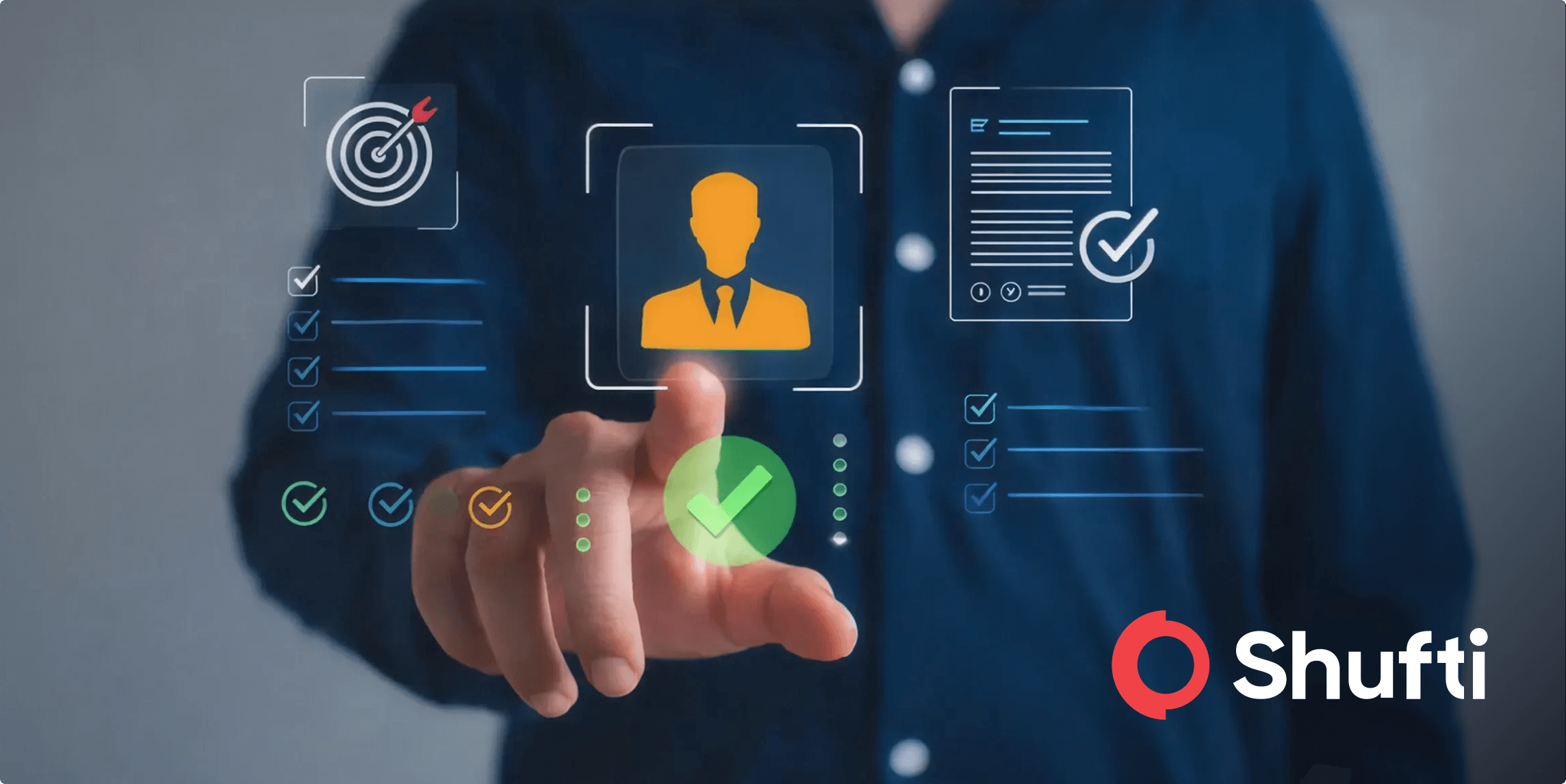
Recent statistics indicate that approximately 40% of the global workforce is now working remotely or in hybrid work setups, altering the way organizations structure work teams, payroll, and compliance systems.
In a world where talent can be recruited across borders and time zones, the traditional identity and location controls are not sufficient any longer. Address verification for remote employees has become an operational flexibility tool as it guarantees that the workforce information complies with legal, tax, and payroll demands, irrespective of the locations of the teams.
A high-quality digital authentication system is no longer an HR convenience but a leadership necessity, when working remotely becomes the new standard, not an exception.
Why Address Verification Matters in Remote Workforce Operations
Remote work has moved workforce operations outside office walls, yet accountability, compliance, and risk exposure are well within the control of the employer. Address verification for remote employees is very important in operational control where teams are distributed across cities, countries, and tax jurisdictions. Without trustworthy address data, companies may end up making crucial decisions based on information that cannot be substantiated during audits or regulatory inspections.
Reducing Compliance and Payroll Risks
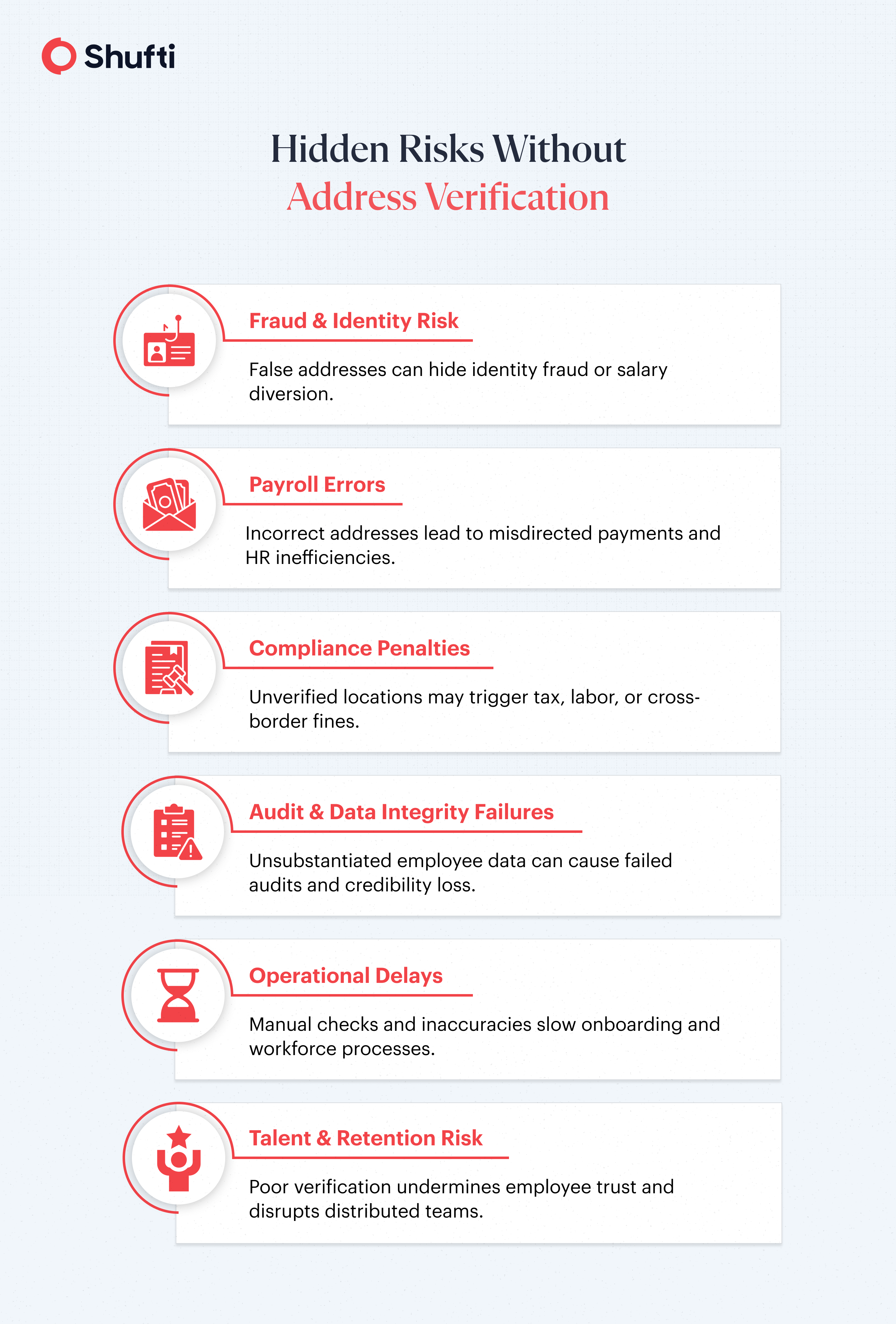
False or incorrect employee addresses can silently generate critical compliance gaps. Location is often associated with payroll tax payments, social security, and employee benefits. Inaccurate addresses can lead to a mismatch of tax jurisdiction, mismatched benefits, or audit penalties. Regulators also demand that companies demonstrate the validation and monitoring of employee location information. Verifying employees address information assists in ensuring payroll accuracy, minimizes compliance exposure, and offers audit-ready evidence for workforce data when needed.
Preventing Insider and Identity-Based Fraud
Remote hiring has not only increased access to talent worldwide but also the possibility of identity abuse. The existence of fake employee profiles, mule accounts, which are actively employed to divert salaries, and scam contractors is still a real threat within a distributed environment. Address verification is a risk control measure that can be used as a baseline by ensuring that the physical existence behind a digital identity is real. By combining address data verification with other checks on the employees, fraud becomes more difficult to scale and fraud becomes difficult to catch before it causes any financial or reputation losses.
Supporting Global Hiring and Cross-Border Compliance
A remote workforce operating across multiple countries makes accurate address verification a critical requirement for organizations managing cross-border employment. Employee address verification online enables alignment with local labor, tax, and regulatory requirements while maintaining consistent verification standards across regions. With regulators stepping up scrutiny of cross-border employment practices, a trusted address check enhances compliance posture and facilitates confident, scalable international hiring.
Challenges Businesses Face When Verifying Remote Employee Addresses
Since remote hiring is becoming popular, address verification has transformed not only into one of the traditional HR duties but also into an operational bottleneck. It is no longer about whether verification is required, but about whether current processes can scale to distributed hiring models without adding risk or friction.
Manual Verification Slows Remote Onboarding
Manual address checks introduce the biggest bottlenecks at the very last step of employee onboarding. HR departments usually have to gather, audit, and verify address records in a variety of formats and jurisdictions. It causes backlogs in documentation, follow-ups, and irregularity in reviews. In addition to inefficiency, manual processes are more prone to human error and complicate proving compliance in the event of an audit. Delays in onboarding in fast-paced remote recruiting events directly translate to loss of productivity as well as increased operational risk.
Inconsistent Address Formats Across Regions
International workforces present structural complexity that can hardly be dealt with using manual processes. The format of address in different countries differs considerably and includes variations in postal codes, hierarchies in the streets, and documentation standards. What is portrayed as valid in one area may be incomplete or false in another. Without address verification for remote employees, organizations risk approving addresses that cannot be reliably validated or compared across systems. Poor formatting also interferes with downstream operations, including payroll, taxation, and workforce reporting, worsening the risk over time.
Difficulty Verifying Employee Business Address
Remote work has blurred traditional workplace boundaries. Remote employees, consultants deployed at client sites, and geographically dispersed satellite teams create additional challenges in validating employee business addresses. The usage of self-proclaimed data or outdated records exposes the risks of misrepresentation and compliance loopholes. Companies require authentication schemes that differentiate between personal, business, and operational addresses without bottlenecking recruitment or sacrificing accuracy, which is commonly difficult to do with manual verification at scale.
These issues further emphasize the necessity of developing address verification for remote workforce activity.
What Businesses Should Look for in Employee Address Verification Solutions
Selecting an address verification solution for a remote workforce is a strategic decision, not a procedural one. The right capability should strengthen compliance, reduce operational drag, and scale as hiring becomes more global and decentralized.
Automation and Digital-First Verification
Modern workforce operations cannot rely on manual checks that slow onboarding and strain HR resources. A strong solution should deliver employee address verification online through automated workflows that validate address data in real time. Automation reduces review cycles, limits human error, and allows HR teams to focus on higher-value work rather than document chasing. Speed is important, but accuracy is even more critical; verification needs to be quick while maintaining full compliance and minimizing risk.
Global Coverage and Document Flexibility
Remote hiring rarely stays within one country for long. Businesses should prioritize solutions that support address verification across multiple regions, languages, and address formats. Flexibility in accepted document types is equally important, as proof of address standards vary widely by location. Whether validating utility bills, bank statements, or official correspondence, the solution must adapt to regional norms while maintaining consistent verification outcomes. This ensures remote teams can be onboarded without friction, regardless of geography.
Risk Signals and Address Validation Accuracy
Verification is only as strong as its ability to detect risk. Effective solutions go beyond surface-level checks and apply address matching, validation logic, and fraud indicators to verify remote employee address data with confidence. This includes identifying inconsistencies between declared and extracted information, flagging suspicious patterns, and supporting audit-ready decisioning. Accurate address validation strengthens payroll accuracy, regulatory alignment, and fraud prevention across distributed workforce models, turning verification into a proactive risk control rather than a reactive process.
How Shufti Assists in Address Verification for Remote Employees
Shufti supports remote workforce operations with digital address verification built for distributed teams, where accuracy and compliance must coexist. Address checks are automated end-to-end, enabling real-time verification without adding friction to employee onboarding or overloading HR teams.
Shufti verifies addresses through proof of address (POA) checks using trusted documents, while also offering docless verification for faster onboarding where risk profiles allow. This flexibility ensures that verifying employees address data remains consistent across roles, locations, and employment models without slowing hiring cycles.
Designed for global workforces, Shufti delivers multi-region coverage with high address validation accuracy, fraud detection, and policy-driven compliance alignment. Verification workflows can integrate into existing HR or onboarding systems through APIs, supporting audit readiness without operational disruption.
The result is faster hiring, reduced fraud exposure, and stronger trust in workforce data, allowing organizations to scale remote teams with conviction. Organizations can also explore these capabilities through a demo, enabling teams to assess real-world performance before deployment.