AMLR Solutions
  AMLR Consultation
 EUDI Wallet
 Onboarding
 Ongoing Monitoring
 FRAML
FRAML KYC
KYC KYB
KYB KYI
KYI Age Assurance
 Workforce IAM
 Candidate Verification
 Account Takeover
 Bonus/ Promotion Abuse
 Chargeback Fraud
 Deepfake
 Document Fraud
 Fraud Networks
 Impersonation Fraud
 Money Mule Activity
 Multi-Accounting
 Party Fraud
 Regulatory & Compliance Risks
 Synthetic Identity Fraud
 Adult Content
 Banking
 Crypto
 Fintech
 Forex
Forex Compliance
 Fraud prevention
 Trust & safety
 Global expansion
 Compliance Officers
 Developers
 Fraud Analysts
 Product Managers
 Journey Builder
  Global Trust Platform
 Customer Profiles
 Vendor Comparison
 IDV Case Management
 AML Case Management
 Regulatory Reporting
 Agentic Rule Builder
  AI Compliance Co-Pilot
  Fraud Analytics
 Fraud Hub
  OCR
OCR Shufti AI
 Bank Account Verification
  Biometric Duplication
 Database Checks
 Document Intelligence
 Government ID
 Mobile Driver's License
 NFC
NFC Selfie Liveness
 Brand Personalisation
 Deployment Options
 Identity Methods
 IDV Modes
 Multi-tenancy
 On-Premise IDV
 Secure Capture
 Shufti MCP
















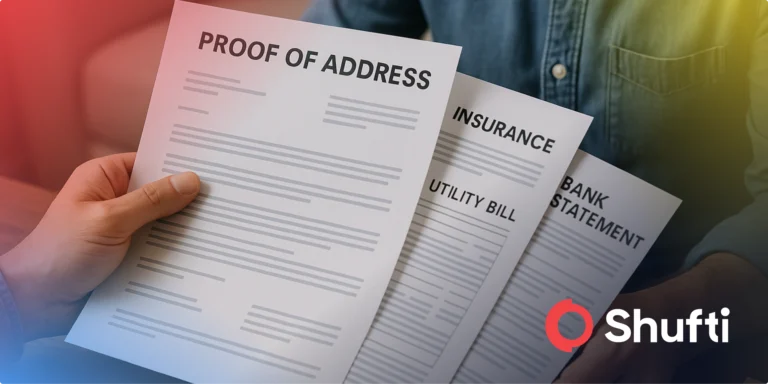
Whether you are opening a bank account, registering a SIM card, completing FICA verification, or signing a lease, you will be asked to prove where you live. In South Africa, this requirement is called proof of address or proof of residence, and not just any document qualifies.
This guide covers every accepted document type, the validity rules that apply, what to do if you have no documents in your name, and the FICA obligations that fall on regulated institutions verifying their clients’ addresses.
Key Takeaways
|
What Is Proof of Address in South Africa?
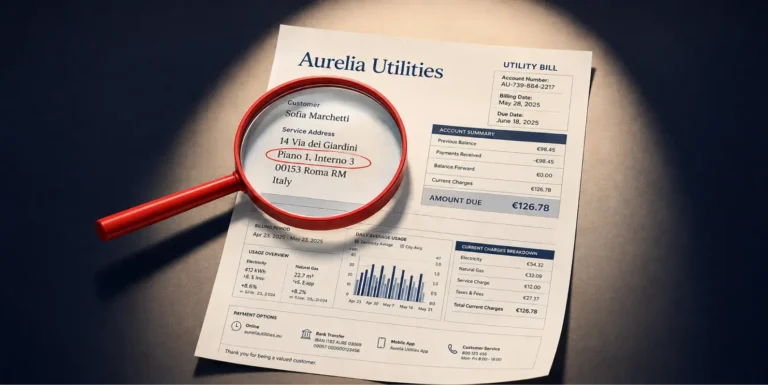
Proof of address is a document issued by a credible, independent third party that links you to a specific physical residential address. It must confirm both your name and your current address in a verifiable, recent form.
In South Africa, proof of address is not a single standardised form or a government-issued certificate. It is a category of documents, including utility bills, bank statements, and lease agreements, that institutions accept as reliable evidence of where you live.
You will be asked for proof of address across a wide range of transactions, including:
- Opening a bank account or applying for credit
- Registering a SIM card under RICA
- Completing FICA verification at any regulated financial institution
- Registering with SARS for tax purposes
- Applying for municipal services such as electricity or water
- Signing a rental or lease agreement
- Registering a vehicle or applying for a driver’s licence
- Completing a bond registration or property transfer
Proof of Address vs Proof of Residence: Is There a Difference?
In South Africa, proof of address and proof of residence mean exactly the same thing. The two terms are used interchangeably in law, banking, and everyday conversation.
The Financial Intelligence Centre Act (FICA) refers to a client’s “residential address” in its guidance documents. Banks and regulated institutions describe the supporting evidence as either proof of address or proof of residence. There is no legal distinction between the two terms, and the documents accepted are identical whichever phrase is used.
When and Why Is Proof of Address Required in South Africa?
Proof of address is a requirement across six main categories of transactions and services in South Africa.
FICA Compliance
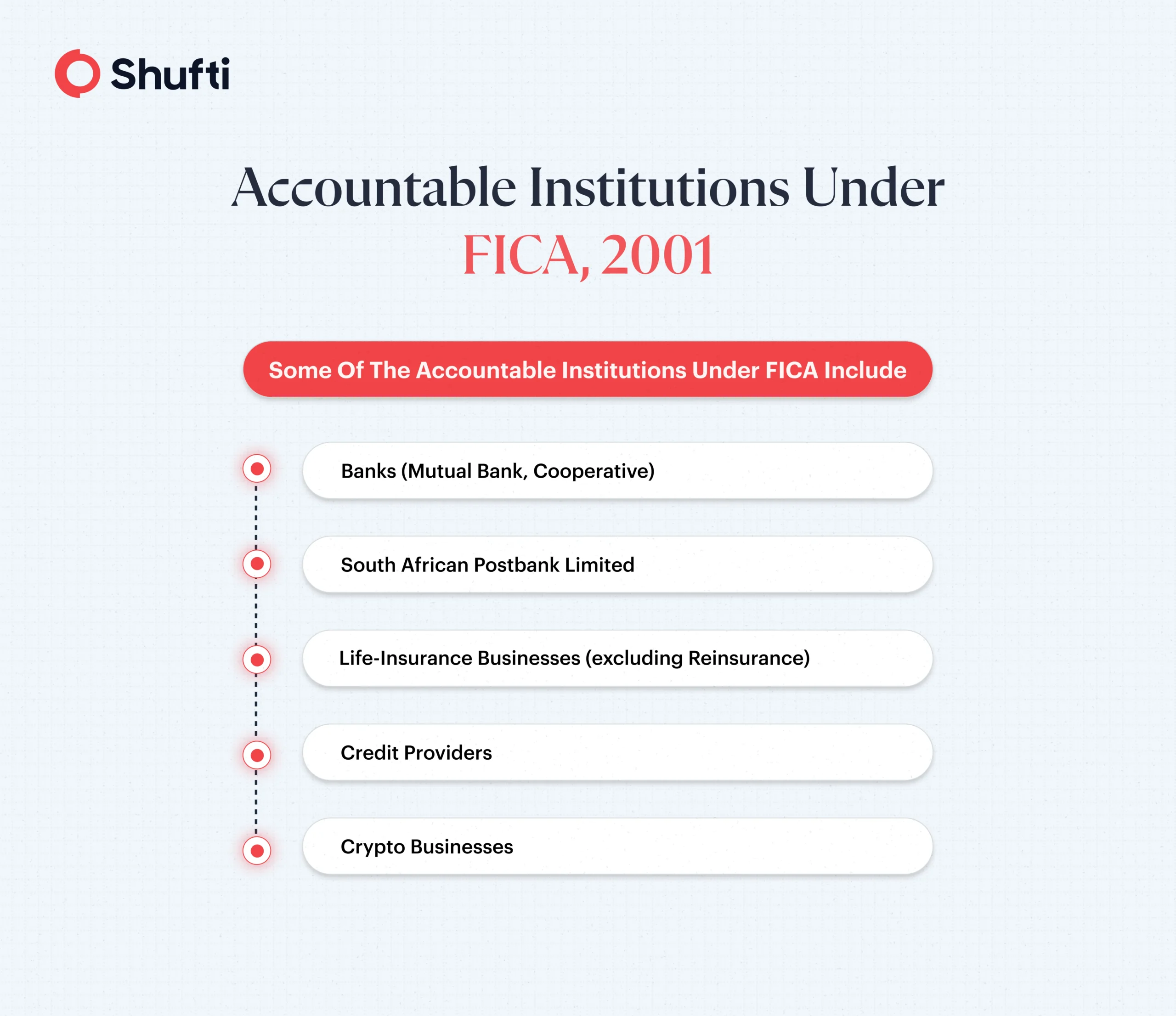
The Financial Intelligence Centre Act, 2001 (Act 38 of 2001) is South Africa’s primary anti-money laundering and counter-terrorism financing legislation. It places customer due diligence obligations on all accountable institutions, including banks, insurers, estate agents, and attorneys, requiring them to verify the identity and residential address of every client before establishing a business relationship.
Under Section 21E, where an accountable institution is unable to complete the customer due diligence FICA requires, which includes verifying a client’s residential address, it may not establish a business relationship or conclude a transaction with that client.
Opening a Bank Account
Every major South African bank, including FNB, Absa, Standard Bank, Nedbank, and Capitec, requires proof of address as a standard part of opening an account. Banks apply their own internal risk frameworks when deciding which documents they accept, but all of them work within the standards set by FICA and FIC Guidance Note 3A.
SARS Tax Registration and eFiling
The South African Revenue Service (SARS) requires proof of residential address when you register as a taxpayer, submit a change of address, or complete identity verification during eFiling. SARS accepts utility bills, bank statements, and lease agreements, subject to the standard three-month recency requirement.
SIM Card Registration (RICA)
The Regulation of Interception of Communications and Provision of Communication-Related Information Act (RICA) requires every South African SIM card to be registered to a verified identity and residential address. Mobile network operators, including MTN, Vodacom, Cell C, and Telkom Mobile, accept the same documents recognised under FICA.
Rental, Bond Registration, and Property Transfers
Landlords and letting agents request proof of address as part of tenant screening. For bond registrations and property transfers, conveyancers require FICA-compliant proof of address for every party to the transaction, and it is a mandatory step in the transfer process.
Municipal Services and Employment Verification
Applying for a new electricity, water, or rates account with a municipality requires proof of address and identity. Some employers, particularly in regulated industries such as financial services, also request proof of address as part of background screening.
Accepted Proof of Address Documents in South Africa
The Financial Intelligence Centre and the South African Revenue Service both publish a practical, non exhaustive list of documents that qualify as proof of address. Accountable institutions may accept additional document types within their own risk frameworks. Unless stated otherwise, every document must be no older than three months at the point of submission.
1. Utility Bill (Electricity, Water, or Rates)
A municipal bill for electricity, water, or refuse removal in your name is the most widely accepted proof of address in South Africa. It needs to show your full name and physical residential address, and it must not be older than three months. Both paper and electronic copies are accepted.
2. Bank Statement
A statement from a registered South African bank that shows your name and residential address works across FICA, banking, SARS, and RICA processes. It must be dated within the last three months and show a physical address, not a PO Box. Statements downloaded from your bank’s online portal or app are valid.
3. Lease or Rental Agreement
A current, signed lease from a registered letting agent or private landlord qualifies as proof of address. It must be signed by both parties and include the full physical address of the property. An expired lease does not count, even if you still live there.
4. Municipal Account or Rates Bill
A rates, refuse, or municipal services invoice addressed to you at your residential address is accepted. This is particularly useful for property owners whose utility bills may be in someone else’s name.
5. Affidavit Confirming Residence
A sworn affidavit commissioned by a Commissioner of Oaths is accepted when standard documents are not available. Under FIC Guidance Note 3A, the affidavit should include your full name and identity number, your residential address, the identity details of the deponent, their relationship to you, and confirmation of your residence. Affidavits are available free of charge at any SAPS station and are subject to the three month rule.
6. Government Correspondence
Official letters from SARS, the Department of Labour, or another government institution confirming your residential address are accepted. The correspondence needs to show your name and physical address and must be recent.
7. Insurance Policy
A long term or short-term insurance policy issued in your name and showing your residential address (homeowner’s, vehicle, or life cover) is accepted. Many institutions apply the standard three month rule, while others accept insurance documents up to twelve months old, so confirm the requirement with the institution.
8. Telecommunications Account
A contract account from a registered South African telecommunications provider such as Telkom, MTN, Vodacom, Cell C, or Rain, registered in your name and residential address, is accepted. Prepaid accounts that carry no registered address do not qualify.
9. Television Subscription (DStv, Showmax)
A subscription account for a broadcast or streaming service, registered in your name and physical address, is accepted by most FICA-regulated institutions. DStv and Telkom television accounts are the most commonly used.
10. Bond or Mortgage Document
A bond or mortgage document issued by a registered financial institution, showing your name and residential address, qualifies as proof of address.
11. Vehicle Registration Document
A motor vehicle registration certificate (RC1) that shows your name and residential address is accepted by many FICA regulated institutions.
12. Retail Account Statement
A statement from a major South African retailer such as Edgars, Woolworths, Truworths, or Jet is accepted where it is recent, shows your name and registered physical address, and reflects an account in active use.
13. Employer Letter (Employer Provided Housing)
If you live in housing provided by your employer, a formal letter on official company letterhead, signed and stamped by an authorised representative and confirming your name and residential address, is accepted by most institutions.
How Recent Must Proof of Address Be?
FIC Guidance Note 3A identifies the three-month standard as good practice, and it has become the de facto requirement across virtually all South African institutions. It is worth knowing that the three-month rule is not written into the Act itself. It is guidance that the sector has adopted almost universally. The table below sets out the accepted validity period by document type.
| Document Type | Standard Validity Period | Notes |
| Utility bill | 3 months | Most widely applied standard |
| Bank statement | 3 months | Downloaded statements accepted |
| Lease agreement | Current and signed | Expired leases are not valid |
| Municipal letter | 3 months | Must be dated and signed |
| Affidavit | 3 months | New affidavit required after expiry |
| Government correspondence | 3 months | Must show current address |
| Insurance policy | Up to 12 months | Confirm with specific institution |
| Telecommunications account | 3 months | Contract accounts only |
| TV subscription | 3 months | Registered contract account |
| Employer letter | 3 months | Must be on official letterhead |
| Retail account statement | 3 months | Physical address must be visible |
| Bond or mortgage document | Institution discretion | Typically accepted if current |
| Vehicle registration | Institution discretion | Must show current residential address |
Can I Use a Digital or Electronic Proof of Address?
Yes. The FIC and most major South African banks accept electronic versions of proof of address documents, including PDF statements downloaded from online banking portals, emailed utility bills, and digitally issued municipal accounts.
The document still has to meet every standard requirement: it must show your name and physical residential address, be no older than three months, and come from a recognised third party. A screenshot of an email or a photograph of someone else’s document will not be accepted.
For FICA purposes, an institution may ask you to submit the digital document through a secure upload channel. Online account-opening platforms, including those used by Capitec, FNB, and TymeBank, routinely accept digital document uploads as part of their FICA-compliant onboarding.
What Does NOT Count as Proof of Address in South Africa?
The following are either explicitly identified by the FIC as insufficient or are widely rejected by South African institutions:
Department of Home Affairs slips: Address slips issued by the Department of Home Affairs are not accepted. The address is self-declared rather than independently verified, and it is often out of date.
Handwritten documents: A handwritten note listing your name and address is not accepted, no matter who wrote it. It is self-declared and cannot be independently verified.
Postal and PO Box addresses: FICA requires a physical residential address, so a document showing only a PO Box or postal address does not satisfy the requirement.
Expired or outdated documents: Anything older than three months, such as an old utility bill, an expired lease, or a lapsed subscription, is not valid.
Incomplete or unsigned affidavits: An affidavit that is missing required information, has not been signed by a Commissioner of Oaths, or is not stamped, is not valid.
Prepaid mobile accounts: Prepaid SIM accounts that carry no registered residential address are not accepted.
Medical aid statements without an address: Medical aid correspondence that does not show your physical residential address does not satisfy the requirement on its own.
What to Do If You Don’t Have Proof of Address in South Africa?
Not having a document in your name is one of the most common reasons South Africans are turned away when opening a bank account or completing FICA verification. It is also one of the easiest problems to fix.
FIC Guidance Note 3A openly acknowledges that not every client will hold a utility bill or bank statement in their own name, and it sets out recognised alternatives. There are five established routes to valid proof of address, plus specific guidance for students, informal settlement residents, foreign nationals, and others.
If you have nothing in your name, your fastest option is a free sworn affidavit from any SAPS police station, available the same day at no cost.
Option 1: Get a Free Affidavit at Your Nearest SAPS Station
A sworn affidavit commissioned by a Commissioner of Oaths is the most widely accessible alternative in South Africa. Every SAPS station has a duty officer who acts as a Commissioner of Oaths. The service is free and takes roughly 15 to 30 minutes.
What to bring:
- Your South African ID book, smart ID card, or valid passport
- If applicable, a utility bill, bank statement, or lease belonging to the person you live with
What the affidavit should contain:
- Your full name and identity number
- Your current physical residential address
- The full name and identity number of the deponent (you, a cohabitant, or your employer)
- The relationship between you and the deponent
- A statement confirming that you reside at the stated address
- The signature and official stamp of the Commissioner of Oaths
Many banks and institutions accept this affidavit for account opening, SARS registration, and RICA SIM registration. Acceptance for FICA onboarding can depend on the institution’s own risk policy. Some require the affidavit to be sworn by a cohabitant, homeowner, or employer rather than by you alone, in line with FIC Guidance Note 3A. The affidavit is valid for three months from the date it is commissioned.
Option 2: Ask Your Landlord for a Confirmation Letter
If you rent, formally or informally, your landlord can provide a written confirmation of residence that most banks and FICA-regulated institutions accept.
The letter needs the landlord’s full name, contact details, and signature; your full name and identity number; the full physical address; the date; and a statement confirming that you currently live there. If your landlord is a private individual, having the letter witnessed and stamped by a Commissioner of Oaths improves its chances of being accepted. The letter must be no older than three months.
Option 3: Use a Family Member’s Documents With an Affidavit
If you live with a parent, spouse, or other family member and no household bills are in your name, you can combine their utility bill or bank statement with a sworn affidavit confirming that you live at the same address.
How it works:
- Get the family member’s utility bill or bank statement, no older than three months and showing the physical address.
- Get a SAPS affidavit stating your name and ID number, the family member’s name and ID number, your relationship, and confirmation that you live together at the address.
- Submit both documents together.
Most major South African banks accept this combination for personal account opening, and the family member does not need to be present.
Option 4: Request a Letter from Your Municipality
South African municipalities can issue an address confirmation letter for residents who have no utility account in their own name. This is the standard route for residents of social housing, RDP properties, and informal settlements.
Visit your local municipal customer care centre with your identity document and ask for an address confirmation letter. If you live in an informal settlement, bring your erf or stand number; your ward councillor’s office can help you find it.
Several major municipalities also offer downloadable proof of address through their online portals:
- City of Cape Town: utility bills at capetown.gov.za/eservices
- eThekwini (Durban): statements via the eThekwini eBilling portal
- City of Johannesburg: account statements via the Joburg Connect portal
Option 5: Download a Bank Statement from Your Online Banking Portal
If you hold a bank account in your name but have no utility bills, your bank statement is itself valid proof of address, as long as it shows your physical residential address and is no older than three months. Every major South African bank lets you download an official statement from its online banking platform or mobile app. Make sure the statement shows your residential address rather than a PO Box.
Special Situations
Students Living on Campus or with Parents
If you live in a university or TVET college residence, ask your residence administrator or student affairs office for an official letter confirming your on-campus address. It must be on institutional letterhead, signed by an authorised staff member, and dated within three months. If you live with your parents, use their utility bill together with a sworn SAPS affidavit confirming your residence.
People Living in Informal Settlements
Under FIC Guidance Note 3, a utility bill addressed to your erf number, stand number, and township name, together with your name, is explicitly recognised as valid proof of address even where no formal street address exists. If no utility account is in your name, a letter from your ward councillor confirming your residence is accepted by many institutions, and a SAPS affidavit is always available as a fallback.
Foreign Nationals Residing in South Africa
Foreign nationals provide the same categories of proof of address as South African citizens, plus a valid passport and a visa, work permit, or study permit. A current signed lease together with your passport, is accepted by most FICA-regulated institutions. SAPS affidavit services are available to foreign nationals who present a valid passport or asylum seeker permit.
People Who Have Recently Moved
If you have just moved and no bills have been issued at your new address yet, use your current signed lease, which is valid from the date of signing, or get a SAPS affidavit confirming your new address. Update your records with your bank and SARS as soon as your first utility bill or statement arrives.
Unemployed Individuals
Being unemployed does not affect your ability to get valid proof of address. The SAPS affidavit, municipal letter, family member’s bill with affidavit, and landlord confirmation letter are all available regardless of employment status, and none of them require employment verification.
Summary: Proof of Address Options When You Have No Documents in Your Name
| Situation | Best Option | Cost | Timeframe |
| Living with family | Family member’s bill + SAPS affidavit | Free | Same day |
| Informal tenant | Landlord letter + SAPS affidavit | Free | 1 to 2 days |
| Student in residence | University or college letter | Free | 1 to 3 days |
| Informal settlement | SAPS affidavit or ward councillor letter | Free | Same day |
| Recently moved | Lease agreement or SAPS affidavit | Free | Same day |
| Foreign national | Lease plus passport, or SAPS affidavit | Free | Same day |
| Unemployed | SAPS affidavit or municipal letter | Free | Same day |
| Has a bank account, no bills | Download the bank statement online | Free | Instant |
FICA Proof of Address Requirements for Accountable Institutions
This section is for financial institutions, estate agents, attorneys, accountants, and other accountable institutions regulated under FICA. If you are an individual looking to provide proof of address, the sections above cover everything you need.
What Section 21E of FICA Requires?
Section 21E places a clear obligation on accountable institutions. Where an institution is unable to establish or verify a client’s identity, obtain the required information, or conduct ongoing due diligence in line with its Risk Management and Compliance Programme, it may not establish a business relationship or conclude a transaction with that client. In practice, verifying a client’s residential address forms part of this due diligence, so an address that cannot be verified can stop onboarding altogether.
The obligation is not simply to request proof of address. It is to verify the address against the institution’s own risk standards and to keep records of that verification under Section 22 of FICA, which requires all client due diligence records to be retained for at least five years.
FIC Guidance Note 3A: The Operational Standards
FIC Guidance Note 3A on client identification sets out the practical standards for proof of address verification. Its key provisions include:
Three-month recency standard: Documents should not be older than three months at the date of submission. The guidance describes this as good practice, and the regulated sector has adopted it almost universally.
Physical address requirement: Documents must reference a physical residential location. Postal-only details, PO Box numbers, and care-of addresses do not satisfy the requirement.
Erf, stand, and township addressing: Where a client’s address is expressed as an erf number, stand number, or township name, a document bearing the client’s name alongside those identifiers satisfies the address verification requirement.
Affidavit as a recognised alternative: Where standard documents are unavailable, Guidance Note 3A allows an institution to accept a sworn affidavit from the client’s cohabitant or employer. The affidavit must include the client’s full name and identity number; the deponent’s full name, identity number, and relationship to the client; the client’s physical residential address; and confirmation of the client’s residence.
Avoiding overly restrictive document policies: Guidance Note 3A notes that excessively restrictive document lists frustrate clients and create unnecessary barriers to financial access. Institutions are expected to take a reasonable, evidence-based approach to document acceptance that is consistent with their risk framework.
Risk-Based Approach
FICA’s risk-based framework requires accountable institutions to apply levels of verification scrutiny proportionate to the client’s risk profile.
| Risk Level | Due Diligence Standard | Proof of Address Requirement |
| Low risk | Simplified due diligence | Single document from approved list; standard three-month rule applies |
| Standard risk | Standard due diligence | One or more documents from the approved list; the three-month rule applies |
| High risk | Enhanced due diligence | Multiple corroborating documents; additional verification steps may apply |
Technical Rules That Apply to All Documents
Recency: Documents must meet the institution’s recency standard, with three months as the FIC benchmark.
Independence: Documents must come from a credible third party. Self-declared or self-prepared documents, including handwritten notes and unsigned affidavits, are not acceptable.
Physical address specificity: The document must reference the client’s physical residential address. Where that address is an erf, stand, or township, it must be stated clearly.
Name consistency: The name on the proof of address must match the name on the client’s identity document. Where the names differ, for example, after a marriage or a legal name change, the institution must obtain a supporting document that explains the discrepancy.
Record keeping: Under Section 22 of FICA, accountable institutions must keep all client due diligence records, including proof of address, for at least five years from the date the business relationship ends or the transaction is completed.
How Shufti Simplifies FICA-Compliant Proof of Address Verification?
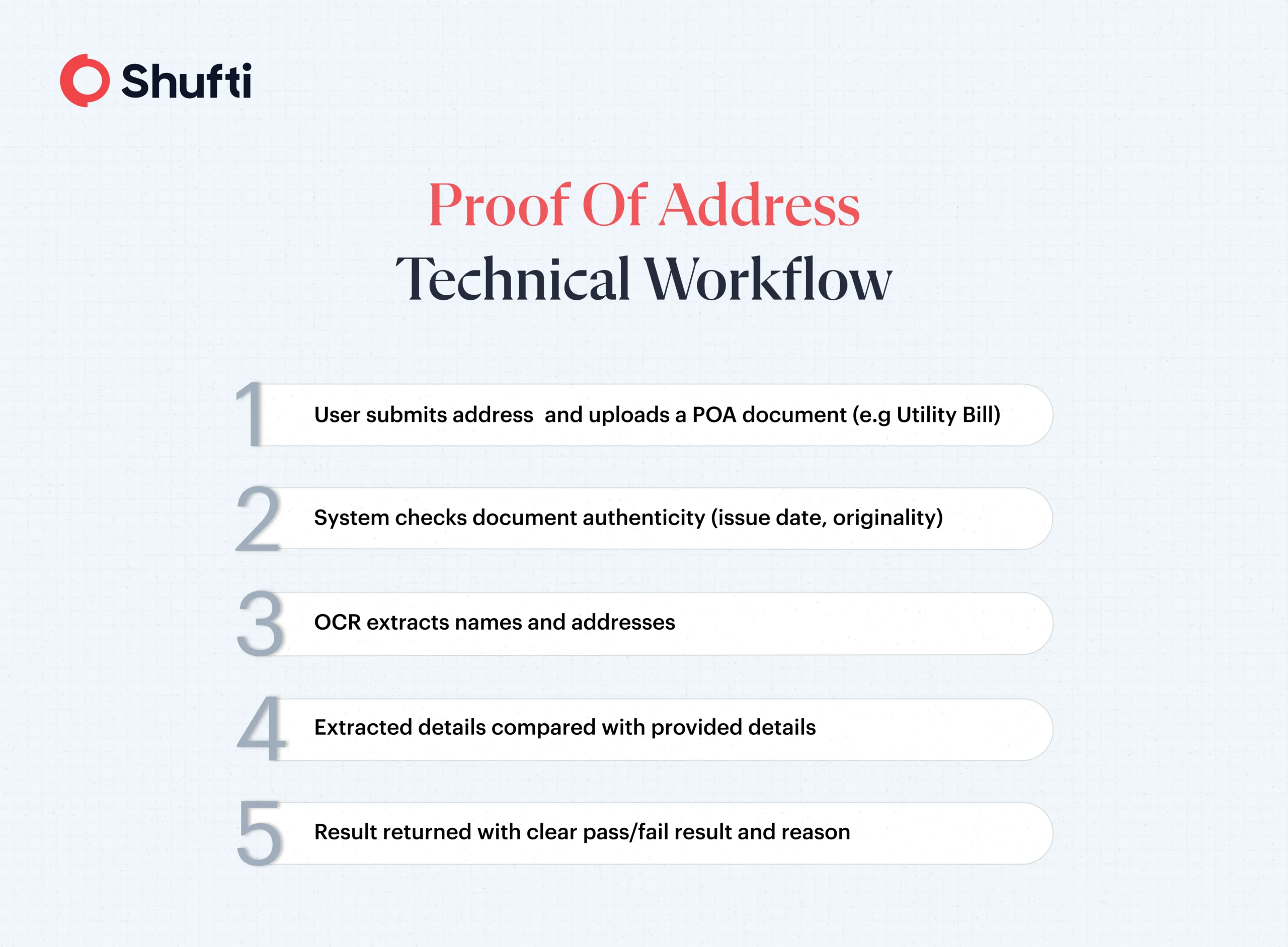
Proof of address checks are one of the points where onboarding most often stalls. People submit the wrong document type, upload a low-quality image, or send through a document that looks valid but has been altered. Each of these cases lands on a compliance officer’s desk for manual review, which slows onboarding, pushes up operational costs, and leads to inconsistent decisions across the team.
Shufti’s AI-powered document verification tackles each of these problems. It uses optical character recognition to read the address, machine learning to detect tampering, and a document library covering 240+ countries and territories. The platform extracts the address data, checks it against the submitted identity document, looks for pixel-level alterations, and flags inconsistencies as they happen.
For South African accountable institutions, Shufti supports every FICA-recognised proof of address document type, from utility bills and bank statements to lease agreements, affidavits, and telecommunications accounts. It handles both Latin and non-Latin scripts and works across physical and digital formats.
That gives compliance teams a proof of address process that is faster, more consistent, and fully defensible under FICA’s record-keeping rules, without adding compliance risk or losing applicants at onboarding.
Request a demo to see how Shufti handles FICA-compliant proof of address verification at scale.
Frequently Asked Questions
What is proof of residence in South Africa?
Proof of residence is a document from a credible third party, such as a bank, municipality, utility provider, or employer, that confirms your current physical residential address. It is required for FICA compliance, opening a bank account, SARS registration, SIM card registration under RICA, and rental agreements. The same documents apply whether the institution calls it proof of residence or proof of address.
How recent must proof of address be in South Africa?
Documents should generally be no older than three months at the date of submission. FIC Guidance Note 3A recommends the three-month standard, and virtually all South African banks and FICA-regulated institutions now treat it as the default. Some institutions accept insurance policies up to twelve months old, so confirm the requirement before you submit.
Can I use a bank statement as proof of address?
Yes. A statement from a registered South African bank showing your name and physical residential address is widely accepted for banking, FICA, SARS, and RICA purposes. It must be no older than three months and must display a physical address rather than a PO Box. Statements downloaded from your bank's online portal or app are valid.
What can I do if I have no proof of address documents in my name?
Your fastest option is a free sworn affidavit from any SAPS police station, available the same day at no cost. Bring your identity document and, if you have one, a utility bill or bank statement belonging to the person you live with. Other options include a landlord confirmation letter, a family member's bill combined with a SAPS affidavit, a municipal address confirmation letter, or a bank statement downloaded from your online banking portal.
Does proof of address expire?
Yes. Documents older than three months are no longer accepted for FICA and banking purposes. Affidavits, utility bills, and bank statements all carry the same three-month window. Once a document expires, you need a more recent one. Some institutions accept insurance documents up to twelve months old, but three months is the safe benchmark.
Can I use a digital or electronic copy of a proof of address document?
Yes. The FIC and most major South African banks accept electronic versions, including PDF statements from online banking portals and digitally issued municipal accounts. The document still has to show your name and physical address, be no older than three months, and come from a recognised third party. Screenshots and personal email correspondence are not accepted.
Can I use a relative's utility bill as proof of address?
Not on its own. If the bill is in a family member's name, you also need a sworn affidavit confirming that you live at the same address. The affidavit must state your name and identity number, the family member's name and identity number, your relationship, and confirmation that you share the residence. Most major South African banks accept this combination for personal account opening.
How do I get a proof of residence affidavit at SAPS?
Visit any South African Police Service station with your identity document. A duty officer, who is a Commissioner of Oaths, will commission the affidavit at no charge, and the process takes about 15 to 30 minutes. The affidavit must include your full name, identity number, and residential address, the deponent's details, the relationship between you, and the Commissioner of Oaths' signature and stamp. It is valid for three months.
What documents are NOT accepted as proof of address in South Africa?
The following are not accepted: Department of Home Affairs address slips; handwritten or self-declared address notes; PO Box or postal-only addresses; documents older than three months; unsigned or incomplete affidavits; prepaid mobile accounts with no registered address; and expired lease agreements. The FIC singles out Home Affairs slips and handwritten documents as insufficient because they are self-declared and cannot be independently verified.
What are the FICA proof of address requirements for financial institutions?
Under Section 21E of FICA, an accountable institution must verify a client's residential address as part of the due diligence set out in its Risk Management and Compliance Programme. If it cannot, it may not establish a business relationship or complete a transaction. FIC Guidance Note 3A sets the operational standard: documents should be no older than three months, must reference a physical address, and must come from an independent third party. Institutions apply a risk-based approach, with enhanced due diligence for higher-risk clients.