 Runs On Your Cloud
 No Data Sharing
 No Contract Required
 Explore Now







 Face Verification
 Address Verification
 Document Verification
 Age Verification
 VideoIdent
 Fast ID
 eIDV
eIDV
 NFC Verification
 Consent Verification
 Business Verification
 Due Diligence
 Investor Verification
 E-Signature
 Behavioural Biometrics
 Device Fingerprinting
 MFA
MFA
 AML Screening
 Business AML Screening
 User Risk Assessment
 Transaction Screening
 Adverse Media Screening
 Identity Verification
 KYC
KYC
 KYB
KYB
 KYI
KYI
 Bonus Abuse
 Fraud Prevention
 Banking
 Crypto
 Fintech
 Forex
Forex
 Gaming
 Gig Economy
 Marketplace
 Social Networks
 Product Managers
 Compliance Officers
 Fraud Analyst
 Global Trust Platform
 Journey Builder

 Content library
 Blogs
Blogs
 News
News
 Reports
 Insights
 Knowledgebase
 ROI calculator
 Blind Spot Audit
 Deepfake Detection
 Liveness Detection
 Document Originality
 Document Deepfake
 Events & Webinar
 Podcast Studio
 Spotlight Studio
 API Documentation
 Mobile SDKs
 Service Status
 Help Center
 Contact Us
 Technical Support
 Compliance
 Supported Document
 About
About
 Career
 Press Release
 Certifications
 Partnership
 Awards
FICA Compliant Proof of Address in South Africa

- 01 What is Proof of Address in South Africa?
- 02 Why Proof of Address Matters for FICA Compliance?
- 03 FICA Proof of Address Requirements & Risk-Based Approach
- 04 FICA-Compliant Documents Accepted as Proof of Address:
- 05 Technical Guidance for Accountable Institutions in South Africa:
- 06 What Does Not Count as Proof of Address:
- 07 Simplifying FICA Proof of Address in South Africa:
Proof of address requires users to find, scan, and upload physical documents. AI-powered verification tools can streamline this step by automatically validating documents, detecting tampering, and reducing onboarding drop-offs.
Financial Institutions (FIs) and regulated businesses that serve South African clients must comply with the proof-of-address obligations under the Financial Intelligence Centre Act, 2001 (FICA). Roadblocks in proof of address processes quickly lead to manual reworking, systematic delays, and delayed customer onboarding.
This blog serves as a complete guide to proof of address requirements in South Africa, including why proof of address matters, which documents qualify as valid proof of address, and what FIs and regulated businesses can do to establish an operationalized system.
What is Proof of Address in South Africa?
Proof of address is evidence that links a user to a physical residential address. It is an essential multi-purpose process that is used across financial, legal, and administrative services.
In practice, proof of address requirements in South Africa are met through documents issued by credible third parties such as banks, municipalities, insurers, or utility providers. In any case, the document must be recent enough to prove that the information is current.
Why Proof of Address Matters for FICA Compliance?
The requirement to prove the user’s address has multiple use cases. Through verifying the user’s physical geographical address, proof of address supports:
- Identity corroboration by confirming that the user is who they claim to be, and where they reside. Verification of where the user resides allows FIs and regulated businesses additional context for risk models, jurisdictional exposure, and product eligibility.
- Transaction monitoring and financial investigations. When the user’s financial activity is flagged as suspicious, review teams and investigators are able to reduce the risk of misdirected noise when they have verified details for outreach.
- Reducing common fraud efforts. Address data is often used in synthetic identity fraud, multi-accounting, and tax evasion. A thorough proof of address process serves as a barrier against low-level fraud that relies on incomplete names, non-existent PO boxes, or copied addresses.
FICA Proof of Address Requirements & Risk-Based Approach
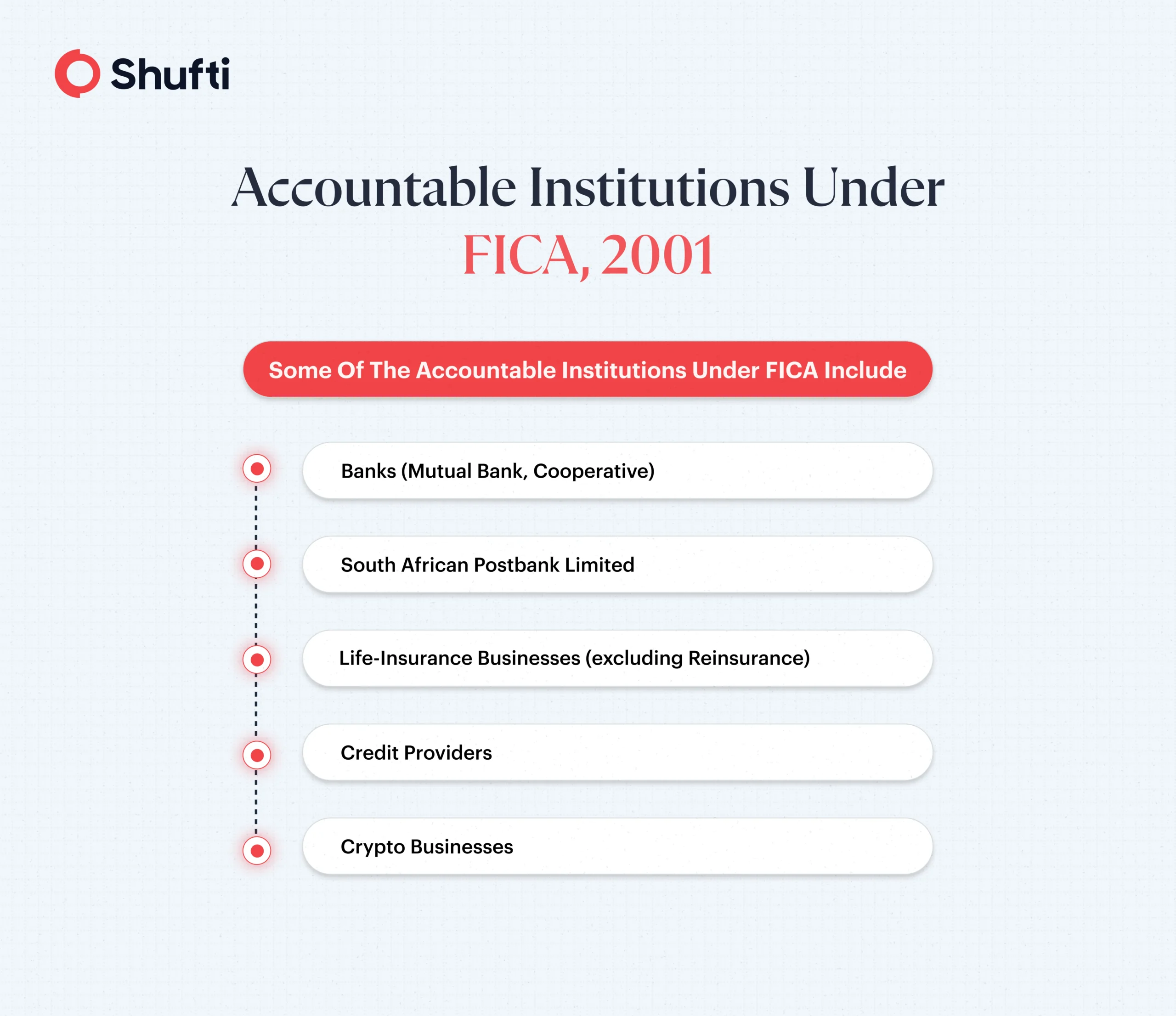
South Africa’s FICA places customer due diligence obligations on accountable institutions, including rules that prevent onboarding when required due diligence cannot be completed.
FICA directs accountable institutions to establish and verify the identity of the client in accordance with their risk assessment policy. For FIs and regulated businesses, this verification process routinely includes proof of address mechanisms to verify the physical address of the user.
Section 21E states that when an accountable institution is unable to establish and verify identity, obtain required relationship information, or conduct ongoing due diligence, the institution may not establish a business relationship or conclude a single transaction.
Additionally, the Financial Intelligence Centre Guidance Note 3A on client identification notes that overly restrictive document choices can frustrate clients, and it provides examples of documents that may offer confirmation of residential address. It also states that a good practice is to require documentation that is less than three months old, and that decisions on how residential addresses are verified should be based on the institution’s risk framework.
FICA-Compliant Documents Accepted as Proof of Address:
The FIC and the South African Revenue Service (SARS) provide a practical, non-exhaustive list that many firms use as a baseline for proof of address requirements. Outside this list, any other documents may serve as valid documentation as per the accountable institution’s risk framework. Commonly accepted documents for proof of address in South Africa include:
- Utility Bill:
An electricity, water, or any other utility bill in the name of the user is accepted as the most common proof of address.
- Bank Statement:
A statement from another bank that includes the name and residential address of the user.
- Lease/Rental Agreement:
A lease or rental agreement document that reflects the name and residence of the user.
- Municipal/Tax Invoices:
An invoice from the municipality, or a tax invoice addressed to the user at their residential address.
- Mortgage Document:
A mortgage document from another relevant accountable institution that includes the name and address of the user.
- Cellular Account:
A cellular account registered to the name and address of the user.
- Television License:
Subscription documents to TV services, such as DSTV, reflect the name and registered address of the user.
- Insurance Policy:
A long-term or short-term insurance policy issued in the user’s name and residential address.
- Vehicle Documentation:
Vehicle documentation, such as registration, including the name and residential address of the user.
- Retail Store:
A statement of accounts that is issued by a retail store, reflecting the address and name of the user
These are also commonly referenced as address verification documents SA in onboarding checklists because they tend to be available to most clients.
Technical Guidance for Accountable Institutions in South Africa:
The FIC Guidance Note 3 states further technical guidance for accountable institutions, explaining certain general rules that shall apply to any document used for collecting proof of a user’s address. These guidelines include:
1. Recency of Document:
Documents providing proof of the user’s address must be recent to establish that the user is still physically present at this given address. As such, the guidance recommends a good practice of accepting documents not older than 3 months from the date of submission.
2. Physical address evidence:
Residential address evidence should point to a physical location. Postal-only details often fail practical deliverability and investigation needs; many onboarding programmes avoid accepting PO Box-only proofs.
3. Erf or stand and township handling:
In cases where the residential address does not point to a physical location, utility bills containing the user’s erf/stand and township details, including their name, can be accepted.
4. Alternative means for proof of address:
If the user is not able to prove their address from the above documents, accountable institutions may obtain an affidavit from an employer, or the cohabitant of the user, containing the following information:
- The user’s name, residential address, and identity number of the deponent of the affidavit and the user.
- The nature of the relationship between the client and the deponent of the affidavit (cohabitor, employer)
- Confirmation of the user’s proof of address.
What Does Not Count as Proof of Address:
The FIC Guideline identifies a number of documents that contain information that cannot reasonably be expected to verify the user’s address. This is so because such documents are not reliable and cannot be verified from independent third-party sources. These include:
1. Slips issued by the Department of Home Affairs:
Address slips issued by the Department of Home Affairs in South Africa are not expected to contain information that can verify proof of address. Such information is not considered independent and is often outdated.
2. Hand-Written Documents:
Handwritten details of the user listing their name and residential address. Such notes are self-declared and therefore not reasonably expected to contain recent and accurate information.
3. Postal Addresses:
Residential addresses that are linked to physical PO Boxes will not be accepted as valid proof of address, since such addresses do not signify the physical address at which the user resides.
4. Expired or Outdated Documents:
Expired and outdated documents, such as old lease agreements or subscriptions, will not be accepted as valid proof of address documents.
Simplifying FICA Proof of Address in South Africa:
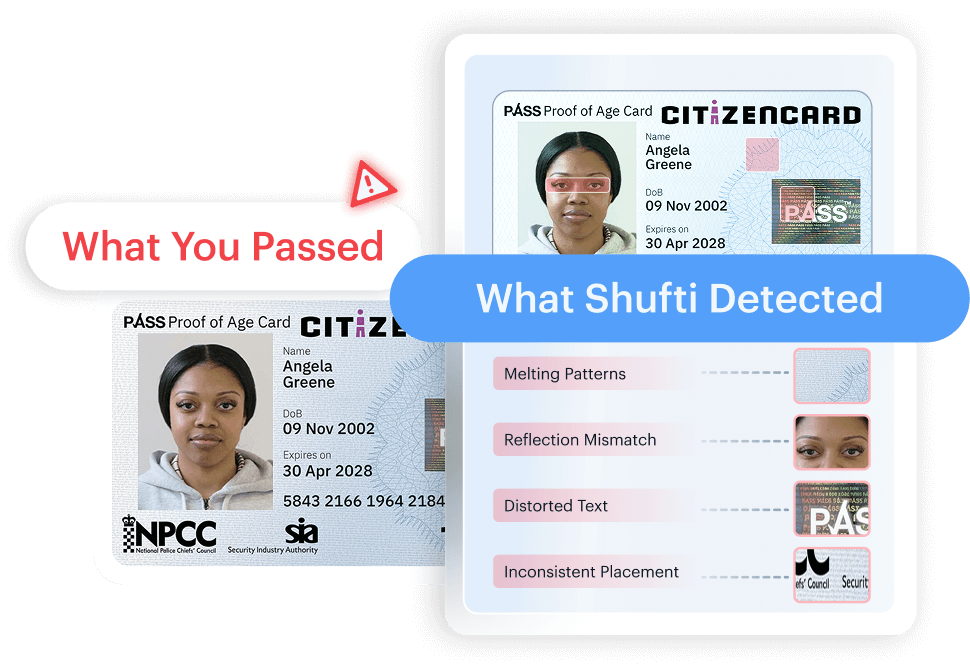
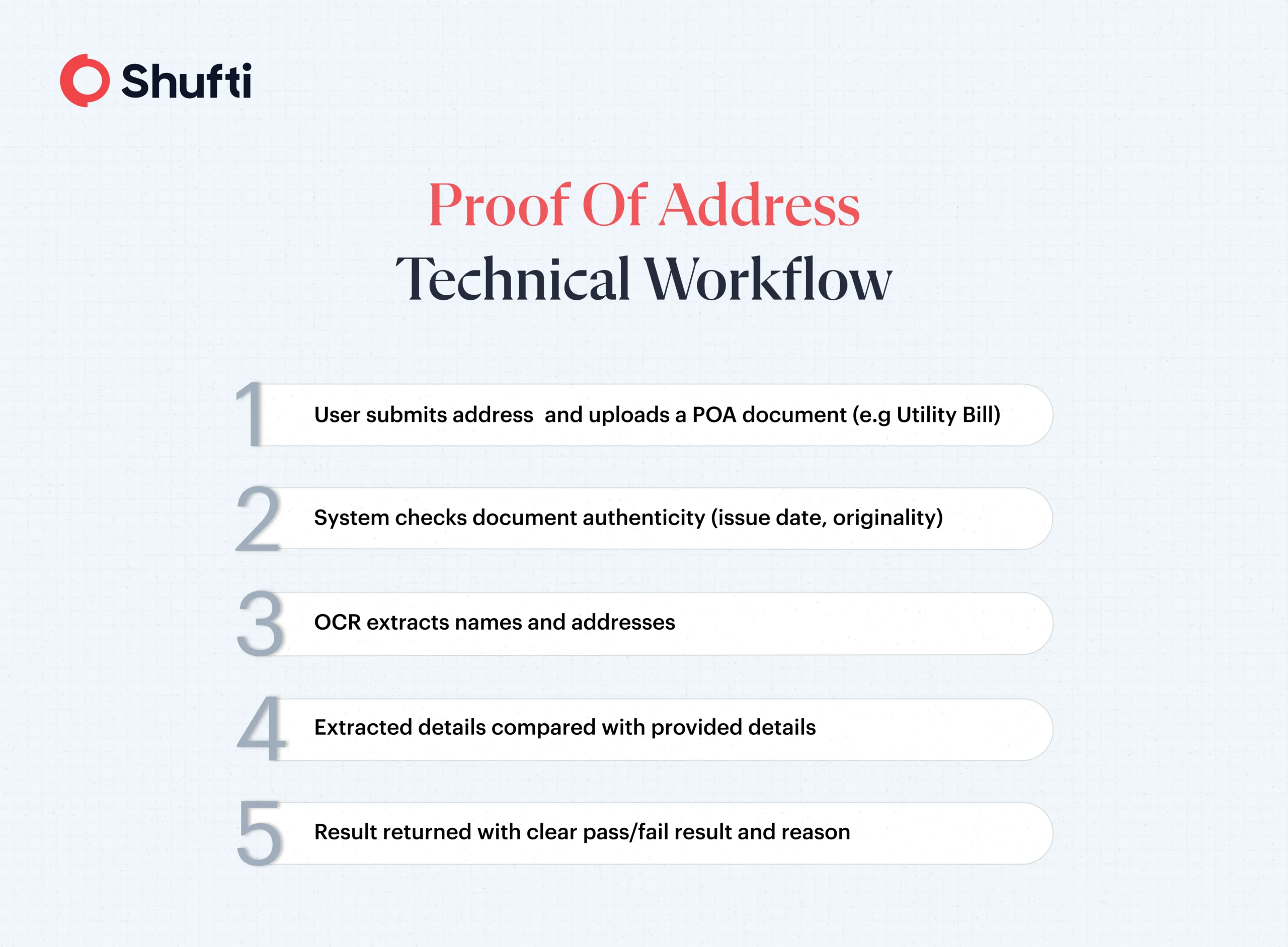
Proof of address checks in South Africa often break down when users submit the wrong document type, upload low-quality images, or share documents that look valid but have been edited. Advanced AI and machine learning algorithms improve verification accuracy by detecting altered documents, reading low-quality scans using OCR, and flagging inconsistencies automatically – reducing manual effort and errors.
Under FICA proof-of-address expectations, teams still need evidence that is readable, current, and defensible; therefore, inconsistent document review can quickly create onboarding backlogs and uneven decisions.
Shufti leverages AI-powered verification to handle hundreds of document types globally, detect pixel tampering, and ensure FICA-compliant proof of address verification that is both fast and accurate. This service supports all address-bearing document types in every language, including:
- Authenticity – detecting pixel tampering, Photoshop artifacts, and edges.
- Flexibility – supports hundreds of address documents, including utility bills, bank statements, subscriptions, and affidavits.
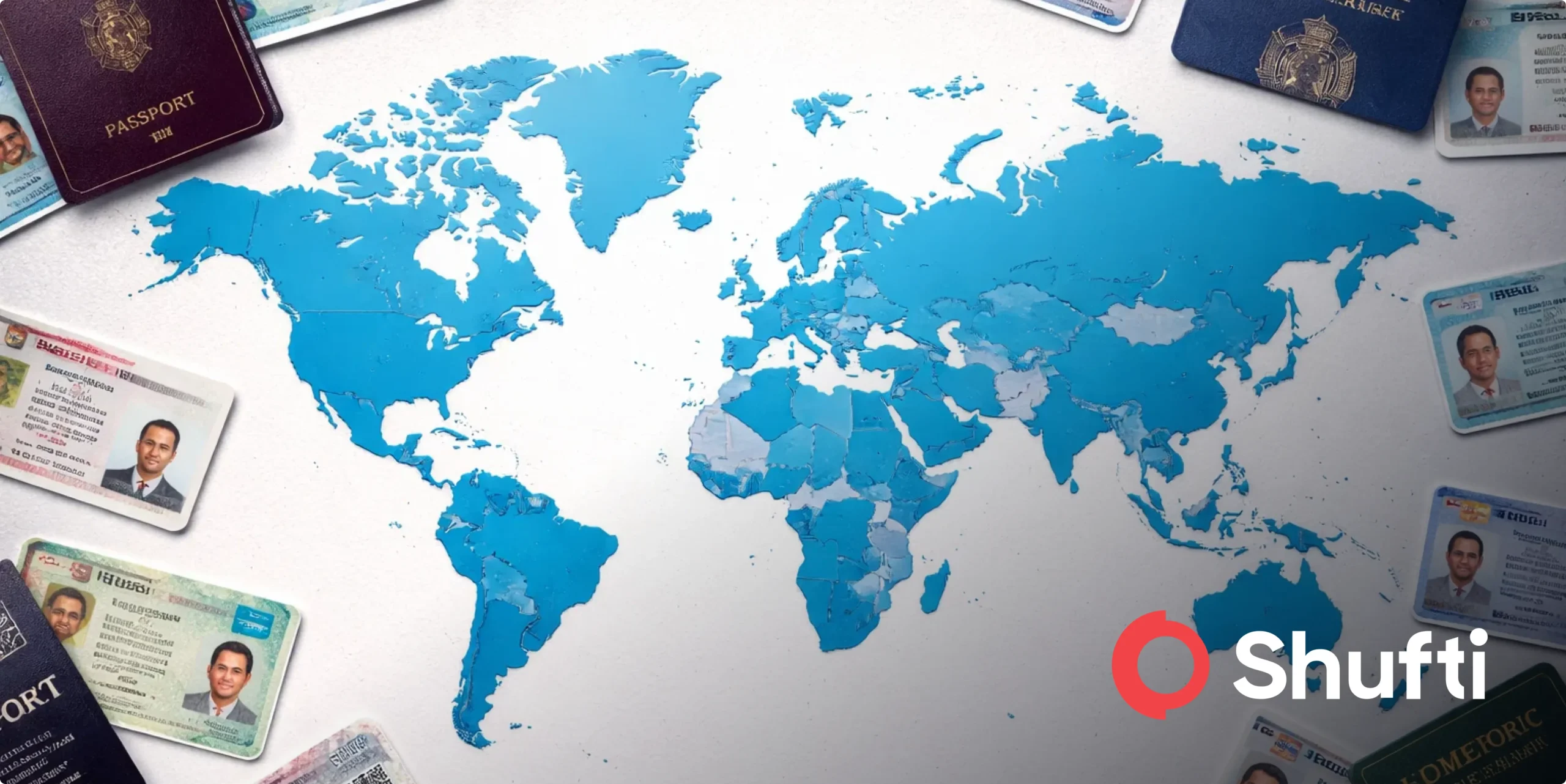
- Global Coverage – covers over 240+ countries with Latin and non-Latin scripts, including regional variations.
Through its global outreach and speed, Shufti transforms a cumbersome proof of address process from a bottleneck to a competitive advantage.
Request a demo to see how proof of address in South Africa can be standardised without weakening the evidence trail.
Frequently Asked Questions
What is FICA in South Africa?
FICA (Financial Intelligence Centre Act) is South Africa’s anti-money laundering (AML) and counter-terrorism financing (CTF) legislation. It requires financial institutions and other regulated businesses to verify the identity and address of clients to ensure they are not involved in illegal activities such as money laundering or fraud.
What documents are accepted as proof of address in South Africa?
Commonly accepted proof of address documents include: - Utility bills (electricity, water, etc.) - Bank statements - Lease or rental agreements - Municipal rates and taxes invoices - Mortgage statements - Insurance policy documents - Telephone or cellular accounts These documents should show the client’s name, residential address, and be recent (typically within the last 3 months).
What does not count as proof of address under FICA?
The following are generally not accepted as proof of address: - Address slips from identity documents issued by Home Affairs - Self-generated documents (e.g., handwritten letters) - PO Box-only addresses - Undated or outdated documents - Altered or cropped documents - Documents without the client’s name or address
What is FICA proof of residence?
FICA proof of residence refers to official documents that verify an individual’s current residential address, submitted as part of the customer due diligence (CDD) process under FICA. These documents help financial institutions ensure that their clients' address information is accurate and up-to-date for compliance with anti-money laundering regulations.