


 Face Verification
 Address Verification
 Document Verification
 Age Verification
 VideoIdent
 Fast ID
 eIDV
eIDV
 Consent Verification
 NFC Verification
 Business Verification
 Due Diligence
 Investor Verification
 QES
QES
 E-Signature
 AML Screening
 Transaction Monitoring
 PEP & RCA
 Sanctions
 Watchlist
 Adverse Media Screening
 Business AML Screening
 Behavioural Biometrics
 Device Fingerprinting
 1:1 Authentication
 Fraud Hub
 MFA
MFA
 Onboarding
 Ongoing Monitoring
 Age Assurance
 Identity Verification
 KYC
KYC
 KYB
KYB
 KYI
KYI
 Workforce IAM
 Candidate Verification
 Compliance
 Fraud prevention
 Trust & safety
 Global expansion
 Product Managers
 Compliance Officers
 Fraud Analysts
 Developers
 Global Trust Platform
 Case Management
 Journey Builder
 Shufti AI
 Fraud Analytics
 Vendor Comparison
 Brand Personalisation
 IDV Modes
 AI Compliance Co-Pilot
 OCR
OCR
 Secure Capture
 Deployment Options
 Identity Methods
 Banking
 Fintech
 Crypto
 Gaming
 Forex
Forex
 Social Networks
 Marketplace
 Gig Economy
 Payments
 Ride Hailing
 Adult Content
 Blind Spot Audit
 Deepfake Detector
 Liveness Detection
 Document Originality
 Document Deepfake
 Deepfake
 Account Takeover
 Synthetic Identity Fraud
 Document Fraud
 Impersonation Fraud
 Multi-Accounting
 Bonus Abuse / Promotion Abuse
 Fraud Networks
 Chargeback Fraud
 Money Mule Activity
 Party Fraud
 Regulatory & Compliance Risks
 API Documentation
 Mobile SDKs
 Service Status
 Help Center
 Contact Us
 Technical Support
 Supported Documents

 Content library
 Blogs
Blogs
 News
News
 Reports
 Insights
 Knowledgebase
 ROI calculator
 About
About
 Career
 Press Release
 Certifications
 Partnership
 Awards
 Events & Webinar
 Interactive Demo
 Podcast Studio
 Spotlight Studio
CSIR Reports Surge in Cybercrimes Pertaining to Work-from-home Culture
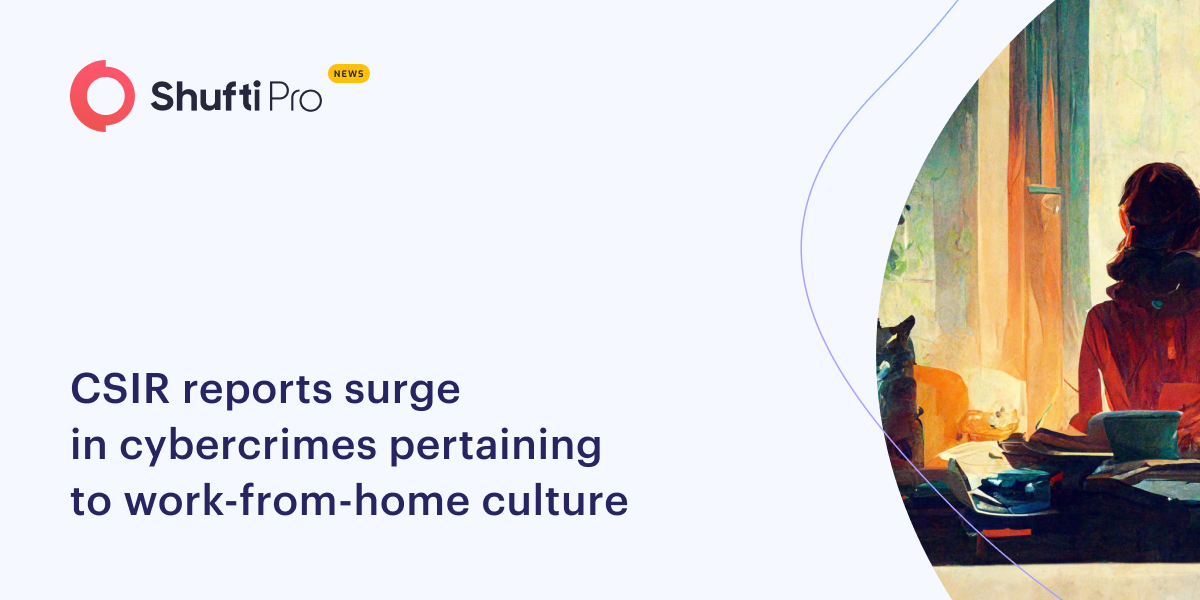
The Council for Scientific and Industrial Research (CSIR) has reported that cyberattacks have increased after the work-from-home culture was adopted due to Covid-19.
Remote employment has led to an upsurge in cybercrimes worldwide, and South Africa isn’t an exception. Despite improvements in existing cybersecurity laws, the country is still at risk of attacks on its commercial interests and national security due to a lack of resources and technical expertise.
As per the Council for Scientific and Industrial Research’s (CSIR) Billy Petzer, a major cause of the rise in cyberattacks during the covid outbreak is that more and more people switched from secure offices and channels to remote working where there’s less protection.
The main issues facing this country, according to Petzer, include SIM swaps and various identity theft. He stated, “These are all things we need to counter and work against. We are looking at efforts to counter fraudulent SIM swaps that are in the early stages, it is on our radar.”
Petzer mentioned a severe scarcity of cyber security expertise as one of the hurdles facing South Africa. He added: “I think universities need to lower the bar of access for people to become certified in cyber security. At the moment there aren’t really any formal degrees for cyber security. Usually, people would have to study for a full engineering degree or an IT degree, and then they would have to specialize in cyber security by obtaining additional certifications and experience. At the moment it takes up to eight to ten years to become a skilled cyber security professional, but at the same time technology and threats are evolving rapidly.”
Looking down the road to the obstacles the country will face, Petzer noted that each generation faced unique difficulties and was inclined to be exposed to various tactics because they saw and used technology in different ways. He noticed: “Millennials and Generation Zs tend to fall for sextortion scams. They are more comfortable sending intimate pictures of themselves. The challenges to be faced by the generation after that, who knows?”
One important rule to abide by is to avoid providing any personal details to anyone on the telephone or via email. Additionally, public Wi-Fi should not be used to access private or financial information, and select apps carefully while keeping an eye on URLs and attachments if one is unsure of their source.
Suggested Read: COVID-19 Has Made Cybercrime More Structured