 Runs On Your Cloud
 No Data Sharing
 No Contract Required
 Explore Now





 Face Verification
 Address Verification
 Document Verification
 Age Verification
 VideoIdent
 Fast ID
 eIDV
eIDV
 NFC Verification
 Consent Verification
 Business Verification
 Due Diligence
 Investor Verification
 E-Signature
 Behavioural Biometrics
 Device Fingerprinting
 MFA
MFA
 AML Screening
 Business AML Screening
 User Risk Assessment
 Transaction Screening
 Adverse Media Screening
 Identity Verification
 KYC
KYC
 KYB
KYB
 KYI
KYI
 Bonus Abuse
 Fraud Prevention
 Deepfakes
 Banking
 Crypto
 Fintech
 Forex
Forex
 Gaming
 Gig Economy
 Marketplace
 Social Networks
 Product Managers
 Compliance Officers
 Fraud Analyst
 Global Trust Platform
 Journey Builder
 Vendor Comparison
 Content library
 Blogs
Blogs
 News
News
 Reports
 Insights
 Knowledgebase
 ROI calculator
 Blind Spot Audit
 Deepfake Detection
 Liveness Detection
 Document Originality
 Document Deepfake
 Events & Webinar
 Podcast Studio
 Spotlight Studio
 API Documentation
 Mobile SDKs
 Service Status
 Help Center
 Contact Us
 Technical Support
 Compliance
 Supported Document
 About
About
 Career
 Press Release
 Certifications
 Partnership
 Awards
Florida Wins Temporary Green Light to Enforce Social Media Restrictions for Minors
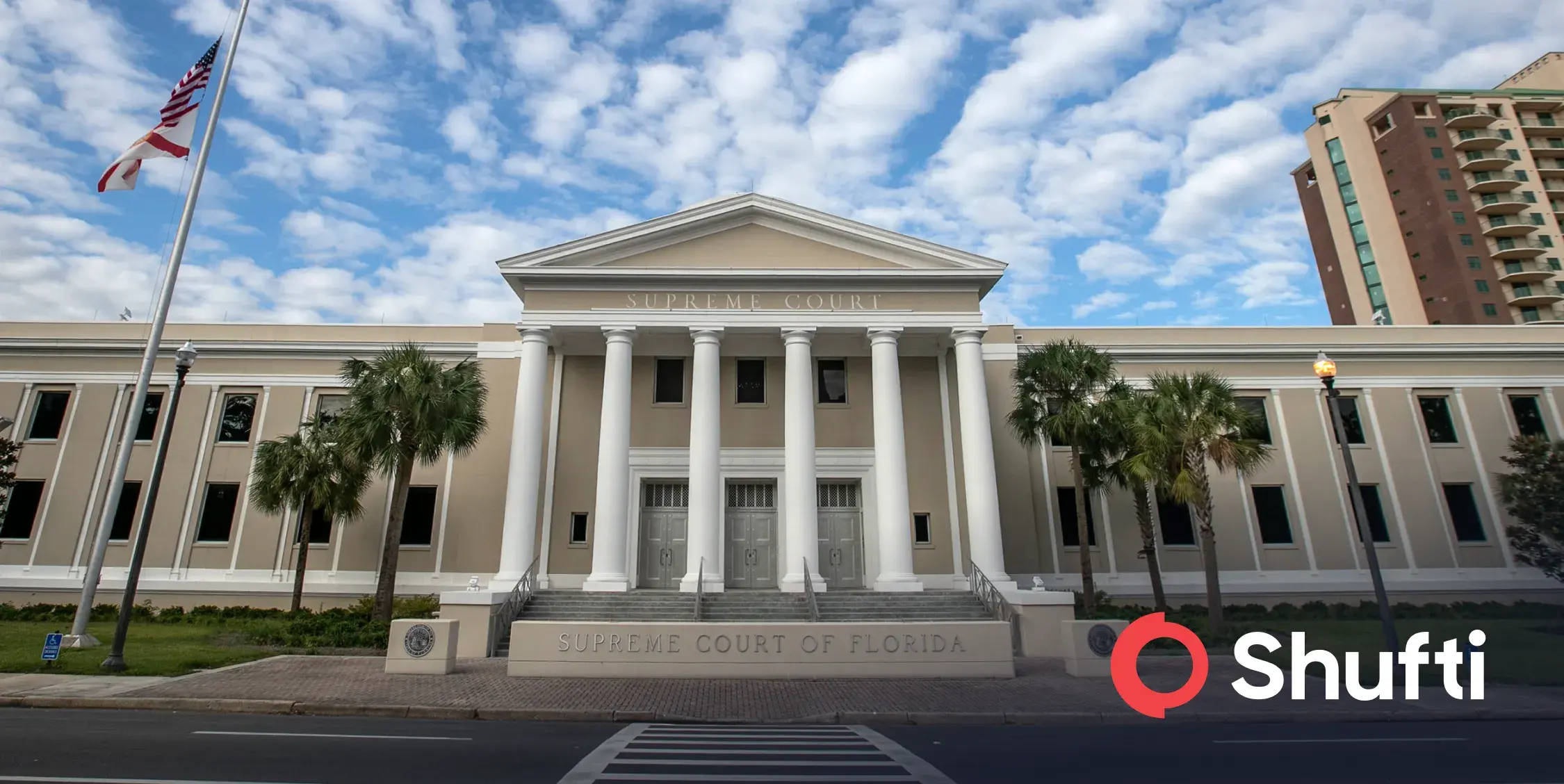
Florida can now start enforcing one of the most debated 2024’s social media laws. The federal court’s decision allows the state government to enforce the law until a decision on the appeal is reached. The 11th U.S. Circuit Court of Appeals stayed a previous injunction that halted the implementation of House Bill 3 (HB 3).
The law bans children under 14 from creating accounts on certain social media platforms. The platforms likely to be covered, according to the court filings, include Instagram, Snapchat, Facebook, and YouTube. Teens aged 14 and 15 may only hold accounts with verified parental consent. The state argues these platforms intentionally use addictive features that are the cause of deliberate harm to mental health and fuel compulsive usage among minors.
Attorney General James Uthmeier quickly celebrated the ruling, saying Florida will “aggressively enforce” the law and that Big Tech must stop profiting from “predatory” design practices targeting kids.
The appeals court majority concluded HB 3 is likely constitutional, disagreeing with U.S. District Judge Mark Walker, who initially blocked the law on First Amendment grounds. Judge Elizabeth Branch, writing for the majority, said the law does not block all access but narrowly regulates account creation on platforms with documented high youth engagement and addictive mechanics.
The dissenting judge, Robin Rosenbaum, strongly condemned the law by declaring it “plainly unconstitutional.” She cautioned that the act would inevitably extend to adults as well, imposing age verification on every user and suppressing free expression across political, religious, and personal discussions. According to Rosenbaum, the law effectively regulates broad online speech rather than child safety alone.
Tech industry groups NetChoice and the Computer & Communications Industry Association, whose members include Meta, Snap Inc., and Google, continue to challenge the law in federal court. They argue Florida’s framework will not only restrict free speech but also likely push minors to use less regulated platforms and VPN workarounds. Though the temporary stay allows enforcement to begin, the broader constitutional fight over HB 3 is far from over.
However, the question for the Social Media platforms remains: how to reliably implement age verification checks if multiple states impose conflicting age thresholds?