




 Face Verification
 Address Verification
 Document Verification
 Age Verification
 VideoIdent
 Fast ID
 eIDV
eIDV
 NFC Verification
 Consent Verification
 Business Verification
 Due Diligence
 Investor Verification
 E-Signature
 Behavioural Biometrics
 Device Fingerprinting
 MFA
MFA
 AML Screening
 Business AML Screening
 User Risk Assessment
 Transaction Screening
 Adverse Media Screening
 Identity Verification
 KYC
KYC
 KYB
KYB
 KYI
KYI
 Fraud Prevention
 Bonus Abuse
 Deepfakes
 Multi-Accounting
 Banking
 Crypto
 Fintech
 Forex
Forex
 Gaming
 Gig Economy
 Marketplace
 Social Networks
 Product Managers
 Compliance Officers
 Fraud Analyst
 Global Trust Platform
 Journey Builder
 Vendor Comparison
 Content library
 Blogs
Blogs
 News
News
 Reports
 Insights
 Knowledgebase
 ROI calculator
 Blind Spot Audit
 Deepfake Detector
 Liveness Detection
 Document Originality
 Document Deepfake
 Events & Webinar
 Podcast Studio
 Spotlight Studio
 API Documentation
 Mobile SDKs
 Service Status
 Help Center
 Contact Us
 Technical Support
 Compliance
 Supported Documents
 About
About
 Career
 Press Release
 Certifications
 Partnership
 Awards
AML Screening
Minimize Global Risk with AI-Driven, Identity-Aware AML Screening
Shufti connects verified identities to proprietary global AML data and in-house name-matching, so you get fewer false positives, higher pass rates, and a clear audit trail across the customer lifecycle.
Request A Demo
Cleaner Signal, Stronger Risk Detection







Built to Turn AML Alerts into Audit-Ready Decisions
The Identity-Anchor Advantage
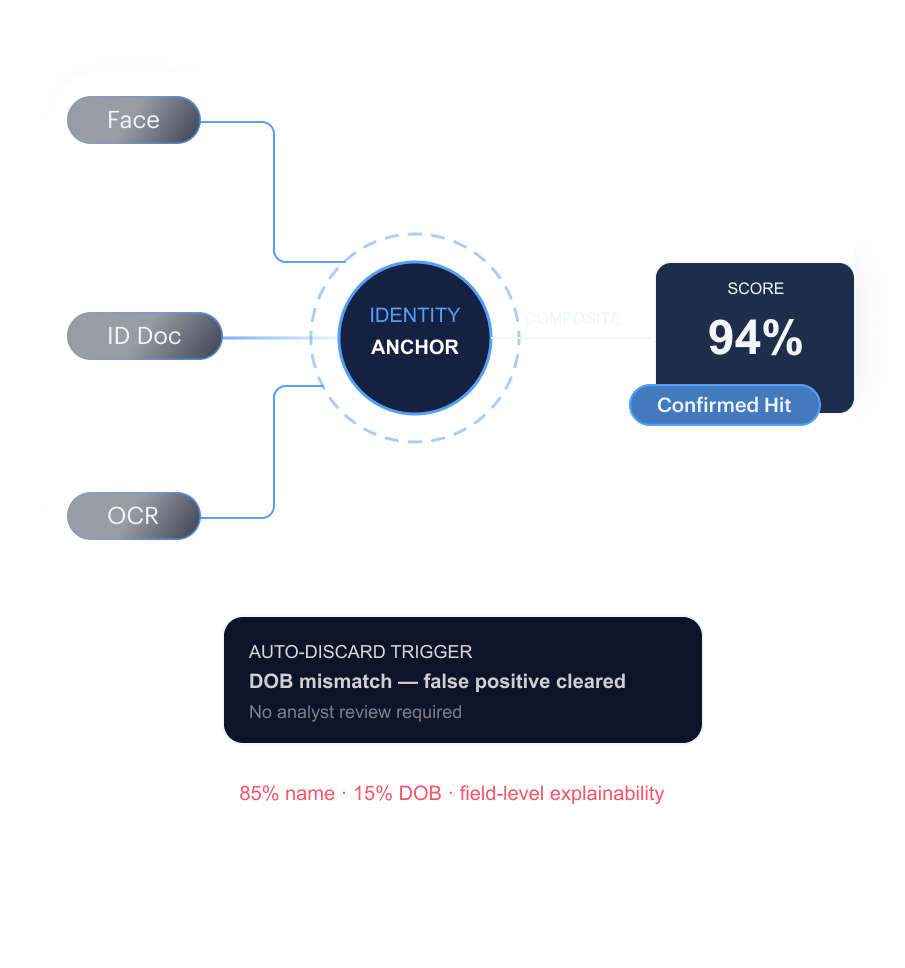
Common-name false positives flood AML queues, and verified criminals slip through under common-name cover. Shufti binds every hit to a biometric-verified identity (Face plus ID plus OCR), so the engine evaluates who, not just how the name was spelled.
Phonetic, diacritic, transliteration, cultural name-order and suffix rules calibrate to your risk appetite — not a vendor's default. Field-level scoring is explainable and tunable without an engineering ticket.
DOB, nationality, document number, and entity type from OCR feed directly into the composite confidence score. Hits where identity signals contradict are auto-discarded — analysts stop reviewing alerts that obviously aren't the same person.
One Owned Data Foundation
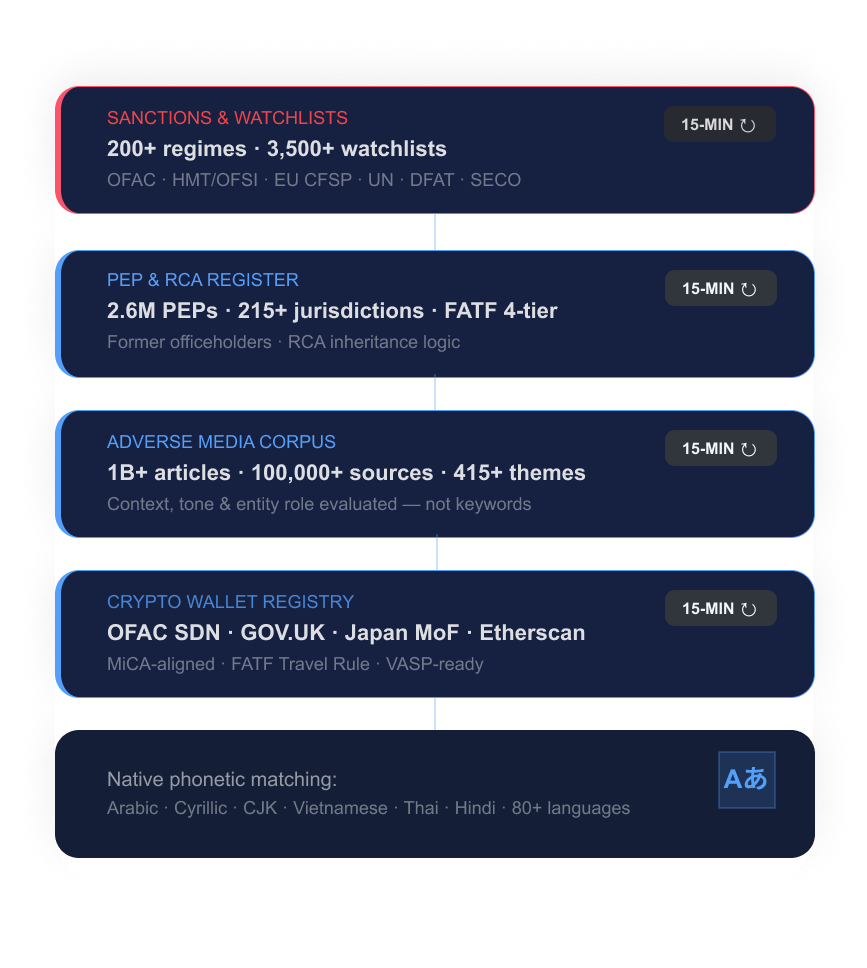
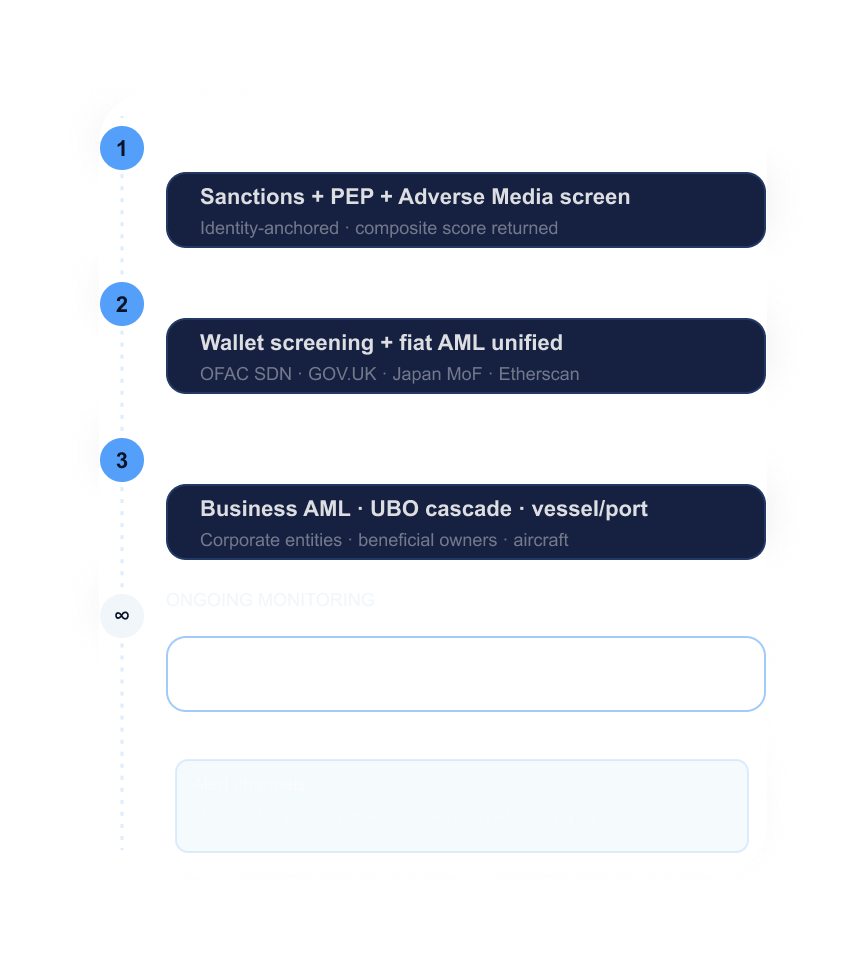
Shufti owns the stack: 4000+ watchlists, 2.6M PEPs across 215+ jurisdictions, and a 1B+ adverse-media corpus from 100,000+ global sources. One platform for complete audit.
Sanctions, PEP, adverse media, and crypto-wallet registries refresh every 15 minutes.
Latin-corpus engines mis-match Arabic, Cyrillic, CJK, Vietnamese, Thai, and Hindi. Shufti runs native phonetic models, transliteration, diacritic handling, and Unicode-confusable resolution before composite confidence is calculated.
Lifecycle Risk Coverage
Screen against 200+ sanction regimes and 3,500+ watchlists. Adverse-media intelligence scores articles across 415+ risk themes (sanctions, PEP, fraud, bribery, organised crime) with context, tone, and entity role evaluated — not keywords.
Wallets matched against OFAC SDN, GOV.UK, Japan MoF and Israel sanctioned-crypto-wallet lists, refreshed on the same 15-minute cadence as fiat AML. MiCA-aligned, FATF Travel Rule-aligned, VASP-onboarding-ready.
Corporate entities, beneficial owners, vessels, aircraft, and ports screened on the same data foundation. Continuous re-screening triggers real-time alerts via API, webhook, email, or back-office.
AI Compliance
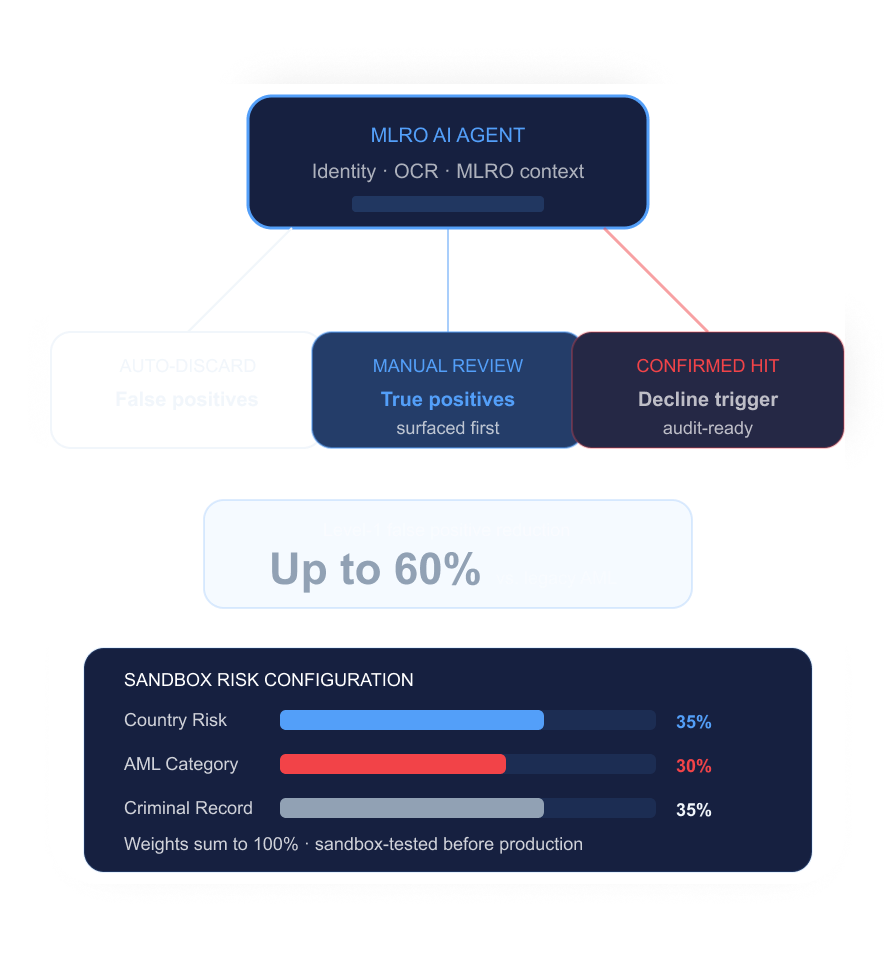
Reconciles every AML hit against the verified identity, OCR data, and MLRO context. Auto-discards provable false positives with plain-language rationale, surfaces true positives first, and clears up to 60% of Level-1 triage.
Compliance teams configure risk weights (country, AML category, criminal record — summing to 100%) and threshold bands (Accept, Manual Review, Decline) in the dashboard. Every policy change is sandbox-tested before production.
Internal watchlists, regulator-specific feeds, and resolved-alert whitelists support institutional memory. Reusable search profiles maintain consistent scope. Bulk Search via CSV plus API covers portfolio sweeps.
AML Screening Is the Foundation. Here Are the Layers Built On It

Sanctions Screening
Screen individuals and entities against 200+ global sanctions regimes — OFAC, HMT/OFSI, EU CFSP, UN Consolidated, DFAT, SECO, and 200+ more — with consolidated coverage and 15-minute enforcement updates.

Adverse Media Screening
Detect negative news across 50,000+ global sources with real-time multilingual monitoring across 80+ languages and contextual risk scoring across 415+ risk categories.

PEP & RCA Screening
Identify politically exposed persons, their relatives, and close associates with a four-tier FATF-aligned classification, RCA inheritance logic, and historical retention for former officeholders.

Watchlist Screening
Match individuals and entities against 3,500+ curated global watchlists drawn from 100,000+ sources, with 15-minute refresh and identity-aware composite scoring across 415+ risk categories.
Seamless Integrations, Powerful Results
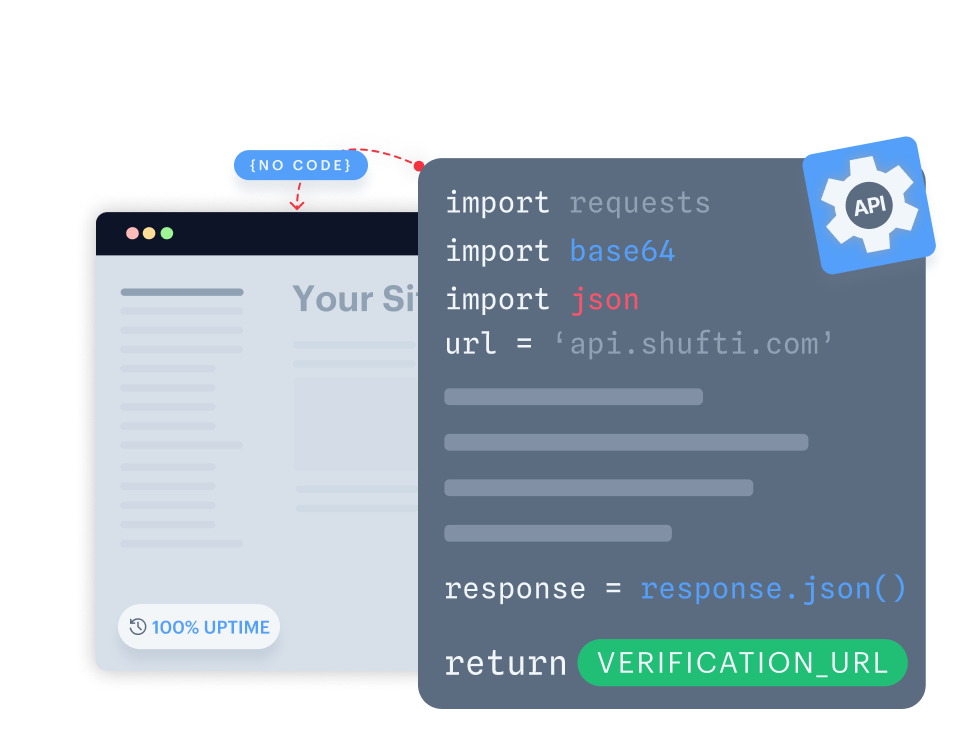
Build fully custom AML flows tailored to your risk policy and decisioning logic.
- Real-time hit alerts, decision callbacks, and audit-log export via webhooks.
- Bulk Search endpoint via CSV plus API for portfolio sweeps and look-back obligations.
- Identity-anchored composite scoring returned in every screening response.
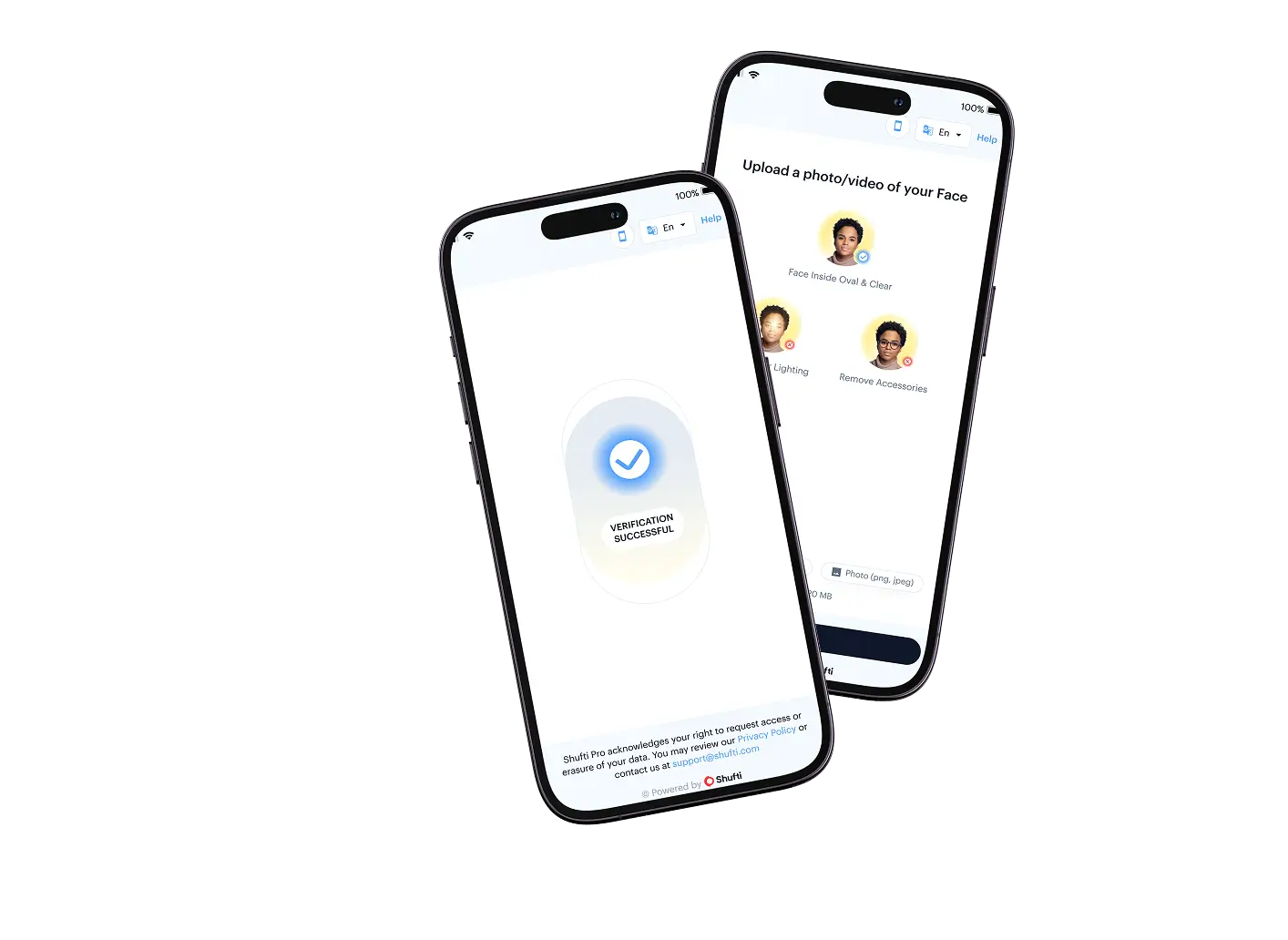
Launch a native verification experience inside your iOS or Android app within minutes.
- Launch native verification within minutes on iOS or Android.
- Use ready-made UI with camera, capture, and real-time feedback.
- Customise flows to fit seamlessly into your mobile app.
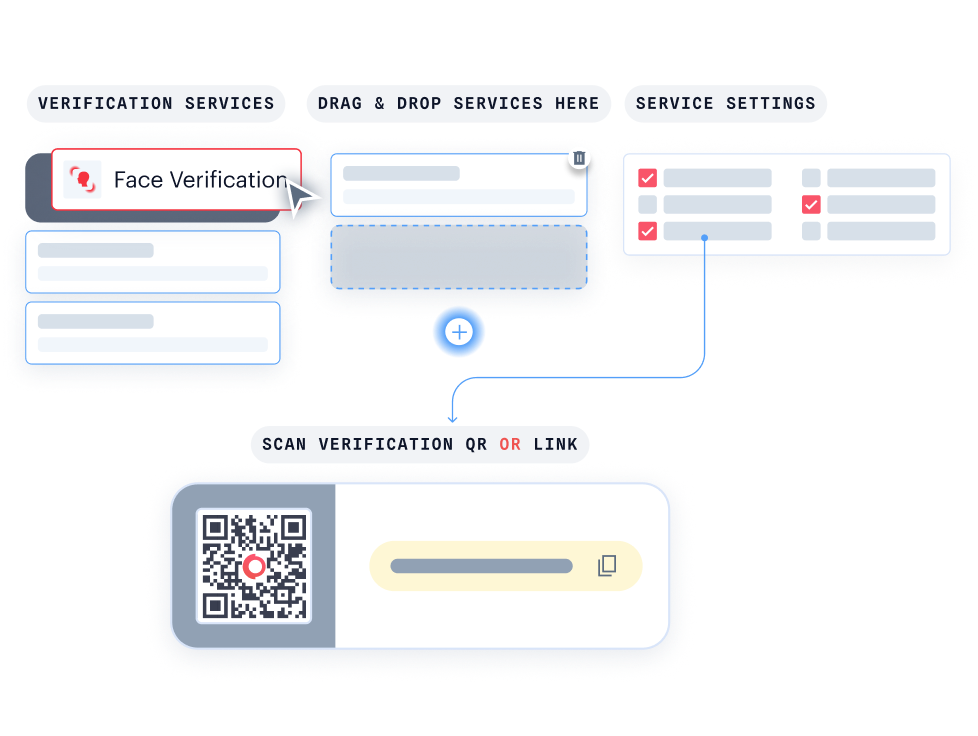
With KYC Journey Builder, design personalised verification journeys without writing a single line of code.
- Customise your journey effortlessly with drag-and-drop functionality.
- Instantly preview how your verification flow looks for your users.
- Easily connect with Hosted Verification for a consistent, branded experience.
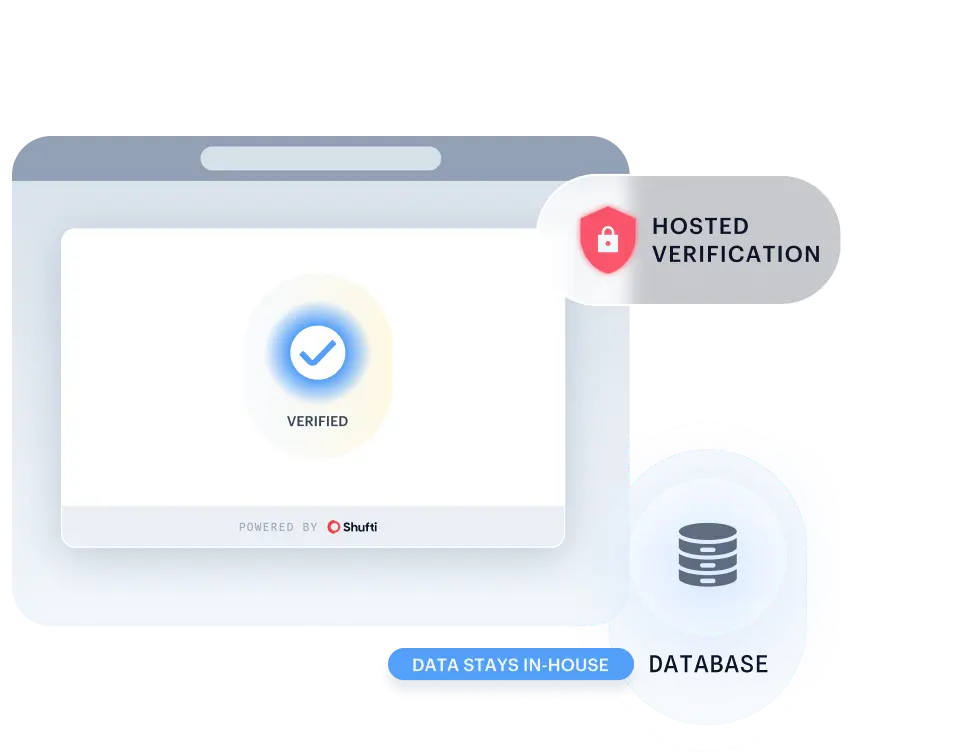
Run Shufti within your own infrastructure for maximum data control and privacy.
- Keep all sensitive information in-house to meet strict governance and residency requirements.
- Maintain full data sovereignty with secure, isolated processing.
- Deploy in highly regulated sectors without compromising compliance.
Where AML screening fits
Built for Regulated and High-Risk Industries
Seller Screening at Volume
Bulk seller onboarding plus event-driven monitoring is the new operating mode. Shufti's bulk-search endpoint, headless integration, and 15-minute refresh let trust and safety teams scale screening without scaling headcount.

Don't just take our word for it, hear from our customers
The Confidence Our Clients Share

The future of digital identity is defined by trust, interoperability, and regulatory alignment, so our partnership with Shufti reinforces DevCode Identity's commitment to supporting our global customers with the most secure, best-in-class, complaints identity verification solutions available today.
Combining our Conversion Driven Compliance Orchestration Platform with Shufti's global KYC and IDV capabilities allows our customers not only to navigate complex regulatory demands but also to maintain a seamless customer onboarding experience with the highest achievable conversion rates.
Shufti gives us verification journeys we can trust across every market we serve. The ability to route players through passive database checks, eID authentication, and full biometric liveness — all behind one API — has reshaped how we think about onboarding compliance.
Their team acts like an extension of ours. When regulators added new requirements across two European markets, Shufti’s journey builder let us adapt in days, not months.
FXBO customers demand speed without compromising AML rigour. Shufti’s eIDV fits exactly there — high-assurance verification for large deposits, invisible background checks for everything else, and one compliance trail across the board.
Integration took a single sprint. The SDK handled the full journey, so our product team stayed focused on trading features instead of building KYC screens.
As a regulated European payments platform, we need identity verification that meets eIDAS 2.0 and AMLD6 without multi-vendor stitching. Shufti delivers both — native eID authentication for high-assurance markets and docless database checks where eIDs don’t reach.
One contract, one audit log. That changes the compliance conversation entirely.
Frequently Asked Questions
What is the difference between AML screening and sanctions screening?
Sanctions screening checks against named regimes (OFAC, UN, HMT/OFSI, EU CFSP, DFAT, plus 200+ more). It is a subset of AML. AML screening also covers PEPs and Relatives and Close Associates, adverse media, criminal records, business AML (corporate, UBO, vessel, aircraft, port), and crypto wallet sanctions on one data foundation.
Why does AML screening need a biometric anchor?
Text-based AML screens whatever the customer types. Common-name false positives flood the queue, and verified criminals slip through under common-name cover. Binding every hit to a biometric-verified identity disambiguates the screened entity at the document layer before name-matching is calculated.
What is Shufti's false-positive rate, and how is it measured?
Customers using identity-anchored matching plus the MLRO AI Agent see up to 60% reduction in Level-1 false-positive triage compared with text-based legacy AML, measured against the customer's pre-Shufti baseline. Match-score composition is 85% name and 15% DOB with a below-90% confidence cap and field-level explainability.
How does the 15-minute refresh cadence work?
Sanctions lists, PEP registers, adverse-media articles, and crypto-wallet registries refresh every 15 minutes. Primary sources are collected directly from regulators (OFAC SDN, HMT/OFSI, EU CFSP, UN Consolidated, DFAT, SECO, GOV.UK, Japan MoF, Etherscan, Israel, plus 200+ more), not through aggregators.
How does Shufti perform on non-Latin names?
Native phonetic models cover Arabic, Cyrillic, Chinese (Simplified and Traditional), Vietnamese, Thai, and Hindi, plus Korean, Japanese, Bengali, Tamil, Hebrew, Greek, and 70+ further language families across 80+ supported languages. Cultural name-order, transliteration, and Unicode-confusable resolution applied before composite confidence is calculated.
What happens for jurisdictions outside the core 215+?
Where a jurisdiction has direct authoritative-source coverage, Shufti screens against the authoritative source. Where coverage is partial, the identity-aware fallback resolves the customer through name-matching across the 80+ language phonetic model, RCA mapping, and adverse-media intelligence in the local language.
Can Shufti AML deploy on private cloud or on-premises?
Yes. The matching engine, audit log, and case-management layer can deploy on private cloud or on-premises for banking, government, defence, and healthcare. AML data refreshes every 15 minutes via secure transport. Regional cloud processing is available across EU, UK, US, APAC, and MENA. SOC 2 Type II, ISO 27001, Cyber Essentials Plus, GDPR (DPA plus SCC), and CCPA documentation available on request.
How does Shufti align to the EU AMLR, AMLA, AMLD6, MiCA, and FATF Travel Rule?
AMLR (Regulation 2024/1624) takes effect on 10 July 2027. AMLA begins direct supervision on 1 January 2028. The maximum administrative penalty is doubled to EUR 10 million or 10% of turnover. Shufti's architecture meets the baseline of identity-anchored screening, field-level explainable scoring, sandbox-tested risk policy, immutable audit trail, real-time refresh, and unified fiat plus crypto coverage.
How does integration work, and how long does it take?
REST API and webhooks for real-time screening. Web and mobile SDKs for embedded journeys. No-Code Journey Builder for orchestration. Bulk Search via CSV plus API for portfolios. Headless Compliance for running Shufti behind an existing dashboard. Sandbox access on contract signature; standard scope deployments are typically completed within 30 days.
Stop Screening Strings, Start Screening People
Your onboarding verifies the person. Your AML should too. Evaluate whether your current stack covers verified identity, 80+ language matching, and 15-minute refresh — or just text against a feed.