 Runs On Your Cloud
 No Data Sharing
 No Contract Required
 Explore Now







 Face Verification
 Address Verification
 Document Verification
 Age Verification
 VideoIdent
 Fast ID
 eIDV
eIDV
 NFC Verification
 Consent Verification
 Business Verification
 Due Diligence
 Investor Verification
 E-Signature
 Behavioural Biometrics
 Device Fingerprinting
 MFA
MFA
 AML Screening
 Business AML Screening
 User Risk Assessment
 Transaction Screening
 Adverse Media Screening

 Identity Verification
 KYC
KYC
 KYB
KYB
 KYI
KYI
 Bonus Abuse
 Fraud Prevention
 Deepfakes
 Banking
 Crypto
 Fintech
 Forex
Forex
 Gaming
 Gig Economy
 Marketplace
 Social Networks
 Product Managers
 Compliance Officers
 Fraud Analyst
 Global Trust Platform
 Journey Builder
 Vendor Comparison

 Content library
 Blogs
Blogs
 News
News
 Reports
 Insights
 Knowledgebase
 ROI calculator
 Blind Spot Audit
 Deepfake Detection
 Liveness Detection
 Document Originality
 Document Deepfake
 Events & Webinar
 Podcast Studio
 Spotlight Studio
 API Documentation
 Mobile SDKs
 Service Status
 Help Center
 Contact Us
 Technical Support
 Compliance
 Supported Document
 About
About
 Career
 Press Release
 Certifications
 Partnership
 Awards
A Guide to Understanding KYC in Banking

2022 has witnessed a rise in the number of fraudulent cases by 18% compared to 2021, damaging businesses’ reputations. Scammers mainly targeted the banking sector to fulfill their illicit intentions. UK Finance has announced bank scams as a “threat to national security.” One way to combat money laundering and financial fraud is by reducing anonymous bank accounts and monitoring suspicious activity. This can only be done by knowing who your customers are through the Know Your Customer (KYC) process.
Who Needs to Perform KYC?
Any financial institution dealing with customers whilst account opening or maintaining must perform KYC verification. When a firm onboarding new customers or when the current client demands a regulated product, basic KYC procedures apply.
Financial firms for which KYC is legally binding include:
- Banks
- Credit unions
- Private lenders and lending platforms
- Broker-dealers and wealth management firms
- Fintech applications, based on the activities they engage in
KYC banking regulations are mandatory for almost every institution dealing with money. Whilst banks have to abide by KYC laws to stop fraud, they pass down KYC requirements for banks to companies with whom they are doing business.
Why is KYC Important for Banks?
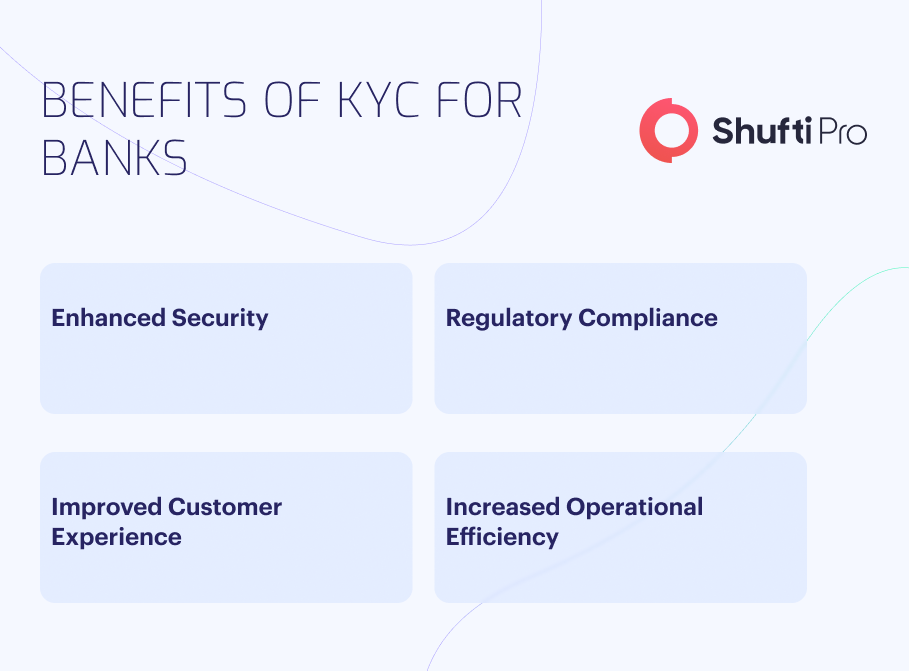
KYC is necessary for financial institutions to check a client’s identity and the level of risk they may pose. KYC-compliant banks prevent identity theft and fraud, stay compliant with regulations, and avoid fines.
Anti-Money Laundering (AML) regulations were introduced in 1970 to combat money laundering. After the 9/11 attack, the US passed stringent KYC regulations as part of the Patriot Act. Title III of the Patriot Act mandates financial firms to perform two core components of KYC: the Customer Identification Programme (CIP) and Customer Due Diligence (CDD). However, the latest KYC processes embrace a Risk-Based Approach (RBA) to mitigate the risk of identity theft, money laundering, and fraud:
- Identity Theft: India ranked first among countries with the highest number of identity theft cases worldwide in 2022, with 27.2 million adults victimised during this period. KYC helps financial firms establish proof of a client’s legal identity and mitigate identity theft risk.
- Money Laundering: Organised and unorganised criminals use dummy accounts in the banks to keep funds for human trafficking, narcotics, smuggling, etc. The KYC process limits their ability to avoid suspicion, spreading money across multiple accounts.
- Financial Fraud: Know your customer process prevents fraudulent economic activities, like using stolen or fake IDs to apply for loans and receive funding using fake accounts.
What Triggers KYC Verification?
Many activities require firms to reverify clients with an updated know your customer procedure. Triggers for KYC verification include:
- Suspicious transaction activity
- Change in the customer’s occupation
- Any change in the nature of the customer’s business
- Adding any new party to an account
For instance, initial Customer Due Diligence (CDD) and ongoing monitoring help banks identify red flags such as international transactions, frequent wire transfers, and interactions with any off-shore financial firms. A high-risk account is monitored more frequently and thoroughly, with the customer being asked to explain the transactions they did or update KYC-related data periodically.
What are the Components of KYC?
1. Customer Identification Programme (CIP)
Financial firms must ask clients for identifying information to meet the requirements of customer identification programmes. Each financial firm must perform its own CIP process depending on its risk profile, requiring a customer to provide different details per the institution’s requirement. KYC documents for an individual include a passport, ID card, driver’s licence, etc. For a business, the information required includes a government-issued business licence, partnership agreement, etc. However, in some cases, additional details are required from the individual or business, including financial references, information from public databases or a consumer reporting agency, a financial statement, etc. Financial firms must check that the details provided are accurate and credible using digital KYC services.
2. Customer Due Diligence
CDD requires financial firms to conduct comprehensive risk assessments, including checking the types of transactions that a customer makes. Institutions must authenticate anyone who owns 25% or more of any legal entity and any individual controlling the legal entity.
Three types of CDD processes include:
- Simplified Due Diligence (SDD): Carried out when the customer poses a low level of risk for money laundering or terrorism financing.
- Standard Customer Due Diligence (CDD): Collect baseline customer data to authenticate their identity and check their associated risks.
- Enhanced Due Diligence (EDD): Performed when customers pose a high risk of money laundering and other financial crimes For instance, if the client appears on a Politically Exposed Persons (PEPs) list, sanctions list, watchlist, or has adverse media coverage, EDD is conducted.
3. Continuous Monitoring
Continuous monitoring means that financial firms must track their customer’s transactions on an ongoing basis to detect any unusual activity. This step gives a dynamic and risk-driven approach to the know your customer process. Whenever suspicious or unusual activity is detected, the financial firm must submit a Suspicious Activities Report (SAR) to the Financial Crimes Enforcement Network (FinCEN) and relevant law enforcement bodies.
How Can Shufti Help?
Shufti offers a robust KYC solution that instantly verifies customers within seconds. We innovate our KYC services to prevent fraud whilst ensuring compliance with banking regulations.
Here’s what makes our KYC solution a must-investment for banks:
- Multi-Layer Authentication: Mitigate the risk of financial crimes with real-time document authentication checks. Helps the banking sector know their customers are who they say they are with multi-layered authentication.
- Secure Onboarding: Identify fake entities among potential clients within seconds, all whilst offering secure and fast identity verification.
- Ongoing KYC: Verify ongoing transactions using facial recognition technology. Monitor transactions that exceed the threshold to prevent money laundering and financial crime
- Customer Data Protection: Adhere to international data protection regulations to secure customer data.
Still, trying to understand how KYC solutions help banks avoid non-compliance fines?