 Runs On Your Cloud
 No Data Sharing
 No Contract Required
 Explore Now






 Face Verification
 Address Verification
 Document Verification
 Age Verification
 VideoIdent
 Fast ID
 eIDV
eIDV
 NFC Verification
 Consent Verification
 Business Verification
 Due Diligence
 Investor Verification
 E-Signature
 Behavioural Biometrics
 Device Fingerprinting
 MFA
MFA
 AML Screening
 Business AML Screening
 User Risk Assessment
 Transaction Screening
 Adverse Media Screening

 Identity Verification
 KYC
KYC
 KYB
KYB
 KYI
KYI
 Bonus Abuse
 Fraud Prevention
 Deepfakes
 Banking
 Crypto
 Fintech
 Forex
Forex
 Gaming
 Gig Economy
 Marketplace
 Social Networks
 Product Managers
 Compliance Officers
 Fraud Analyst
 Global Trust Platform
 Journey Builder
 Vendor Comparison

 Content library
 Blogs
Blogs
 News
News
 Reports
 Insights
 Knowledgebase
 ROI calculator
 Blind Spot Audit
 Deepfake Detection
 Liveness Detection
 Document Originality
 Document Deepfake
 Events & Webinar
 Podcast Studio
 Spotlight Studio
 API Documentation
 Mobile SDKs
 Service Status
 Help Center
 Contact Us
 Technical Support
 Compliance
 Supported Document
 About
About
 Career
 Press Release
 Certifications
 Partnership
 Awards
Fraud Prevention in Capital Markets for Protecting Investors and Firms

In the United States, consumers reported losses of more than $4.6 billion to investment scams in 2023, which makes it the largest fraud category by total losses. The possibilities of fraudulent schemes are on the rise as capital markets grow with faster trading, digital intermediaries, and retail participation. Fraudsters are taking advantage of technology and social networking to defraud investors by using cryptocurrency schemes, deepfake identities, and spoofing. In this context, fighting fraud in capital markets has turned out to be a priority for supervisors and banking entities. Therefore, there is a huge necessity to create a high verification and legal framework to protect the investors, assure confidence in the market, and implement better trading protocols.
Why Capital Markets Attract Fraudsters?
Capital markets are the selling and buying of long-term securities. These long-term securities are derivatives, bonds, and stocks. These marketplaces enable firms and governments for fundraising, with investors demanding returns. But as capital markets have become available online and more approachable, they act as a frontier for fraud. The increasing number of retail investors, fast trading, international trade, and the use of modern financial products enable scams to proliferate undetected. These conditions, combined with fraud tricks, lead to an apparent increase in fraud and financial damage, especially in spheres of blockchain currency.
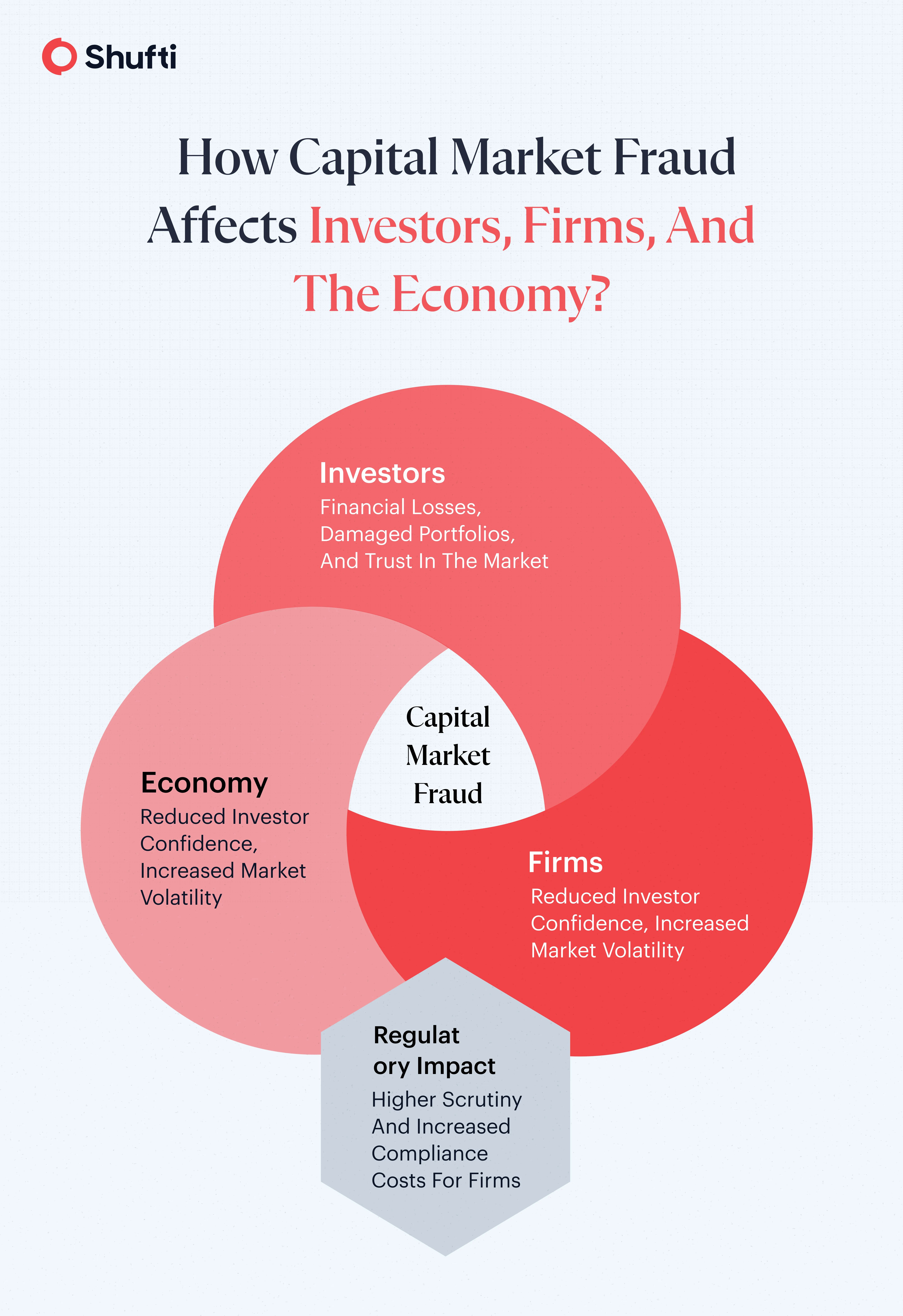
As investment and trading scams are increasing, regulators state that there is a significant increase in losses. The amount of money lost by consumers due to investment fraud increased by approximately 21% in 2022-2023, with scams linked with bitcoins remaining a primary contributor to these losses. Social platforms can now be used to implement an organized plot, and artificial intelligence allows the usage of deepfakes IDs and fake accounts, which can be used to develop additional points of vulnerability. All these trends complicate the process of capital markets fraud detection and prevention.
What are Capital Market Frauds? Common Types and Tactics?
Capital market frauds refer to the unlawful actions that are performed within the financial markets in a bid to deceive the stakeholders and illegally gain a financial advantage. These frauds usually reach investors via social media messages, impersonation, counterfeit broker websites, or deceptive filings, propagating concealed information that ruins financial decision-making and market prices. These activities destroy trust, drive losses in finance, and interfere with the normal operations of capital markets. In simple terms, some of the most popular capital market frauds are mentioned below:
Market Manipulation
Market manipulation involves coordinated trading, false news, or deceptive alerts to artificially affect security prices. A typical example is pump-and-dump schemes. Another example is spoofing, which consists of making large orders to generate fake market impressions and nullifying them prior to implementation.
Insider Trading
Insider trading happens when someone buys or sells stocks based on Material Non Public Information (MNPI) regarding a company. It is often fraudulent because the information is used before it is accessible to the public, and allows certain investors to make a profit while other investors lose out.
Disclosure Fraud
Covering up important information about the company or giving false financial reports to deceive investors. Such manipulation can cause changes in stock prices or deceive stakeholders in decision-making by using misleading information.
Investment Scams
Promoting high-return, low-risk schemes online to lure retail investors with false promises. Fraudsters commonly use fake websites, testimonials, or fake fund performance reports to convince victims to invest.
Crypto and Digital Asset Scams
Fraud tests, bogus returns, or counterfeit high-growth projects aimed at crypto investors. Fraudsters use the uncontrolled crypto environment that is moving very rapidly to extract money and vanish.
Impersonation Scams
Account takeovers, mule accounts, wash trades, or unauthorized withdrawals are some of the possible results of a fraudster posing as a broker or advisor. Victims are duped into entering confidential data or giving authorization for transfers to fake accounts.
Fake Identities
Recurrent abuse of prohibitions, where fraudsters are allowed to proceed with fraud without detection. They create new accounts or profiles to circumvent controls and continue fraudulent operations.
Relationship Investment Scams
Taking advantage of personal relationships to win trust and coerce victims into investments. Fraudsters may pretend to be friends, relatives, or trusted figures, and they apply social control to make more money.
Pig Butchering
Prolonged grooming through social media or applications to obtain massive investments at the expense of victims. Fraudsters can build trust over weeks or months before convincing victims to send large amounts of money.
Social Media and Internet Schemes
Distributing false investment opportunities or phishing links with the help of online resources. Advertisements, direct messages, or bogus forums are used to entice victims to send money or share credentials.
Fake Form 4 Filings
Filing fake insider filings in order to generate fake market signals and distort investor behavior. Such filings deceive investors into either buying or selling on fake insider trading.
Common Strategies for Capital Markets Fraud Detection
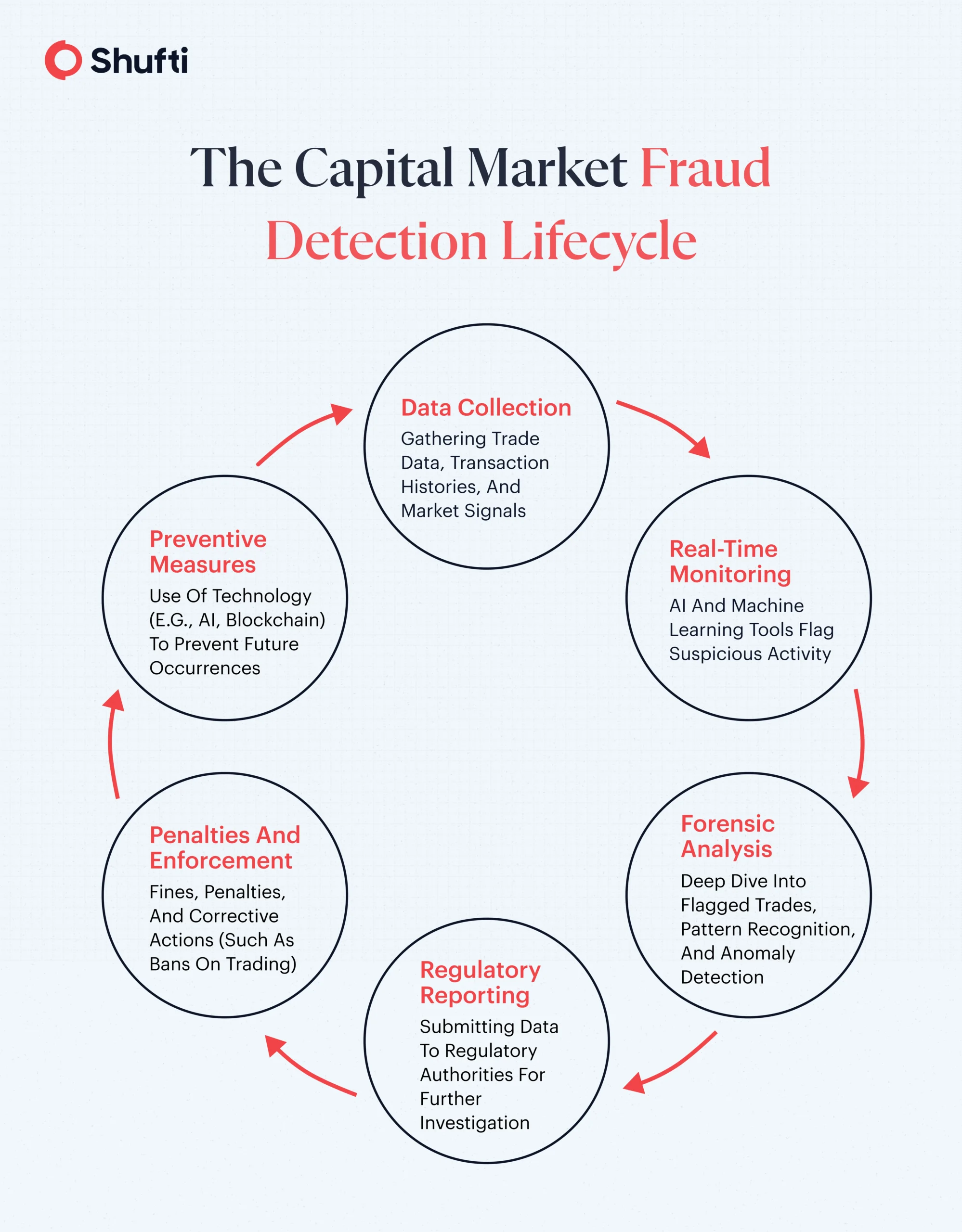
Capital markets fraud prevention is a way to protect investors and create confidence in the market and equitable trade. As trading has accelerated and gone more digital and global, it is necessary to have advanced detection and prevention technologies to detect suspicious behavior prior to its ability to do significant damage. The most important prevention and detection measures involve:
- Real-time trade monitoring is an artificial intelligence and machine learning technology that refers to the detection of abnormal trading behaviour, abrupt alterations in prices, or massive changes in orders that can reflect either market manipulation or spoofing.
- AML screening helps firms spot risk by checking investors, counterparties, and transactions against sanctions lists, watchlists, and negative news. This process makes it easier to flag suspicious activity early, limit illegal money flows, and reduce the risk of money laundering across capital markets.
- Identity verification and investor onboarding provide compliance with identity checks and curb the possibility of impersonation, non-representative accounts, and fraudulent activities on the market.
- Automated risk assessment uses data analytics to review trades, account and investment transactions to continually identify potential risks to be reviewed by compliance teams.
- Behavioral analytics monitors trading trends with time to identify deviant trends associated with either insider trading or manipulation.
- Regulatory compliance checks depend on internal controls and automated processes to make sure that firms adhere to capital market rules, minimize fines, and enhance investor confidence.
How Compliance Supports Capital Market Regulation?
Capital market regulations are legal provisions that are imposed by governments and other financial regulators to ensure that the stock, bond, and securities markets work in a transparent manner. These laws safeguard investors and bring confidence to fiscal regimes throughout the world.
Capital markets in the US are governed by regulators such as the Securities and Exchange Commission (SEC) and the Financial Industry Regulatory Authority (FINRA). The SEC has major laws regarding the reporting of stock exchange companies and the barring of market manipulation. Various rules, such as SEC Rule 144A, help make capital markets more accessible to qualified investors while protecting less experienced participants from high-risk, unregistered securities. Frauds like insider trading and false disclosure are common and subject to enforcement action.
The European Union possesses a set of legislation, including MiFID II (Markets in Financial Instruments Directive) and MiFIR, to regulate the trading operation, reporting conditions, and disclosure within the member states. These legislations compel the investment companies to reveal proper information and outlaw unethical inducements in trade.
Monetary authorities such as the Monetary Authority of Singapore (MAS) and the Japan Financial Services Agency (JFSA) govern local market standards, oversee cybersecurity, and provide fair trade in Asia and elsewhere in the world. Most international agencies, like the International Organization of Securities Commissions, liaise with other leading countries to align the rules.
Capital market compliance is the effective enforcement of these regulations, ensuring that firms and other market participants comply with them. This is covered by internal reporting, auditing, and risk management, and trade monitoring systems to check suspicious conduct. Compliance adherence assists enterprises in dodging fines, ensuring fair competition, and sustaining investor confidence by granting consistency in the rules to be followed.
How does Shufti Support Fraud Prevention in Capital Markets?
Capital markets firms face a growing challenge in keeping fraudulent actors out of trading environments, especially when impersonation, synthetic identities, and deepfake-enabled onboarding attempts increase.
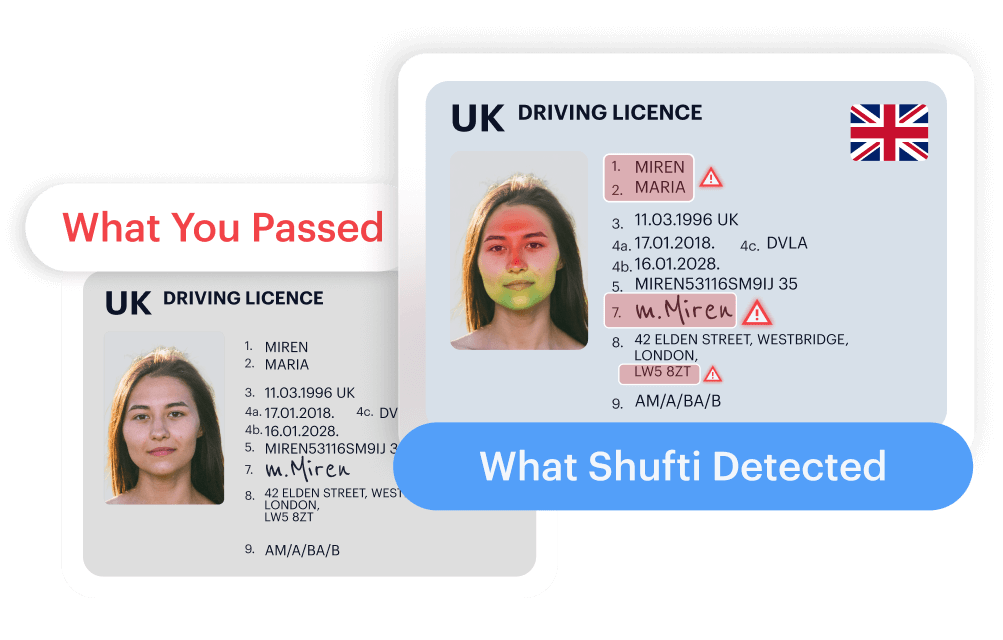
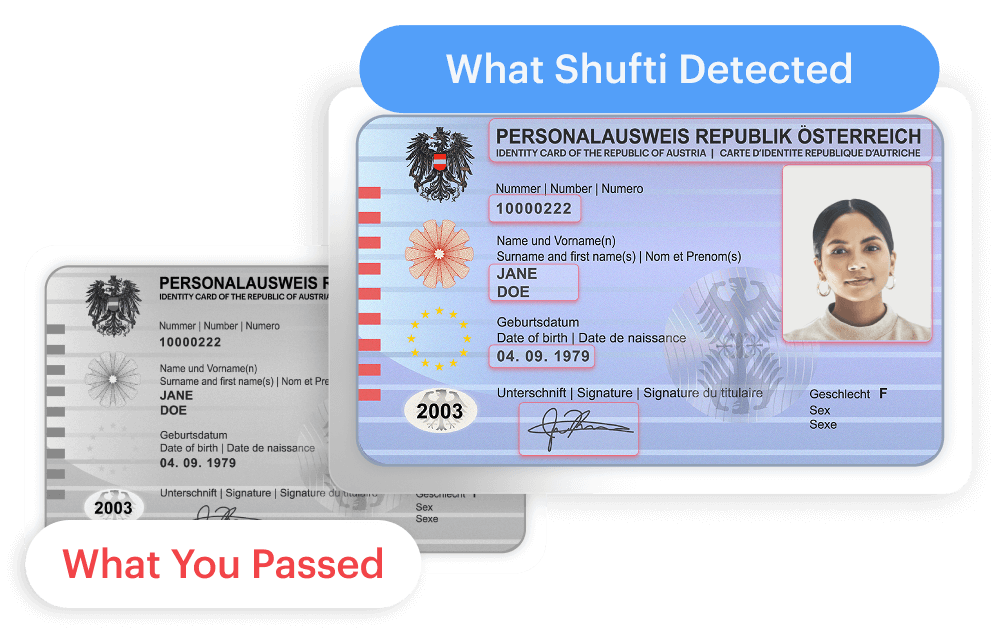
Shufti supports these controls through AI-based identity verification with face verification and 3D liveness detection, along with document verification coverage across a wide range of countries and document types.
For AML and risk controls, Shufti also supports watchlist screening across sanctions and PEP data sources to help firms identify higher-risk users during onboarding and as part of ongoing compliance processes.
A tailored verification and screening layer helps trading venues and investment platforms reduce exposure to impersonation, account misuse, and prohibited actors.
For teams assessing fraud controls in capital markets onboarding and monitoring, a Shufti demo can clarify coverage and workflow fit.