 Runs On Your Cloud
 No Data Sharing
 No Contract Required
 Explore Now





 Face Verification
 Address Verification
 Document Verification
 Age Verification
 VideoIdent
 Fast ID
 eIDV
eIDV
 NFC Verification
 Consent Verification
 Business Verification
 Due Diligence
 Investor Verification
 E-Signature
 Behavioural Biometrics
 Device Fingerprinting
 MFA
MFA
 AML Screening
 Business AML Screening
 User Risk Assessment
 Transaction Screening
 Adverse Media Screening
 Identity Verification
 KYC
KYC
 KYB
KYB
 KYI
KYI
 Bonus Abuse
 Fraud Prevention
 Deepfakes
 Banking
 Crypto
 Fintech
 Forex
Forex
 Gaming
 Gig Economy
 Marketplace
 Social Networks
 Product Managers
 Compliance Officers
 Fraud Analyst
 Global Trust Platform
 Journey Builder
 Vendor Comparison

 Content library
 Blogs
Blogs
 News
News
 Reports
 Insights
 Knowledgebase
 ROI calculator
 Blind Spot Audit
 Deepfake Detection
 Liveness Detection
 Document Originality
 Document Deepfake
 Events & Webinar
 Podcast Studio
 Spotlight Studio
 API Documentation
 Mobile SDKs
 Service Status
 Help Center
 Contact Us
 Technical Support
 Compliance
 Supported Document
 About
About
 Career
 Press Release
 Certifications
 Partnership
 Awards
How Identity Verification Solutions Process PII Data to Verify Identities
- 01 The Race to Scale Identity Verification Is Putting PII Data at Immediate Risk
- 02 How Jurisdictional Differences Impact PII Compliance
- 03 How PII Data Moves Behind the Scenes in Identity Verification
- 04 Where Things Break: Operational Challenges in PII Data Handling
- 05 The Trust Gap in Fintech: Protecting Customer Identity Data at Scale
- 06 AI and Privacy: How Identity Verification Can Work Without Exposing PII
- 07 Infrastructure-Level Controls: Reducing PII Exposure Through Architecture
- 08 Governance Controls to Limit Internal Exposure to PII
- 09 Building a Privacy-First Identity Verification Process
- 10 Shufti Enables Secure, Scalable PII Data Processing
What appears to be a simple onboarding step is, in reality, a complex digital identity verification workflow powered by data-intensive systems.
With remote onboarding becoming a significant business trend, identity verification solutions are now handling large amounts of sensitive information at mutli-region cloud and vendor infrastructures.
This shift raises a practical question for compliance teams. How does PII move through an identity verification workflow, and which controls keep it protected across regions.
The Race to Scale Identity Verification Is Putting PII Data at Immediate Risk
The fintech, crypto, and gig-economy services acceleration has increased the dependence on massive identity verification solutions. Remote onboarding, which has become a new business necessity, has led to a fast uptake of identity verification solutions which return verification outcomes quickly, expanding breach exposure and regulatory scrutiny.
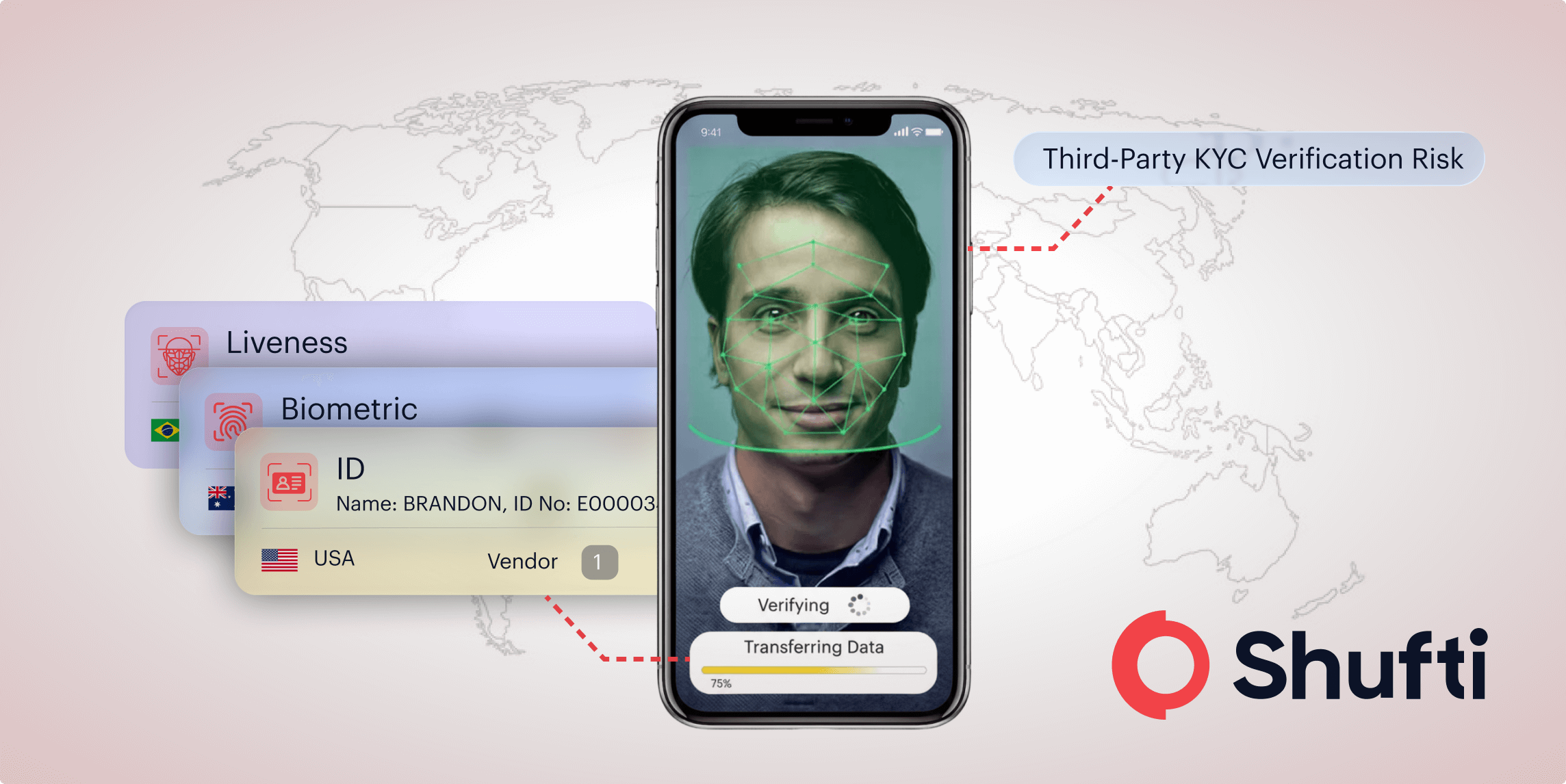
A typical identity verification process comprises document capture, biometric authentication and database validation. However, behind this streamlined flow lies a fragmented data journey. A user can provide credentials in one jurisdiction, and the digital identity verification systems will process the information through distributed cloud environments.
This cross-border PII data processing brings about complexity to operations and exposure to regulation. The regulations of data sovereignty vary, storage standards vary, and transfer systems are necessary to stay in compliance. Along with the rise in volume of verification, the need to secure, comply, and ensure transparent management of sensitive personal data becomes more difficult.
How Jurisdictional Differences Impact PII Compliance
The regulatory expectations of PII compliance remain to be continually expanded with data flows spanning across jurisdictions. All these regions have different sets of legal frameworks that present disjointed requirements to businesses that provide global identity verification solutions. For example, the General Data Protection Regulation mandates strict controls on data handling, while the California Consumer Privacy Act (CCPA) emphasizes consumer rights and transparency.
Data minimization and user consent are demanded by regulators and make it difficult to comply. Non-compliance is no longer a minor risk. Strong PII data processing controls have become a strategic imperative as a result of financial fines, operational limitations, and reputational losses.
How PII Data Moves Behind the Scenes in Identity Verification
A privacy-first identity verification system does not treat PII protection as a single control point. Instead, it aligns security and compliance measures across the entire data lifecycle—from collection to deletion—ensuring continuous protection at every stage.
The process begins with collection, where identity documents, selfies, and device metadata are captured using secure SDKs with encryption in transit, explicit user consent, and strict data minimization. During processing, OCR engines and biometric systems operate within encrypted, isolated environments, applying role-based access and real-time fraud monitoring to reduce exposure risks.
Once verified, data enters storage, where it is protected using AES-256 encryption, logical segregation, and tokenization, with retention policies aligned to regulatory requirements. Controlled access follows, enforced through role-based permissions, multi-factor authentication, and audit logs to ensure accountability.
Finally, retention and deletion complete the lifecycle, where data is stored only as long as necessary and securely erased through automated, auditable mechanisms—ensuring compliance while minimizing long-term risk.
Where Things Break: Operational Challenges in PII Data Handling
Operational strain can frequently occur when data processing of PII information is not uniform when working with fragmented systems. Most organizations rely on various vendors who also use varied standards, and this creates disparity in data handling and validation results. This disintegration poses a risk of duplication of data since similar sensitive records are kept in disparate systems without a single administrative control.
Latency also makes world verification more complicated. Delays may occur when data is cross-regional to be processed, which means that users may experience delays, and the accuracy of the fraud-detection process can be impacted. Simultaneously, centralized storage structures create essential security threats. One incident can reveal significant amounts of confidential information and increase financial and reputational risks.
Even the storage practices are not transparent, so in most cases, users have no idea about their data lifecycle.
With regulations ever-changing, compliance burnout ensues. Organizations are constantly forced to change controls, and ensuring sustainable PII compliance becomes increasingly challenging at scale.
The Trust Gap in Fintech: Protecting Customer Identity Data at Scale
Fintech applications are more vulnerable to managing sensitive identity data at scale. In order to secure customers, apps use zero-trust architectures, which authenticate each access request and provide end-to-end encryption to prevent data loss in transit and at rest.
Mobile and web applications that have secure SDKs restrict the exposure of raw PII data even more. All these measures contribute to the increased trust, allowing for safe and scalable identity checks.
AI and Privacy: How Identity Verification Can Work Without Exposing PII
The development of AI is transforming the way companies authenticate identity and restrict access to sensitive information. Modern identity verification software, instead of being reliant on transfers between raw data, makes use of more privacy-preserving algorithms in order to minimize risk at each step.
One of these is edge processing, where information is processed on the device of the user instead of being sent to the central servers. This reduces unwarranted information transmission and reduces exposure to breaches. In the same manner, biometric hashing will encode facial features in encrypted forms such that the original images are not stored or reused.
Privacy-conscious AI models go a step further to support this strategy by allowing one to check verifications without having access to full datasets. Methods such as federated learning allow the systems to enhance accuracy by utilizing decentralized data without centralizing sensitive information in one place.
Verification systems are moving beyond high-data-construction models toward privacy-centered designs that are more accurate and less reliant on raw PII.
Infrastructure-Level Controls: Reducing PII Exposure Through Architecture
To preserve the privacy of personal data and align with frameworks like the General Data Protection Regulation, identity verification providers are increasingly shifting toward controlled deployment environments that limit unnecessary data movement.
On-premise deployments allow organizations to process and store PII within their own infrastructure, ensuring full control over data handling and eliminating third-party exposure risks. This model is particularly relevant for highly regulated sectors such as banking and government identity programs.
In parallel, Virtual Private Clouds (VPCs) replicate on-premise security within cloud environments. These isolated infrastructures enable businesses to enforce strict network controls, ensuring that PII data never leaves designated geographic or organizational boundaries. This is critical for meeting data residency requirements, where regulations mandate that personal data must remain within specific jurisdictions.
Another key advancement is on-device processing, where sensitive data is processed directly on the user’s device before any transmission occurs. By minimizing raw data transfer, this approach significantly reduces breach surfaces and supports privacy-by-design principles.
Governance Controls to Limit Internal Exposure to PII
Beyond infrastructure, controlling who can access PII is equally important. Modern identity verification systems implement Segregation of Duties (SoD) to ensure that no single individual has unrestricted access to sensitive workflows. This reduces the risk of internal misuse and strengthens accountability across operations.
Additionally, role-based access control (RBAC) ensures that employees only interact with the minimum data required for their function. For example, a compliance officer may review verification outcomes without accessing raw identity documents, while engineering teams operate on anonymized datasets.
Together, these controls create a layered security model where both external exposure and internal risk are systematically minimized, reinforcing trust in large-scale identity verification systems.
Building a Privacy-First Identity Verification Process
A privacy-focused identity verification process needs to be designed with extreme care to data minimization, decentralized storage, and real-time verification, rather than a more extended data retention. There is a structured PII compliance checklist that will lead organizations through the most important controls:
- Obtain user consent where required, before processing data.
- Encrypt PII data both in transit and at rest.
- Maintain immutable audit logs of access and modifications.
- Define deletion and retention timelines for data, and enforce them.
These practices will allow the development of a GDPR compliant PII verification system, which will foster a light burden of operational liability and customer confidence.
Shufti Enables Secure, Scalable PII Data Processing
Shufti supports secure identity verification with controls that help organisations manage PII responsibly across jurisdictions.
Verification data can be protected through encryption controls and governance layers that support auditability and oversight across onboarding workflows. Shufti also offers deployment options including on-premises identity verification for organisations that require stronger data residency control.
Data retention requirements differ by sector and region, so Shufti provides configurable data retention timelines and instant deletion to meet these jurisdictional and business specific requirements.
To understand how these controls can support privacy and compliance requirements across markets, businesses can request a demo.