 Runs On Your Cloud
 No Data Sharing
 No Contract Required
 Explore Now







 Face Verification
 Address Verification
 Document Verification
 Age Verification
 VideoIdent
 Fast ID
 eIDV
eIDV
 NFC Verification
 Consent Verification
 Business Verification
 Due Diligence
 Investor Verification
 E-Signature
 Behavioural Biometrics
 Device Fingerprinting
 MFA
MFA
 AML Screening
 Business AML Screening
 User Risk Assessment
 Transaction Screening
 Adverse Media Screening

 Identity Verification
 KYC
KYC
 KYB
KYB
 KYI
KYI
 Bonus Abuse
 Fraud Prevention
 Deepfakes
 Banking
 Crypto
 Fintech
 Forex
Forex
 Gaming
 Gig Economy
 Marketplace
 Social Networks
 Product Managers
 Compliance Officers
 Fraud Analyst
 Global Trust Platform
 Journey Builder

 Content library
 Blogs
Blogs
 News
News
 Reports
 Insights
 Knowledgebase
 ROI calculator
 Blind Spot Audit
 Deepfake Detection
 Liveness Detection
 Document Originality
 Document Deepfake
 Events & Webinar
 Podcast Studio
 Spotlight Studio
 API Documentation
 Mobile SDKs
 Service Status
 Help Center
 Contact Us
 Technical Support
 Compliance
 Supported Document
 About
About
 Career
 Press Release
 Certifications
 Partnership
 Awards
A Guide to Proof of Address Verification in the UK

Over the past few years, there has been increasing pressure on UK-based institutions to enhance customer verification and anti-money-laundering (AML) controls as fraud techniques evolve. According to PwC (2024) EMEA AML Survey (UK insights), 65% of UK financial institutions indicated that they had experienced a rise in AML/CTF compliance expenditure in the last 24 months.
Meanwhile, remote account openings and digital onboarding have become the norm throughout the UK market. Although this change enhances customer convenience, it also expands the attack surface for fraudsters who can resort to synthetic identities, falsified documentation, and location disguising with VPN.
As address verification comes with its own complications, JMLSG Guidance on MLR 2017 requires firms to collect proof of address as part of customer due diligence, which makes residency verification a regulatory obligation rather than a discretionary process.
The formats of addresses in the UK are considerably different, as the use of abbreviations, flat numbers, and the spacing between postcodes can often lead to inconsistencies during verification. Documents like bank statements and utility bills do not have very high visibility security features, making it more challenging to authenticate them. With the increasing onboarding volumes, the manual document reviews put pressure on operations and risk human error.
Therefore, understanding how proof of address in the UK works, its pitfalls, and the technologies that enable reasonably accurate verification, contributes towards faster and compliant onboarding.
Understanding Proof of Address in the UK and Why It Matters
In the UK proof of address is a key factor in the verification of the residence of an individual to meet KYC and AML requirements. Proof of address in the UK is not merely a matter of gathering a document, but verifying that a certain address belongs to a person, issued by a reliable third party. Financial institutions, including banks, investment firms, and other financial services governed by regulations, usually demand evidence of address during the opening of an account or issuing a credit or other financial service.
Address checks also support service eligibility, where firms must apply location-based restrictions, for example, licensing, sanctions exposure, or product availability rules.
UK proof of address verification is primarily used to verify the residency and eliminate impersonation or fraudulent account creation. Checking a residential address lowers the chances of identity theft, account hijacking, and the misuse of financial services. Whereas identity verification confirms that a person is who he claims to be by producing documents such as passports or driving licences, proof of address ascertains where a particular individual resides. Both checks are complementary and have different regulatory and security purposes.
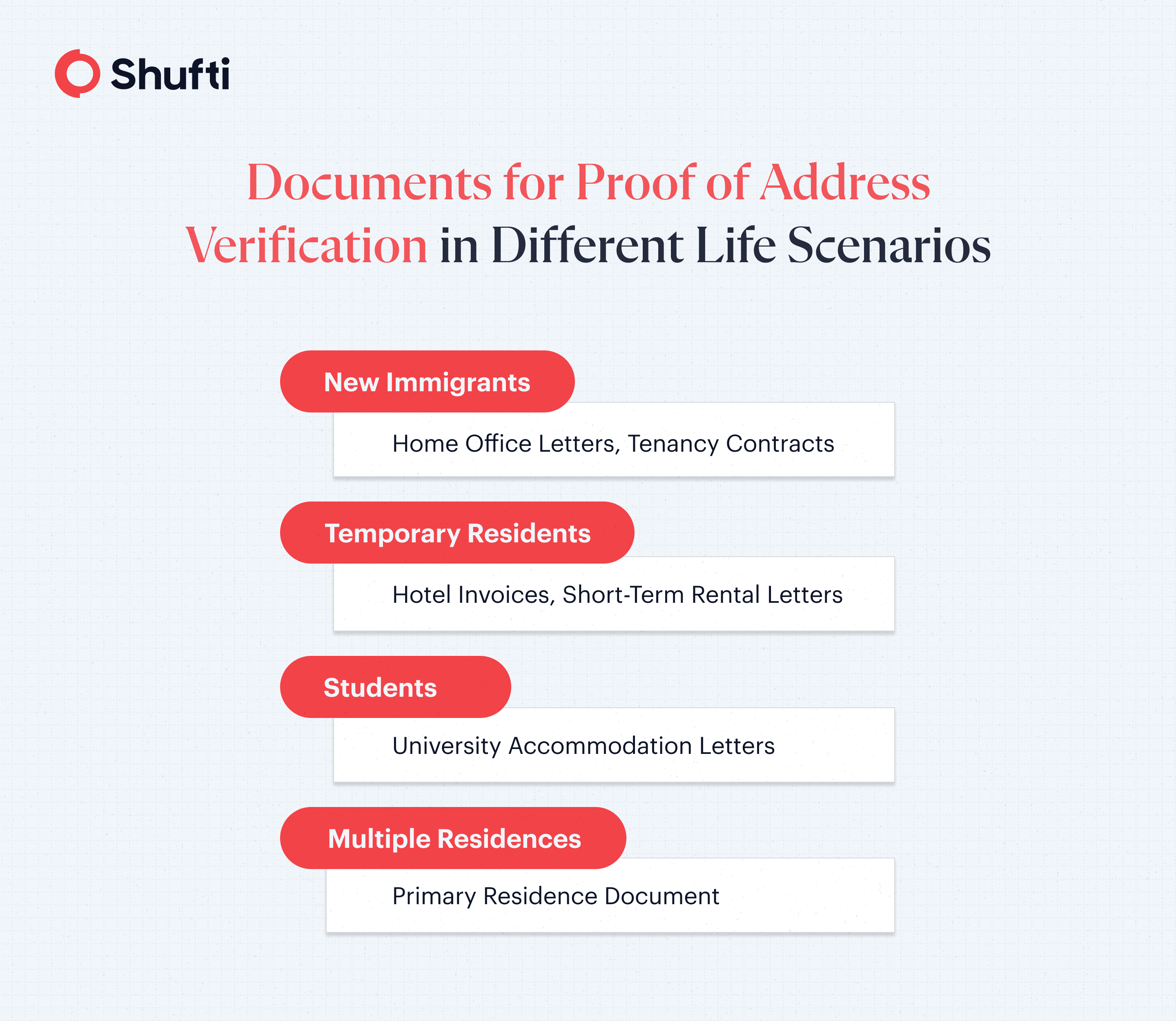
Address verification documents can vary based on the situation of the individual. Newcomers or immigrants may show official mailings by the Home Office, tenancy contracts, or utility bills as examples to prove that they are in the UK. Individuals temporarily relocating to a different address, e.g., students or temporary workers, or individuals staying in a short-term rental, can provide tenancy agreements, hotel invoices, or letters written by the property owner with official papers.
The proper verification is vital to regulatory compliance maintenance as well as to avoid any fraud or ensure that only qualified residents may receive the financial services according to the UK legislation.
Commonly Accepted Proof of Address Documents in the UK
Various documents are generally accepted to establish residency, depending on individual situations:
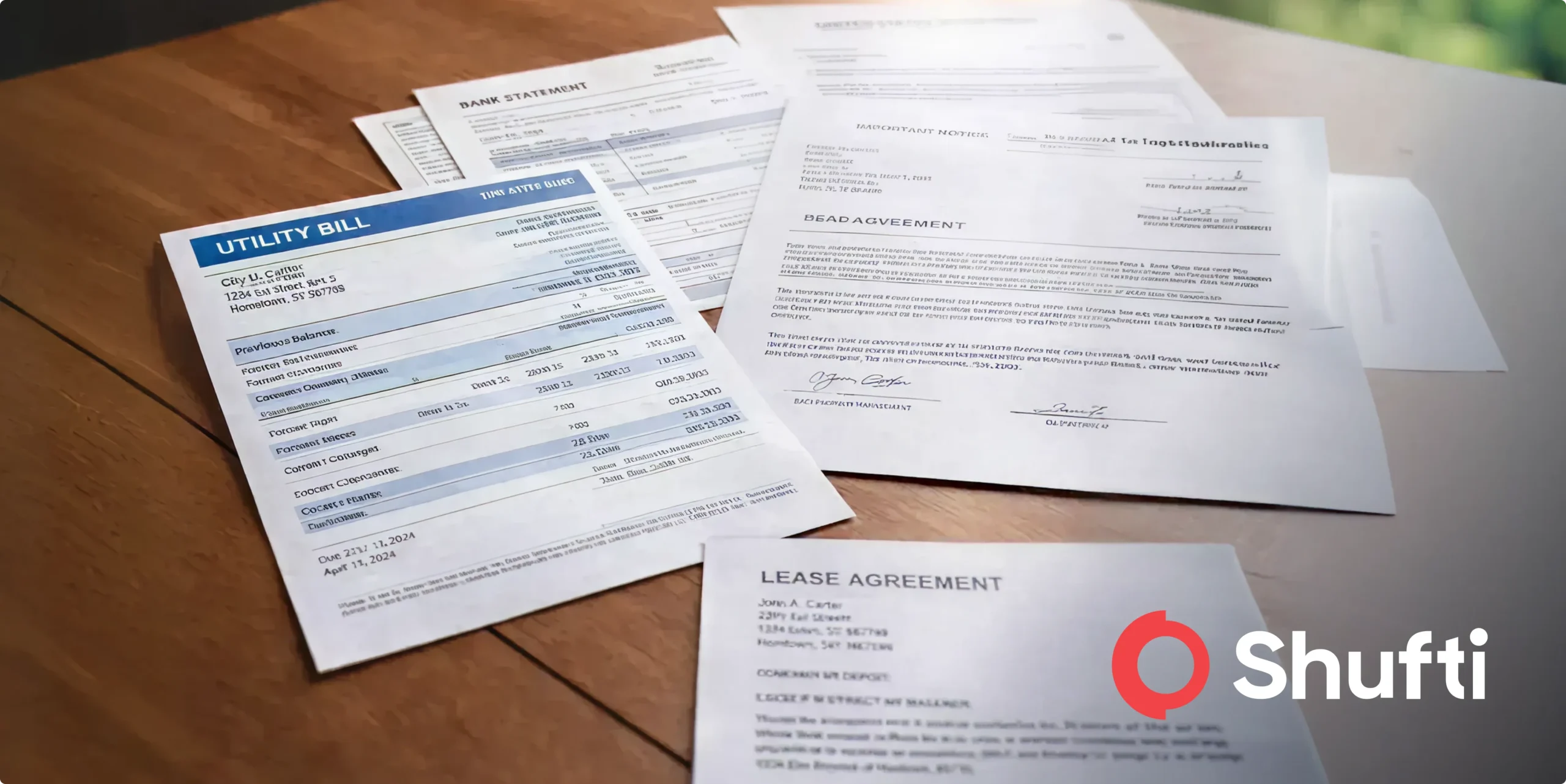
- Utility bills: Gas, electricity, water, or landline bills.
- Bank statements: Official statements issued by a recognised bank in the UK.
- Council tax bills: Local council statements (annually or quarterly).
- HMRC correspondence: Tax notices or letters that confirm official communication.
- Tenancy agreements: Signed lease agreements or rental contracts.
- Home Office letters: To immigrants or newly-settled residents.
- Temporary residence documents: Letters from property owners, accommodation providers, or short-term housing arrangements.
Firms usually accept documents issued within the last three months; however, this timeframe may vary depending on the type of document or internal policies. They are expected to fully indicate the full name of the individual, the full residential address, and the name of the issuing authority. Electronic copies of these documents are gaining acceptance, but they should be scrutinized to prevent fraud.
In any case, when opening a bank account, creating an investment portfolio, or using any other financial services, a valid, verifiable demonstration of address is required to comply, minimize the risk of fraud, and build trust between the institution and the client.
Key Challenges in UK Address Verification
The process of authenticating the address of a customer in the UK might seem straightforward, though in reality, it preconditions the establishment of various working and fraud-related problems. Address formats, cross-language variations, document authenticity, and attempts to spoof locations are just some of the challenges that financial institutions must overcome to ensure they comply with KYC and AML regulations. These problems are particularly acute in the framework of digital onboarding, whereby the creation of an account can be conducted remotely, and the process of manual verification might not be adequate to prevent fraud.
Address Formatting and Normalization Issues
Address format variation is one of the most prevalent pitfalls in the UK address verification. Take the following example:
Flat 2B, 10 High Street
vs.
10 High St., Apt 2B
Although they indicate the same address, the abbreviations (Street vs St.), terms of apartments (Flat vs Apt), postal code structure (SW1A1AA vs SW1A 1AA), and the sequence of lines on the address can cause inaccuracies during automated verification. The normalization method overcomes these inconsistencies through the disaggregation of addresses into standardised parts like house number, street name, unit, and postcode. Those elements can then be compared in a reliable way. In the absence of this processing, small differences in formatting may lead to unjustifiable verification failures, adding to operational workload.
Cross-Language Variations and Character Differences
The UK institutions also face international documents that add another dimension to the situation. For instance:
“Musterstraße 12, 10115 Berlin”
vs.
“Musterstrasse 12, 10115 Berlin”
In this case, the German character ß is transliterated to ss, and special characters or diacritics can be omitted, but the address still mentions the same place. These variations have to be properly interpreted in the verification systems to avoid false rejections. In cross-language address processing, a foreign-issued document is subject to the same degree of examination and accuracy in processing as proof of address UK documents.
Other operational issues that cause address verification failures are low-quality scans, glare, cropped pages, and poor resolution.
Authentication Challenges in Proof of Address Documents
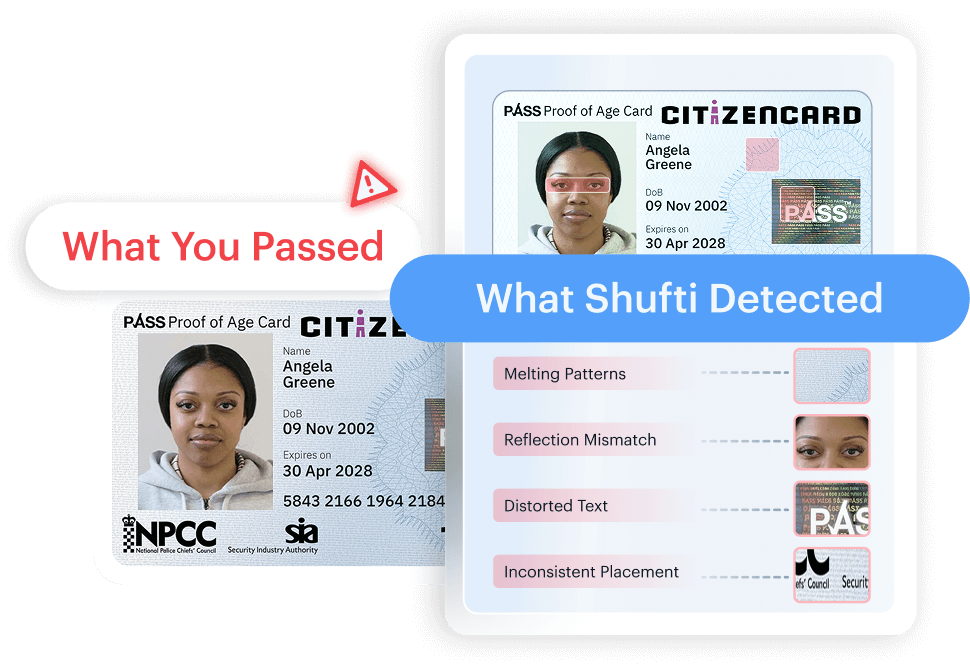
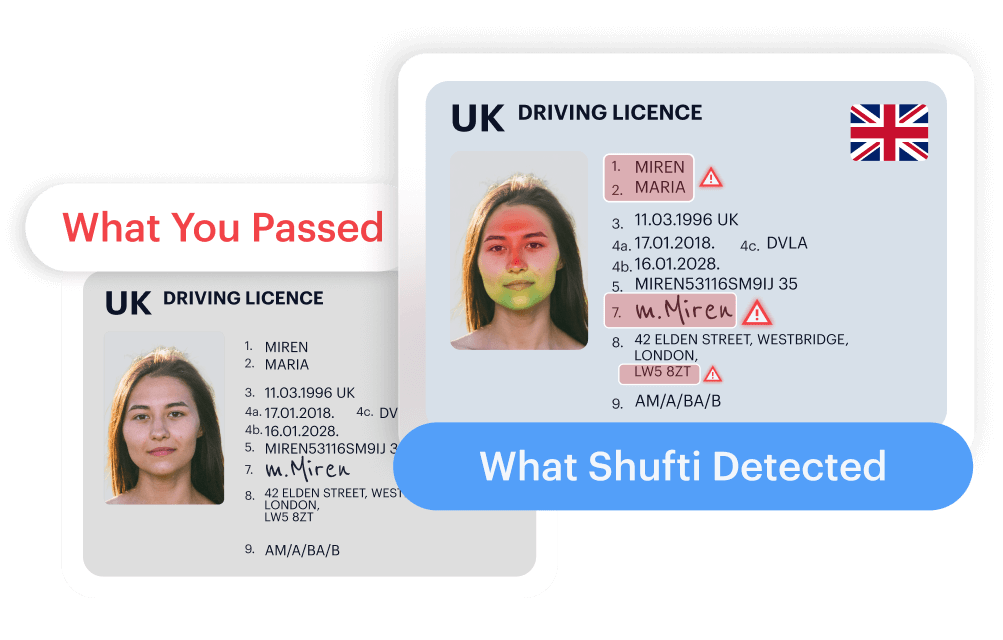
The Proof of Address documents may be challenging to verify because of the emergence of digital editing tools and document manipulation methods. A lot of PoA are provided as scanned paper or PDF files, which complicates the process of attestation of originality. The risks of fraud are document manipulation, templates, and data inconsistencies that cannot easily be identified based on manual inspection alone.
Bank Statement Authentication Limitations
One of the most commonly provided documents is the bank statements, though they also present their own set of challenges. Bank statements may not have noticeable security features, as opposed to utility bills or council tax letters. Fraudsters can also adjust balances, transactions, or layouts more easily with editable PDFs. There is also template cloning.
Modern verification systems reduce these risks by applying the techniques that include:
- Template comparison and layout checks
- Font and alignment validation
- Digit pattern and amount consistency checks
- Metadata inspection to detect tampering
- Pattern anomaly detection
Manual verification may expose institutions to fraud, whereas automated checks can enhance precision as well as minimize the workload.
Fraud Indicators in Proof of Address Verification
Certain document features are direct indicators of fraud, instead of operational limitations. Edited PDFs, templates cloned, metadata anomalies, discrepancies in issuer information, or observable formatting anomalies are common indicators of intentional interference. Early detection of these indicators enhances the authentication of documents and minimizes financial crimes.
VPN-Based and Location Spoofing Risks
The use of VPNs and location spoofing poses further risks on online onboarding platforms. Scammers can hide their real geographic position and pretend to be located in the UK, which can cause discrepancies between IP data and the stated residential address. These inconsistencies undermine the credibility of the validity of the Proof of Address documentation filed.
The strategies to mitigate fraud are:
- IP tests to confirm location compatibility.
- Fingerprinting of devices to identify an abnormal behavior pattern.
- Comparison with the geolocation plausibility of residency.
- Risk-based scoring systems to indicate suspicious onboarding.
Institutions can enhance PoA verification and minimize the risks of residency-based fraud during digital onboarding by combining document-level fraud detection with behavioral and location intelligence controls.
Modern Approaches to Proof of Address Verification in the UK
As the issue of confirming residency continues to get more complicated, institutions are resorting to technological solutions to provide accurate and reliable proof of address checks. New verification models take advantage of AI-enabled OCR to read data on documents like utility bills, bank statements, and tenancy agreements, paying attention to ensure that important data, such as name and residential address, is obtained accurately. The process is also accelerated with automated document classification that recognizes document types and directs them to the correct verification workflow.
High-end systems additionally use address matching, fuzzy logic, and standardization of address components to support differences in format, abbreviations, or international character variation. The methodology makes sure that minor variations in spelling or layout will not lead to false rejections. Real-time verification enables institutions to process documents efficiently and deliver instant results without compromising regulatory accuracy. Audit-ready reporting offers comprehensive logs of verification results, which can justify regulatory and internal scrutiny mandates.
These techniques reduce address verification failures caused by purely operational issues. Manual workload is significantly reduced, onboarding time is shortened, and compliance accuracy improves. Scalable infrastructures enable institutions to handle increasing customer volumes effectively, and advanced fraud detection mechanisms reduce the risk of identity or address-based fraud. Address validation software helps you determine that the provided address is valid and that it physically exists.
Institutions can achieve compliance controls while ensuring service efficiency through advanced verification technology, which provides a smooth and reliable experience to customers during onboarding.
How Shufti Supports Proof of Address Verification in the UK?
Address checks fail for two reasons. Due to operational friction, such as low-quality scans, glare, inconsistent formatting, and real risks like document tampering and template cloning.
Shufti helps firms address both with proof of address verification, address matching, and risk signals designed for UK onboarding. It removes operational friction with intelligent address decomposition, normalization and highly accurate in-house OCR technology, as well as identifying fraudulent submissions with real-time risk analysis through IP type, geolocation, device fingerprint, and document tampering signs.
Request a demo to review suitable proof-of-address flows for UK onboarding.
Frequently Asked Questions
What is proof of address in the UK, and why is it needed?
Proof of Address in the UK is a document that confirms an individual’s residential location for regulatory and financial purposes. Institutions use it to Verify Address details as part of KYC and AML compliance before opening accounts or providing services.
What are the six methods to get proof of address in the UK?
Common methods include utility bills, bank statements, council tax bills, HMRC letters, tenancy agreements, and official government correspondence. These documents are typically validated using an Address Checker or automated verification systems.
Can utility bills be used as proof of address in the UK?
Yes, gas, electricity, water, or landline bills issued within the last three months are widely accepted. Institutions may use address validation software to confirm formatting accuracy and detect inconsistencies.
How do bank statements serve as proof of address?
Bank statements display the customer’s full name and registered residential address, making them acceptable for verification. Many firms use a UK Address Verification API to extract and validate the address digitally.
Can official UK ID documents also serve as proof of address?
Some government-issued IDs, such as driving licences, may display residential addresses and support verification. Institutions often cross-check these using a UK Address Checker API to ensure accuracy.
How long is proof of address valid in the UK?
Most organisations require documents issued within the last three months to reflect current residency. Automated checks through a UK Address Validation API help confirm document recency and address consistency.
What is the process for verifying addresses with UK banks?
Customers submit acceptable documents, which are reviewed manually or through UK Address Validation Software that standardises and matches address components. Additional fraud checks may also be applied before approval.
Common mistakes when submitting UK proof of address
Frequent errors include submitting outdated documents, incomplete addresses, or mismatched names. Using an automated Address Checker helps reduce rejections and speeds up verification.