 Runs On Your Cloud
 No Data Sharing
 No Contract Required
 Explore Now







 Face Verification
 Address Verification
 Document Verification
 Age Verification
 VideoIdent
 Fast ID
 eIDV
eIDV
 NFC Verification
 Consent Verification
 Business Verification
 Due Diligence
 Investor Verification
 E-Signature
 Behavioural Biometrics
 Device Fingerprinting
 MFA
MFA
 AML Screening
 Business AML Screening
 User Risk Assessment
 Transaction Screening
 Adverse Media Screening
 Identity Verification
 KYC
KYC
 KYB
KYB
 KYI
KYI
 Bonus Abuse
 Fraud Prevention
 Deepfakes
 Banking
 Crypto
 Fintech
 Forex
Forex
 Gaming
 Gig Economy
 Marketplace
 Social Networks
 Product Managers
 Compliance Officers
 Fraud Analyst
 Global Trust Platform
 Journey Builder
 Vendor Comparison

 Content library
 Blogs
Blogs
 News
News
 Reports
 Insights
 Knowledgebase
 ROI calculator
 Blind Spot Audit
 Deepfake Detection
 Liveness Detection
 Document Originality
 Document Deepfake
 Events & Webinar
 Podcast Studio
 Spotlight Studio
 API Documentation
 Mobile SDKs
 Service Status
 Help Center
 Contact Us
 Technical Support
 Compliance
 Supported Document
 About
About
 Career
 Press Release
 Certifications
 Partnership
 Awards
A Compliance Officer’s Guide to Proof of Address in the EU

Regulated businesses in the European Union (EU) often face a common requirement: proof of address (POA). Whether an individual is opening a bank account, applying for a visa, or renting property, proving their physical residence is a crucial step.
While the EU does have customer verification guidelines, rules can vary from one member state to another, creating a unique challenge for individuals and businessmen who operate across the EU alike.
The following guide clarifies POA requirements in the EU and provides solutions for obtaining and submitting a POA in the region.
What is Proof of Address in the EU?
POA is a vital step in verifying a customer’s address. Credible documents, such as utility bills, are used by Financial Institutions (FIs) and businesses to obtain their customer’s name & residential addresses.
Certain actions require verification of the customer’s residential address as part of their customer due diligence policy: actions such as opening a bank account, applying for a loan, and renting property.
But why do banks need proof of their customers’ addresses?
FIs and banks collect such information primarily for two reasons:
1) to collect accurate records for customer outreach
2) to prevent fraud.
What is the Difference between Proof of Address and Address Verification?
Proof of Address is a physical or digital document that contains a customer’s residential address, such as a utility bill, bank statement, or subscription service statement.
Address Verification compares customer-submitted documents with trusted external databases (e.g., government records). Modern AI-based tools provide greater tools for assessing document authenticity.
What Documents Are Accepted as Proof of Address?
Across the EU, several types of documents can be used to prove the customer’s address. While EU directives impose strict Customer Due Diligence (CDD) obligations on member states, they do not provide an exhaustive template for such measures. Each member state is to devise its own CDD measures in line with its nature of business and risk profile.
As such, while common documents are used for POA across the EU, what may be accepted as proof of residence varies from jurisdiction to jurisdiction:
1. Germany:
In Germany, the registration issued by local authorities at the residents’ office is the most crucial document for legally proving your address. This registration certification confirms that the individual is officially residing at a particular address
Utility bills (gas, electric, or internet) are accepted as POA by FIs during initial onboarding, with the Anmeldung (registration certificate) required for higher-value financial services, including loans, mortgages, or registering a business.
2. France:
In France, utility bills are among the most widely accepted forms of POA for administrative purposes, such as opening a bank account or applying for a permit. Alongside utility bills, customers who have a recent domicile certificate, property tax notice, or residence tax notice can provide valid proof of residence.
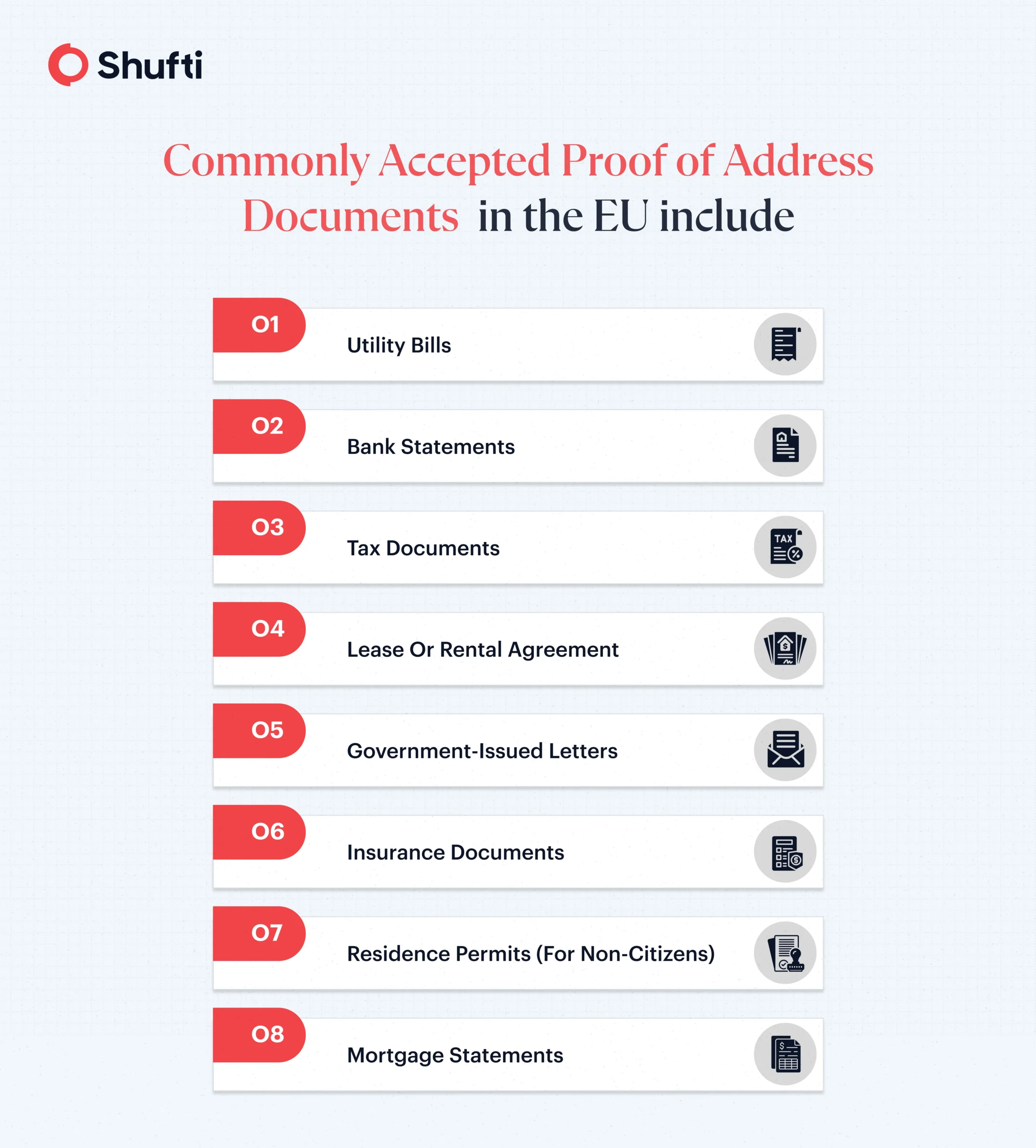
Commonly accepted POA documents in the EU include documents that:
- Have the individual’s name and residential address listed.
- Are issued by a credible source (not self-claimed).
- Are recent enough to prove that the individual may reside at the listed address.
Documents that fulfil those requirements may include utility bills, tax returns, lease agreements, and bank statements.
What Documents Do Not Count as Proof of Address in the EU:
Documents that do not count as POA include:
1. Personal Letters:
Informal or formal letters from family, friends, or landlords, for instance, are not sufficient as proof of address.
2. PaySlips:
Payslips of any kind that may contain an address are not considered a credible source for confirming an address.
3. Old Documents:
Documents that are over a certain age ( 3-6 months) are not valid for POA. Even validly issued utility bills will be rejected if the date of issuance is more than 3-6 months old.
Why Proof of Address is Necessary in Regulated Industries:
POA is not collected as a box-ticking exercise. For regulated businesses across the EU, it is one of the clearest ways to establish which jurisdiction applies to a customer. This information then influences onboarding decisions, reporting duties, and the controls required to manage financial crime risk.
FIs and other regulated businesses must know where the customer resides before they can decide which products, if any, can be offered and which regulatory rules, based on the jurisdiction, shall apply to those products.
This also explains the relationship between POA and proof of residence. POA confirms the customer’s stated address by presenting a document bearing the address. Proof of residence goes a step further and supports whether the customer is a resident in that jurisdiction for legal and tax purposes. This is illustrated by:
1. Foreign Account Tax Compliance Act – United States of America:
Under the Foreign Account Tax Compliance Act (FATCA), FIs in Europe are required to determine if individuals they are onboarding are U.S. citizens or residents for tax purposes. This is crucial because U.S. citizens must report their financial accounts to the Internal Revenue Service (IRS), and FIs must report these individuals back to the U.S. tax authorities.
Thus, under FATCA, FIs collect documents such as government-issued residence certificates (e.g., Anmeldung in Germany, Empadronamiento in Spain) or other residence permits to confirm an individual’s legal residency status.
2. EU DAC7 Directive (Directive (EU) 2021/514) – the European Union:
Applicable since 2023, requires digital platforms and certain financial intermediaries to report sellers’ tax residency information to EU authorities. Institutions must confirm the jurisdiction in which an individual is a resident, not merely that an address exists. Therefore, DAC7 requires institutions to confirm residency through legal documents.
Simplifying Proof of Address Verification:
For FIs and other regulated businesses in the EU, POA is an important step in complying with the EU’s CDD regulations. However, simple checks such as POA can become complex if documents are inconsistent, low-quality, or tampered with.
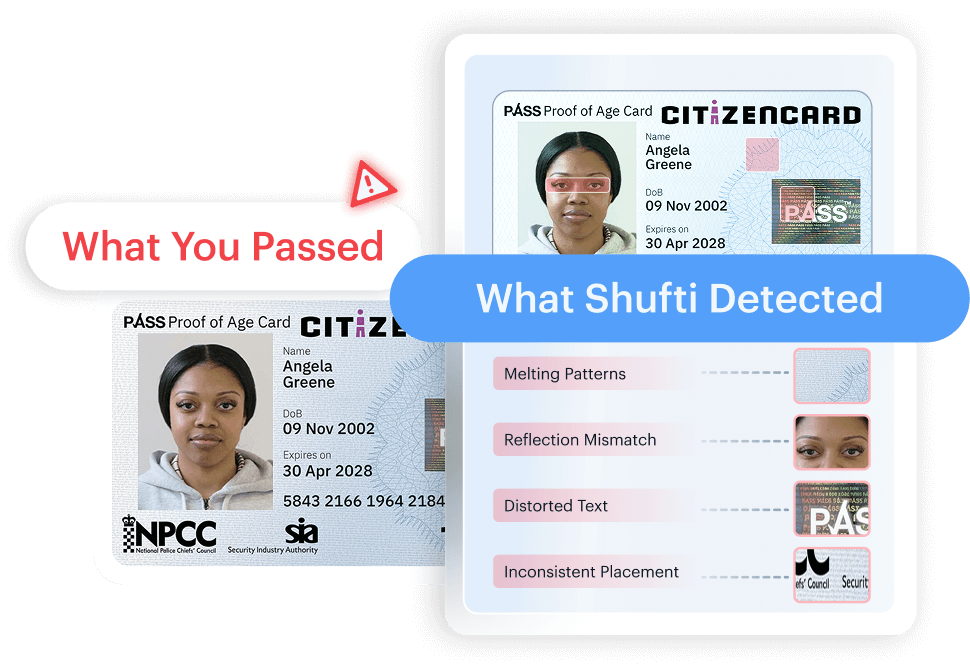
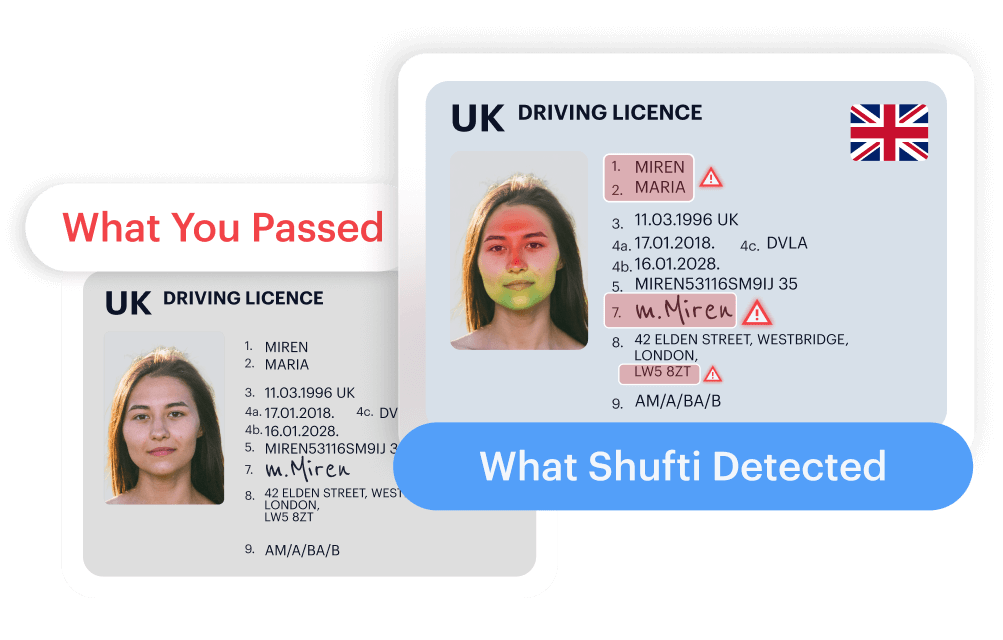
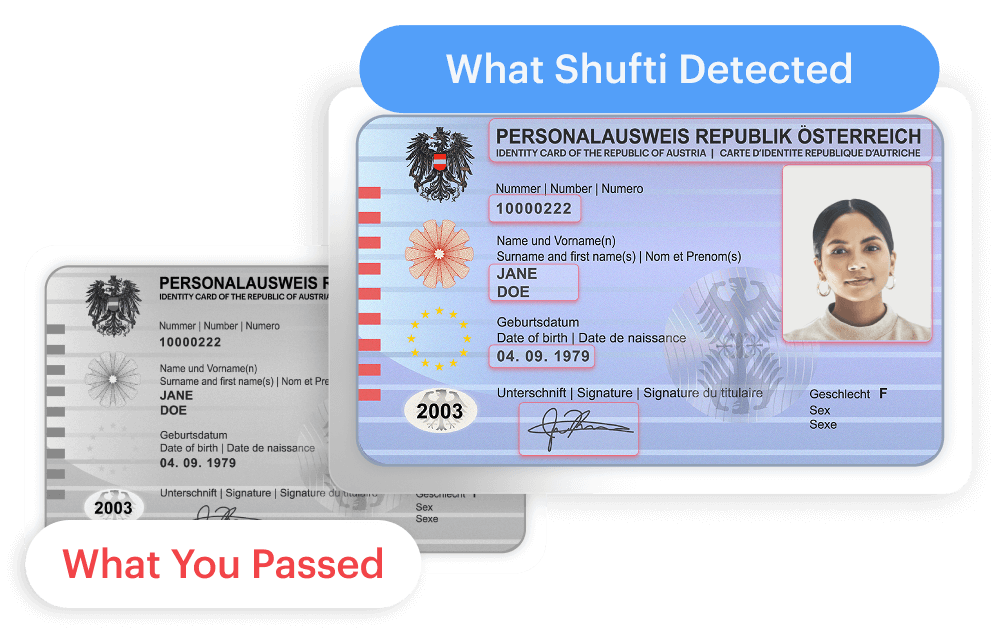
Shufti uses AI-powered document verification to detect pixel tampering and read low-quality scans with OCR, providing regulated businesses with an accurate verification process that minimizes manual workload.
Shufti’s coverage extends to over 240 countries and handles over 10,000 address-bearing documents in every language, including Latin, non-Latin, and regional variations, ensuring that FIs and regulated businesses stay compliant with FATCA, DAC7, and other applicable regulations.
Request a demo today to discover how Shufti can simplify your proof of address verification.