


 Face Verification
 Address Verification
 Document Verification
 Age Verification
 VideoIdent
 Fast ID
 eIDV
eIDV
 Consent Verification
 NFC Verification
 Business Verification
 Due Diligence
 Investor Verification
 E-Signature

 QES
QES
 AML Screening
 Transaction Monitoring
 Adverse Media
 Business AML Screening
 PEP & RCA
 Sanctions
 Watchlist
 Behavioural Biometrics
 Device Fingerprinting
 1:1 Authentication
 MFA
MFA
 Fraud Hub
 Onboarding
 Ongoing Monitoring
 KYC
KYC
 KYB
KYB
 KYI
KYI
 Age Assurance
 Identity Verification
 Workforce IAM
 Candidate Verification
 Compliance
 Fraud prevention
 Trust & safety
 Global expansion
 Product Managers
 Compliance Officers
 Fraud Analysts
 Developers
 Deepfake
 Bonus Abuse / Promotion Abuse
 Account Takeover
 Synthetic Identity Fraud
 Document Fraud
 Impersonation Fraud
 Multi-Accounting
 Fraud Networks
 Chargeback Fraud
 Money Mule Activity
 Party Fraud
 Regulatory & Compliance Risks
 Fintech
 Crypto
 iGaming
 Forex
Forex
 Social Network
 Marketplace
 Banking
 Gig Economy
 Blind Spot Audit
 Deepfake Detector
 Liveness Spoofs
 Document Originality
 Document Deepfake
 Global Trust Platform
 Journey Builder
 Case Management
 Shufti AI
 Fraud Analytics
 Vendor Comparison
 Brand Personalisation
 IDV Modes
 AI Compliance Co-Pilot
 OCR
OCR
 Secure Capture
 Deployment Options
 Identity Methods
 API Documentation
 Mobile SDKs
 Service Status
 Help Center
 Contact Us
 Technical Support
 Supported Documents
 Content library
 Blogs
Blogs
 News
News
 Reports
 Insights
 Knowledgebase
 ROI calculator
 About
About
 Career
 Press Release
 Certifications
 Partnership
 Awards
 Events & Webinar
 Interactive Demo
 Podcast Studio
 Spotlight Studio
US Treasury Department Issues AML Study for the Art Market
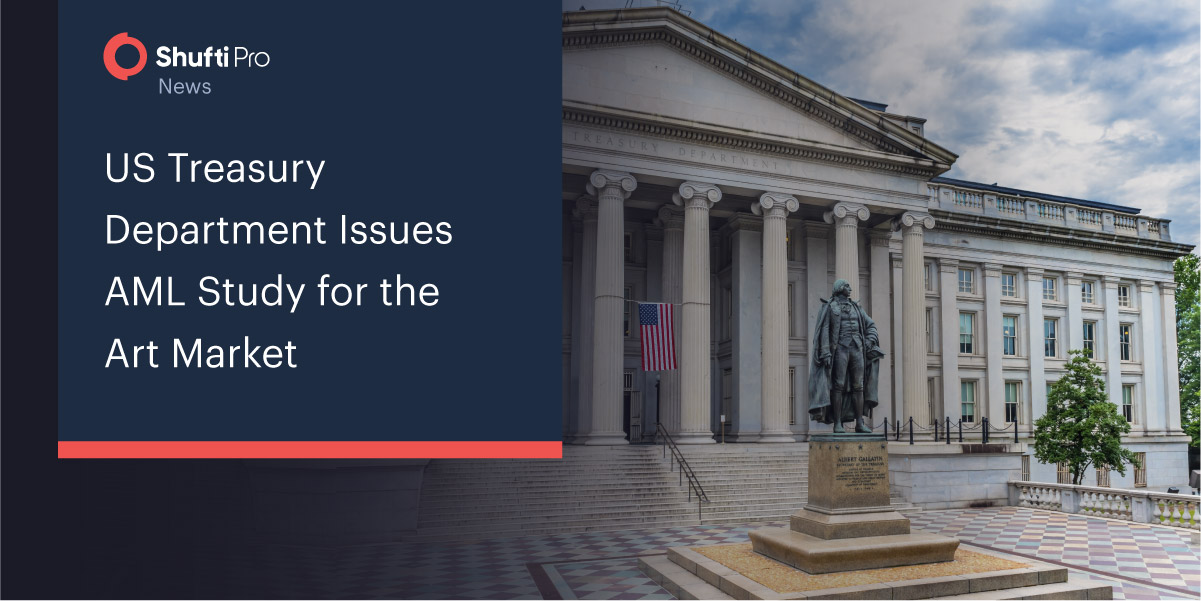
The US Treasury Department Issues anti-money laundering (AML) study for the art market, aiming to overcome the money laundering risks.
On Jan. 1, 2021, Congress passed the Anti-Money Laundering Act of 2020 (AMLA) which widened the definition of “financial institution” to enforce anti-money laundering (AML) requirements on the person. “engaged in the trade of antiquities, including an advisor, a consultant, or any other person who engages as a business in the solicitation or the sale of antiquities.”
The AMLA also directed the Secretary of the Treasury, in collaboration with the FBI, the Attorney General, and Homeland Security Investigations, to publish a study to uncover the potential money laundering risks circulating in the art industry.
On Feb. 4, 2022, the Treasury Department also published its findings on the money laundering risks associated with high-value art and recommended regulatory along with non-regulatory practices to address these risks. The study also found that the high dollar values of single transactions, ease of transportability of works of art, the long-standing culture of privacy in the market, and the use of artwork as an investment asset could make the art market ripe for money laundering. Cash purchases, lack of transparency into private transactions, the subjectivity of prices, and the use of shell companies further spiked susceptibility to money laundering.
The Treasury Department noted three common money laundering schemes likely to affect the high-value art market: (1) offering and accepting art as payment to integrate illicit proceeds into the financial system; (2) buying art with illicit proceeds, holding it for extended periods of time and later selling it for a profit; and (3) using art as collateral for loans to disguise the original source of the funds.
However, to address money laundering risks in the conventional and digital art markets, the Treasury Department suggested numerous regulatory and non-regulatory actions for art industry entities and government agencies, including:
- Market entities could develop information-sharing programs to increase transparency for buyers and enable the government to access information in money laundering investigations.
- Government law enforcement bodies could increase their focus on financial criminal activities involving high-value art in guidance and training to better understand how to verify and investigate bogus transactions.
- Fincen could also seek more detailed information from institutional market entities to stop criminals from money laundering through the art market and impose strict AML measures on selected art market participants.
Suggested Read: Art Dealers Urged to Intensify Regulatory Actions Against Money Launderers