AMLR Solutions
  AMLR Consultation
 EUDI Wallet
 Onboarding
 Ongoing Monitoring
 FRAML
FRAML KYC
KYC KYB
KYB KYI
KYI Age Assurance
 Workforce IAM
 Candidate Verification
 Account Takeover
 Bonus/ Promotion Abuse
 Chargeback Fraud
 Deepfake
 Document Fraud
 Fraud Networks
 Impersonation Fraud
 Money Mule Activity
 Multi-Accounting
 Party Fraud
 Regulatory & Compliance Risks
 Synthetic Identity Fraud
 Adult Content
 Banking
 Crypto
 Fintech
 Forex
Forex Compliance
 Fraud prevention
 Trust & safety
 Global expansion
 Compliance Officers
 Developers
 Fraud Analysts
 Product Managers
 Journey Builder
  Global Trust Platform
 Customer Profiles
 Vendor Comparison
 IDV Case Management
 AML Case Management
 Regulatory Reporting
 Agentic Rule Builder
  AI Compliance Co-Pilot
  Fraud Analytics
 Fraud Hub
  OCR
OCR Shufti AI
 Bank Account Verification
  Biometric Duplication
 Database Checks
 Document Intelligence
 Government ID
 Mobile Driver's License
 NFC
NFC Selfie Liveness
 Brand Personalisation
 Deployment Options
 Identity Methods
 IDV Modes
 Multi-tenancy
 On-Premise IDV
 Secure Capture
 Shufti MCP
















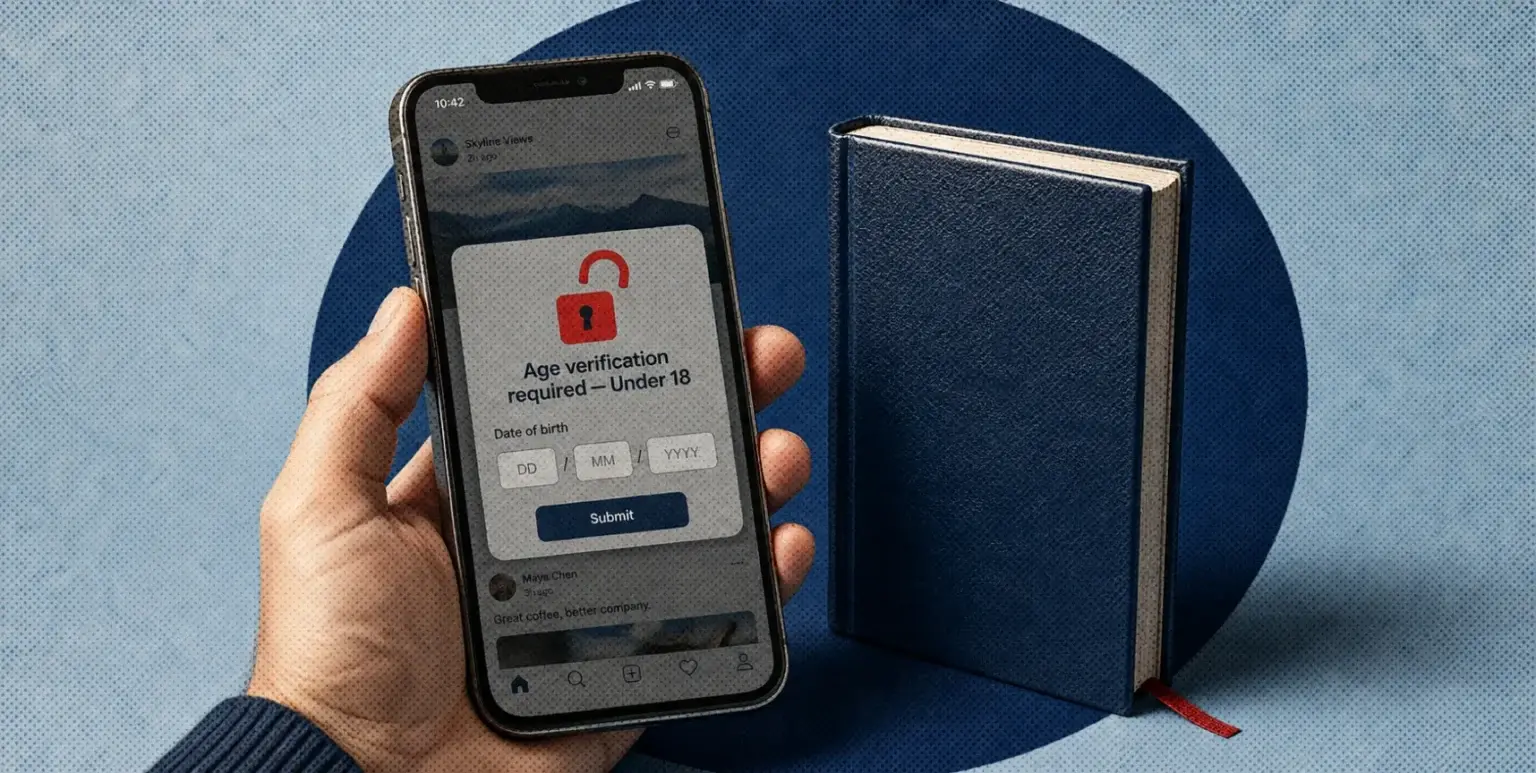

The debate around online child safety has intensified as parents express mounting doubts about whether existing app-store age checks meaningfully protect minors. New findings from a recent Progressive Policy Institute (PPI) survey underscore this sentiment: a substantial majority of parents want safeguards that operate continuously, not merely at the point of download. Only a third believe app-store-only age verification offers meaningful protection. These concerns, coupled with widespread distrust in how apps secure children’s data, have renewed pressure on policymakers to adopt practical and privacy-conscious solutions.
As a reaction, Congress Representatives Jake Auchincloss (D-Mass.) and Erin Houchin (R-Ind.) have proposed the Parents Over Platforms Act (H.R. 6333) – bipartisan legislation on December 1, 2025. It would help put in place a more responsible and balanced method of age assurance in the mobile ecosystem. The goal of the bipartisan bill is to introduce a challenging age assurance without parental exhaustion or consent fatigue, which reduces effectiveness.
At the center of the proposal is a dual-responsibility model. App stores would collect or infer a user’s age group and forward an age signal to developers, with the user’s or parent’s permission. The developers, on their part, would impose customized safety protocols within their applications – limiting potentially dangerous functions, blocking content designated for adults, and ensuring that minors do not access experiences that already require parental consent or age gating. Such an arrangement indicates an apparent inclination among parents toward collective responsibility rather than leaving the entire responsibility to a single phase.
Privacy is also a dominant aspect in the legislation. Over 50 percent of respondents indicated low trust in apps’ ability to secure information about children to protect their age. POPA seeks to fill this gap by limiting the use of age verification information, the information developers request, and any attempts to determine a full date of birth based on age indications. The bill also prohibits personalized advertising to minors, thereby strengthening a standards-based strategy for the responsible use of data.
Another important factor is awareness of parental exhaustion. Repeated consent prompts can lead to habituation, where parents approve requests automatically and overall vigilance declines. POPAs solution to this problem is to block entire categories of applications based on age ratings, rather than individually vetting each download. The developers would also be able to ensure that minors cannot access adult-oriented applications on their product lists before they are exposed to inappropriate content.
The bill formally defines age categories, age signals, covered applications, and minors, which will matter for how compliance teams design onboarding and parental controls.
The bill would be enforced by the Federal Trade Commission, and unfair and deceptive practices would be considered violations of the rules. The law supersedes state laws that are likely incompatible and aims to establish consistent national standards for app stores and developers. POPA would take effect twenty-four months after enactment, allowing industry stakeholders time to revise their systems.
The Act has come at a time when parents, policymakers, and technology companies have converged on one fundamental fact: more protection is needed to keep pace with the dangers children encounter online.