 Runs On Your Cloud
 No Data Sharing
 No Contract Required
 Explore Now








 Face Verification
 Address Verification
 Document Verification
 Age Verification
 VideoIdent
 Fast ID
 eIDV
eIDV
 NFC Verification
 Consent Verification
 Business Verification
 Due Diligence
 Investor Verification
 E-Signature
 Behavioural Biometrics
 Device Fingerprinting
 MFA
MFA
 AML Screening
 Business AML Screening
 User Risk Assessment
 Transaction Screening
 Adverse Media Screening

 Identity Verification
 KYC
KYC
 KYB
KYB
 KYI
KYI
 Bonus Abuse
 Fraud Prevention
 Deepfakes
 Banking
 Crypto
 Fintech
 Forex
Forex
 Gaming
 Gig Economy
 Marketplace
 Social Networks
 Product Managers
 Compliance Officers
 Fraud Analyst
 Global Trust Platform
 Journey Builder
 Vendor Comparison

 Content library
 Blogs
Blogs
 News
News
 Reports
 Insights
 Knowledgebase
 ROI calculator
 Blind Spot Audit
 Deepfake Detection
 Liveness Detection
 Document Originality
 Document Deepfake
 Events & Webinar
 Podcast Studio
 Spotlight Studio
 API Documentation
 Mobile SDKs
 Service Status
 Help Center
 Contact Us
 Technical Support
 Compliance
 Supported Document
 About
About
 Career
 Press Release
 Certifications
 Partnership
 Awards
AML Checks: An Emerging Frontier in RegTech Revolution
The Anti Money Laundering (AML) landscape has been around since the signing of BSA (Bank Secrecy Act) in 1970. Financial institutions have been battling with compliance regulations since forever. Over the years the financial services industry has confronted $26 billion by way of non-compliance fines. To enable the banking sector to fulfil its compliance obligations, the RegTech industry has come up with some of the most technologically advanced solutions. They are able to enhance the capability and output of compliance teams in banks and financial service firms. From advanced analytical tools to anti money laundering checks, banks are now able to fight fire with fire.
Overspending on AML Compliance
The risk of money laundering has increased significantly due to the fact that overseas transaction volumes have increased making the financial system more vulnerable to financial crimes. The constantly changing AML regulations and the increase in non-cash payments have added to this risk infinitely as well. But the banking sector has been dealing with all these challenges by investing heavily in the expansion of their compliance teams. This has not only increased their annual spending on AML compliance – $3.5 Billion – but has made the process, if anything, more complicated than ever before. In the US compliance staff in banks has increased exponentially.
The Drawbacks of Prevailing AML Systems
For the moment, AML systems currently resemble operational units that have huge overheads and still employ manual procedures to manage client profiles. The cost of such compliance teams would have been acceptable if only they were as effective. Some of the major drawbacks of these AML systems include;
- Large amounts of unstructured data make it difficult for different teams to accumulate and organise information. This ultimately causes operations to slow down, creating friction in onboarding procedures. Banks still resort to calling each customer individually to update their documents for KYC (Know Your Customer) procedures. Simple tasks such as these can be easily automated.
- The systems in use for analysing client data are outdated and slow. Such legacy systems use fixed rules for analysing customer data and are unable to account for unforeseen scenarios. This rule-based approach generates a large number of false positives, that ends up wasting a significant amount of time and money to be wasted towards investigating bogus leads.
- Outdated systems also result in erratic reporting of suspicious activity. As financial institutions deal with a large number of customer data, the system can produce an equal amount of false positives, thereby causing the compliance team to overlook legitimately high-risk cases.
- Due diligence procedures in banks are still manual. They rely on manual identification, verification and screening of clients, which are both slow and have a higher rate of inaccuracy.
- The complexity in financial transactions and the proliferation of faster services has made it difficult for financial companies to monitor client activity. Online payments and anonymous fund transfers also lack adequate KYC and AML procedures.
As prevailing systems are becoming more and more inefficient and costly, banks are exploring new avenues to perform AML compliance. An emerging avenue in this regard is regulatory technology or RegTech that is enabling the financial sector to implement advanced tech solutions to aid their AML compliance functions. More than anything, these systems have the ability to reduce costs and enhance the onboarding process. All such tools can make compliance systems in banks more feasible and cost-effective.

AML Compliance Systems and Tools
The RegTech space is now leveraging technologies like AI and big data to make streamline compliance procedures in banks and financial institutions. One such system is advanced analytics that can intelligently analyse client data and process it within minutes. The current analytical models being implemented are rather tuned to explicit regulatory and anti-money laundering requirements. Therefore, nearly 90% of the warning signals generated by them are false positives.
However, advanced analytical tools are now allowing banks to venture beyond such legacy systems. They primarily operate based on machine learning algorithms that can learn from past behaviour and issue alerts using predictive analytics. They sift through past data to look for patterns and determine legitimate and suspicious transactions. Such analytical models require large data sets to work with that financial companies can provide easily. ML algorithms help reduce the number of false results significantly, thereby saving ample time for compliance teams to investigate legitimate alerts. The manual work in such cases can be reduced by at least 50%.
The Fintech industry is still working on developing more advanced systems. They are using deep learning which is a step further from machine learning. It can be used for image processing and to imitate human speech. In short, it is able to mimic human cognition and implement intelligence towards the investigation of financial crimes like humans do. Efforts are being made to refine such processes and bring them into the mainstream.
Anti Money Laundering Checks
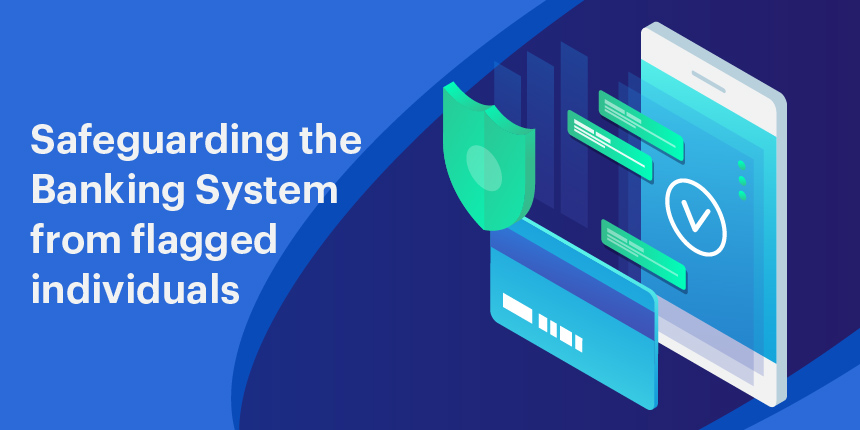
Another simple yet highly effective tool for improving AML compliance is AML screening. Anti Money Laundering checks also use AI to perform background checks of individuals by screening them through global sanction lists and databases. AML & CTF checks enable banks to screen out money launderers, financial criminals and Politically Exposed Persons (PEPs). Financial institutions can choose whether or not to take on a flagged person as a client or to at least classify them as a higher risk client and thus charge higher premiums accordingly.
Shufti is an anti-fraud solution that uses AI and Human Intelligence to provide KYC and AML verification services to businesses. It can effectively help prevent your business from financial crime laundering through anti money laundering checks. Shufti is providing ongoing PEP screening for clients wherein banking institutions can execute ongoing screening for a specific list of clients or even their entire clientele. They can also implement batch screening which allows them to screen existing customers through AML sanction lists.