 Runs On Your Cloud
 No Data Sharing
 No Contract Required
 Explore Now






 Face Verification
 Address Verification
 Document Verification
 Age Verification
 VideoIdent
 Fast ID
 eIDV
eIDV
 NFC Verification
 Consent Verification
 Business Verification
 Due Diligence
 Investor Verification
 E-Signature
 Behavioural Biometrics
 Device Fingerprinting
 MFA
MFA
 AML Screening
 Business AML Screening
 User Risk Assessment
 Transaction Screening
 Adverse Media Screening
 Identity Verification
 KYC
KYC
 KYB
KYB
 KYI
KYI
 Bonus Abuse
 Fraud Prevention
 Deepfakes
 Banking
 Crypto
 Fintech
 Forex
Forex
 Gaming
 Gig Economy
 Marketplace
 Social Networks
 Product Managers
 Compliance Officers
 Fraud Analyst
 Global Trust Platform
 Journey Builder
 Vendor Comparison
 Content library
 Blogs
Blogs
 News
News
 Reports
 Insights
 Knowledgebase
 ROI calculator
 Blind Spot Audit
 Deepfake Detection
 Liveness Detection
 Document Originality
 Document Deepfake
 Events & Webinar
 Podcast Studio
 Spotlight Studio
 API Documentation
 Mobile SDKs
 Service Status
 Help Center
 Contact Us
 Technical Support
 Compliance
 Supported Document
 About
About
 Career
 Press Release
 Certifications
 Partnership
 Awards
How Businesses Detect AI-Generated Fake IDs?
- 01 The Surge of AI-Generated Documents
- 02 What are AI-Generated Fake Government IDs?
- 03 Three Methods to Detect AI-Generated Fake IDs
- 04 1. Conduction of Forensic Document Verification
- 05 2. Biometric Validation
- 06 3. Cross-Referencing with Global Database
- 07 How Shufti Helps Identify Forged Identities That Your IDV May Have Missed?
The identity verification landscape has become increasingly competitive, where software solutions are now obliged to fight advanced versions of AI that can easily defeat traditional verification systems. An example of such use of technology is that of OnlyFake.
According to the Department of Justice of the United States, the creator of OnlyFake was charged and pleaded guilty to selling more than 10,000 digital fake identification documents. It also allowed its customers to create fake digital identification documents, including passports for 56 countries other than the United States.
Similarly, a man in Amsterdam stands on trial for opening nearly 50 bank accounts using deepfake technology. The accounts were created with stolen identities and could have been used for fraud or money laundering.
For fraud prevention teams, especially, this is an alarming reality. AI-generated IDs can bypass traditional controls; fraudsters combine AI-generated documents with real data. Businesses that fail to adapt face increased losses, regulatory penalties,, and reputational damage.
The Surge of AI-Generated Documents
AI’s evolution has been from being a creative assistant in daily work to this advanced technology used for empowering sophisticated fraud. Generative AI replicates visible design patterns convincingly enough to make it difficult to spot with human eyes only.
There has been a significant rise in AI-generated documents because fraudsters are able to leverage the latest AI-driven technologies to their own advantage.
1. Generative AI
It is primarily used for thorough analysis of thousands of legitimate IDs to clone every visual element from multiple elements to holographs. Generative AI creates new, entirely unique documents, but the catch is that they follow all the authentic design rules.
2. Leaked Templates Access
There are dark-web marketplaces that share detailed specifications for government documents worldwide. This can include, but is not limited to, color codes, measurements,, and security features.
3. Fraud-as-a-Service
On-demand custom fake IDs (like OnlyFake) are generated by criminal enterprises, and the customer receives the document in a matter of hours. The customers usually make the payments in cryptocurrency.
4. Deep Layered AI Attacks
Sophisticated fraudsters create an amalgamation of different types of AI, like deepfake photos, AI-generated documents, and synthetic identity frameworks, to create a mesh of multi-layered fraud that is increasingly hard to detect.
5. Unrestricted Access to Open-Source AI
Access to multiple AI models and cloud computing has led remotely tech-savvy individuals to produce relatively convincing fake IDs from their own devices. Document fraud is no longer limited to the works of criminal masterminds; it can be easily done by fraudsters with no technical skills working from the comfort of their homes.
You Might Also Like: How to spot a fake ID?
What are AI-Generated Fake Government IDs?
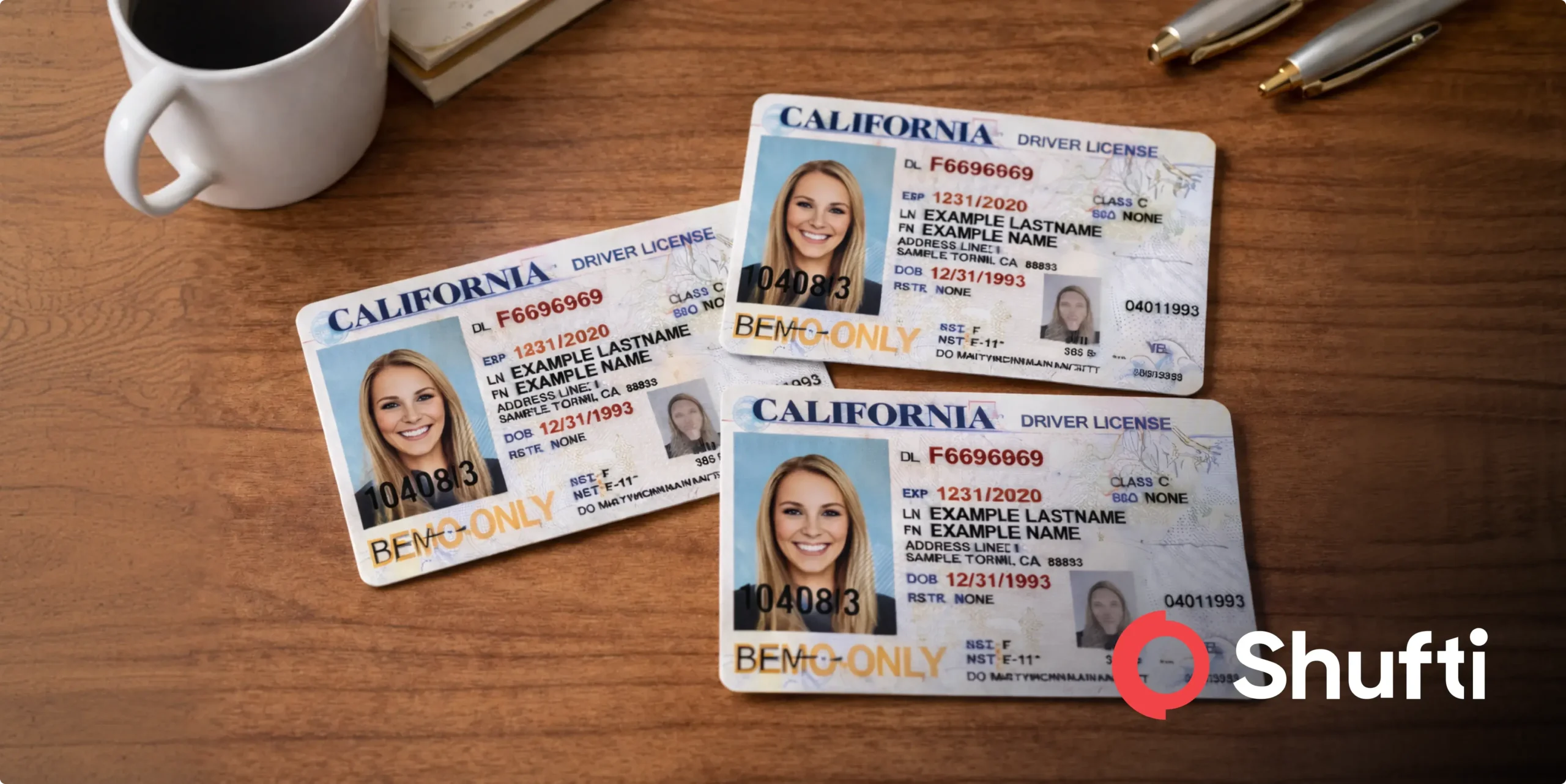
AI-generated government IDs are documents that copy real and official identification using generative models that have been trained in detail about intricate authentic data patterns. These documents include ID numbers, barcodes, photos, and holograms that closely resemble the real credentials. Examples of these documents can be
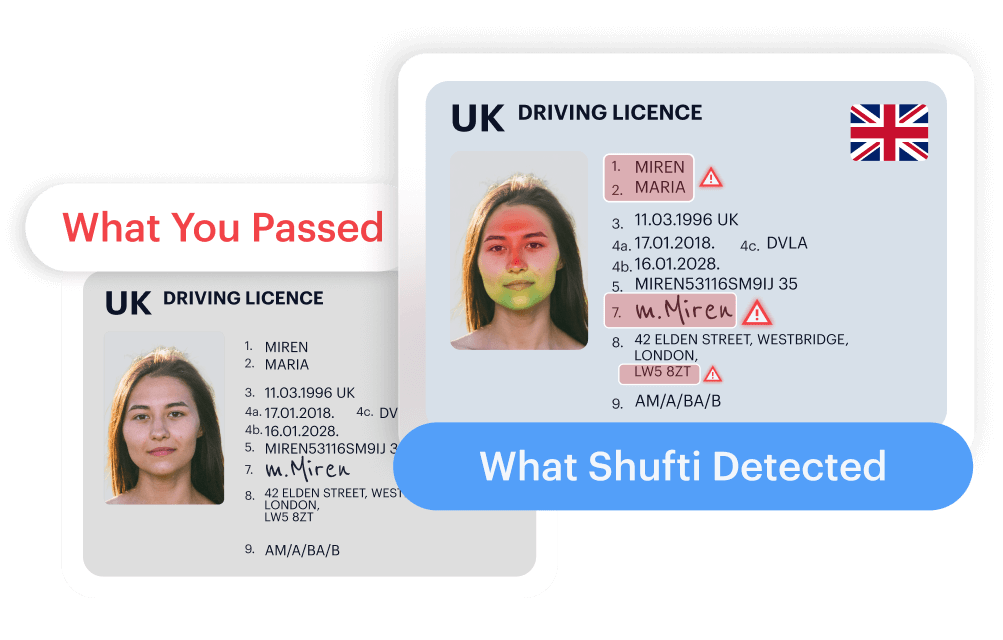
- A driver’s license with a fabricated date of birth, an artificially generated picture, a document ID that do not actually exist in databases
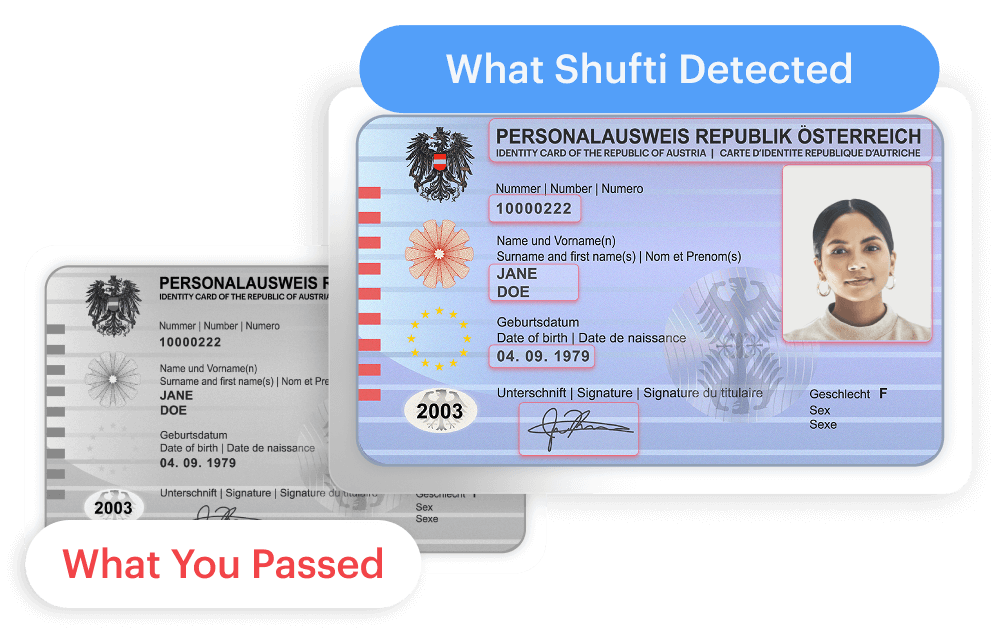
- Passport documents that seem official with scannable barcodes
- Residency cards with correct fonts, seals and logos but synthetic credentials
- IDs that contain correct stolen details of a real person but paired with synthetic photos
Three Methods to Detect AI-Generated Fake IDs
The same AI that is used to create fake documents can also be used for fake ID detection; however, this can only happen if trained and used properly.
The more advanced verification systems are reliant on deeply layered, in-depth AI analysis to rule out any digital problems that could not have been identified if viewed through a human lens.
1. Conduction of Forensic Document Verification
The current document authentication finds itself at a crossroads with one key question, which is: “ Does this document pass all the checks to be a government document or is it leaning towards digital synthesis?”
How Forensic Document Examination Works?
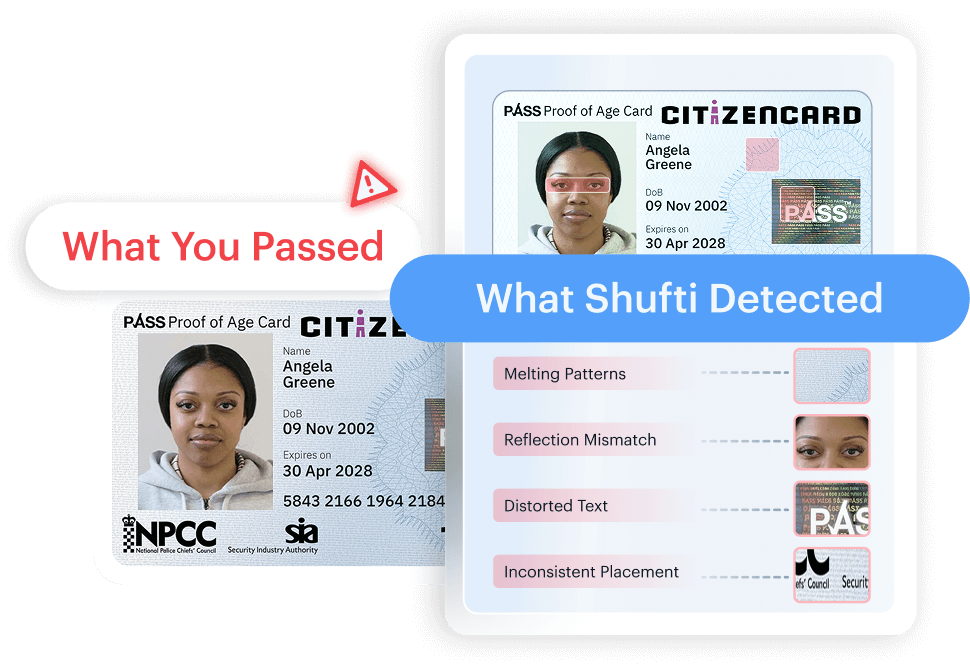
Pixel Analysis
The document is examined at the minutest and the most granular level that is beyond human capacity or perception. AI models are able to exactly comprehend the precise pixel patterns from the right printing sources.
AI-generated documents have some numerical or mathematical inconsistencies in color distribution that may look fine at first glance, but they are not. This is where advanced verification tools will be able to correctly differentiate between a synthetic document and an original one.
Non-Uniformity in Textures
Identifying any irregularity in texture happens through advanced image analysis. One of the striking differences that sets apart an original from a fake is the textures. An original has specific texture patterns from printing technology and materials, while oftentimes an AI-generated document could display relatively smooth gradients.
Changes in Font Patterns
A thorough analysis of every character from the curves to the spacing from official printing processes. There are subtle yet existent changes in the way characters are displayed and put together that create a difference from government printers.
Inconsistencies during Micro-Printing
These are evident or visible enough to give the AI-generated fake away. This is because legitimate microprinting is quite sharp and precise; the AI-generated versions lack such definition.
Metadata Anomaly Detection
Authentic IDs generate some detailed and specific metadata patterns when they are captured. As a result, digital fingerprints of document creation are examined.
2. Biometric Validation
Facial Recognition
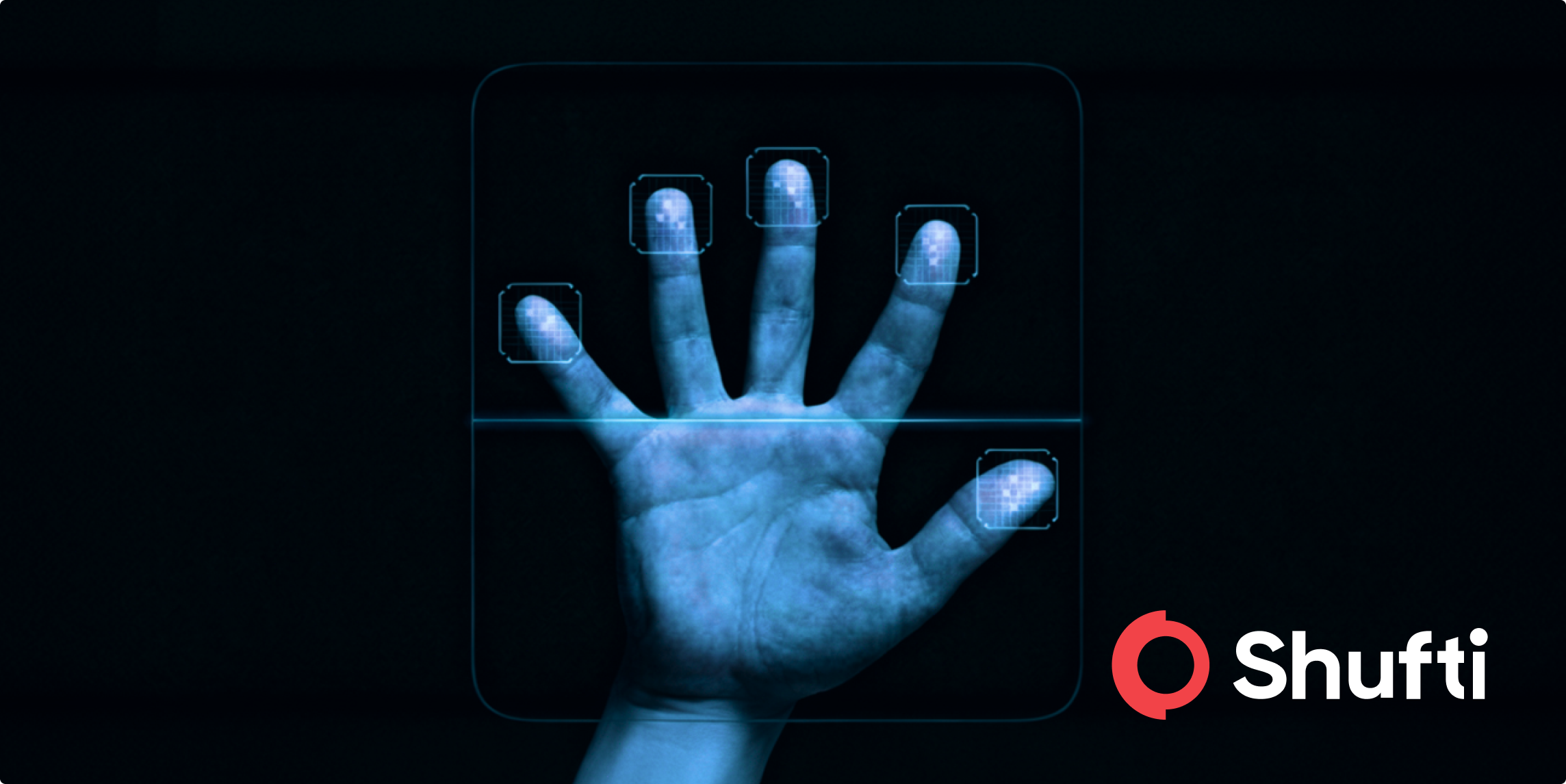
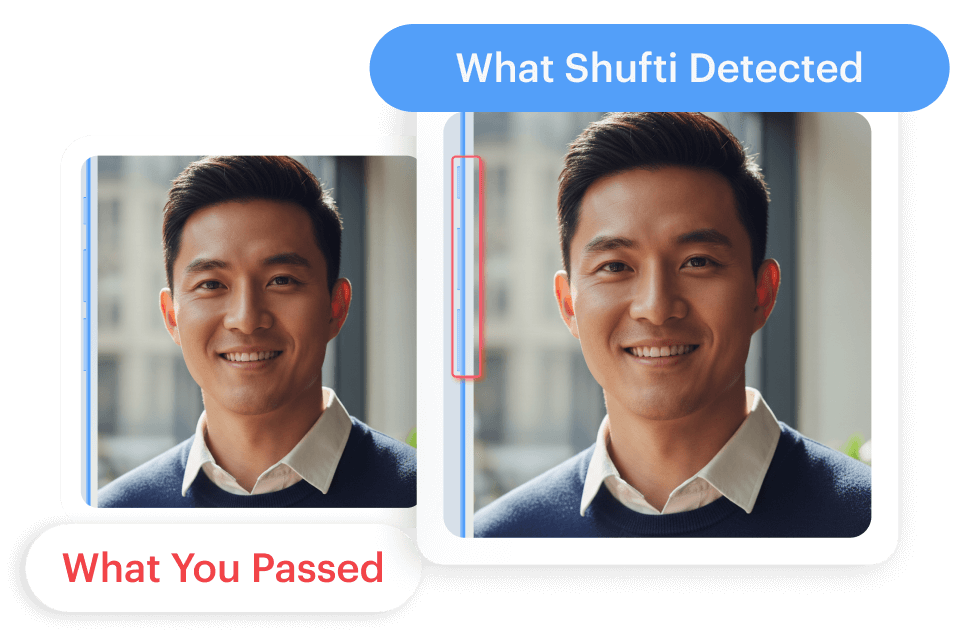
ID photos are put in comparison with live images using specific biometric features that can work across all angles and lighting.
Liveness Detection
This ensures that the person is physically present in real time.
Behavioral Analytics
An examination of the verification process patterns, how much time does the person take to interact, etc.
3. Cross-Referencing with Global Database
Advanced identity verification systems ensure that the documents created match the specific demands of the jurisdictions those IDs belong to; this does not exclude regional variations and multiple versions. They also ensure that the formatting done is correct and legitimate. They are to also identify any existing inconsistencies between the documents and claimed identities.
How Shufti Helps Identify Forged Identities That Your IDV May Have Missed?
Businesses facing AI-generated document fraud need more than visual checks.
Shufti helps compliance teams examine document integrity, validate machine-readable data, and combine document verification with biometric and liveness checks for stronger onboarding decisions.
Request a demo to see how Shufti helps detect fake IDs before they pass onboarding.