 Runs On Your Cloud
 No Data Sharing
 No Contract Required
 Explore Now





 Face Verification
 Address Verification
 Document Verification
 Age Verification
 VideoIdent
 Fast ID
 eIDV
eIDV
 NFC Verification
 Consent Verification
 Business Verification
 Due Diligence
 Investor Verification
 E-Signature
 Behavioural Biometrics
 Device Fingerprinting
 MFA
MFA
 AML Screening
 Business AML Screening
 User Risk Assessment
 Transaction Screening
 Adverse Media Screening
 Identity Verification
 KYC
KYC
 KYB
KYB
 KYI
KYI
 Bonus Abuse
 Fraud Prevention
 Deepfakes
 Banking
 Crypto
 Fintech
 Forex
Forex
 Gaming
 Gig Economy
 Marketplace
 Social Networks
 Product Managers
 Compliance Officers
 Fraud Analyst
 Global Trust Platform
 Journey Builder
 Vendor Comparison
 Content library
 Blogs
Blogs
 News
News
 Reports
 Insights
 Knowledgebase
 ROI calculator
 Blind Spot Audit
 Deepfake Detection
 Liveness Detection
 Document Originality
 Document Deepfake
 Events & Webinar
 Podcast Studio
 Spotlight Studio
 API Documentation
 Mobile SDKs
 Service Status
 Help Center
 Contact Us
 Technical Support
 Compliance
 Supported Document
 About
About
 Career
 Press Release
 Certifications
 Partnership
 Awards
How Much of What You’ve Verified Is Actually Real?
Shufti’s Deepfake Blindspot Audit now runs fully inside your AWS environment, auditing historic KYC for manipulation signals without moving sensitive data off-prem.
Run Now on AWSDid You Know Deepfake Detection Is Now an Arms Race?
Deepfakes do not stand still. Threat actors test your defenses and come back smarter.
Shufti runs inside your AWS environment so you can fight back where it matters most. Detect manipulation in real-world conditions, move faster as threats evolve, and keep sensitive data inside your cloud.
Explore Clouds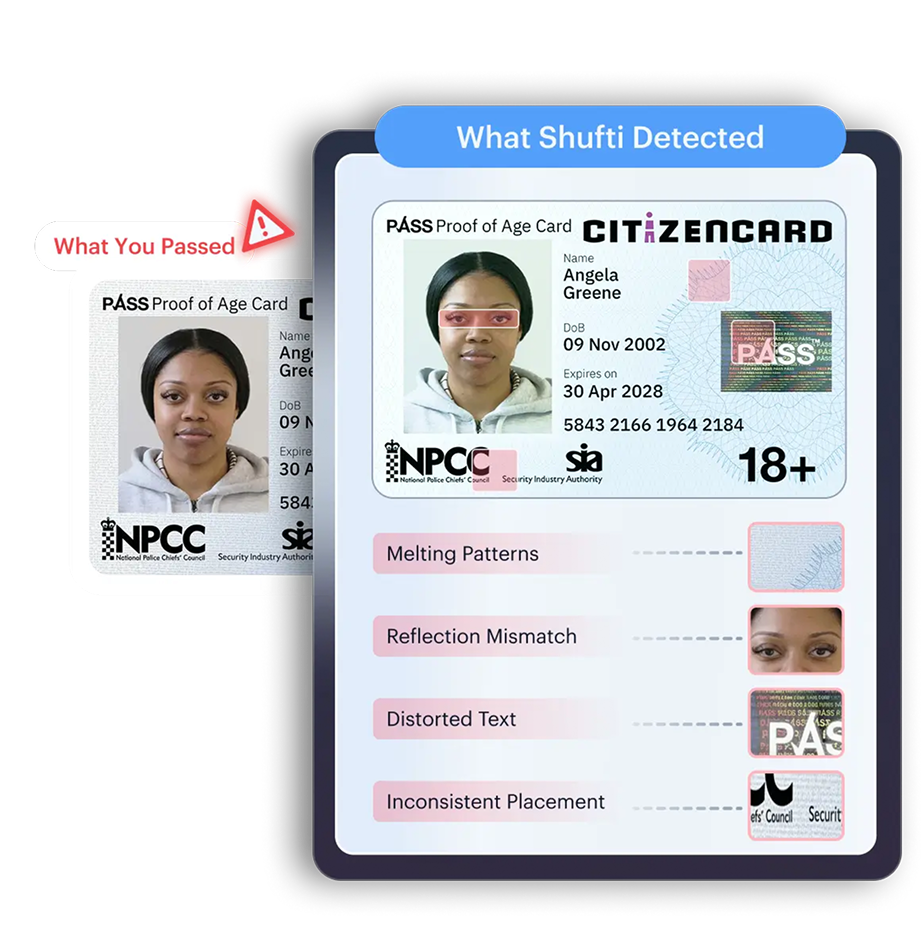

Runs entirely
in your cloud

No PII
Ever leaves

No integration
or coding
Not All Synthetic Media is Dangerous Until It Becomes a Deepfake
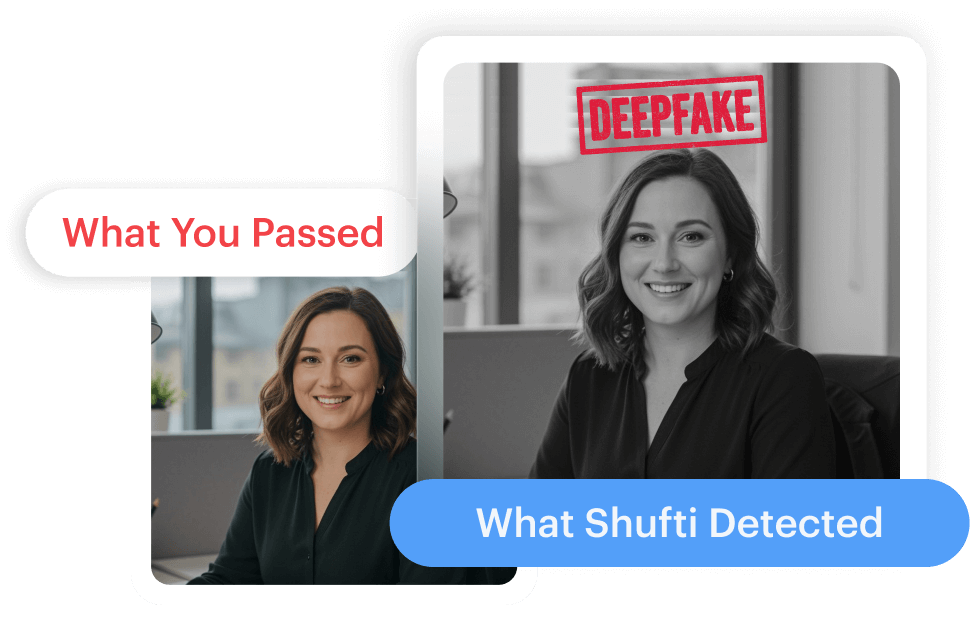
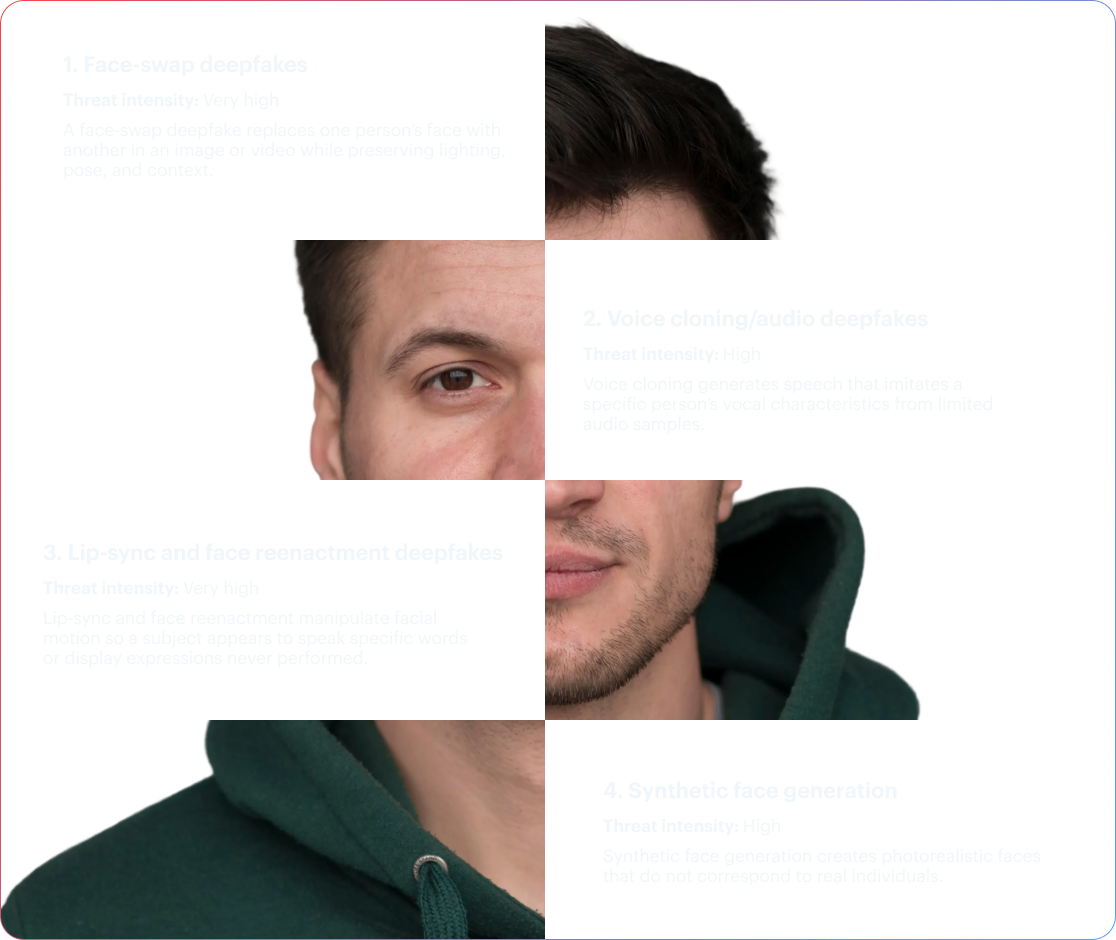
Synthetic media covers all digitally altered or created content. However, deepfakes are a high-risk subset, fully AI-generated media designed to replicate real identities with near-photorealistic accuracy.
Why Detection Starts With The Right Distinction
Different manipulation types leave different signals. These signals are evaluated directly within your AWS compute layer, reducing noise introduced by external pipelines or data transfers.
The Comfort of Simple Answers
Commercial deepfake detectors are trained on clean, controlled data, not on deepfakes used in real-life threat scenarios like spoofing remote identity verification systems. Their performance claims often rely on threshold-based benchmarks that look impressive but create a false sense of coverage across real-world threat environments.
360° Deepfake Detection
with Shufti's Seven Gates of Defense


Gate 1
The Biometric Detective

The Biometric Detective
This gate examines whether a face follows natural human geometry as it moves. It measures spatial relationships that the human eye rarely tracks, looking for inconsistencies that tend to appear when synthetic faces try to mimic real anatomy over time.
Gate 2
The AI Signature Hunter

The AI Signature Hunter
This layer scans for statistical patterns commonly produced by AI-generated media. Instead of identifying a specific tool, it looks for broader characteristics that distinguish machine-generated content from camera-captured reality.
Gate 3
The Digital Archaeologist

The Digital Archaeologist
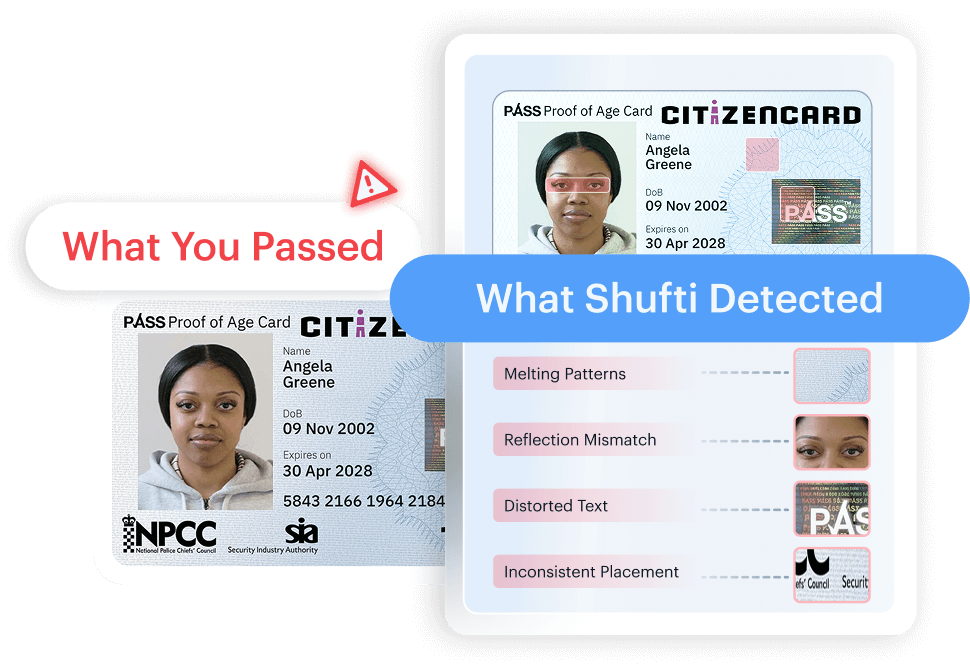
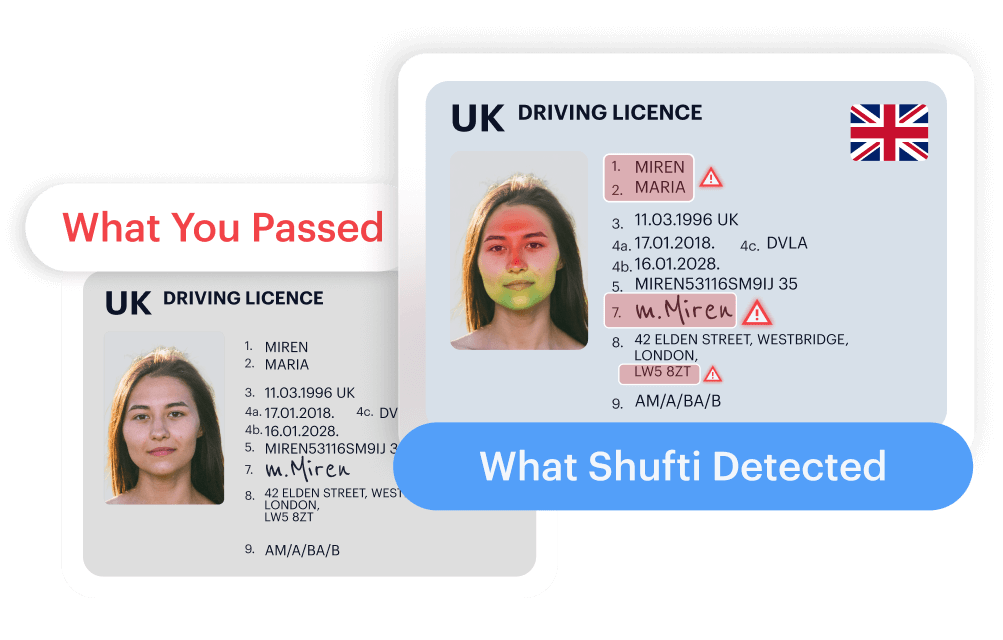
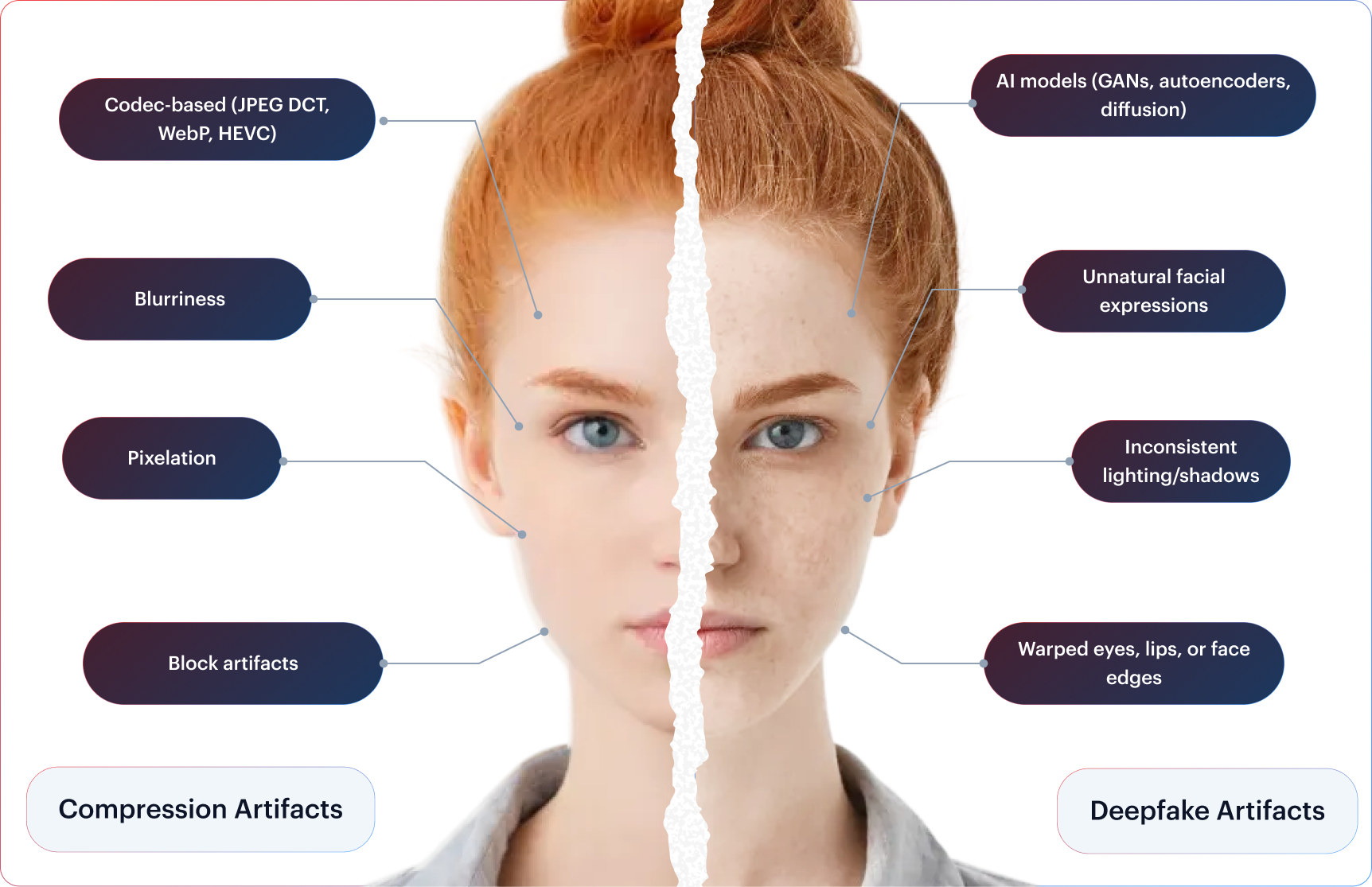
This layer analyzes how the media has been processed. Real images tend to degrade evenly, while manipulated ones often show uneven compression or editing traces that suggest parts of the image were altered separately.
Gate 4
The Frequency Analyst

The Frequency Analyst
This gate moves beyond visible pixels and analyzes the image in frequency space. It detects noise and spectral patterns that real sensors naturally create, but synthetic systems often replicate imperfectly.
Gate 5
The Texture Specialist

The Texture Specialist
This layer focuses on fine surface details such as skin texture and edges. It looks for repetition, smoothing, or loss of micro-variation that can occur when generative models simplify complex natural patterns.
Gate 6
The Degradation Expert

The Degradation Expert
Many attacks rely on poor image quality to hide flaws. This gate is designed to remain effective under compression, blur, low light, and noise, identifying signals that persist even when clarity is reduced.
Gate 7
The Pixel Inspector

The Pixel Inspector
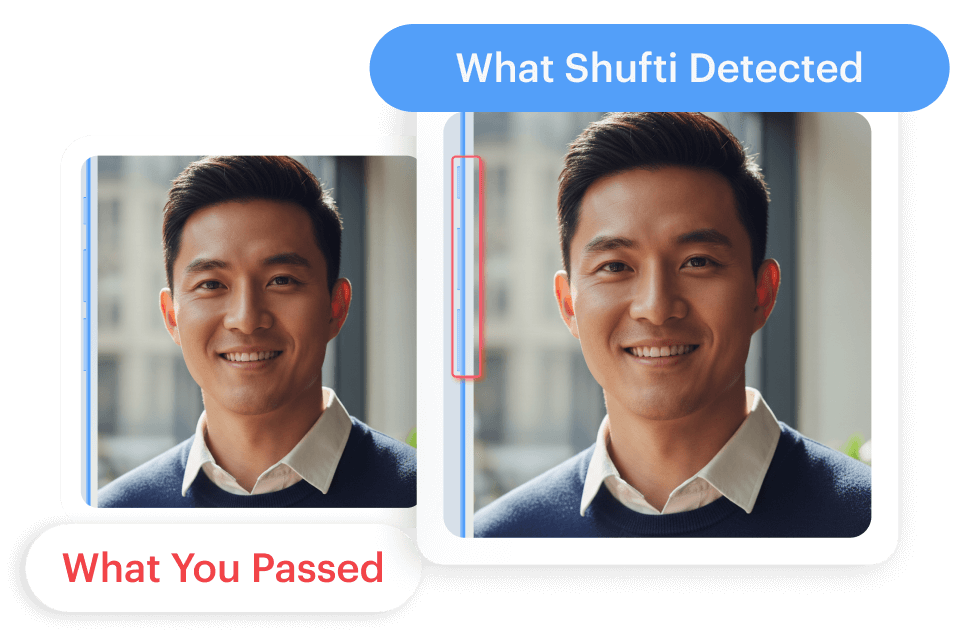
This final gate examines how pixels interact with one another at high resolution. It looks for subtle discontinuities that can reveal how an image was assembled, especially where synthetic media struggles to maintain consistency at fine detail.
Preview