 Runs On Your Cloud
 No Data Sharing
 No Contract Required
 Explore Now


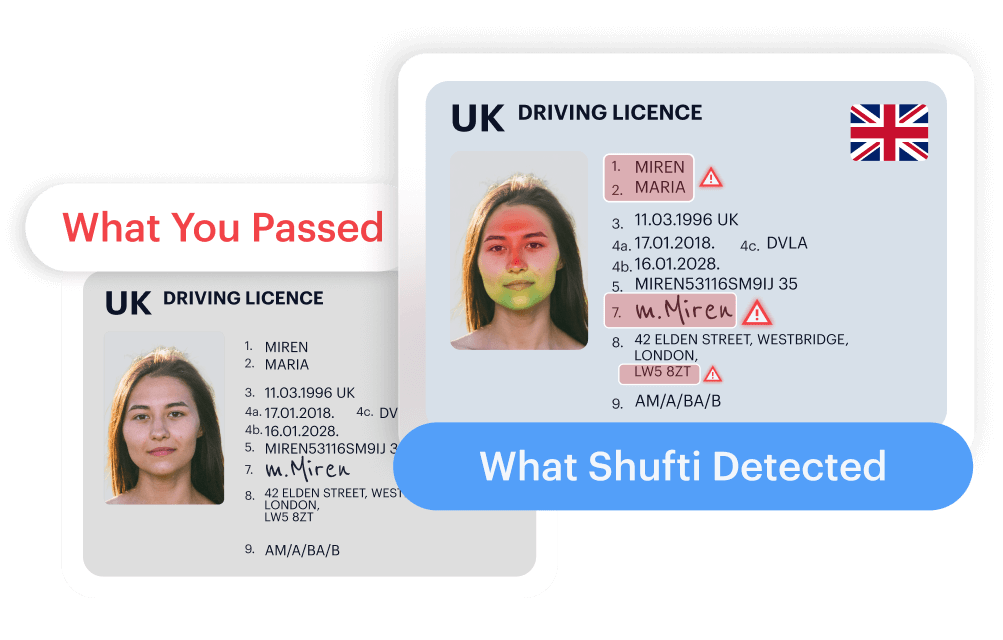
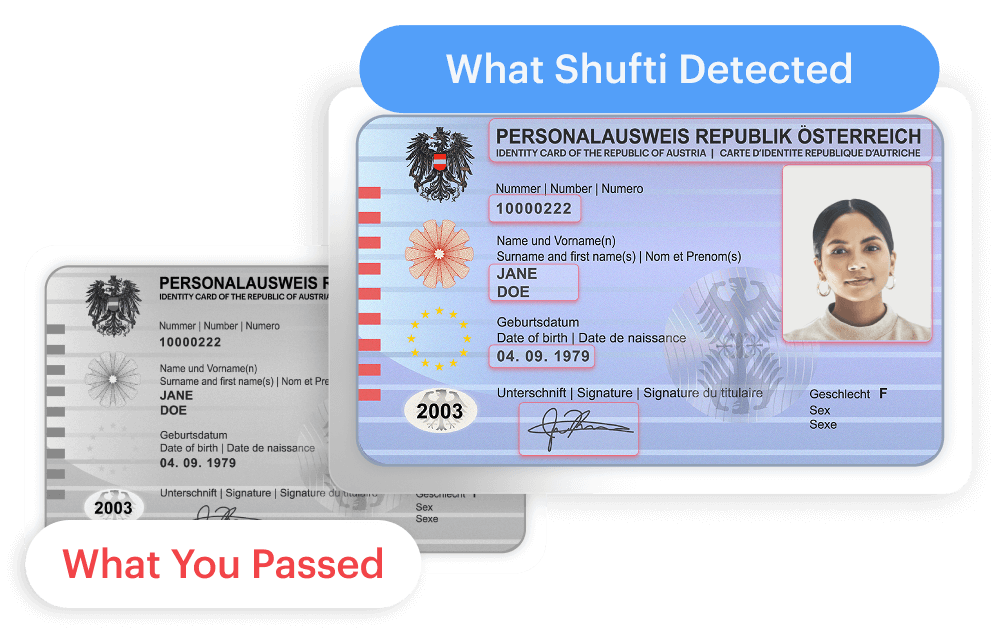





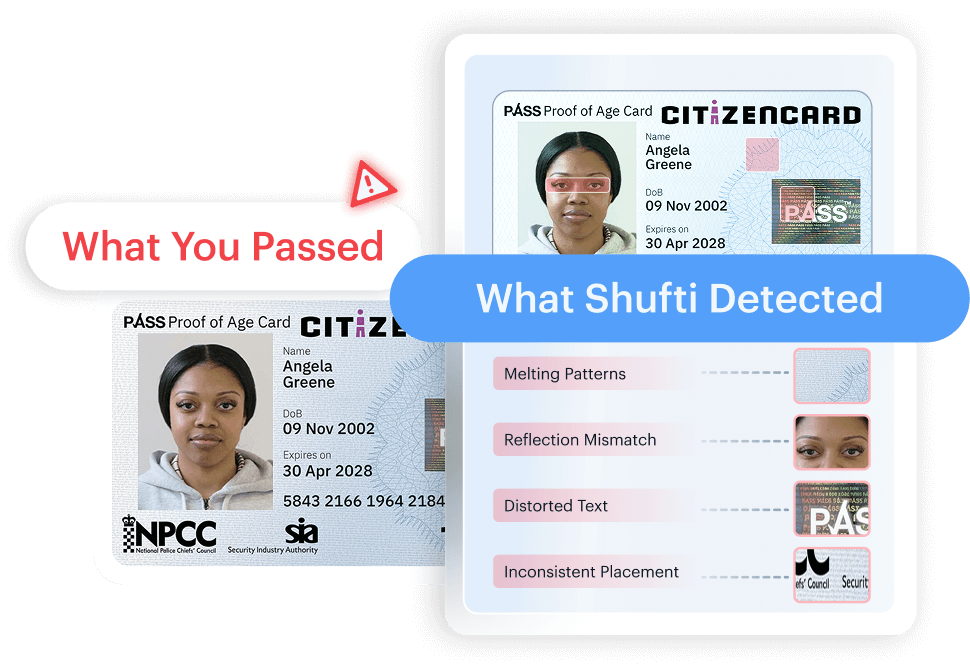
 Face Verification
 Address Verification
 Document Verification
 Age Verification
 VideoIdent
 Fast ID
 eIDV
eIDV
 NFC Verification
 Consent Verification
 Business Verification
 Due Diligence
 Investor Verification
 E-Signature
 Behavioural Biometrics
 Device Fingerprinting
 MFA
MFA
 AML Screening
 Business AML Screening
 User Risk Assessment
 Transaction Screening
 Adverse Media Screening
 Identity Verification
 KYC
KYC
 KYB
KYB
 KYI
KYI
 Bonus Abuse
 Fraud Prevention
 Deepfakes
 Banking
 Crypto
 Fintech
 Forex
Forex
 Gaming
 Gig Economy
 Marketplace
 Social Networks
 Product Managers
 Compliance Officers
 Fraud Analyst
 Global Trust Platform
 Journey Builder
 Vendor Comparison
 Content library
 Blogs
Blogs
 News
News
 Reports
 Insights
 Knowledgebase
 ROI calculator
 Blind Spot Audit
 Deepfake Detection
 Liveness Detection
 Document Originality
 Document Deepfake
 Events & Webinar
 Podcast Studio
 Spotlight Studio
 API Documentation
 Mobile SDKs
 Service Status
 Help Center
 Contact Us
 Technical Support
 Compliance
 Supported Document
 About
About
 Career
 Press Release
 Certifications
 Partnership
 Awards
Identity Verification Trends In 2026

- 01 1. Government-led age assurance becomes mainstream:
- 02 2. Privacy-Preserving Age Verification moves from Preference to Requirement:
- 03 3. Digital Identity Wallets move from concept to deadline:
- 04 4. Passkeys reshape login assurance and step-up design
- 05 5. Deepfake Risk Becomes a Regulator-Recognized and Operational:
- 06 6. Agentic AI’s Role in IDV:
- 07 Ready to Adapt Your Verification Strategy for 2026?
Traditionally, the most common identity verification strategy treated verification as a gate at onboarding. Financial institutions selected the best verification method that matched their risk profile and exposure, verified the customer’s identity through document checks or selfies, and the customer’s journey moved on.
This strategy is failing in 2026. The evolution of technology has created never-before-seen fraud tactics for which the vast majority of IDV solution systems are ill-equipped.
In response, governments around the world are tightening rules around accessing high-risk products and services. This new year started in the backdrop of a global wave of pushing identity and age checks into everyday digital life, from social platforms to adult content.
That is precisely why the most important IDV trends in 2026 differ from the norm. The playbook has changed because identity checks are expanding beyond onboarding, and AI-powered impersonation has forced verification teams to rethink what “proof” means.
Below are 6 IDV trends that will shape compliance in 2026:
1. Government-led age assurance becomes mainstream:
Age and Identity verification are no longer restricted to the financial realm. Instead, such checks are routinely being incorporated into day-to-day digital life. For instance,
- Social Media Access: Florida received a temporary green light to ban social media accounts for children under 14, requiring verified parental consent for access.
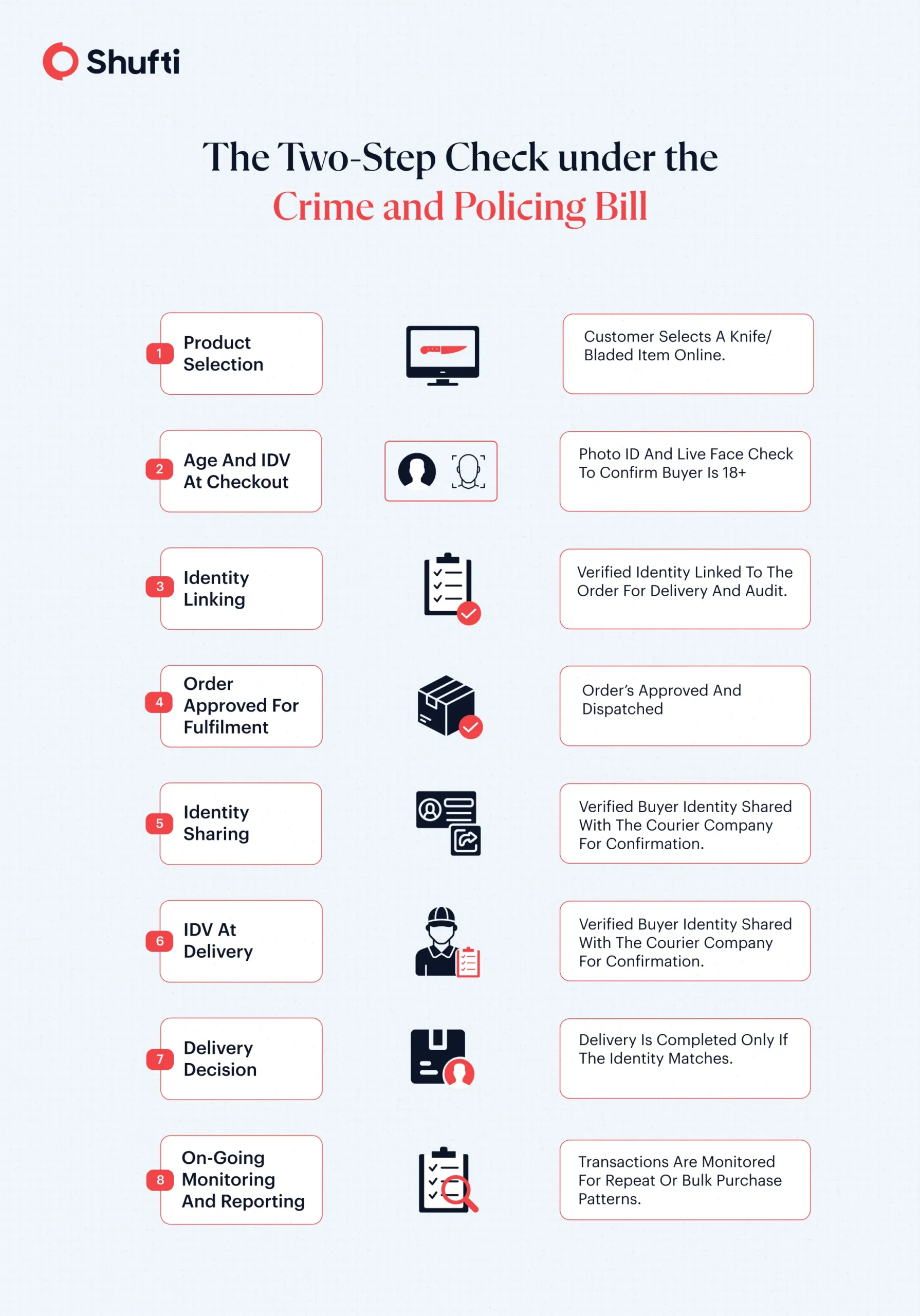
- Stringent Measures for E-Commerce: The UK is moving in the same direction, with the proposed Crime and Policing Bill introducing minimum age thresholds and novel IDV methods for e-commerce businesses selling knives/bladed items.
Taken together, these headlines are not isolated. Verification is gradually becoming a public policy focus for safety and protection across ordinary digital journeys.
2. Privacy-Preserving Age Verification moves from Preference to Requirement:
The need for age-locked content and user privacy is being recognized. Governments, especially in the EU, are focusing on minimizing the exposure of personal data while ensuring that platforms can verify users’ age.
This ID verification trend verifies the user’s age and grants access to content without revealing the user’s identity.
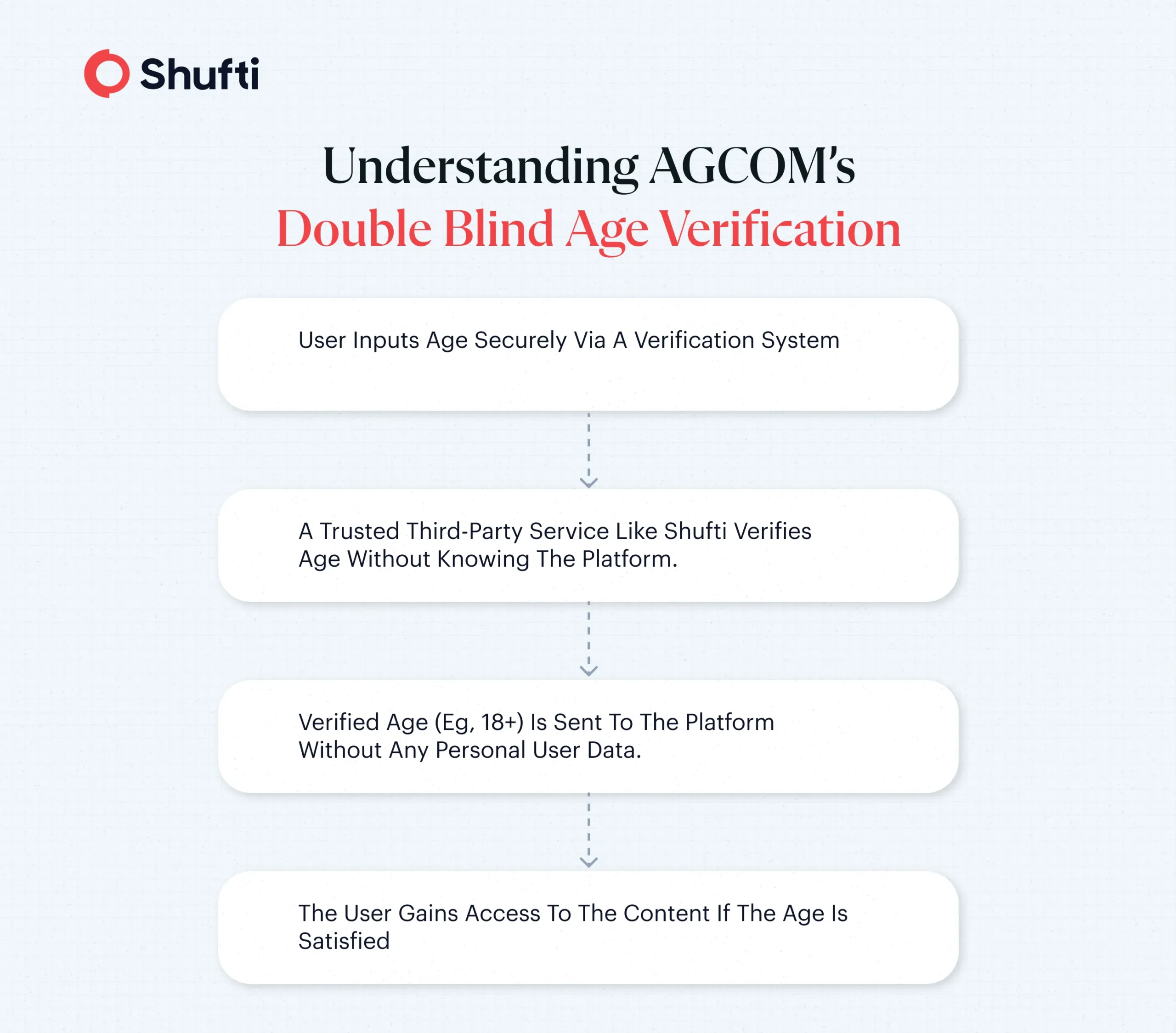
Italy’s AGCOM regulation for age verification on adult content is a prime example of privacy-focused age checks. This regulation mandates a double anonymity approach towards age verification, where adult content providers are made privy only to the user’s age, not their sensitive personal information.
For businesses implementing age verification, the focus will shift to result-only-verification models that reduce the amount of data collected and shared. This can be achieved by using a third-party service that issues an age-verification token (18+, 21+) without sharing any other user details.
3. Digital Identity Wallets move from concept to deadline:
One of the emerging digital identity trends in 2026 are digital wallets are moving from conversation to execution. The EU has mandated all Member States to offer at least one form of EU Digital Identity Wallet to their citizens by the end of 2026.
The EU Digital Identity initiative is advocating for a world where individuals can store verified personal information (age, address, academic qualifications) in a digital wallet.
The key functionality of the Wallet shall be to store and share digital documents, ranging from driving licenses to everyday items such as gym membership cards.
Businesses operating in the EU must adopt a framework that accepts digital identity credentials in place of traditional documents. This shift towards reusable credentials showcases that IDV workflows will become more streamlined and user-centric, with fewer data retention requirements for businesses.
4. Passkeys reshape login assurance and step-up design
Traditional password-based authentication is moving toward passwordless login frameworks. Passkeys, for instance, are a secure, cryptographic authentication method that significantly reduces the risk of credential theft.
- FIDO’s Passkey Index found that 93% of user accounts across nine FIDO Alliance members (including Amazon, Google, Mercari Inc., PayPal, and Microsoft, etc.) are eligible for passkeys. This percentage establishes that the technical barriers for large-scale user passkey enrollment have been addressed.
- The same Index also reveals that passkey logins have a higher success rate (93%) when compared to traditional MFA methods (63%), with further advantages such as reduced support burden, lower authentication expense, and a better conversion rate.
- With 26% of sign-ins using passkeys, this method is gaining significant traction across both B2C and B2B. Passkeys make it easier for users to authenticate securely, and they’re increasingly becoming the default method for account access and recovery.
Adopting passkeys as a standard authentication method means businesses will need to support multi-factor authentication (MFA) systems that integrate smoothly with passkey technologies. This move will reduce friction for genuine users while preventing phishing and credential stuffing attacks, especially in high-risk transactions.
5. Deepfake Risk Becomes a Regulator-Recognized and Operational:
Technological advancements in AI have rendered modern Deepfakes a genuine concern. Regulators are now formally recognizing deepfake media as a legitimate threat to digital trust, and businesses are expected to integrate deepfake detection into their identity verification workflows.
The World Economic Forum highlights that even state-of-the-art detection systems experience 45-50% accuracy drops when tested against real-world deepfakes, while human ability to identify deepfakes is at a mere 55-60% threshold.
Between 2019-2020, deepfake videos increased at a rate of 900% annually, and detection systems have consistently lagged behind. Here’s what businesses can do:
- Camera Path Verification: KYC providers should detect virtual cameras and unauthorized device swaps during live sessions. This prevents synthetic video from entering biometric systems undetected.
- Active Liveness Checks: Introduce randomized prompts and lighting changes to detect timing discrepancies and facial motion inconsistencies that are common in deepfake-generated media.
- Temporal Consistency Monitoring: Track facial features like blinking and lip sync over time. Real-time face swaps often have temporal artefacts such as frame drift or lip-sync errors that can be detected with detailed analysis.
- AI-Driven Detection: Implement AI systems that assess stream quality for seams, flicker, and other artefacts typical of synthetic media.
Adopting a multi-layered fraud detection system, businesses can better identify and mitigate deepfake risks. Regularly updating detection systems and employing advanced AI-driven tools is crucial to staying ahead of these sophisticated identity fraud threats.
6. Agentic AI’s Role in IDV:
Autonomous systems are now common in enterprise networks, with AI agents aiding identity verification workflows. In 2026, AI-driven systems are likely to participate fully in the identity verification lifecycle.
A recent industry reports have found that non-human identities (NHIs) are experiencing a 44% year-on-year growth, outnumbering human identities to a ratio of 144:1. With NHI’s like Agentic AI growing rapidly, businesses need to adopt modern Know Your Agent (KYA) measures that can counter the rapid growth of AI Agents in the IDV realm.
The challenge with this issue is identifying which human authorized the AI agent and subsequently what function the said AI Agent perform with that authorization. When an AI system verifies user identities or approves financial transactions at machine velocity, traditional IDV solution systems struggle to keep pace simply because they were designed for human users.
Here’s what businesses can do:
- Implement Identity and Access Management (IAM) and Customer Identity and Access Management (CIAM) controls that track both Human and AI Agents, establish clear audit trails, accountability procedures, and containment policies.
- Adopt IDV systems that can distinguish between human and AI-driven actions.
As AI systems take on more responsibilities, businesses need to integrate identity verification solutions that provide AI authorization protocols. Failure to implement KYA measures imposes the risk of unauthorized access escalation, poor audibility due to struggling solution systems, and potentially compliance headaches when regulators impose accountability for AI Agents.
The IDV trends discussed throughout this article, from privacy-preserving age verification to deepfake detection, all have one thing in common: the need for an IDV solution that is flexible. A system that evolves with risk is crucial for financial institutions to safeguard operations.
Ready to Adapt Your Verification Strategy for 2026?
Identity verification is no longer a one-time onboarding step. Businesses now face a mix of deepfake-enabled impersonation, stricter age assurance rules, and the shift toward reusable digital credentials, which is why verification teams need infrastructure that can validate identities with stronger proof and lower data exposure.
Shufti supports this shift with a core identity verification infrastructure that verifies document authenticity and biometric signals, and can also act as the underlying verification layer for organisations aiming to issue digital identity credentials and wallets. Verified documents and identity attributes still need reliable validation before they can become reusable credentials. Wallet strategies depend on robust IDV foundations that can detect spoofing, confirm liveness, and validate document integrity.
A demo with Shufti can help compliance and product teams assess how to modernise identity checks for 2026 requirements while preparing for wallet-led identity experiences.