 Runs On Your Cloud
 No Data Sharing
 No Contract Required
 Explore Now







 Face Verification
 Address Verification
 Document Verification
 Age Verification
 VideoIdent
 Fast ID
 eIDV
eIDV
 NFC Verification
 Consent Verification
 Business Verification
 Due Diligence
 Investor Verification
 E-Signature
 Behavioural Biometrics
 Device Fingerprinting
 MFA
MFA
 AML Screening
 Business AML Screening
 User Risk Assessment
 Transaction Screening
 Adverse Media Screening

 Identity Verification
 KYC
KYC
 KYB
KYB
 KYI
KYI
 Bonus Abuse
 Fraud Prevention
 Deepfakes
 Banking
 Crypto
 Fintech
 Forex
Forex
 Gaming
 Gig Economy
 Marketplace
 Social Networks
 Product Managers
 Compliance Officers
 Fraud Analyst
 Global Trust Platform
 Journey Builder
 Vendor Comparison

 Content library
 Blogs
Blogs
 News
News
 Reports
 Insights
 Knowledgebase
 ROI calculator
 Blind Spot Audit
 Deepfake Detection
 Liveness Detection
 Document Originality
 Document Deepfake
 Events & Webinar
 Podcast Studio
 Spotlight Studio
 API Documentation
 Mobile SDKs
 Service Status
 Help Center
 Contact Us
 Technical Support
 Compliance
 Supported Document
 About
About
 Career
 Press Release
 Certifications
 Partnership
 Awards
Strengthening Address Verification for
Global KYC Compliance
This guide explains why address verification breaks down in practice, how regulators assess address controls, and what regulated businesses must do to maintain compliance, accuracy, and onboarding performance across jurisdictions.
Why Address Verification Is Important for Businesses
Address verification is critical for businesses to meet AML and KYC requirements, prevent fraud, and reduce regulatory risk. Accurate address checks help confirm customer legitimacy, detect high-risk activity, and ensure compliance across jurisdictions—while supporting secure onboarding and protecting businesses from fines, reputational damage, and operational losses.

391%
Rise in shipping fraud since 2018
22%
of merchants hit by reshipping scams
What You’ll Learn in This Address Verification Guide
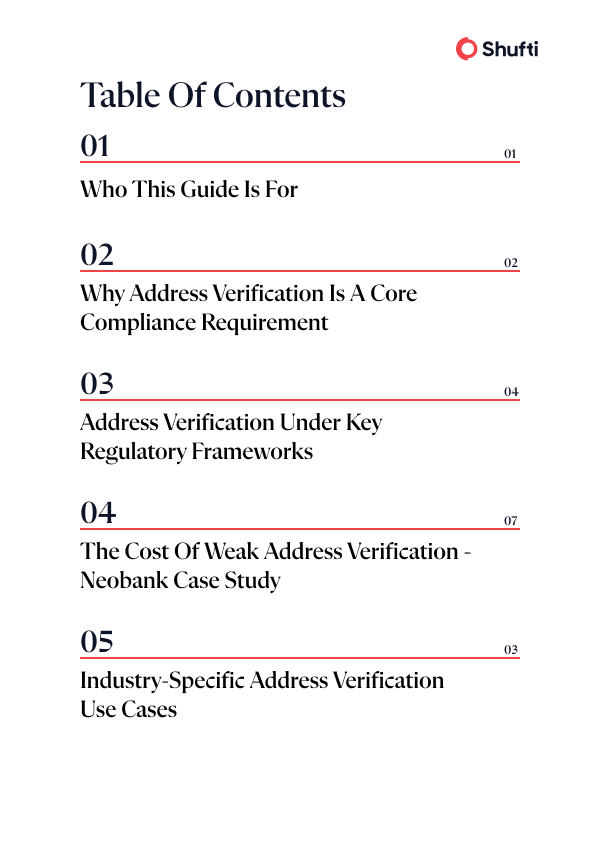
- How to understand why address verification is a core AML and KYC requirement and the role it plays in meeting global regulatory expectations.
- How to identify the risks of weak address controls, including non-compliance, increased fraud exposure, and regulatory penalties.
- How to understand address verification requirements across key regimes, such as UK MLR 2017, Germany’s GwG, and the U.S. FinCEN CIP.
- How to apply address verification across different industries, including fintech, e-commerce, insurance, travel, and iGaming.
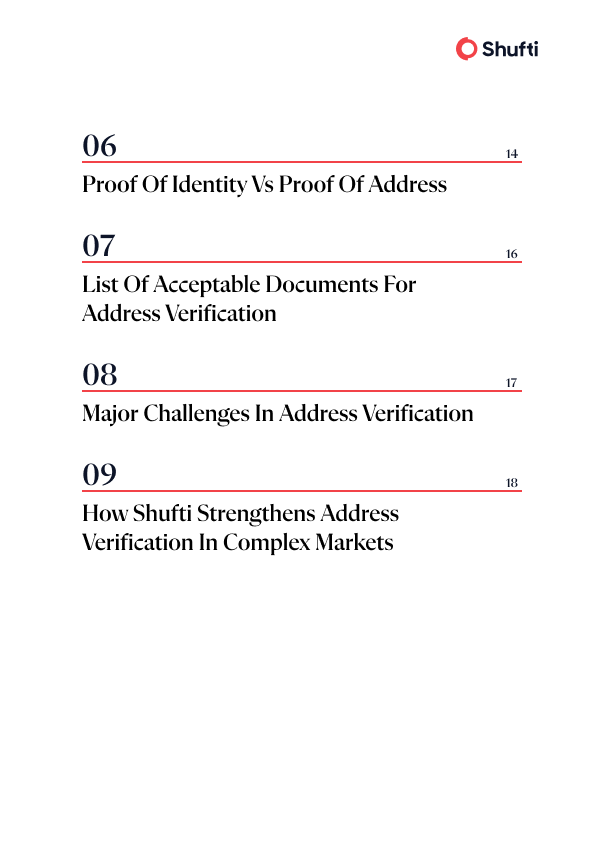
- How to distinguish proof of identity from proof of address, understand common verification challenges, and evaluate why layered verification models are more effective than fragmented approaches.



Frequently Asked Questions
Why is address verification required for KYC compliance?
Address verification is a regulatory requirement under AML frameworks like MLR 2017, GwG, and FinCEN's CIP to confirm customer identity and prevent jurisdictional fraud.
What are the main challenges in address verification?
Common challenges include evolving address formats, inconsistent document layouts, OCR extraction errors, and mismatches across different systems.
How does weak address verification lead to regulatory fines?
Inadequate address controls can result in onboarding ineligible customers, failing risk assessments, and significant penalties from regulators.
What documents are typically accepted for address verification?
Acceptable documents vary by jurisdiction but commonly include utility bills, bank statements, government correspondence, and certain identity documents with address fields.