 Runs On Your Cloud
 No Data Sharing
 No Contract Required
 Explore Now


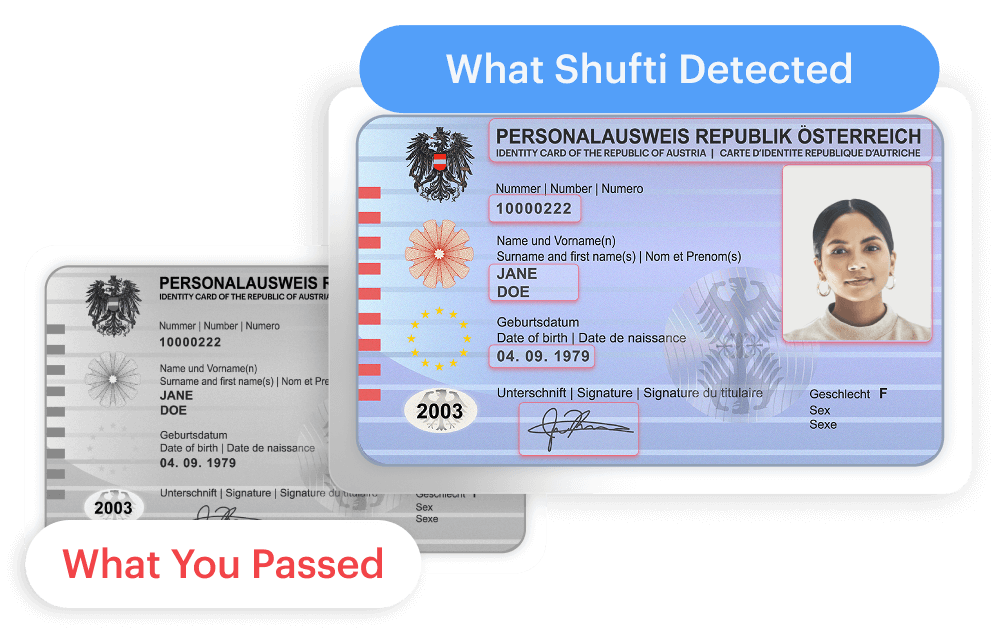





 Face Verification
 Address Verification
 Document Verification
 Age Verification
 VideoIdent
 Fast ID
 eIDV
eIDV
 NFC Verification
 Consent Verification
 Business Verification
 Due Diligence
 Investor Verification
 E-Signature
 Behavioural Biometrics
 Device Fingerprinting
 MFA
MFA
 AML Screening
 Business AML Screening
 User Risk Assessment
 Transaction Screening
 Adverse Media Screening
 Identity Verification
 KYC
KYC
 KYB
KYB
 KYI
KYI
 Bonus Abuse
 Fraud Prevention
 Deepfakes
 Banking
 Crypto
 Fintech
 Forex
Forex
 Gaming
 Gig Economy
 Marketplace
 Social Networks
 Product Managers
 Compliance Officers
 Fraud Analyst
 Global Trust Platform
 Journey Builder
 Vendor Comparison
 Content library
 Blogs
Blogs
 News
News
 Reports
 Insights
 Knowledgebase
 ROI calculator
 Blind Spot Audit
 Deepfake Detection
 Liveness Detection
 Document Originality
 Document Deepfake
 Events & Webinar
 Podcast Studio
 Spotlight Studio
 API Documentation
 Mobile SDKs
 Service Status
 Help Center
 Contact Us
 Technical Support
 Compliance
 Supported Document
 About
About
 Career
 Press Release
 Certifications
 Partnership
 Awards
report
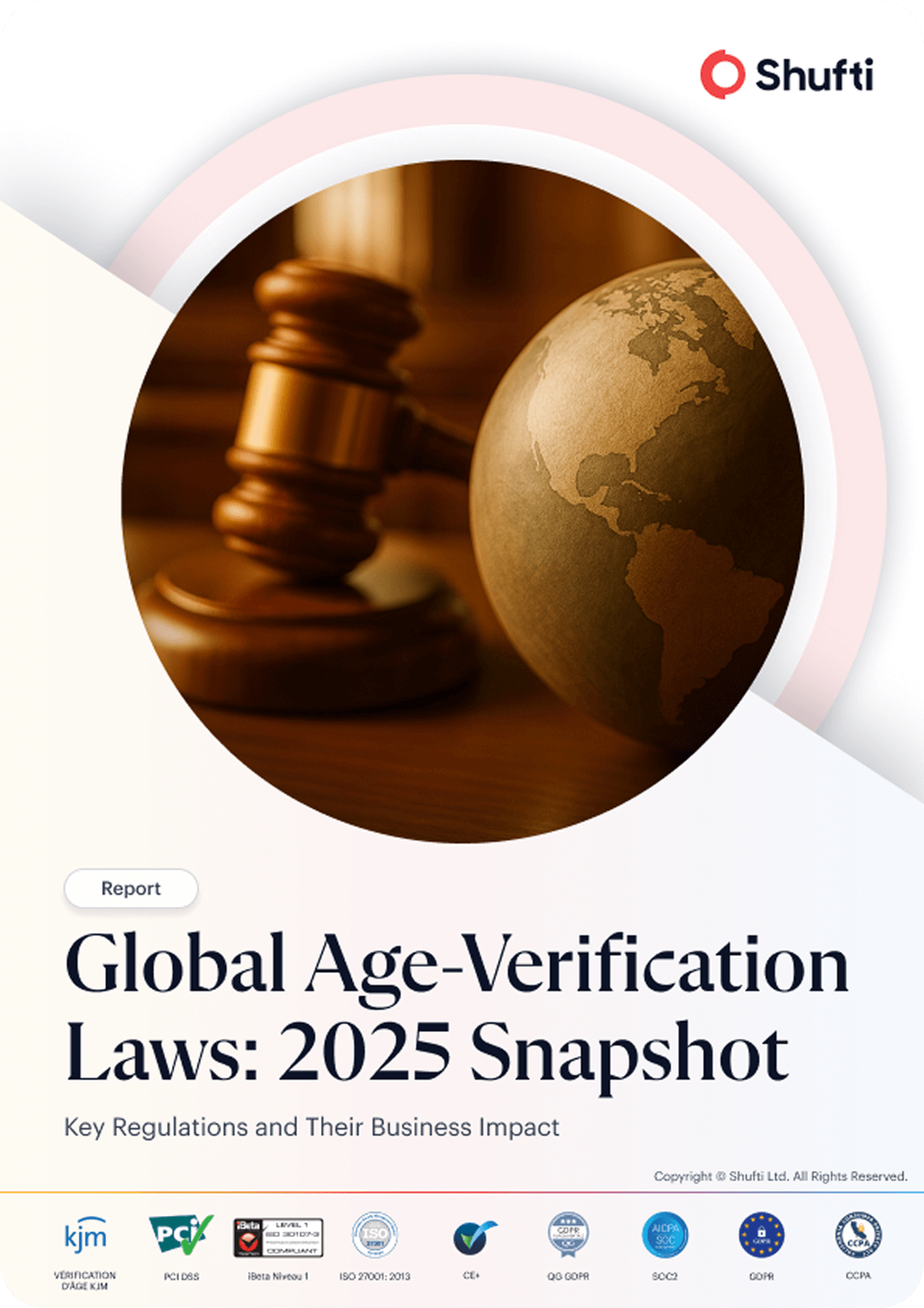
Global Age-Verification Laws 2025 Snapshot
A Data-Driven Overview of Emerging Regulations & Their Business Impact
Age verification is no longer optional; global regulations now require businesses across adult content, social media, gaming, retail, and digital platforms to prove users’ ages without adding friction or compromising privacy. This insight explains where obligations are tightening globally and how businesses can stay compliant without sacrificing user experience or privacy.
Key Regulations at a Glance
A quick view of how major jurisdictions are tightening age‑verification and age‑assurance requirements.
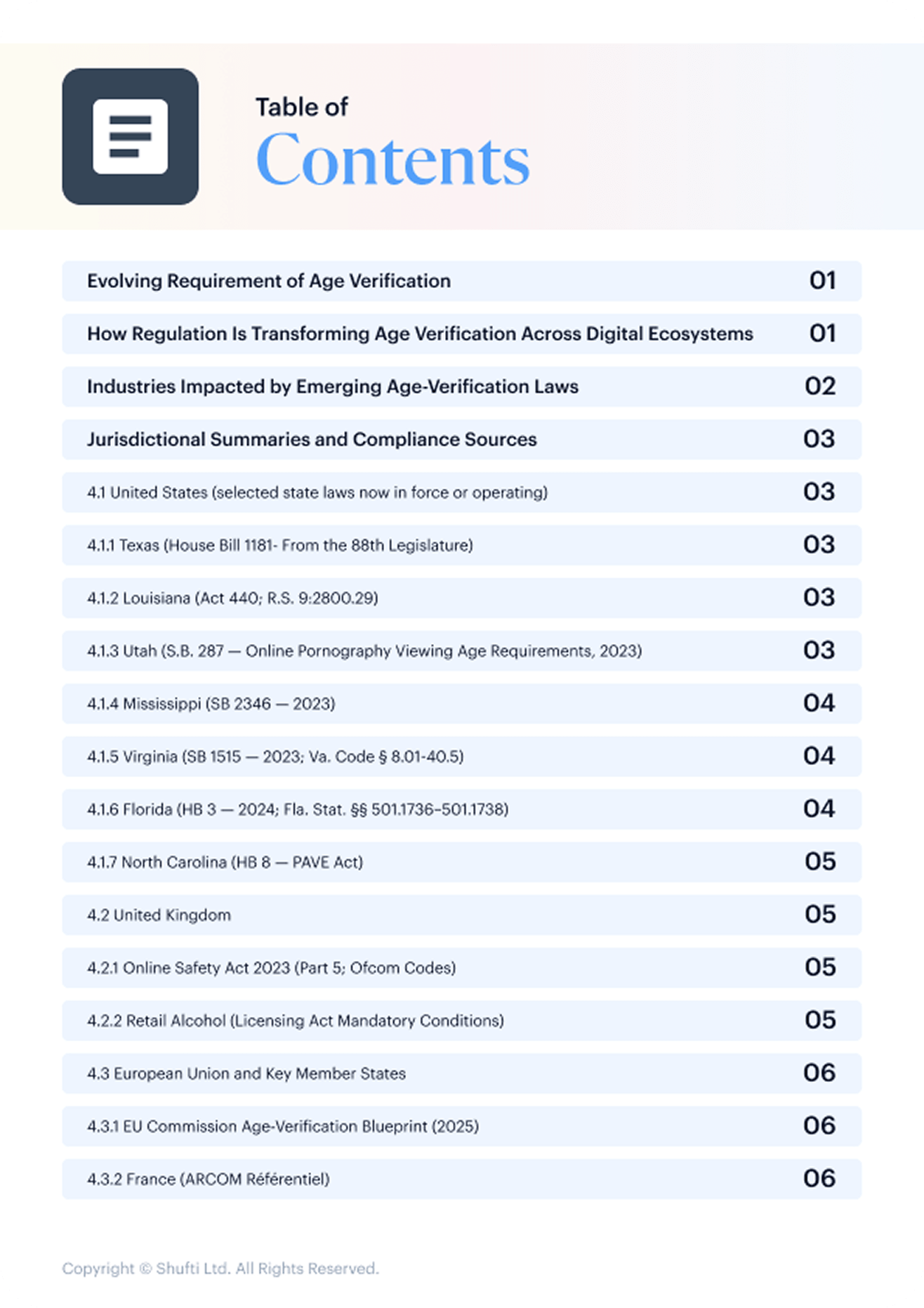
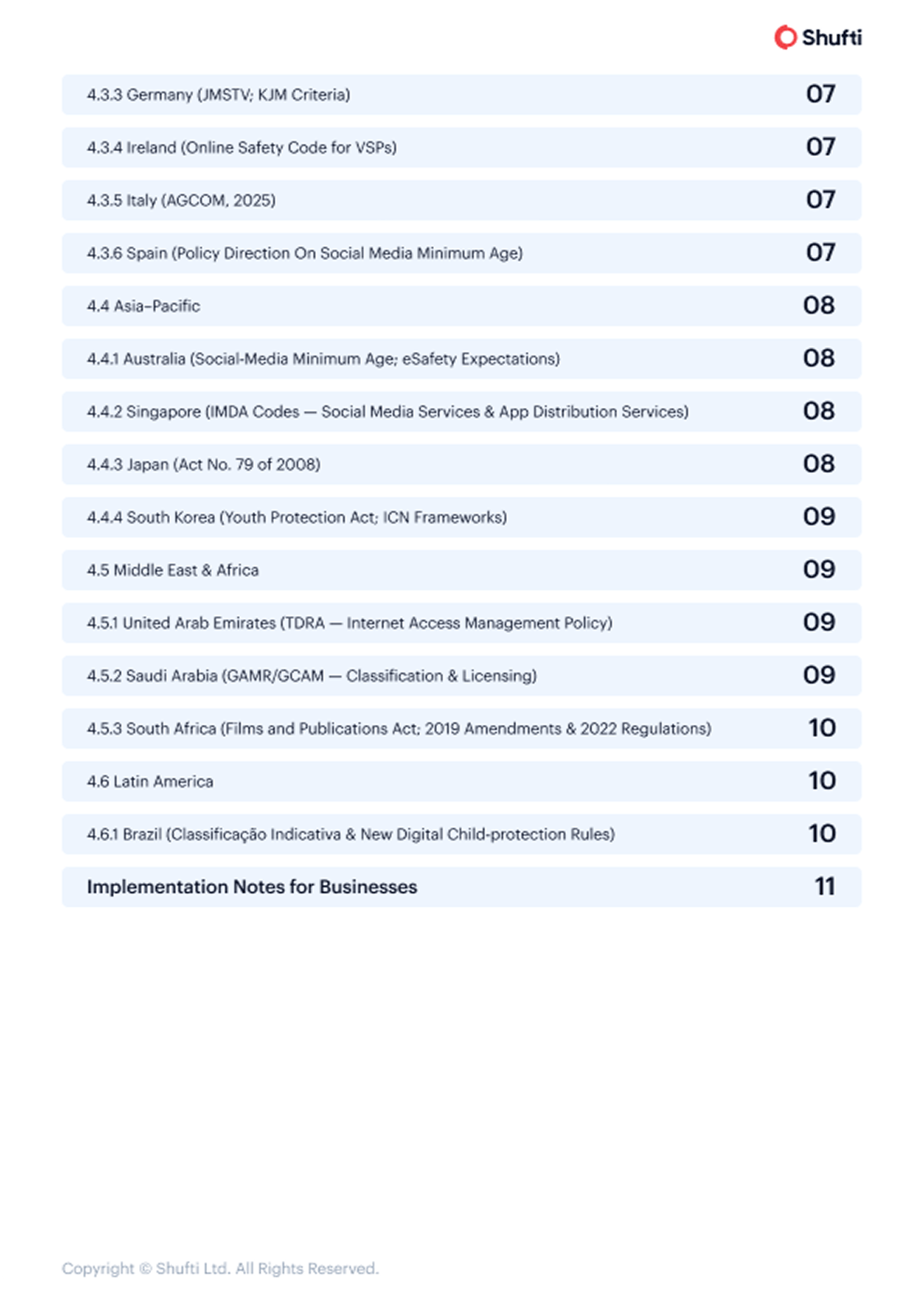
United States
33%
Harmful Content
Threshold
State laws require age verification when over one-third of a site’s content is harmful to minors.
Australia
Social Media Age Ban
Platforms must block users under 16 from December 2025 and meet eSafety verification standards.
Singapore
IMDA Codes
Platforms and app stores must implement age gating aligned with content ratings and PDPA limits.
Brazil
2025
Digital
Child‑Protection Rules
Expands age checks with mandatory ratings, parental controls, and ECA‑aligned verification processes.
What This Report Reveals
- Age verification is moving from “best practice” to an enforceable legal duty in many jurisdictions
- Obligations now extend beyond adult content into social media, app stores, gaming, and e-commerce
- Traditional, high-friction checks (ID uploads, manual review) are hurting onboarding speed and conversion
- Regulators expect stronger evidence that minors are blocked while personal data is protected
- Businesses need adaptive, jurisdiction-aware age-verification frameworks that balance compliance, privacy, and UX
- Implementing low-friction, privacy-first age assurance is becoming a strategic differentiator, not just a safeguard
Preview: