 Runs On Your Cloud
 No Data Sharing
 No Contract Required
 Explore Now


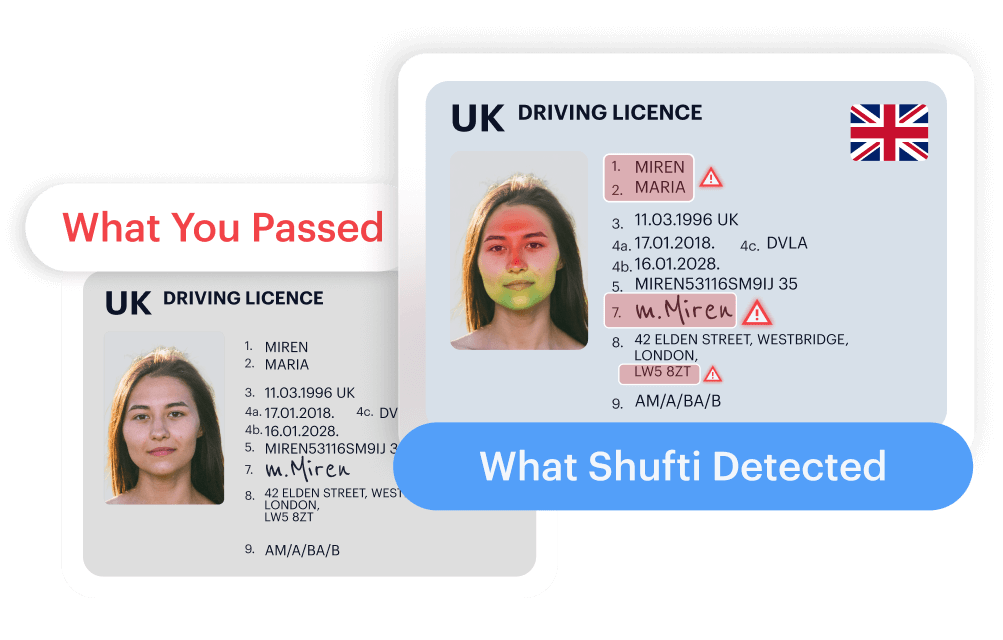
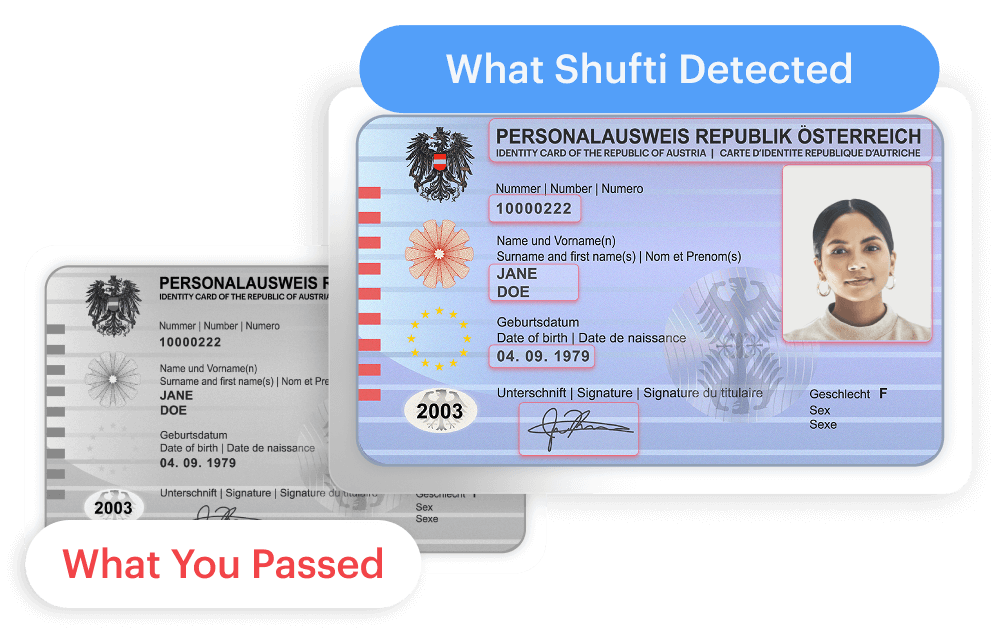





 Face Verification
 Address Verification
 Document Verification
 Age Verification
 VideoIdent
 Fast ID
 eIDV
eIDV
 NFC Verification
 Consent Verification
 Business Verification
 Due Diligence
 Investor Verification
 E-Signature
 Behavioural Biometrics
 Device Fingerprinting
 MFA
MFA
 AML Screening
 Business AML Screening
 User Risk Assessment
 Transaction Screening
 Adverse Media Screening
 Identity Verification
 KYC
KYC
 KYB
KYB
 KYI
KYI
 Bonus Abuse
 Fraud Prevention
 Deepfakes
 Banking
 Crypto
 Fintech
 Forex
Forex
 Gaming
 Gig Economy
 Marketplace
 Social Networks
 Product Managers
 Compliance Officers
 Fraud Analyst
 Global Trust Platform
 Journey Builder
 Vendor Comparison
 Content library
 Blogs
Blogs
 News
News
 Reports
 Insights
 Knowledgebase
 ROI calculator
 Blind Spot Audit
 Deepfake Detection
 Liveness Detection
 Document Originality
 Document Deepfake
 Events & Webinar
 Podcast Studio
 Spotlight Studio
 API Documentation
 Mobile SDKs
 Service Status
 Help Center
 Contact Us
 Technical Support
 Compliance
 Supported Document
 About
About
 Career
 Press Release
 Certifications
 Partnership
 Awards
report
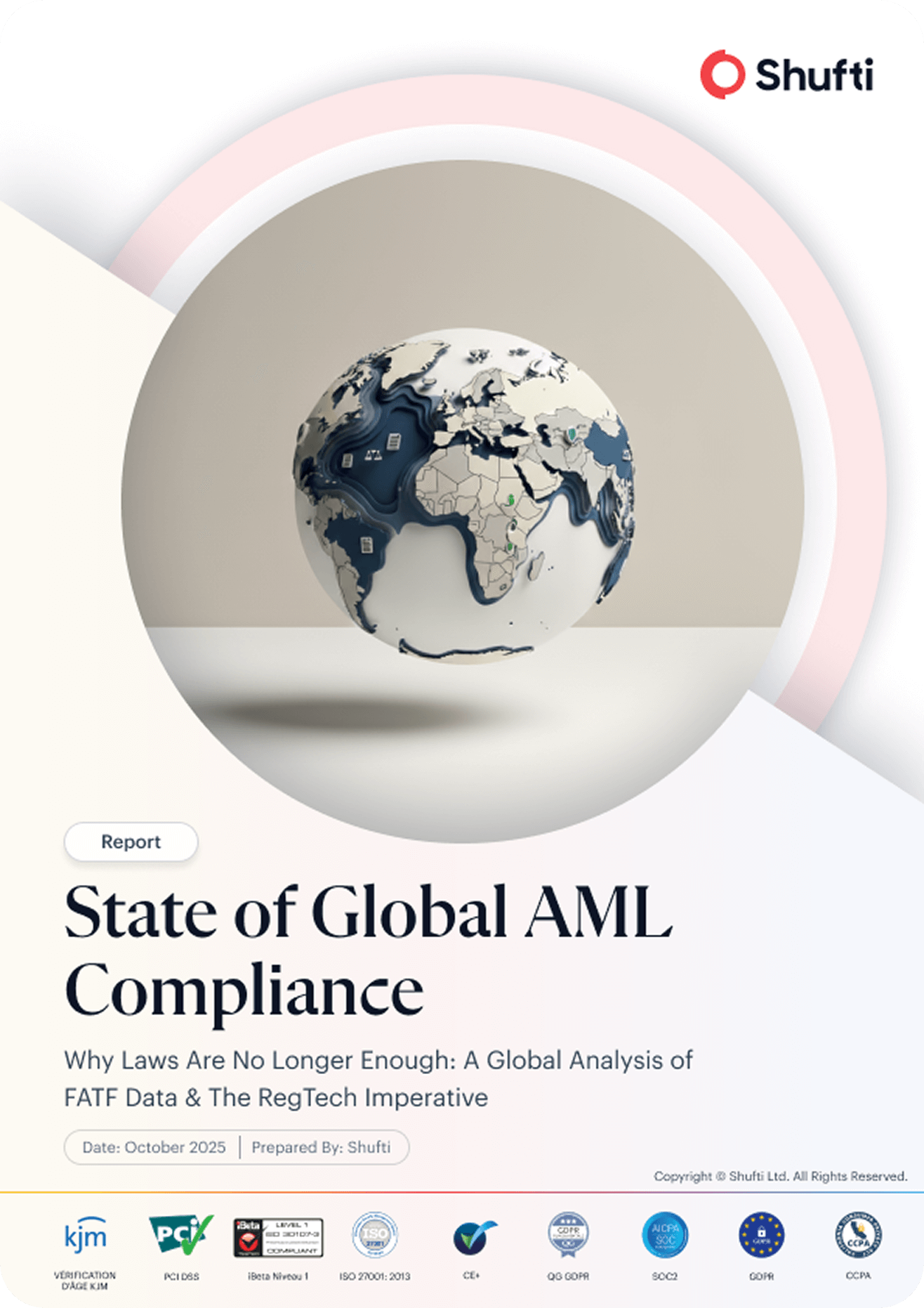
State of Global AML Compliance 2025
A Data-Driven Analysis of FATF Findings & the RegTech Imperative
Global AML frameworks are stronger than ever, yet real-world enforcement remains critically weak. This insight uncovers the structural reasons behind the global AML effectiveness gap and why RegTech-led transformation is now essential for meaningful impact.
State of Global AML Compliance
A data-led view of where global AML is failing in practice — and how wide the gap is between laws on paper and real-world outcomes.
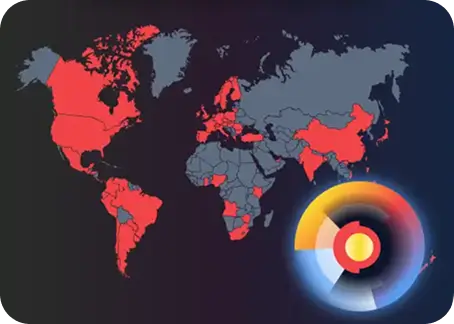
The Effectiveness Gap
59.26%
Global AML
Effectiveness Gap
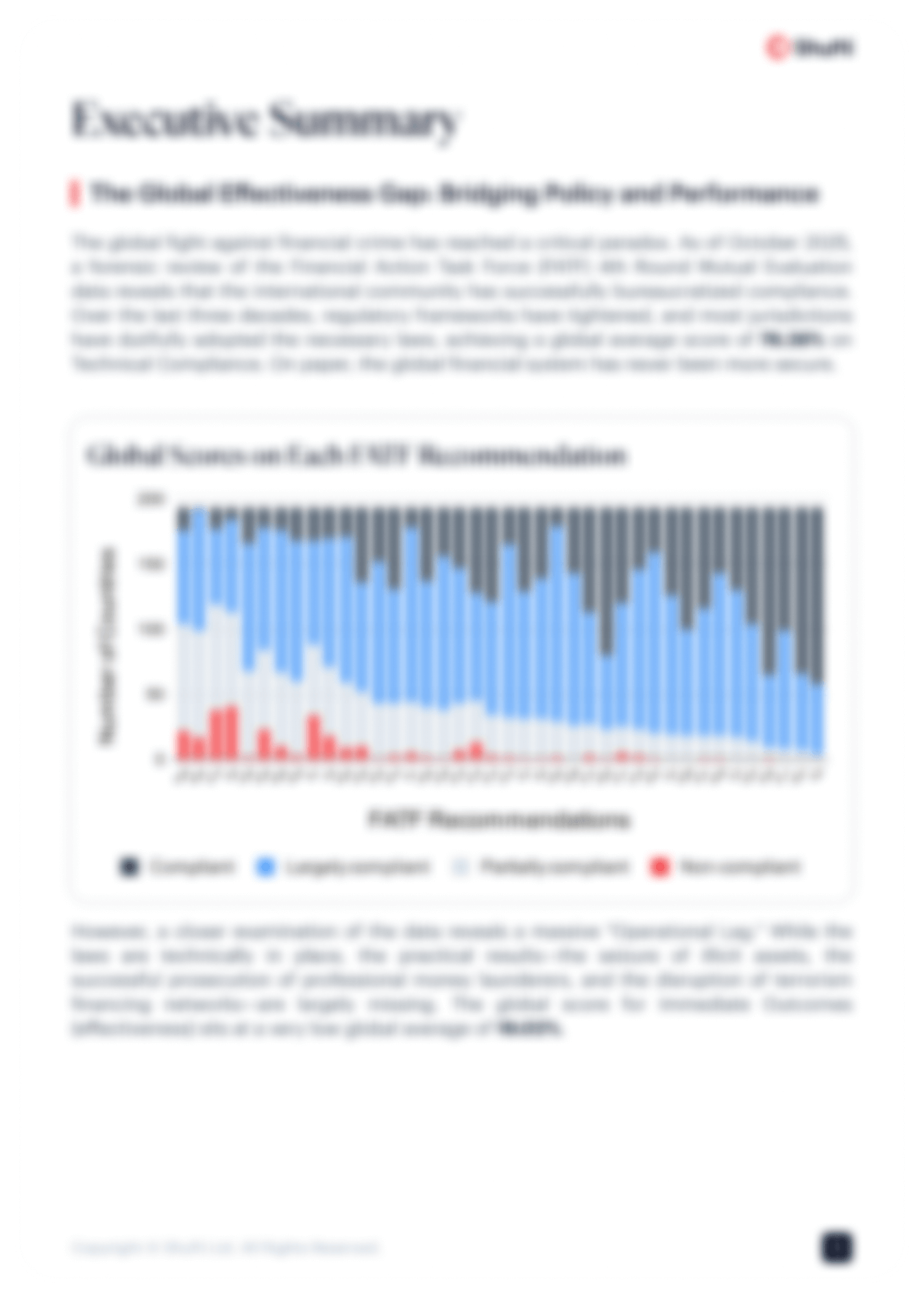
The world scores 78.28% on AML laws, but only 19.02% on actual results.
Banking & Crypto Crisis (IO3)
94.33%
of banks and crypto platform perform poorly on FATF’s IO3
Financial Institutions & VASPs cannot scale manual compliance to meet volume & velocity.
DNFBP Blind Spot (IO4)
97.94%
failure rate
among DNFBPs
Lawyers, real estate, casinos and other high-risk sectors lack affordable compliance tools.
Technology Compliance Breakdown
61.30%
failure on FATF R.15
(New Technologies)
Regulators can’t keep pace with digital finance & crypto innovation.
What This Report Reveals
- Global AML laws look strong, but real-world enforcement still falls short.
- Many jurisdictions are compliant on paper, yet ineffective in practice.
- Banks, fintechs, and crypto platforms can’t manually keep pace with financial crimes.
- High-risk non-financial sectors remain some of the biggest AML blind spots.
- Beneficial ownership and new technologies, including crypto, are hardest to govern.
- RegTech-driven automation is now essential to close the global AML effectiveness gap.
Preview: