 Runs On Your Cloud
 No Data Sharing
 No Contract Required
 Explore Now







 Face Verification
 Address Verification
 Document Verification
 Age Verification
 VideoIdent
 Fast ID
 eIDV
eIDV
 NFC Verification
 Consent Verification
 Business Verification
 Due Diligence
 Investor Verification
 E-Signature
 Behavioural Biometrics
 Device Fingerprinting
 MFA
MFA
 AML Screening
 Business AML Screening
 User Risk Assessment
 Transaction Screening
 Adverse Media Screening
 Identity Verification
 KYC
KYC
 KYB
KYB
 KYI
KYI
 Bonus Abuse
 Fraud Prevention
 Deepfakes
 Banking
 Crypto
 Fintech
 Forex
Forex
 Gaming
 Gig Economy
 Marketplace
 Social Networks
 Product Managers
 Compliance Officers
 Fraud Analyst
 Global Trust Platform
 Journey Builder
 Vendor Comparison
 Content library
 Blogs
Blogs
 News
News
 Reports
 Insights
 Knowledgebase
 ROI calculator
 Blind Spot Audit
 Deepfake Detection
 Liveness Detection
 Document Originality
 Document Deepfake
 Events & Webinar
 Podcast Studio
 Spotlight Studio
 API Documentation
 Mobile SDKs
 Service Status
 Help Center
 Contact Us
 Technical Support
 Compliance
 Supported Document
 About
About
 Career
 Press Release
 Certifications
 Partnership
 Awards
report
The Backbone of Global Trust
What happens in business when identity verification systems fail?
When the systems behind ID verification fall short, the impact extends far beyond individual errors, affecting compliance, market access, customer trust, and operational continuity. This guide examines the structural reasons verification failures occur and outlines what modern organizations need to build resilient, regulator-ready verification infrastructure.
Why Small Identity Failures Become Systemic Business Risk
Key metrics that show how scale, crime exposure, and friction turn verification weaknesses into financial, regulatory, and commercial threats.
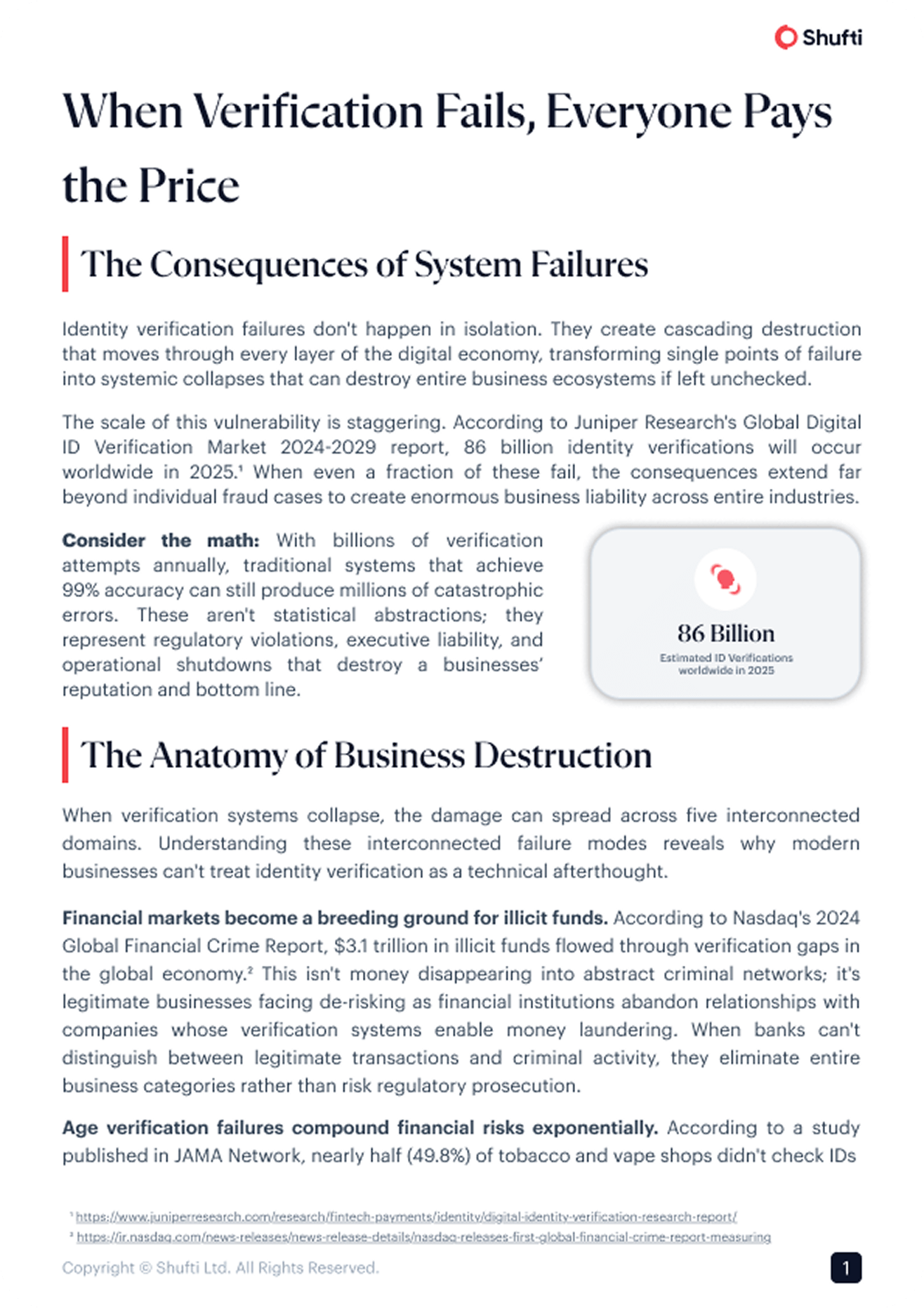
Scale of Global Verification
86B+
verification checks in
2025
Even a 1% failure rate translates into millions of high-risk identity errors across the digital economy.
Scale of Global Verification
$3.1T
illicit funds via
verification gaps
Illicit flows move through weak verification controls, increasing derisking, enforcement, and systemic business risk.
Age-Verification Failures
49.8%
shops that didn’t
check IDs
Nearly half of tobacco and vape retailers failed to verify ages when minors attempted purchases.
Friction-Driven Abandonment
32%
users drop off after 10
minutes
Complex, slow verification flows drive almost one-third of users to abandon onboarding entirely.
What This Report Reveals
- Verification failures create broad operational and compliance risks across entire business ecosystems.
- Even small error rates scale into major exposure when billions of checks occur annually.
- Regulatory actions now extend to shutdowns, license loss, and executive-level liability.
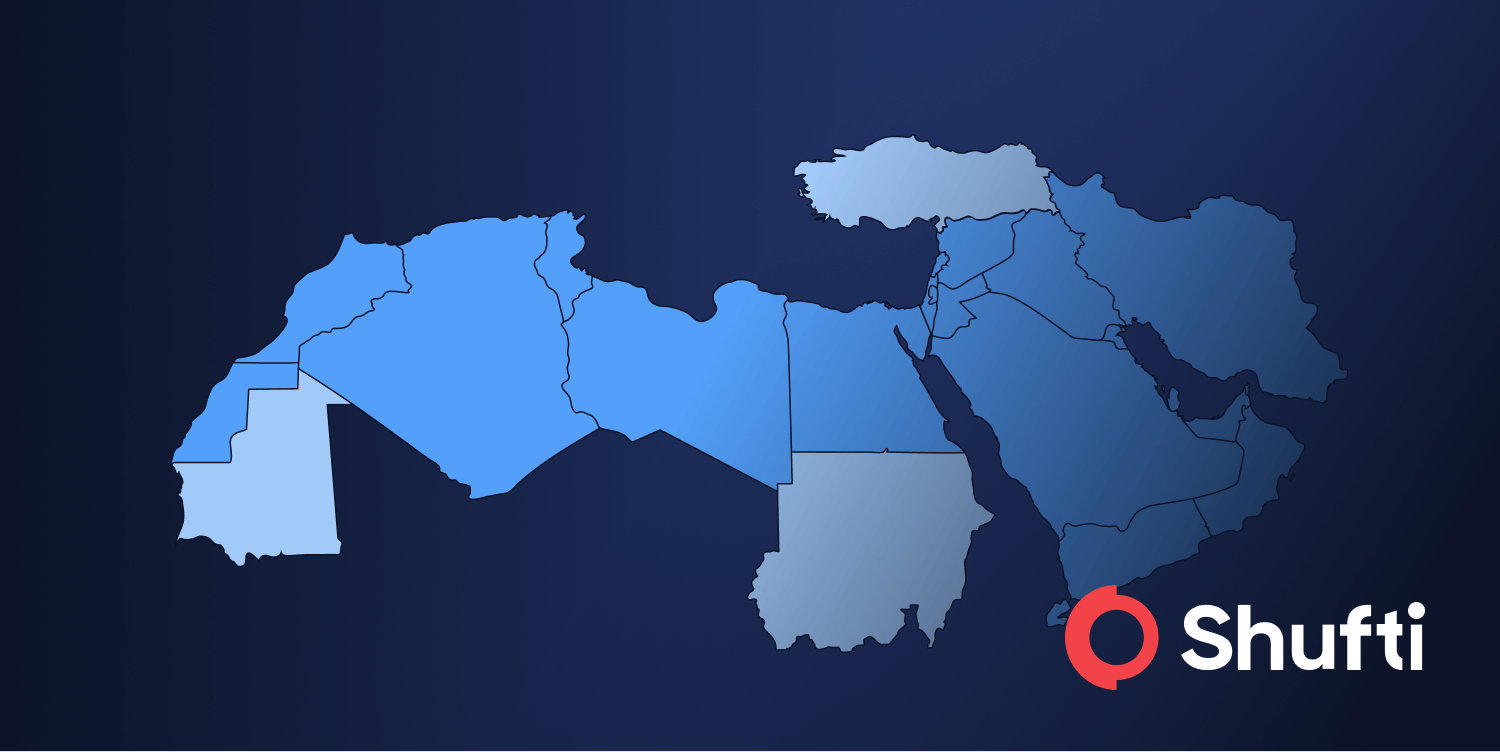
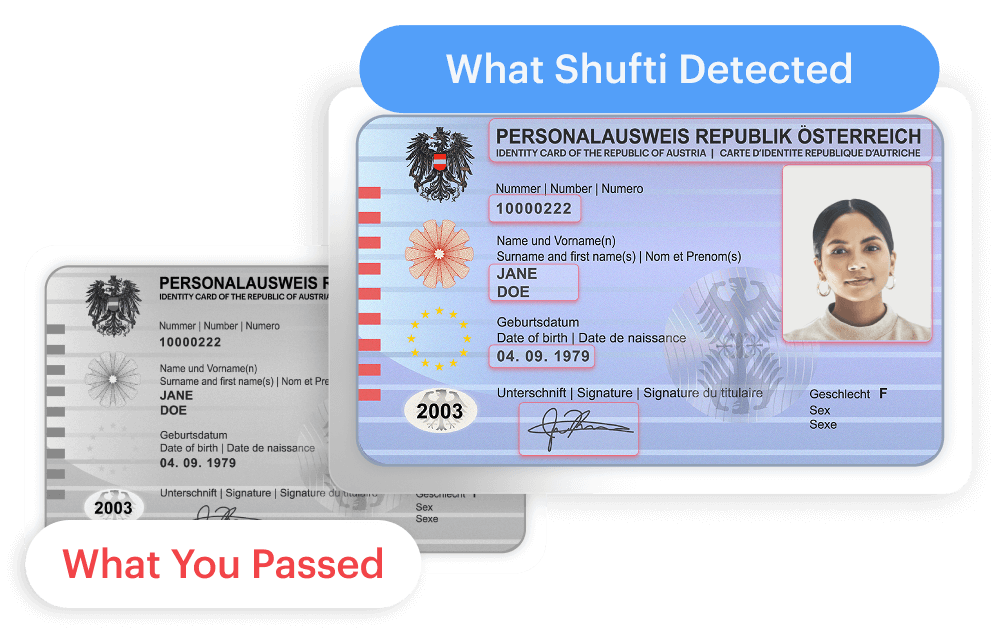
- Systems that can’t handle global document diversity exclude legitimate users and markets.
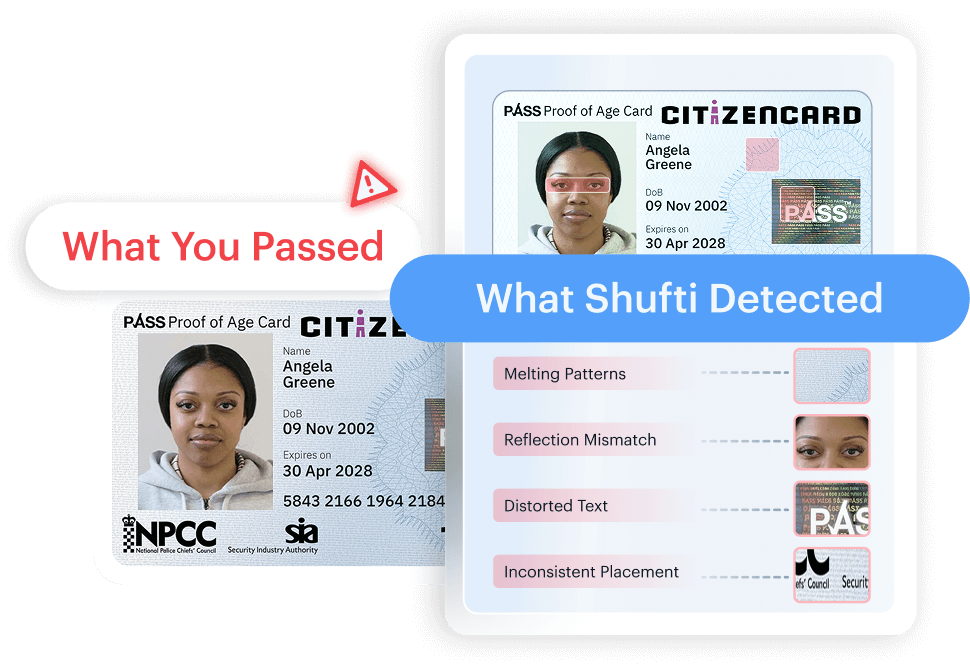
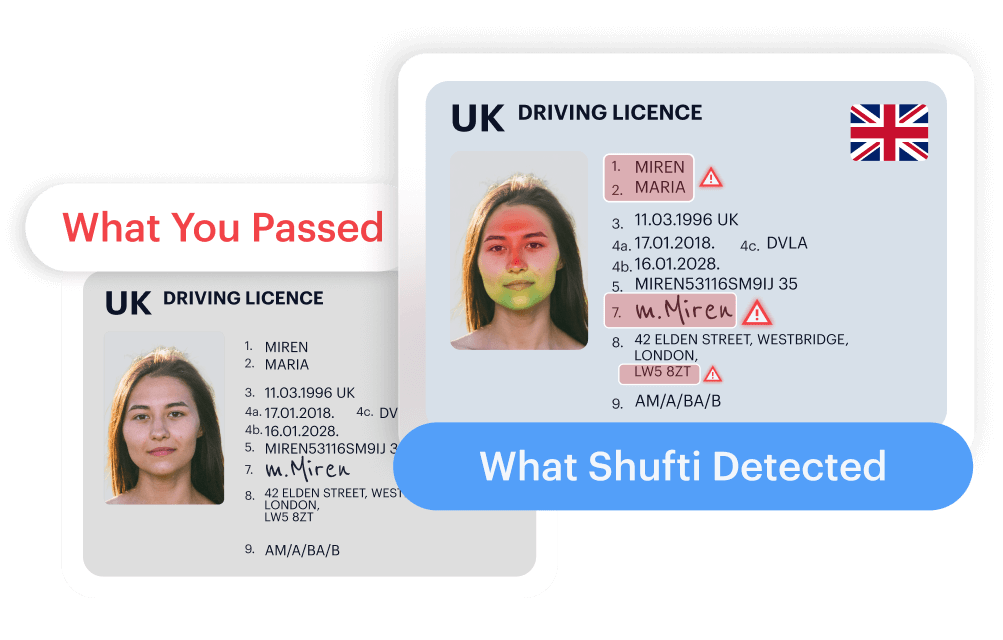
- Modern threats, from deepfakes to evasion tactics, routinely bypass legacy verification.
- Resilient verification requires a multi-layered, regulator-aligned infrastructure built for global scale.
Preview: