 Runs On Your Cloud
 No Data Sharing
 No Contract Required
 Explore Now







 Face Verification
 Address Verification
 Document Verification
 Age Verification
 VideoIdent
 Fast ID
 eIDV
eIDV
 NFC Verification
 Consent Verification
 Business Verification
 Due Diligence
 Investor Verification
 E-Signature
 Behavioural Biometrics
 Device Fingerprinting
 MFA
MFA
 AML Screening
 Business AML Screening
 User Risk Assessment
 Transaction Screening
 Adverse Media Screening

 Identity Verification
 KYC
KYC
 KYB
KYB
 KYI
KYI
 Bonus Abuse
 Fraud Prevention
 Deepfakes
 Multi-Accounting
 Banking
 Crypto
 Fintech
 Forex
Forex
 Gaming
 Gig Economy
 Marketplace
 Social Networks
 Product Managers
 Compliance Officers
 Fraud Analyst
 Global Trust Platform
 Journey Builder
 Vendor Comparison

 Content library
 Blogs
Blogs
 News
News
 Reports
 Insights
 Knowledgebase
 ROI calculator
 Blind Spot Audit
 Deepfake Detection
 Liveness Detection
 Document Originality
 Document Deepfake
 Events & Webinar
 Podcast Studio
 Spotlight Studio
 API Documentation
 Mobile SDKs
 Service Status
 Help Center
 Contact Us
 Technical Support
 Compliance
 Supported Documents
 About
About
 Career
 Press Release
 Certifications
 Partnership
 Awards
KYC API – What It Is, How It Works, Integration & Use Cases

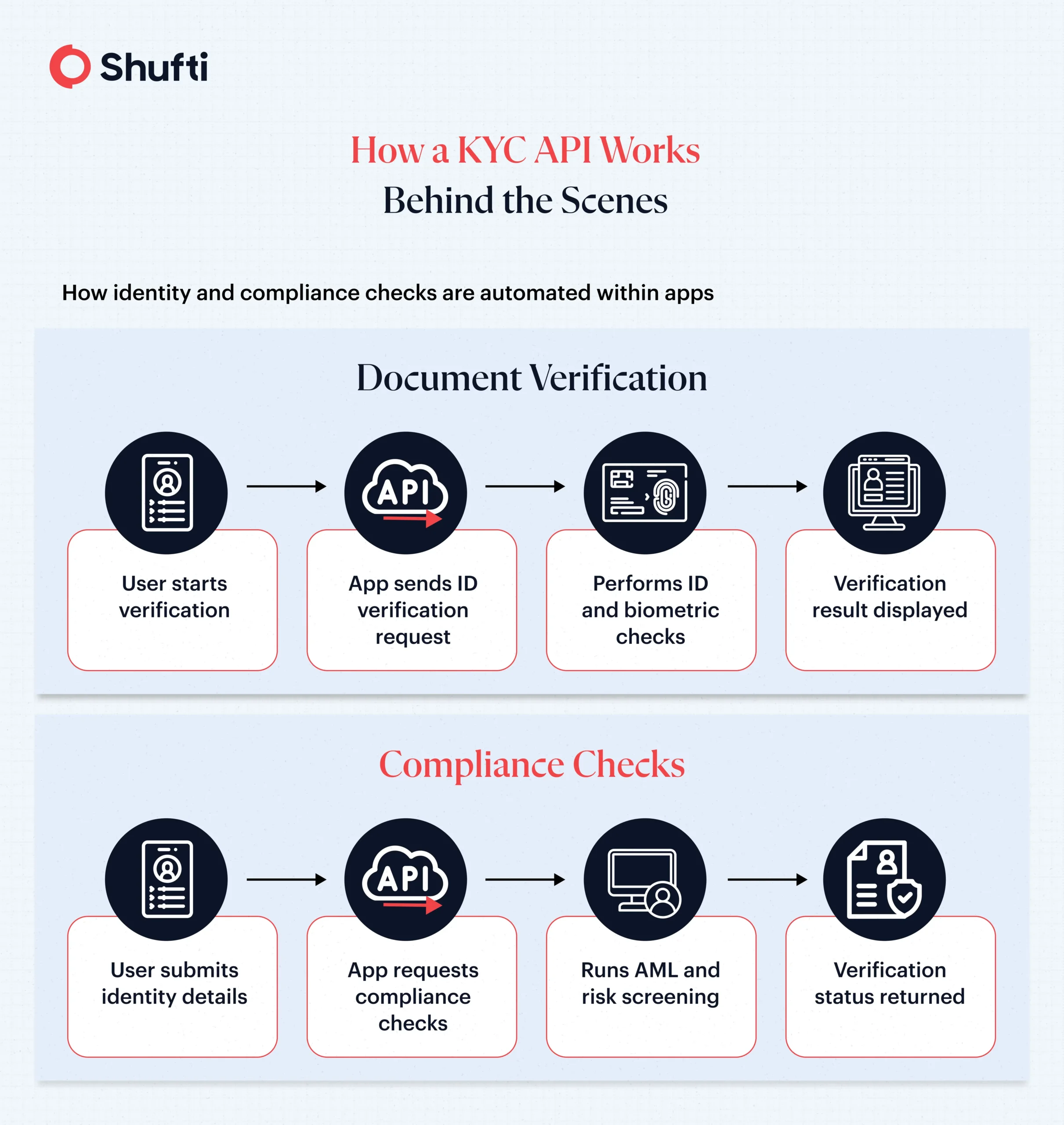
A KYC (Know Your Customer) API (Application Programming Interface) acts as a gateway that allows applications to automate customer onboarding and compliance checks. Instead of building identity verification, document validation, and regulatory compliance systems from scratch, businesses can integrate a KYC API to securely send customer data and receive real-time verification results from specialised third-party services.
For example, when you sign up for a digital banking or fintech app and begin the onboarding process, the app itself doesn’t manually verify your identity documents or check whether the ID is authentic. Instead, it uses a KYC API (a third-party service) to perform document verification and biometric checks and then displays the verification result on the app screen.
In the same way, when you submit your identity details during registration, the application itself doesn’t run background compliance or risk checks. It sends an API request to a KYC service provider (such as an identity verification or AML screening API) to handle the verification process.
What’s the difference between KYC API and KYC Software?
A KYC API acts as a bridge to a verification service. Whereas a KYC software is a complete solution set with multiple features and capabilities for verifying user identities.
Let’s say you’re a fintech startup building a mobile app where users would sign up and upload their ID before they can top up their accounts. In this case, you’d need an API in the backend that would verify the ID without redirecting your user to another platform for the verification. The user would stay on your application, wouldn’t see the process happening in the background, and would be notified when they are verified.
Now, let’s say you’re a bank that needs to verify customers globally across different regions, languages, and document types. Also, regulators expect your compliance team to review flagged cases, maintain audit trails, and produce audit reports on demand. This is when you would need KYC software.
What to consider when comparing/choosing a KYC API?
These are the things you should consider when choosing a KYC API
Global document coverage: One of the things you come across a lot when comparing different KYC APIs is that most of them will highlight the number of countries they support. While important, it’s not the only thing you should evaluate an API on. What matters more is the variety of document types and regions it supports. Make sure you select the one that can handle the document types in the regions you operate in.
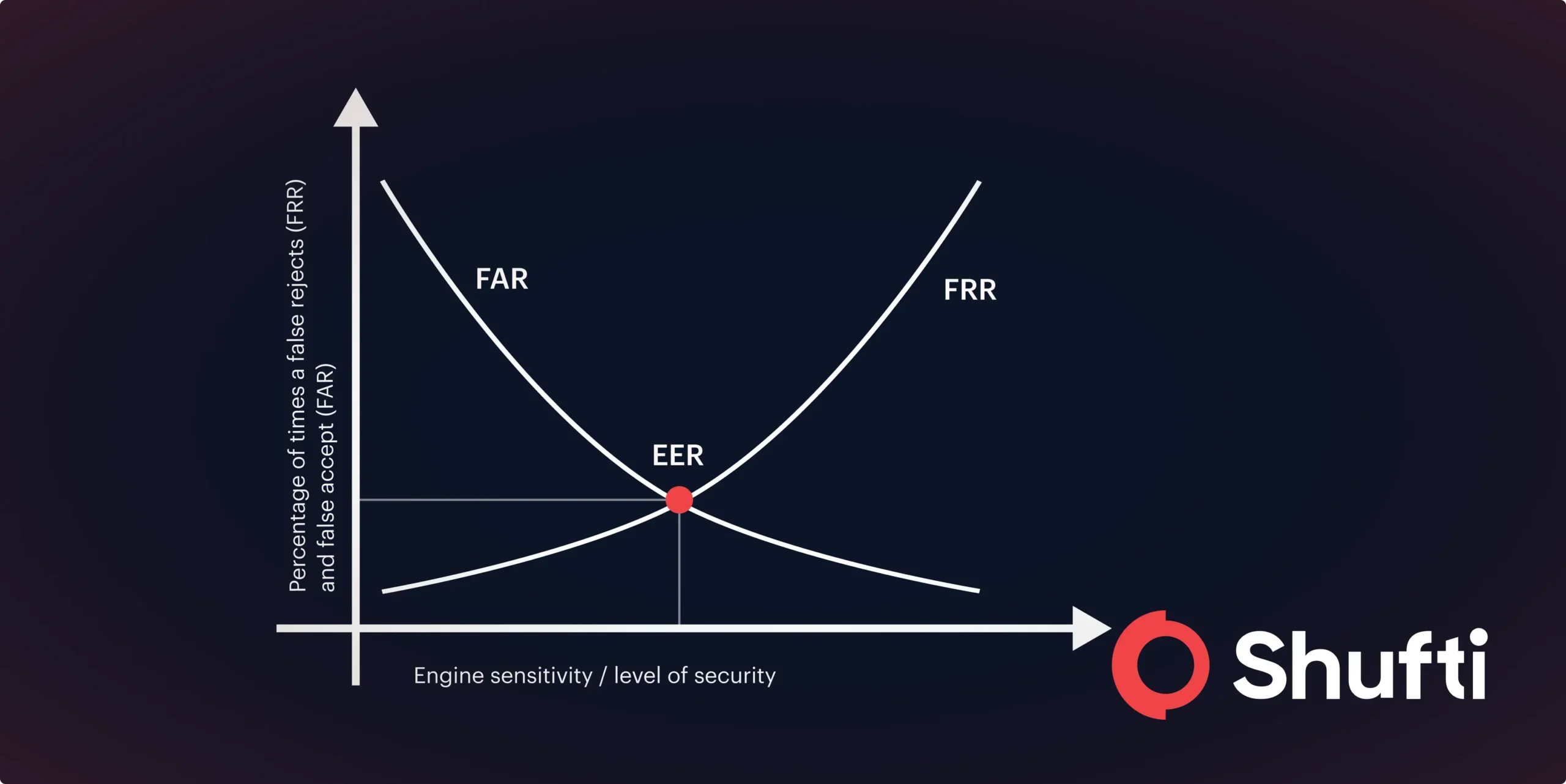
False positive and false negative rates: Another set of metrics you should keep an eye on is the ‘false positive’ and ‘false negative’ rates. These indicate how often a service considers a fraudster a genuine customer and rejects authentic customers by identifying them as fraudsters. The lower these ratios are, the better.
Verification speed: Verification speed matters a lot because customers these days don’t have the patience to wait for long for anything, including verifying their identity. They want fast access to the service, product, or platform that you offer. If the API keeps them waiting for long, they’ll simply quit the process and go to your competitor. So, make sure to check that the API you choose offers a speedy process.
Integration complexity: Do consider how many endpoints you would need to call to run a full verification flow with a KYC API? A single-endpoint architecture that handles document, biometric, and AML in one call would be significantly easier to maintain than stitching together separate services.
Compliance certifications: Make sure you select an API that has the right certifications and complies with all the regulations that your business has to comply with. The solution should be GDPR compliant, have certifications like Level 1 ISO 30107-3, Level 2 ISO 30107-3, and SOC 2 Type 2.
Implementation option: Try to get an API that has multiple implementation options. This would give you the flexibility to change as your business requirements change.
Pricing: Always review your cash flow and how long you want to use that API for before making a purchase decision. Most businesses would implement and use an API for more than 3 years, but that totally depends on your business model and how your industry changes.
Free KYC APIs: Should You Even Use Them?
Technically, yes, you can use KYC APIs for free, but they are not worth it. Here’s why:
You’ll probably find sandbox/test environments: Most KYC vendors offer a free sandbox to let users test their integration and have an idea of how they would work for them in a real-life situation. Yes, you would be able to run verification flows, test edge cases, and simulate results for free, but you would not be able to implement it in your actual business and verify your real customers.
Freemium Tiers: Some vendors might offer you a small number of free verifications to help you test out the solution in a real-world situation and perform basic processes like OCR, document parsing, and face matching. But the number of free verifications would be so low that you won’t be able to use it to verify your customer base in an effective way at scale.
Open Source Identity Libraries: Then there are some open source libraries that would give you parts of the KYC process for free. These would be the basic document parsing and some OCR capabilities. However, you would have to build the orchestration layer, maintain the document library, and keep up with the changing regulations yourself. These tasks would actually make implementing and using open source libraries more complex and expensive.
So, because of these reasons, we think that going for a commercial KYC API is always a better choice, but do use these free versions if you want to have an idea of how these APIs would work.
Conclusion:
A KYC API is the fastest way to embed identity verification into your product without building compliance infrastructure from scratch. It would help you verify your customer while meeting compliance requirements.
However, choosing the wrong one can cost you more, especially if you end up choosing one that has lower accuracy and is slower. This would result in hefty fines from regulators and low onboarding rates that would cost you your potential customers.
If you’re at that stage, Shufti’s KYC API is worth a look. It supports 10,000+ document types across 230+ countries, runs document verification, biometrics, and AML screening through a single endpoint, and offers four implementation options depending on where you are in your build. You can explore the documentation or book a demo.
Frequently Asked Questions
What is KYC API?
A programmatic interface that automates identity verification by connecting to identity databases, document validation, and compliance screening tools in real-time.
What are the key components of a KYC API?
Identity data collection, document verification, database matching, AML/sanctions screening, and audit logging.
What is the best KYC onboarding API?
The best KYC API combines real-time verification, global coverage, low friction, and instant decisions without relying heavily on documents. Shufti stands out by delivering fast, accurate verification with minimal false rejections and built-in compliance.