 Runs On Your Cloud
 No Data Sharing
 No Contract Required
 Explore Now







 Face Verification
 Address Verification
 Document Verification
 Age Verification
 VideoIdent
 Fast ID
 eIDV
eIDV
 NFC Verification
 Consent Verification
 Business Verification
 Due Diligence
 Investor Verification
 E-Signature
 Behavioural Biometrics
 Device Fingerprinting
 MFA
MFA
 AML Screening
 Business AML Screening
 User Risk Assessment
 Transaction Screening
 Adverse Media Screening
 Identity Verification
 KYC
KYC
 KYB
KYB
 KYI
KYI
 Bonus Abuse
 Fraud Prevention
 Deepfakes
 Banking
 Crypto
 Fintech
 Forex
Forex
 Gaming
 Gig Economy
 Marketplace
 Social Networks
 Product Managers
 Compliance Officers
 Fraud Analyst
 Global Trust Platform
 Journey Builder
 Vendor Comparison

 Content library
 Blogs
Blogs
 News
News
 Reports
 Insights
 Knowledgebase
 ROI calculator
 Blind Spot Audit
 Deepfake Detection
 Liveness Detection
 Document Originality
 Document Deepfake
 Events & Webinar
 Podcast Studio
 Spotlight Studio
 API Documentation
 Mobile SDKs
 Service Status
 Help Center
 Contact Us
 Technical Support
 Compliance
 Supported Document
 About
About
 Career
 Press Release
 Certifications
 Partnership
 Awards
The Top 10 Crypto-Friendly Countries for 2026
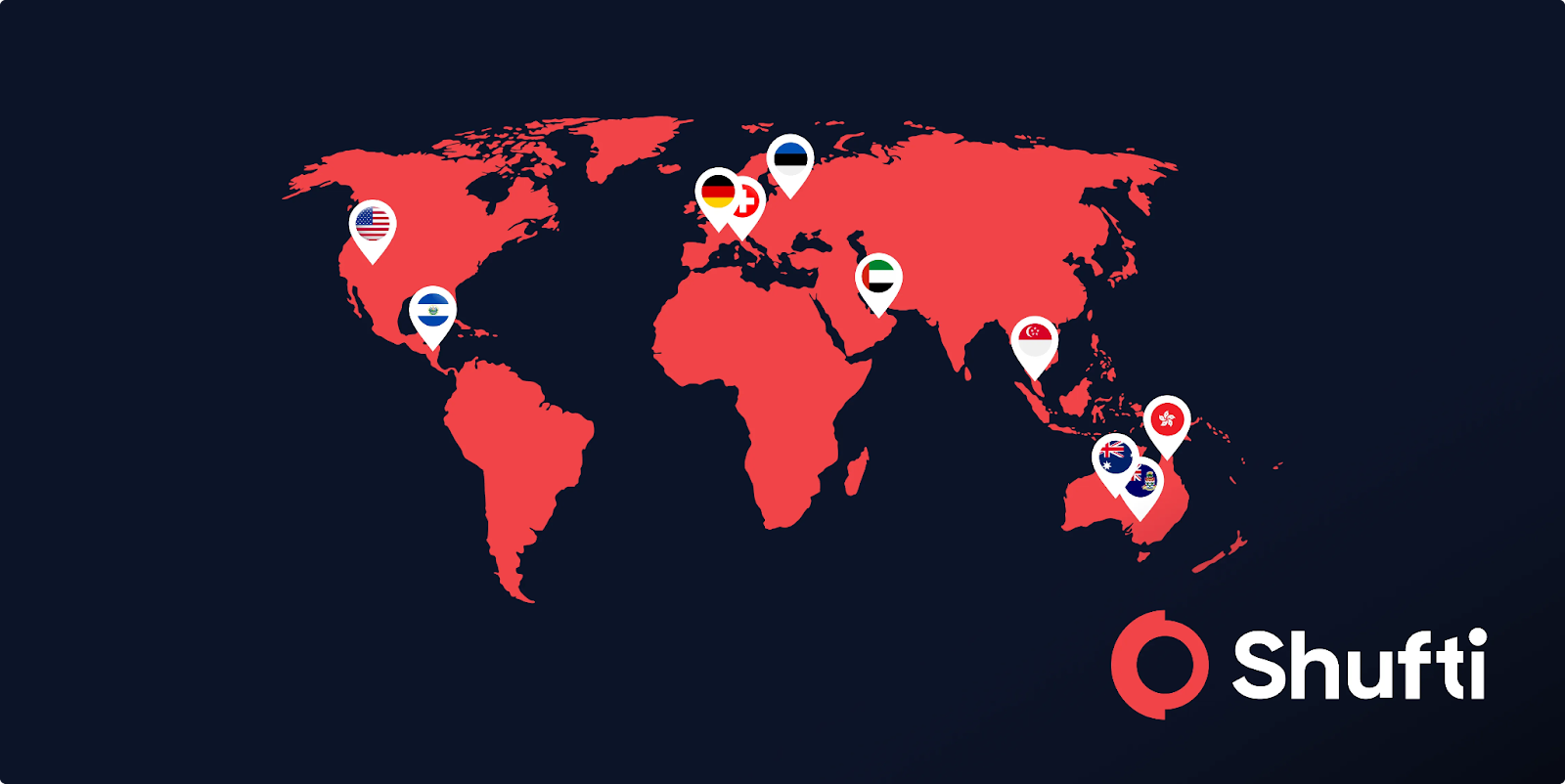
The future and the success of cryptocurrency in the coming years will not solely rely on technological advancements, but it will also depend on the regulatory environment in which businesses operate. The legislation concerning crypto-specific regulations and taxes, along with compliance, now plays a crucial role in how easily crypto companies can attract customers. With the regulation specific to KYC and AML, the crypto companies can also secure banking services and expand their operations.
However, before discussing the friendliness of the countries with crypto, a simple question arises:
What does “Crypto-Friendly” really mean?
So, to answer that, there are the 3 primary dimensions that define crypto-friendly jurisdictions in a country, which are:
- Transparency of Cryptocurrency policy: This refers to the existence of clearly defined licensing requirements and reporting obligations applicable to crypto platforms, service providers, and regulatory authorities, which provide operational clarity for market participants.
- Workable tax treatment: This involves the presence of predictable personal and corporate tax frameworks governing digital asset holdings, transactions, and capital gains, reducing uncertainty around compliance.
- Banking Access and Financial Integration: This reflects the extent to which digital assets are integrated into the traditional financial system. In such jurisdictions, regulated crypto businesses are able to open and maintain bank accounts, facilitate fiat on-ramps and off-ramps, access established payment rails such as SEPA, SWIFT, and ACH, and, in some cases, integrate crypto services within licensed banking institutions.
With these criteria, regulatory clarity becomes the foundation for all the crypto-related sustainable activities for Crypto Exchanges, Issuers, Custodians, or Wallet Providers. Right now, in 2026, only a few countries provide clear rules and guidelines that support legal cryptocurrency activities, and here are the top ten:
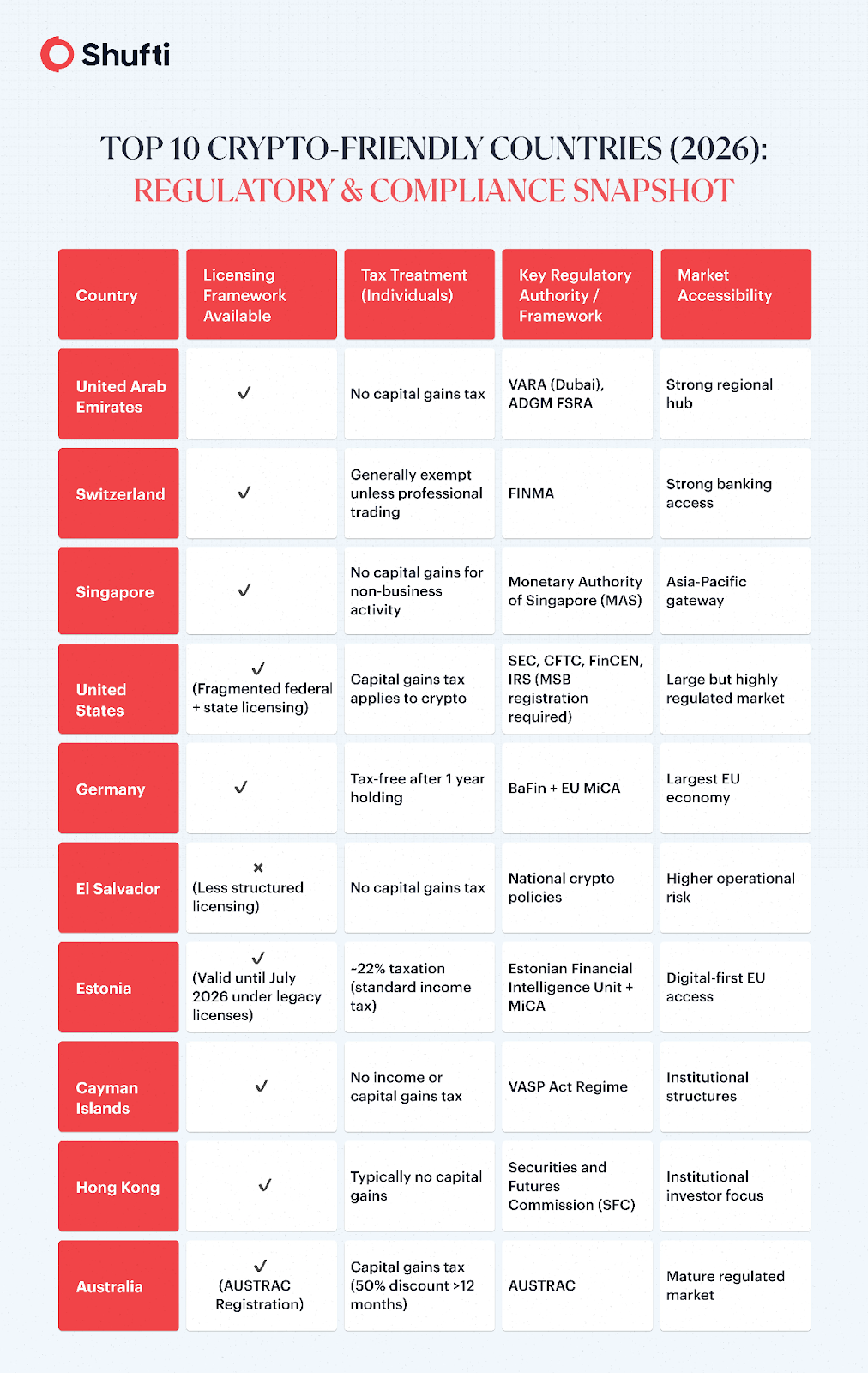
1. United Arab Emirates
The UAE is steadily establishing itself as a well-organized hub for businesses in the digital asset sector. Dubai’s Virtual Assets Regulatory Authority and Abu Dhabi’s financial regulators provide defined licensing pathways for exchanges, custodians, and brokers.
The absence of capital gains tax for individuals, combined with predictable corporate taxation, makes the UAE commercially attractive. However, entry requires mature governance, strong AML controls, and ongoing regulatory engagement. For firms willing to invest in compliance infrastructure, the UAE offers credibility and regional reach without regulatory ambiguity.
2. Switzerland
Switzerland remains one of the most institutionally credible crypto jurisdictions. The Swiss Financial Market Supervisory Authority (FINMA) treats crypto services as financial intermediation, placing them under established AML and reporting obligations. Customer identification, transaction monitoring, along with the record-keeping expectations closely resemble banking standards.
Personal crypto holdings are generally exempt from capital gains tax unless classified as professional trading, while companies face standard corporate taxation. This environment helps well-funded businesses that want stable regulations and access to traditional financial systems. However, starting up can be expensive, and compliance can take a lot of effort.
3. Singapore
Singapore’s regulatory framework is among the most structured globally. Under the Payment Services Act, crypto firms must meet capital thresholds and segregate customer assets, and perform daily reconciliation. Licensing requirements depend on the number of transactions. This approach helps monitor risks more effectively.
While capital gains are untaxed for non-business activity, MAS enforces strict AML, customer risk profiling, and protects consumers. Singapore attracts companies that value trust and strong management, especially those looking to enter Asia-Pacific markets with stable regulations for the long term.
4. United States
The United States is a key center for cryptocurrency activity, especially among large investors and exchanges. For tax purposes, crypto assets are considered property. This means capital gains taxes apply based on how long you hold the assets and your income level.
Several regulatory bodies, including the SEC, CFTC, and FinCEN, share oversight, which makes compliance complicated. Even with strict rules for anti-money laundering (AML), know your customer (KYC), and state licensing, companies that invest in compliance can tap into large capital markets and see significant growth opportunities.
5. Germany
Germany offers one of the clearest tax incentives for long-term crypto holders. Assets that are held for more than a year enjoy an exemption from capital gains tax, whereas profits made in the short term are subject to progressive taxation. The Federal Financial Supervisory Authority (BaFin) oversees the custody, trading, and issuance of crypto tokens, while the Markets in Crypto-Assets (MiCA) regulation aims to create greater uniformity across the European Union.
This environment is best suited to compliance-focused companies and institutional investors that require clarity regarding regulations. The needs for documentation, reporting, and governance are many. Transparency leads to more predictable operations in Europe’s largest economy.
6. El Salvador
El Salvador’s crypto framework shifted following IMF negotiations in 2024. Following IMF negotiations in 2024, Bitcoin is no longer a legal tender in El Salvador, meaning it cannot be used to pay taxes, and acceptance by private-sector businesses is now voluntary. Nonetheless, capital gains are not taxed, which keeps the Bitcoin-centric strategies attractive.
The regulatory controls and Anti Money Laundering maturity are lower than those of developed markets, leading to reputational and also banking risks. El Salvador would suit companies that are able to manage high risk and specialize in one area, unlike those that offer a broad array of services to institutions.
7. Estonia
Estonia maintains its reputation as a digital-first jurisdiction, which is supported by the e-residency and also the effective online administration. The existing crypto licenses in Estonia will remain valid until July 31, 2026. However, after that, businesses need to comply with MiCA requirements as per the standard. In addition, capital thresholds, audit standards, and IT security requirements in Estonia are becoming more stringent. Cryptocurrency gains are not taxed under a separate regime; instead, they are generally treated as regular taxable income, typically subject to Estonia’s standard income tax rate of around 22%.
For businesses aiming to access the EU market through an ecosystem of powerful digital solutions, Estonia is still a viable option because it offers the compliance investment that meets regulatory standards.
8. Cayman Islands
The Cayman Islands continue to attract institutional crypto structures due to zero taxation on income, also on capital gains, and corporate profits. They have the Virtual Asset Service Providers Act, which establishes licensing for them and provides oversight. Moreover, the AML obligations in the Cayman Islands align with FATF standards.
This jurisdiction suits funds and complex investment vehicles, though companies need to maintain economic substance and reputational safeguards to meet international scrutiny.
9. Hong Kong
Hong Kong’s licensing regime emphasizes governance, along with capital adequacy and investor suitability. Capital gains are usually not taxed, which helps big trading firms. In contrast, individual investors face more limitations.
For companies aiming to attract professional investors in Asia, Hong Kong offers a regulatory framework and a predictable tax environment. However, it provides limited flexibility for models that cater to retail clients.
10. Australia
In Australia, cryptocurrency is classified as property for tax purposes, with capital gains applying to disposals and a 50% discount for assets held for more than 12 months. Exchanges must register with AUSTRAC and operate comprehensive AML programs. Starting from 31st March, 2026, all providers of digital asset services will come under regulatory supervision.
Australia’s clear regulatory guidance appeals to compliance-first businesses, though evolving consumer protection requirements demand continuous transformation.
Impact of MiCA on Crypto-Friendly EU Countries
The Markets in Crypto-Assets Regulation (MiCA) is the EU’s first unified framework for crypto-assets, establishing clear guidelines for issuers, exchanges, and wallet providers. It aligns licensing, risk exposures, also operational standards across member states, which reduces regulatory confusion.
MiCA introduces stricter consumer protection obligations and AML/KYC compliance. It raises the operational needs for smaller startups and improves their credibility in the market. This, in turn, builds investor trust. Crypto-friendly EU countries remain attractive for innovation, but adherence to MiCA is now mandatory to ensure safe and transparent crypto markets.
Why Regulatory Stability and Clarity Matter More Than Speed?
Success in regulating the crypto industry depends on having clear and predictable rules. Jurisdictions with defined licensing requirements and consistent oversight aid businesses to get started easily, reduce audit risks, along with that, this build strong banking relationships. When businesses operate within well-defined frameworks, they can confidently plan for their growth.
Even supportive environments can still be risky if they do not have strong standards for checking and monitoring. Investing early in compliance systems helps reduce correction costs and preserves a solid reputation. As cryptocurrency regulations continue to evolve beyond 2026, businesses that focus on stability rather than speed will be more effectively positioned for sustainable growth in the long run. Strong identity checks and monitoring systems help ensure smooth cross-border operations without problems with regulations.
Build a Regulator-Aligned Crypto Compliance Strategy With Shufti
Crypto businesses that are in operation across jurisdictions must align expansion with clear regulatory and compliance expectations.
To meet specific legal requirements and support ongoing risk assessments, businesses need effective identity verification and anti-money laundering (AML) controls. This helps ensure businesses are ready for audits without putting a strain on operations.
Shufti enables crypto firms to integrate configurable Know Your Customer and monitoring capabilities into digital workflows, supporting compliant growth across regulated markets.
Request a demo to evaluate how Shufti supports compliant, cross-border crypto expansion.