 Runs On Your Cloud
 No Data Sharing
 No Contract Required
 Explore Now
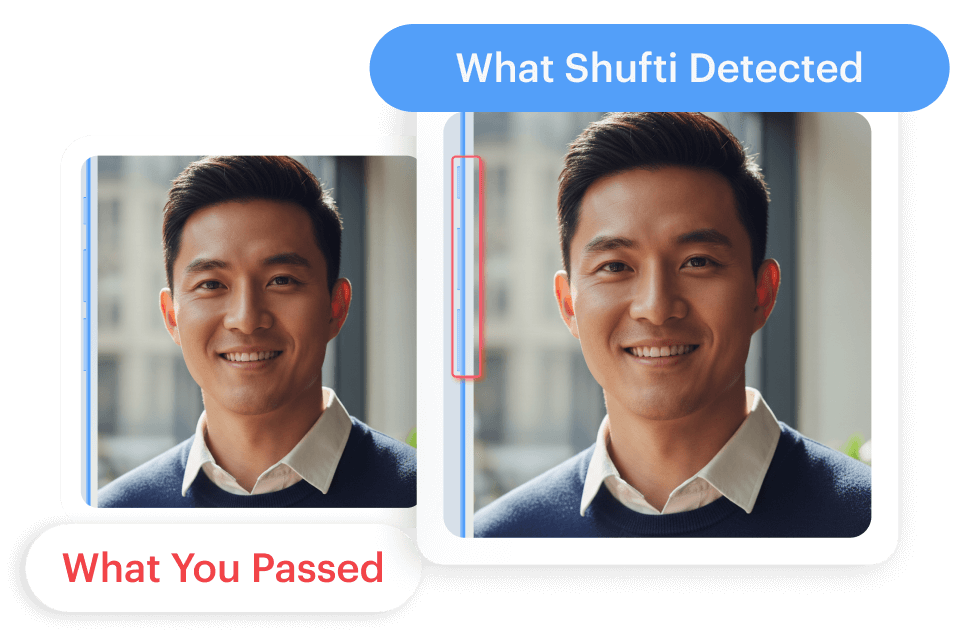
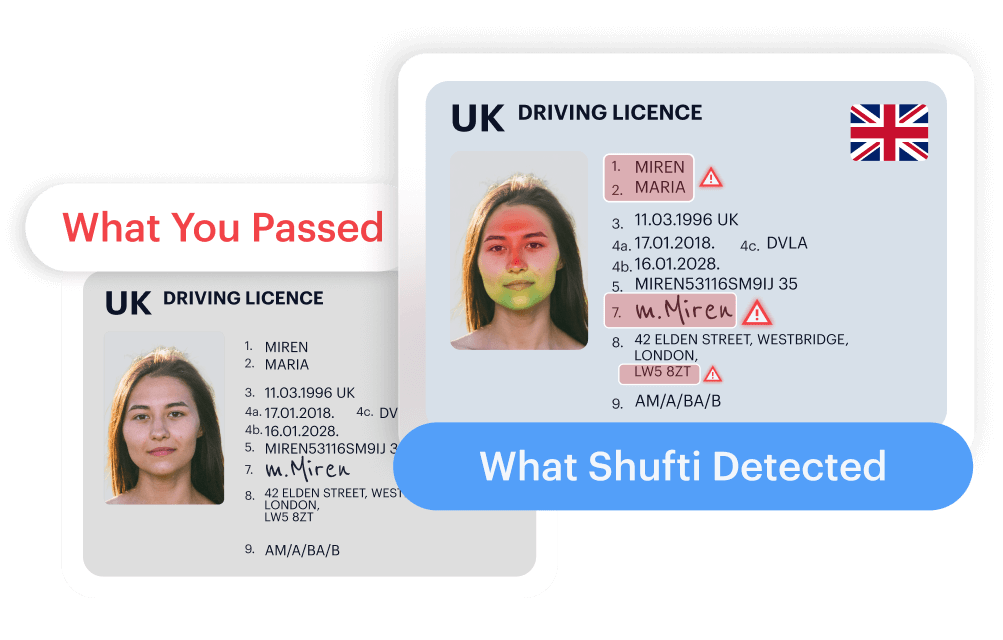
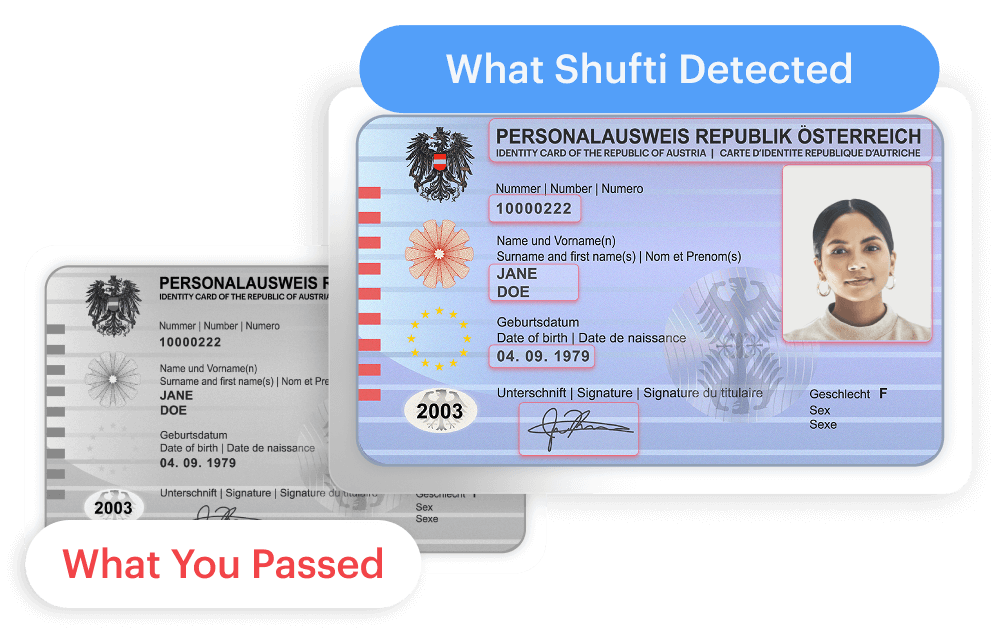





 Face Verification
 Address Verification
 Document Verification
 Age Verification
 VideoIdent
 Fast ID
 eIDV
eIDV
 NFC Verification
 Consent Verification
 Business Verification
 Due Diligence
 Investor Verification
 E-Signature
 Behavioural Biometrics
 Device Fingerprinting
 MFA
MFA
 AML Screening
 Business AML Screening
 User Risk Assessment
 Transaction Screening
 Adverse Media Screening
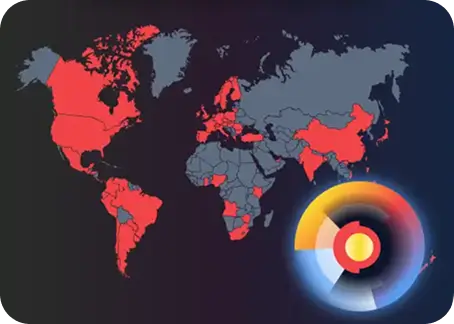
 Identity Verification
 KYC
KYC
 KYB
KYB
 KYI
KYI
 Bonus Abuse
 Fraud Prevention
 Deepfakes
 Multi-Accounting
 Banking
 Crypto
 Fintech
 Forex
Forex
 Gaming
 Gig Economy
 Marketplace
 Social Networks
 Product Managers
 Compliance Officers
 Fraud Analyst
 Global Trust Platform
 Journey Builder
 Vendor Comparison
 Content library
 Blogs
Blogs
 News
News
 Reports
 Insights
 Knowledgebase
 ROI calculator
 Blind Spot Audit
 Deepfake Detection
 Liveness Detection
 Document Originality
 Document Deepfake
 Events & Webinar
 Podcast Studio
 Spotlight Studio
 API Documentation
 Mobile SDKs
 Service Status
 Help Center
 Contact Us
 Technical Support
 Compliance
 Supported Documents
 About
About
 Career
 Press Release
 Certifications
 Partnership
 Awards
United States of America
Identity Verification & KYC for the United States of America
Built for organisations operating under the Bank Secrecy Act (BSA), USA PATRIOT Act, FinCEN AML regulations, SEC/FINRA rules, and state-level compliance frameworks, covering KYC, KYB, CIP, CDD, Beneficial Ownership and AML screening in one unified Shufti workflow, aligned to the United States regulatory ecosystem.
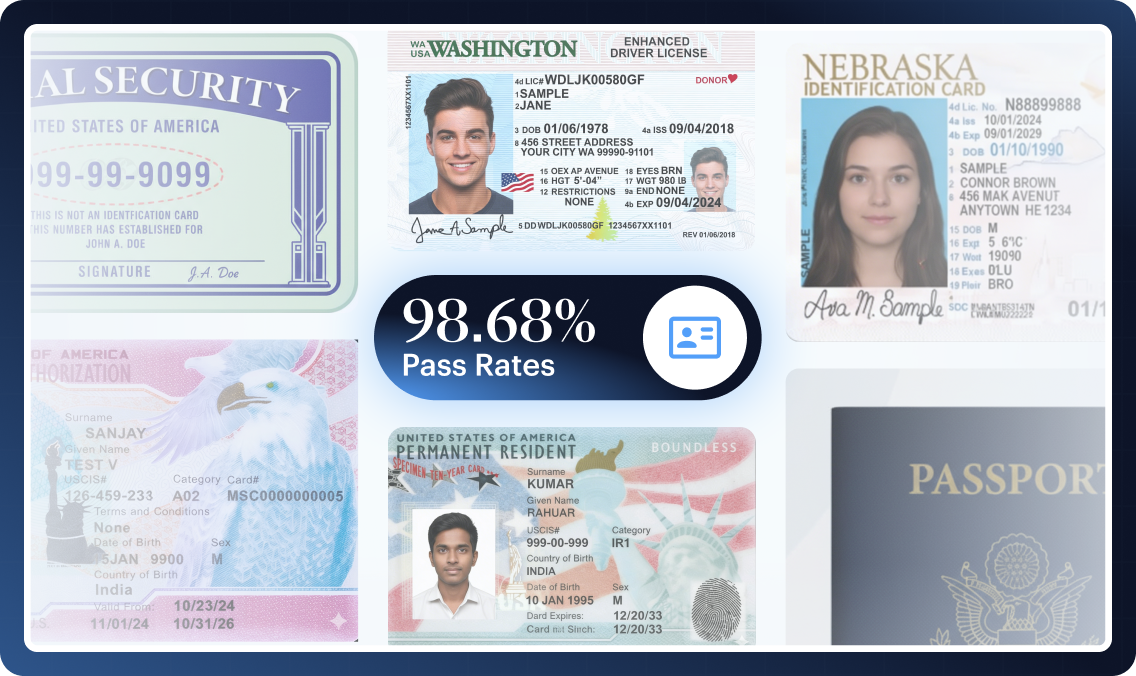
Operational performance for United States of America KYC
Our Numbers Speak Volumes
98.68%
Pass Rate
<5s
Verification Time
99%
EIDV Coverage
Evidence-Ready Checks Across People & Businesses
Individual Documents we Verify
Shufti Verifies 520+ Individual US Documents.
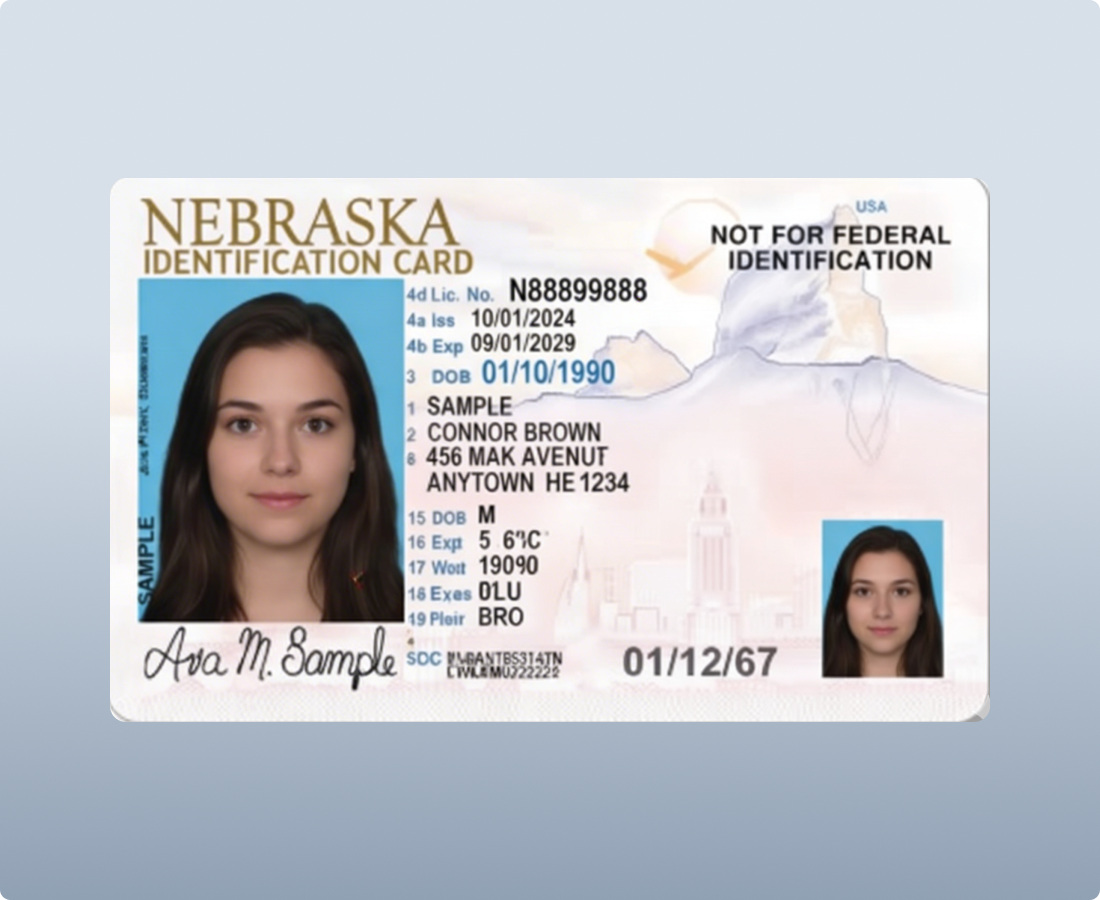
View All Supported DocumentsU.S. State Driver’s Licence
Primary identity document for most U.S. residents; issued at state level with security features varying by state, including REAL ID-compliant versions.
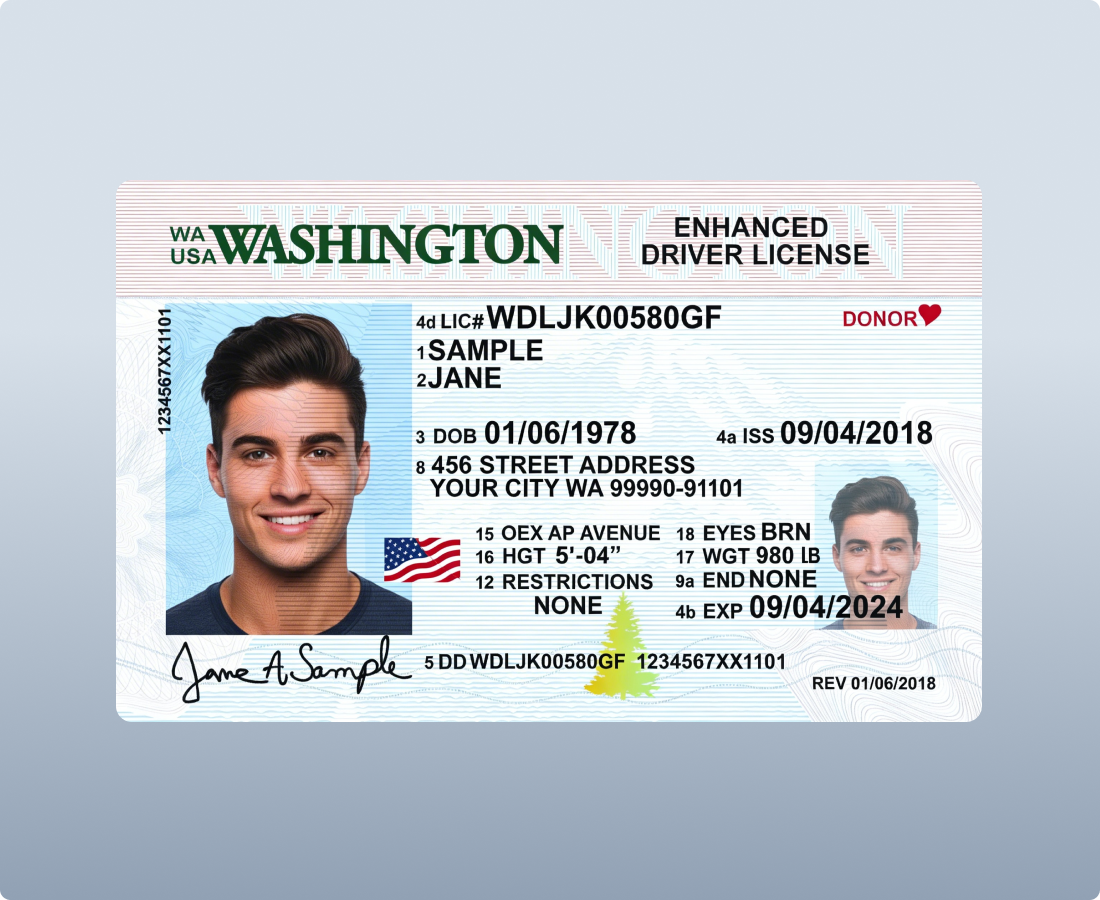
U.S. State Identification Card
Non-driver alternative issued by state DMVs; commonly used in financial onboarding where no driving licence exists.
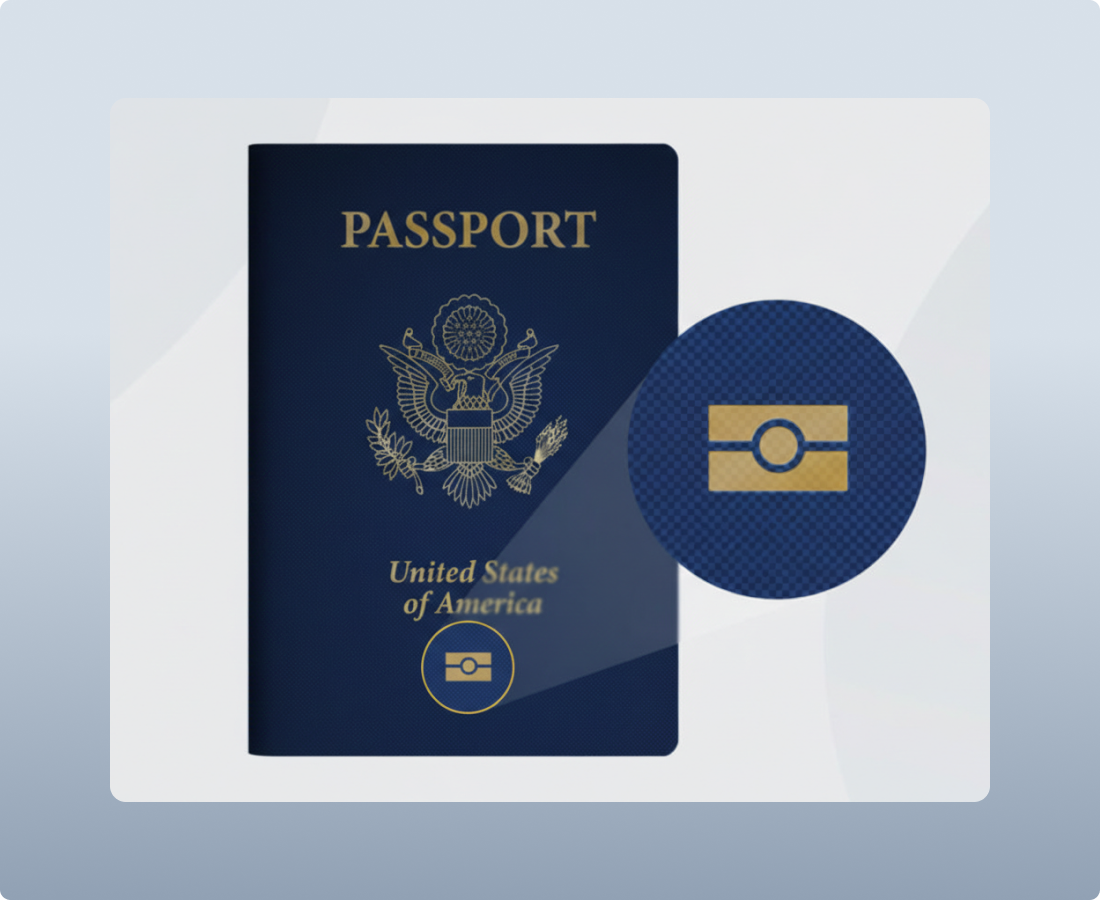
U.S. Passport (ePassport)
ICAO-compliant biometric passport; widely accepted as primary ID and required for cross-border onboarding.
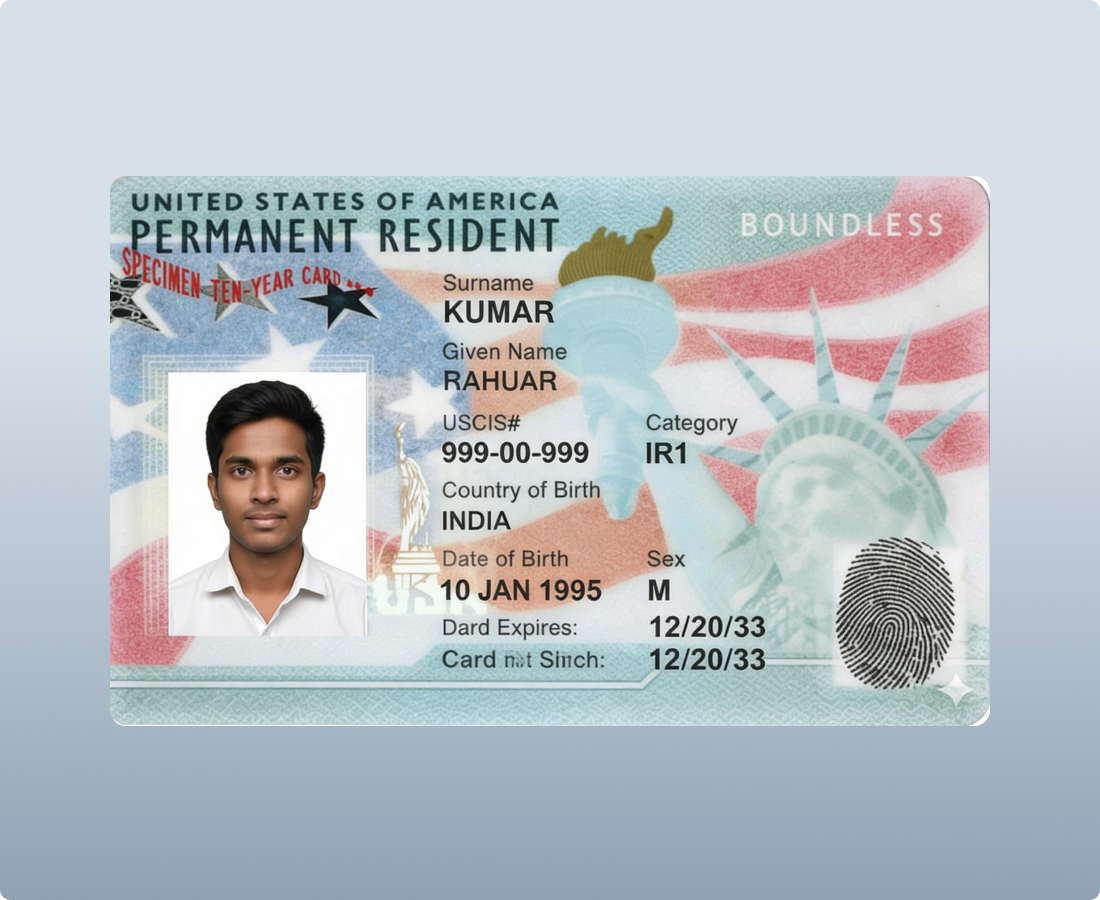
U.S. Permanent Resident Card (Green Card)
Primary identity document for lawful permanent residents; includes USCIS security features and machine-readable zone.
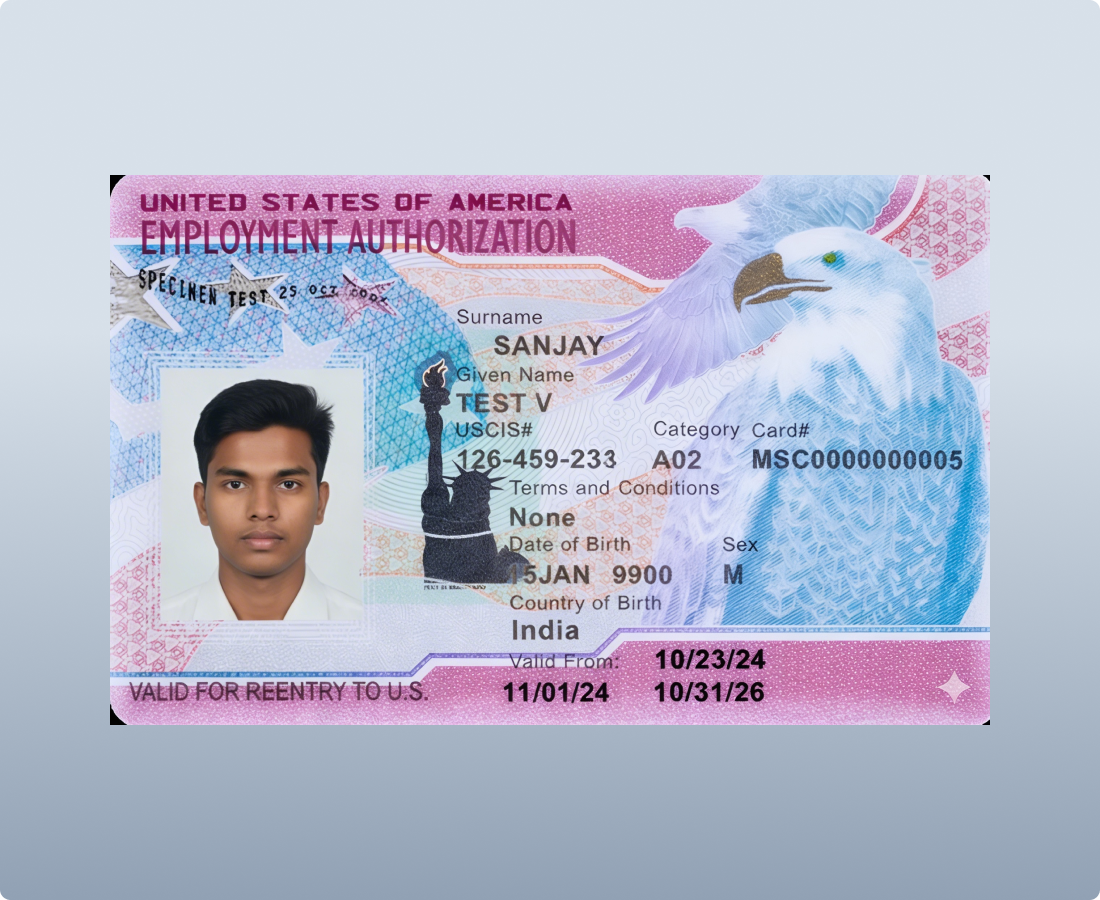
Employment Authorisation Document (EAD)
Issued by USCIS to certain non-citizens; used to verify identity and legal presence in specific onboarding contexts.
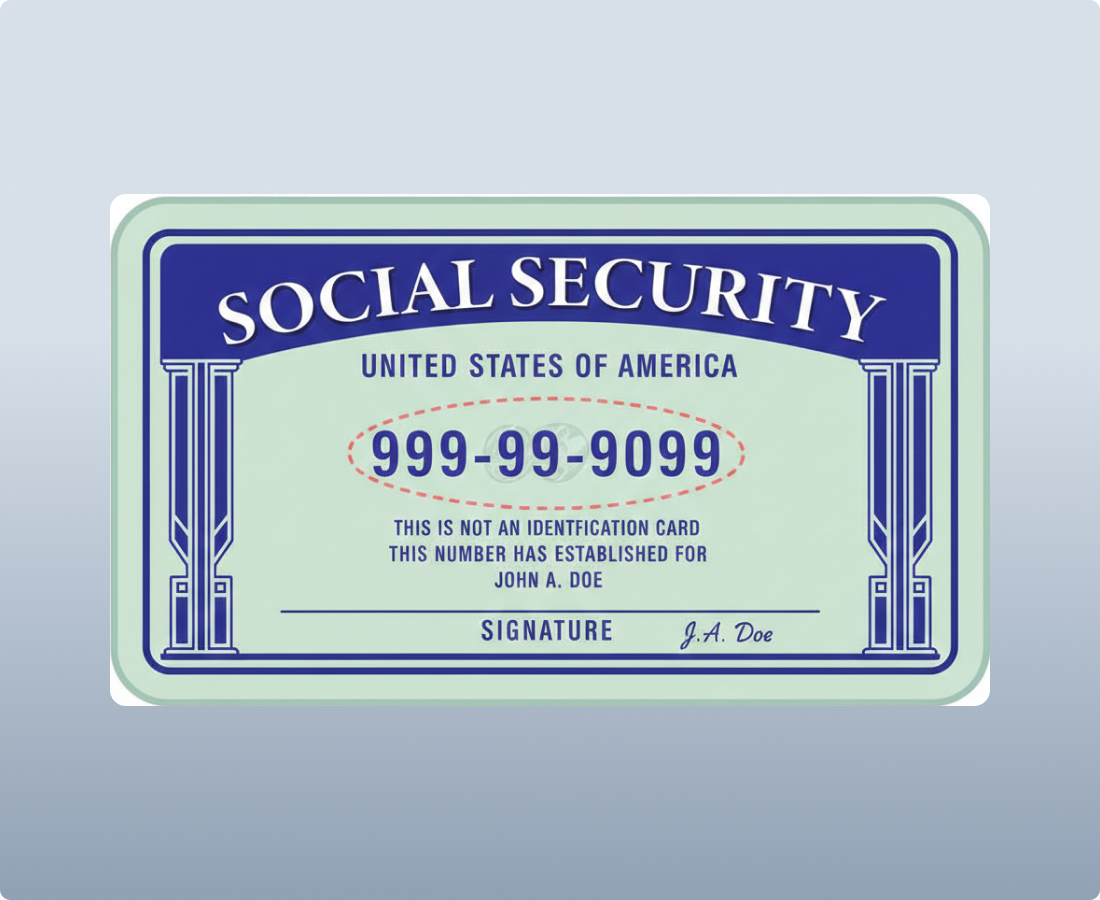
Social Security Number (SSN) / ITIN (data point)
Not a standalone photo ID, but required for CIP compliance under BSA/USA PATRIOT Act for most financial institutions.
Entity Identity
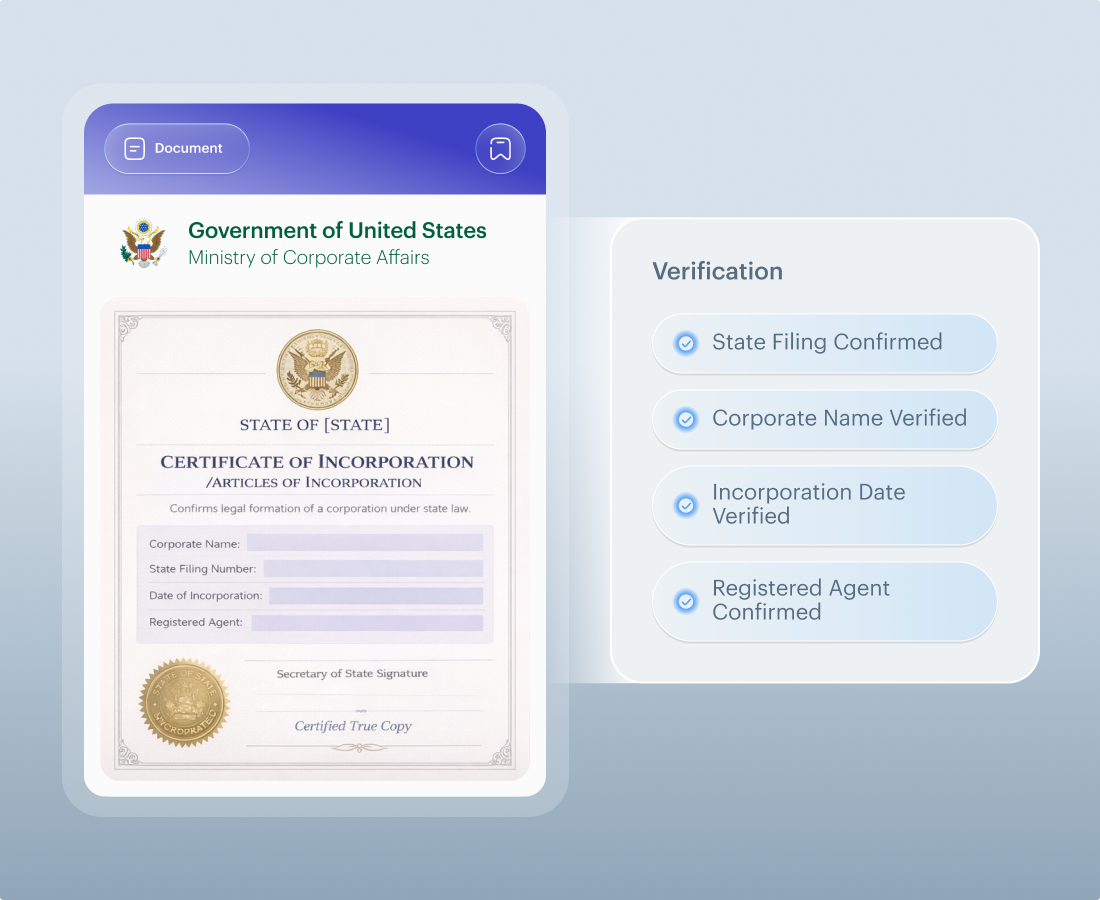
Articles of Incorporation / Formation
Confirms legal existence; filed with state Secretary of State.
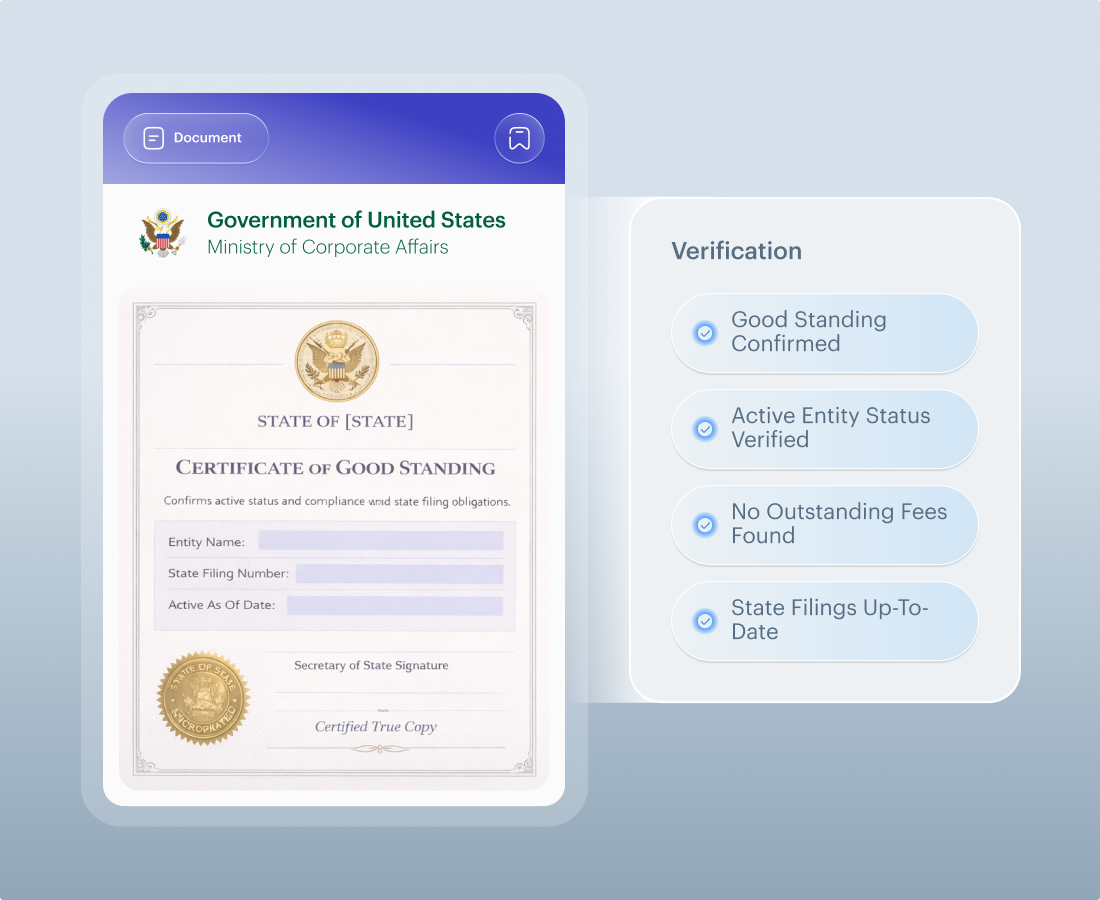
Certificate of Good Standing (State-level)
Confirms active status and compliance with state filing obligations.
Business Tax Identity
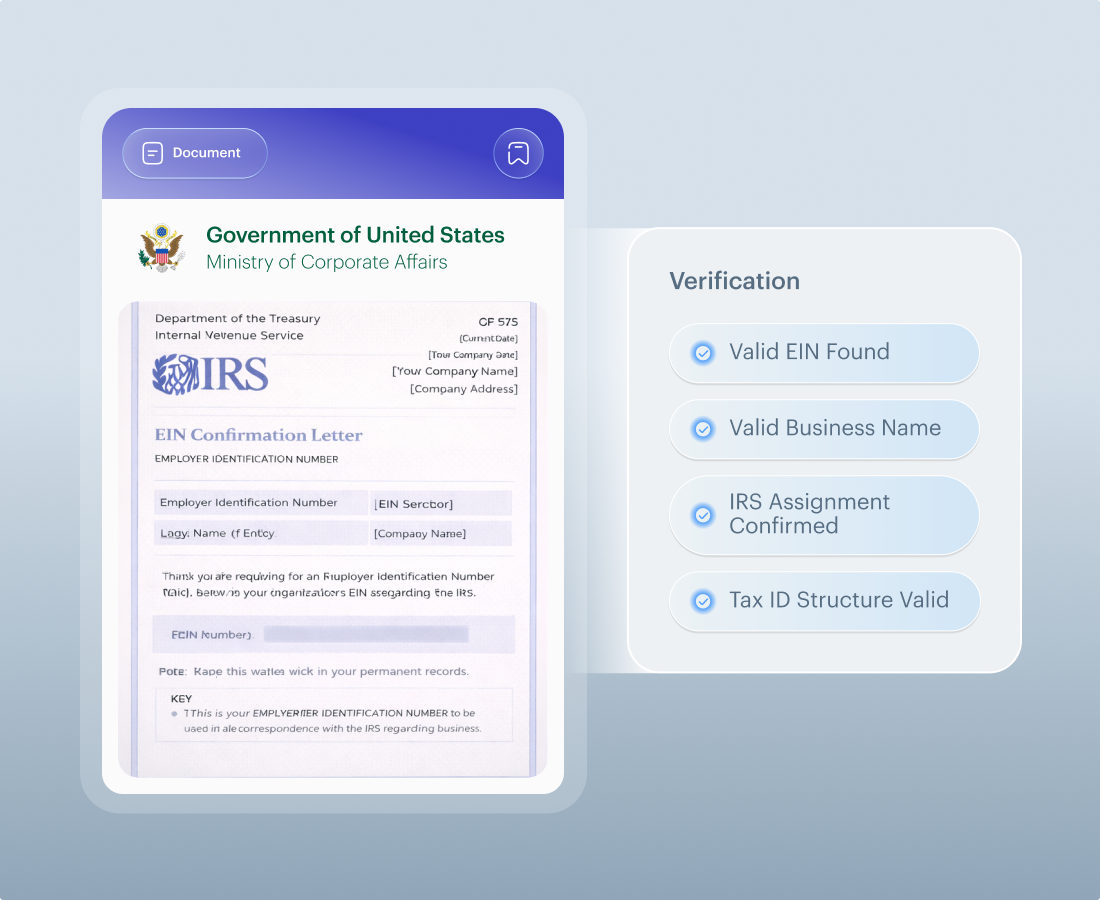
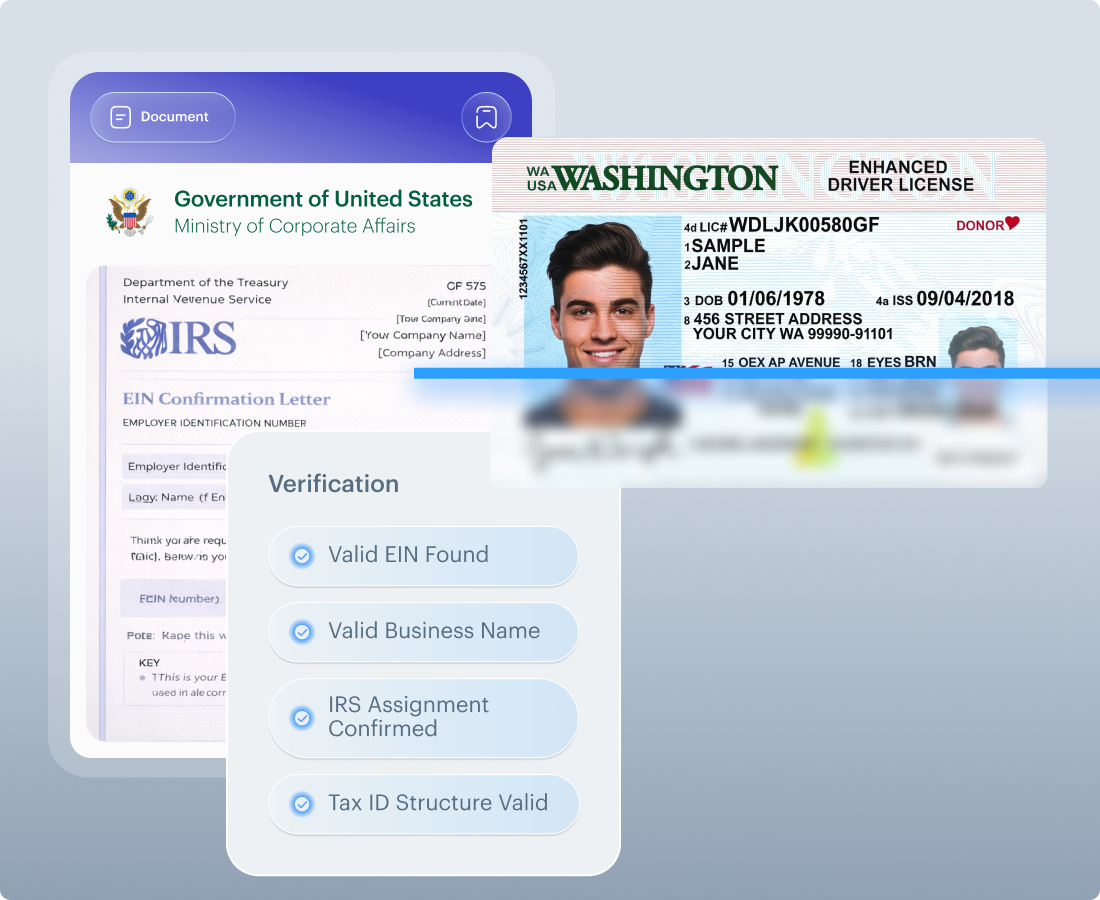
Employer Identification Number (EIN)
Issued by the IRS; required for tax and banking purposes.
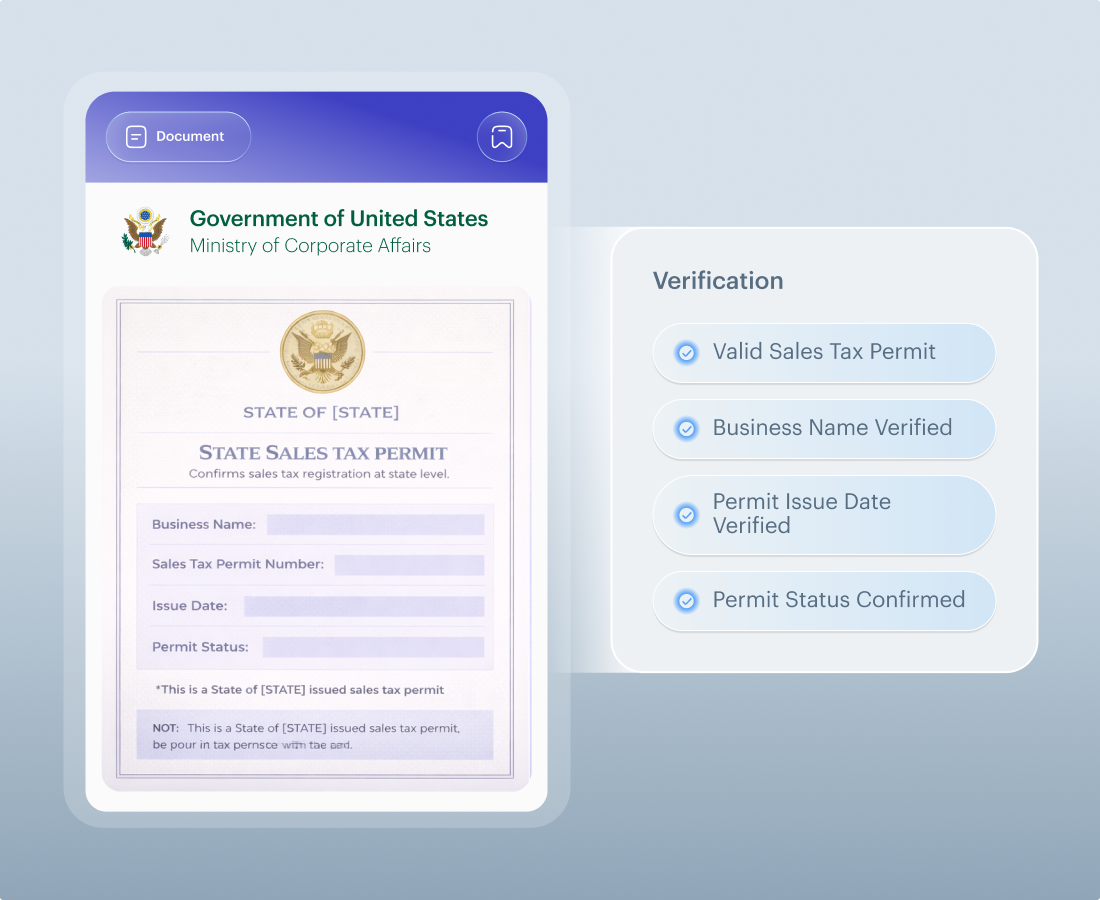
State Sales Tax Permit (where applicable)
Confirms sales tax registration at state level.
Ownership & Control (UBO)
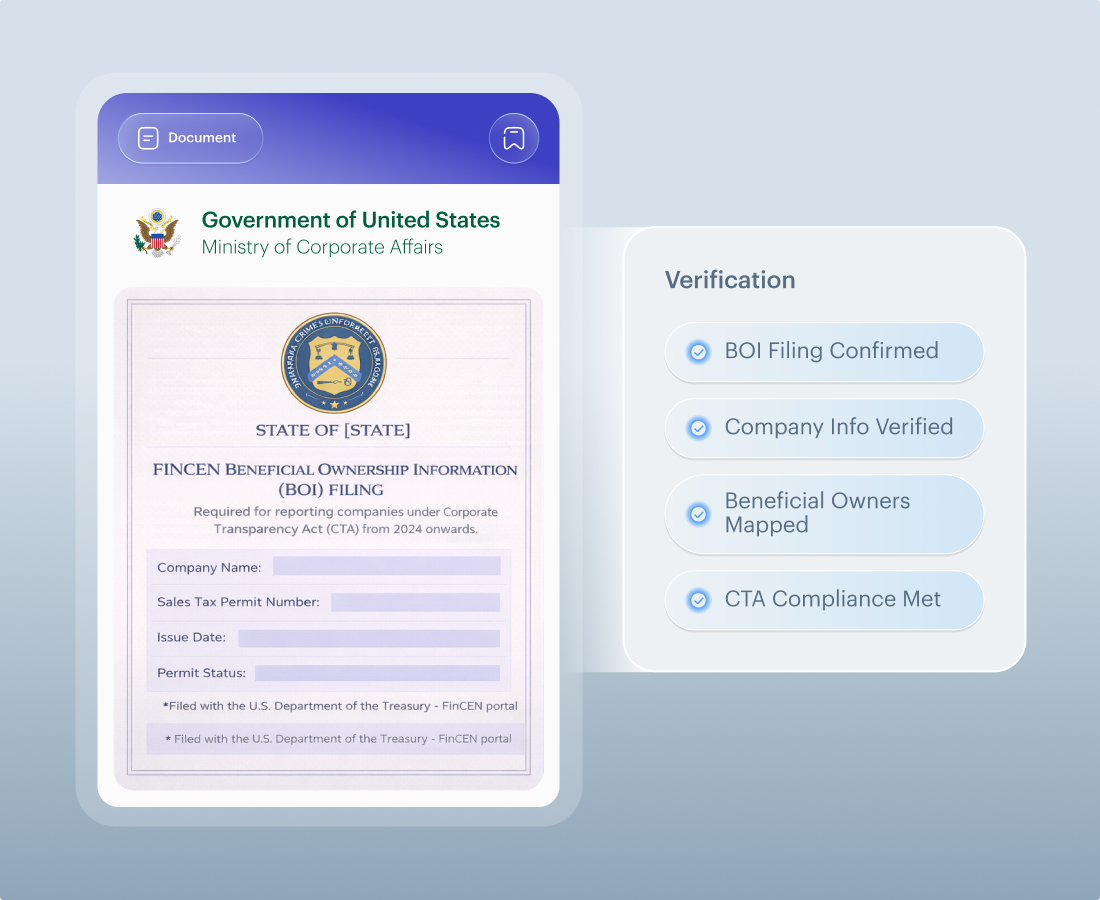
FinCEN Beneficial Ownership Information (BOI) Filing (Corporate Transparency Act)
Required for reporting companies under the Corporate Transparency Act (CTA) from 2024 onwards.
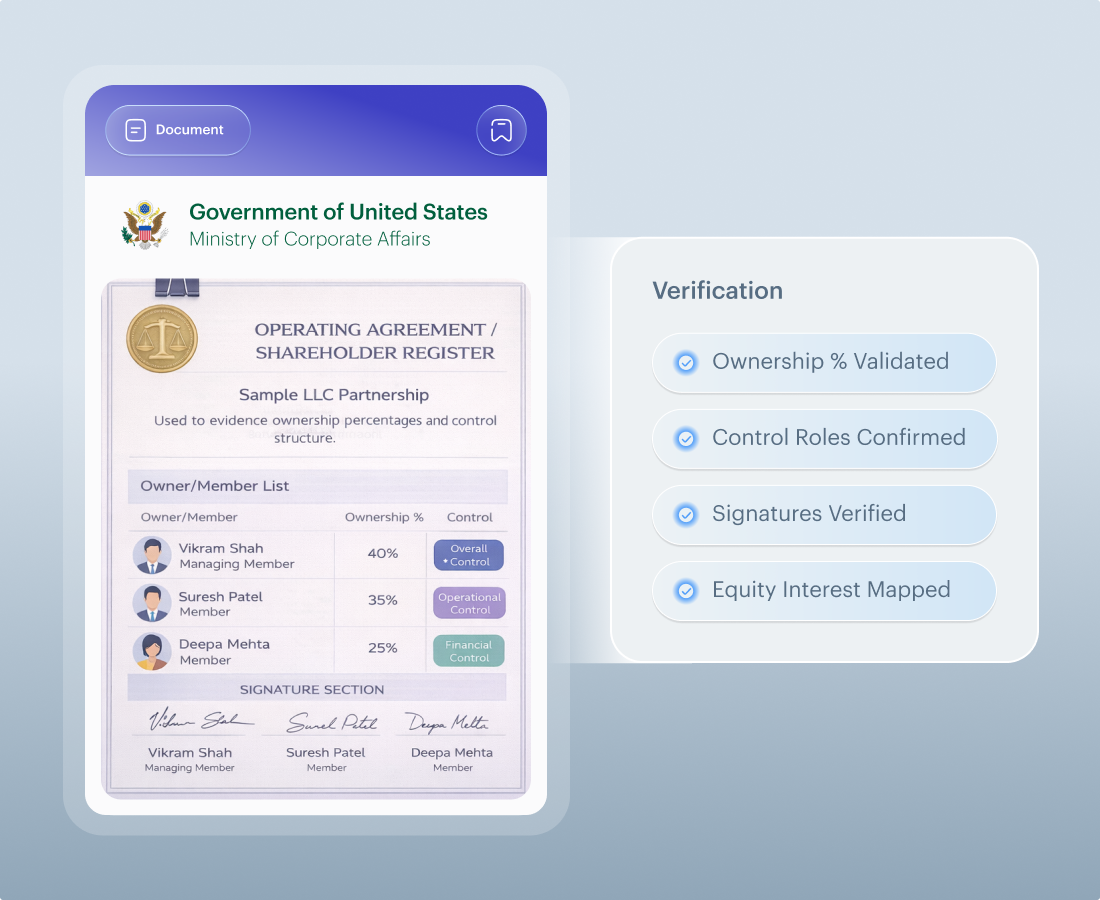
Operating Agreement / Shareholder Register
Used to evidence ownership percentages and control structure.
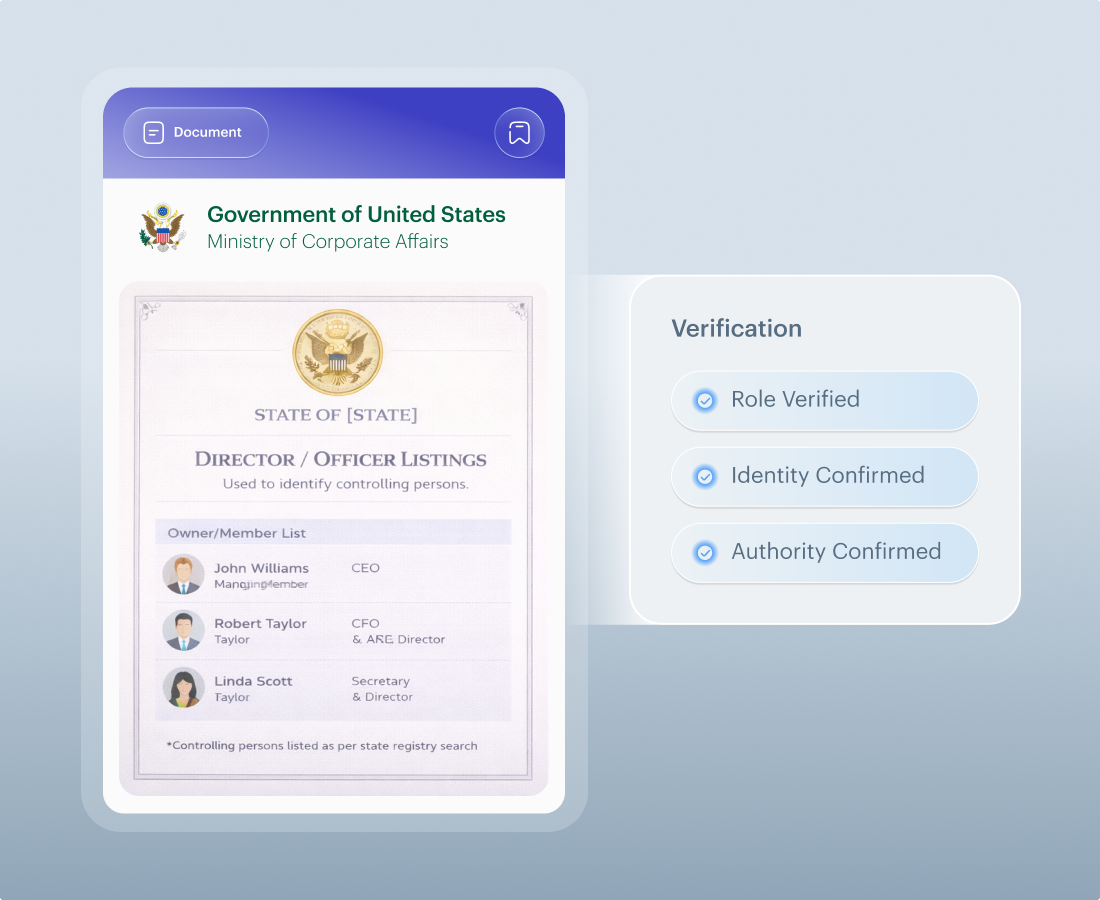
Director/Officer Listings (State Registry)
Used to identify controlling persons.
Languages We Cover
English-first document handling
U.S. identity documents are issued in English; Shufti captures and stores structured data fields directly for audit use.
Name matching across variants
Controls handle middle names, initials, suffixes (Jr., Sr., III), and hyphenated surnames to reduce false positives in sanctions and PEP screening.
Evidence consistency across CIP/CDD
Identity data is reconciled across SSN/EIN inputs, document data, beneficial ownership disclosures and screening outputs in one case file.
GOVERNANCE & CONTROLS
Audit-Ready Decisions, Lower Operational Drag
Fewer avoidable re-submissions
State-aware document capture reduces failure rates across 50 state ID formats.
Cleaner audit trails
Structured CIP/CDD case files retrievable for regulatory examinations.
Better name matching outcomes
Handles U.S. naming conventions, initials, suffixes and hyphenation.
One workflow, one back office
KYC, KYB, sanctions screening and case management consolidated in one system.

Identity-first flow design
Driver’s licence or passport-first flows aligned with how identity is actually verified in the U.S.
United States IDV/KYC Challenges

State-level ID fragmentation
Driver’s licences vary by state in format and security features, increasing manual review risk.

SSN misuse risk
SSNs are required for CIP, but identity theft and synthetic identity fraud remain persistent threats.

Beneficial Ownership shift
CTA BOI reporting introduces new UBO verification friction across millions of entities.

Sanctions enforcement intensity
OFAC penalties are high. False negatives in screening create material regulatory exposure.
Shufti’s IDV/KYC Solutions for United States of America
KYC Solutions

Face Verification
Reduces impersonation and synthetic identity risk. In the U.S., where SSN misuse and account takeover fraud remain prevalent, biometric corroboration strengthens CIP evidence.
.
Age Verification
Selfie-based age estimation with document verification fallback where required (e.g., regulated products such as gambling, alcohol or financial services).
.
Address Verification
Verifies address-bearing documents including major U.S. utility providers (e.g., Con Edison, PG&E, Duke Energy), telecom providers (AT&T, Verizon), and U.S. bank statements (e.g., JPMorgan Chase, Bank of America, Wells Fargo). Why this matters in the U.S.: CIP requires residential or business address capture and validation.
.
Document Verification
Supports all 50 state driver’s licences and ID cards, U.S. passports, Green Cards, and other USCIS identity documents with MRZ and barcode extraction where applicable.
.KYB Solutions

Business Verification
Validates entity status through state registry data, corroborates EIN evidence, and captures beneficial ownership disclosures consistent with Corporate Transparency Act obligations.
.
Enhanced Due Diligence (EDD)
Structured escalation workflows for high-risk entities, politically exposed persons (PEPs), or cross-border exposure. Produces reconstructable audit trails aligned with BSA expectations.
.

Built To Fit United States Compliance Landscape

Financial Crimes Enforcement Network (FinCEN)
Administers and enforces the Bank Secrecy Act (BSA); issues regulations covering Customer Identification Program (CIP), Customer Due Diligence (CDD), Beneficial Ownership reporting, SAR filing and recordkeeping obligations.

Board of Governors of the Federal Reserve System
Supervises bank holding companies, state member banks and certain financial institutions; examines institutions for BSA/AML compliance under federal banking laws.

Office of the Comptroller of the Currency (OCC)
Charters, regulates and supervises national banks and federal savings associations; enforces BSA/AML compliance through examinations and guidance.

Federal Deposit Insurance Corporation (FDIC)
Supervises state-chartered banks that are not Federal Reserve members; enforces BSA/AML compliance and safety and soundness standards.

Securities and Exchange Commission (SEC)
Regulates broker-dealers, investment advisers and securities markets; enforces AML programme requirements and recordkeeping obligations, including SEC Rule 17a-4.

Financial Industry Regulatory Authority (FINRA)
Self-regulatory organisation overseeing U.S. broker-dealers; enforces AML compliance under FINRA Rule 3310 and supervises suspicious activity monitoring obligations.

Internal Revenue Service (IRS)
Administers federal tax laws and issues Employer Identification Numbers (EINs); EIN validation is commonly used in U.S. KYB processes.

National Association of Secretaries of State (NASS)
Represents U.S. state Secretaries of State, who maintain corporate registries and entity status databases at the state level.

U.S. Department of the Treasury – Office of Foreign Assets Control (OFAC)
Administers and enforces U.S. economic and trade sanctions programmes; maintains the Specially Designated Nationals (SDN) list and other sanctions lists used in AML screening.
Deployment Choice
US-based cloud regions or on-premise deployment support federal examination access, data governance and supervisory control expectations.
Regulatory Alignment
Aligned to Bank Secrecy Act (BSA) CIP, CDD and SAR obligations, alongside applicable federal and state privacy laws.
Retention Control
BSA regulations generally require customer identification and transaction records to be retained for at least five years.
Encryption Posture
Encryption, strict access controls and audit logging support GLBA Safeguards Rule and federal cybersecurity requirements.
Data And Privacy
Controls in USA
United States of America

House of Representatives of the United States

Federal Communications Commission (FCC)

U.S. Department of Homeland Security (DHS)

Puerto Rico Department of Treasury (Departamento de Hacienda)

Government Accountability Office (GAO)

Delaware Department of State

State of Utah (Official Government Portal)

U.S. Department of State — Directorate of Defense Trade Controls (DDTC)
U.S. Department of State – Cuba Restricted List (sanctions listing page)
House of Representatives of the United States
Federal Communications Commission (FCC)
U.S. Department of Homeland Security (DHS)
Puerto Rico Department of Treasury (Departamento de Hacienda)
Government Accountability Office (GAO)
Delaware Department of State
State of Utah (Official Government Portal)
U.S. Department of State — Directorate of Defense Trade Controls (DDTC)
U.S. Department of State – Cuba Restricted List (sanctions listing page)
House of Representatives of the United States
Federal Communications Commission (FCC)
U.S. Department of Homeland Security (DHS)
Puerto Rico Department of Treasury (Departamento de Hacienda)
Government Accountability Office (GAO)
Delaware Department of State
State of Utah (Official Government Portal)
U.S. Department of State — Directorate of Defense Trade Controls (DDTC)
U.S. Department of State – Cuba Restricted List (sanctions listing page)
Frequently Asked Questions
What is required under U.S. Customer Identification Program (CIP) rules?
Under the USA PATRIOT Act and BSA regulations, institutions must collect name, date of birth, address, and identification number (e.g., SSN or EIN) and verify identity using documentary or non-documentary methods.
Is SSN mandatory for all onboarding?
For most regulated financial institutions, yes. However, alternative identifiers may apply in limited contexts consistent with BSA regulations.
How does the Corporate Transparency Act affect KYB?
Reporting companies must file Beneficial Ownership Information with FinCEN. Institutions must still independently verify ownership for CDD purposes.
How long must records be retained?
BSA regulations typically require five-year retention for many records, including CIP and SAR-related documentation.
What sanctions lists must U.S. firms screen against?
At minimum, OFAC sanctions lists. Additional screening may include domestic law enforcement and global sanctions lists based on risk appetite.
What causes onboarding drop-off in the U.S.?
Mismatched SSN/name combinations, state-specific ID capture issues, and manual beneficial ownership remediation are common friction points.
Build a USA-ready KYC, KYB & AML programme with Shufti
INDEPENDENTLY AUDITED. GLOBALLY CERTIFIED.
Certified to Global Standards






PROVEN WORKFLOWS
Use Cases for Regulated Growth in US
Accelerate Growth, Eliminate Friction
Onboard users in seconds, not days. Deploy tiered address verification flows that maximise completion rates for genuine users while filtering out synthetic fraud.


Onboard Global Traders in Real-Time
Verify investors across 250+ countries & territories. Ensure compliance with international financial regulations while preventing identity theft and high-risk chargebacks.


Secure Trust at Every Transaction
Automate KYC and AML workflows to reduce manual onboarding costs. Strengthen residency checks while delivering the frictionless digital experience modern customers expect.


Power a Fair & Secure Player Experience
Reduce bonus abuse and multi-accounting rings at the door. Enforce location rules and trigger step-up checks without disrupting the player journey.



Build a Trusted, Verified Workforce
Screen freelancers and drivers at scale. Verify residency and reduce onboarding friction while maintaining trust between users.



Scale Your Exchange with Confidence
Balance anonymity with compliance. Instantly verify user jurisdiction to meet Travel Rule obligations and help stop abuse without slowing down legitimate trading volume.



Reduce fraud without blocking growth
Shufti supports marketplace integrity by verifying seller and buyer identities, enabling age-gated journeys where needed, and preserving evidence to support investigations, disputes and risk-led enforcement actions.




Accelerate Growth, Eliminate Friction
Onboard users in seconds, not days. Deploy tiered address verification flows that maximise completion rates for genuine users while filtering out synthetic fraud.
Onboard Global Traders in Real-Time
Verify investors across 250+ countries & territories. Ensure compliance with international financial regulations while preventing identity theft and high-risk chargebacks.
Secure Trust at Every Transaction
Automate KYC and AML workflows to reduce manual onboarding costs. Strengthen residency checks while delivering the frictionless digital experience modern customers expect.
Power a Fair & Secure Player Experience
Reduce bonus abuse and multi-accounting rings at the door. Enforce location rules and trigger step-up checks without disrupting the player journey.
Build a Trusted, Verified Workforce
Screen freelancers and drivers at scale. Verify residency and reduce onboarding friction while maintaining trust between users.
Scale Your Exchange with Confidence
Balance anonymity with compliance. Instantly verify user jurisdiction to meet Travel Rule obligations and help stop abuse without slowing down legitimate trading volume.
Reduce fraud without blocking growth
Shufti supports marketplace integrity by verifying seller and buyer identities, enabling age-gated journeys where needed, and preserving evidence to support investigations, disputes and risk-led enforcement actions.
Accelerate Growth, Eliminate Friction
Onboard users in seconds, not days. Deploy tiered address verification flows that maximise completion rates for genuine users while filtering out synthetic fraud.
Onboard Global Traders in Real-Time
Verify investors across 250+ countries & territories. Ensure compliance with international financial regulations while preventing identity theft and high-risk chargebacks.
Secure Trust at Every Transaction
Automate KYC and AML workflows to reduce manual onboarding costs. Strengthen residency checks while delivering the frictionless digital experience modern customers expect.
Power a Fair & Secure Player Experience
Reduce bonus abuse and multi-accounting rings at the door. Enforce location rules and trigger step-up checks without disrupting the player journey.
Build a Trusted, Verified Workforce
Screen freelancers and drivers at scale. Verify residency and reduce onboarding friction while maintaining trust between users.
Scale Your Exchange with Confidence
Balance anonymity with compliance. Instantly verify user jurisdiction to meet Travel Rule obligations and help stop abuse without slowing down legitimate trading volume.
Reduce fraud without blocking growth
Shufti supports marketplace integrity by verifying seller and buyer identities, enabling age-gated journeys where needed, and preserving evidence to support investigations, disputes and risk-led enforcement actions.
Let’s Tailor your journey
Just a few quick questions to guide your Shufti experience.

Shufti
Market Positioning and Commercial Assessment

Industry stands at 1.7rating

Best ID Verification Innovator

TOP 10 KYC Solution Provider
Best Client Onboarding Solution

Samer Al Tamimi@CEO of Safwa Bank
We take our client's privacy very seriously and always look for new innovative solutions to ensure a safe banking experience. Working with Shufti feels like a breath of fresh air, as their 100% in-house tech keeps our customer's data free from vulnerabilities and fully safe and protected.




PROVEN PLAYBOOKS
Explore Practical KYC & AML Resources
16 August, 2025
5 minutes read
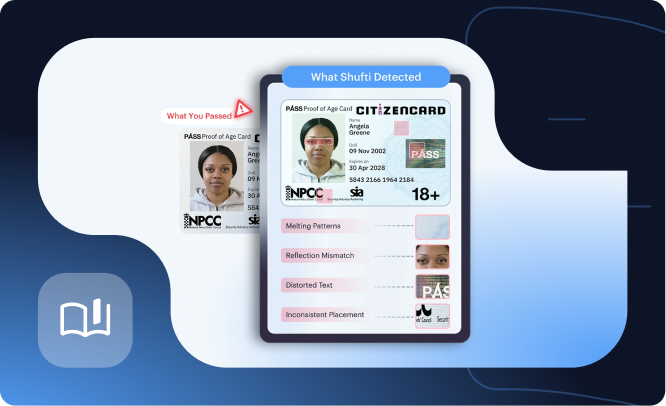
How Much of What You’ve Verified Is Actually Real?
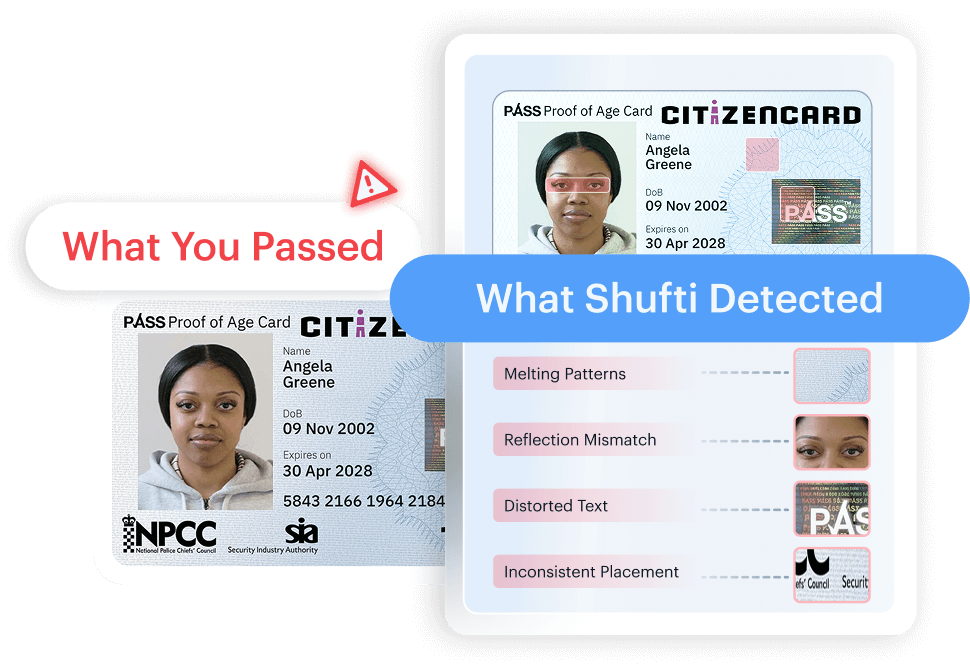
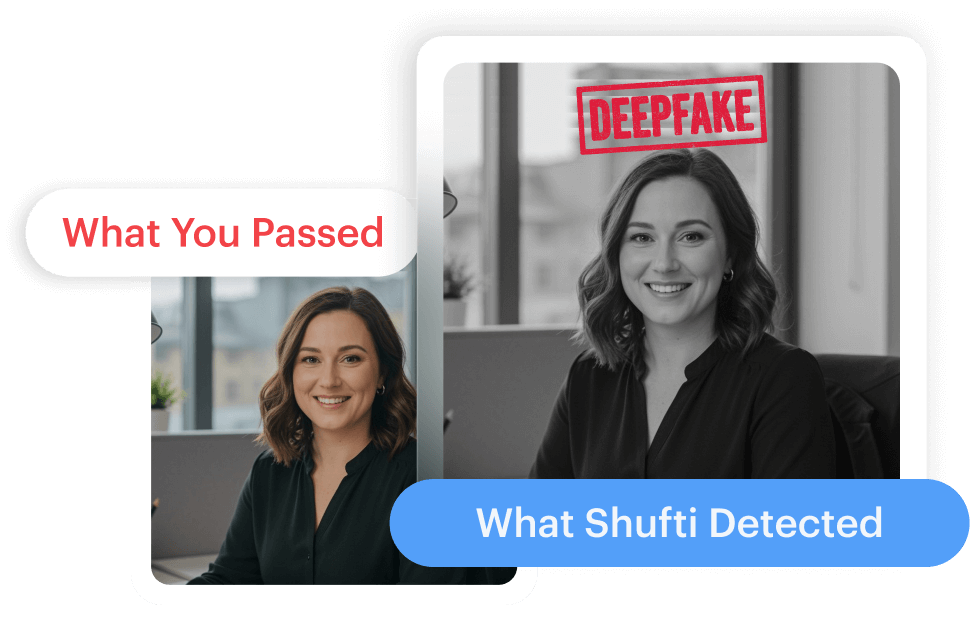
Shufti’s Deepfake Blindspot Audit now runs fully inside your AWS environment, auditing historic KYC for manipulation signals without moving sensitive data off-prem.
whitepapers