




 Face Verification
 Address Verification
 Document Verification
 Age Verification
 VideoIdent
 Fast ID
 Docless Verification
 Consent Verification
 NFC Verification
 Business Verification
 Due Diligence
 Investor Verification
 E-Signature

 QES
QES
 AML Screening
 Transaction Monitoring
 Adverse Media
 Business AML Screening
 PEP & RCA
 Sanctions
 Watchlist
 Behavioural Biometrics
 Device Fingerprinting
 Biometric Face Authentication
 MFA
MFA
 Fraud Hub
 Onboarding
 Ongoing Monitoring
 KYC
KYC
 KYB
KYB
 KYI
KYI
 Age Assurance
 Identity Verification
 Workforce IAM
 Candidate Verification
 Compliance
 Fraud prevention
 Trust & safety
 Global expansion
 Product Managers
 Compliance Officers
 Fraud Analysts
 Developers
 Deepfake Detection
 Bonus Abuse / Promotion Abuse
 Account Takeover
 Synthetic Identity Fraud
 Document Fraud
 Impersonation Fraud
 Multi-Accounting
 Fraud Networks
 Chargeback Fraud
 Money Mule Activity
 Party Fraud
 Regulatory & Compliance Risks
 Fintech
 Crypto
 iGaming
 Forex
Forex
 Social Network
 Marketplace
 Banking
 Gig Economy
 Payments
 Ride Hailing
 Adult Content
 Blind Spot Audit
 Deepfake Detector
 Liveness Spoofs
 Document Originality
 Document Deepfake
 Global Trust Platform
 Journey Builder
 Case Management
 Shufti AI
 Fraud Analytics
 Vendor Comparison
 Brand Personalisation
 AI Compliance Co-Pilot
 OCR
OCR
 Secure Capture
 Deployment Options
 Identity Methods
 API Documentation
 Mobile SDKs
 Service Status
 Help Center
 Contact Us
 Technical Support
 Supported Documents
 Supported Countries
 Content library
 Blogs
Blogs
 News
News
 Reports
 Insights
 Knowledgebase
 ROI calculator
 About
About
 Career
 Press Release
 Certifications
 Partnership
 Awards
 Events & Webinar
 Interactive Demo
 Podcast Studio
 Spotlight Studio
- Australia
- Austria
- Bangladesh
- Brazil
- Bulgaria
- Canada
- China
- Cyprus
- Egypt
- Estonia
- Eswatini
- Ethiopia
- France
- Germany
- Greece
- Haiti
- Hong Kong
- India
- Iraq
- Ireland
- Indonesia
- Italy
- Japan
- Jordan
- Kazakhstan
- Kenya
- Kosovo
- Kuwait
- Latvia
- Luxembourg
- Malaysia
- Malta
- Mauritius
- Mexico
- Micronesia
- Moldova
- Montenegro
- Morocco
- Mozambique
- Myanmar
- Namibia
- Nauru
- Nepal
- Nigeria
- Nicaragua
- Niue
- Norway
- Netherlands
- New Zealand
- Oman
- Pakistan
- Palau
- Palestine
- Panama
- Papua New Guinea
- Paraguay
- Peru
- Puerto Rico
- Philippines
- Portugal
- Portugal
- Qatar
- Republic of Congo
- Romania
- Russia
- Rwanda
- Samoa
- San Marino
- Senegal
- Serbia
- Seychelles
- Sierra Leone
- Singapore
- Slovakia
- Slovenia
- Somalia
- South Africa
- South Korea
- South Sudan
- Sri Lanka
- St Kitts and Nevis
- St Maarten
- St Lucia
- Sweden
- Switzerland `
- Syria
- Taiwan
- Tajikistan
- Tanzania
- Thailand
- Timor Leste
- Togo
- Tonga
- Trinidad and Tobago
- Turkey
- Turks and Caicos
- Turkmenistan
- Tunisia
- Tuvalu
- Uganda
- Ukraine
- UK
- Uruguay
- USA
- Uzbekistan
- Vatican City
- Vietnam
- Venezuela
- Vanuatu
China
Identity Verification & KYC For China
Built for institutions operating under the Anti-Money Laundering Law of the People’s Republic of China (2006, as amended), supervised by the People’s Bank of China (PBOC) and the National Financial Regulatory Administration (NFRA), across banking, payments, fintech, digital platforms and other regulated sectors.
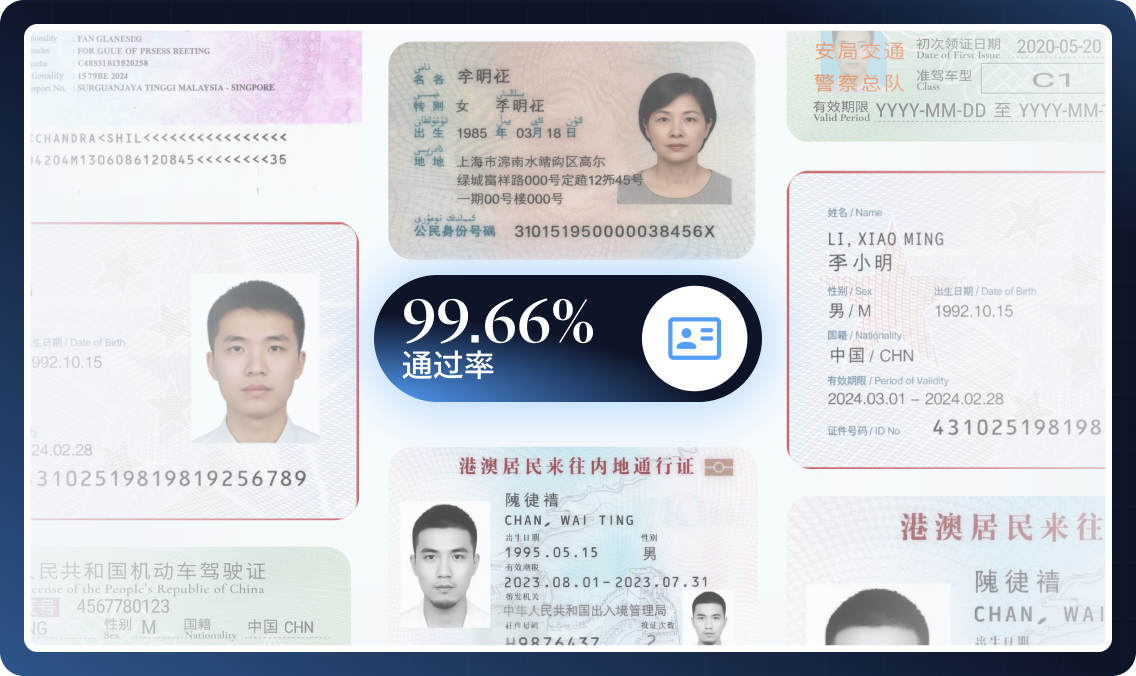
Operational Performance for KYC in China
Our Numbers Speak Volumes
99.66%
Pass Rate
5 secs
IDV Verification Time
95%
eIDV Verification Rate
Evidence-Ready Checks Across People & Businesses
Individual Documents We Verify
Shufti can verify 10+ types of Chinese personal documents
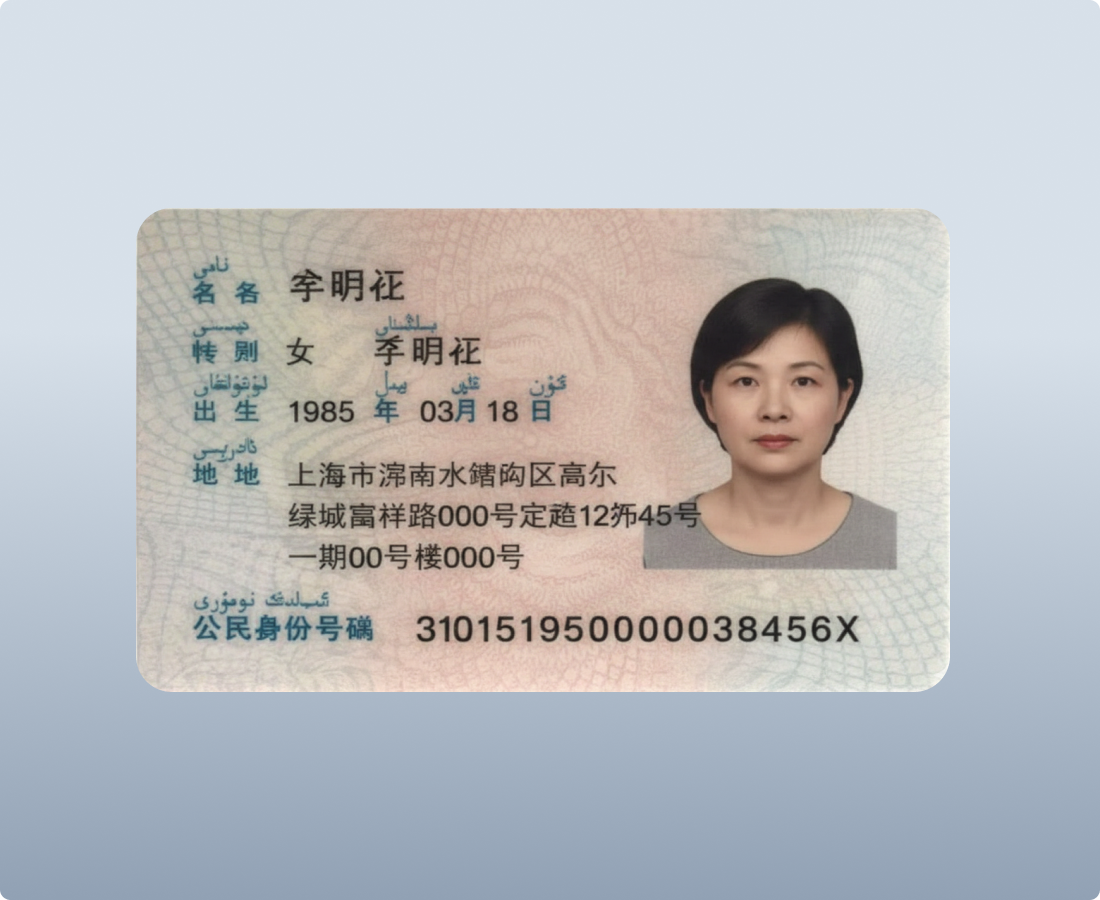
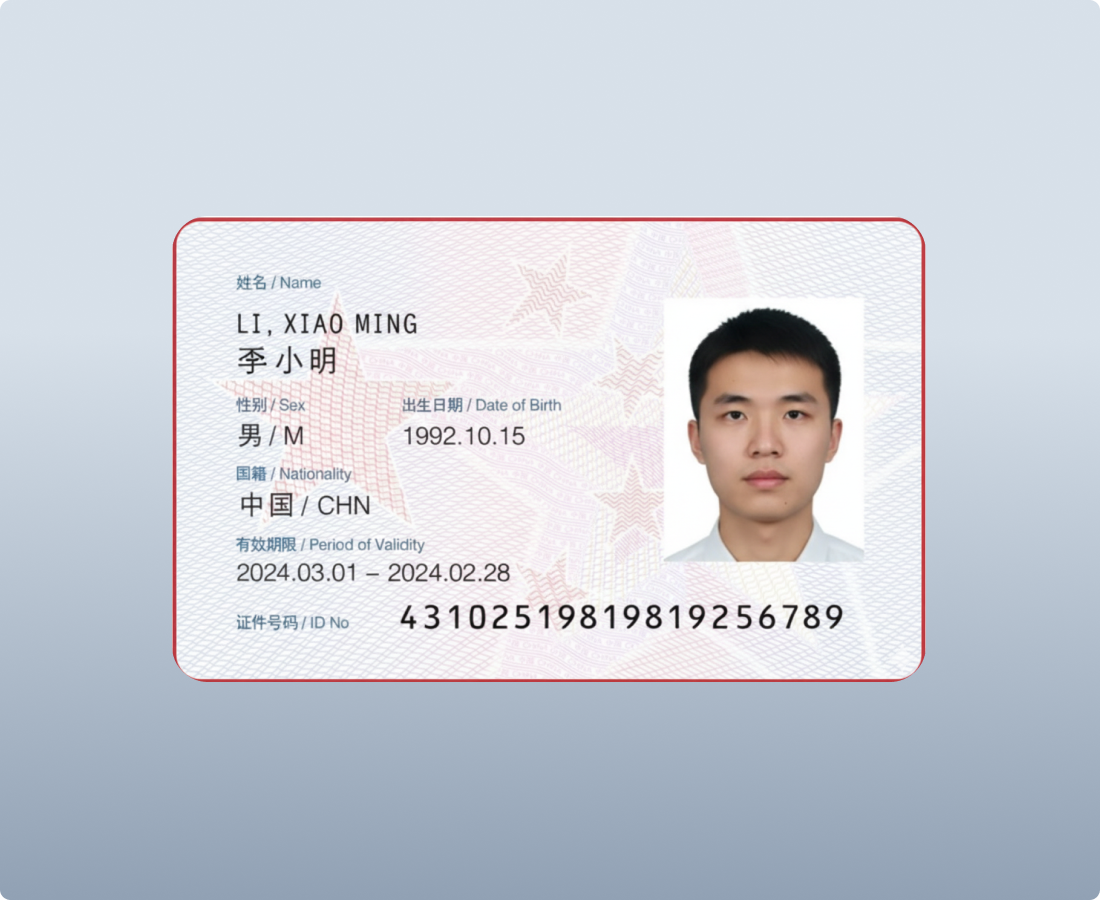
View all supported documentsResident Identity Card (People’s Republic of China Resident Identity Card)
Primary identity document for Chinese citizens under the Resident Identity Card Law. Chip-enabled second-generation ID card used for mandatory real-name verification across financial services and telecom sectors.
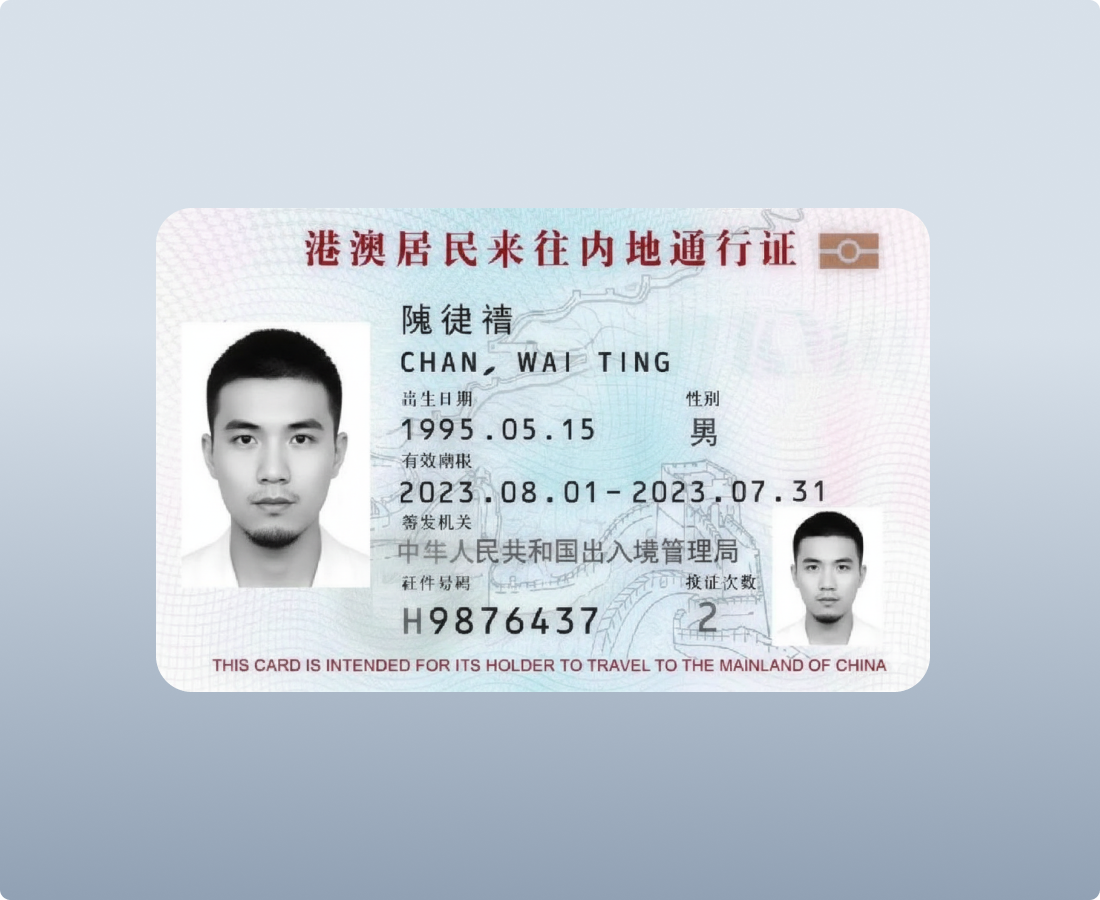
Mainland Travel Permit (for Hong Kong, Macao and Taiwan Residents)
Used for identity verification of non-mainland Chinese nationals residing or operating in mainland China.
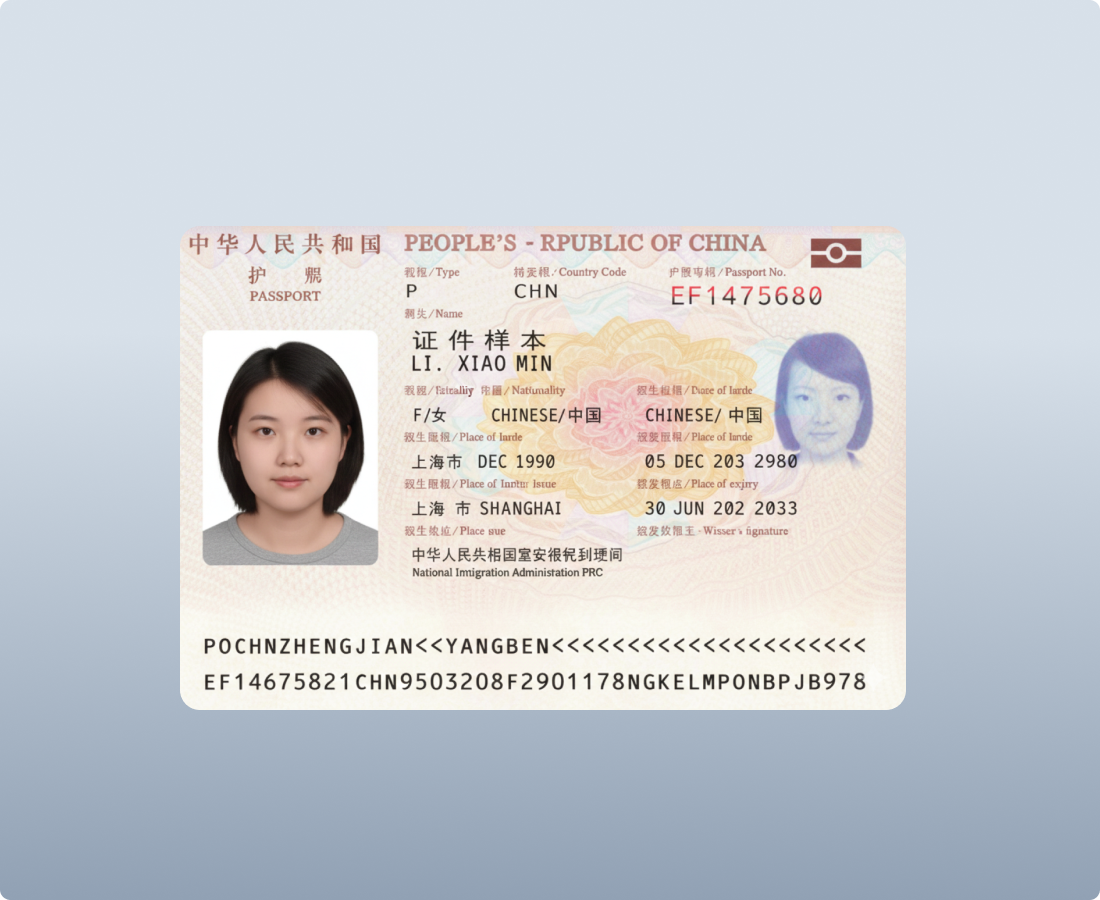
PRC Passport (普通护照 – ePassport)
ICAO-compliant biometric passport with embedded chip and MRZ; used for cross-border onboarding.
Foreigner’s Passport + Residence Permit
Required for non-Chinese nationals residing in China; validated alongside residence permit issued by Public Security Bureau.
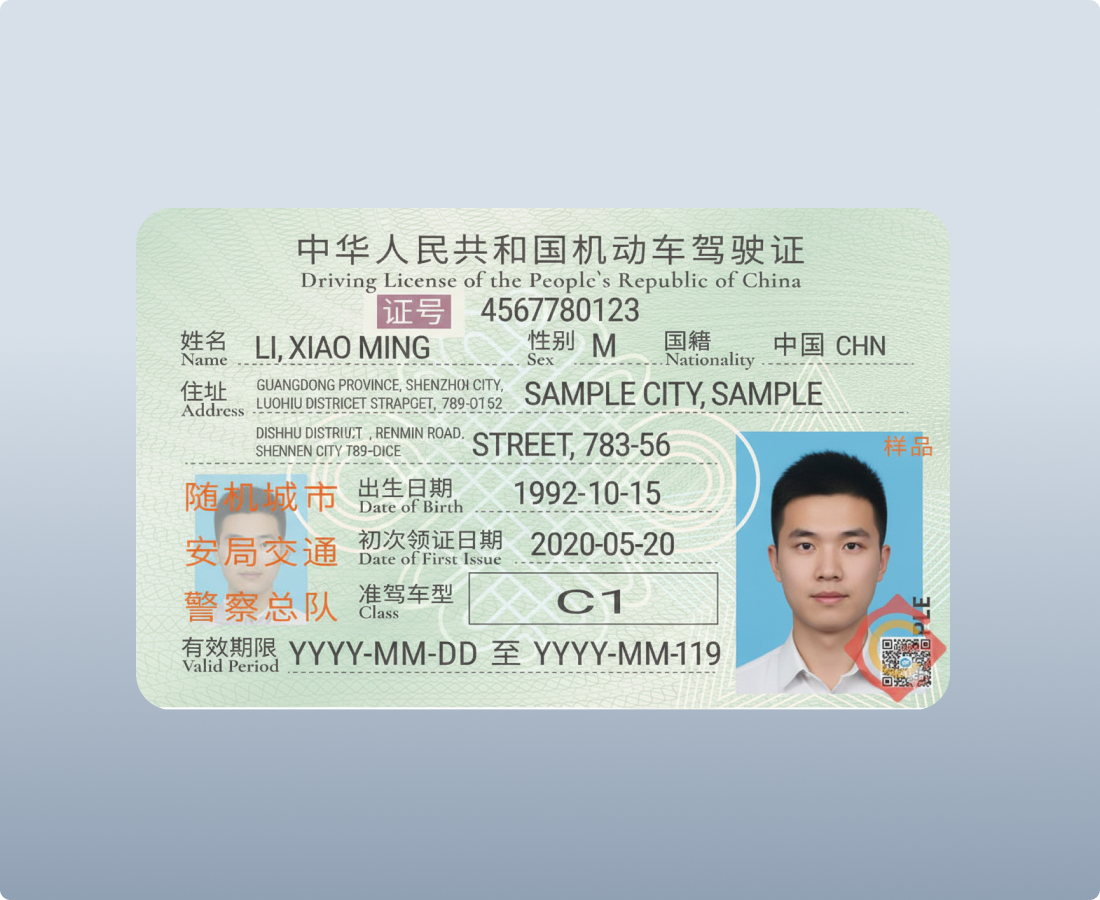
Chinese Driving Licence (机动车驾驶证)
Supplementary identification only; not sufficient alone for financial onboarding under AML rules.
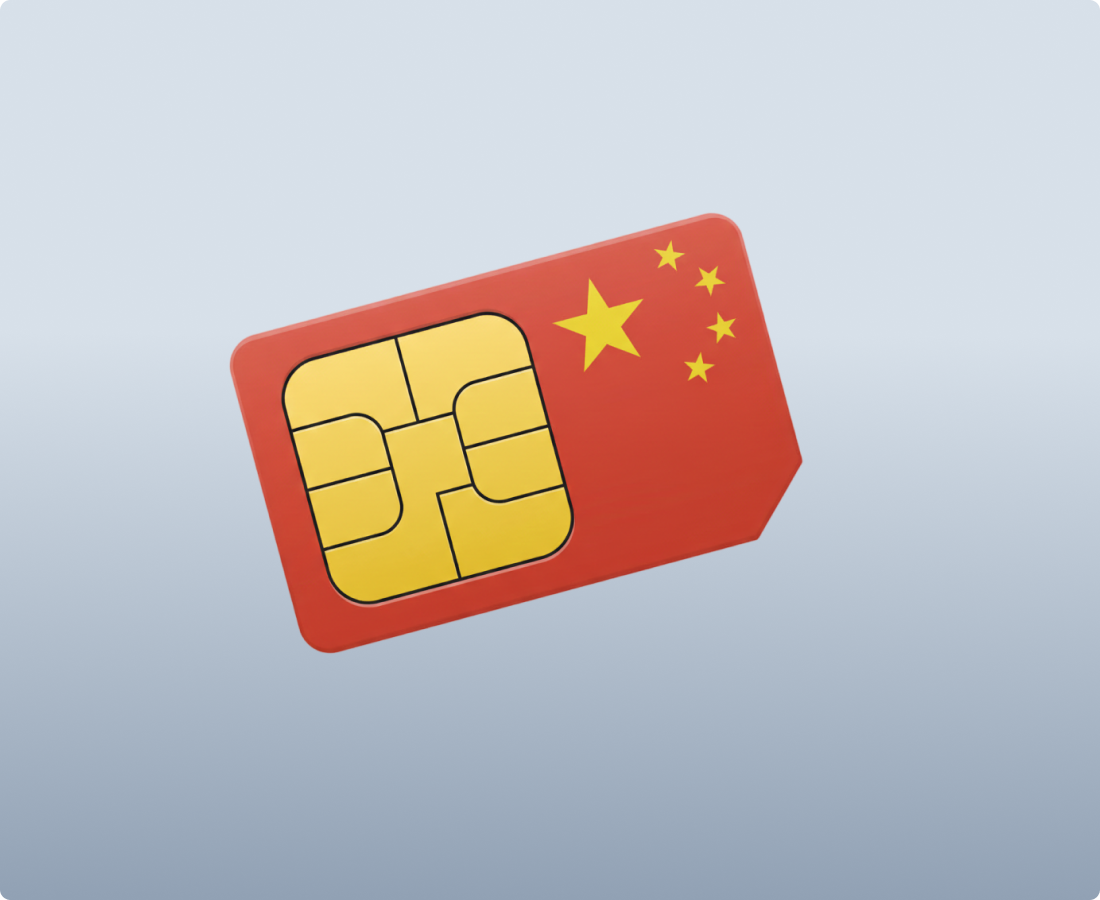
Real-Name Registered Mobile Number
Telecom SIM cards must be registered under real-name requirements pursuant to Ministry of Industry and Information Technology (MIIT) regulations; often used as secondary corroboration.
Business Entity Identity
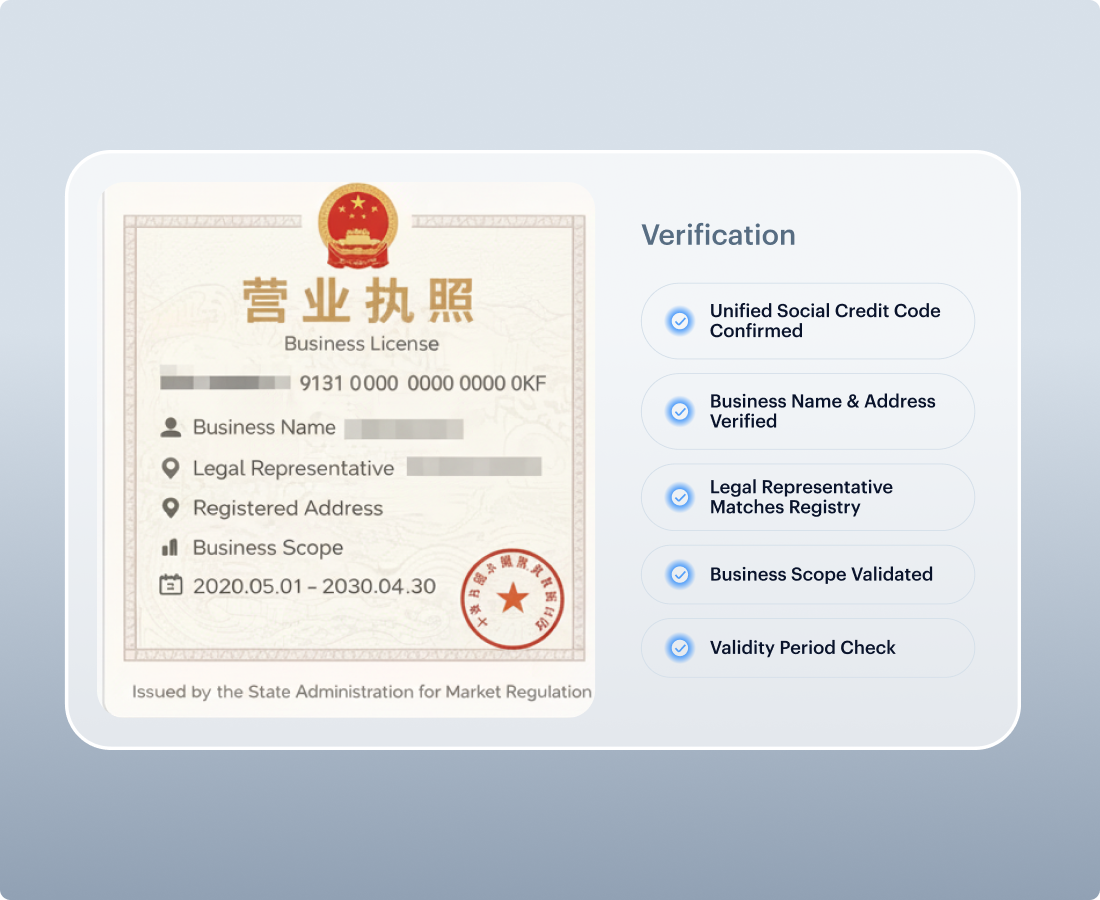
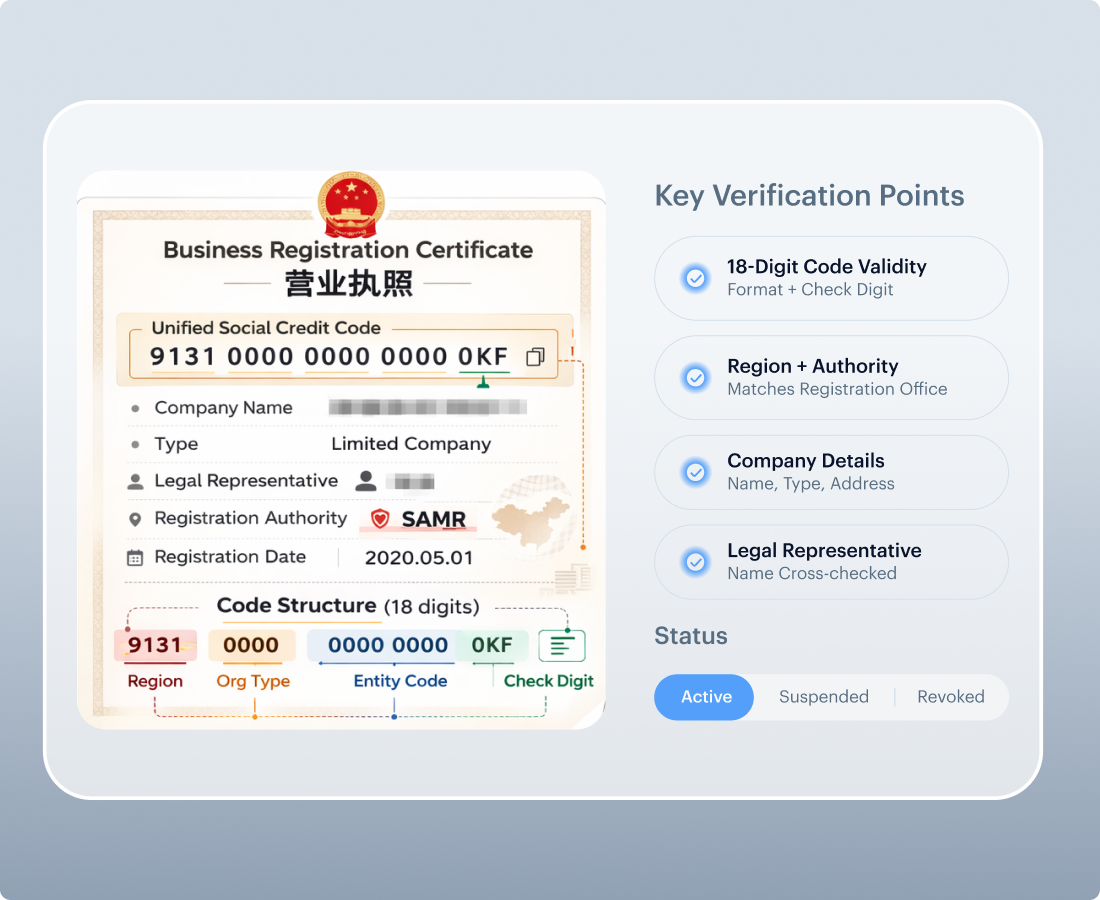
Business Licence (营业执照)
Issued by the State Administration for Market Regulation (SAMR); confirms unified social credit code, legal representative and business scope.
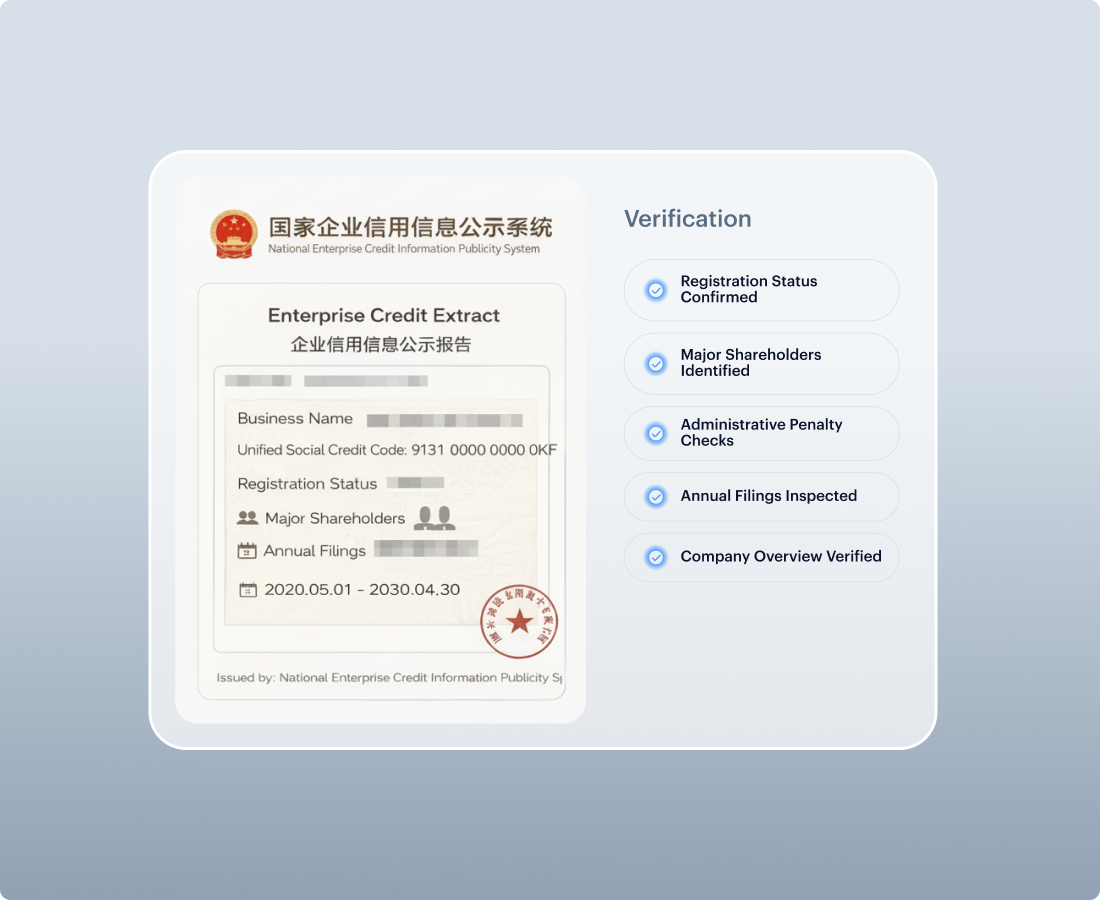
National Enterprise Credit Information Publicity System Extract
Confirms registration status, shareholders, administrative penalties and annual filings.
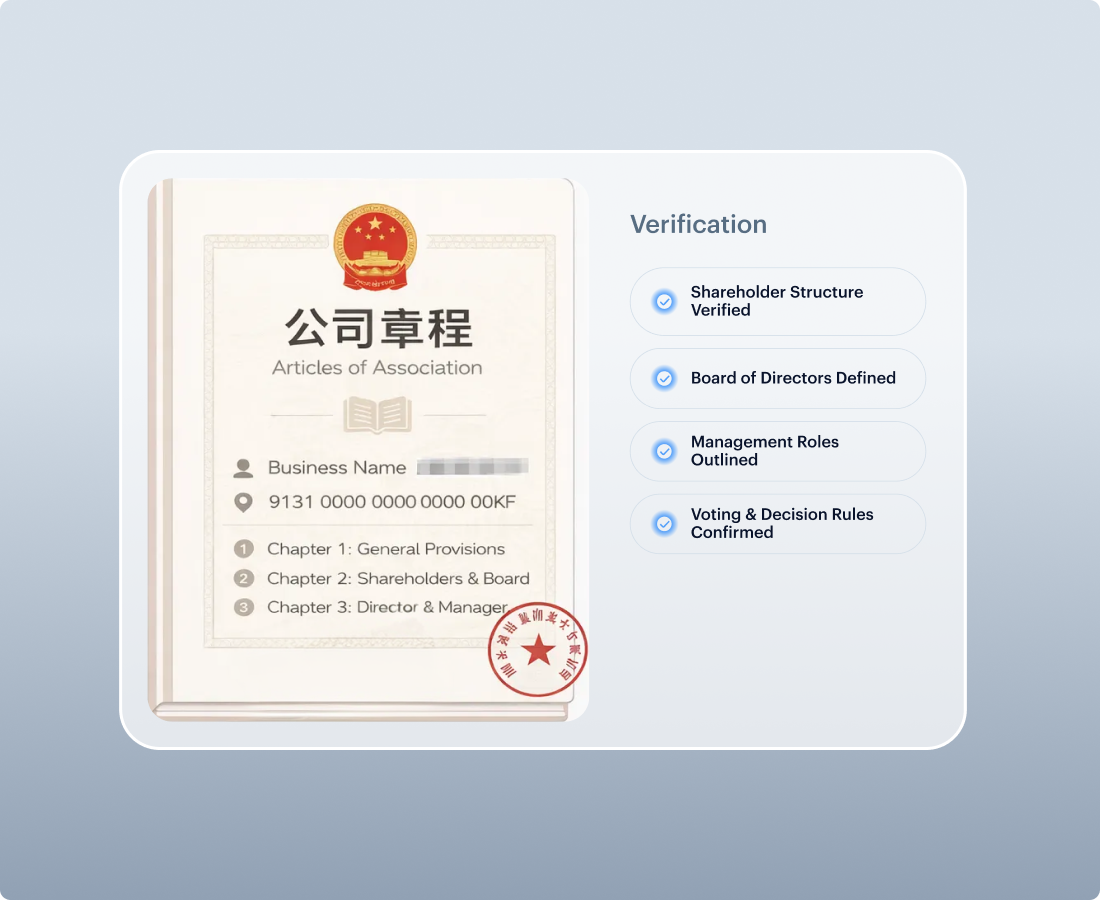
Articles of Association (公司章程)
Defines corporate governance structure and shareholding arrangements.
Tax Identity
Unified Social Credit Code (统一社会信用代码)
18-digit identifier combining tax, registration and organisational codes.
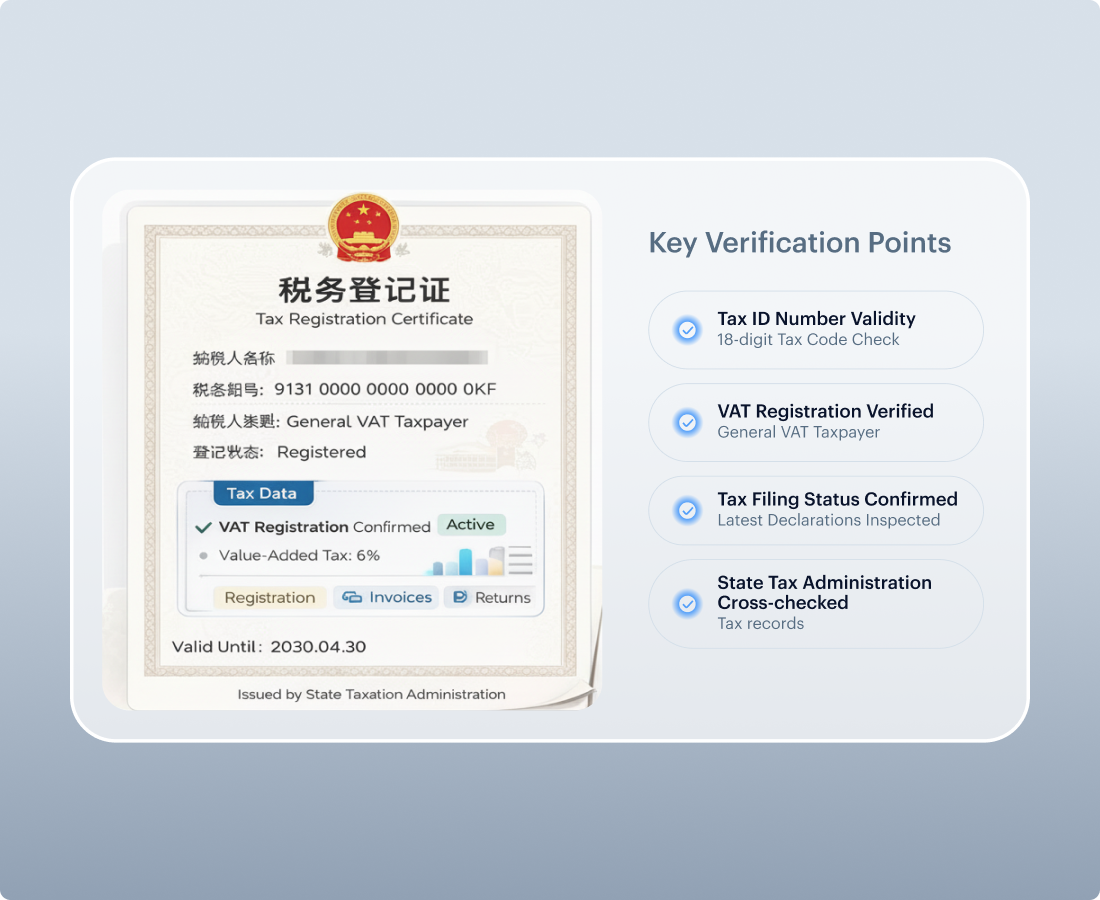
Tax Registration Status (State Taxation Administration)
Confirms tax compliance status and VAT registration where applicable.
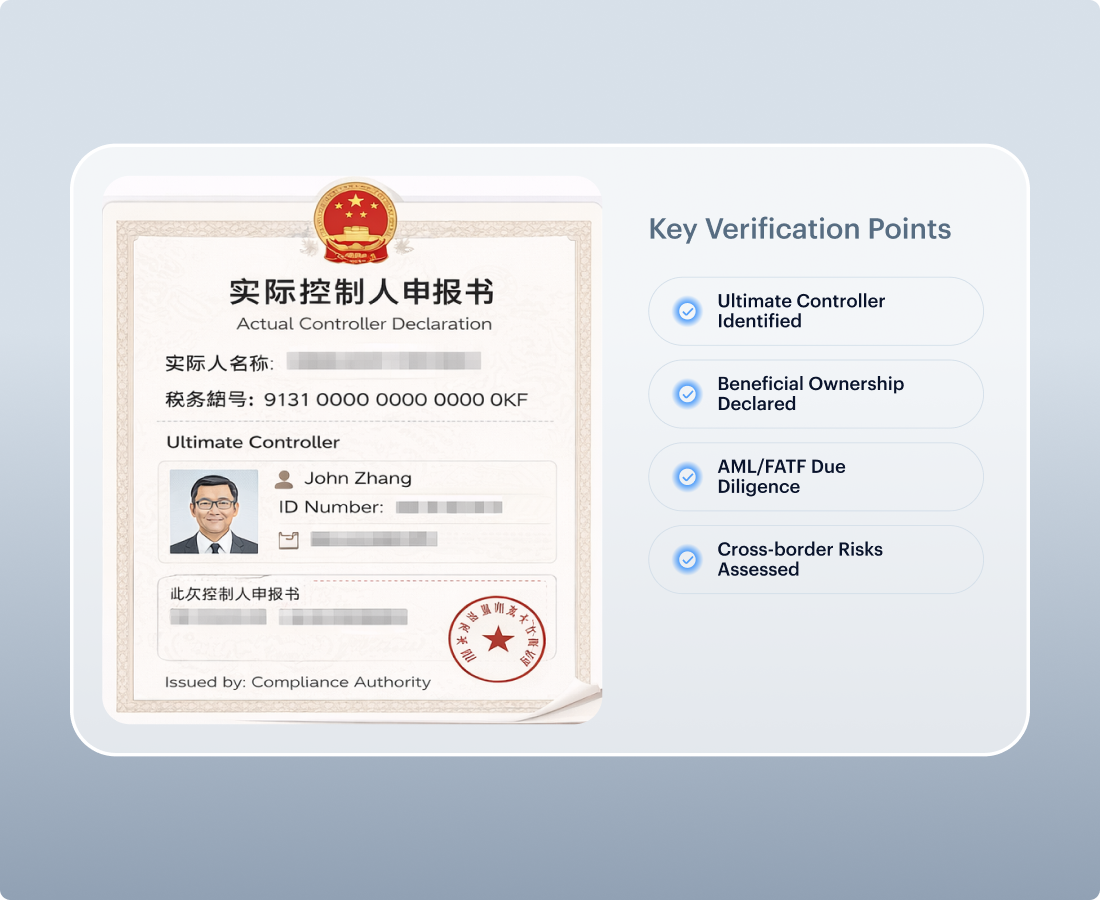
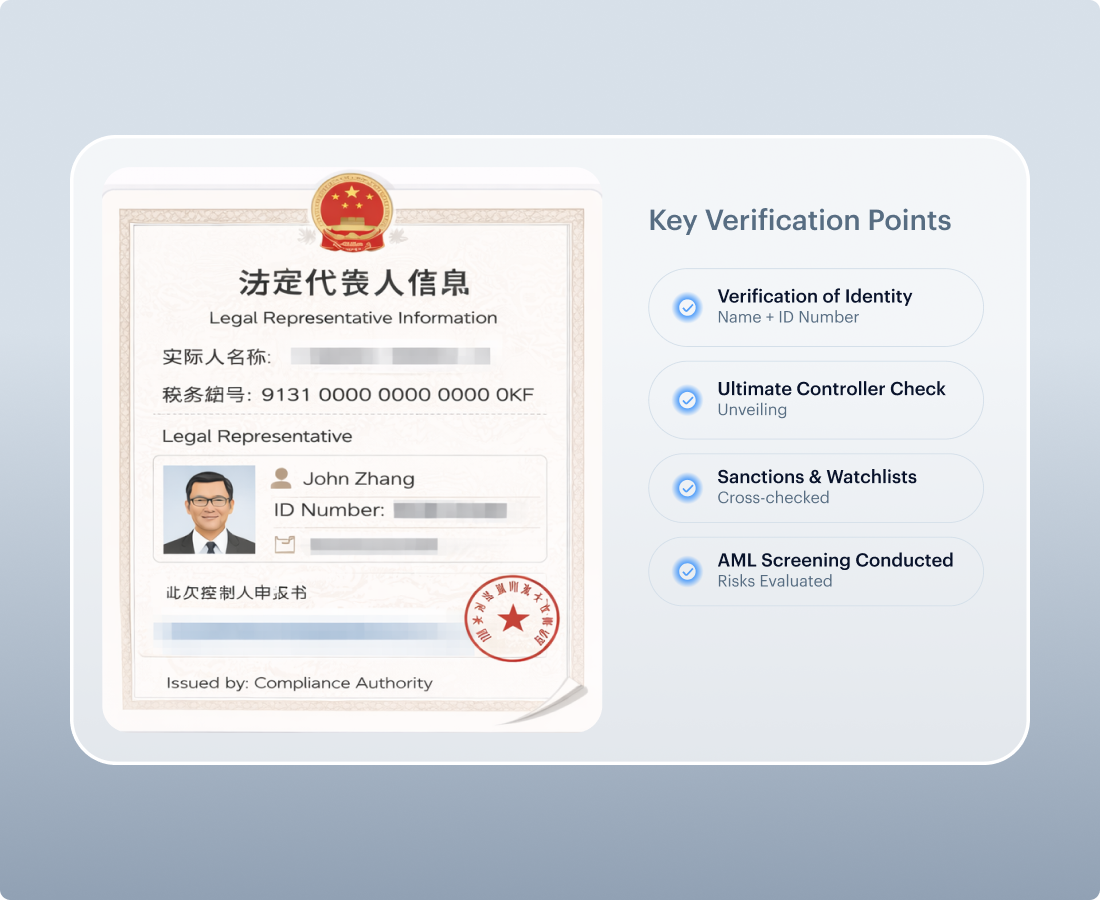
Ownership and Control (UBO)
Actual Controller Declaration (where applicable)
Identifies ultimate controlling party, particularly relevant for financial institutions and cross-border transactions.
Legal Representative Information (法定代表人)
Mandatory registered representative subject to AML screening.
Language Support
English Document Processing
Simplified Chinese character recognition for PRC ID cards and business licences.
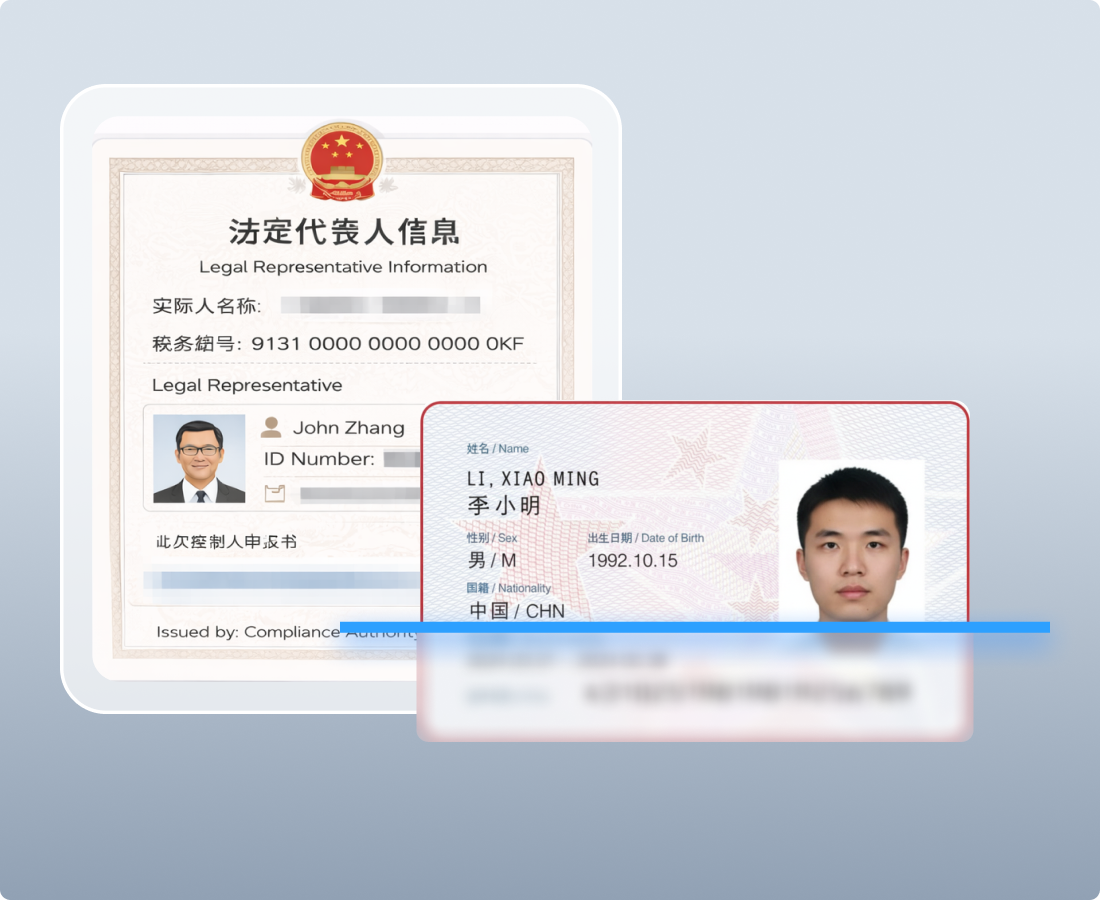
Name Matching (Supports Multiple Format Variants)
Name matching controls for pinyin transliteration inconsistencies (e.g., Zhang Wei vs. Wei Zhang).
Account Opening Data Consistency Check
Cross-record consistency checks between Chinese characters and Romanised names in passports and international records.
Governance and Control
Audit-Ready Decisions, Lower Operational Drag
Fewer Avoidable Re-submissions
Optimised capture for PRC ID card format and Simplified Chinese documentation.
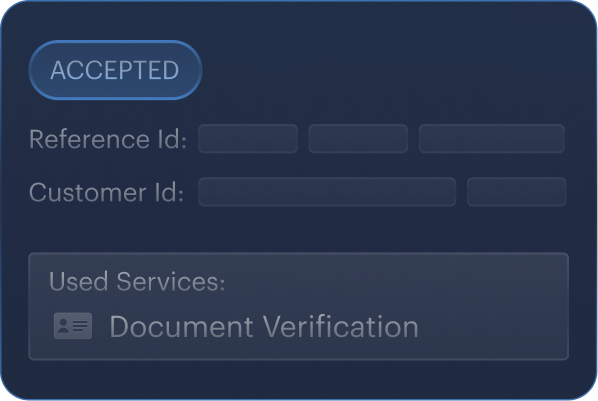
Clearer Audit Trails
Structured logs aligned with AML Law record retention obligations.
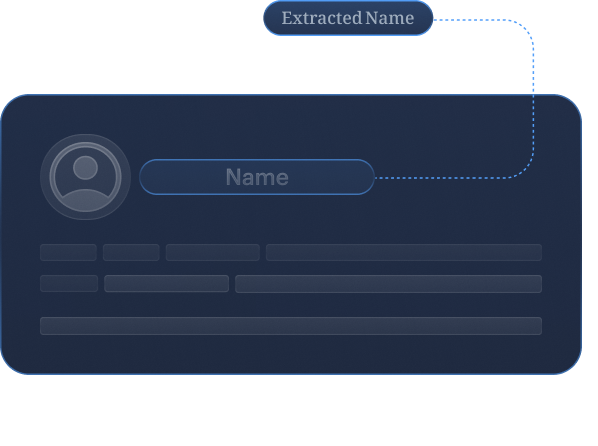
Better Name Matching Outcomes
Handles pinyin transliteration, name order reversal and character-to-Latin inconsistencies.
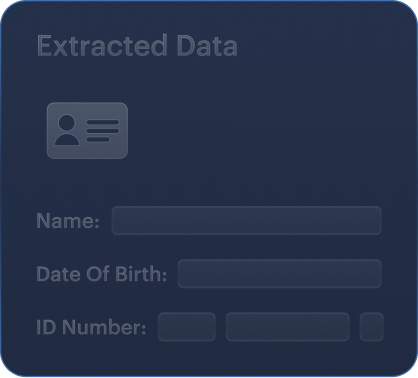
One Workflow, One Back Office
KYC, KYB and AML screening managed in one operational case view.

National ID-first flow design
Resident Identity Card-first onboarding reflects China’s real-name regulatory model.
China IDV/KYC Challenges

Real-Name Enforcement Risk
Mandatory real-name systems increase liability for identity misverification. Telecom and financial sectors require verified identities but weak verification exposes firms to administrative penalties.

Pinyin Mismatch Errors
Romanisation inconsistencies trigger sanctions false positives. Chinese names often reversed in international records. And multiple pinyin spellings reduce screening precision.

Complex Ownership Layers
Multi-tier shareholding structures delay KYB and obscure controllers. Beneficial ownership transparency remains evolving and cross-border structures increase review workload.

Data Localisation Controls
PIPL and Data Security Law restrict cross-border personal data transfers. Sensitive data exports require security assessment and improper handling increases regulatory exposure.
Shufti’s China Identity Verification (IDV) / Know Your Customer (KYC) Solutions
KYC Solutions

Face Verification
Biometric liveness detection reduces impersonation risk in China’s mobile-driven digital payments and fintech environment.
.
Age Verification
Selfie-based age estimation with document verification fallback where required for gaming and youth protection compliance under PRC regulations.
.
Address Verification
Shufti verifies Chinese address-bearing documents including utility invoices (State Grid, China Southern Power Grid), telecom bills (China Mobile, China Unicom, China Telecom) and bank statements (ICBC, Bank of China, CCB).
.
Document Verification
Verification of PRC Resident Identity Cards, passports and business licences — handling Simplified Chinese text and unified social credit codes.
.KYB Solutions

Business Verification
Validation of business licence number, unified social credit code, legal representative and shareholder records through official registry sources.
.
Enhanced Due Diligence (EDD)
Structured review of complex shareholding structures and cross-border ownership aligned to AML supervisory expectations.
.

Built to Fit China's Compliance Landscape

People’s Bank of China (PBOC)
Primary authority responsible for AML supervision under the AML Law. Shufti supports risk-based CDD, identity verification and five-year record retention requirements.

National Financial Regulatory Administration (NFRA)
Supervises banking and insurance institutions. Structured onboarding controls support compliance with financial sector AML rules.

China Securities Regulatory Commission (CSRC)
Regulates securities and capital markets. Beneficial ownership capture and ongoing AML screening support securities sector compliance.

State Administration for Market Regulation (SAMR)
Maintains business registration and licensing system. Moreover, KYB workflows validate business licence authenticity and registration status.

State Taxation Administration (STA)
Administers tax compliance. Verification of unified social credit code and tax status supports entity legitimacy checks.

Ministry of Industry and Information Technology (MIIT)
Oversees telecom real-name registration rules. Identity workflows align with mandatory real-name SIM registration requirements.

Cyberspace Administration of China (CAC)
Oversees data security and cross-border data transfer under the Data Security Law and Personal Information Protection Law (PIPL). Additionally, data handling workflows support minimisation and lawful processing expectations.
Deployment Options
Using cloud regions within China (such as Beijing and Shanghai) or localized on-premise deployment helps meet PIPL data localization principles and regulatory requirements for domestic storage of personal and financial data.
Regulatory Compliance Alignment
Complies with Customer Due Diligence (CDD), beneficial ownership identification, and suspicious transaction reporting obligations under the AML Law, while also adhering to PIPL processing principles of lawfulness, purpose limitation, and transparency.
Data Retention Controls
Under AML regulatory requirements, customer identity information and transaction records typically need to be retained for at least five years after the business relationship ends.
Encryption and Security Measures
Technical and organizational measures such as encryption, access controls, and secure processing mechanisms support PIPL data security handling requirements and align with China’s cybersecurity compliance framework.
Data Control and Privacy Protection in China
China AML Sources That Strengthen Decision

Central Commission for Discipline Inspection (CCDI)

China Securities Regulatory Commission (CSRC)

MOFCOM Unreliable Entity List (MOFCOM UEL)

Credit China

Ministry of Civil Affairs - Illegal Social Organizations List

National Narcotics Control Commission (NNCC)

Asian Infrastructure Investment Bank (AIIB)
Central Commission for Discipline Inspection (CCDI)
China Securities Regulatory Commission (CSRC)
MOFCOM Unreliable Entity List (MOFCOM UEL)
Credit China
Ministry of Civil Affairs - Illegal Social Organizations List
National Narcotics Control Commission (NNCC)
Asian Infrastructure Investment Bank (AIIB)
Central Commission for Discipline Inspection (CCDI)
China Securities Regulatory Commission (CSRC)
MOFCOM Unreliable Entity List (MOFCOM UEL)
Credit China
Ministry of Civil Affairs - Illegal Social Organizations List
National Narcotics Control Commission (NNCC)
Asian Infrastructure Investment Bank (AIIB)
Frequently Asked Questions
Is the Resident Identity Card mandatory for financial onboarding?
Yes. Financial institutions are required to conduct customer identity verification under the AML Law using valid identification documents.
How is beneficial ownership verified in China?
Through shareholder filings and corporate registration records maintained by SAMR, alongside internal ownership documentation.
Are sanctions lists required for screening?
Institutions are expected to screen against UN sanctions and other relevant restrictive measures.
How long must AML records be retained?
Financial institutions must retain customer identity and transaction records for at least five years.
Does China require data localisation?
Personal information processing is governed by PIPL and Data Security Law, with cross-border transfers subject to security assessment requirements.
What causes onboarding friction in China?
Pinyin inconsistencies, complex ownership structures and strict data handling controls.
Build China-Ready KYC, KYB, and AML Workflows with Shufti
Independent Audits · Global Certifications
Certified to Global Standards









Proven Workflows
Use Cases for Compliance-Led Growth in Australia
Accelerate Growth, Reduce Friction
Complete user onboarding in seconds, not days. Deploy layered address verification flows to filter synthetic fraud while improving completion rates for genuine users.




Onboard Global Traders in Real Time
Verify investors from 250+ countries and territories. Stay compliant with international financial regulations while preventing identity theft and high-risk chargebacks.



Build Trusted Security Into Every Transaction
Automate KYC and AML workflows to reduce manual onboarding costs. Strengthen proof-of-address checks while delivering a smooth, frictionless digital experience for modern customers.




Create a Fair and Secure Player Experience
Reduce bonus abuse and multi-accounting from the point of entry. Enforce geolocation rules and trigger additional verification when needed, without harming player experience.



Build a Trusted and Verified Workforce Network
Screen freelancers and drivers at scale. Verify residence information and reduce onboarding friction while maintaining trust across users.



Scale Your Digital Asset Platform with Confidence
Balance anonymity and compliance. Instantly verify user jurisdictions to meet Travel Rule requirements and prevent abuse without disrupting legitimate transaction volume.




Reduce Fraud Risk Without Slowing Growth
Shufti protects marketplace integrity on digital platforms by verifying both buyers and sellers, while supporting age-based access flows when required. It also preserves key evidence for investigations, dispute handling, and risk-based compliance enforcement.




Accelerate Growth, Reduce Friction
Complete user onboarding in seconds, not days. Deploy layered address verification flows to filter synthetic fraud while improving completion rates for genuine users.
Onboard Global Traders in Real Time
Verify investors from 250+ countries and territories. Stay compliant with international financial regulations while preventing identity theft and high-risk chargebacks.
Build Trusted Security Into Every Transaction
Automate KYC and AML workflows to reduce manual onboarding costs. Strengthen proof-of-address checks while delivering a smooth, frictionless digital experience for modern customers.
Create a Fair and Secure Player Experience
Reduce bonus abuse and multi-accounting from the point of entry. Enforce geolocation rules and trigger additional verification when needed, without harming player experience.
Build a Trusted and Verified Workforce Network
Screen freelancers and drivers at scale. Verify residence information and reduce onboarding friction while maintaining trust across users.
Scale Your Digital Asset Platform with Confidence
Balance anonymity and compliance. Instantly verify user jurisdictions to meet Travel Rule requirements and prevent abuse without disrupting legitimate transaction volume.
Reduce Fraud Risk Without Slowing Growth
Shufti protects marketplace integrity on digital platforms by verifying both buyers and sellers, while supporting age-based access flows when required. It also preserves key evidence for investigations, dispute handling, and risk-based compliance enforcement.
Accelerate Growth, Reduce Friction
Complete user onboarding in seconds, not days. Deploy layered address verification flows to filter synthetic fraud while improving completion rates for genuine users.
Onboard Global Traders in Real Time
Verify investors from 250+ countries and territories. Stay compliant with international financial regulations while preventing identity theft and high-risk chargebacks.
Build Trusted Security Into Every Transaction
Automate KYC and AML workflows to reduce manual onboarding costs. Strengthen proof-of-address checks while delivering a smooth, frictionless digital experience for modern customers.
Create a Fair and Secure Player Experience
Reduce bonus abuse and multi-accounting from the point of entry. Enforce geolocation rules and trigger additional verification when needed, without harming player experience.
Build a Trusted and Verified Workforce Network
Screen freelancers and drivers at scale. Verify residence information and reduce onboarding friction while maintaining trust across users.
Scale Your Digital Asset Platform with Confidence
Balance anonymity and compliance. Instantly verify user jurisdictions to meet Travel Rule requirements and prevent abuse without disrupting legitimate transaction volume.
Reduce Fraud Risk Without Slowing Growth
Shufti protects marketplace integrity on digital platforms by verifying both buyers and sellers, while supporting age-based access flows when required. It also preserves key evidence for investigations, dispute handling, and risk-based compliance enforcement.
Let’s Tailor your journey
Just a few quick questions to guide your Shufti experience.

Shufti
Market Positioning and Commercial Assessment

Industry stands at 1.7rating

Best ID Verification Innovator

TOP 10 KYC Solution Provider

Best Client Onboarding Solution

Samer Al Tamimi@CEO of Safwa Bank
We take our client's privacy very seriously and always look for new innovative solutions to ensure a safe banking experience. Working with Shufti feels like a breath of fresh air, as their 100% in-house tech keeps our customer's data free from vulnerabilities and fully safe and protected.




PROVEN PLAYBOOKS
Explore Practical KYC & AML Resources
16 August, 2025
5 minutes read
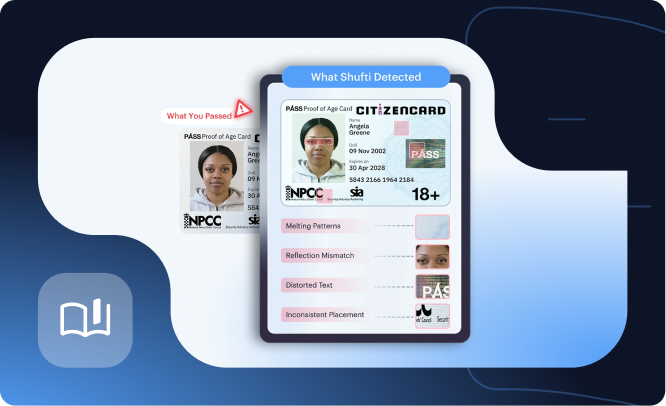
How Much of What You’ve Verified Is Actually Real?
Shufti’s Deepfake Blindspot Audit now runs fully inside your AWS environment, auditing historic KYC for manipulation signals without moving sensitive data off-prem.
whitepapers