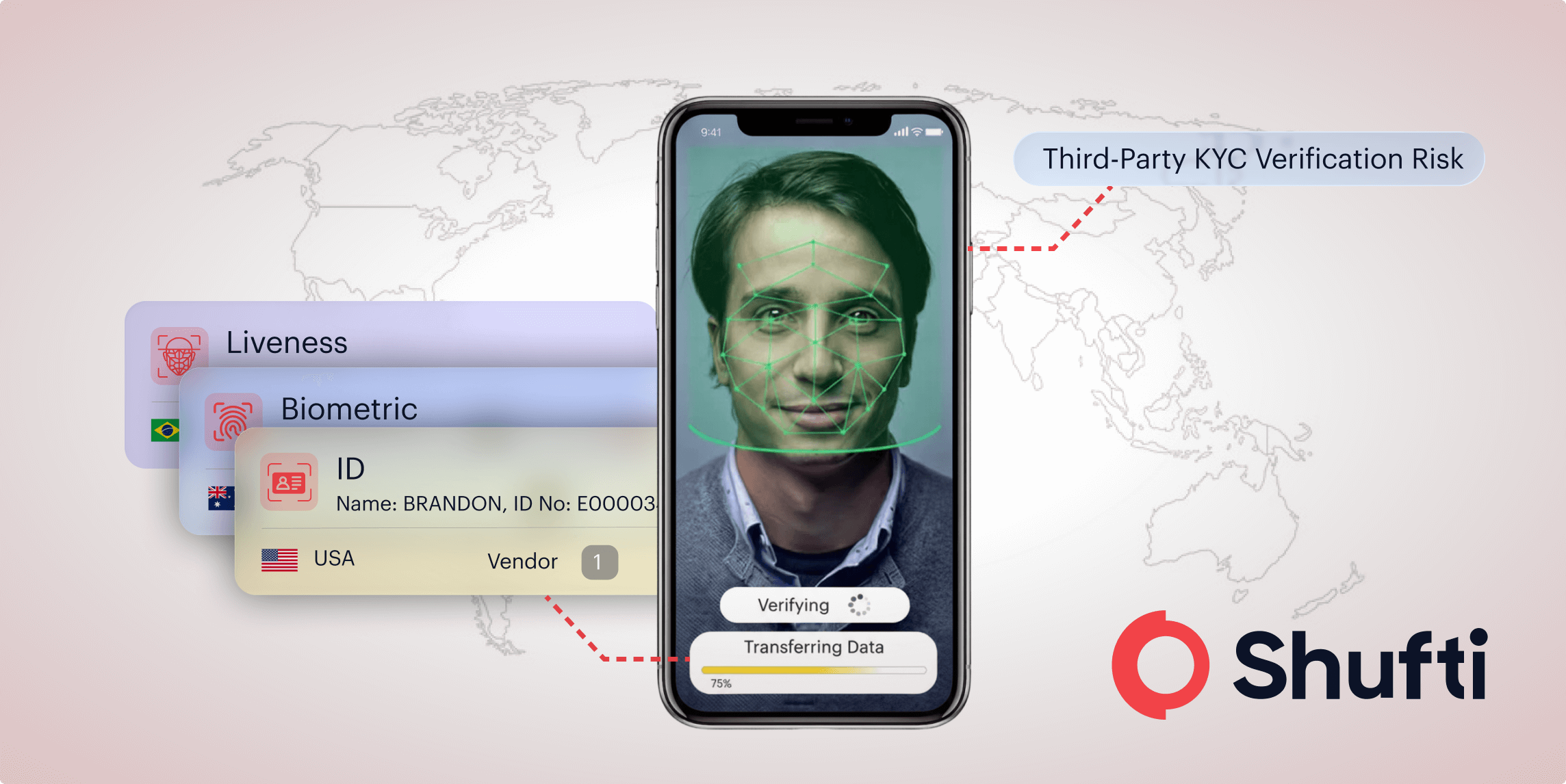
 Runs On Your Cloud
 No Data Sharing
 No Contract Required
 Explore Now






 Face Verification
 Address Verification
 Document Verification
 Age Verification
 VideoIdent
 Fast ID
 eIDV
eIDV
 NFC Verification
 Consent Verification
 Business Verification
 Due Diligence
 Investor Verification
 E-Signature
 Behavioural Biometrics
 Device Fingerprinting
 MFA
MFA
 AML Screening
 Business AML Screening
 User Risk Assessment
 Transaction Screening
 Adverse Media Screening

 Identity Verification
 KYC
KYC
 KYB
KYB
 KYI
KYI
 Bonus Abuse
 Fraud Prevention
 Deepfakes
 Banking
 Crypto
 Fintech
 Forex
Forex
 Gaming
 Gig Economy
 Marketplace
 Social Networks
 Product Managers
 Compliance Officers
 Fraud Analyst
 Global Trust Platform
 Journey Builder
 Vendor Comparison

 Content library
 Blogs
Blogs
 News
News
 Reports
 Insights
 Knowledgebase
 ROI calculator
 Blind Spot Audit
 Deepfake Detection
 Liveness Detection
 Document Originality
 Document Deepfake
 Events & Webinar
 Podcast Studio
 Spotlight Studio
 API Documentation
 Mobile SDKs
 Service Status
 Help Center
 Contact Us
 Technical Support
 Compliance
 Supported Document
 About
About
 Career
 Press Release
 Certifications
 Partnership
 Awards
How KYC AI is Transforming Digital Identity Verification and Fraud Prevention
- 01 The Growing Trend of AI-Backed KYC & Why is it Necessary?
- 02 What is KYC AI?
- 03 How KYC AI Transforms Digital Identity Verification?
- 04 Core AI KYC Capabilities Enabling Smarter Compliance
- 05 AI-Driven Know Your Customer Risk Intelligence Systems
- 06 Generative AI KYC Threats and Advanced Defences
- 07 KYC AI Automation for Scalable Global Onboarding
- 08 Industry-Specific KYC AI Solutions and Applications
- 09 Implementing a KYC AI Solution with Measurable ROI
- 10 Stay Always One Step Ahead of Fraud with Shufti
Financial institutions handle thousands of onboarding requests every day, but their fraud teams face attackers who evolve faster than traditional controls can keep up.
Deepfakes, along with synthetic identities and documents created by using advanced Artificial Intelligence, are becoming widespread with a level of precision that easily evades human eyes.
This intensification reveals a systematic flaw: the traditional KYC cannot support the volume or complexity of current identity attacks, relying on discontinuous workflows and human-based audits. The consequences are substantial.
The Growing Trend of AI-Backed KYC & Why is it Necessary?
According to recent FTC data, reported fraud losses in the United States reached $12.5 billion in 2024, a 25% increase from the previous year.
Industry-relevant research reveals that only 0.1% of the participants who were asked to find the deepfakes have correctly identified all deepfakes and real stimuli (e.g., images and videos). This demonstrates that it is nearly impossible for humans to detect deepfakes reliably without specialized technology. Therefore, humans require specialized technology that is backed by AI, which can detect deepfakes faster and more accurately.
Deepfake threats have exploded, rising from an estimated 500K files in 2023 to an estimated 8 million in 2025. Fraud attempts surged 3,000%, with North America seeing 1,740% growth. Voice cloning leads as a cheap, fast, convincing attack. Human detection is only 24.5% effective, making AI tools and procedural safeguards essential against large-scale fraud and identity theft.
What is KYC AI?
KYC AI refers to the use of artificial intelligence to automate and enhance Know Your Customer processes by analysing identities, documents, and risks with speed and precision. AI-driven KYC is beginning to reverse this trend. Rapid onboarding, enhanced document analysis, as well as automated risk scoring, and a global decision-making process have transformed the efficiency of operations and increased customer conversions. These outcomes indicate a measurable shift in how KYC operations perform at scale.
How KYC AI Transforms Digital Identity Verification?
Conventional KYC models are not designed to support the velocity, scale, or complexity required in digital onboarding. With increasing volumes of customers and more sophisticated fraud networks, the manual review departments inevitably end up operating reactively. This results in longer onboarding times, uneven decision quality, and a higher likelihood of missed fraud.
KYC AI brings a different dynamic to the operations. AI-driven document analysis, biometric verification, and real-time data validation help to minimize friction and cut identity checks from minutes to seconds. Convenience is not the only factor driving this shift. The rising fraud losses, greater AML scrutiny, and the costs associated with compliance failures have made automation an advantage and a strategic necessity, not an optional add-on.
The gap is most evident in high-volume onboarding, where verification becomes faster and more accurate, risk monitoring stays continuous, and the overall consistency far exceeds what manual teams can sustain.
Core AI KYC Capabilities Enabling Smarter Compliance
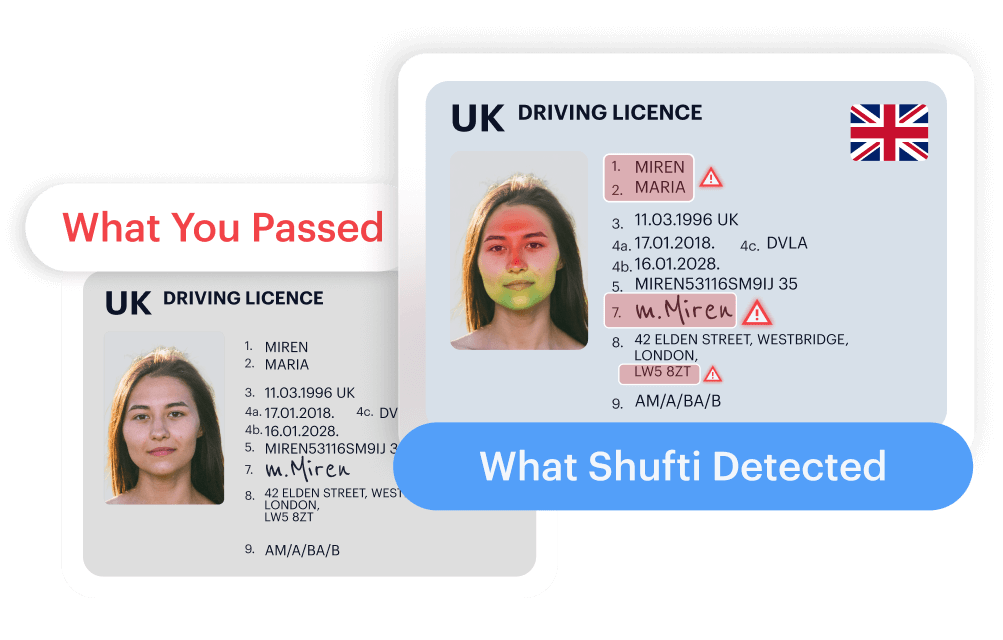
The modern AI-powered KYC systems work based on a collection of capabilities that are designed to detect risk much more accurately than manual review can provide. At the document level, advanced OCR and computer vision analyse fonts, microprint, holograms, MRZ data, and material textures to detect subtle inconsistencies that typically escape human inspection. This is further supported by biometric matching and effective liveness verification, which are used to verify that a person is present and not a spoofed or pre-recorded identity.
In addition, behavioral cues (such as typing cadence, swipes, navigation patterns), and device intelligence (such as OS, hardware, IP, and geolocation) provide risk visibility in real-time. Combined, these capabilities enhance KYC AI AML controls, enabling organisations to detect fraud indicators sooner, minimise false positives, and continue working in a more heightened regulatory environment.
AI-Driven Know Your Customer Risk Intelligence Systems
AI-powered KYC risk intelligence goes far beyond traditional identity verification to deliver a more dynamic and contextual analysis that constantly reassesses emerging threats. At the center of this approach, AI-driven risk scoring combines real-time data with transaction history, behavioural patterns, and device intelligence to generate a dynamic risk score that continuously updates as new events occur.
Incorporation of AML watchlists and negative media surveillance allows organisations to meet regulatory requirements and, at the same time, identify high-risk activity that would otherwise remain unidentified. Network analysis also improves detection, which helps reveal mule accounts, fraudulent connections, and organized schemes among several entities.
Compared to simple verification, which checks identity at a single point in time, risk intelligence powered by AI is dynamic and constantly changes the risk profile, as new data is processed. This active, analytical strategy enables organisations to intervene, reduce false positives, and maintain a strong compliance posture in order to lower the operational and reputational exposure.
Generative AI KYC Threats and Advanced Defences
Generative AI has introduced a new frontier in identity fraud, enabling the creation of synthetic identities, hyper-realistic document forgeries, and deepfake facial or voice impersonations. These advanced attacks can easily avoid the old methods of KYC, taking advantage of the weaknesses of manual checks and simple authentication systems.
More defensive layers can now be applied to counter all these threats by advanced KYC AI systems:
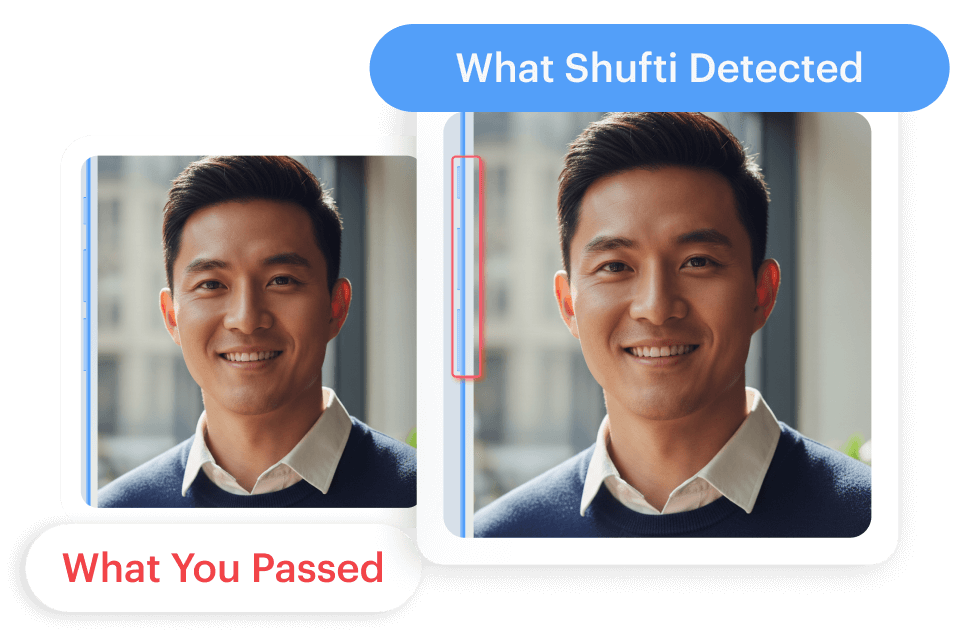
- The deepfake detection algorithms identify small anomalies in micro-expressions of the face and in video artefacts.
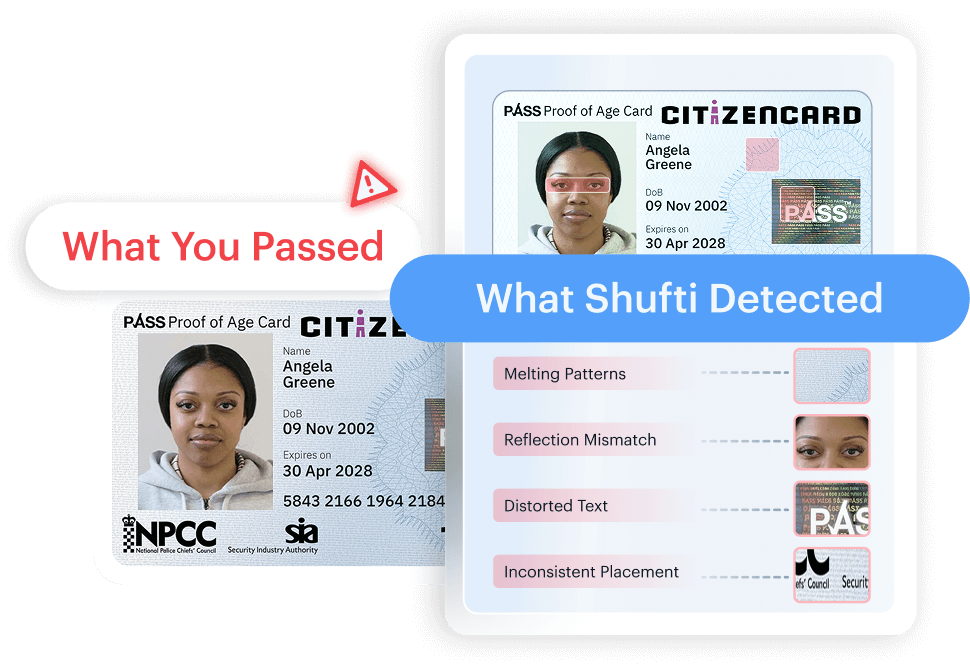
- Hologram and texture analysis detect tampered or morphed documents.
- The challenge-response liveness verification is used to verify real-time user presence in the authentication.
For example, a financial institution using an AI-based KYC system identified a fake ID generated with generative AI. The system detected anomalies in document texture and facial liveness to stop the creation of fraudulent accounts. These abilities reveal that, in addition to the increasing intricacy of threats, AI-based defences are now precision-based and reliable.
KYC AI Automation for Scalable Global Onboarding
KYC AI automation helps organisations to handle massive volumes of onboarding with accuracy and efficiency. The system simplifies the process of verification by organizing the end-to-end KYC process, whilst ensuring compliance and operational controls.
Decisioning is an integration of rule-based logic and machine-learning knowledge, which enables the automatic approval of cases with low risk and forwards complex or ambiguous cases to human reviewers. The concept of queue prioritisation and human-in-the-loop interventions also maximizes the throughput without losing accuracy.
The effects are practical, including reduced mistakes, lower operational costs, and a shorter onboarding process. In the case of multinational organisations, KYC AI compliance facilitates cross-border onboarding while accommodating diverse languages and distinct regulatory frameworks.
Collectively, these features convert the manual, fragmented onboarding process into a scalable, reliable operation. Organisations can accelerate customer acquisition, reduce risk, and remain compliant without jeopardising operational integrity or user experience.
Industry-Specific KYC AI Solutions and Applications
KYC AI has proven to have quantifiable effects on a variety of high-risk sectors by offering bespoke solutions to address industry-specific issues:
- Fintech & Banking: AI-backed KYC automates AML compliance by detecting suspicious account activity and reducing fraud losses. For example, a mid-sized bank raised red flags on several synthetic identities within hours, preventing any possible financial exposure.
- Crypto & Web3: Real-time monitoring of transactions and scoring of risks allows the identification of high-risk wallets and suspicious activity within seconds, and protects the platform against illegal finance.
- Real Estate: AI for KYC verifies tenants and detects forged documents, helping agencies reduce tenancy fraud and minimise legal liability.
- Gig Economy Platforms: Verification remains efficient without compromising quality, ensuring gig economy contractors are authenticated and onboarded rapidly.
- Insurance & Healthcare: AI verifies identities of claims processing, telemedicine visits, and can eliminate fraud, but has to maintain regulatory compliance.
These applications demonstrate how KYC using AI can be adjusted to the requirements of different industries, in terms of operations and compliance.
Implementing a KYC AI Solution with Measurable ROI
A KYC AI implementation should be strategized to achieve operational and financial payoffs. Organisations are increasingly using API-based integration, and KYC AI online platforms can be incorporated into the existing system without disruption to the workflow. Deployment options, cloud, on-premise, or hybrid, are evaluated based on scalability, latency, and regulatory requirements.
Strong security controls form the basis of implementation, such as end-to-end encryption, a strict data retention policy, and extensive audit trails to ensure accountability and risk prevention. The main metrics used to measure the performance will be onboarding time reduction, fraud detection uplift, and verification accuracy rates.
Selecting a solution requires a rigorous vendor evaluation process based on the reliability of the system, the ability to adjust to the changing fraud trends, and the ability to provide a quantifiable ROI. The right KYC AI platform accelerates operations and also strengthens organisational resilience against identity fraud.
Stay Always One Step Ahead of Fraud with Shufti
Seasonal spikes and high transaction volumes can mask fraud attempts, from fake accounts to identity theft.
Shufti unites Know Your Customer, biometric verification, AML screening, and behavioral intelligence into a single solution that helps businesses spot suspicious activity early. It also onboards genuine customers quickly and reduces losses.
Request a demo today to experience how Shufti keeps your operations secure and your customers’ privacy protected.