








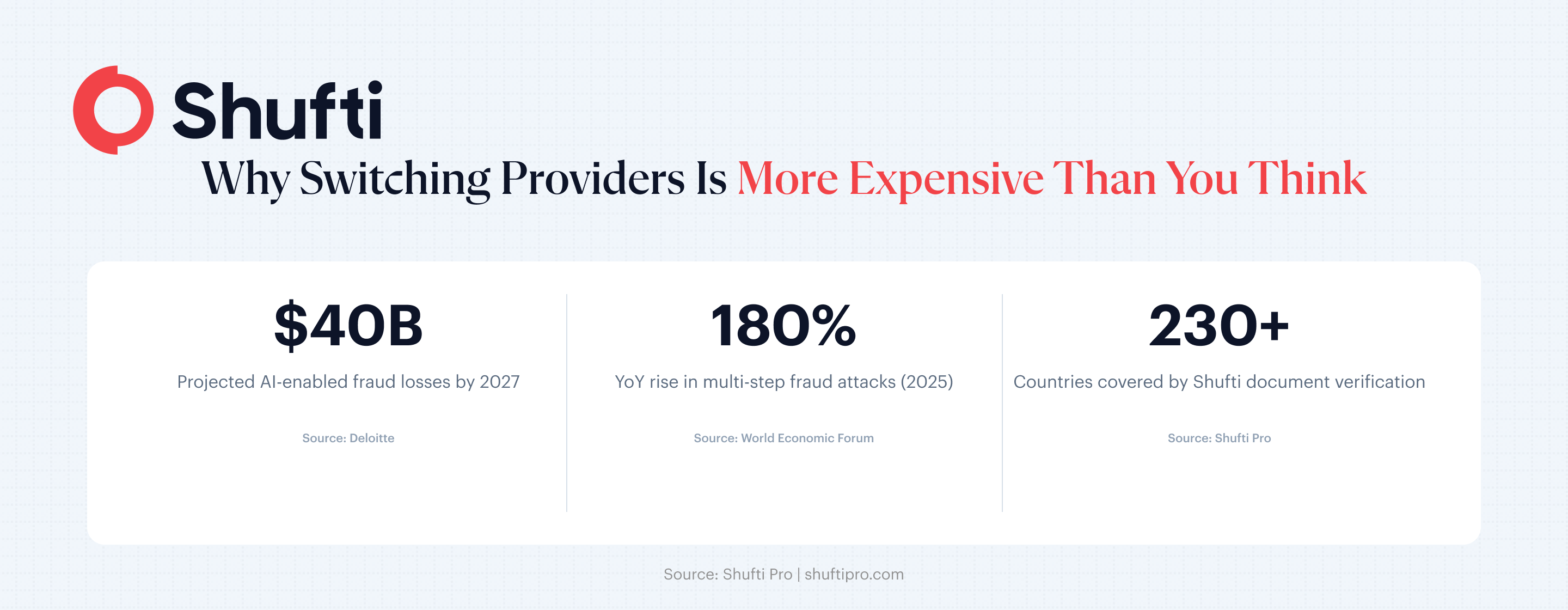
Generative AI could push fraud losses in the US alone to $40 billion by 2027, according to Deloitte’s Center for Financial Services. Multi-step fraud attacks rose 180% year-on-year in 2025, per the World Economic Forum. For compliance teams and product managers responsible for onboarding, the document verification provider you pick today will define how well you catch fraud, pass audits, and scale across markets for the next several years.
This is not a decision you make once and forget. This guide covers the eight evaluation criteria that matter most when comparing document verification services and the red flags that should send you looking elsewhere.
How to Correctly Evaluate a Document Verification Provider?
Most evaluation guides hand you a feature checklist. That works for comparing spreadsheet tools. It falls apart for document verification because the real costs of a bad choice show up 12 to 18 months in when you’re expanding into a new market and discover your provider can’t read Arabic-script IDs, or when a regulator asks for on-premises data processing and your vendor only offers cloud.
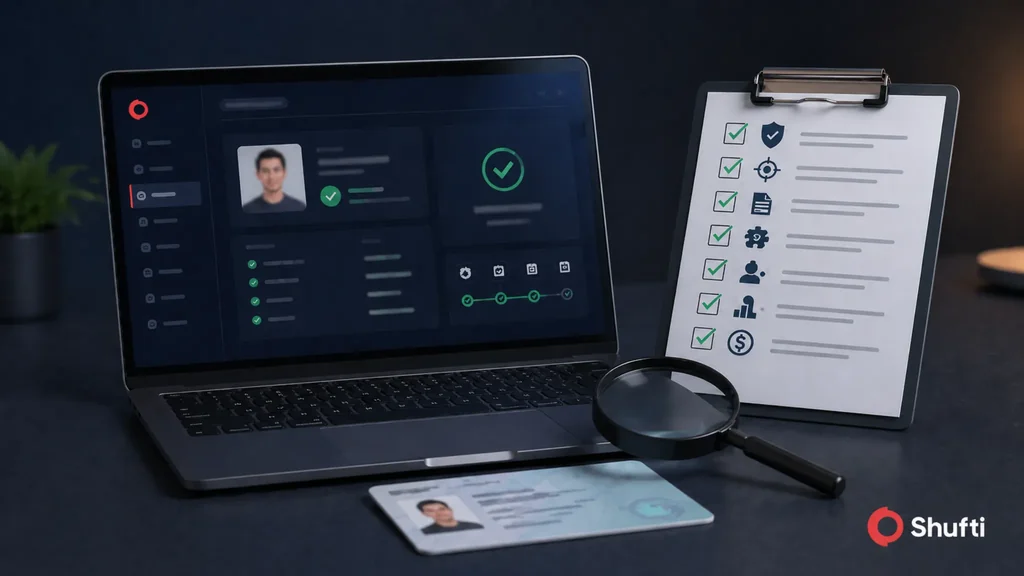
A proper evaluation framework for a document verification service provider needs to cover three layers. First, technical capability: can the system actually detect forged, expired, and tampered documents across the geographies you operate in? Second, operational fit: does the deployment model, API design, and SLA match your architecture and uptime requirements? Third, strategic alignment: does the provider’s roadmap, certification portfolio, and pricing model support where your business is headed, not just where it is today?
The eight criteria below cut across all three layers.
Why Provider Selection Is a Long-Term Strategic Decision
Switching document verification providers mid-stream is expensive in ways that don’t appear on a vendor’s pricing page. Your engineering team has already built onboarding flows around a specific API. Your compliance team has documented the provider in regulatory filings. Your operations team has trained support staff on the dashboard and exception-handling workflows.
The identity verification market is projected to grow from $14.34 billion in 2025 to $29.32 billion by 2030, according to MarketsandMarkets. That growth means your verification volumes will climb, you’ll enter new regions, and regulatory requirements will tighten. The provider you choose should be able to grow with you without requiring a rip-and-replace in two years.
Think of this like choosing a payment processor. You can switch, but the migration costs engineering hours, compliance re-documentation, user experience disruption make it a decision you want to get right the first time.
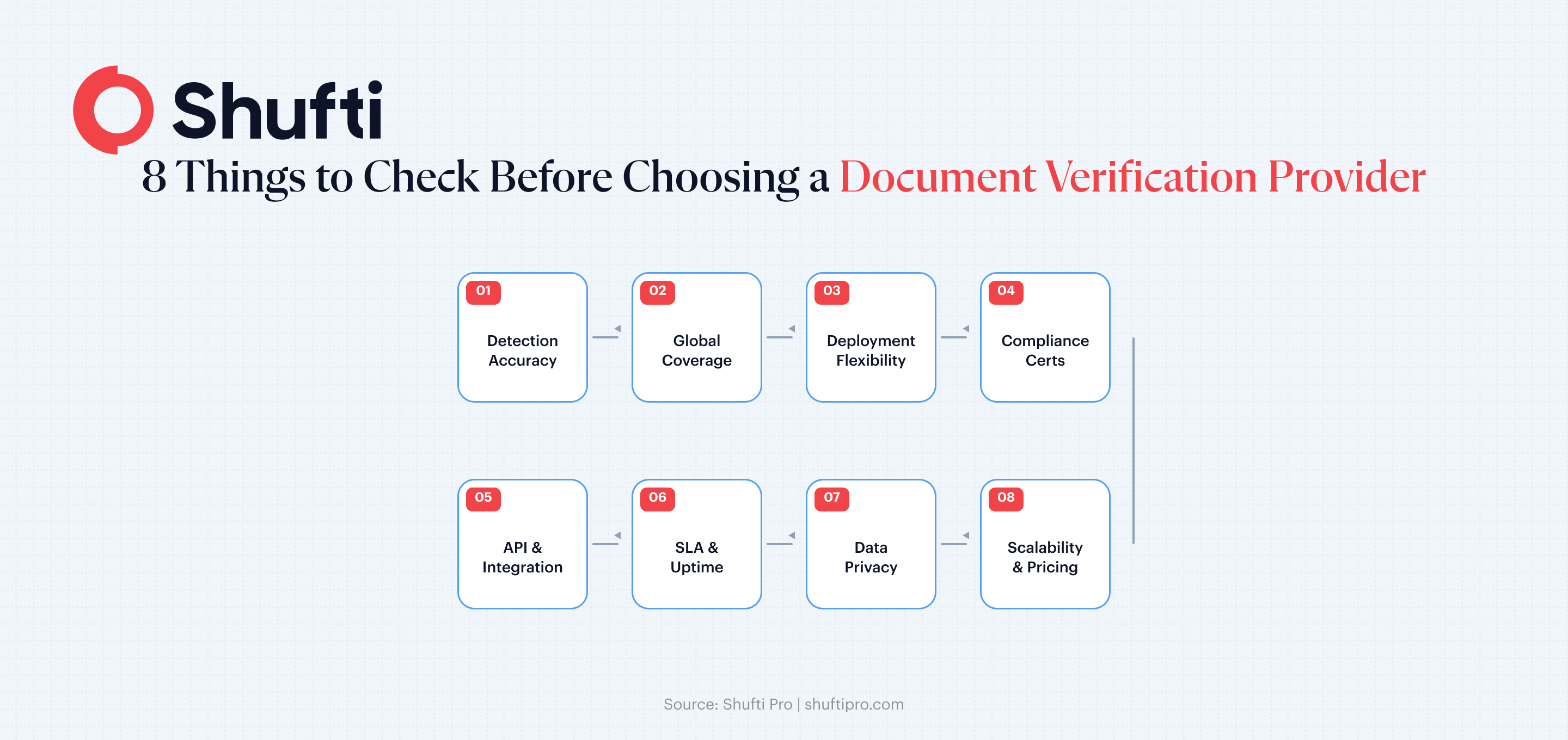
8 Things to Check Before Signing With a Document Verification Provider
1. Detection Accuracy and Fraud Prevention
A document verification tool is only as useful as its ability to distinguish genuine documents from fakes. Ask for the provider’s true detection rate, the percentage of confirmed fraud attempts the system catches and their false positive rate, which tells you how many legitimate users get incorrectly flagged and drop off during onboarding.
Look for providers that combine OCR data extraction with forensic-level checks: MRZ validation, micro-print analysis, hologram detection, and cross-referencing extracted data against the document’s visual elements. Providers that only run OCR without forensic layers miss sophisticated forgeries.
Shufti’s document verification engine delivers a 99.3% true detection rate for confirmed fraud attempts, with GPU-accelerated processing that completes full KYC checks in under 15 seconds. That accuracy comes from a 100% proprietary AI stack with no patchwork of third-party models.
2. Global Document and Country Coverage
If you operate (or plan to operate) across borders, coverage is non-negotiable. A document verification platform that handles 50 countries sounds reasonable until you realise you need to onboard users from Bangladesh, Nigeria, or Jordan and the system has never seen those ID formats.
Check three coverage dimensions: number of countries supported, number of document types within each country (national IDs, passports, driver’s licenses, residence permits), and OCR language support. A user uploading a document in Cyrillic, Arabic, or Mandarin needs the same extraction accuracy as one uploading a UK passport.
Shufti covers 230+ countries, supports 10,000+ document types, and processes nearly 100 OCR languages including Arabic, Mandarin, and Cyrillic scripts. That coverage means you don’t hit a wall when you expand into your next market.
3. Deployment Flexibility
This is where many buyers get locked in without realising it. Most document verification solutions are cloud-only. That works for many businesses, but regulated industries banking in Germany, healthcare in the US, government contracts often require on-premises data processing or hybrid models to meet data sovereignty and zero-trust requirements.
Ask whether the provider offers cloud, on-premises, and hybrid deployment through a single API. If you need on-prem today, that’s obvious. But if you think you might need it in two years when you win an enterprise banking contract, choosing a cloud-only provider now means you’ll be switching later.
Shufti offers all three deployment models cloud, on-premises (zero-trust), and hybrid through a single API integration. You choose where your data lives. That flexibility is rare among document verification service providers.
4. Compliance Certifications and Security Standards
Your document verification vendor processes some of the most sensitive personal data your business touches: government IDs, selfies, proof-of-address documents. The vendor’s security posture becomes your security posture.
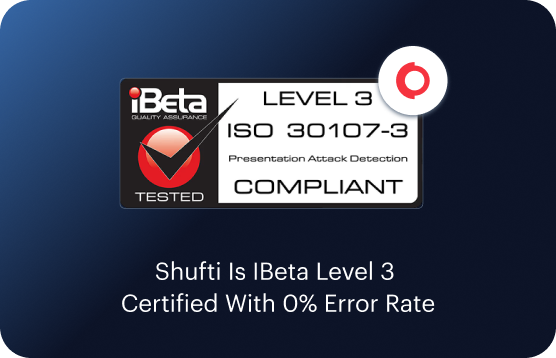
At minimum, require ISO 27001 certification (information security management), SOC 2 (service organisation controls), and PCI DSS compliance (if handling payment-adjacent data). Beyond certifications, checking for biometric testing standards iBeta Level 1 and Level 2 certification means the system’s liveness detection has been independently validated against presentation attacks.
Shufti holds ISO 27001:2013, SOC 2, PCI DSS, iBeta Level 1 & 2 certifications, along with GDPR compliance and KJM approval for age verification in Germany. These are not marketing claims, they are audited standards that your compliance team can reference in regulatory filings.
5. API Quality and Integration Depth
You’re going to live inside this provider’s API for years. That makes integration quality a first-tier evaluation criterion, not an afterthought.
Ask the vendor you’re evaluating these questions:
- Is there a RESTful API with complete documentation and code examples?
- Is there a sandbox environment for testing?
- Are there native SDKs for your platforms (iOS, Android, web)?
- How customisable are the verification flows?
- Can you configure which checks run, in what order, and with what thresholds?
Shufti’s Journey Builder lets you design verification workflows without writing code choosing which checks (document, face, AML, address) apply to each user segment and in what sequence. For teams that want deeper control, the full API and SDKs offer granular configuration. Check out the API documentation for specifics.
6. SLA, Uptime, and Response Time
Downtime in document verification means users can’t onboard. For a fintech company processing thousands of sign-ups daily, even 30 minutes of downtime translates to lost revenue and a support queue.
Ask for the provider’s committed SLA. A credible document verification provider should guarantee 99.9% uptime at minimum. Check whether the SLA includes financial penalties for breaches that signal whether the provider actually stands behind the number. Also verify average response time per verification. Anything above 30 seconds for an automated check will cause noticeable onboarding drop-off. For context, pass rates and accuracy rates directly affect drop-off and fraud risk.
7. Data Privacy and Residency
Where does the provider store your users’ documents? For how long? Can you control deletion policies? These questions aren’t hypothetical GDPR in Europe, CCPA in California, PDPA in Southeast Asia, and similar frameworks impose specific requirements on how biometric and identity data is handled.
Ask whether the provider offers configurable data retention policies, whether documents are encrypted at rest and in transit, and whether you can specify the geographic region for data storage. Providers that store documents indefinitely by default create a liability for your business.
Shufti offers configurable data retention and deletion policies, with encryption at rest and in transit. The on-premises deployment option means highly regulated businesses can keep all verification data within their own infrastructure and no data leaves their environment.
8. Scalability and Pricing Transparency
Verification volumes grow. If your pricing model penalises growth, you’ve built a problem into your unit economics.
Ask for clear, per-check pricing with volume tiers. Watch for hidden fees: charges for API calls that return errors, fees for accessing your own verification data, or premium rates for certain document types or countries. A document verification provider should give you a pricing model where costs decrease per check as volume increases, not one where costs stay flat or spike.
Also verify that the infrastructure can scale. Can the provider handle 10x your current volume during a marketing campaign or seasonal spike without degraded response times?
Suggested Read: Document Verification Services – The Secret Sauce to Keep Fraudsters Away
Red Flags That Disqualify a Document Verification Provider
Not every weakness is a deal-breaker. These are:
No independent accuracy testing. If a provider can’t share iBeta results, NIST evaluations, or third-party accuracy audits, you’re trusting their marketing, not verified performance.
Cloud-only with no roadmap for on-prem. Even if you don’t need on-premises today, a provider with zero flexibility signals architectural limitations that will constrain you later.
Vague data handling policies. If the provider can’t clearly explain where documents are stored, for how long, and who has access, walk away. Your regulators will ask you the same questions, and “our vendor handles it” is not an acceptable answer.
Opaque pricing with locked contracts. Long-term contracts with no exit clause, unclear per-check pricing, or fees buried in addendums suggest a vendor that profits from confusion, not performance.
Narrow document or country coverage with no expansion timeline. A provider covering 30 countries today with no visible investment in expanding coverage is a provider you’ll outgrow.
If you’re evaluating Shufti against other document verification solutions, request a demo and test with your actual documents across your target markets. That’s the fastest way to see whether the coverage and accuracy claims hold up.
Frequently Asked Questions
What SLA should a document verification provider offer?
A credible provider should commit to 99.9% uptime with financially-backed penalties for breaches. Response time for automated checks should stay below 15–30 seconds. Any SLA without penalty clauses is a marketing promise, not a commitment.
How important is ISO 27001 for a document verification vendor?
ISO 27001 is the baseline, not a differentiator. It confirms the vendor has a structured information security management system that’s been independently audited. Without it, you’re trusting the vendor’s internal security practices without third-party validation — a risk most compliance teams shouldn’t accept.
Can I switch document verification providers without disrupting my integration?
You can, but it’s costly. Plan for 4–8 weeks of engineering work to re-integrate APIs, update onboarding flows, re-test edge cases, and update compliance documentation. Providers with RESTful APIs and strong documentation make migration easier. The bigger disruption is often operational retraining staff and re-baselining fraud rules.
Do document verification providers store my users’ documents?
It depends on the provider and your configuration. Some providers store documents by default for audit trails; others offer configurable retention and deletion policies. Ask explicitly: where is data stored, for how long, and can you trigger deletion on demand? GDPR and similar frameworks may require you to demonstrate control over this data.
Which document verification provider covers the most countries?
Coverage claims vary, but look for providers supporting 200+ countries with 5,000+ document types. Shufti covers 230+ countries with 10,000+ document types and nearly 100 OCR languages. Verify coverage for your specific markets: a provider might claim 200 countries but only support passports, missing national IDs and driver’s licenses that your users actually carry.