AMLR Solutions
  AMLR Consultation
 EUDI Wallet
 Onboarding
 Ongoing Monitoring
 FRAML
FRAML KYC
KYC KYB
KYB KYI
KYI Age Assurance
 Workforce IAM
 Candidate Verification
 Account Takeover
 Bonus/ Promotion Abuse
 Chargeback Fraud
 Deepfake
 Document Fraud
 Fraud Networks
 Impersonation Fraud
 Money Mule Activity
 Multi-Accounting
 Party Fraud
 Regulatory & Compliance Risks
 Synthetic Identity Fraud
 Adult Content
 Banking
 Crypto
 Fintech
 Forex
Forex Compliance
 Fraud prevention
 Trust & safety
 Global expansion
 Compliance Officers
 Developers
 Fraud Analysts
 Product Managers
 Journey Builder
  Global Trust Platform
 Customer Profiles
 Vendor Comparison
 IDV Case Management
 AML Case Management
 Regulatory Reporting
 Agentic Rule Builder
  AI Compliance Co-Pilot
  Fraud Analytics
 Fraud Hub
  OCR
OCR Shufti AI
 Bank Account Verification
  Biometric Duplication
 Database Checks
 Document Intelligence
 Government ID
 Mobile Driver's License
 NFC
NFC Selfie Liveness
 Brand Personalisation
 Deployment Options
 Identity Methods
 IDV Modes
 Multi-tenancy
 On-Premise IDV
 Secure Capture
 Shufti MCP
















In an increasingly digital and global economy, verifying the identities of users remotely is no longer a convenience or a competitive advantage — it’s a requirement for security, compliance, and trust. Now more than ever, digital fraud is a constant threat, so organizations—from government agencies and healthcare providers to financial institutions and e-commerce platforms—must ensure that they are dealing with real individuals in real time.
Document verification plays a critical role in this process. By analyzing official documents like passports, national ID cards, driver’s licenses, utility bills, and tax documents, organizations are able to confirm the identities of their users and detect fraudsters. It is also a key part of compliance with global regulatory frameworks, particularly Know Your Customer (KYC) and Anti-Money Laundering (AML) efforts.
As threats like synthetic identity fraud and deepfake impersonations become more sophisticated and prevalent, document verification software and systems will need to rapidly improve in order to keep up. By continuing to leverage and improve artificial intelligence (AI), optical character recognition (OCR), machine learning, and biometric technologies, document verification systems will be better positioned to protect users, comply with regulations, and operate with confidence.
How Document Verification Works Today
Modern document verification systems are built to balance speed, security, and user experience and while from the user side it may seem simple, there are multiple layers of analysis and validation behind the scenes. Today’s systems follow a structured, tech-driven workflow consisting of four primary stages:
- Submission of identity documents
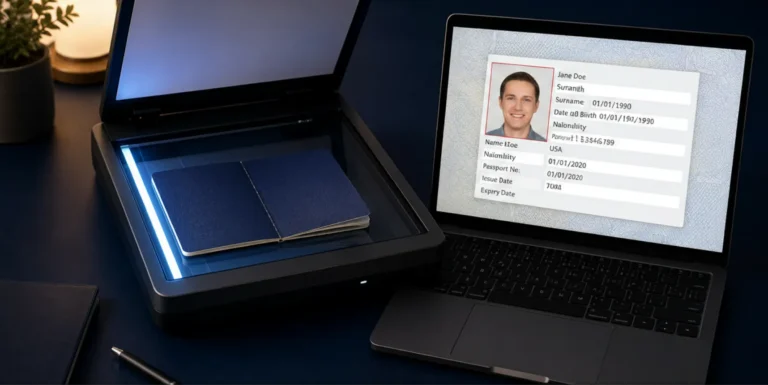
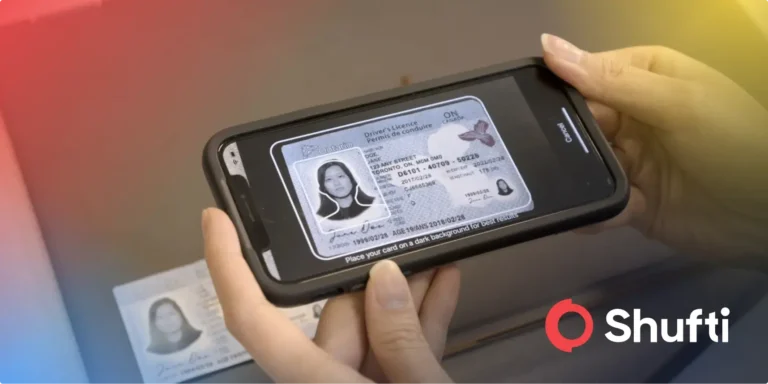
The document verification process begins with users uploading or capturing their identity documents. Depending on the region and factors like internet reliability, this can take the form of taking a picture with a smartphone, scanning a document with a webcam, or even uploading an existing image file.
For use cases involving higher risk—such as financial onboarding, cross-border transactions, or access to sensitive services—a live selfie or short video (sometimes with the document itself) may be required. This step includes biometric validation and enables real-time checks for presence and authenticity.
- Data Extraction & Processing
Once the document is captured, advanced OCR software extracts the structured data from it. Standard identity fields like full name, date of birth, document number, nationality, and expiration date are then cross-checked against existing information provided by the user during registration.
To identify irregularities, modern systems also analyze layout consistency, font structure, and metadata patterns within the document. These subtleties help to indicate if a document has been digitally manipulated or if it has been forged using cloned templates.
It is crucial that OCR tools used in markets that are multilingual or that use non-Latin based scripts are trained to interpret regional languages or fonts in order to reduce false rejections and improve verification accuracy.
- Document Authenticity
After extracting the data, the next step is evaluating if the document is authentic. This involves analyzing the document for three key attributes:
- Is it genuine? (Issued by a recognized government or authority)
- Is it unaltered? (Free of digital edits, tampering, or manipulation)
- Is it valid? (Not expired, revoked, or blacklisted)
To assess these factors, the system inspects multiple embedded security features—including holograms, UV patterns, watermarks, barcodes, ink texture, and Machine Readable Zones (MRZs). While some of these are visually detectable, like holograms and barcodes, others require algorithmic analysis to identify pixel-level anomalies or signs of digital substitution.
Document template matching is also common during this step, where submitted documents are compared to a trusted global library of document types to ensure alignment with official standards.
- Biometric & Identity Matching
The final layer of verification, typically reserved for high-risk use cases, ties the document to the individual presenting it. The selfie or the video collected with the document is analyzed to determine two things:
- Liveness: Is the person physically present, or is it a still photo, video replay, or deepfake attempting to spoof the system?
- Facial Match: Does the person’s face match the photo printed on the submitted identity document?
To answer these questions, biometric systems perform liveness detection using cues like eye movement, facial microexpressions, and 3D facial modeling. Then, facial recognition algorithms compare facial features between the live image and the document portrait. If the two match, the system is able to successfully verify the document.
Types of Invalid or Fraudulent Documents
Modern verification systems are designed to recognize and reject a wide range of fraudulent document types, including:
- Illegitimate Documents: Fabricated documents not issued by any legal authority, often created using stolen templates, editing software, or purchased through dark web marketplaces. Because they were never officially issued, they frequently fail key checks like barcode validation, MRZ formatting, and embedded security features.
- False Documents: Legitimate documents used by someone other than the rightful owner, frequently encountered in identity theft cases. Even though the document might pass technical authentication checks, facial recognition and liveness checks reveal a mismatch between the document photo and the individual submitting it.
- Tampered Documents: Documents with edited information such as altered birth dates, addresses, or ID numbers which advanced systems can detect via inconsistencies in font size, alignment, and pixel structure. Tampering is often used to evade age restrictions, hide prior fraud, or manipulate identity attributes.
Why Document Verification Matters
Fraud Prevention
Document verification is one of the key ways to keep fraudsters out of the digital ecosystem, helping platforms identify stolen, altered or fabricated identities before any damage can be done. It’s especially important in industries where one compromised account can lead to significant financial loss or data breaches since stopping fraud before it happens is far less disruptive than recovering from it after the fact.
Remote Customer Onboarding
As businesses expand beyond their borders, onboarding new customers remotely becomes standard practice. Digital document verification allows organizations to safely validate identities without requiring in-person interaction, removing long standing geographic barriers while maintaining compliance and security. Not only does it enhance accessibility, it accelerates customer conversion rates by reducing friction during registration.
KYC/AML Compliance
For heavily regulated industries, like finance and gaming, identity document verification isn’t just best practice — it’s a legal requirement. Global frameworks like FATF, FinCEN, 6AMLD, and GDPR require businesses to verify identity documents, perform due diligence, and report suspicious activities to prevent financial crimes like money laundering and terrorist financing. Document verification supports these mandates by verifying ID authenticity, confirming identity claims, and providing proper documentation to demonstrate regulatory compliance.
Age Verification
Age-restricted services—such as online gambling, alcohol delivery, or adult content platforms—must take steps to ensure that their users meet the legal minimum age requirement. ID document verification allows businesses to confidently verify a user’s age by extracting and confirming birth date information from official documents. Failure to properly implement reliable age checks can result in regulatory penalties, lawsuits, or even loss of license.
Operational Efficiency
Manual identity verification is slow, expensive, and error prone. Using automated document verification, businesses can reduce overhead, scale operations, and verify thousands of documents accurately per day, enabling compliance teams to focus on higher-risk cases while maintaining a high standard of security.
Industries Benefiting from Document Verification
Document verification is applicable across a wide range of sectors:
- Banking & Fintech: Essential in order to onboard new customers while meeting regulatory requirements and preventing fraud before fake or stolen documents are used to open new accounts or access financial products.
- Cryptocurrency Exchanges: Helps ensure users are legitimate and not on watchlists before allowing them to convert fiat currency to cryptocurrency or withdraw funds, reducing the risk of money laundering, account fraud, and non-compliance with Travel Rule requirements.
- Healthcare: With the rise of telemedicine and digital health records, document verification helps healthcare providers protect access to sensitive medical data, prevent fraud, and maintain HIPAA and GDPR compliance.
- Insurance: Helps to verify the identity of policyholders and beneficiaries before processing transactions as well as streamlines onboarding and claims management.
- Real Estate: Works to confirm the authenticity of buyers, tenants, landlords, and property managers and prevent identity fraud, financial scams, and regulatory violations.
- E-commerce: Protects against fraudulent chargebacks, fake account creation, and age-restricted sales violations as well as boosts trust in peer-to-peer marketplaces.
- Travel & Hospitality: Helps confirm bookings, issue tickets, and manage digital check-ins securely, all while meeting international travel regulations.
- Legal Services: Ensures the legitimacy of all parties involved in remote legal proceedings and digital document signing, especially when it comes to virtual notarizations, power of attorney, and e-signature workflows.
The Future of Document Verification
As fraud becomes more sophisticated and digital identity continues to evolve, document verification has begun rapidly shifting from a reactive security step to proactive security infrastructure. The next generation of solutions will focus on enhancing precision, global reach, and user control while balancing increasingly strict privacy laws.
AI-Driven Fraud Detection
As synthetic IDs and deepfake technologies become more accessible, traditional rule-based systems will struggle to detect increasingly subtle manipulation. Document verification systems will need to adapt in real time using AI and machine learning to recognize new forgery techniques and flag anomalies invisible to the human eye. This shift in detection methods will allow fraud to be caught earlier, even before it reaches manual review.
Global Document Coverage
As businesses continue to expand across borders, supporting a wider range of documents is no longer optional—it’s a necessity. Document verification platforms need to handle a wide variety of document formats, layouts, and local nuances, from national ID cards in Nigeria to driver’s licenses in Japan. The next frontier involves seamlessly supporting complex scripts and multilingual content, with OCR systems capable of interpreting languages like Arabic, Mandarin, and Hindi, without compromising speed, accuracy, or regulatory compliance.
Passive & Behavioral Biometrics
Traditional biometrics like facial recognition are increasingly supplemented by behavioral and passive authentication modes. Future systems will use factors such as typing speed, mouse movement, swipe patterns, and voice tone to build unique behavioral profiles for each user. These will help distinguish between legitimate users and bots or fraudsters in post-onboarding scenarios and help stop account takeovers as they are happening, all without creating additional friction for legitimate users.
Reusable Digital Identities
Users will soon be able to carry verified identities that are portable, persistent, and privacy-preserving, without needing to repeat the same verification steps on every new platform. These reusable identities will be securely stored, consent-based, and cryptographically protected using emerging blockchain technology, helping to reduce onboarding times and streamlining user experiences while still maintaining KYC and AML compliance.
Privacy-First Verification
As privacy regulations like GDPR, CCPA, and India’s DPDPA become more enforceable and far-reaching, document verification must shift to a privacy-by-design approach. Zero-knowledge proofs are likely to begin widespread adoption in the coming years, allowing verification without revealing underlying data, as well as selective disclosure, enabling users to share only the minimum amount of necessary information (e.g., confirming they’re over 18 without disclosing their exact birthdate). Encryption-by-default and consent-based data handling will be standard, giving users more control over their identity while ensuring businesses remain fully compliant.
Conclusion
Document verification has evolved from a cumbersome, back-office task into an important pillar of digital infrastructure, enabling secure access, regulatory compliance, and user confidence in a connected world. Whether it’s to verify identities for financial onboarding, age-restricted purchases, or legal transactions, the process enables businesses to operate with confidence in high-risk environments.
But its value doesn’t stop at risk mitigation. Document verification makes it possible for organizations to onboard users on a global scale without compromising security or compliance anywhere. It reduces friction during the customer journey, accelerates decision-making, and streamlines regulatory workflows, all while protecting users from impersonation and fraud.
As the digital economy becomes more interconnected and high-stakes, documentation will remain a key to responsible innovation. AI and behavioral biometrics will help anticipate and thwart fraud before it happens. People will be able to reuse their digital identities, secure in the knowledge that their personal data is private and protected. Businesses that embrace there advancements now will be best positioned to build trust with their users while meeting global standards and thriving in a fast-moving, freud-conscious world.