AMLR Solutions
  AMLR Consultation
 EUDI Wallet
 Onboarding
 Ongoing Monitoring
 FRAML
FRAML KYC
KYC KYB
KYB KYI
KYI Age Assurance
 Workforce IAM
 Candidate Verification
 Account Takeover
 Bonus/ Promotion Abuse
 Chargeback Fraud
 Deepfake
 Document Fraud
 Fraud Networks
 Impersonation Fraud
 Money Mule Activity
 Multi-Accounting
 Party Fraud
 Regulatory & Compliance Risks
 Synthetic Identity Fraud
 Adult Content
 Banking
 Crypto
 Fintech
 Forex
Forex Compliance
 Fraud prevention
 Trust & safety
 Global expansion
 Compliance Officers
 Developers
 Fraud Analysts
 Product Managers
 Journey Builder
  Global Trust Platform
 Customer Profiles
 Vendor Comparison
 IDV Case Management
 AML Case Management
 Regulatory Reporting
 Agentic Rule Builder
  AI Compliance Co-Pilot
  Fraud Analytics
 Fraud Hub
  OCR
OCR Shufti AI
 Bank Account Verification
  Biometric Duplication
 Database Checks
 Document Intelligence
 Government ID
 Mobile Driver's License
 NFC
NFC Selfie Liveness
 Brand Personalisation
 Deployment Options
 Identity Methods
 IDV Modes
 Multi-tenancy
 On-Premise IDV
 Secure Capture
 Shufti MCP















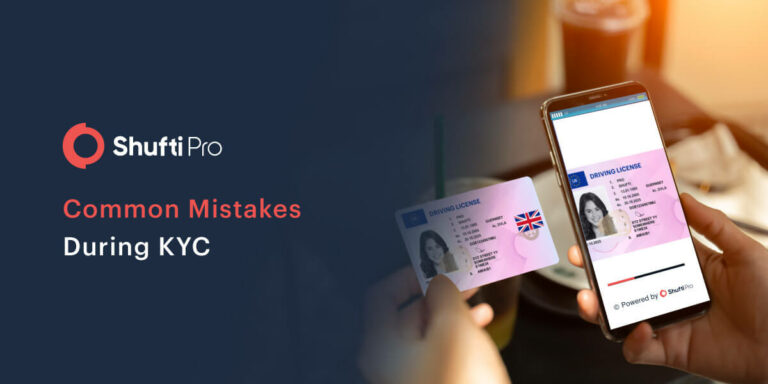
KYC verification fails legitimate users in four distinct ways, and only one of them is fraud. This guide covers what passing KYC involves, how to tell the four causes apart, and the controls that lift your first-attempt pass rate.
Your onboarding dashboard shows a decline. It does not tell you whether that was a fraudster stopped at the gate or a real customer whose address was written under a hierarchy your parser had never seen.
Most verification stacks record the outcome and discard the cause, which is why teams end up arguing about vendor accuracy when what they should be discussing is attribution.
Verification failure has at least four distinct causes, and only one of them is fraud. Your KYC pass rate reports all four as the same number.
What does it actually mean to pass KYC?
Passing KYC means a user has cleared three separate checks inside one session, and any one of them can end the journey. Know Your Customer, usually shortened to KYC, is the regulated process of confirming that a customer is who they claim to be before you let them transact. Under Regulation (EU) 2024/1624, the EU’s anti-money laundering regulation, that obligation becomes directly applicable across every member state from 10 July 2027.
KYC meaning, and the three KYC pass steps
- Document capture: The user photographs a government-issued ID. After that the system reads the data fields, parses the name, and checks the document’s security features for signs of manipulation.
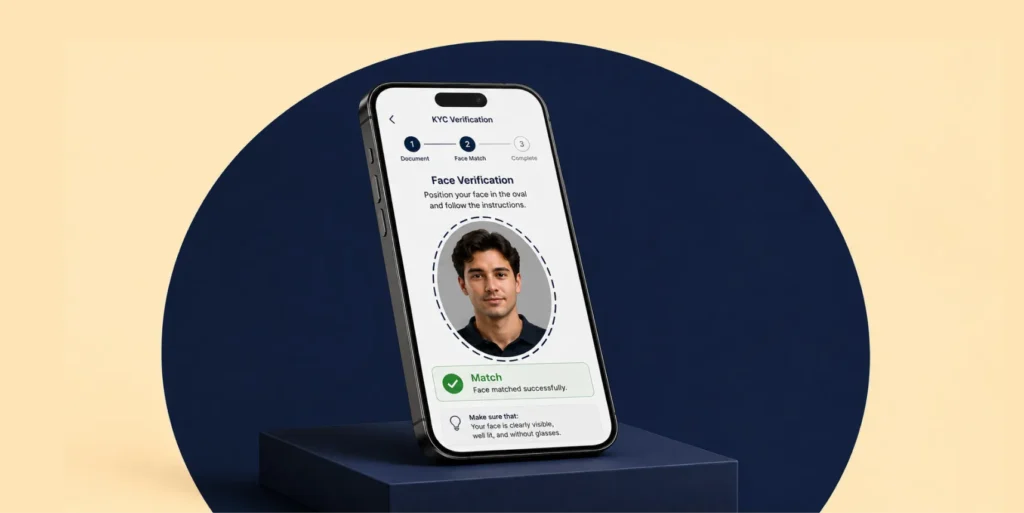
- Biometric match: The user takes a selfie or completes a liveness check. Then the system confirms a live human is present and matches that face to the document photo.
- AML screening: The system takes the extracted identity and runs it against sanctions lists, politically exposed person databases, and adverse media before the account opens.
The KYC verification process is sequential, so each step consumes the output of the one before it. A misread name at step one becomes a false screening hit at step three, which is why extraction quality decides far more of your pass rate than the screening engine does.
First-attempt pass rate versus overall pass rate
Your overall pass rate counts everyone who eventually passed, including the people who failed and tried again. Your first-attempt pass rate counts only the people who got through on their first try.
The gap between the two numbers is the users who needed more than one go. Overall will always be the higher figure, because every retry that succeeds is counted as a pass. That makes it the more flattering number to report and the less useful one to act on.
Why does KYC verification fail for legitimate users?
Verification fails for legitimate users in four recognisable ways, and only one of them involves actual fraud. Which one dominates your funnel depends entirely on your markets, your customers’ devices and how many checks you have stacked, so the useful question is not which cause is biggest in general. It is which one is biggest in yours.
The four causes, and how to tell them apart
| Failure type | What it looks like | Where it bites hardest | The fix |
| Data-layer errors | Valid names and addresses read as mismatches | Non-Latin scripts, multi-part names, reformed address systems | Diacritic-aware OCR, dual-format address logic, name parsing that does not assume Western order |
| Capture quality | Blurry, cropped, glare-covered or cut-off document images | Older devices, low-resolution cameras, poor lighting | Extraction tuned for imperfect images, in-flow capture guidance |
| Stacked-layer attrition | Small losses at every added check, compounding into a large one | Funnels that bolted on one control at a time | Consolidate checks, escalate by risk instead of applying every layer to everyone |
| Genuine fraud rejection | Manipulated documents, injected video, synthetic identities | High-value and high-anonymity products | Nothing. This is the system working, and it should stay strict |
Why data-layer failures are the hardest to see
Of the four, data-layer errors are the ones least likely to show up as errors. A blurry photo announces itself and a fraud flag is logged as a fraud flag, but a misparsed name produces a clean, confident negative. The dashboard records a decline and nobody asks whether the address was actually wrong or simply written under a hierarchy the parser had never seen.
Vietnam is the clearest documented example. In April 2025, Resolution 60-NQ/TW replaced the country’s three-tier address hierarchy with Province/City to Commune/Ward, and Resolution 125/NQ-CP cut provincial units from 63 to 34. Millions of records still carry the old format, so a system reading only one of them rejects the people carrying the other.
Shufti’s breakdown of why KYC fails in Vietnam sets out the mechanism. Without diacritic-aware extraction and normalisation, systems manufacture discrepancies between what the user typed, what the document says and what the database holds. Vietnam is not unusual here, only well documented. The same class of failure surfaces wherever local naming conventions, scripts or administrative structures diverge from the Western defaults most stacks were built around.
What are the real KYC requirements a user has to meet?
Three things, in almost every jurisdiction. What you accept for each one decides how many real customers get through.
Requirement 1: A valid government-issued photo ID
A passport, national ID card, driving licence or residence permit. It has to be current and readable enough for the system to pull the data fields.
You do not have to demand a passport. A national ID card or driving licence meets the same obligation in most jurisdictions, and a passport-only policy will fail every customer who does not hold one.
Requirement 2: Proof of address
Evidence that the customer lives where they say they live. Usually a utility bill, bank statement or government letter dated within the last three months, though some markets let you check the address against a national database instead. This is the requirement that reformed jurisdictions break, because a perfectly valid address written in the old format reads as a mismatch against the new one.
Requirement 3: A live biometric check
A selfie or short video that proves a real person is present and matches the photo on the document. It confirms liveness as well as likeness, which is what stops someone passing with a stolen or borrowed ID.
How to do KYC online without losing the users you want
Four controls do most of the work, and none of them requires loosening your risk appetite. Fast KYC approval is a by-product of clean extraction and smart routing, never of weaker checks.
- Route by risk instead of by default: Apply the heaviest checks to the riskiest segments and let low-risk users through a lighter path. Uniform friction costs you conversion without buying proportional safety.
- Make the failure reason legible: Track declines by cause, not just by count. If you cannot separate a blurry photo from a name-parsing mismatch, you cannot fix either one.
- Design the retry, not just the happy path: Most recoverable failures are recoverable only if the user is told what went wrong and gets a second attempt inside the same session.
- Judge approval rate and loss rate together: A pass rate that climbs while fraud losses climb faster is not an improvement, and a fraud rate near zero usually means you are rejecting customers you wanted.
What should you look for in a KYC verification provider?
Evaluate online KYC services against the things that move your pass rate, not against the headline accuracy number every vendor quotes.
| Criterion | What to ask for | Why it moves your pass rate |
| Coverage in your actual markets | Named document and language support for your top five countries, not a global count | Generic coverage claims hide the markets where extraction quietly fails |
| Extraction under real conditions | Performance on worn, laminated and low-resolution documents | Your users photograph old cards on old phones |
| Local format agility | How fast the vendor adapted to a recent regulatory or address change | Jurisdictions reform without warning, and stale logic rejects valid data |
| Failure visibility | Decline reasons exposed per check, not a pass or fail flag | You cannot fix what the dashboard will not show you |
| Integration path | A single documented API, sandbox access and prebuilt SDKs | A clean KYC API integration service removes the multi-vendor dependencies that create blind spots |
| Independent validation | iBeta conformance level under ISO/IEC 30107-3 | Liveness tested by a third party, rather than benchmarked in-house |
How Shufti helps onboarding teams lift first-attempt pass rates
If your users are in Vietnam, Indonesia, Brazil, South Asia or the Gulf, you have probably watched good customers fail a check they should have passed. The cause is usually extraction rather than risk, because most verification stacks were trained on Western documents and adapted to everything else afterwards.
Shufti’s document intelligence was built the other way round. It actively processes 10,000+ document types across 150+ languages and 240+ countries, and it parses multi-part names and diacritics without forcing them into Western order. For jurisdictions that have restructured their address systems, Shufti processes both the pre-reform and post-reform formats, so a valid legacy address stops registering as a mismatch. Clients running non-Latin document mixes in Vietnam, Indonesia and the Gulf see that difference in their first-attempt numbers.
Frequently Asked Questions
Why does KYC verification fail?
Four causes account for most declines. Data-layer errors such as misparsed names and superseded address formats, poor capture quality, attrition from stacked checks, and genuine fraud. Only the last is the system working as intended. Which cause dominates depends on your markets and your users' devices.
How do I fix a failed KYC verification?
Diagnose by cause before you change anything. Separate declines into capture quality, data-layer mismatch, stacked-layer attrition and genuine fraud. Capture issues are fixed with in-flow guidance and a same-session retry. Data-layer mismatches need extraction that handles local name and address conventions.
How long does KYC verification take online?
KYC verification online typically completes in seconds once the document images are captured. Database-backed checks are faster still, finishing in around 10 seconds in markets where a national ID number and a face scan are enough. Manual review adds hours or days.
What is the easiest way to do KYC online?
Verify against an authoritative database wherever one exists, because skipping the document upload also skips every failure mode attached to it. Keep document capture as the fallback for users and markets the database path does not cover.
Is my data safe during KYC verification?
Safety depends on the provider's certifications and where the data sits. Look for PCI DSS, SOC 2, ISO 27001, GDPR and CCPA alignment, and confirm the vendor can host in the region your regulator requires rather than in one default cloud location.
What does "KYC pending" or "KYC under review" mean?
It means the automated check did not return a confident decision and a human is now looking at the case. Well-configured flows tell the user why, give an expected turnaround, and offer a same-session retry where the failure was recoverable.