




 Face Verification
 Address Verification
 Document Verification
 Age Verification
 VideoIdent
 Fast ID
 Docless Verification
 Consent Verification
 NFC Verification
 Business Verification
 Due Diligence
 Investor Verification
 E-Signature

 QES
QES
 AML Screening
 Transaction Monitoring
 Adverse Media
 Business AML Screening
 PEP & RCA
 Sanctions
 Watchlist
 Behavioural Biometrics
 Device Fingerprinting
 Biometric Face Authentication
 MFA
MFA
 Fraud Hub
 Onboarding
 Ongoing Monitoring
 KYC
KYC
 KYB
KYB
 KYI
KYI
 Age Assurance
 Identity Verification
 Workforce IAM
 Candidate Verification
 Compliance
 Fraud prevention
 Trust & safety
 Global expansion
 Product Managers
 Compliance Officers
 Fraud Analysts
 Developers
 Deepfake Detection
 Bonus Abuse / Promotion Abuse
 Account Takeover
 Synthetic Identity Fraud
 Document Fraud
 Impersonation Fraud
 Multi-Accounting
 Fraud Networks
 Chargeback Fraud
 Money Mule Activity
 Party Fraud
 Regulatory & Compliance Risks
 Fintech
 Crypto
 iGaming
 Forex
Forex
 Social Network
 Marketplace
 Banking
 Gig Economy
 Payments
 Ride Hailing
 Adult Content
 Blind Spot Audit
 Deepfake Detector
 Liveness Spoofs
 Document Originality
 Document Deepfake
 Global Trust Platform
 Journey Builder
 Case Management
 Shufti AI
 Fraud Analytics
 Vendor Comparison
 Brand Personalisation
 AI Compliance Co-Pilot
 OCR
OCR
 Secure Capture
 Deployment Options
 Identity Methods
 API Documentation
 Mobile SDKs
 Service Status
 Help Center
 Contact Us
 Technical Support
 Supported Documents
 Supported Countries
 Content library
 Blogs
Blogs
 News
News
 Reports
 Insights
 Knowledgebase
 ROI calculator
 About
About
 Career
 Press Release
 Certifications
 Partnership
 Awards
 Events & Webinar
 Interactive Demo
 Podcast Studio
 Spotlight Studio
- Australia
- Austria
- Bangladesh
- Brazil
- Bulgaria
- Canada
- China
- Cyprus
- Egypt
- Estonia
- Eswatini
- Ethiopia
- France
- Germany
- Greece
- Haiti
- Hong Kong
- India
- Iraq
- Ireland
- Indonesia
- Italy
- Japan
- Jordan
- Kazakhstan
- Kenya
- Kosovo
- Kuwait
- Latvia
- Luxembourg
- Malaysia
- Malta
- Mauritius
- Mexico
- Micronesia
- Moldova
- Montenegro
- Morocco
- Mozambique
- Myanmar
- Namibia
- Nauru
- Nepal
- Nigeria
- Nicaragua
- Niue
- Norway
- Netherlands
- New Zealand
- Oman
- Pakistan
- Palau
- Palestine
- Panama
- Papua New Guinea
- Paraguay
- Peru
- Puerto Rico
- Philippines
- Portugal
- Portugal
- Qatar
- Republic of Congo
- Romania
- Russia
- Rwanda
- Samoa
- San Marino
- Senegal
- Serbia
- Seychelles
- Sierra Leone
- Singapore
- Slovakia
- Slovenia
- Somalia
- South Africa
- South Korea
- South Sudan
- Sri Lanka
- St Kitts and Nevis
- St Maarten
- St Lucia
- Sweden
- Switzerland `
- Syria
- Taiwan
- Tajikistan
- Tanzania
- Thailand
- Timor Leste
- Togo
- Tonga
- Trinidad and Tobago
- Turkey
- Turks and Caicos
- Turkmenistan
- Tunisia
- Tuvalu
- Uganda
- Ukraine
- UK
- Uruguay
- USA
- Uzbekistan
- Vatican City
- Vietnam
- Venezuela
- Vanuatu
Japan
Identity Verification & KYC For Japan
Shufti unifies KYC, KYB, and AML controls for Japan in one platform, built for customer due diligence under the Act on Prevention of Transfer of Criminal Proceeds, FSA AML/CFT expectations, JAFIC STR workflows, and APPI data governance.
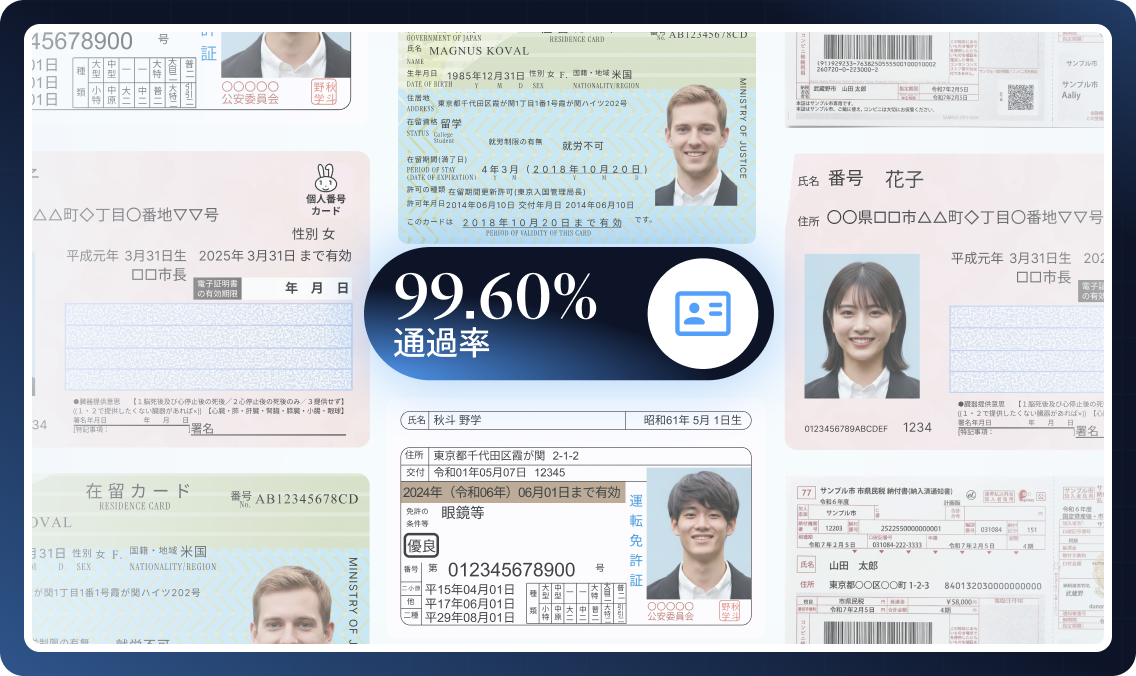
Operational performance for Japan KYC
Our Numbers Speak Volumes
99.60%
Pass rates
< 5 sec
Verification
Time
11%
EIDV
Verification
Evidence-Ready Checks Across People & Businesses
Individual Documents We Verify
Shufti supports 25 Japanese national document types across remote and assisted onboarding journeys.
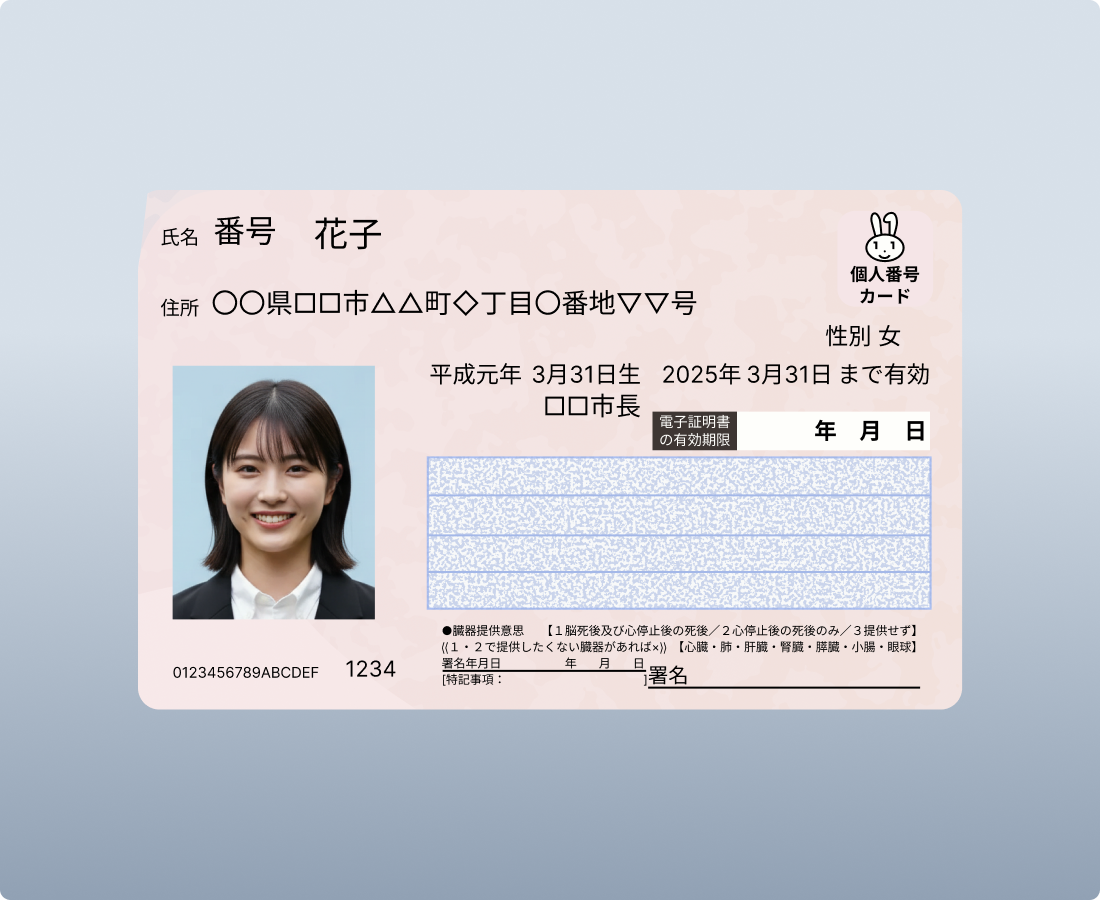
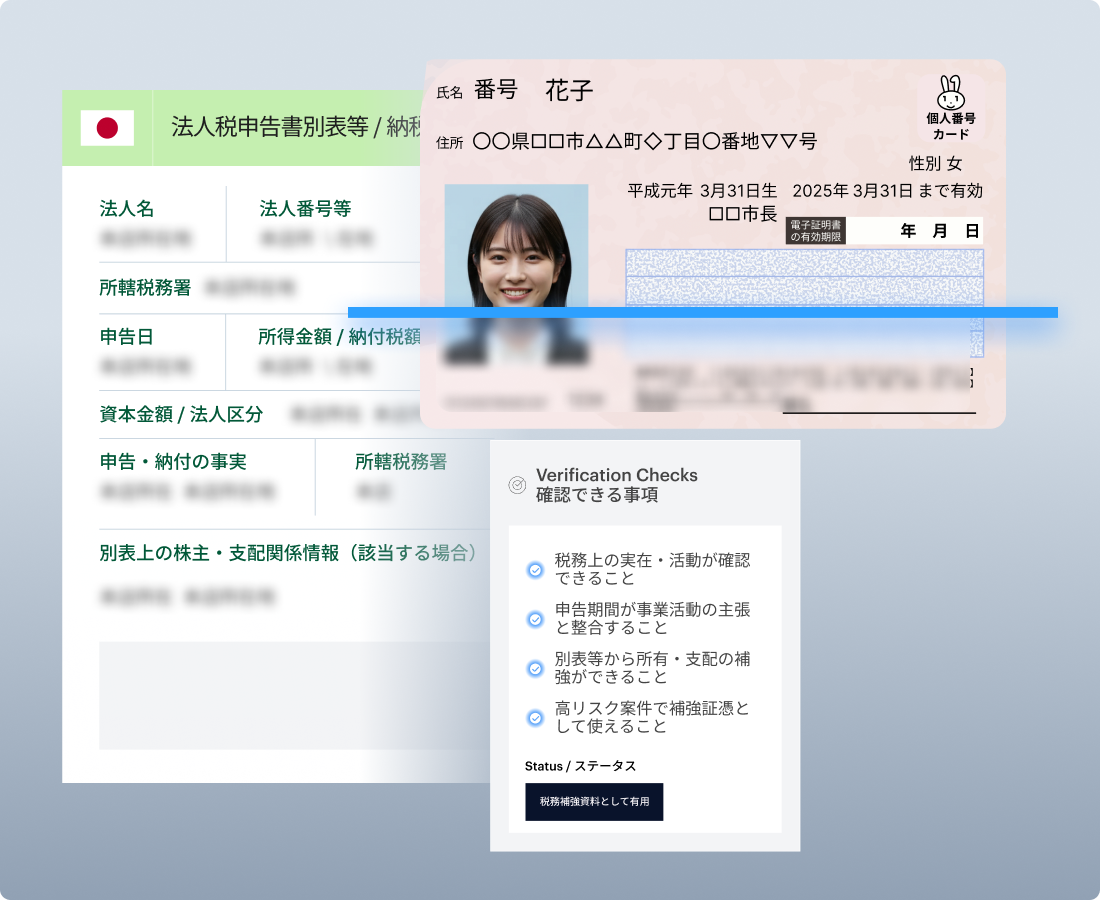
View All Supported DocumentsMy Number Card
A major resident identity document for many domestic onboarding flows. It carries name, address, date of birth, sex, Individual Number, and photo. JPKI is the card’s electronic certificate function, not a separate document.
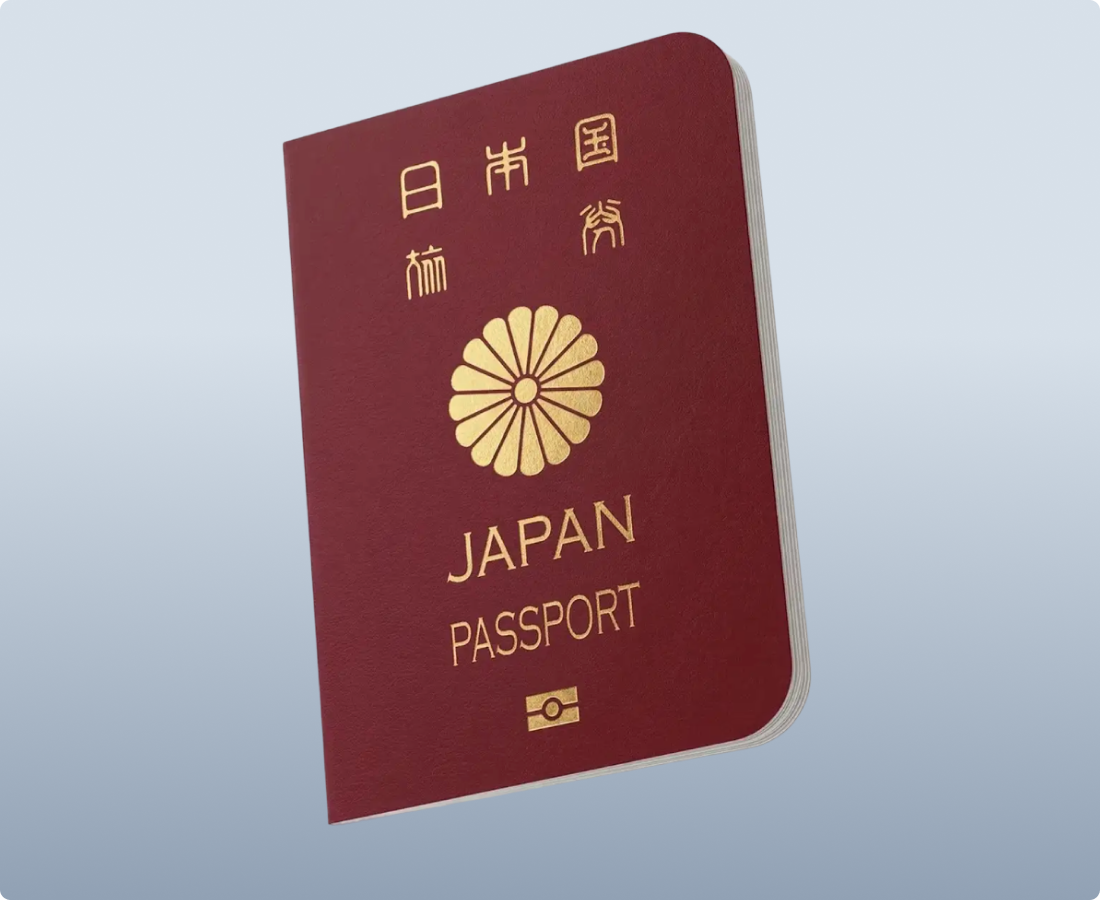
Japanese Passport
A strong fallback for citizens in remote onboarding. Japan issues IC passports, but alternative surnames and given names may appear only in the visual zone, not in the MRZ or chip.
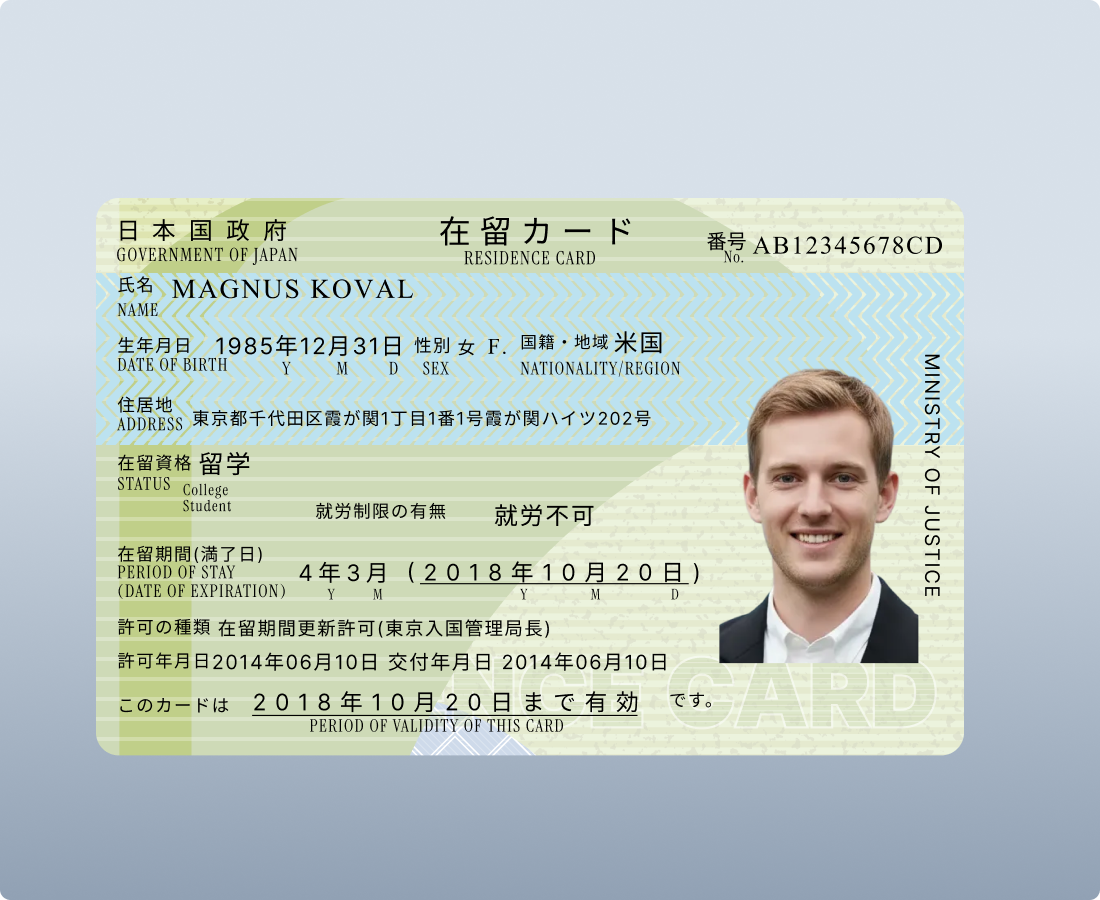
Residence Card
For mid-to-long-term foreign residents. This is separate from the My Number Card and shows identification details, period of stay, and status of residence.
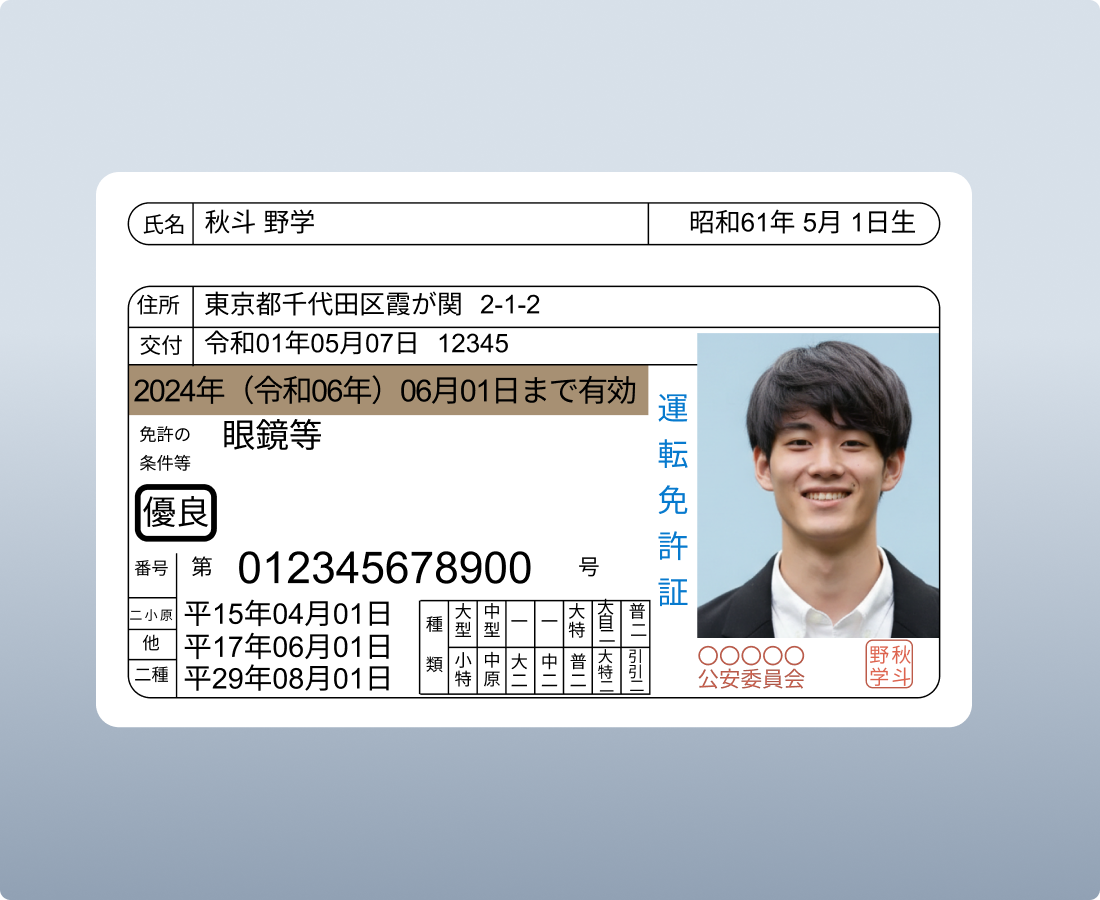
Driver’s Licence
Widely used photo ID for domestic checks. It remains a practical KYC document, especially where a customer does not present a My Number Card first.
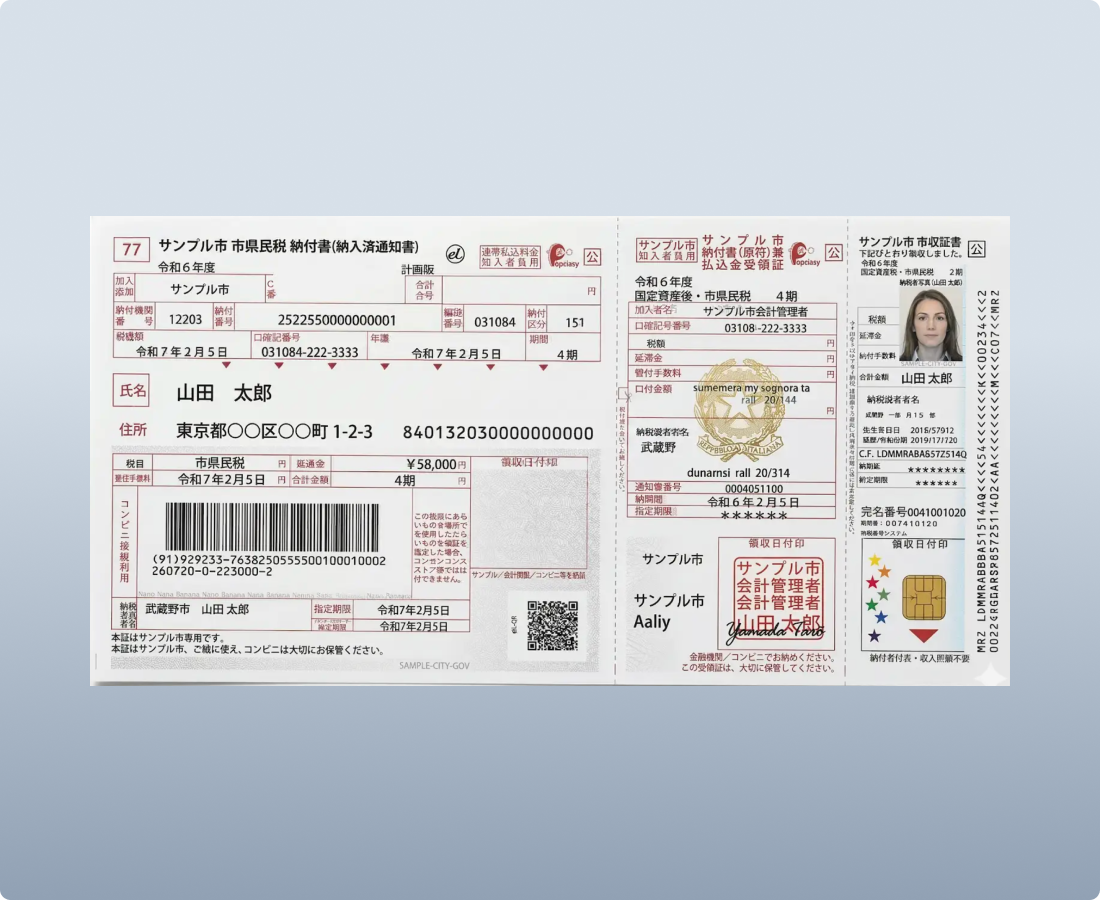
National / Local Tax Payment Receipt
Used as supporting address evidence in exception handling, especially where a current residential address needs corroboration in the customer file.
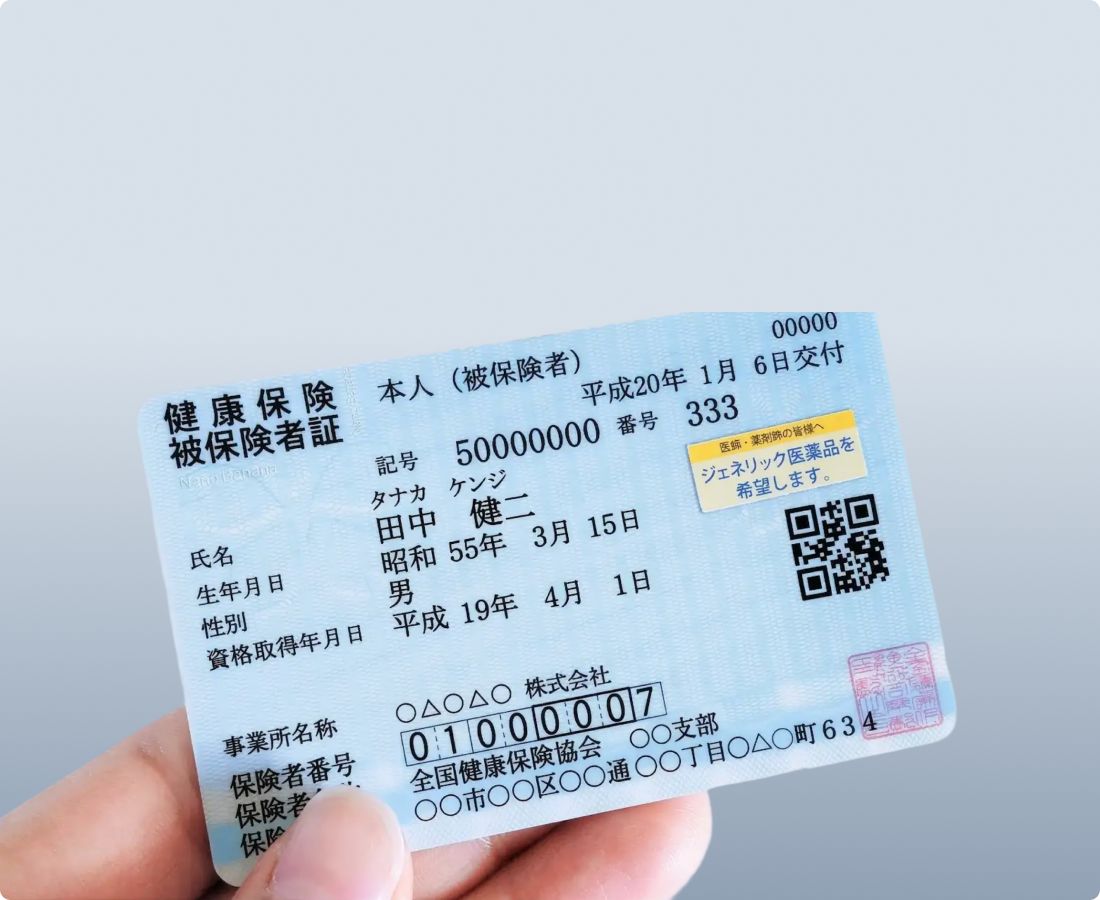
Social Insurance Premiums
Used as supplementary residence evidence in edge cases where the onboarding file needs additional current-address support.
Business Entity Identity
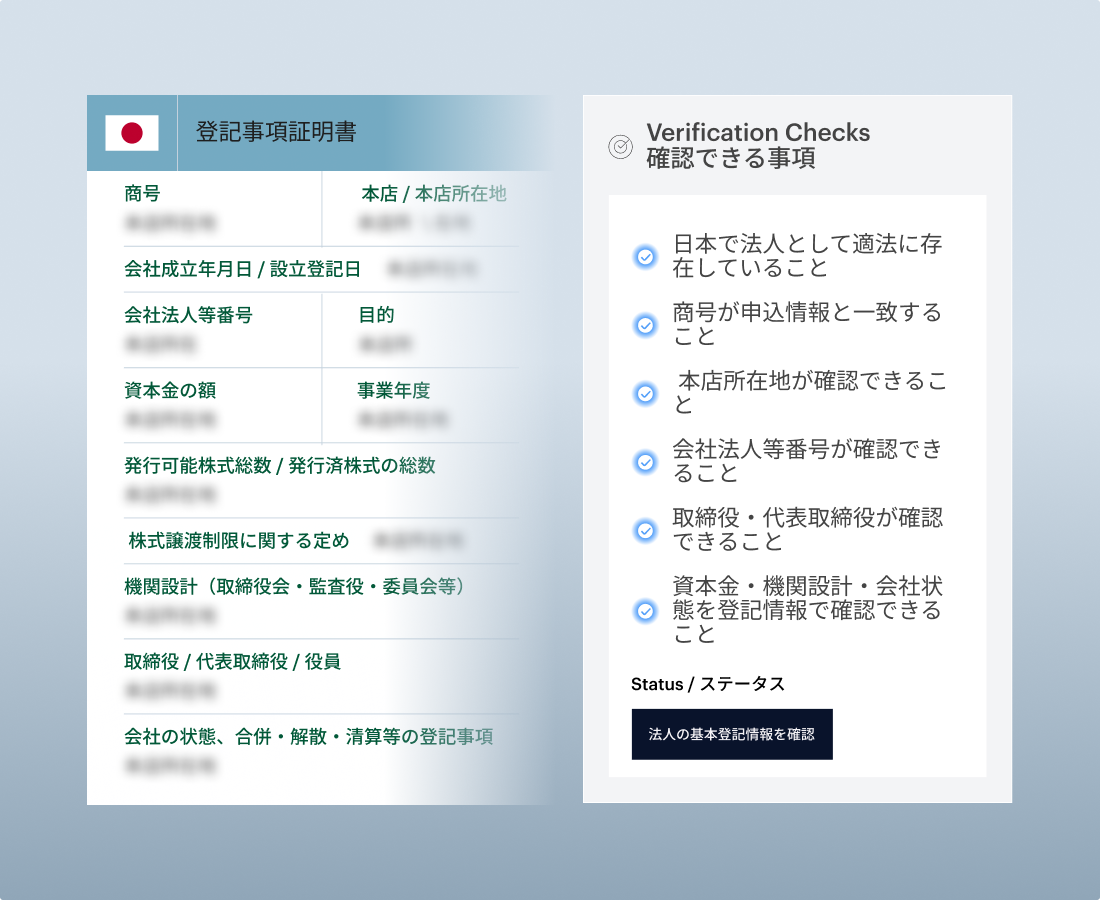
Certificate Of Registered Matters
Proves legal existence, registered name, address and officers. It is a standard company identity document in Japan and a common starting point for KYB files.
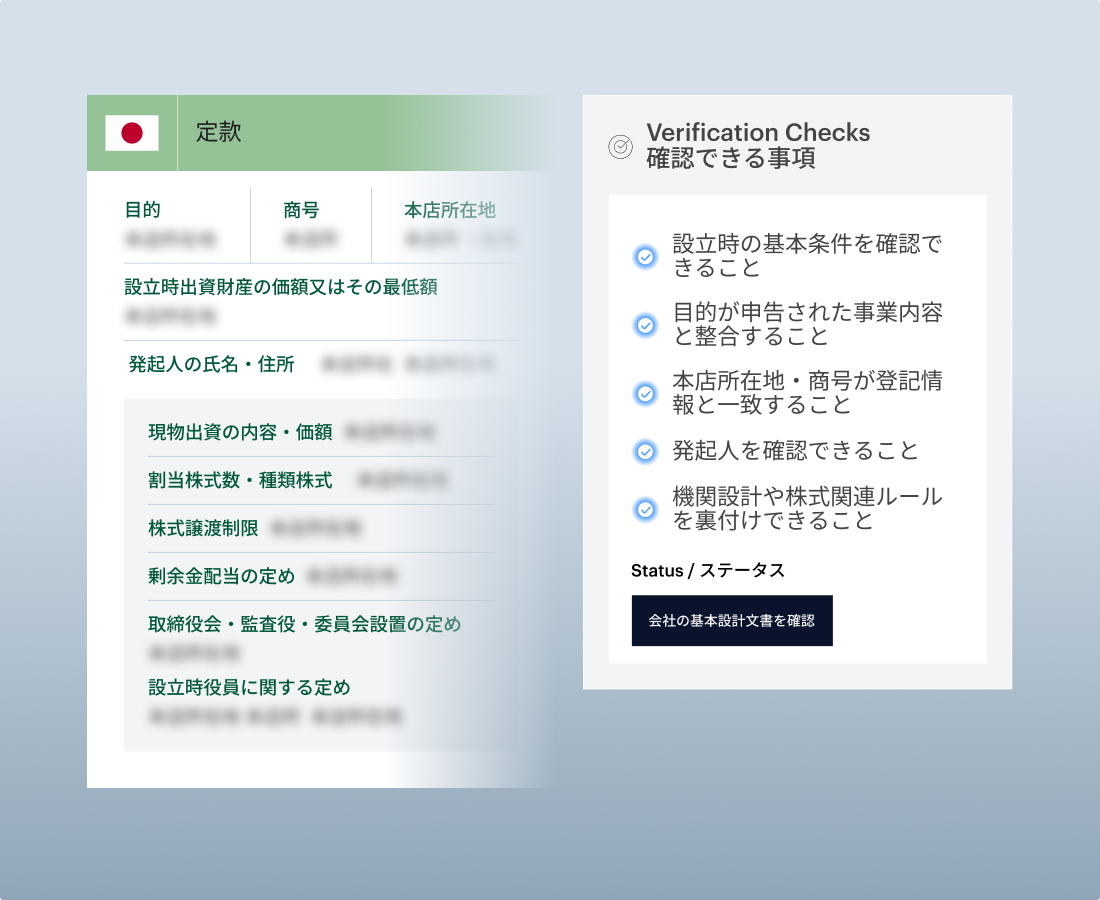
Articles Of Incorporation
Helps evidence the nature of business and legal formation details. FSA AML/CFT guidance also treats notarised articles as a reliable input in beneficial owner verification work.
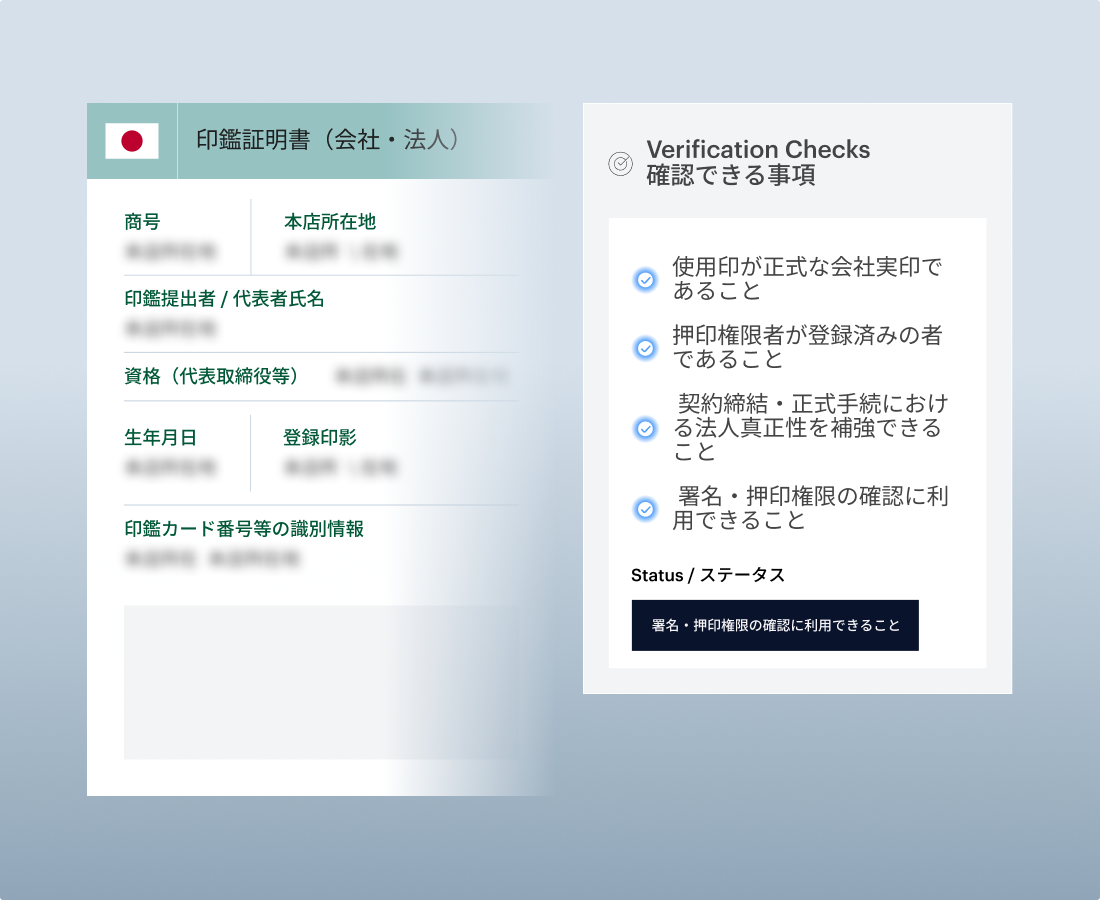
Certificate Of Seal Impression
Used to support representative authority and corporate authenticity in formal business onboarding and contract execution.
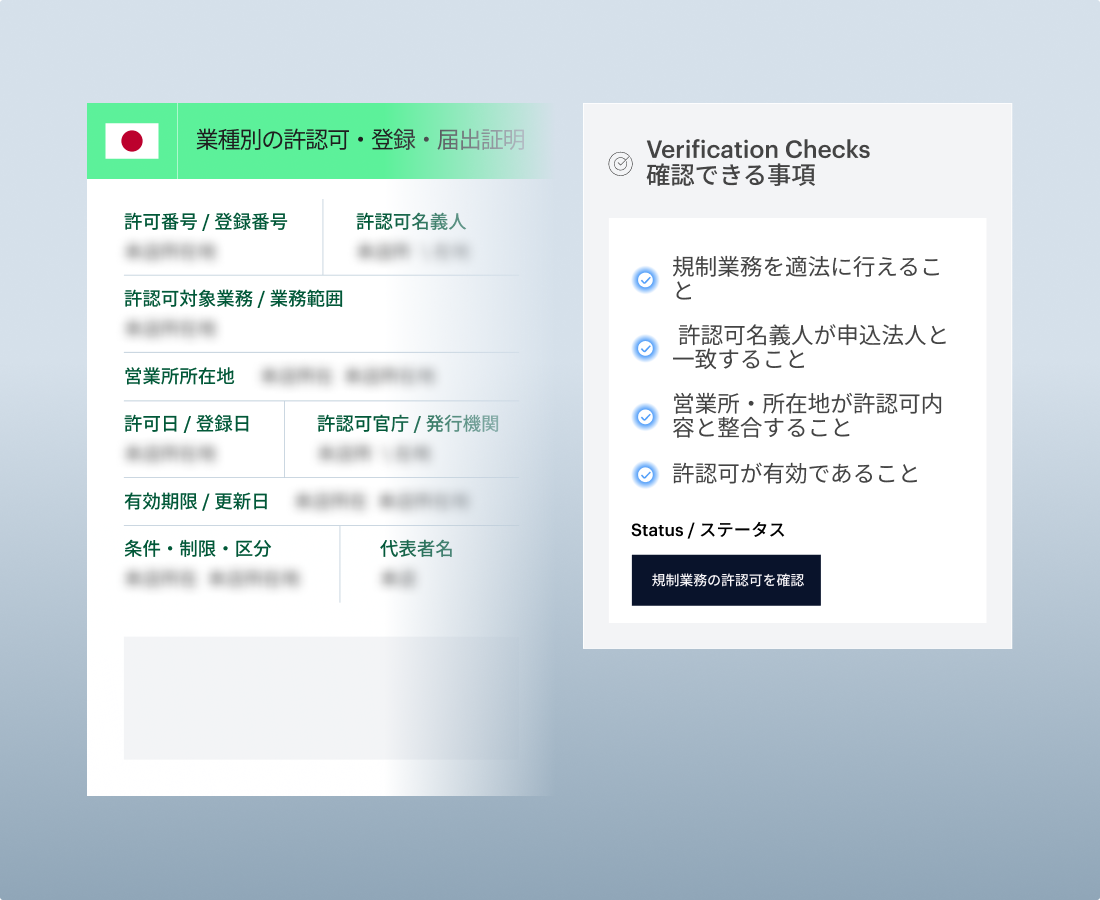
Sector-Specific Licences Or Permits
Where the business activity is regulated, licence or permit evidence can be critical to a defensible KYB file and should sit alongside registry and tax materials.
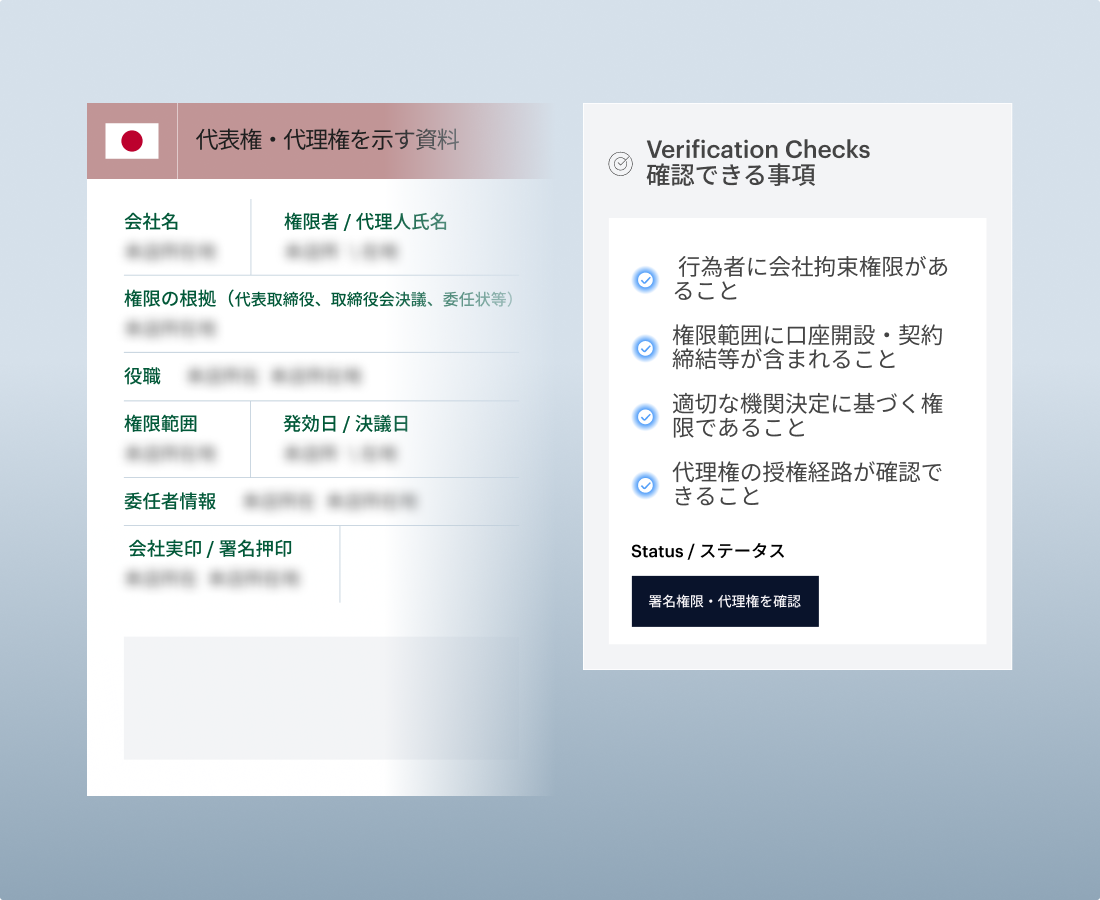
Representative Authority Evidence
Where the acting person is not clearly authorised from the registry alone, additional authority evidence should be collected to support execution and onboarding controls.
Business Tax Identity
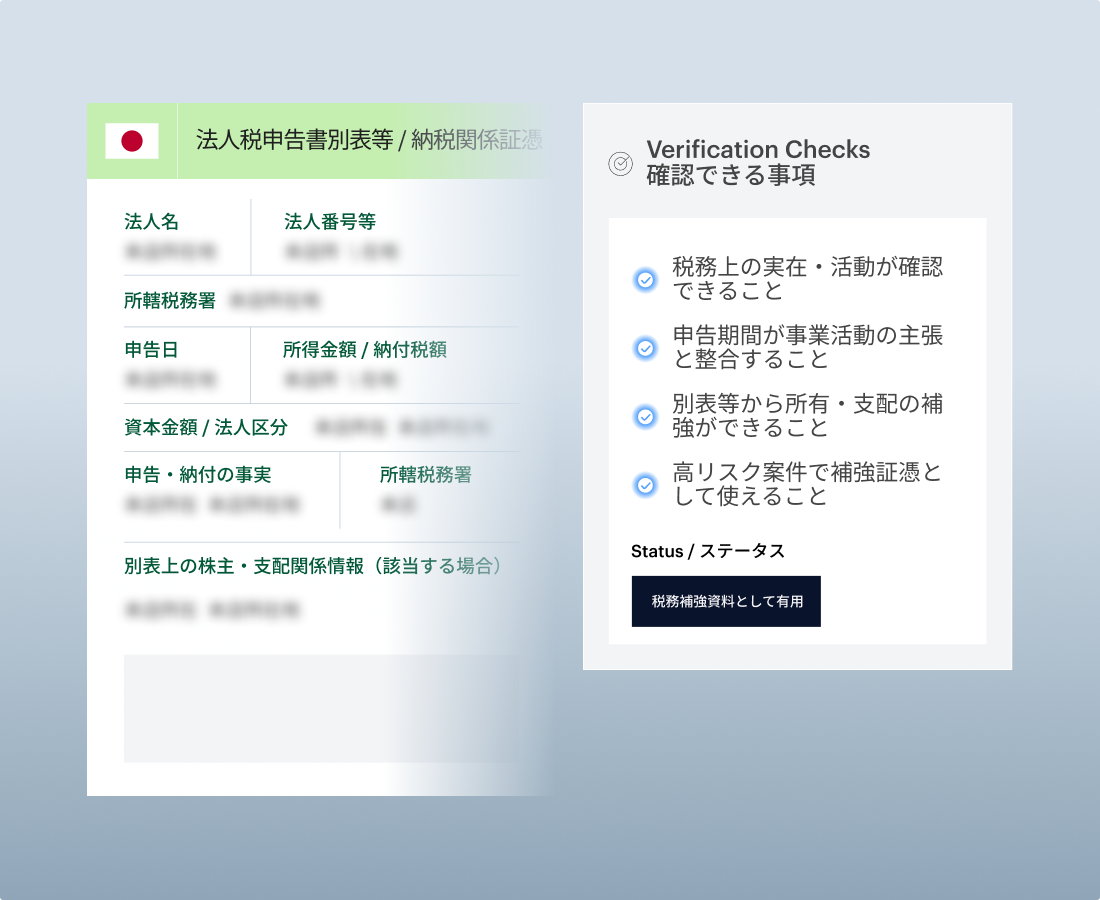
Corporate Number
Japan’s 13-digit Corporate Number helps confirm the legal entity and basic registered data through the National Tax Agency publication site.
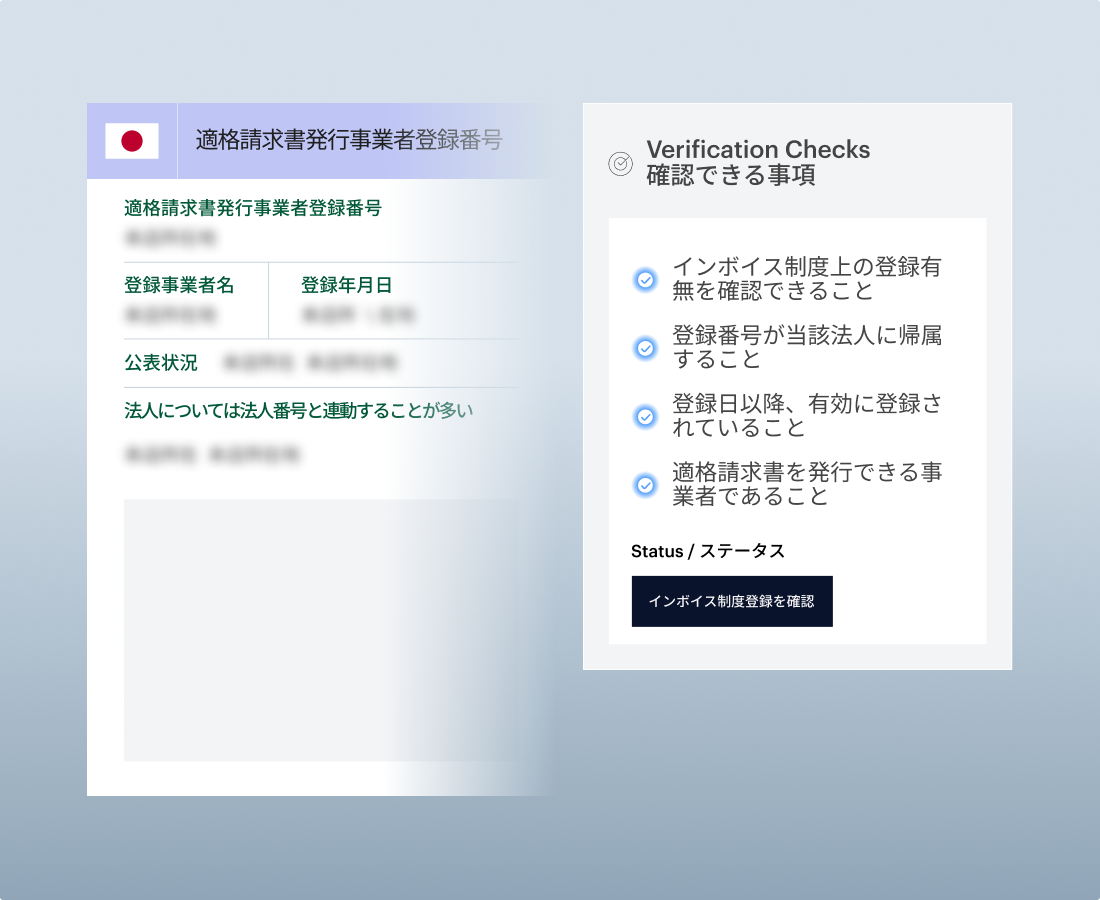
Qualified Invoice Issuer Registration Number
Useful for checking consumption tax registration under Japan’s invoice system, in force since 1 October 2023.
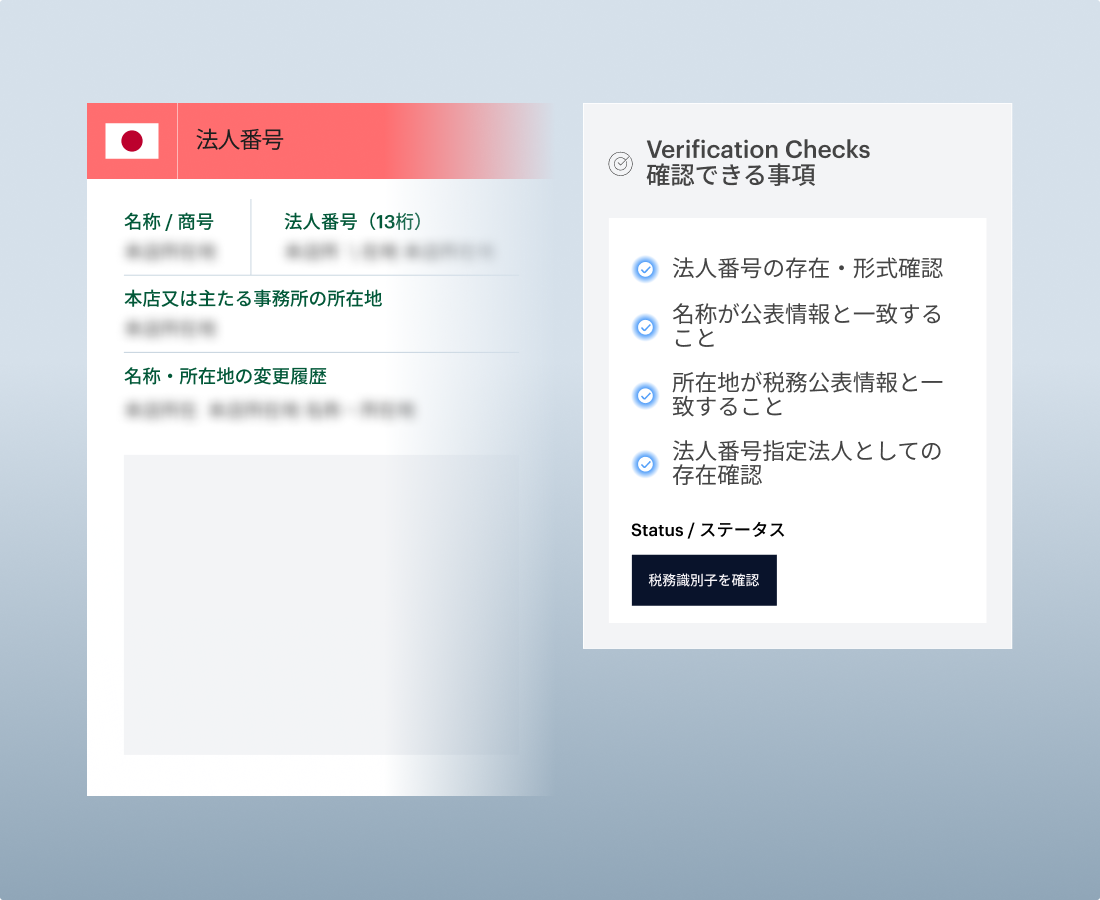
Corporate Tax Return Appendix Or Tax Evidence
Often used in enhanced checks where tax presence, operating status, or beneficial owner corroboration needs stronger documentary support.
Ownership & Control (UBO)
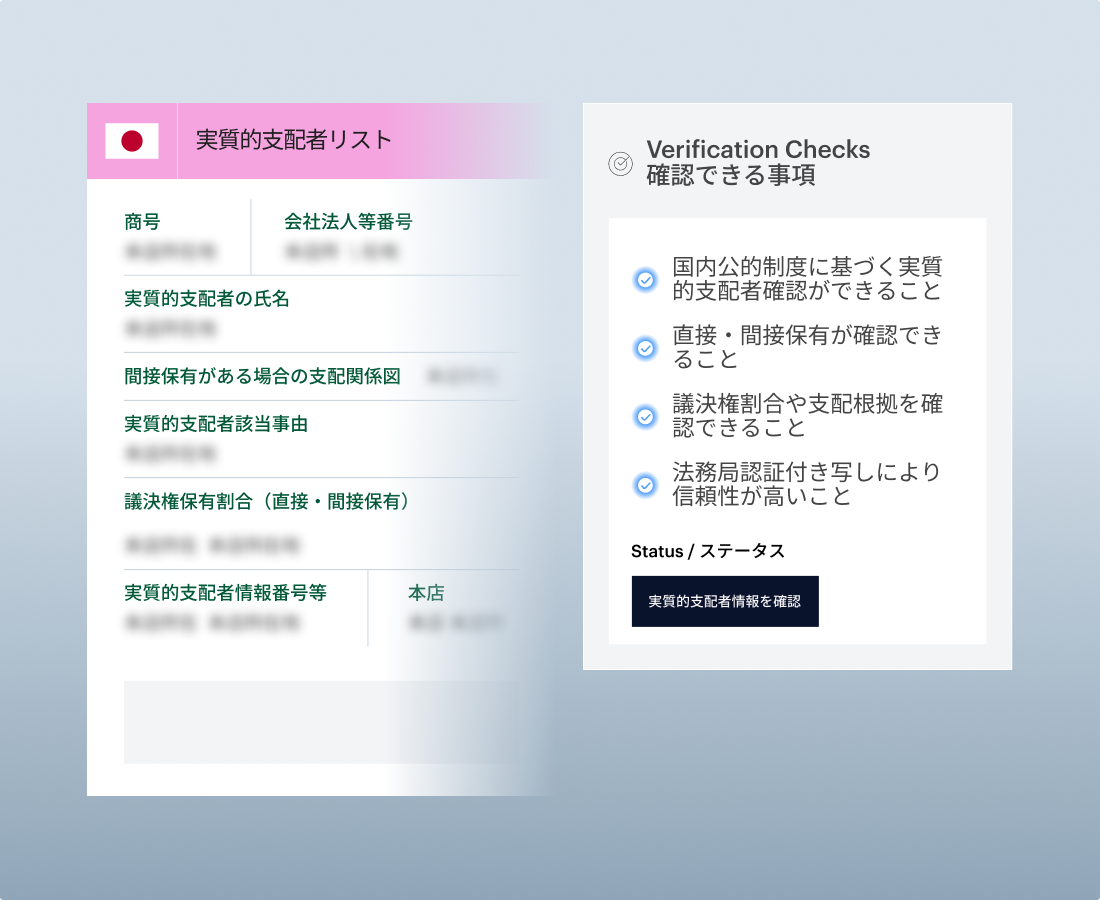
Beneficial Ownership Of Legal Persons List
A Legal Affairs Bureau certified list can support beneficial ownership checks for eligible company types and adds a strong domestic evidence source to KYB review.
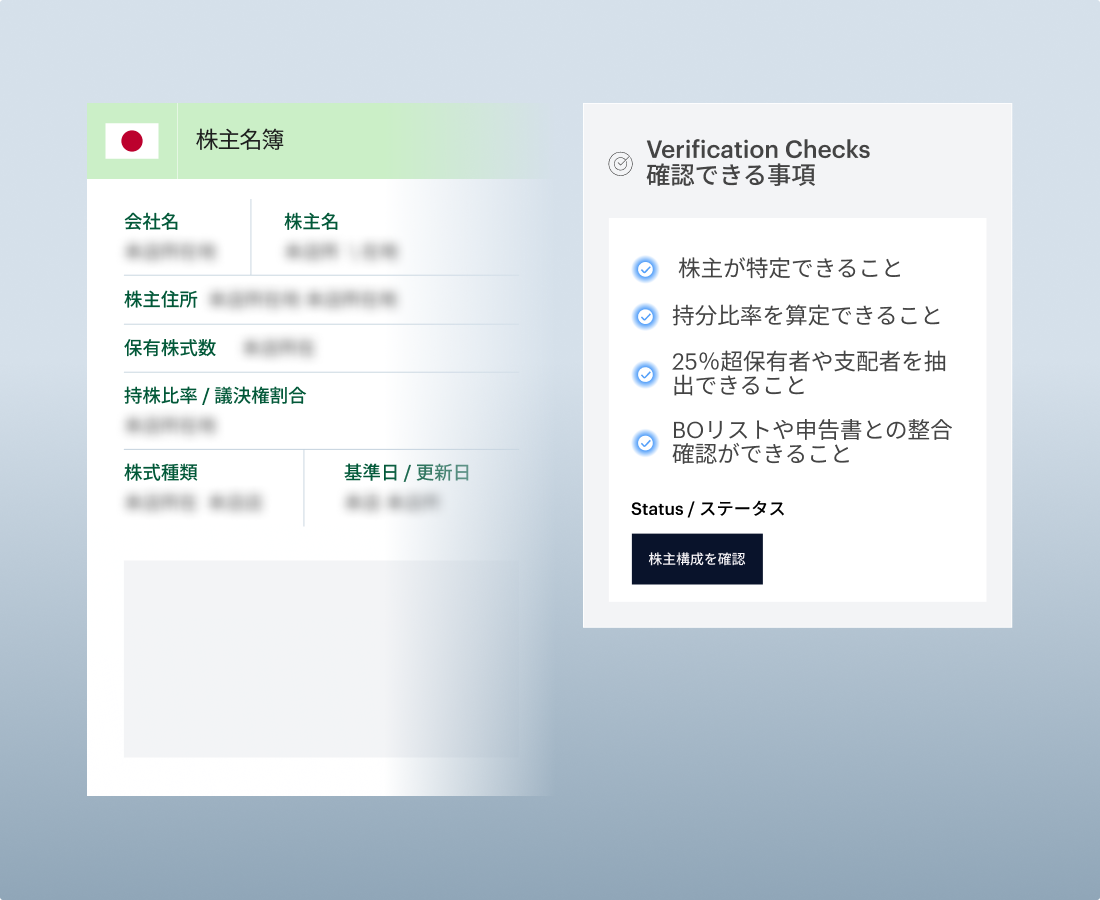
Shareholder Register
A practical ownership source in Japan. FSA AML/CFT guidance names it as reliable evidence when verifying beneficial owners.
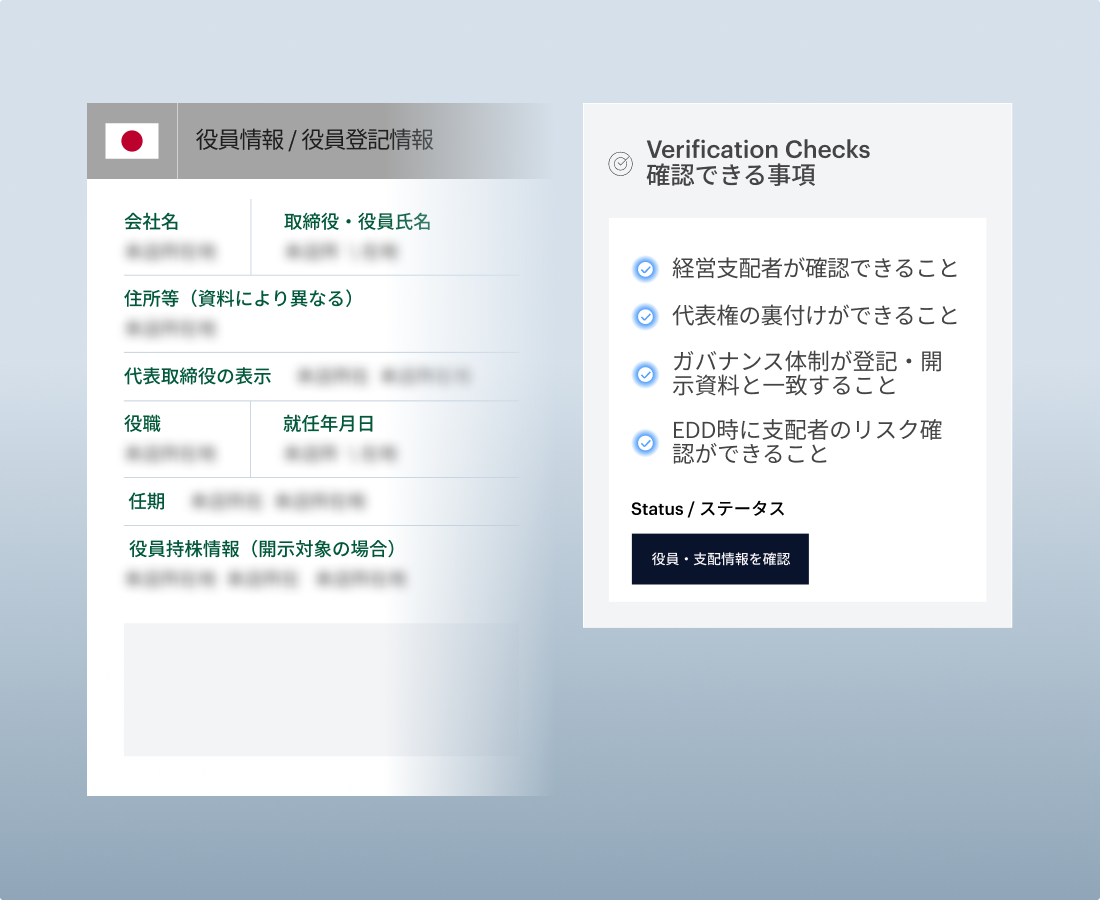
Director And Officer Records
Officer data from the commercial register or annual securities reporting helps confirm control and representation for escalation or EDD review.
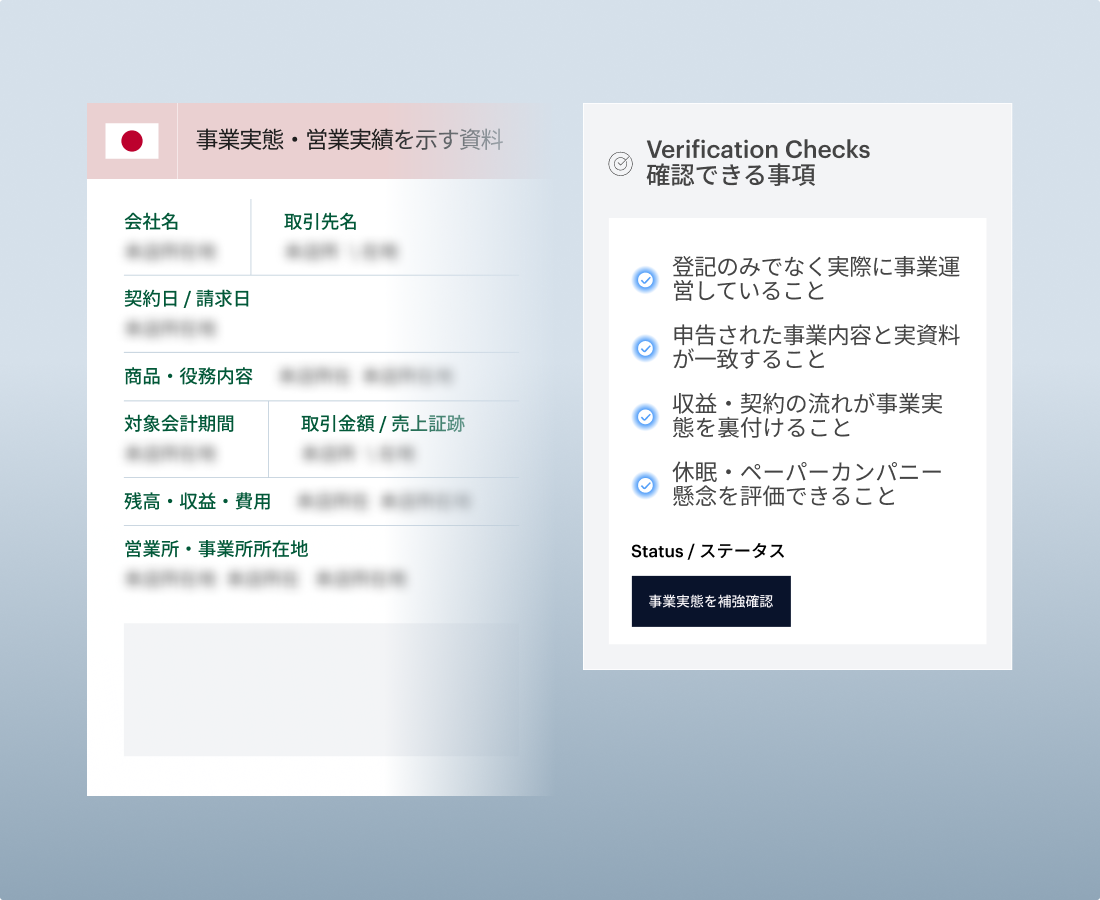
Business Activity Or Operating-Status Evidence
For higher-risk files, contracts, financial statements or other activity evidence can help corroborate that the company is operating as claimed.
Languages We Cover
Document Text Handling
Japanese KYC records often mix kanji, kana and Latin script. Shufti supports extraction and review across these formats in one onboarding flow.
Name Matching Controls
Japan name matching is rarely one-to-one. Shufti helps compare kanji, kana, long-vowel, Romanised and passport spelling variants with controlled matching rules.
Evidence Consistency
The same customer may appear in kanji, Roman letters and app input variants. Shufti links these records across steps for a cleaner decision trail.
GOVERNANCE & CONTROLS
Audit-Ready Decisions, Lower Operational Drag
Fewer Avoidable Re-submissions
Design flows around the documents people in Japan actually present first, then catch address mismatches, glare, script differences and missing fields earlier in the journey.
Cleaner Audit Trails
Keep verification evidence, review actions, decision reasons and screening outcomes together, which helps with FSA supervision and Japan’s seven-year AML record preservation duty.
Better Name Matching Outcomes
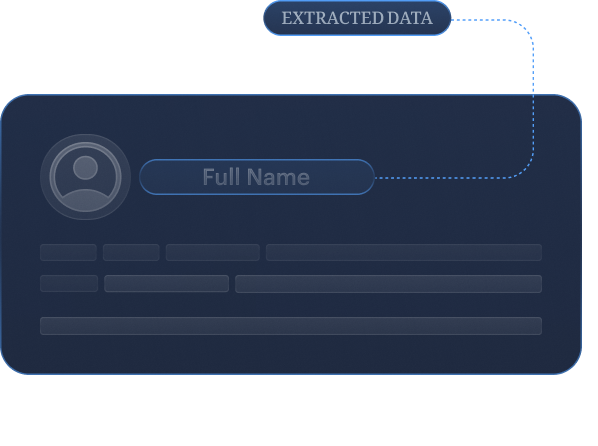
Handle kanji, kana and Roman-letter variants in a controlled way, including long-vowel and approved alternative passport spellings that often create manual review.
One Workflow, One Back Office
Run KYC, KYB and AML review in one operating view, so teams do not have to rebuild the same case across identity, business and screening systems.

My Number-First Flow Design
Prioritise My Number Card where that fits the customer journey, then route to passports, residence cards or driver’s licences without breaking the evidence chain.
Japan IDV/KYC Challenges

Romanised Name Variants Across Documents
Passports, customer input, residence documents and domestic records do not always align the first time. Long vowels, approved alternative spellings and cross-script differences create avoidable exceptions in name matching.

Address Evidence Gaps In Remote Onboarding
In practice, firms may need supplementary address evidence where the current residence differs from the ID record or where a passport cannot establish an address cleanly enough for the onboarding file. That adds friction to remote onboarding and manual review.

Mule-Account And Identity Abuse Pressure
Special-fraud losses remain high, and authorities continue to flag misuse of accounts linked to identity abuse, impersonation and residence-status issues. Front-end checks need to do more before activation.

Fragmented Registry, Tax And Ownership Evidence
Registry data, Corporate Number data, invoice registration data, representative-authority evidence and beneficial-owner materials sit across separate systems. Compliance teams still spend time stitching one defensible file together.
Shufti’s IDV/KYC Solutions for Japan
KYC Solutions

Face Verification
Helps counter impersonation, phishing-led account opening and mule activity in Japan by linking the claimant to the presented identity document before the account or service goes live.
.
Age Verification
Supports selfie-based age estimation first, with a document verification step when required, using Japanese identity evidence such as My Number Cards, passports or residence cards.
.
Address Verification
Shufti can verify any address-bearing document, including utility and bank evidence commonly seen in Japan such as TEPCO, Tokyo Gas, NTT East, MUFG, SMBC and Mizuho documents.
.
Document Verification
Supports key Japanese KYC documents including My Number Cards, passports, residence cards and driver’s licences, while handling Japanese and Latin text, fine print and capture inconsistencies.
.KYB Solutions

Business Verification
Checks Japanese business identity using commercial registry evidence, Corporate Number data, qualified invoice registration, and officer or ownership records needed for defensible KYB review.
.
Enhanced Due Diligence (EDD)
Supports enhanced reviews where source of funds, source of wealth, complex ownership, sanctions exposure or higher-risk country links need structured evidence and a clear audit trail.
.AML Screening
Utilise artificial intelligence models and 1700+ sanction and watchlists to identify and prevent money laundering attempts.

Business AML Screening
Screens the legal entity and relevant controllers against domestic and global watchlist expectations, helping firms combine Japan-specific risk handling with wider sanctions, PEP and adverse media controls.
.
Transaction Screening
Supports ongoing monitoring for patterns that matter in Japan, including mule-linked behaviour, unusual transfers, higher-risk foreign exposure and cases that may need escalation into suspicious transaction review.
.Built to Fit Japan's Compliance Landscape

Financial Services Agency
Supervises banks, insurers, securities firms and many fintechs. Shufti helps evidence risk-based CDD, sanctions checks, UBO review and review logic.

Japan Financial Intelligence Center, National Police Agency
Leads Japan’s STR framework. Shufti helps preserve verification records, support suspicious case review and maintain evidence for disciplined reporting.

National Public Safety Commission
Important in Japan’s AML/CFT governance structure through oversight of the National Police Agency and the broader FIU context.

Personal Information Protection Commission
Oversees APPI privacy rules. Shufti supports controlled data handling, purpose-bound workflows and retention settings around KYC, KYB and AML evidence.

Digital Agency
Relevant to Japan’s digital identity environment. Shufti helps support card-led digital identity journeys where My Number Card workflows are in scope.

Japan Agency for Local Authority Information Systems (J-LIS) and JPKI
J-LIS supports the public infrastructure behind My Number Card operations, while JPKI is the card-based public personal authentication service. Shufti helps build card-led identity flows and capture evidence from My Number Card-based digital verification journeys.

Immigration Services Agency
Administers residence status and residence cards. Shufti helps review expiry, status inconsistencies and foreign resident document exceptions in onboarding.

Ministry Of Justice And the Legal Affairs Bureaus
Runs commercial registration and beneficial ownership list processes. Shufti helps organise registry, authority and ownership evidence into one KYB file.

National Tax Agency
Maintains Corporate Number and invoice registration systems. Shufti helps cross-check legal entity identity and tax registration data during onboarding.

Ministry Of Finance
Relevant to Japan’s domestic sanctions and asset-freeze framework, including official economic-sanctions target lists used in Japan-facing screening controls.
Deployment Choice
Available through Japanese cloud regions including AWS, Azure, Google Cloud and Oracle, with deployment design shaped by service configuration, operational needs and APPI governance rather than by a blanket localisation rule.
Regulatory Alignment
Built to support Japan’s APTCP verification, suspicious transaction reporting and seven-year recordkeeping requirements, alongside FSA AML/CFT expectations and APPI governance obligations.
Retention controls
Retention and purge settings can be aligned to Japan’s seven-year preservation requirement for verification and transaction records, plus internal policy.
Encryption posture
Personal and business data handling should sit inside APPI-aligned safeguard governance, with encryption, access control, purpose limitation and cross-border transfer controls applied consistently across the chosen deployment model.
Data Controls & Privacy for Japan
Japan AML Sources That Strengthen Decision

Ministry of Finance, Japan - Economic Sanctions and Target Lists

Japan Financial Services Agency - Illegal Financial Companies

Ministry of Justice

Ministry of Foreign Affairs

Ministry of Finance
Public Prosecutors Office
Supreme Court
Ministry of Finance, Japan - Economic Sanctions and Target Lists
Japan Financial Services Agency - Illegal Financial Companies
Ministry of Justice
Ministry of Foreign Affairs
Ministry of Finance
Public Prosecutors Office
Supreme Court
Ministry of Finance, Japan - Economic Sanctions and Target Lists
Japan Financial Services Agency - Illegal Financial Companies
Ministry of Justice
Ministry of Foreign Affairs
Ministry of Finance
Public Prosecutors Office
Supreme Court
Ministry of Finance, Japan - Economic Sanctions and Target Lists
Japan Financial Services Agency - Illegal Financial Companies
Ministry of Justice
Frequently Asked Questions
What are the main identity documents used for KYC in Japan?
In practice, My Number Cards, passports, residence cards, special permanent resident certificates and driver’s licences are the main documents seen in onboarding. Japan’s AML framework expressly recognises several of these as accepted identity evidence.
Can a Japanese passport be used if a customer does not present a My Number Card?
Yes. A passport is a practical fallback document for citizens. Firms should still handle name-format differences carefully, because alternative names can appear in the visual zone but not in the MRZ or chip.
How do you handle name variants in Japan?
Japanese onboarding often mixes kanji, kana and Roman letters. Long vowels and approved non-standard spellings can create multiple legitimate forms of the same name, so matching logic should normalise and compare variants rather than forcing exact text equality.
What usually belongs in a Japan KYB file?
A practical file often starts with a commercial registry extract, representative authority evidence, Corporate Number data, tax registration evidence where relevant, and beneficial owner or shareholder evidence for control review.
Do firms in Japan need domestic screening inputs as well as global sanctions and PEP data?
In practice, yes. Japan-facing AML controls usually need global sanctions and PEP coverage, but also local risk logic, domestic escalation handling, and case evidence that makes sense to Japanese supervisors and auditors.
How are suspicious transaction reports filed in Japan?
Under Article 8 of the Act on Prevention of Transfer of Criminal Proceeds, specified business operators file suspicious transaction reports to competent administrative authorities. JAFIC then collects, arranges and analyses that information. Official guidance describes filing methods including electronic application through e-Gov, alongside other supported submission routes.
Can data stay in Japan?
Yes, Japan has multiple in-country cloud options, including AWS in Tokyo and Osaka, Azure in Japan East and Japan West, Google Cloud in Tokyo and Osaka, and Oracle regions in Tokyo and Osaka.
How long should KYC and AML evidence be retained in Japan?
The APTCP framework requires preservation of customer verification and transaction records for seven years. Firms often align internal retention settings to that baseline, then extend them if sector rules or internal policy require it.
How do you reduce drop-off and retries in Japan onboarding?
Start with the documents customers are most likely to hold, handle Japanese and Roman text together, and route address or residence-status exceptions into clear follow-up steps instead of restarting the whole journey.
Build a Japan-ready KYC, KYB & AML programme with Shufti
INDEPENDENTLY AUDITED. GLOBALLY CERTIFIED.
Certified to Global Standards








PROVEN WORKFLOWS
Use Cases for Regulated Growth in Japan
Accelerate Growth, Eliminate Friction
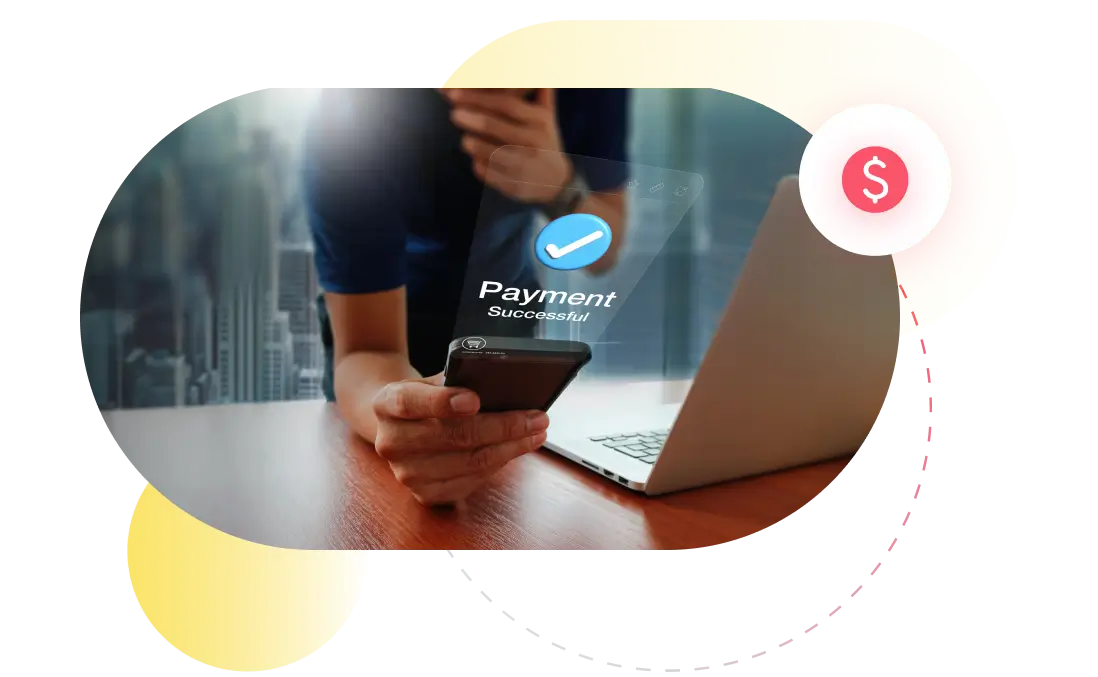
Onboard users in seconds, not days. Deploy tiered address verification flows that maximise completion rates for genuine users while filtering out synthetic fraud.

Onboard Global Traders in Real-Time
Verify investors across 250+ countries & territories. Ensure compliance with international financial regulations while preventing identity theft and high-risk chargebacks.



Secure Trust at Every Transaction
Automate KYC and AML workflows to reduce manual onboarding costs. Strengthen residency checks while delivering the frictionless digital experience modern customers expect.


Power a Fair & Secure Player Experience
Reduce bonus abuse and multi-accounting rings at the door. Enforce location rules and trigger step-up checks without disrupting the player journey.



Build a Trusted, Verified Workforce
Screen freelancers and drivers at scale. Verify residency and reduce onboarding friction while maintaining trust between users.



Scale Your Exchange with Confidence
Balance anonymity with compliance. Instantly verify user jurisdiction to meet Travel Rule obligations and help stop abuse without slowing down legitimate trading volume.



Reduce fraud without blocking growth
Shufti supports marketplace integrity by verifying seller and buyer identities, enabling age-gated journeys where needed, and preserving evidence to support investigations, disputes and risk-led enforcement actions.




Accelerate Growth, Eliminate Friction
Onboard users in seconds, not days. Deploy tiered address verification flows that maximise completion rates for genuine users while filtering out synthetic fraud.
Onboard Global Traders in Real-Time
Verify investors across 250+ countries & territories. Ensure compliance with international financial regulations while preventing identity theft and high-risk chargebacks.
Secure Trust at Every Transaction
Automate KYC and AML workflows to reduce manual onboarding costs. Strengthen residency checks while delivering the frictionless digital experience modern customers expect.
Power a Fair & Secure Player Experience
Reduce bonus abuse and multi-accounting rings at the door. Enforce location rules and trigger step-up checks without disrupting the player journey.
Build a Trusted, Verified Workforce
Screen freelancers and drivers at scale. Verify residency and reduce onboarding friction while maintaining trust between users.
Scale Your Exchange with Confidence
Balance anonymity with compliance. Instantly verify user jurisdiction to meet Travel Rule obligations and help stop abuse without slowing down legitimate trading volume.
Reduce fraud without blocking growth
Shufti supports marketplace integrity by verifying seller and buyer identities, enabling age-gated journeys where needed, and preserving evidence to support investigations, disputes and risk-led enforcement actions.
Accelerate Growth, Eliminate Friction
Onboard users in seconds, not days. Deploy tiered address verification flows that maximise completion rates for genuine users while filtering out synthetic fraud.
Onboard Global Traders in Real-Time
Verify investors across 250+ countries & territories. Ensure compliance with international financial regulations while preventing identity theft and high-risk chargebacks.
Secure Trust at Every Transaction
Automate KYC and AML workflows to reduce manual onboarding costs. Strengthen residency checks while delivering the frictionless digital experience modern customers expect.
Power a Fair & Secure Player Experience
Reduce bonus abuse and multi-accounting rings at the door. Enforce location rules and trigger step-up checks without disrupting the player journey.
Build a Trusted, Verified Workforce
Screen freelancers and drivers at scale. Verify residency and reduce onboarding friction while maintaining trust between users.
Scale Your Exchange with Confidence
Balance anonymity with compliance. Instantly verify user jurisdiction to meet Travel Rule obligations and help stop abuse without slowing down legitimate trading volume.
Reduce fraud without blocking growth
Shufti supports marketplace integrity by verifying seller and buyer identities, enabling age-gated journeys where needed, and preserving evidence to support investigations, disputes and risk-led enforcement actions.
Let’s Tailor your journey
Just a few quick questions to guide your Shufti experience.

Shufti
Market Positioning and Commercial Assessment

Industry stands at 1.7rating

Best ID Verification Innovator

TOP 10 KYC Solution Provider
Best Client Onboarding Solution

Samer Al Tamimi@CEO of Safwa Bank
We take our client's privacy very seriously and always look for new innovative solutions to ensure a safe banking experience. Working with Shufti feels like a breath of fresh air, as their 100% in-house tech keeps our customer's data free from vulnerabilities and fully safe and protected.





PROVEN PLAYBOOKS
Explore Practical KYC & AML Resources
16 August, 2025
5 minutes read
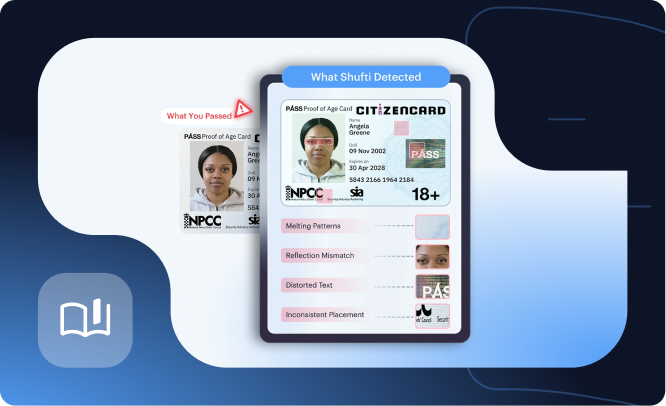
How Much of What You’ve Verified Is Actually Real?
Shufti’s Deepfake Blindspot Audit now runs fully inside your AWS environment, auditing historic KYC for manipulation signals without moving sensitive data off-prem.
whitepapers