

















EUROPE · REGION GUIDE
Identity Verification, KYC, KYB & AML Across Europe
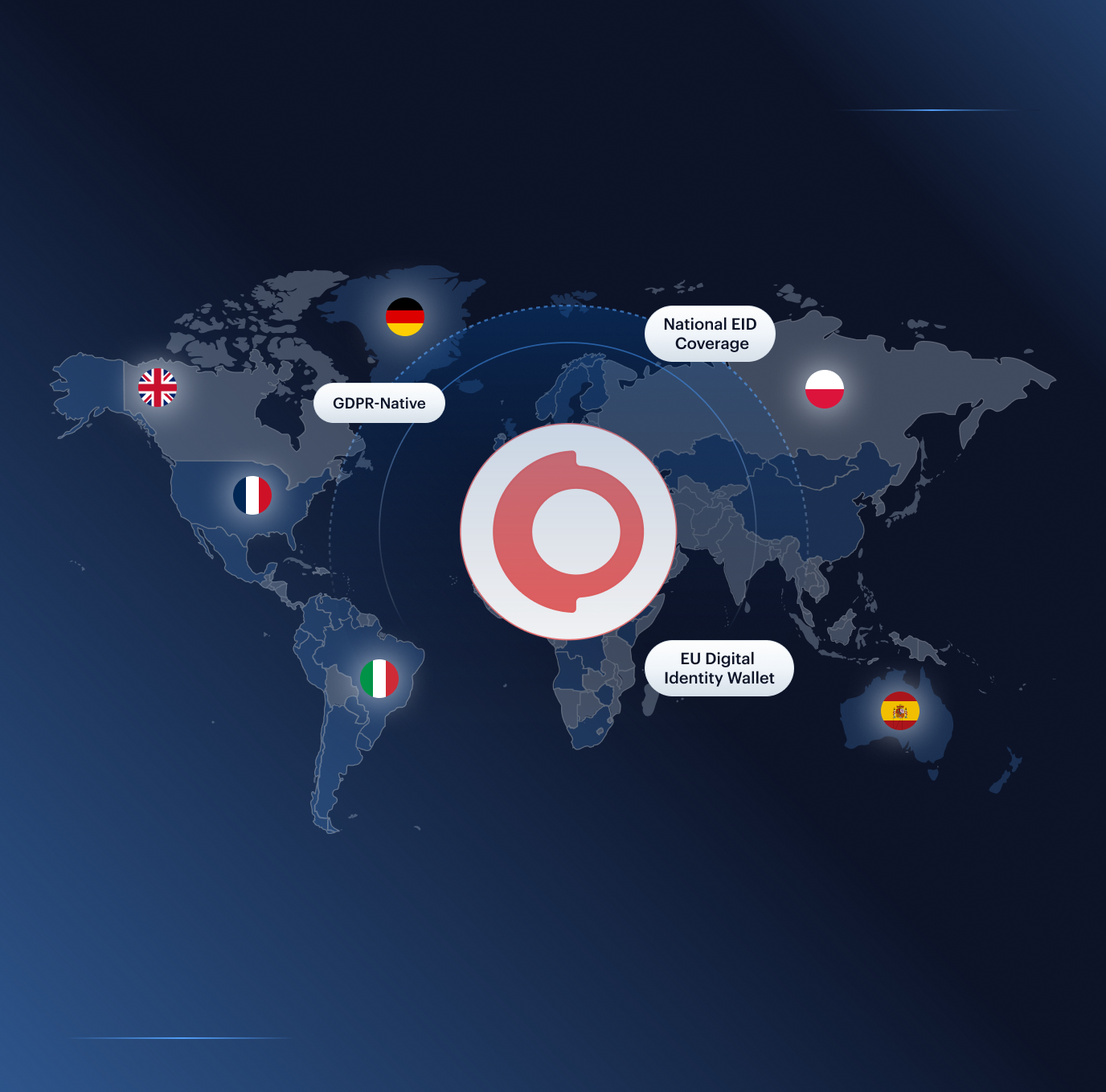
National eID schemes and screening requirements still vary by market. Shufti bridges them with GDPR-native identity verification, KYC, KYB and AML built for the EU, UK and Switzerland — one integration, no rebuild per market.
The regional problem
Harmonized law does not mean harmonized execution
What's genuinely harmonized
- GDPR: one directly-applicable regulation across the EU/EEA
- MiCA: a single, passportable crypto-asset licence
- AMLR: one forthcoming AML regulation and supervisor (AMLA)
- eIDAS2: a mandated EU Digital Identity Wallet in every member state
What still diverges
- AMLD6 transposition timing, staggered through July 2027
- Dozens of incompatible national eID schemes at different maturity levels
- A UK that runs an entirely separate regime post-Brexit
- 24+ working languages and national document formats
Three forces define European compliance right now

The AMLD6 to AMLR/AMLA handover
The EU is replacing 27 national AML rulebooks with one regulation and a single Frankfurt-based supervisor (AMLA), with AMLD6 transposition staggered through July 2027.

eIDAS2 and the EUDI Wallet rollout
Member states must offer a certified wallet by December 2026. Today, enterprises still navigate dozens of national eID schemes at different maturity levels.

DORA and DSA reach vendors and platforms
DORA makes financial entities responsible for the ICT risk their vendors introduce. DSA requires marketplaces to verify business users under Article 30.
Built For Europe's Compliance Reality, Not Retrofitted To It

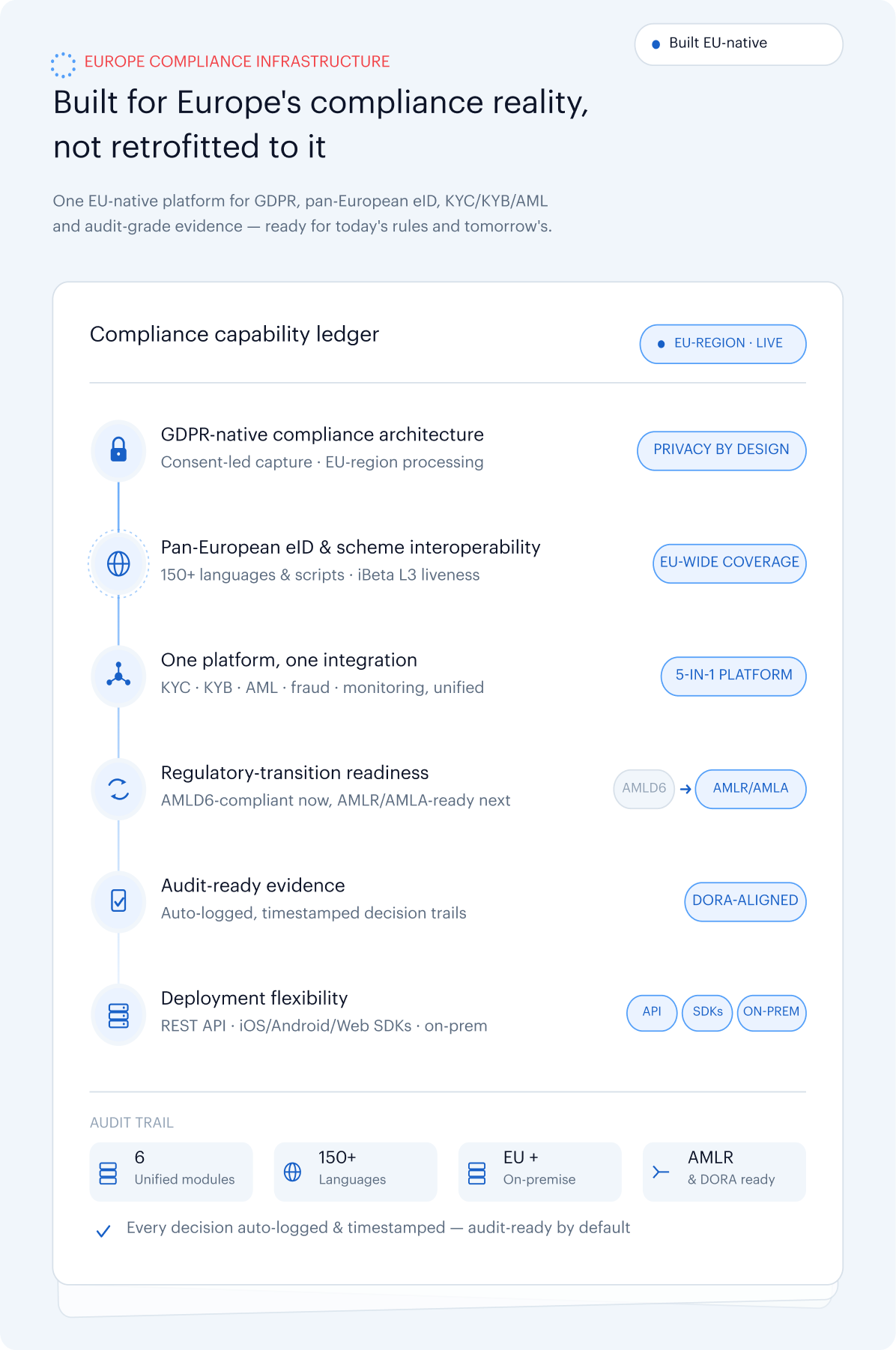
GDPR-native compliance architecture
Consent-led capture, EU-region processing and configurable retention.
Pan-European eID and scheme interoperability
150+ languages and scripts, with iBeta Level 3 liveness validation.
One platform
KYC, KYB, AML screening, fraud prevention and ongoing monitoring in a single integration.
Regulatory-transition readiness
Built for the current AMLD6 regime and the incoming AMLR/AMLA standard, with no re-platforming required.
Audit-ready evidence
Auto-logged, timestamped decision trails suitable for regulator and DORA-driven vendor review.
Deployment flexibility
Single REST API, iOS/Android/Web SDKs, EU-region processing, and an on-premise option for strict-residency buyers.
Markets matrix
Nine Markets, Three Regulatory Tracks
In production
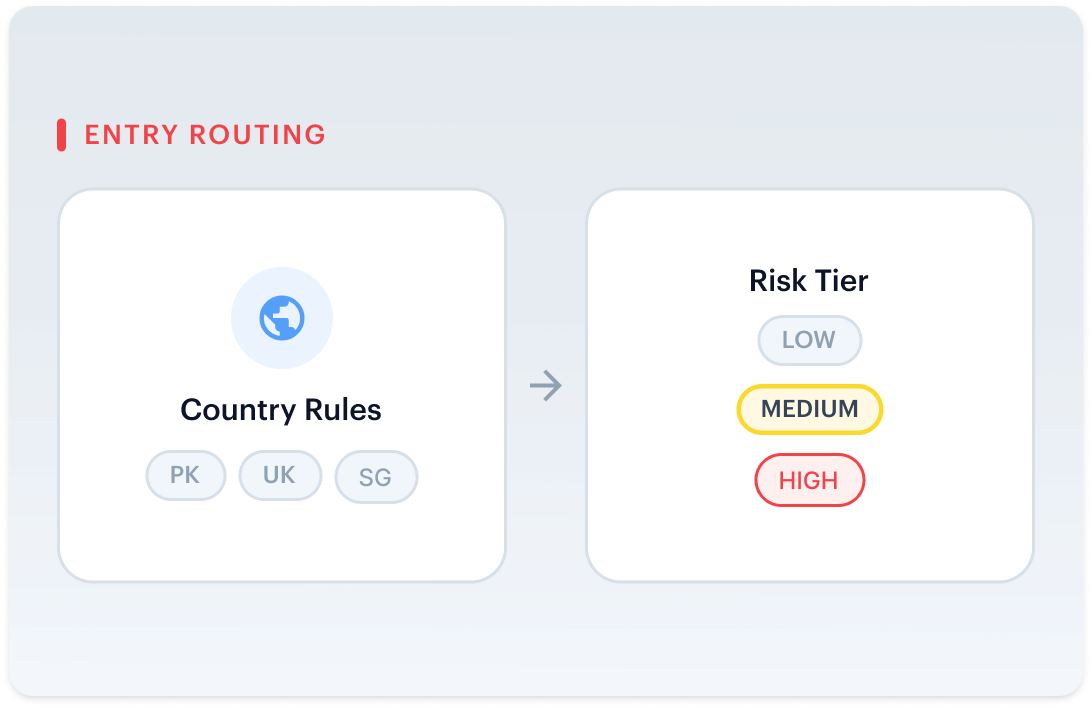
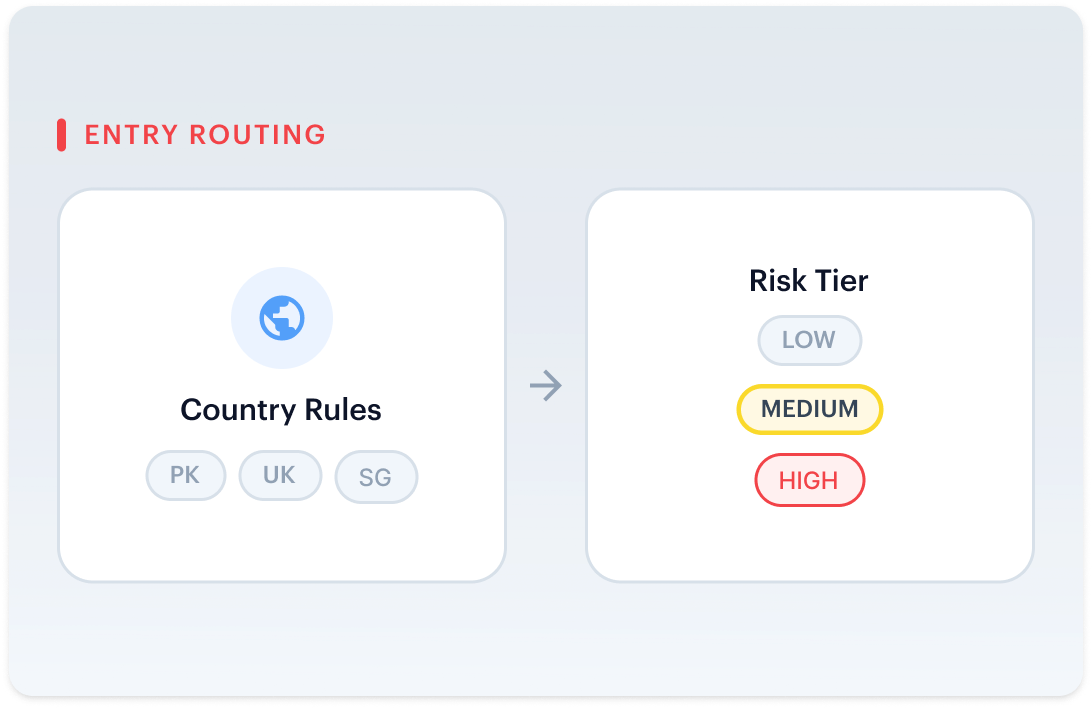
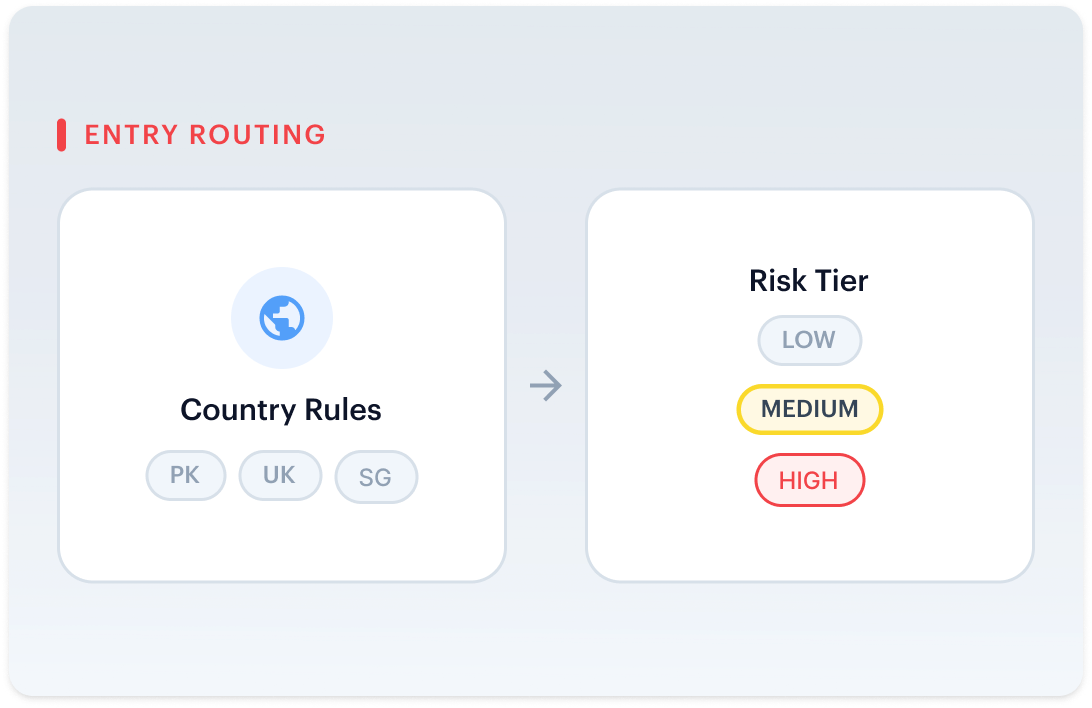
One Risk-Based Workflow, Every European Market
01
STEP 01
Country entry
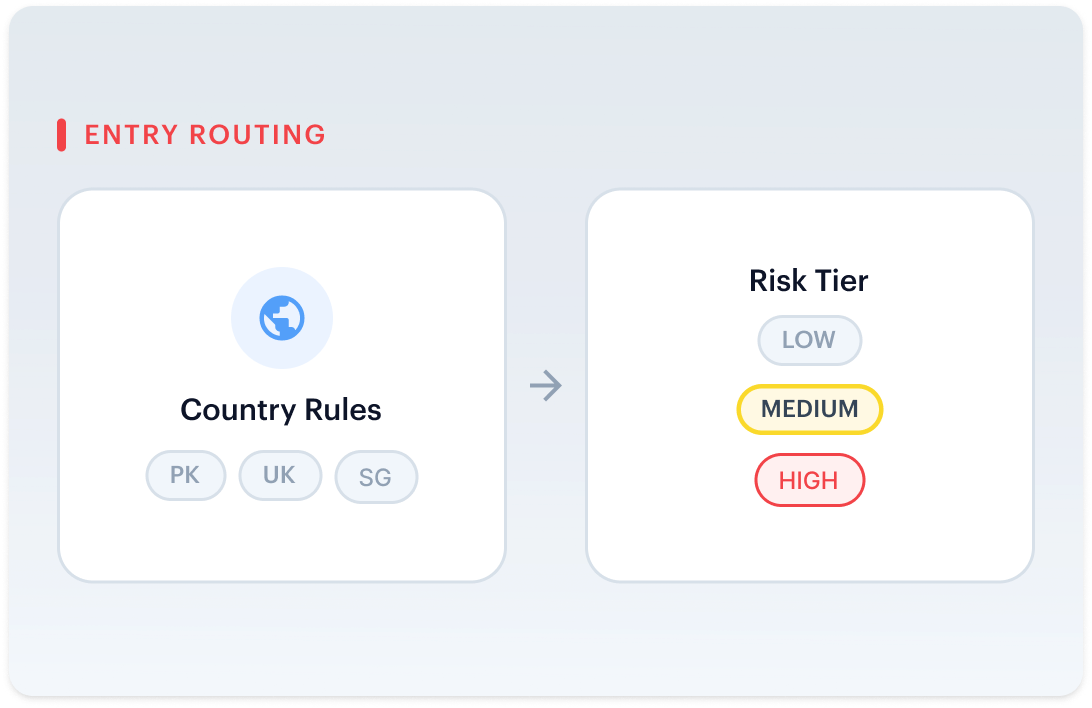
User enters from an EU, UK, or Swiss market.
02
STEP 02
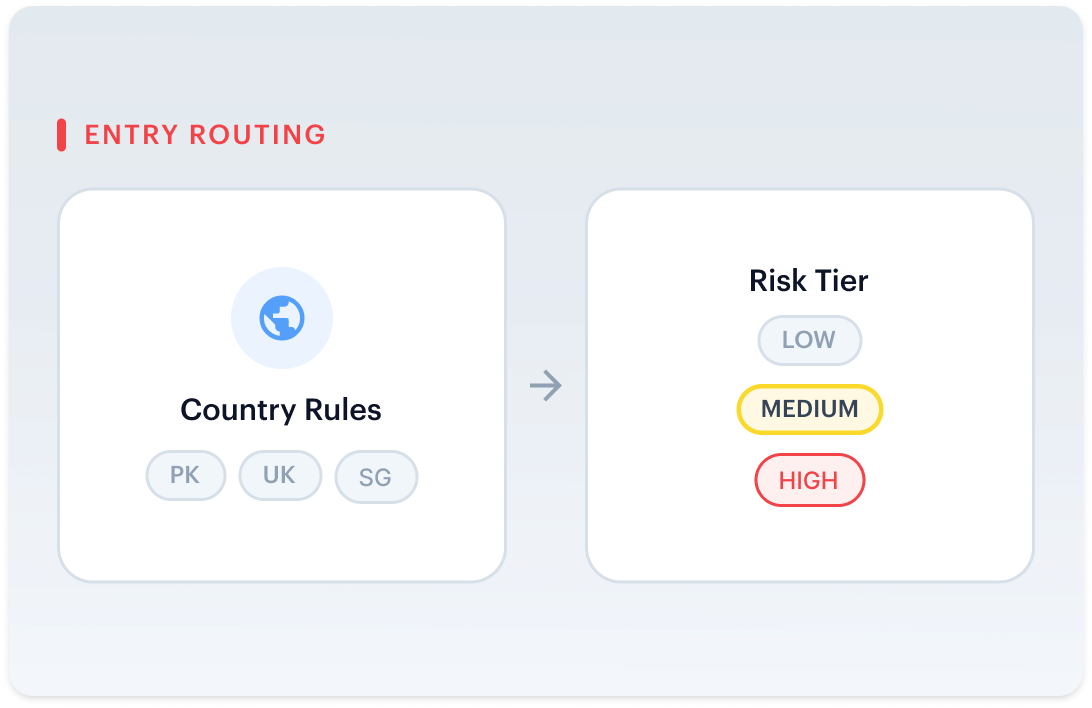
Risk Rules Applied
03
STEP 03
Consent & Identity Verification
04
STEP 04
AML & Sanctions Screening
05
STEP 05
Step-Up & Case Review
06
STEP 06
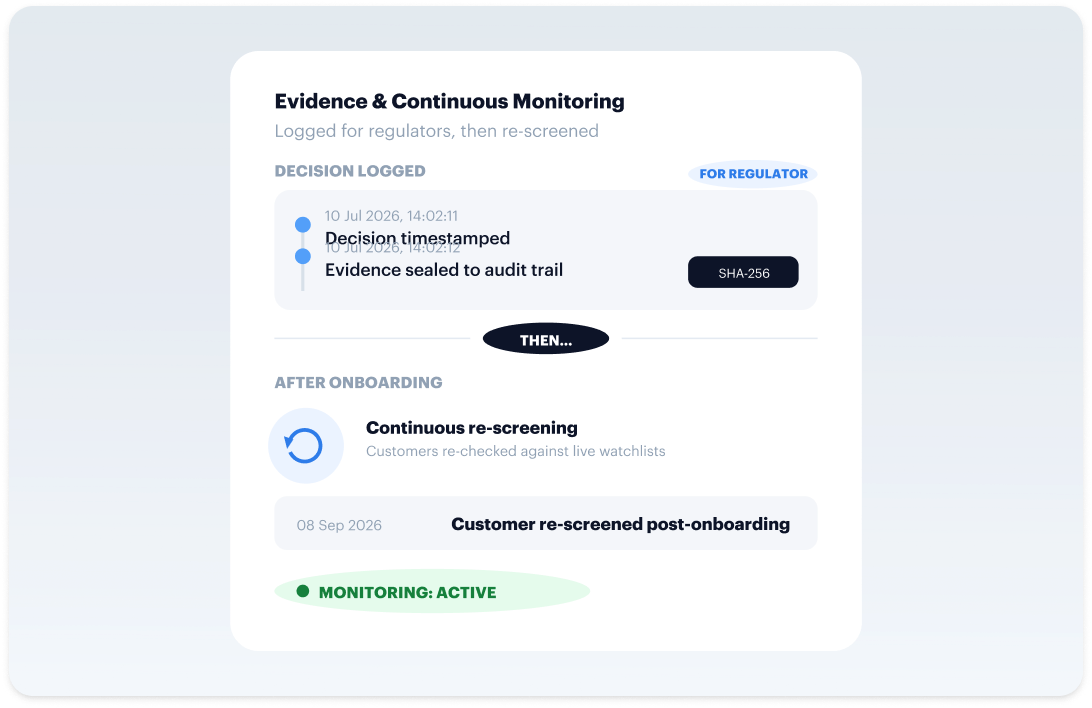
Audit Trail & Ongoing Monitoring
REGIONAL FRAUD AND SAFEGUARDING
The Fraud Patterns That Define European Risk

Account takeover / APP fraud
UK APP fraud alone: £450.7M lost in 2024; EU/EEA credit-transfer fraud €2.2bn, up 16% year on year. Liveness, device and behavioural signals, ongoing monitoring.

Synthetic identity
Used in 21% of first-party frauds detected in Europe in 2025; 37% of firms still verify manually. Document forensics, face match, database cross-checks.

Document fraud
Dozens of national ID and residence-document formats still circulate across the EU. OCR across EU and UK formats, template validation, tamper detection.

Deepfake and biometric spoofing
Deepfake attempts rose sharply across major markets through 2025; 72% of EU firms expect more AI-driven fraud. Passive + active liveness, injection detection, iBeta Level 3.

Money mule activity
Europol's EMMA 9 identified 10,759 mules and 1,013 arrests across 27 countries. KYC and ongoing monitoring, 1:N face search for multi-accounting.

Shell company / UBO opacity
Only 17 of 30 EU/EEA countries had completed UBO-register interconnection as of Sept 2025. KYB: UBO resolution and per-director AML.

Sanctions evasion
Both EU and UK regimes are expanding fastest against evasion infrastructure since 2022. Sanctions/PEP screening with ongoing re-screening.

Marketplace impersonation
The EU's first DSA fine (€120m, Dec 2025) cited paid verification badges enabling impersonation. KYB and trader verification under DSA Article 30.
Industry-Specific Solutions
Built For Your Business

Compliance Officer
Concern: keeping pace with the AMLD6 to AMLR/AMLA transition without a rebuild. Proof: audit-ready decision trails and configurable retention.
Head of Product
Eliminate market-specific friction with a configurable engine that scales to 240+ regions actively processed.
Head of Engineering
Deploy one REST API for the entire user lifecycle; sandbox day one, documented lawful-basis handling, iOS/Android/Web SDKs.
Fraud Analyst
Slash manual review times with a unified Fraud Hub that surfaces the reason behind every flag before you action it.
Regional FAQ
Frequently Asked Questions
Is Shufti GDPR compliant?
Shufti's data-processing architecture is built around GDPR's lawful-basis and data-minimization requirements, including explicit-consent handling for biometric data under Article 9. Confirm the specific processing terms for your use case with your Shufti compliance contact.
Does Shufti support the EU Digital Identity Wallet (EUDI Wallet)?
The EUDI Wallet is still rolling out. Member states must offer a certified wallet by December 2026. Shufti's identity verification bridges today's national eID schemes and is positioned for Wallet acceptance as member-state rollouts mature. Ask your Shufti contact for the current status.
Is the UK treated the same as the EU?
No. The UK runs its own regime: UK GDPR, the Money Laundering Regulations 2017 (as amended), and a separate FCA-based crypto authorisation gateway. It sits outside eIDAS2, MiCA and AMLR/AMLA entirely. Shufti supports the UK as its own market with its own compliance framing.
Which European countries does Shufti support?
Coverage spans the EU, UK and Switzerland as part of Shufti's broader 230+ country and territory coverage. See the Markets Matrix above for country-specific detail, or view the full supported-countries list.
Does Shufti support MiCA-regulated crypto businesses?
Yes. Shufti's KYC/AML capabilities support the CDD, EDD and screening obligations CASPs need under MiCA. Confirm Travel Rule data-capture requirements for your specific transfer flows with your Shufti contact.
How does Shufti handle data residency in Europe?
Shufti offers an EU-region processing option alongside on-premise deployment for enterprises with strict residency requirements. Retention is configurable per client and jurisdiction.
Onboard across Europe without rebuilding for every market
Twenty-plus national frameworks, one integration, and data residency set per market, backed by ISO 27001:2022, SOC 2 Type 2 and independent liveness validation.