









 AMLR Solutions
  AMLR Consultation
 EUDI Wallet
 Onboarding
 Ongoing Monitoring
 FRAML
FRAML KYC
KYC KYB
KYB KYI
KYI Age Assurance
 Workforce IAM
 Candidate Verification
 Account Takeover
 Bonus/ Promotion Abuse
 Chargeback Fraud
 Deepfake
 Document Fraud
 Fraud Networks
 Impersonation Fraud
 Money Mule Activity
 Multi-Accounting
 Party Fraud
 Regulatory & Compliance Risks
 Synthetic Identity Fraud
 Adult Content
 Banking
 Crypto
 Fintech
 Forex
Forex Compliance
 Fraud prevention
 Trust & safety
 Global expansion
 Compliance Officers
 Developers
 Fraud Analysts
 Product Managers
 Journey Builder
  Global Trust Platform
 Customer Profiles
 Vendor Comparison
 IDV Case Management
 AML Case Management
 Regulatory Reporting
 Agentic Rule Builder
  AI Compliance Co-Pilot
  Fraud Analytics
 Fraud Hub
  OCR
OCR Shufti AI
 Bank Account Verification
  Biometric Duplication
 Database Checks
 Document Intelligence
 Government ID
 Mobile Driver's License
 NFC
NFC Selfie Liveness
 Brand Personalisation
 Deployment Options
 Identity Methods
 IDV Modes
 Multi-tenancy
 On-Premise IDV
 Secure Capture
 Shufti MCP


QUALIFIED ELECTRONIC SIGNATURES
Qualified Electronic Signatures For Trusted Global Agreements
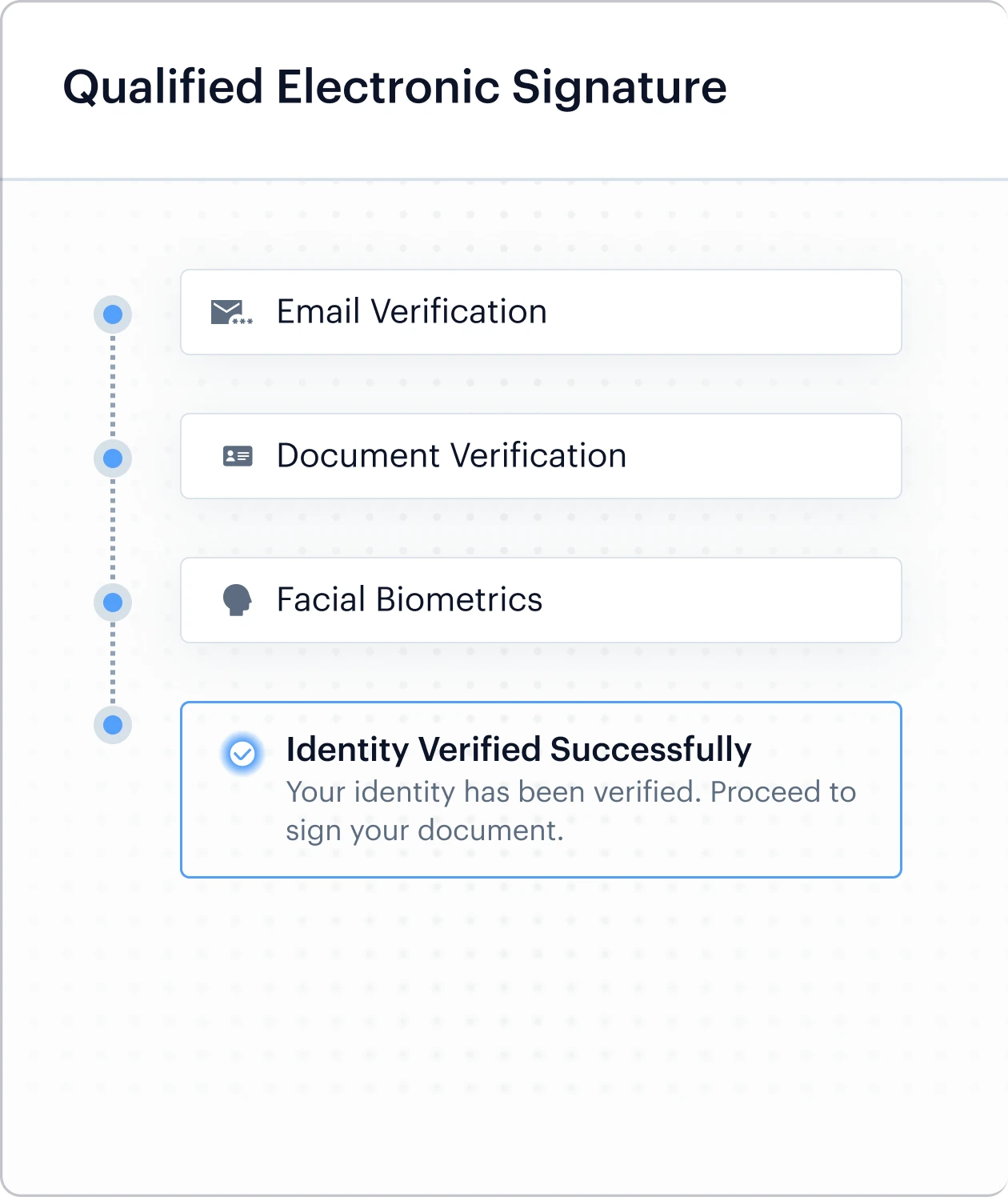
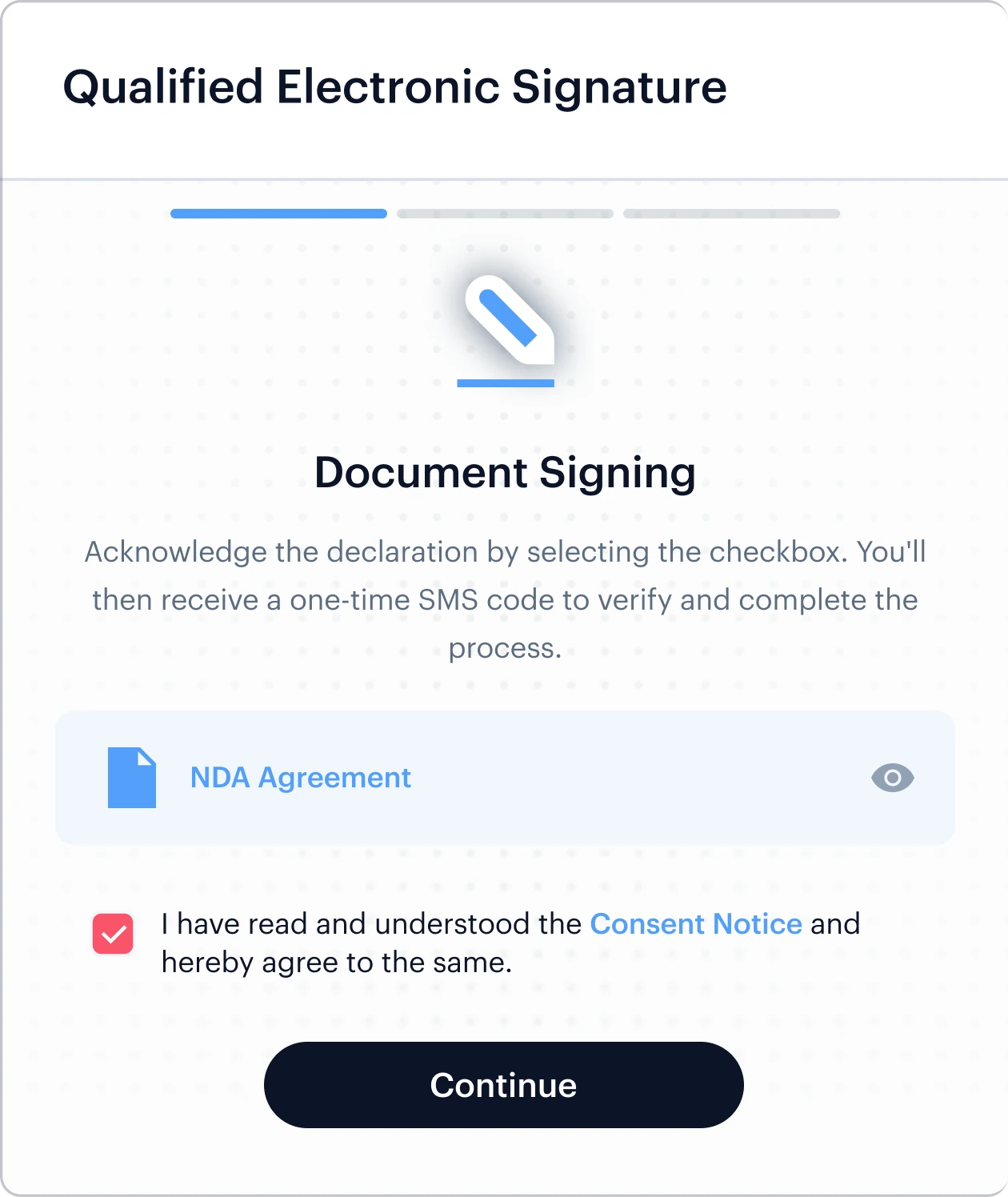
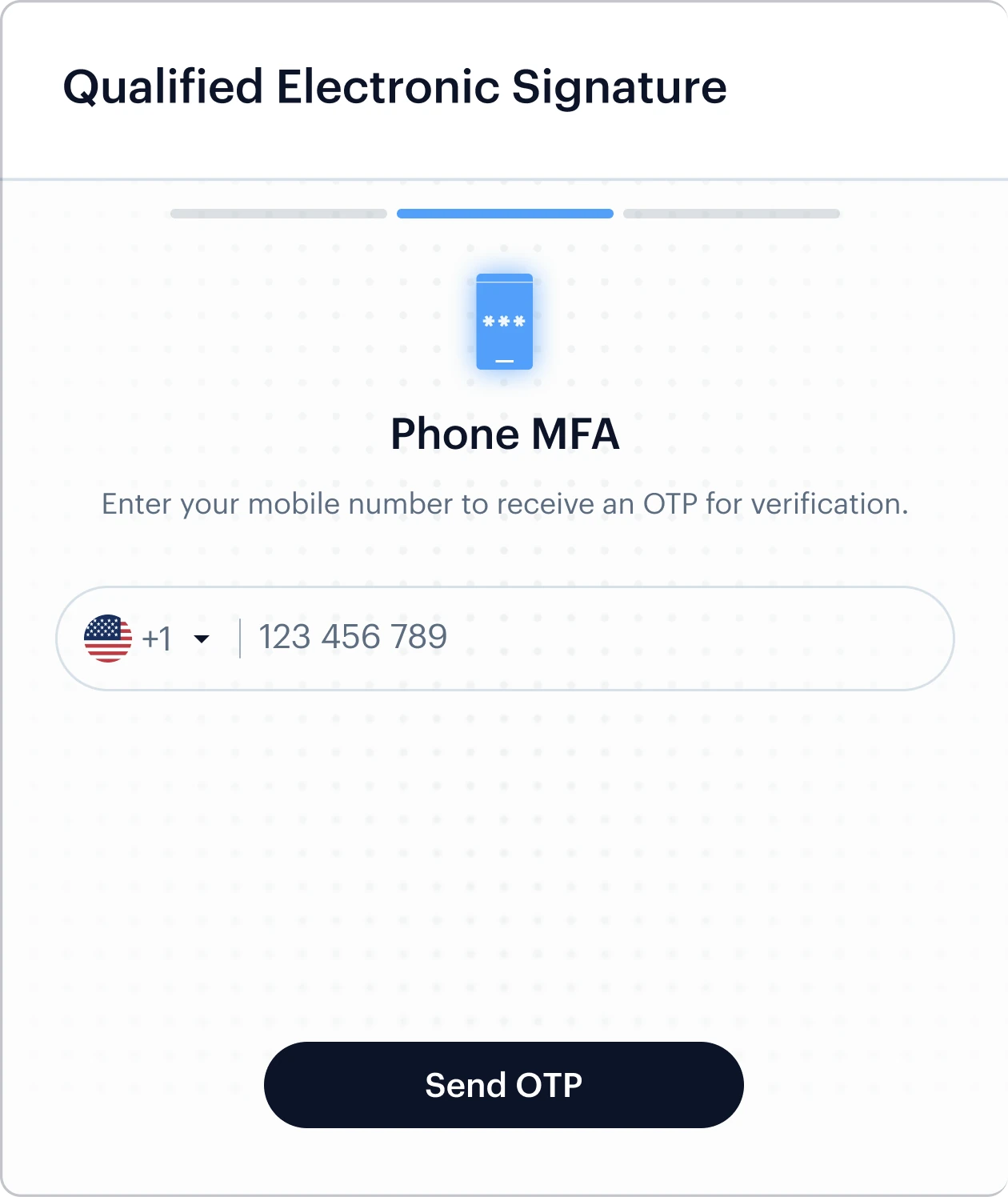
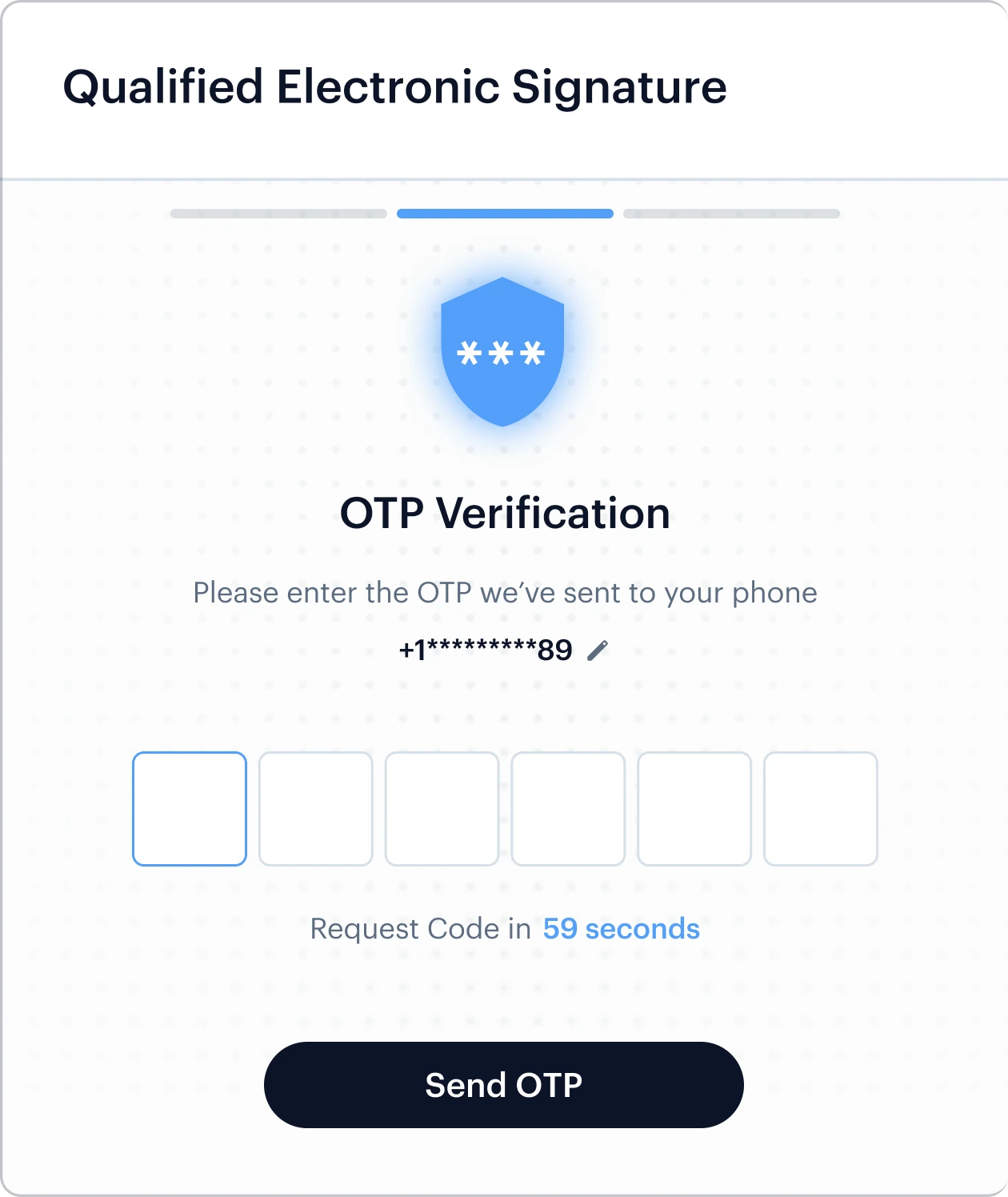
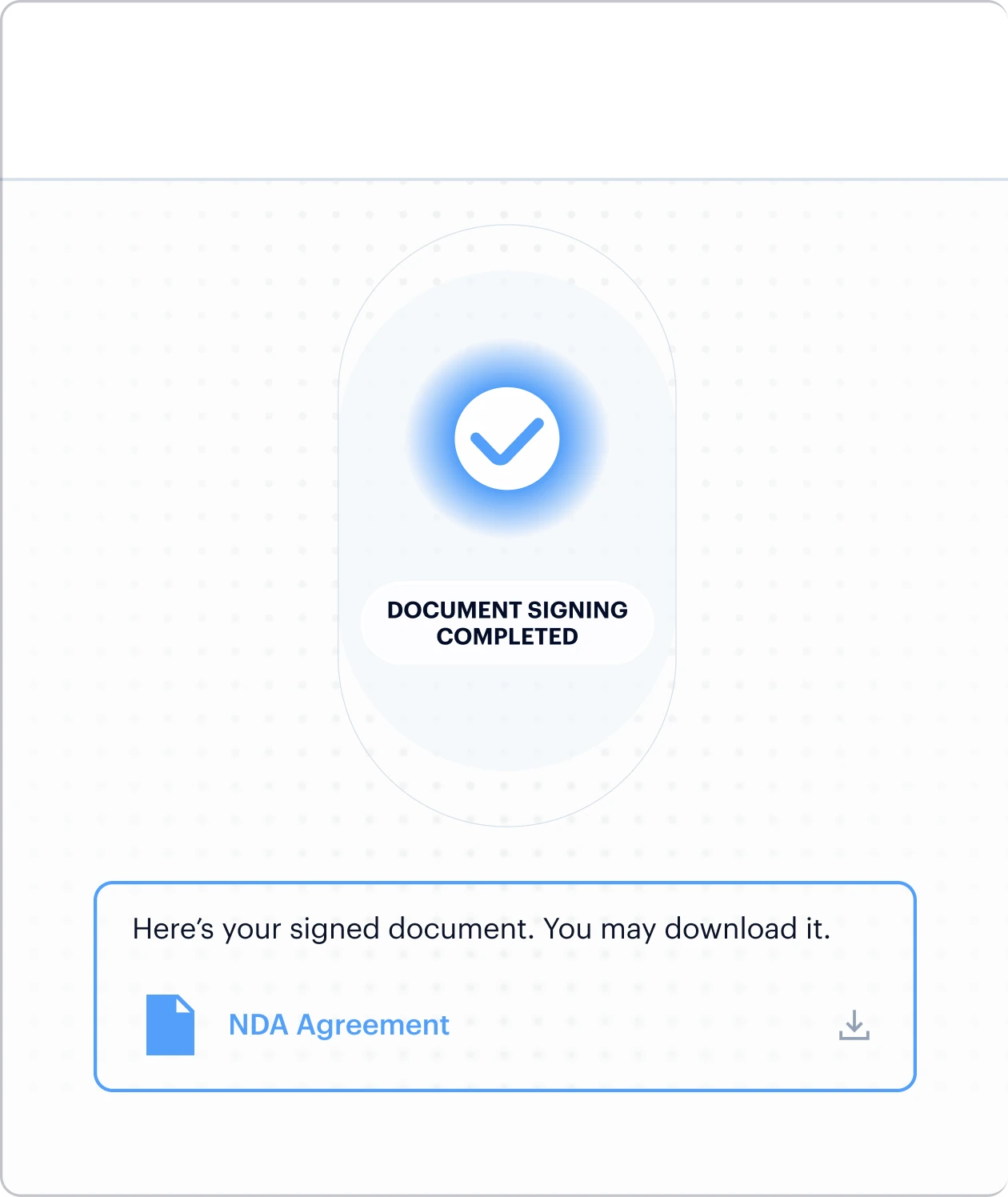
Shufti's QES solution combines qualified electronic signatures with identity verification in one platform. Three identity-proofing flows lead into a hosted signing ceremony powered by Evrotrust, an EU Qualified Trust Service Provider.

Qualified Trust Built On Verified Identity
EU Member States with Legal Recognition
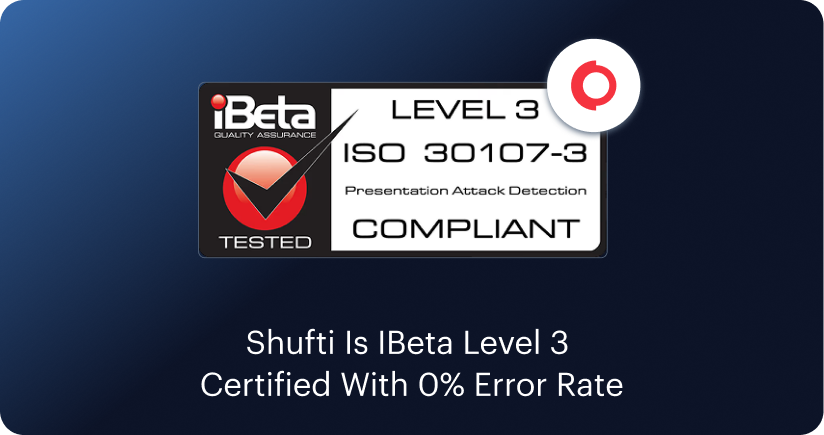
iBeta PAD Level 3 Liveness
Evidence Retention Per Signed Document
LoA High Compliant
Trusted By 2000+ Clients Worldwide









From Verified Identity To A Compliant, Binding Signature
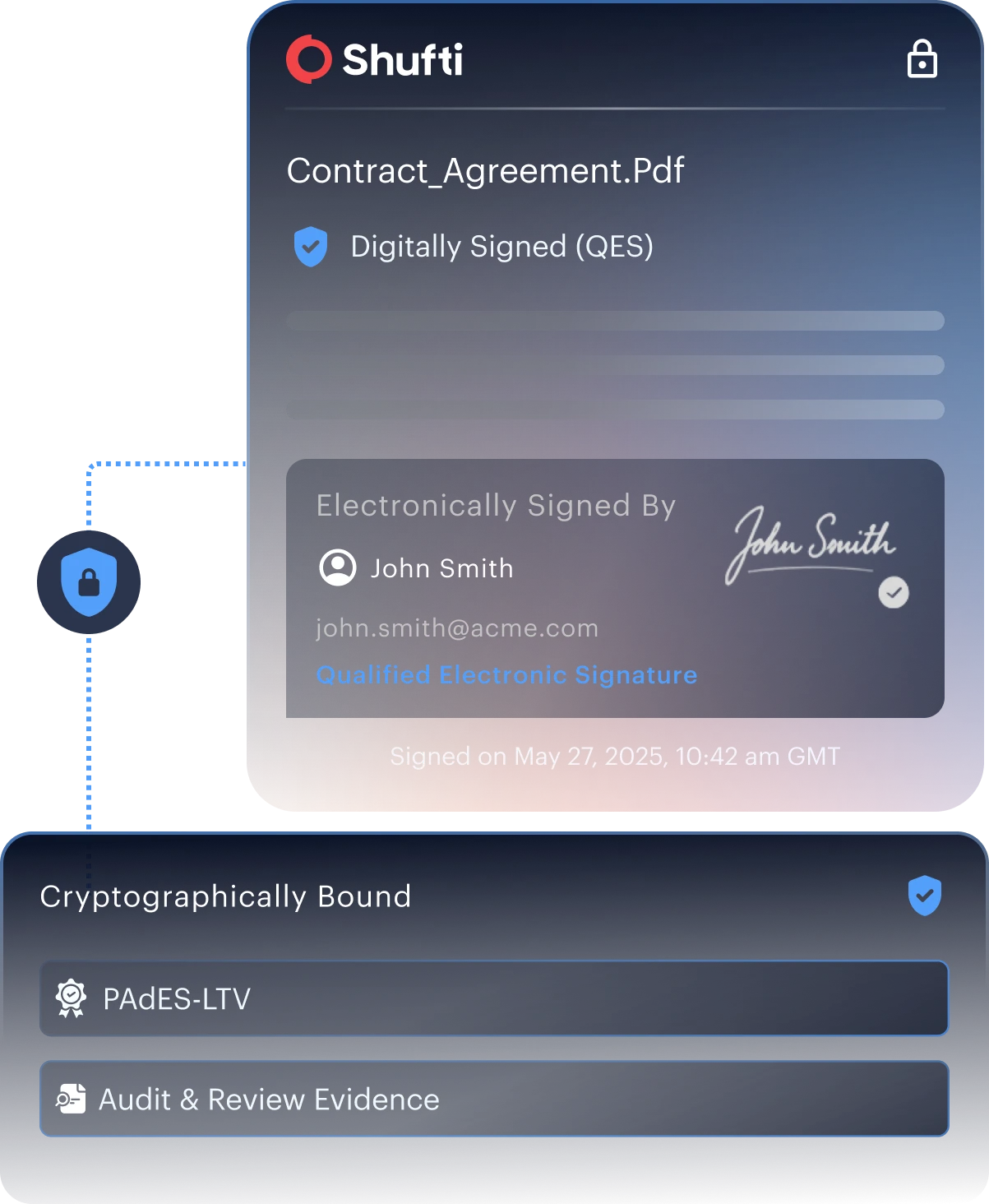
A Legally Binding Signature That Defends Itself
CRYPTOGRAPHICALLY BOUND AND TAMPER-EVIDENT
Every QES is bound to the verified signatory, making post-signature changes detectable and giving the business a verifiable record instead of a simple status flag.
PADES-LTV BUILT IN
Long-term validation is embedded at the moment of signing and can remain verifiable for up to 10 years, independent of the original certificate's later expiry.
BUILT FOR CHALLENGE AND REVIEW
Powered by Evrotrust and recognised under eIDAS, QES provides a certificate, trusted timestamp, revocation status, and audit-ready evidence.
Identity And Document
Handling That Fit The Risk
THREE IDENTITY FLOWS
Verify through a supported national eID, ID document and selfie, or NFC face and selfie based on market and assurance needs.
FLEXIBLE DOCUMENT HANDLING
Keep documents in the client environment with hash-only signing or submit the full document to Evrotrust. Hash-only supports higher-confidentiality use cases.
HIGH-ASSURANCE PROOFING
iBeta PAD Level 3 passive liveness is combined with deepfake and injection-attack defences before certificate issuance.
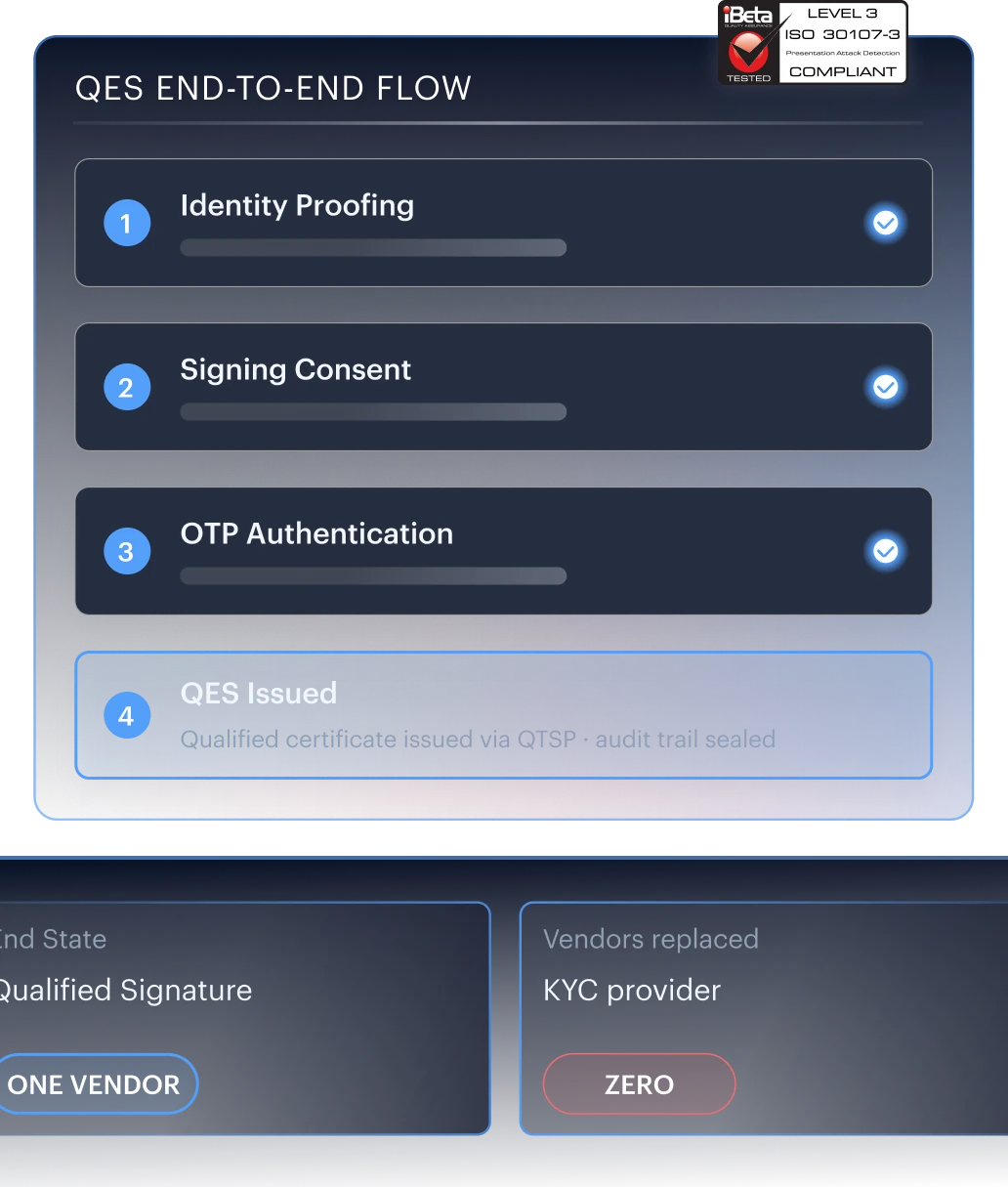
One Hosted Ceremony, From Identity To Signature
HOSTED SIGNING, NO EXTRA HARDWARE
The ceremony runs in an iFrame, redirect, or in-app browser from any device, with no smart card, app install, or PIN to provision.
EVROTRUST-POWERED QUALIFIED SIGNING
After identity verification and signing consent, Evrotrust, an EU Trusted List QTSP, issues the qualified certificate and completes the QES in the same session.
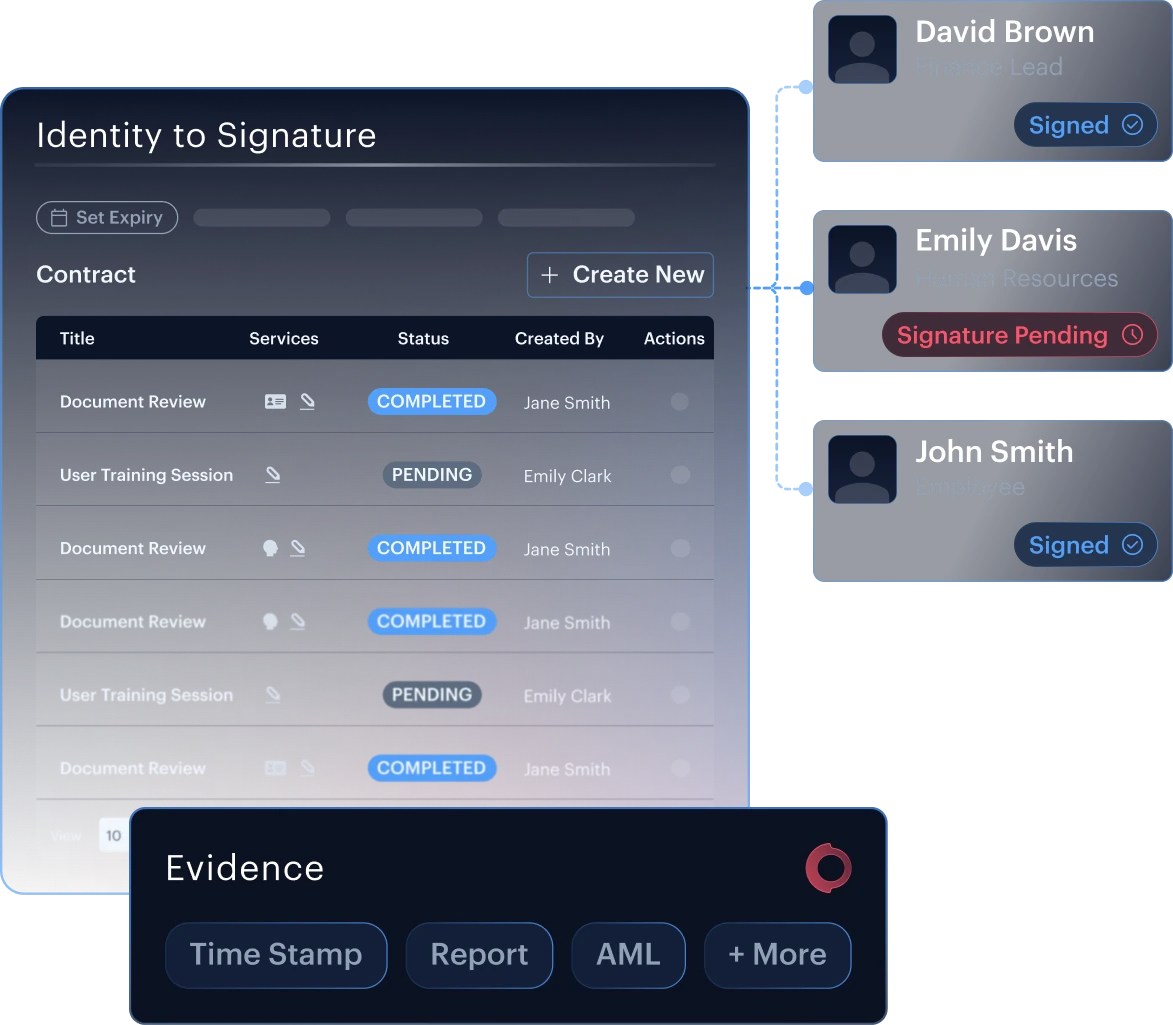
ONE EVIDENCE PACKAGE
The signed document, certificate, timestamp, revocation status, identity report, AML screening output, and audit trail are delivered through one connected workflow.
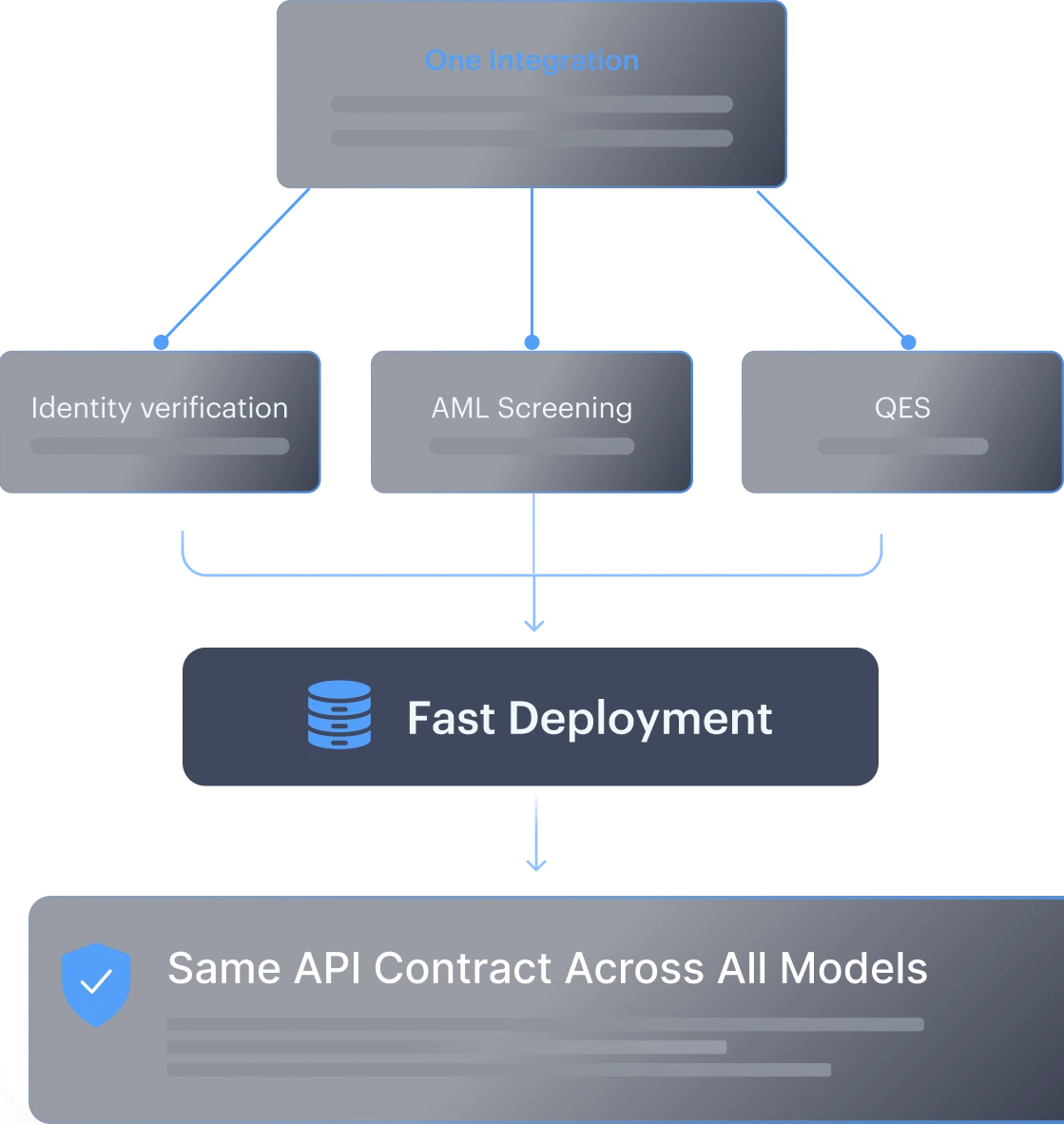
Compliance And Signing That Scale Globally
ONE RELATIONSHIP AND ONE INTEGRATION
Identity verification, AML screening, and QES run on one Shufti platform with a single QES API, one webhook, and a unified audit trail instead of multiple vendors, contracts, and audit trails.
FAST TO DEPLOY
Customers complete legally binding contracts in minutes, while teams integrate the hosted QES flow in weeks using Shufti’s existing infrastructure.
READY FOR REGULATORY CHANGE
AMLR applies from 10 July 2027. Shufti QES connects high-assurance identity, qualified trust services, AML evidence, and signing in one workflow, helping businesses prepare for evolving compliance needs.
Built for Regulated Markets
Identity Gaps hit every sector differently
Verified Borrowers, Faster Agreements
Loans and account-opening agreements, signed with ink-level legal weight, no branch visit required. The same session that verifies the applicants identity issues the qualified certificate, giving lenders a signed, audit-ready agreement without a separate KYC step.
EVERYTHING YOU NEED TO KNOW IN ONE PLACE
Frequently Asked Questions
What is a Qualified Electronic Signature (QES)?
The highest tier of electronic signature under EU law: an Advanced Electronic Signature created inside a certified Qualified Signature Creation Device (QSCD) and backed by a qualified certificate from an accredited Qualified Trust Service Provider (QTSP). It carries the same legal effect as a handwritten signature, automatically, across all 27 EU member states.
Why do I need QES instead of a standard e-signature?
A standard e-signature, a typed name or a checkbox, proves almost nothing about who actually signed. QES verifies the signer's identity first and binds that identity to the signature through a certified process, so the agreement holds up if it's ever challenged, without needing to gather extra evidence after the fact.
Is QES only useful for businesses based in the EU?
No. Any business that signs agreements with EU-based customers or partners, or simply wants the strongest available signature assurance for a cross-border agreement, can use QES, regardless of where the business itself is headquartered.
How does QES support AML and KYC compliance?
QES runs on the same identity verification used for Know Your Customer checks. Document and biometric verification confirm the signer before the certificate is issued. Regulatory frameworks increasingly support higher-assurance digital identity methods for remote due diligence. Under EU AMLR, relevant qualified trust services sit alongside eIDAS-recognised electronic identification as accepted verification routes. QES does not, by itself, make a business fully AML-compliant, but it removes a gap between identity verification and contract execution.
How does the verification and signing process work?
The signer completes identity verification, document check, face match, and liveness detection, inside one session. Once verified, a qualified certificate is issued by an accredited QTSP and the signature is applied immediately, no separate signing tool or second verification round required.
Which countries recognise QES?
All 27 EU member states, plus Iceland, Liechtenstein, and Norway under the EEA framework. Outside the EU/EEA, recognition depends on local law or bilateral arrangements, though the underlying identity evidence still supports the agreement.
Does the signer need a hardware token or smart card?
No. eIDAS 2.0 allows the signing device to be certified remote software, so the flow runs entirely from the signer's own device, wherever they are.
What happens when eIDAS 2.0 and the EUDI Wallet roll out?
eIDAS 2.0 introduces the EU Digital Identity (EUDI) Wallet, with member states targeting availability by December 2026. Shufti's remote signing flow is built on the same remote-software model the EUDI Wallet relies on, so it is positioned to accept wallet-issued credentials as national wallets roll out.
What evidence do I get for every signed document?
The qualified certificate, a trusted timestamp, an OCSP-verified revocation status, the biometric identity verification record from the same session, and a complete signing-session log, ready to hand to an auditor or counterparty.
Can multiple parties sign the same document?
Yes. Shufti supports sequential multi-party signing, where each signer completes their own verification and signing step, with an individual timestamp and evidence record captured per signer.
Why choose Shufti for QES?
Shufti combines identity verification, AML screening, and qualified signing software in one platform, so businesses aren't stitching together separate vendors for onboarding and for signing. The same verified identity that issues the signature also feeds AML and KYC checks, giving compliance teams one connected record instead of two.
Prove The Signer Is Real Before The Qualified Signature Is Binding
Verify the signer, issue a qualified certificate and capture a legally binding signature in one connected flow. Talk to the Shufti team about bringing QES and AML/KYC verification into onboarding and contract journeys across global operations.