










 AMLR Solutions
  AMLR Consultation
 EUDI Wallet
 Onboarding
 Ongoing Monitoring
 FRAML
FRAML KYC
KYC KYB
KYB KYI
KYI Age Assurance
 Workforce IAM
 Candidate Verification
 Account Takeover
 Bonus/ Promotion Abuse
 Chargeback Fraud
 Deepfake
 Document Fraud
 Fraud Networks
 Impersonation Fraud
 Money Mule Activity
 Multi-Accounting
 Party Fraud
 Regulatory & Compliance Risks
 Synthetic Identity Fraud
 Adult Content
 Banking
 Crypto
 Fintech
 Forex
Forex Compliance
 Fraud prevention
 Trust & safety
 Global expansion
 Compliance Officers
 Developers
 Fraud Analysts
 Product Managers
 Journey Builder
  Global Trust Platform
 Customer Profiles
 Vendor Comparison
 IDV Case Management
 AML Case Management
 Regulatory Reporting
 Agentic Rule Builder
  AI Compliance Co-Pilot
  Fraud Analytics
 Fraud Hub
  OCR
OCR Shufti AI
 Bank Account Verification
  Biometric Duplication
 Database Checks
 Document Intelligence
 Government ID
 Mobile Driver's License
 NFC
NFC Selfie Liveness
 Brand Personalisation
 Deployment Options
 Identity Methods
 IDV Modes
 Multi-tenancy
 On-Premise IDV
 Secure Capture
 Shufti MCP


FRAML: Fraud + AML
Connect Every Fraud Signal to Its AML Outcome
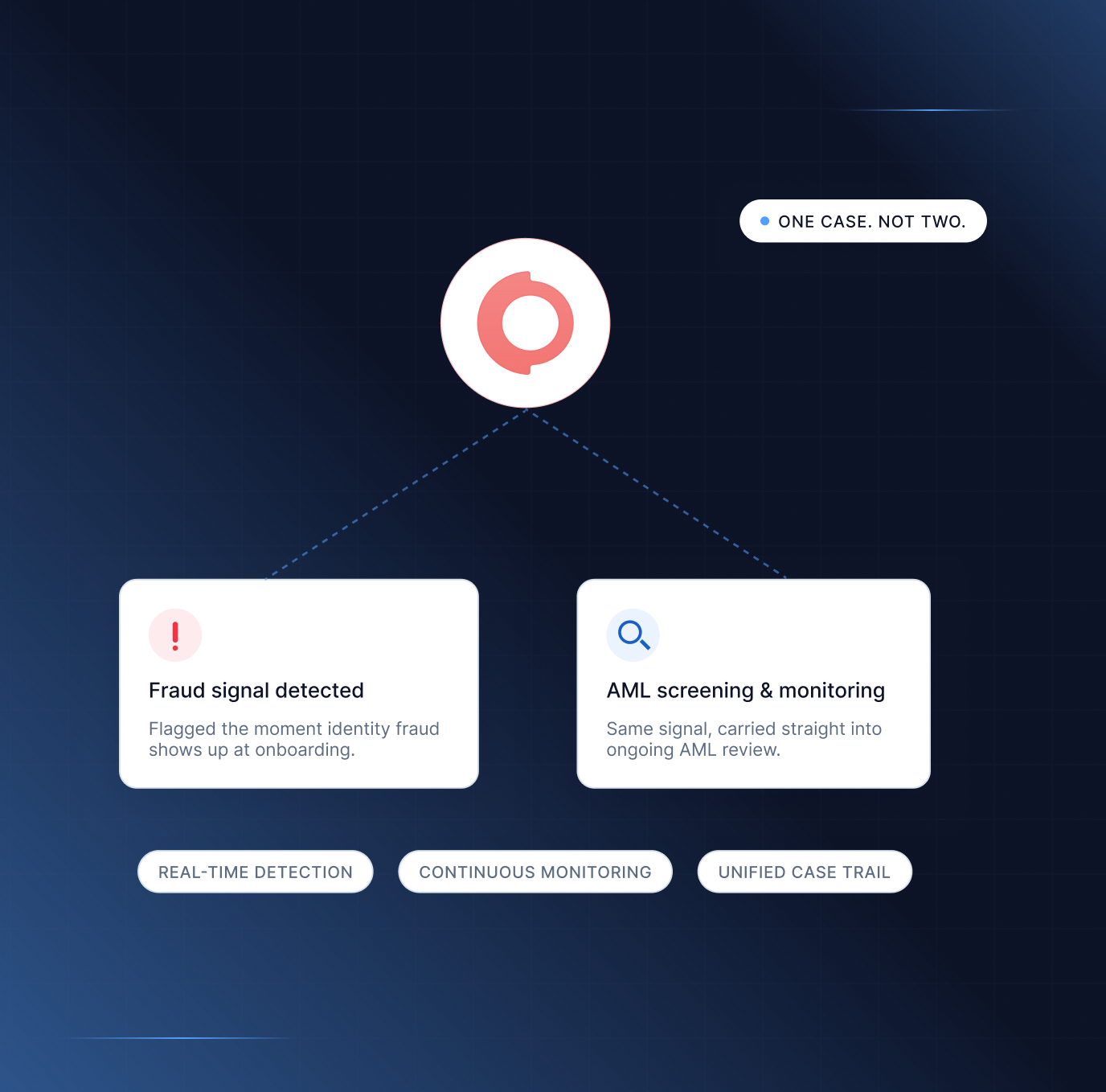
Shufti detects identity fraud at onboarding and carries the signal through to AML screening and monitoring, so financial crime is treated as one problem, not two.
Wide Fraud and AML Coverage, Precisely Triaged







Identity Carries Every Flag to a Filed STR
Catch Fabricated Identities Before an Account Exists
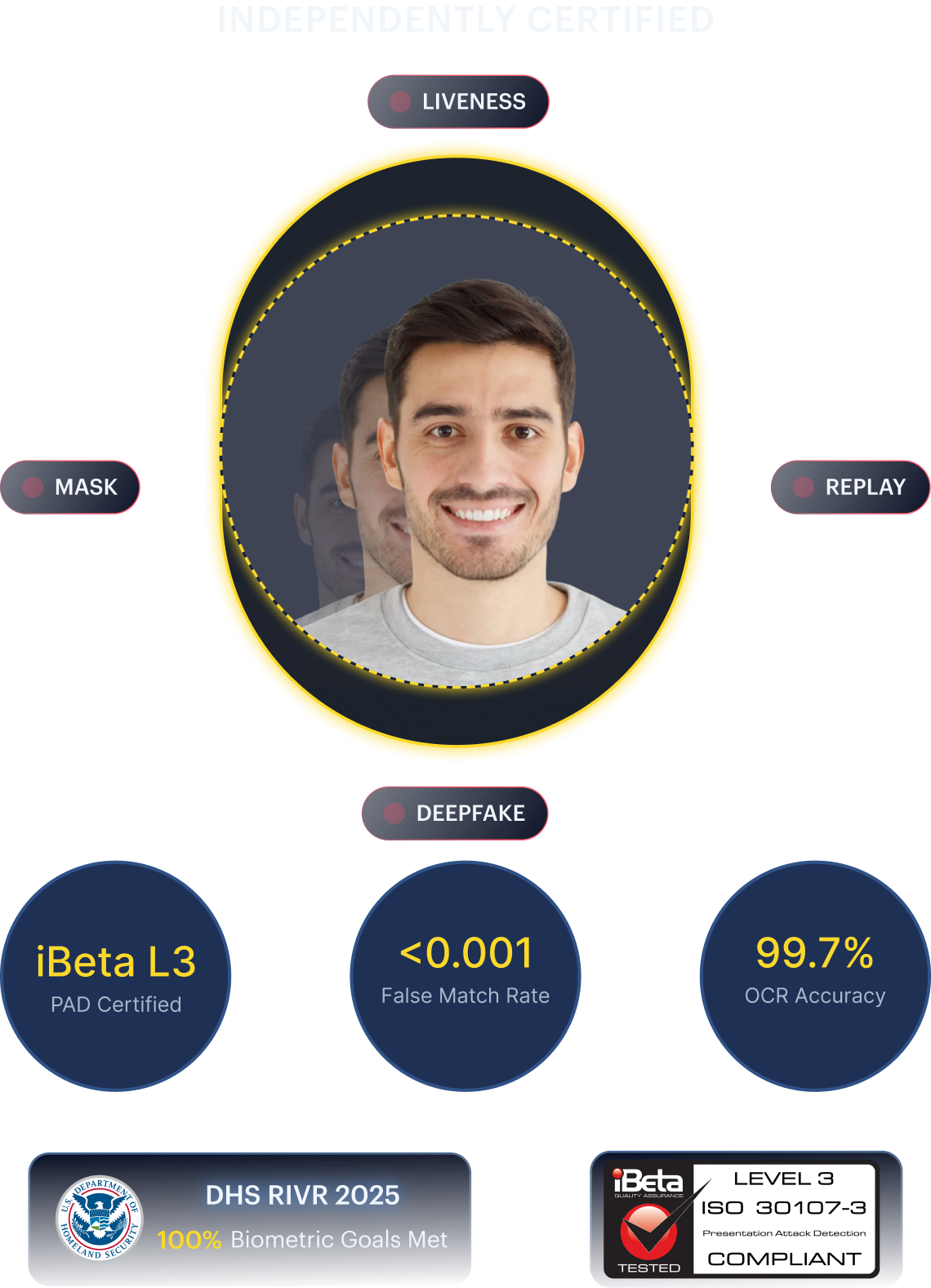
Synthetic identities and deepfakes are designed to clear a single onboarding check and disappear. Shufti's liveness detection holds iBeta Level 3 PAD certification, and its selfie-to-document matching met every performance goal in DHS's 2025 Remote Identity Validation Rally, an independent evaluation only 31% of tested systems passed in full.
Multi-layer facial analysis identifies masks, replay attacks, injection attempts, and AI-generated deepfakes before verification completes. With an independently validated <0.001 False Match Rate and ~99% True Acceptance Rate, genuine users are approved while sophisticated presentation attacks are stopped.
Nine forensic inspection layers analyse document integrity, security features, image manipulation, and template consistency beyond OCR. Processing completes in under 15 seconds with 99.7% OCR accuracy, exposing sophisticated document fraud before approval.
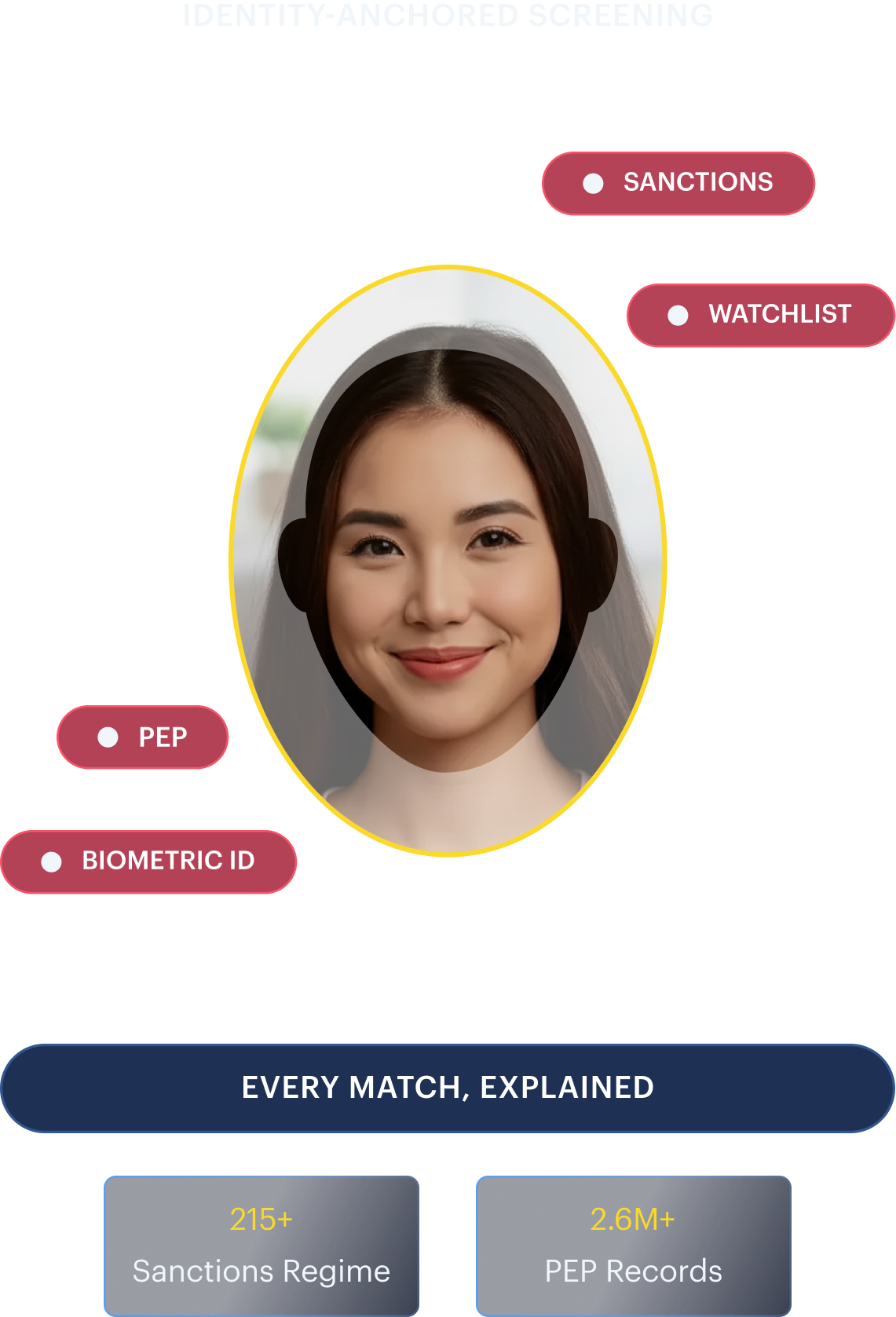
Screen Against a Verified Identity, Not a Name String
Sanctioned and politically exposed actors slip through loose, name-only matching. Shufti runs sanctions, PEP, and watchlist screening against a biometrically verified identity, cutting false hits while catching the matches that matter.
Biometrically verified identity data strengthens sanctions, PEP, and adverse media screening against 215+ global sanctions regimes and 2.6 million+ PEP records, improving match confidence while reducing unnecessary false positives.
Every potential match carries supporting identity attributes, a confidence score, and source references, so investigators see why an alert fired and how the risk was scored.
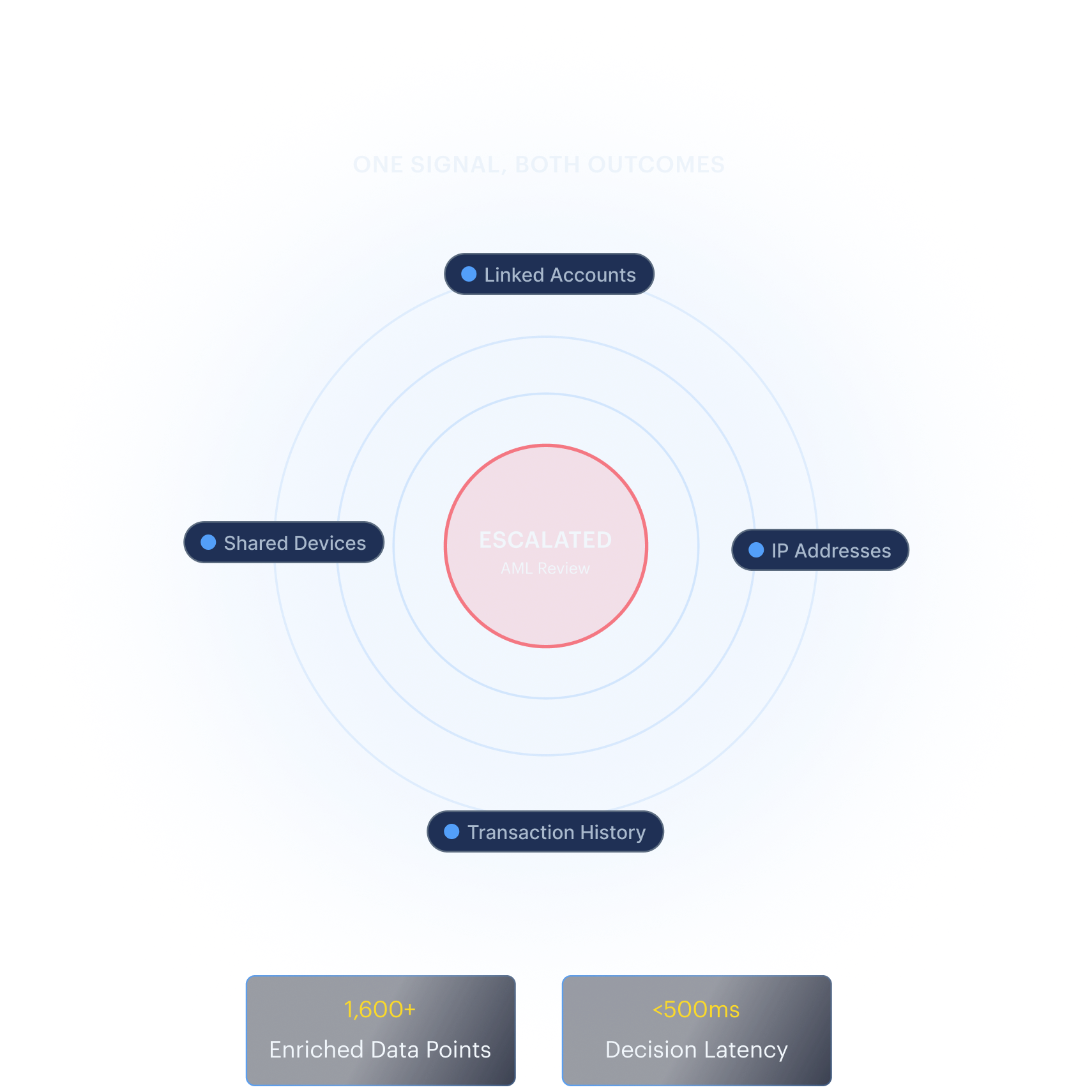
FRAML Connects Every Fraud Signal to Its AML Outcome
A compromised account becomes a mule within minutes, moving funds before fraud and AML teams compare notes. Shufti's transaction monitoring flags high-velocity structured transfers across a network of linked accounts, not just one, and routes the same account into AML review, connecting the fraud event to the laundering outcome.
Behavioural analytics combine linked identities, shared devices, IP addresses, and transaction history across 1,600+ enriched data points, with decision latency under 500 milliseconds.
High-risk accounts route directly into analyst review, carrying linked fraud signals and AML evidence into the same case, so investigators start with full context instead of a blank queue.
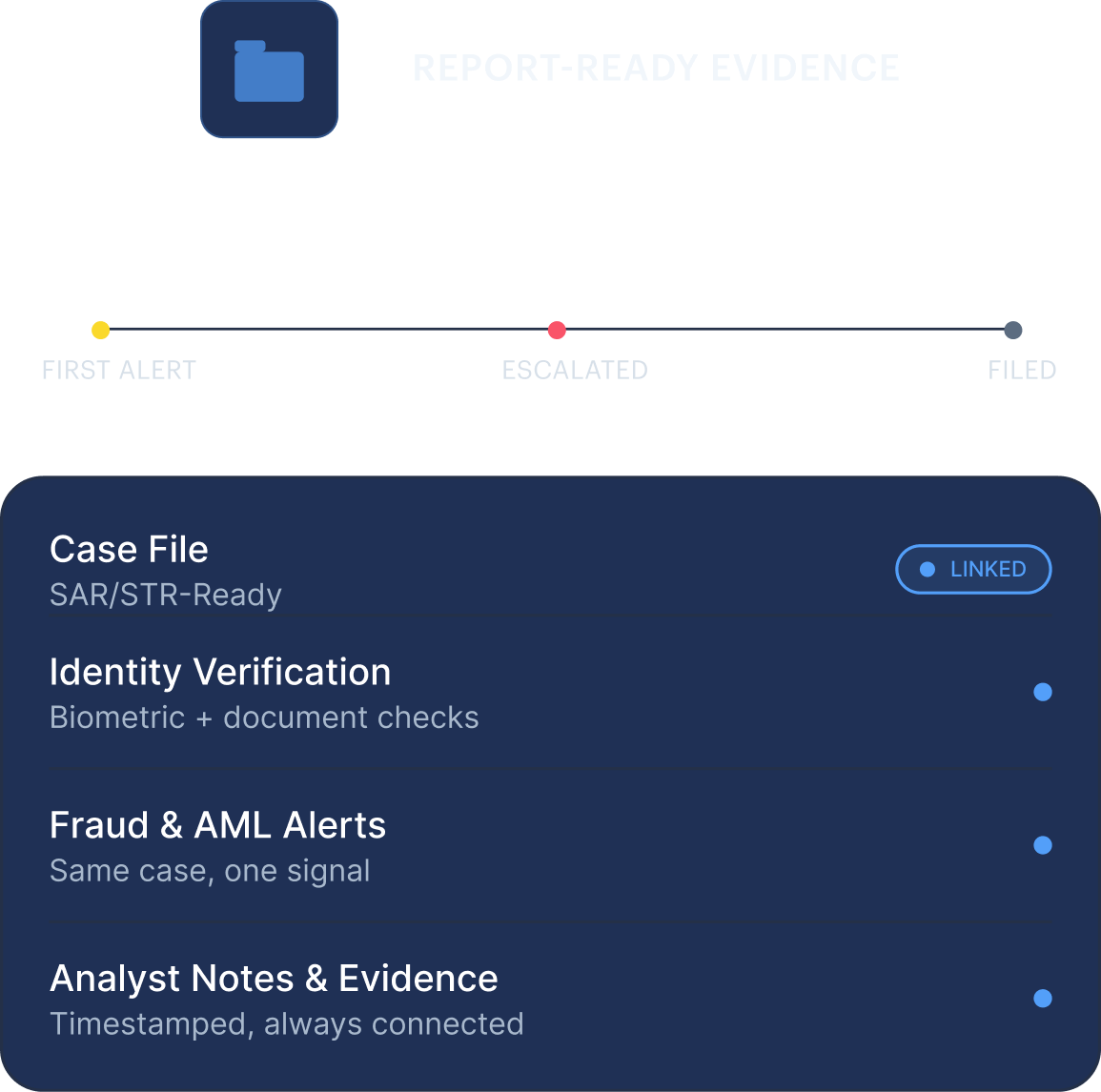
Move From Flagged Case to Filed Report
Investigations collapse when the evidence trail has to be reconstructed by hand, and a regulator expects a filed report, not a folder of screenshots. Shufti logs every alert, decision, and analyst action in one case file, so compliance teams can move from a flagged account to a SAR/STR-ready filing without rebuilding the evidence by hand.
Every alert, analyst action, review step, approval, and escalation is automatically timestamped, creating a complete audit trail that preserves every decision from the first alert to final resolution.
Identity verification, fraud alerts, AML screening results, analyst notes, and supporting evidence remain linked inside a single case file, eliminating manual evidence collection during investigations.
CORE CAPABILITIES · BUILT INTO THE WORKFLOW
The Investigation Surface Behind Every Decision
Organised across three layers: what catches the signal, what decides on it, and what proves the decision afterward.
Detection & Screening
Forged documents, deepfakes, presentation attacks, and synthetic identities are caught at onboarding through forensic document inspection and biometric liveness. This establishes the verified-identity anchor that every downstream screening, monitoring, and AML decision resolves back to.
Sanctions, PEP, RCA, adverse media, and watchlist matches, including UBO chains for business entities, are surfaced at alert level. The reason a record matched is visible before the analyst opens the case file.
Point-in-time screening checks each transaction against sanctions and typology rules as it happens. Continuous monitoring tracks behaviour over time, velocity, structuring, corridor risk, so patterns are caught, not just single transactions.
Per-profile and per-source rescreening frequency. Continuous monitoring picks up sanctions designations, role changes, and adverse media as they break.

Risk Decisioning
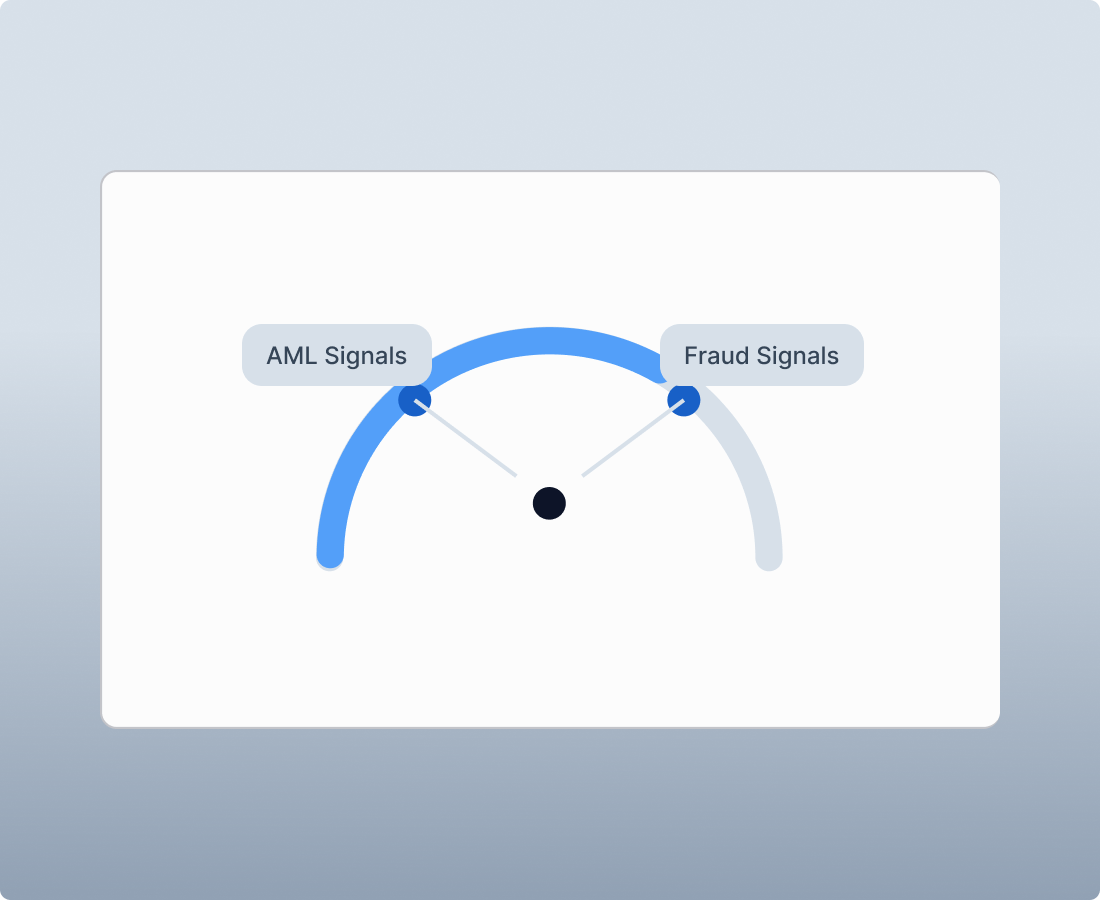
One risk score and one rule set drive both fraud and AML outcomes, embedded wherever screening runs.
Every profile carries a single computed risk score built from both identity/fraud signals and AML signals together, so analysts see one score, not two separate flags, when deciding how deep to investigate.
Typology-specific rules for account takeover, mule behaviour, and structuring are configured without engineering, so new fraud patterns can be turned into AML triggers without waiting on a release cycle.
AML screening can be embedded directly into onboarding flows, core systems, or existing case-management environments.
New or changed rules replay against historical transactions before going live, showing projected alert volume, precision, and fraud caught, so rules are tuned with evidence instead of guesswork.
When a transaction can't be scored reliably because data is missing, the platform returns an explicit Not Assessable result instead of defaulting to a clean score, so gaps stay visible rather than silently read as low risk.
Case Management & Reporting
Every decision escalated, logged, and ready for the report a regulator will ask for.
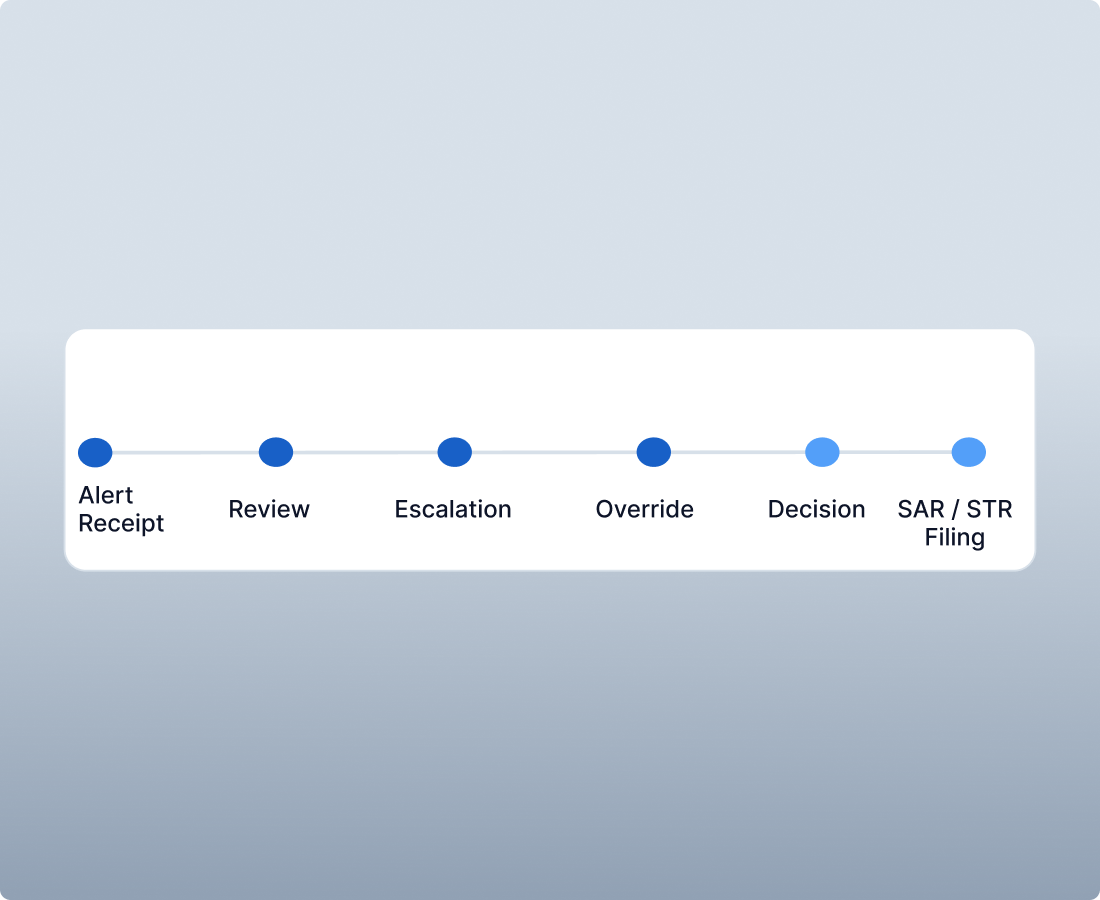
Every action timestamped and user-attributed: alert receipt, review, escalation, override, decision, SAR and STR filing. Exportable on demand.
Configurable escalation paths route flagged cases to an MLRO or senior analyst for sign-off, and the escalation itself becomes part of the case's audit trail.
Console for analysts inside the back office. API for core platform integration. Webhooks for real-time push to internal systems. Email for non-login stakeholders.
Approved SAR and STR reports transmit directly to the regulator in that jurisdiction's native format, with no separate portal or export step, while threshold-based reports batch automatically with a deadline guard before the filing window closes.
HOW IT WORKS
From Identity Signal to AML Outcome
Signal Detected
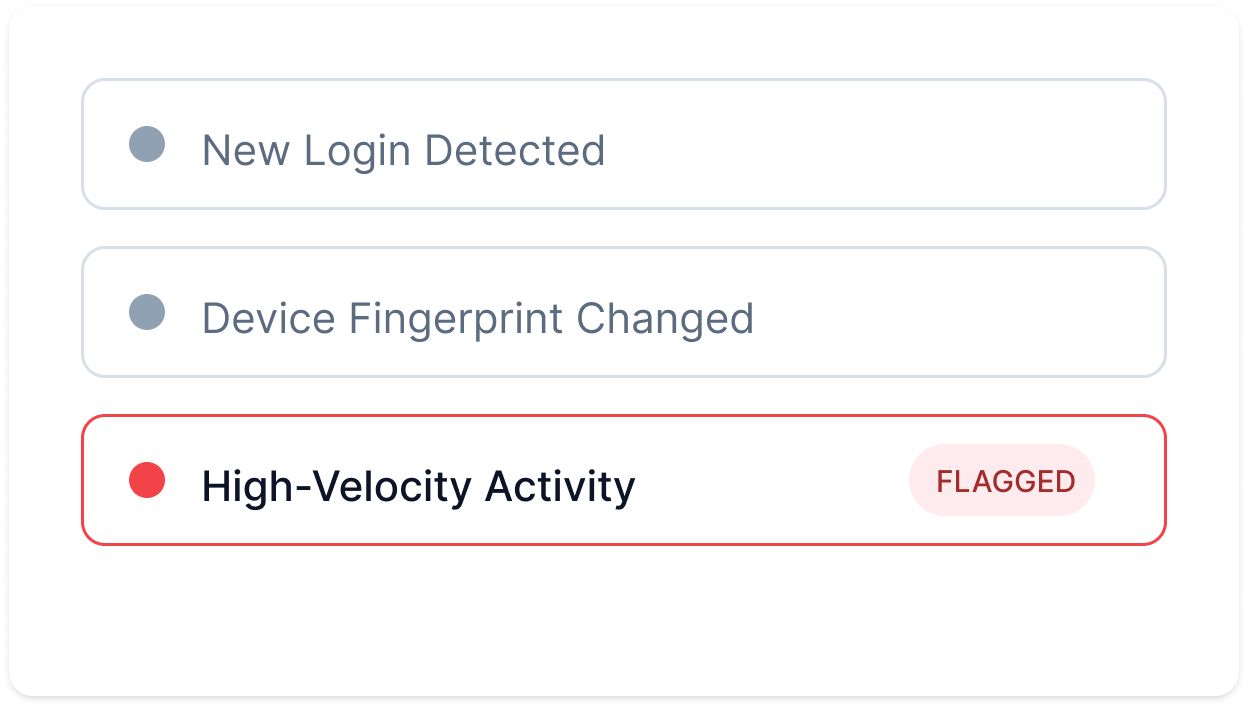
An identity or behavioural anomaly is flagged: a device mismatch, an unusual login, or high-velocity activity.
Risk Assessed
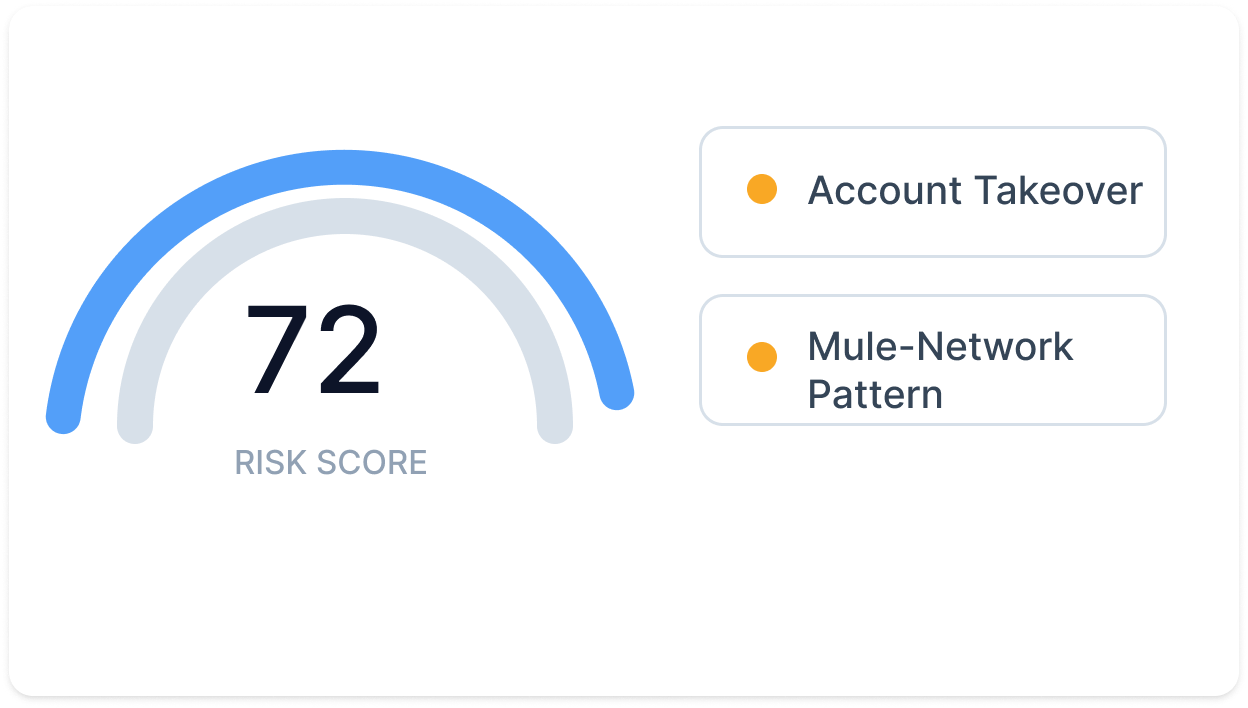
A risk score is computed against known fraud typologies, including account takeover and mule-network patterns.
AML review triggered
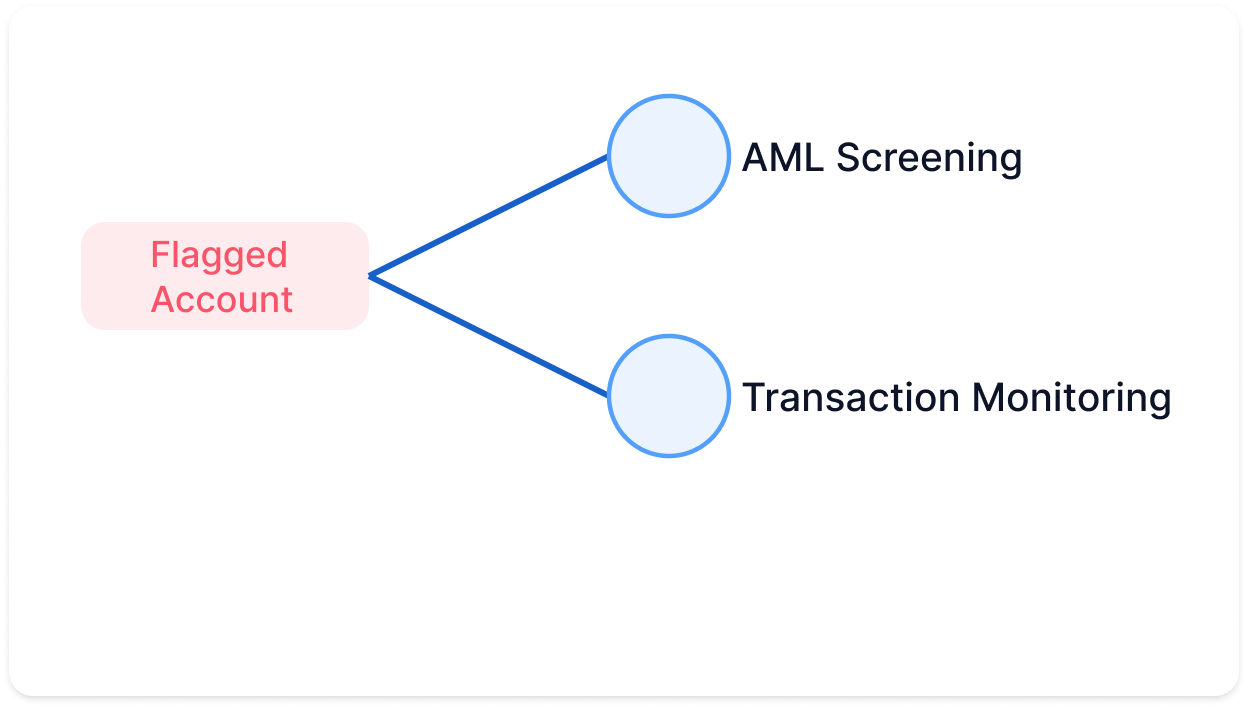
The flagged account is routed into AML screening and transaction monitoring for the same entity.
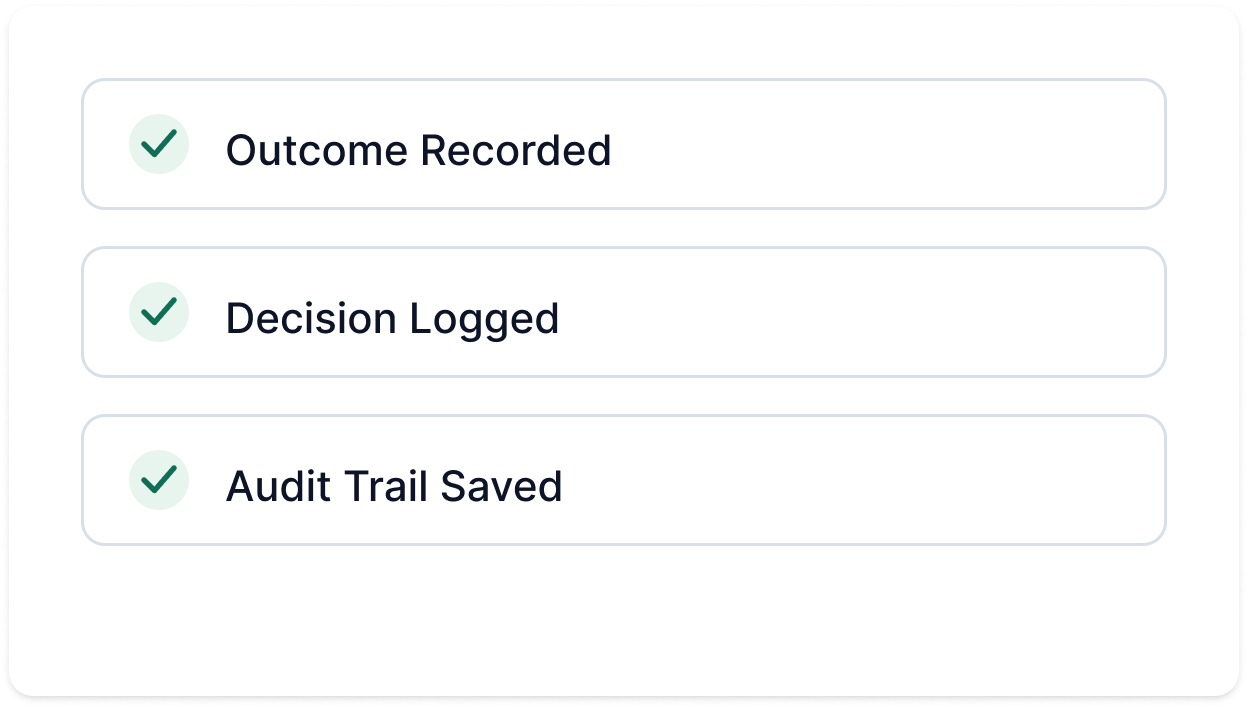
Case logged
Outcome, analyst decision, and audit trail are recorded in case management for later review.
MAPPED FROM IDENTITY FRAUD TO PAYMENT FRAUD
One Platform. Every Fraud Type.
Identity Fraud
Fabricated, stolen, or manipulated identities at onboarding.
Platform Abuse
Coordinated accounts and incentive exploitation across your platform.
Payment Frauds
Fraudulent transactions, disputes, and the compliance risk behind them.
Identity Fraud
Fabricated, stolen, or manipulated identities at onboarding.

Account Takeover


DeepFake

Document Fraud

Synthetic Identity Fraud
Platform Abuse
Coordinated accounts and incentive exploitation across your platform.
Bonus Abuse/ Promotion Abuse
Fraud Networks
Multi-Accounting
Payment Frauds
Fraudulent transactions, disputes, and the compliance risk behind them.
Chargeback Fraud
Impersonation Fraud
Party Fraud
Regulatory & Compliance Risks
Trust isn’t one-size-fits-all, we build it for your business
Industry-Ready Solutions
Layered Laundering Risk
Layered laundering runs through legitimate accounts. AML screening, transaction monitoring, and ongoing monitoring hold the audit trail examiners expect.

Don’t just take our word for it, hear from our customers
The Confidence Our Clients Share

The future of digital identity is defined by trust, interoperability, and regulatory alignment, so our partnership with Shufti reinforces DevCode Identity’s commitment to supporting our global customers with the most secure, best-in-class, compliant identity verification solutions available today.
Combining our Conversion Driven Compliance Orchestration Platform with Shufti’s global KYC and IDV capabilities allows our customers not only to navigate complex regulatory demands but also to maintain a seamless customer onboarding experience with the highest achievable conversion rates.
We’re proud to continue our partnership with Shufti as we expand into new jurisdictions.
Shufti’s verification technology not only strengthens our compliance framework but also ensures our players enjoy a smooth, secure onboarding experience.
We aim to offer our clients and their traders the very best tools with which to do their jobs, we’re excited to be able to work with Shufti.
They’re a leading company, and we’re looking forward to offering their solutions to our clients through our CRM.
The relationship with Shufti was born out of frustration with an existing provider, so we started our discussion with Shufti.
The response time was excellent, from the start of speaking to sales to getting up and running with the demo.
Industry Recognition & Awards

TOP 10 KYC SOLUTION PROVIDER 2023GRC Outlook

BEST USE OF TECHNOLOGY IN ID VERIFICATIONGlobal brands magazine

FASTEST GROWING KYC SOLUTIONS PROVIDERGlobal brands magazine

TOP PERFORMER IDENTITY VERIFICATION SOFTWARE SUMMER 2023Featured Customers

EXCELLENCE IN IDENTITY VERIFICATION SOLUTIONSGlobal brands magazine

BEST CLIENT ONBOARDING SOLUTION - MEAUltimate Fintech

BEST REGTECH REPORTING SOLUTION - MEAUltimate Fintech

BEST CLIENT ONBOARDING SOLUTION UFAWARDS 2023
Frequently Asked Questions
What fraud does Shufti's FRAML approach detect?
Account takeover, deepfake impersonation, synthetic identity, multi-accounting, and mule-network behaviour, each connected to AML screening and monitoring.
How does a fraud signal connect to an AML alert?
When a signal such as mule-network behaviour is detected, the account is routed into AML screening and transaction monitoring for review.
Is this one platform or connected products?
Shufti's FRAML approach connects identity fraud detection to AML screening and monitoring across its product suite.
What certifications does Shufti hold?
Shufti holds SOC 2 Type II and ISO/IEC 27001 certifications.
Which regulatory frameworks does it support?
Shufti's AML capabilities are aligned to frameworks including FATF recommendations, 6AMLD, and FinCEN requirements, alongside regional regimes such as MAS, FCA, and AUSTRAC.
Find Where Your Fraud and AML Signals Are Disconnected
Most stacks catch fraud and laundering separately, even when the same account is behind both. See how Shufti connects them.