




 AMLR Solutions
 AMLR Consultation
 Onboarding
 Ongoing Monitoring
 FRAML
FRAML KYC
KYC KYB
KYB KYI
KYI Age Assurance
 Workforce IAM
 Candidate Verification
 Bank Account Verification
 Account Takeover
 Bonus/ Promotion Abuse
 Chargeback Fraud
 Deepfake
 Document Fraud
 Fraud Networks
 Impersonation Fraud
 Money Mule Activity
 Multi-Accounting
 Party Fraud
 Regulatory & Compliance Risks
 Synthetic Identity Fraud
 Adult Content
 Banking
 Crypto
 Fintech
 Forex
Forex Compliance
 Fraud prevention
 Trust & safety
 Global expansion
 Compliance Officers
 Developers
 Fraud Analysts
 Product Managers
 Advanced Journey Builder (AJB)
 Global Trust Platform
 Customer Profiles
 Vendor Comparison
 IDV Case Management
 AML Case Management
 Regulatory Reporting
 Agentic Rule Builder
 AI Compliance Co-Pilot
 Fraud Analytics
 Fraud Hub
 OCR
OCR Shufti AI
 Biometric Duplication
 Database Checks
 Document Intelligence
 Government ID
 Mobile Driver's License
 NFC
NFC Selfie Liveness
 Brand Personalisation
 Deployment Options
 Identity Methods
 IDV Modes
 Multi-tenancy
 On-Premise IDV
 Secure Capture



Unhosted Wallet Verification
Prove Wallet Ownership Without Losing the Withdrawal
A self-hosted wallet has no institution on the other side, so the rule asks you to prove your customer controls it. Shufti verifies ownership inside the withdrawal, with four methods matched to the risk and a record built for audit.
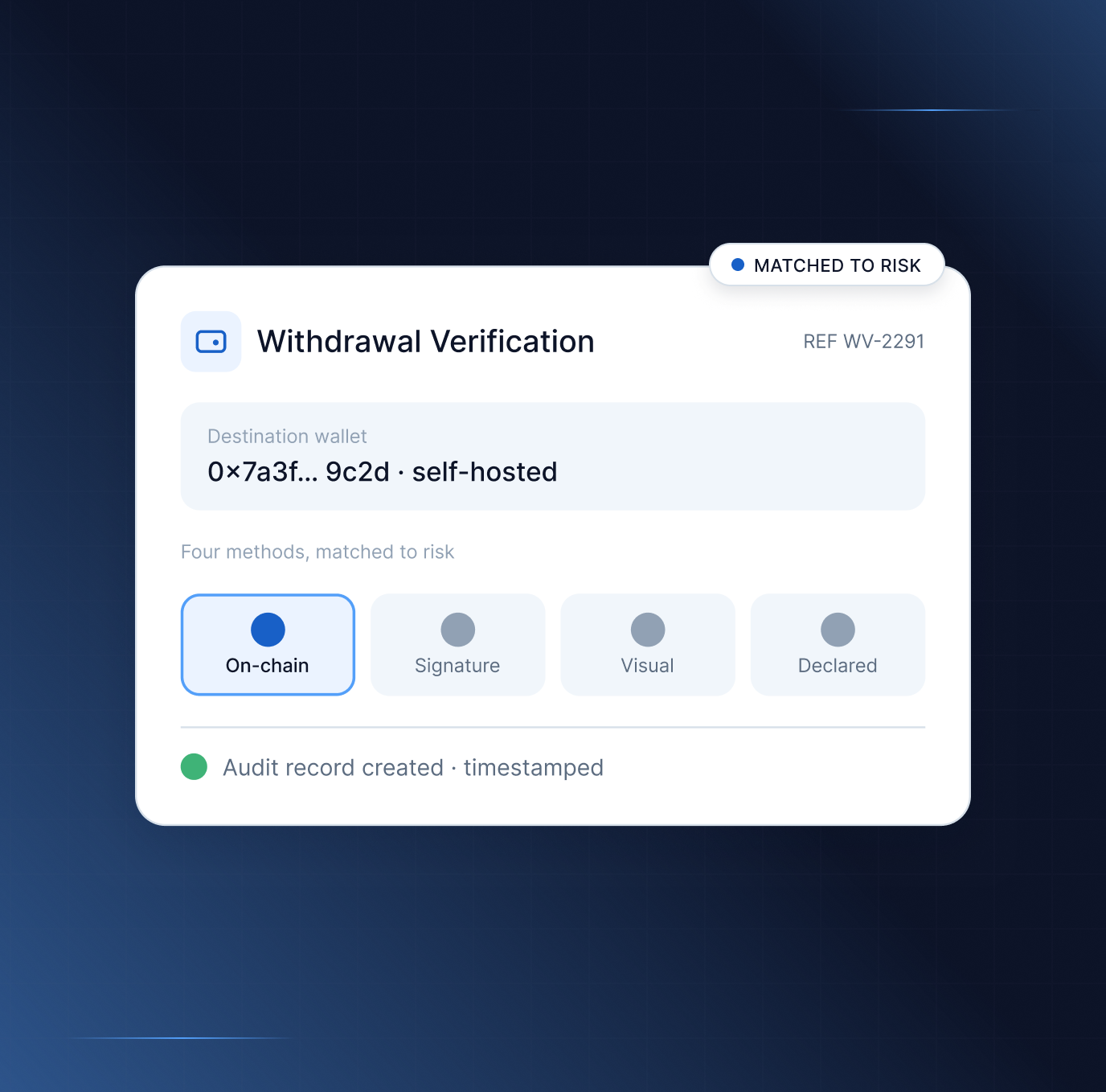
Ownership Proof, Matched to the Risk







Hosted vs Unhosted
When There Is No Counterparty,
You Prove Ownership Instead

Hosted Wallets

Self-Hosted Wallets
Four Ways to Prove Ownership, Matched to the Risk
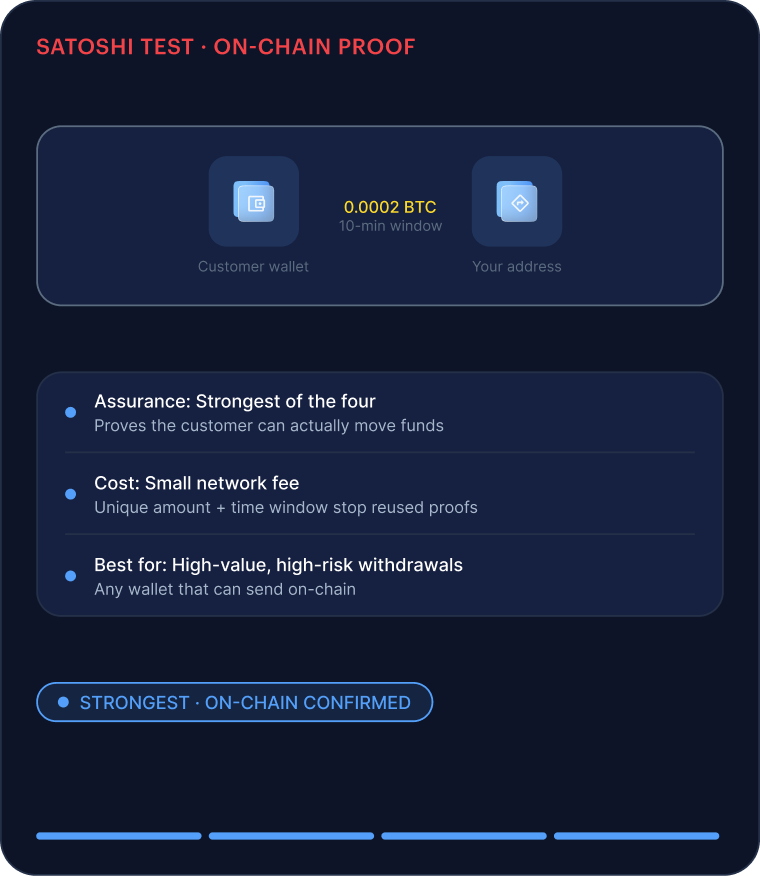
An On-Chain Test Payment That Proves Control
The customer sends a small, predefined amount from the wallet being verified to an address you specify, within a set time window.
Completing that transaction on-chain proves the customer can actually move funds from the address, the strongest evidence of control short of the private key itself. The unique amount and time window stop a reused or borrowed proof.
Higher-value or higher-risk withdrawals, and any wallet that can send on-chain. It carries a small network cost and asks the customer to make a transfer, so it is the heaviest of the four.
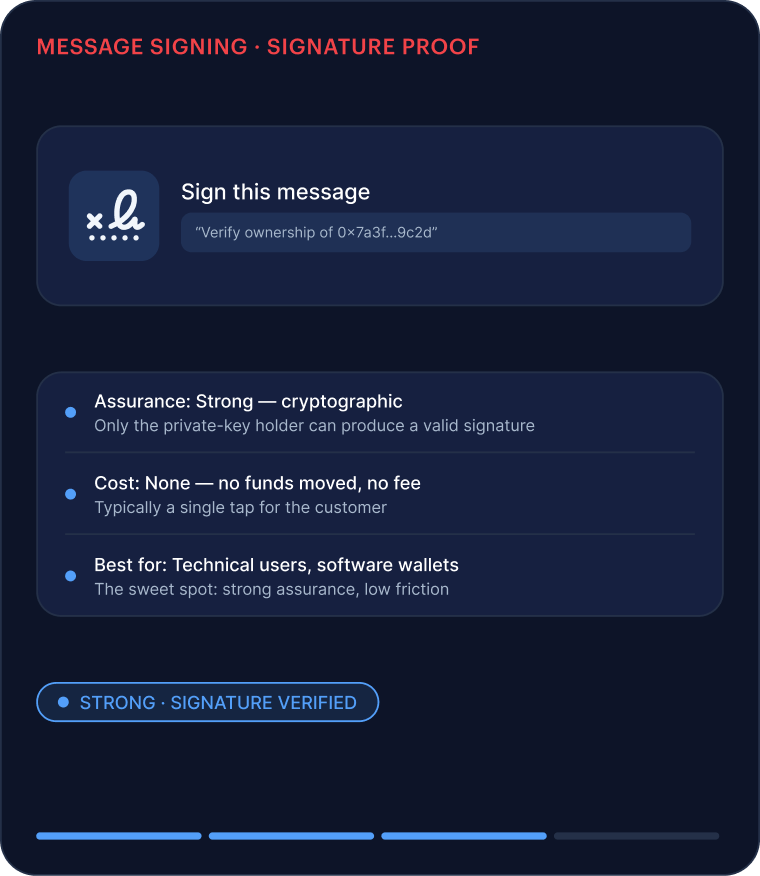
A Cryptographic Signature, With No Funds Moved
The customer signs a short message with the wallet's private key, usually through a connect-wallet prompt, and Shufti verifies the signature against the address.
Only the holder of the private key can produce a valid signature, so it proves control cryptographically without moving funds or paying a network fee. For the customer it is typically a single tap.
Technical users and software wallets that support message signing. It is the sweet spot of the four: strong assurance at low friction.
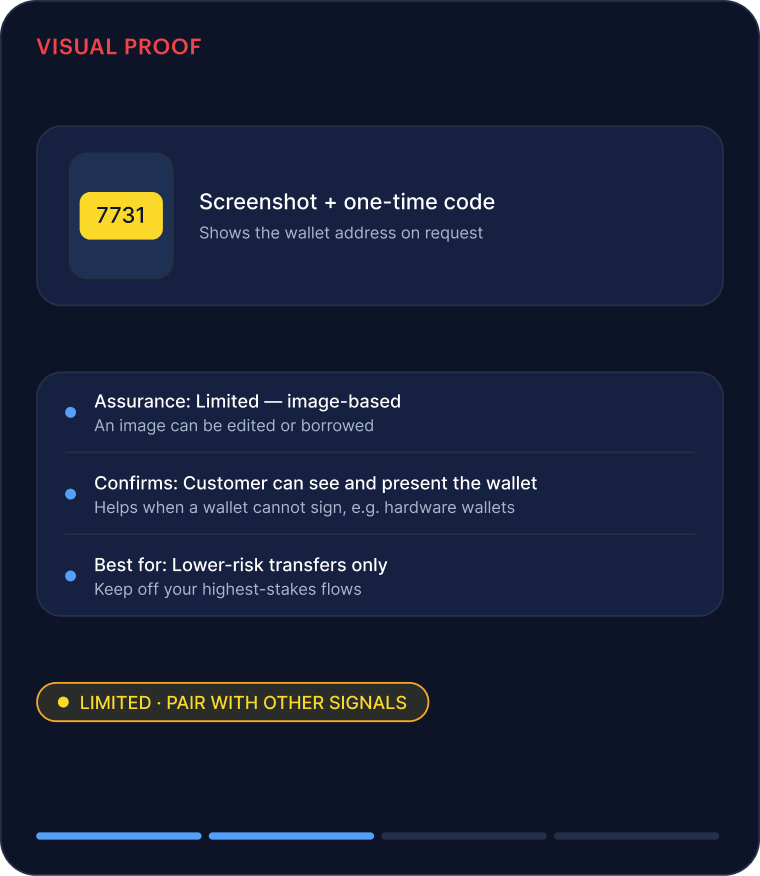
A Visual Proof for Wallets That Cannot Sign
The customer supplies a visual proof of the wallet, such as a screenshot showing the address, with a one-time code or the date where you require it.
It confirms the customer can see and present the wallet, which helps when the wallet cannot sign a message or send easily, as with many hardware wallets. Because an image can be edited or borrowed, its assurance is limited and it is best paired with other risk signals.
Lower-risk transfers and wallets that do not support signing. Keep it off your highest-stakes flows.
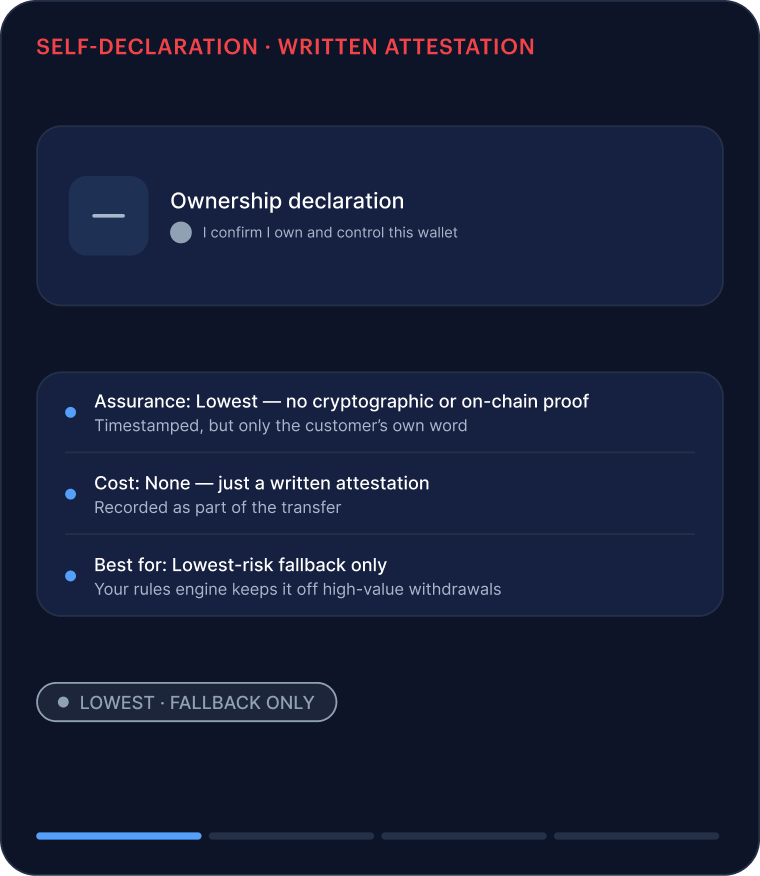
A Written Attestation for Low-Risk Cases
The customer confirms, in a written declaration, that they own and control the destination wallet.
It records and timestamps the customer's own attestation as part of the transfer, but carries no cryptographic or on-chain proof, so it is the lowest assurance of the four.
Your lowest-risk, lowest-value transfers, or a documented fallback when no stronger method is available. Your rules engine keeps it away from high-value withdrawals.
How It Works
Ownership Proven Inside the Withdrawal
Detect
Shufti flags a withdrawal going to a self-hosted wallet.
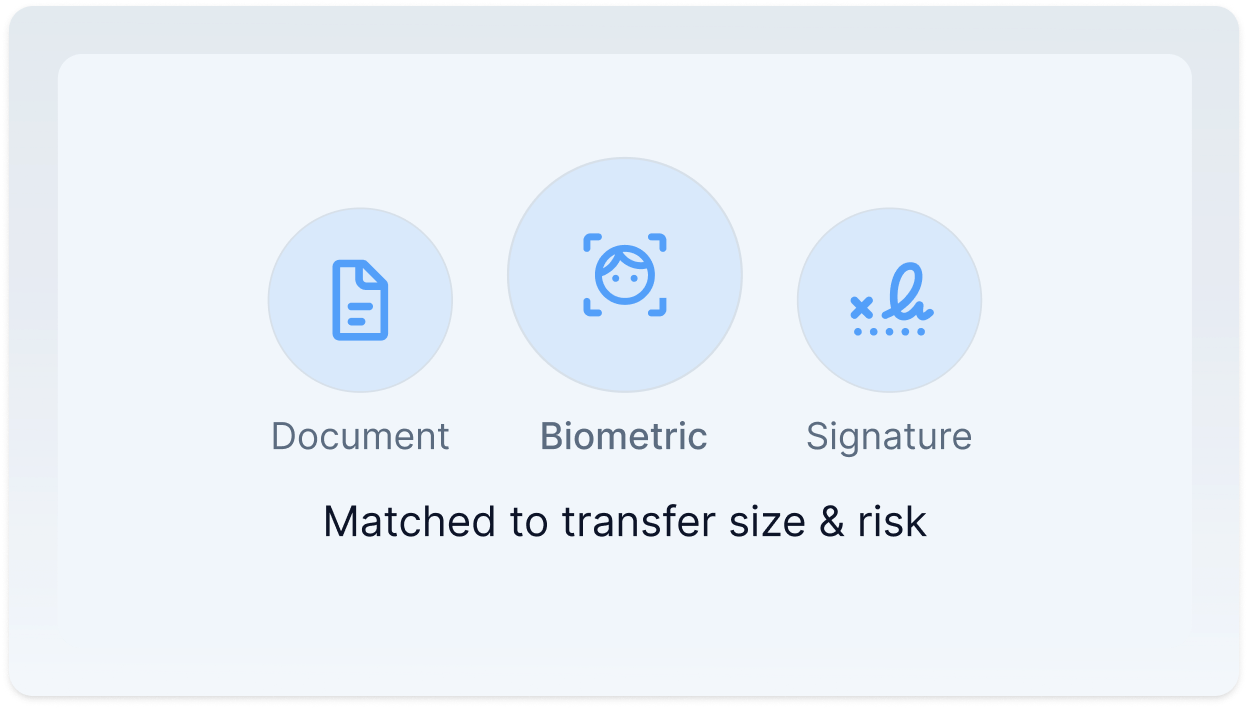
Offer
The customer gets a proof method suited to them and the transfer.
Prove
They complete the check inside the withdrawal.
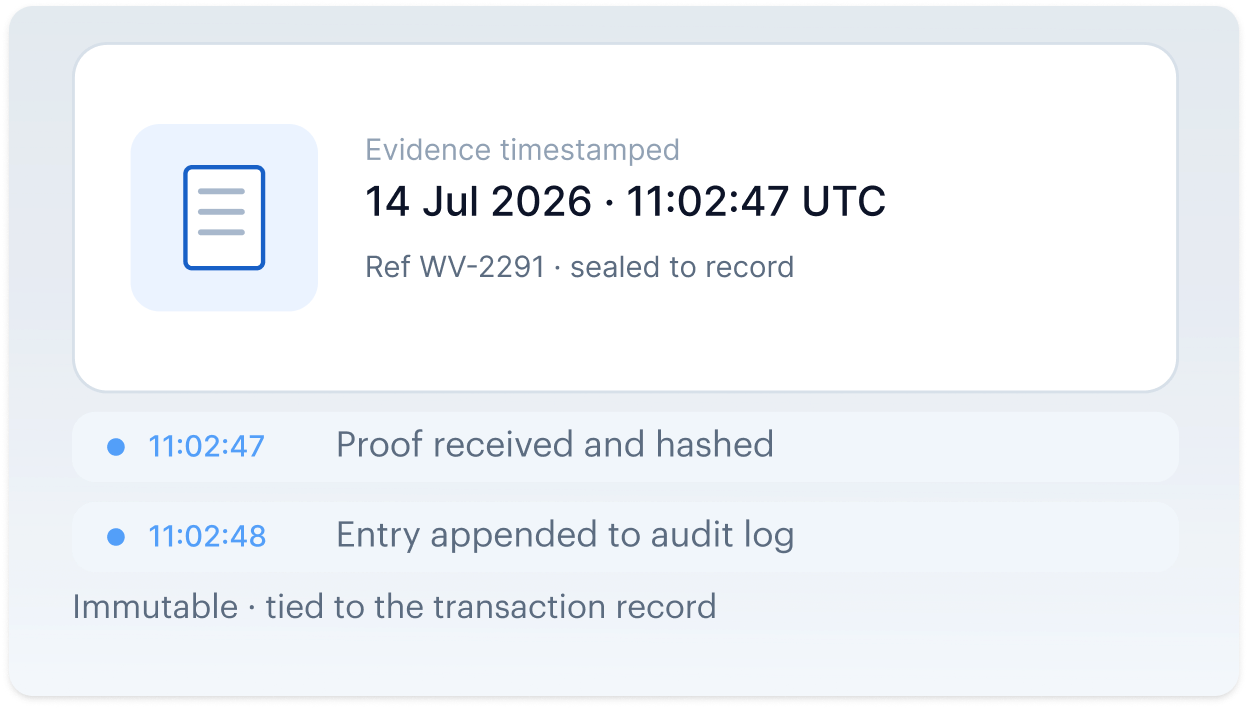
Log
Timestamped evidence is recorded against the transaction.
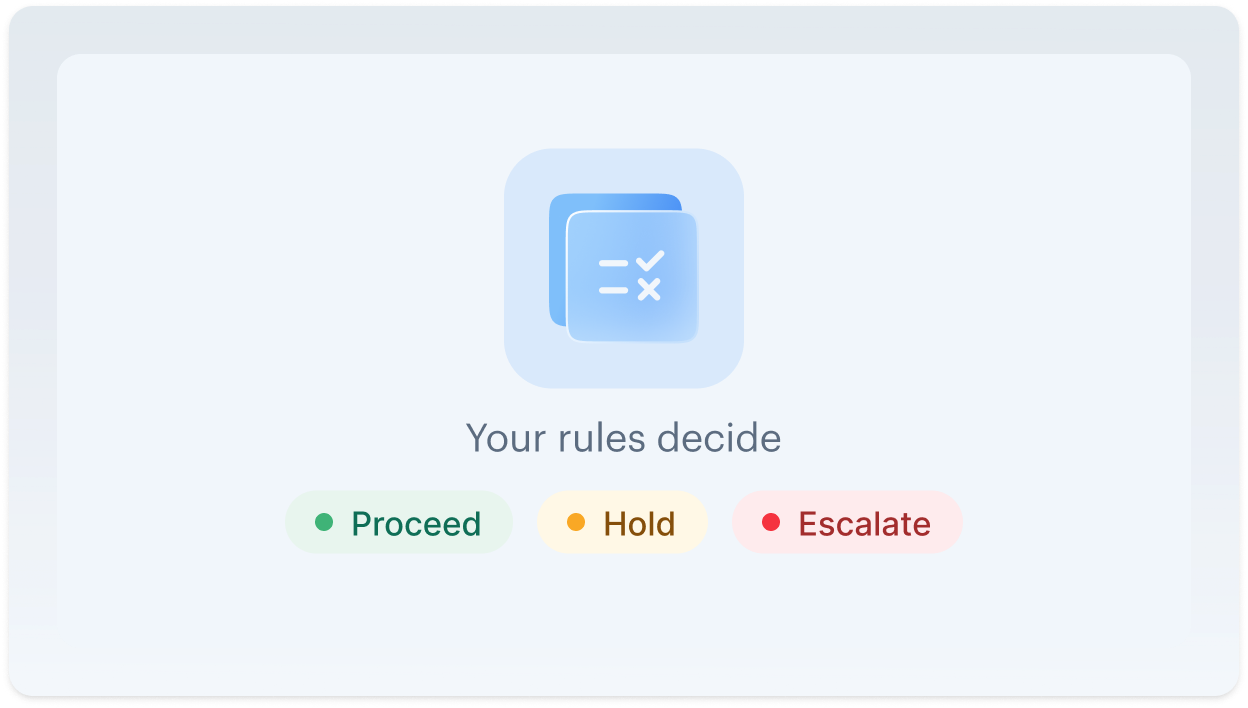
Decide
Your rules proceed, hold, or escalate.
Risk-Based Controls
Stronger Proof Where the Stakes Are Higher

Your Thresholds, Your Rules
You set the policy; the engine applies it consistently across every transfer.

Before or After Value Moves
Gate the transfer where policy requires a check first, or verify alongside it.

Proceed, Hold, or Escalate
Routine transfers clear automatically; only exceptions reach your team.
Objections, Answered Proof
What Compliance Teams Worry About, Answered
Privacy And Evidence
Prove Control Without Oversharing

No Third-Party Disclosure
Because there is no institution on the other side, verification happens between you and your customer.

Collect Only What Proves Control
A signature, a test payment, a visual, or a declaration. Nothing more.

Every Check Is Audit-Ready
Timestamped and tied to the transaction, ready for an examiner.
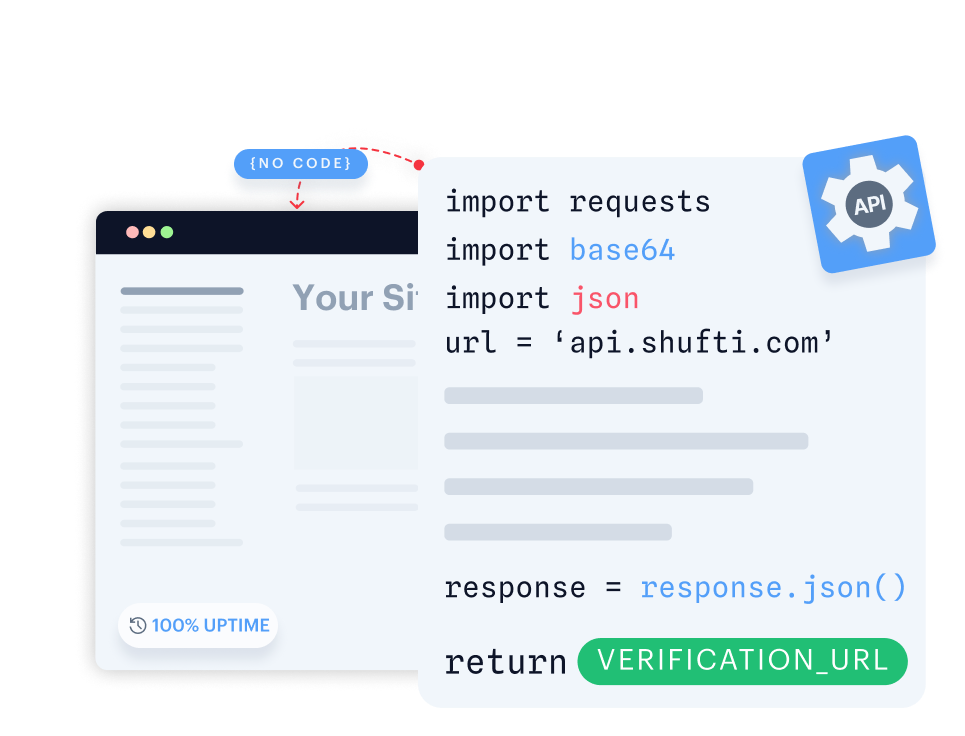
Single API, Seamless Integration
Build fully customisable verification flows with seamless backend integration.
- Gain full control by customising verification flows end-to-end.
- Integrate seamlessly with your backend for quick implementation.
- Design flexible verification journeys tailored to your users.
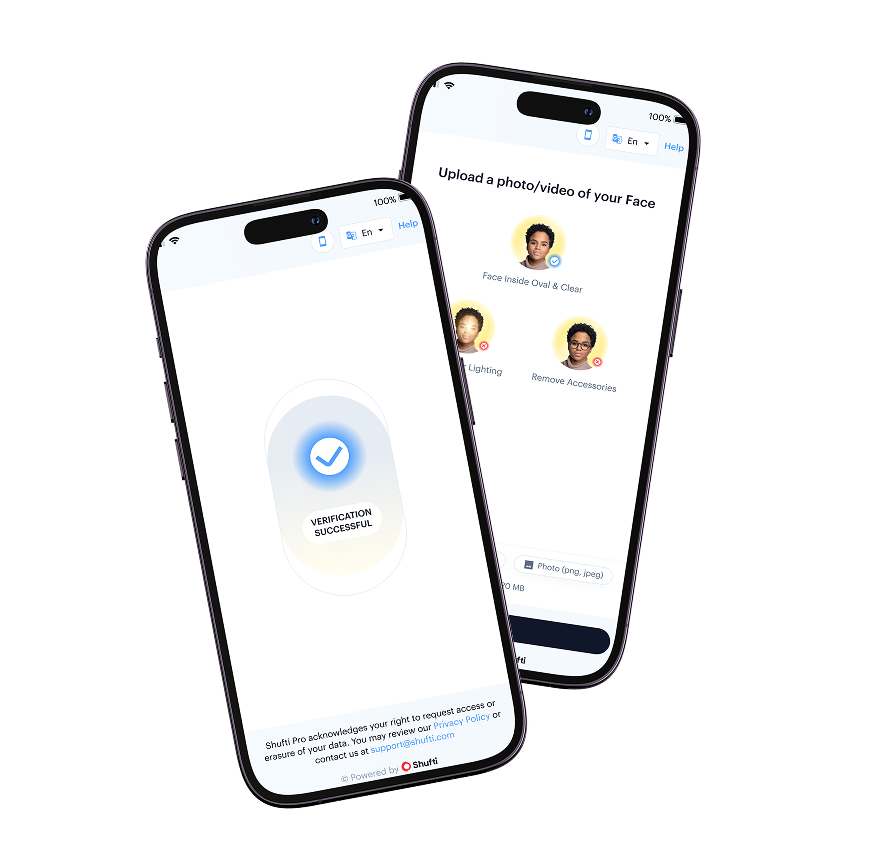
Launch a native verification experience in your mobile app within minutes.
- Launch native verification within minutes on iOS or Android.
- Use ready-made UI with camera, capture, and real-time feedback.
- Customise flows to fit seamlessly into your mobile app.
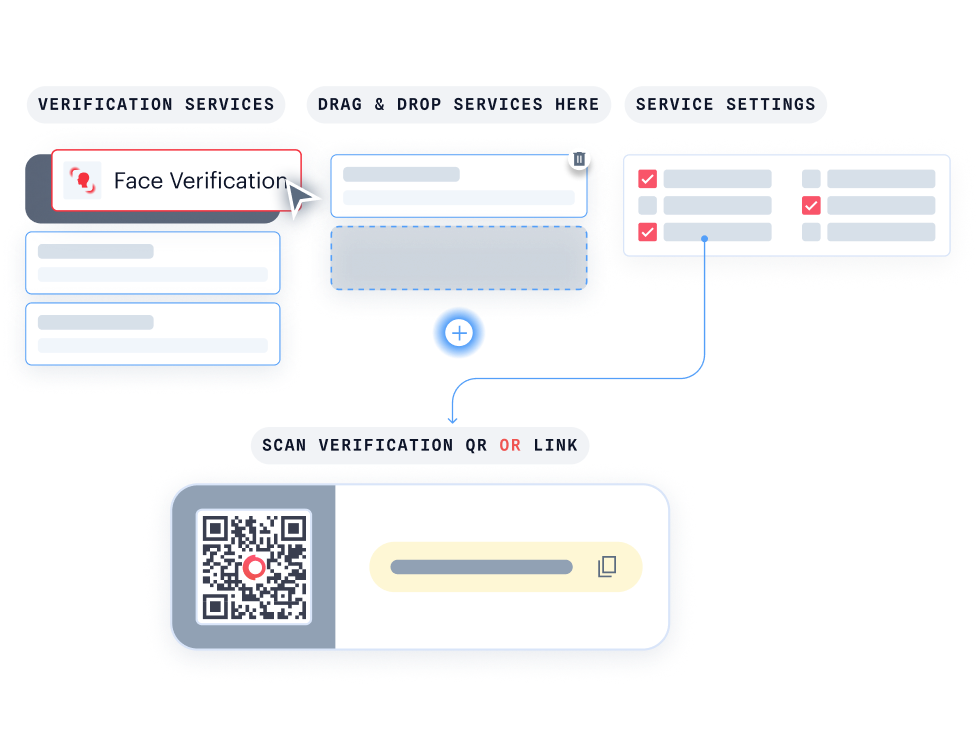
With KYC Journey Builder, create personalised verification journeys without writing a single line of code.
- Customise your journey effortlessly with drag-and-drop functionality.
- Instantly see how your verification flow looks for your users.
- Easily connect with Hosted Verification for a consistent, branded experience.
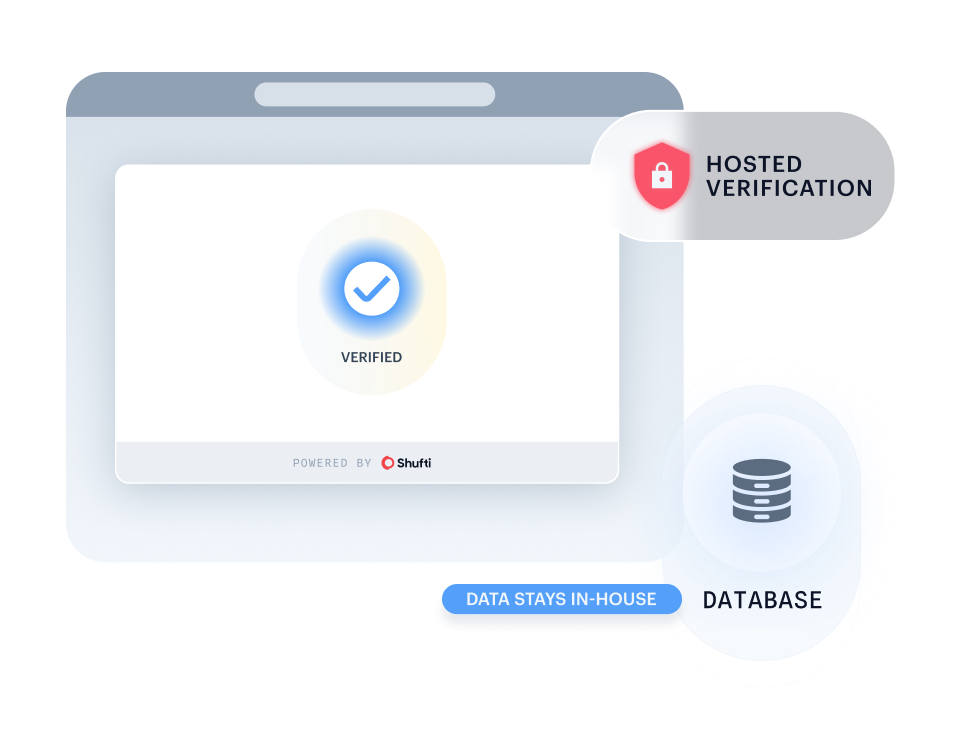
Run Shufti within your own identical-capability infrastructure for maximum data control and privacy.
- Keep all sensitive information in-house to meet strict governance and data residency requirements.
- Keep sensitive information fully private and secure in-house.
- Deploy in highly regulated sectors without compromising compliance.
INDUSTRIES
Where Self-Hosted Wallet Verification Matters Most
Crypto
Exchanges, custodians, and on and off ramps process self-custody withdrawals every day. Shufti verifies ownership inside the withdrawal, matched to the risk, with an audit record for each one.

Don’t just take our word for it, hear from our customers
The Confidence Our Clients Share

The future of digital identity is defined by trust, interoperability, and regulatory alignment, so our partnership with Shufti reinforces DevCode Identity’s commitment to supporting our global customers with the most secure, best-in-class, compliant identity verification solutions available today.
Combining our Conversion Driven Compliance Orchestration Platform with Shufti’s global KYC and IDV capabilities allows our customers not only to navigate complex regulatory demands but also to maintain a seamless customer onboarding experience with the highest achievable conversion rates.
We’re proud to continue our partnership with Shufti as we expand into new jurisdictions.
Shufti’s verification technology not only strengthens our compliance framework but also ensures our players enjoy a smooth, secure onboarding experience.
We aim to offer our clients and their traders the very best tools with which to do their jobs, we’re excited to be able to work with Shufti.
They’re a leading company, and we’re looking forward to offering their solutions to our clients through our CRM.
The relationship with Shufti was born out of frustration with an existing provider, so we started our discussion with Shufti.
The response time was excellent, from the start of speaking to sales to getting up and running with the demo.
Industry Recognition & Awards

TOP 10 KYC SOLUTION PROVIDER 2023GRC Outlook

BEST USE OF TECHNOLOGY IN ID VERIFICATIONGlobal brands magazine

FASTEST GROWING KYC SOLUTIONS PROVIDERGlobal brands magazine

TOP PERFORMER IDENTITY VERIFICATION SOFTWARE SUMMER 2023Featured Customers

EXCELLENCE IN IDENTITY VERIFICATION SOLUTIONSGlobal brands magazine

BEST CLIENT ONBOARDING SOLUTION - MEAUltimate Fintech

BEST REGTECH REPORTING SOLUTION - MEAUltimate Fintech

BEST CLIENT ONBOARDING SOLUTION UFAWARDS 2023
Frequently Asked Questions
What is an unhosted (self-hosted) wallet?
One where the user holds their own private keys, with no custodial service in between, such as MetaMask or a hardware wallet.
Why do I have to verify ownership?
With a self-hosted wallet there is no institution on the other side to exchange data with, so the rule asks you to prove your customer controls the destination wallet before value moves.
What methods can my customer use?
Four, matched to the risk: an on-chain Satoshi test payment, a cryptographic message signature, a visual proof (screenshot), or a written self-declaration.
Is self-declaration enough on its own?
It is the lowest assurance of the four, with no cryptographic or on-chain proof, so your rules engine keeps it to lowest-risk transfers or a documented fallback and requires stronger proof where it matters.
What is the Satoshi test?
The customer sends a small, predefined amount from the wallet being verified to an address you specify, within a set time window completing it on-chain proves they can actually move funds from that address.
Which wallets and chains does this work with?
Coverage follows the wallet: message signing uses common connect-wallet standards and the Satoshi test works on-chain. Our team walks you through the specifics for your supported wallets and chains.
Does verifying ownership slow down the withdrawal?
Verification happens inside the withdrawal and is matched to the risk, a one-tap signature for technical users, a screenshot for hardware wallets, so routine transfers clear automatically and only exceptions reach your team.
How does this fit with my compliance stack?
It runs on the same identity, KYB, AML, and Travel Rule platform, triggered from a single endpoint with signed webhooks on the credentials you already use, no new keys to manage.
Prove Ownership, Keep the Customer, Satisfy the Examiner
Four proof methods matched to the risk, verification inside the withdrawal, and a timestamped record for every check, on the identity and AML platform you may already run.