







 AMLR Solutions
  AMLR Consultation
 EUDI Wallet
 Onboarding
 Ongoing Monitoring
 FRAML
FRAML KYC
KYC KYB
KYB KYI
KYI Age Assurance
 Workforce IAM
 Candidate Verification
 Account Takeover
 Bonus/ Promotion Abuse
 Chargeback Fraud
 Deepfake
 Document Fraud
 Fraud Networks
 Impersonation Fraud
 Money Mule Activity
 Multi-Accounting
 Party Fraud
 Regulatory & Compliance Risks
 Synthetic Identity Fraud
 Adult Content
 Banking
 Crypto
 Fintech
 Forex
Forex Compliance
 Fraud prevention
 Trust & safety
 Global expansion
 Compliance Officers
 Developers
 Fraud Analysts
 Product Managers
 Journey Builder
  Global Trust Platform
 Customer Profiles
 Vendor Comparison
 IDV Case Management
 AML Case Management
 Regulatory Reporting
 Agentic Rule Builder
  AI Compliance Co-Pilot
  Fraud Analytics
 Fraud Hub
  OCR
OCR Shufti AI
 Bank Account Verification
  Biometric Duplication
 Database Checks
 Document Intelligence
 Government ID
 Mobile Driver's License
 NFC
NFC Selfie Liveness
 Brand Personalisation
 Deployment Options
 Identity Methods
 IDV Modes
 Multi-tenancy
 On-Premise IDV
 Secure Capture
 Shufti MCP


USER RISK ASSESSMENT
User Risk Assessment Solution For Proportionate Due Diligence
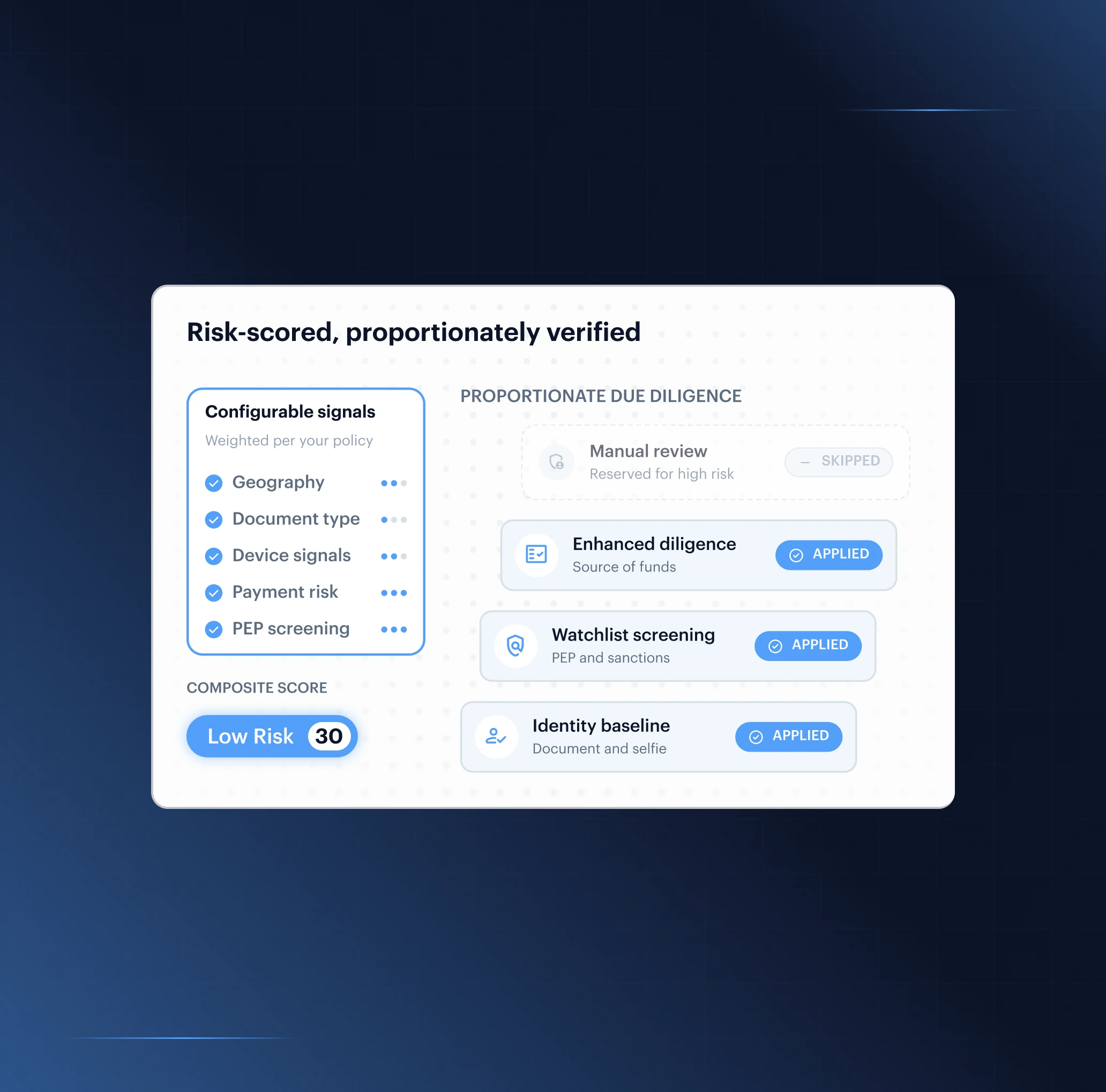
Treating every customer the same over-verifies low risk and under-checks high risk. Shufti scores each customer against configurable signals and applies proportionate due diligence automatically.
The Scale Of Fraud And Money Laundering Today
Account Takeover Reports,
Global GDP Laundered Yearly,
Lost to Fraud,
Trusted By 2,000+ Clients Worldwide









Score, Route, And Monitor
Risk In One Model
Scored On Real Signals
EMAIL, PHONE, AND IP RISK
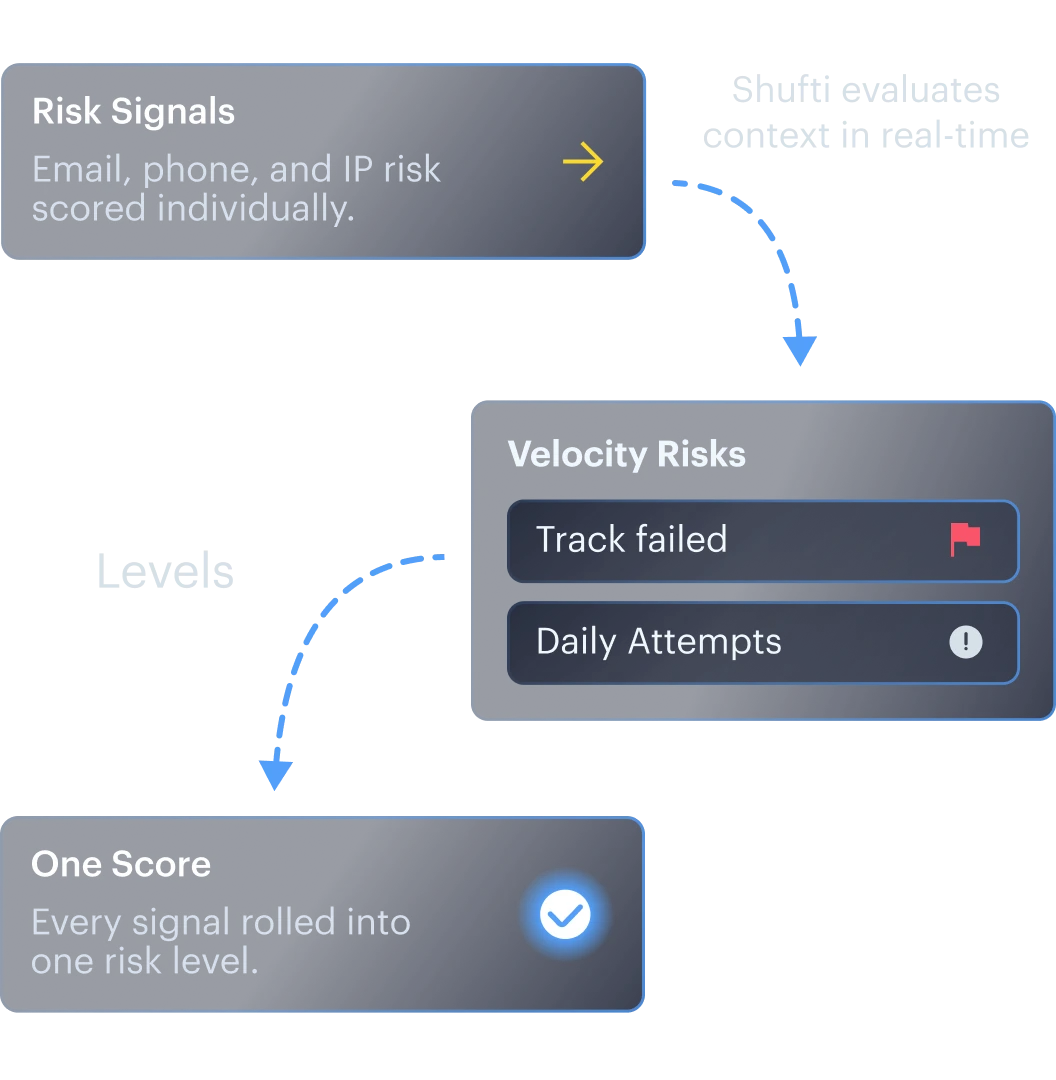
Disposable emails, invalid numbers, and proxy IPs often slip past basic checks. Shufti scores email, phone, and IP risk individually before rolling them into one risk level.
VELOCITY RISK OVER TIME
Repeated verification attempts can signal fraud or account takeover. Shufti tracks failed and successful attempts daily, weekly, and monthly.
ONE SCORE, FOUR LEVELS
Raw signal data alone doesn't tell a team who to act on first. Shufti rolls every signal into one risk level: low, medium, high, or prohibited.
Built Without Code
WEIGHTED RISK RANGES
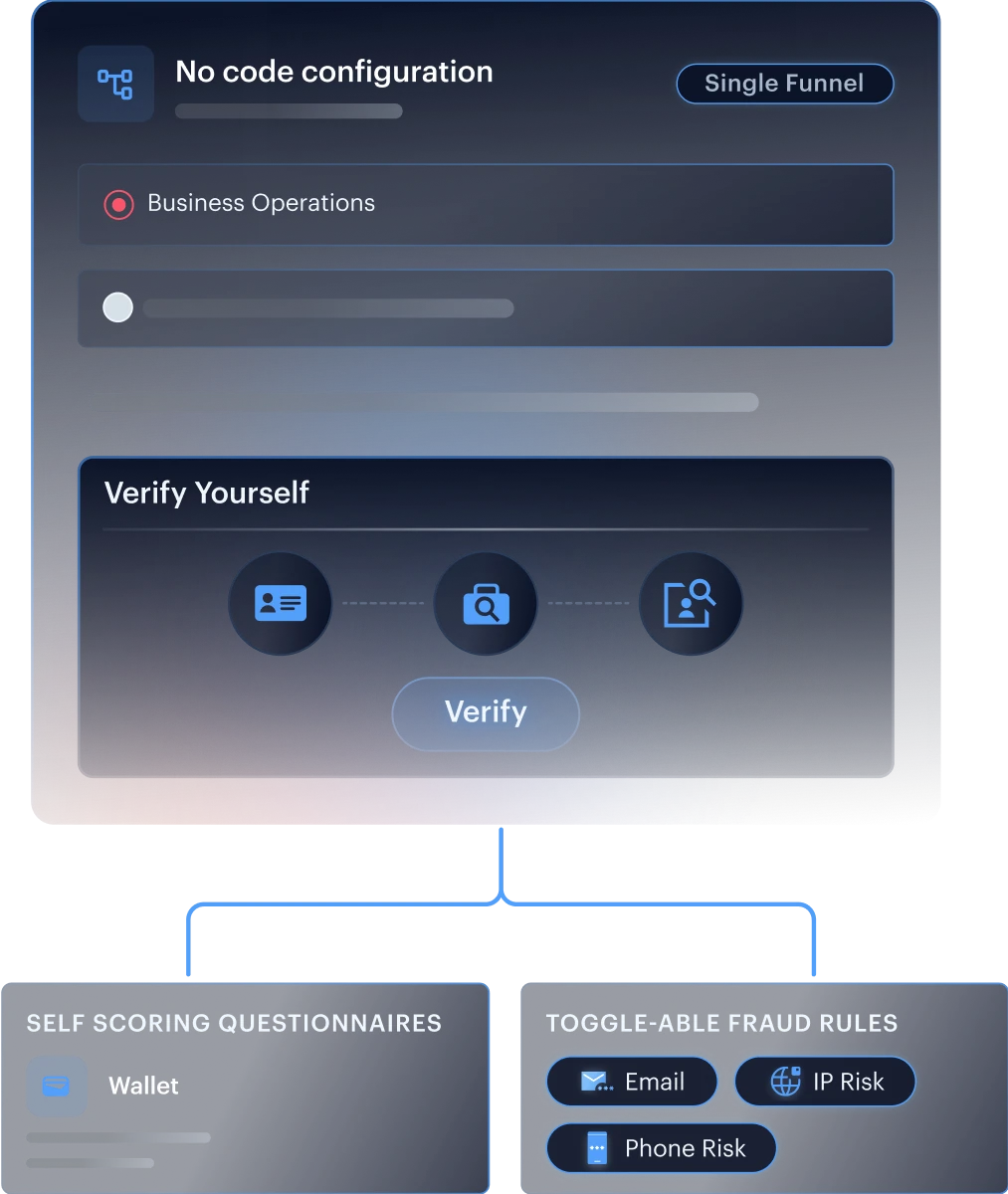
Fixed, one-size-fits-all thresholds rarely match a business's real risk appetite. Shufti lets you set the weighted scales that turn a score into a level, no developer required.
TOGGLEABLE FRAUD RULES
Not every fraud check applies to every business model. Shufti lets you turn phone, IP, email, and velocity checks on or off to match your risk appetite.
A SELF-SCORING QUESTIONNAIRE
Some risk factors can't be captured by automated checks alone. Shufti lets you build a Due Diligence Form where every answer carries its own score.
Routed By Risk, Automatically
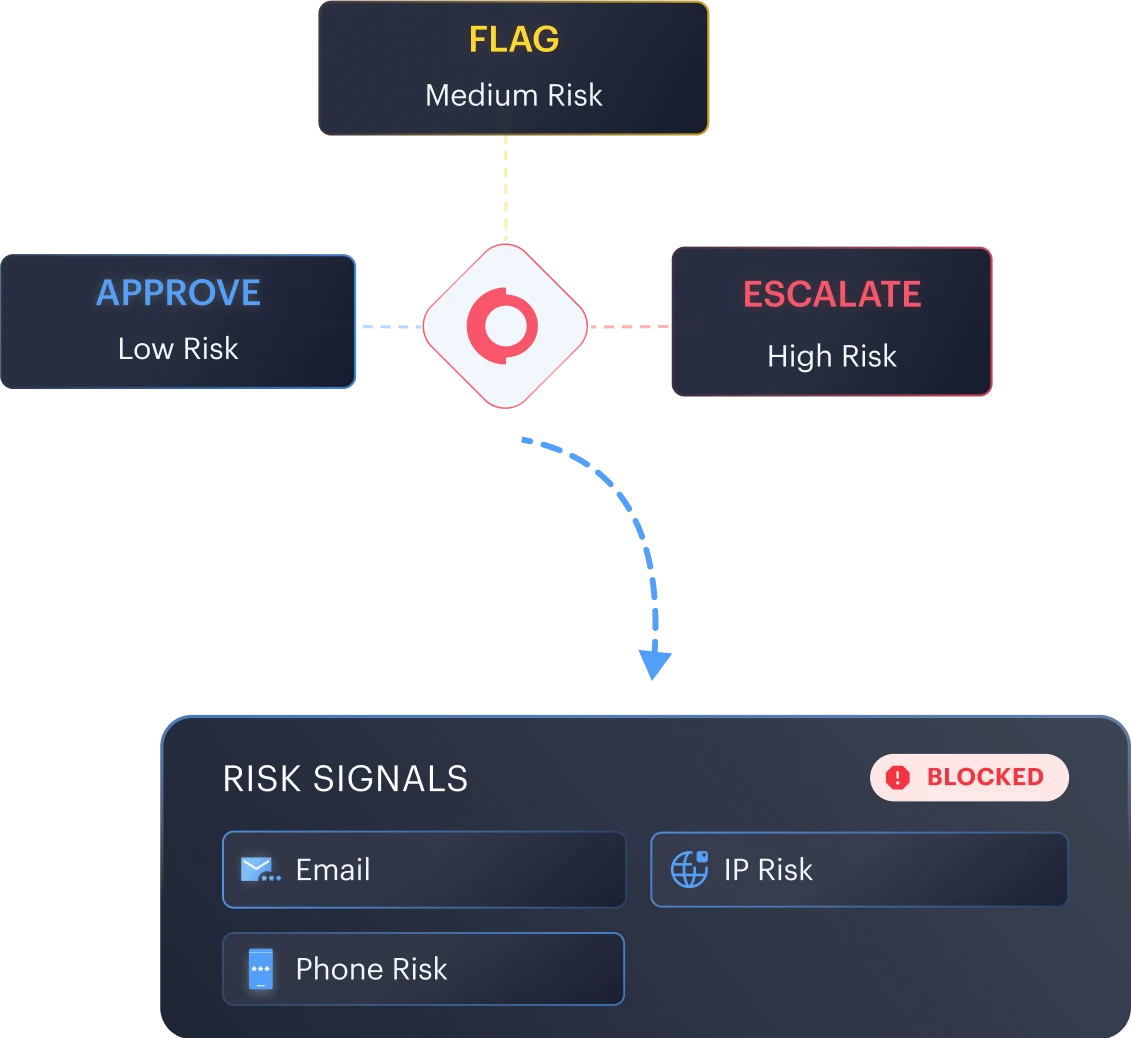
APPROVE, FLAG, OR ESCALATE
Manual review of every customer doesn't scale and slows down low-risk users. Shufti routes each customer automatically based on their assessed risk level.
CUSTOMISED VERIFICATION JOURNEY
The same checks for every customer over-verifies low risk and under-verifies high risk. Shufti sends low-risk customers down a lighter path and high-risk customers to deeper checks.
PROPORTIONATE DUE DILIGENCE
Identical checks are hard to defend under risk-based AML rules. Shufti routes by risk to apply proportionate CDD, and EDD where required, automatically.
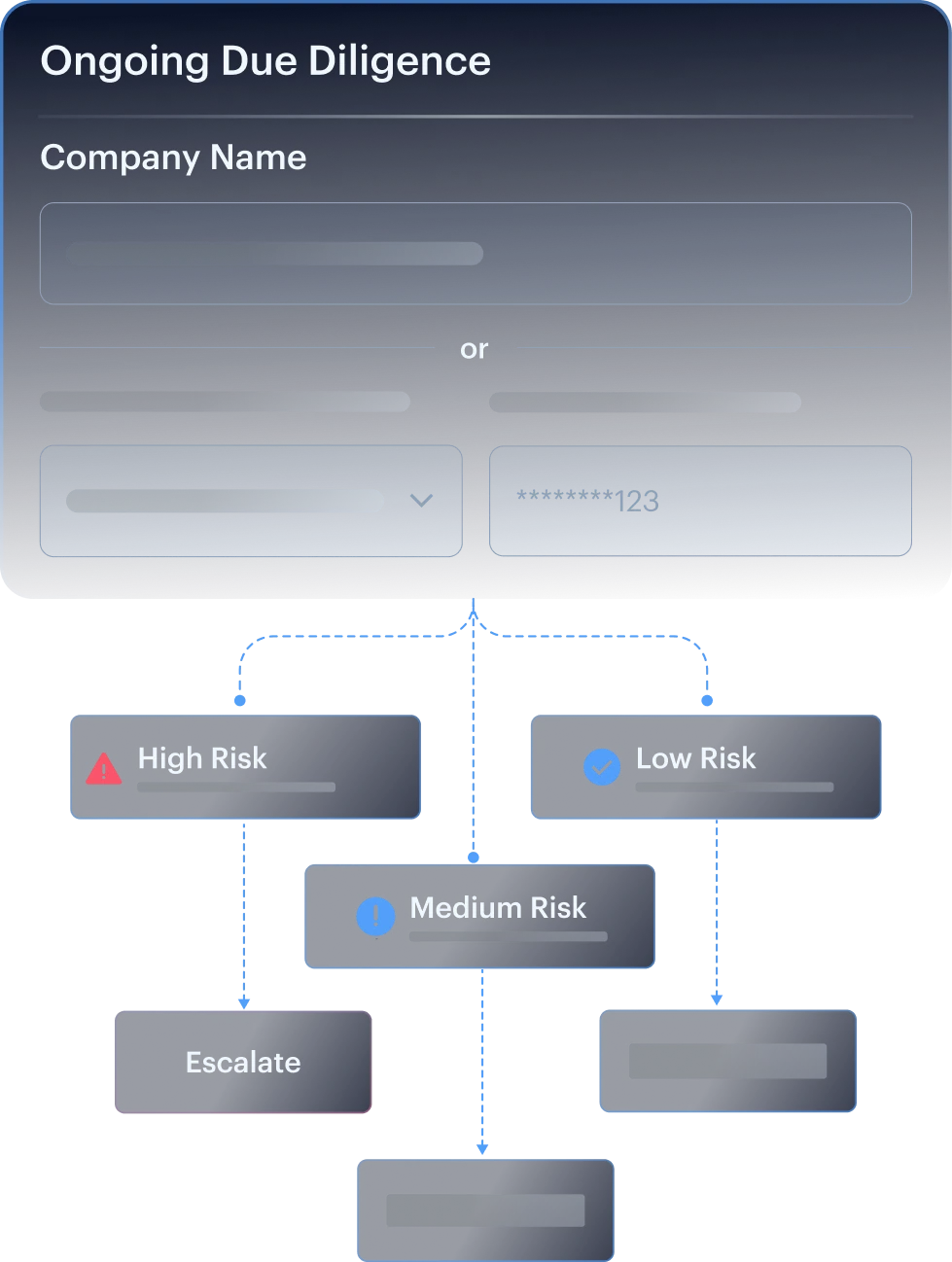
Built For Ongoing Due Diligence
PAIRS WITH ONGOING MONITORING
A risk score taken once at onboarding goes stale as circumstances change. Paired with Ongoing Monitoring, it can be revisited anytime after.
REASSESS FLAGGED USERS
New information on a flagged customer can surface after their initial review. Ongoing Monitoring routes them back through the Due Diligence Form when it does.
MATCHES AML'S EXPECTATIONS
AML regulation expects risk to be reassessed over time, not checked once and forgotten. Risk Assessment works alongside Ongoing Monitoring to keep due diligence current.
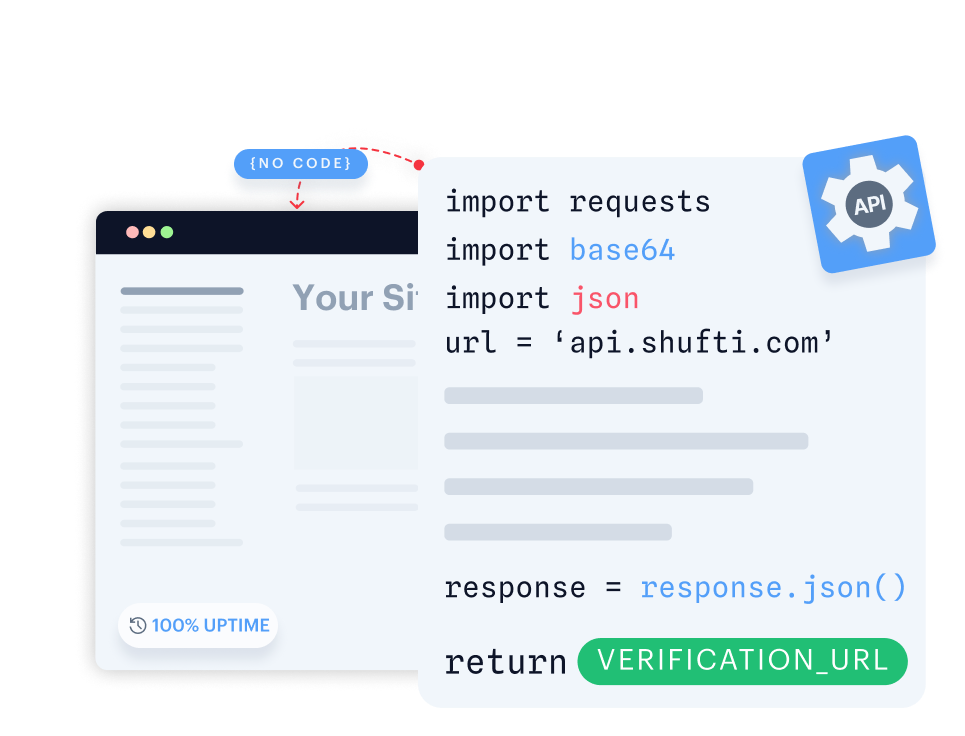
Single API, Seamless Integration
Build fully customisable verification flows with seamless backend integration.
- Gain full control by customising verification flows end-to-end.
- Integrate seamlessly with your backend for quick implementation.
- Design flexible verification journeys tailored to your users.
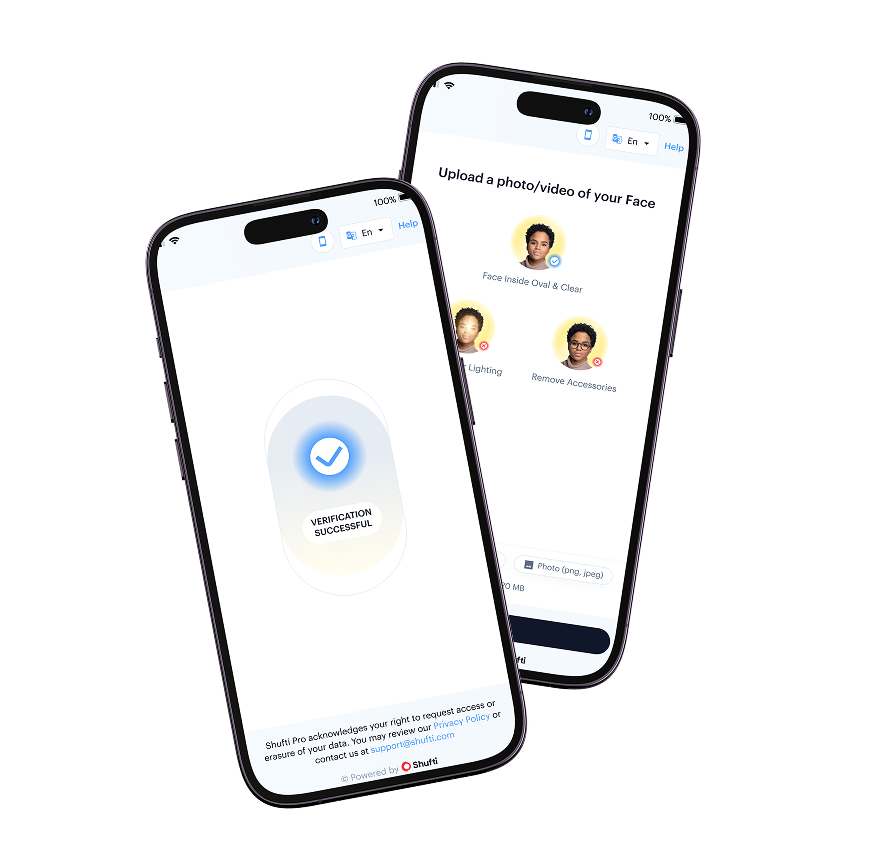
Launch a native verification experience in your mobile app within minutes.
- Launch native verification within minutes on iOS or Android.
- Use ready-made UI with camera, capture, and real-time feedback.
- Customise flows to fit seamlessly into your mobile app.
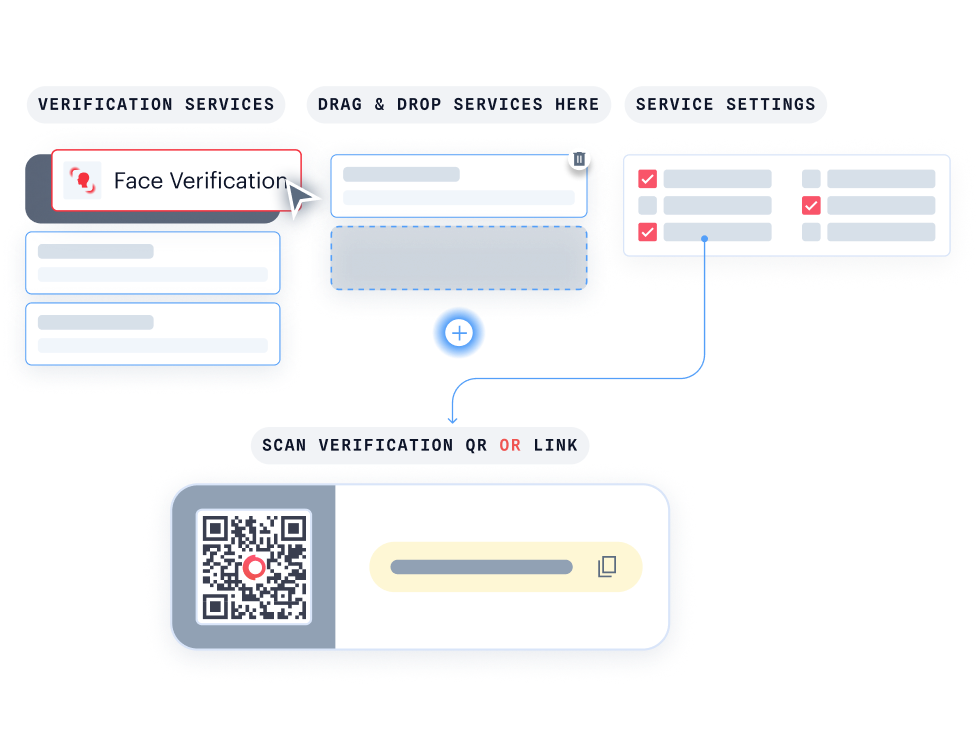
With KYC Journey Builder, create personalised verification journeys without writing a single line of code.
- Customise your journey effortlessly with drag-and-drop functionality.
- Instantly see how your verification flow looks for your users.
- Easily connect with Hosted Verification for a consistent, branded experience.
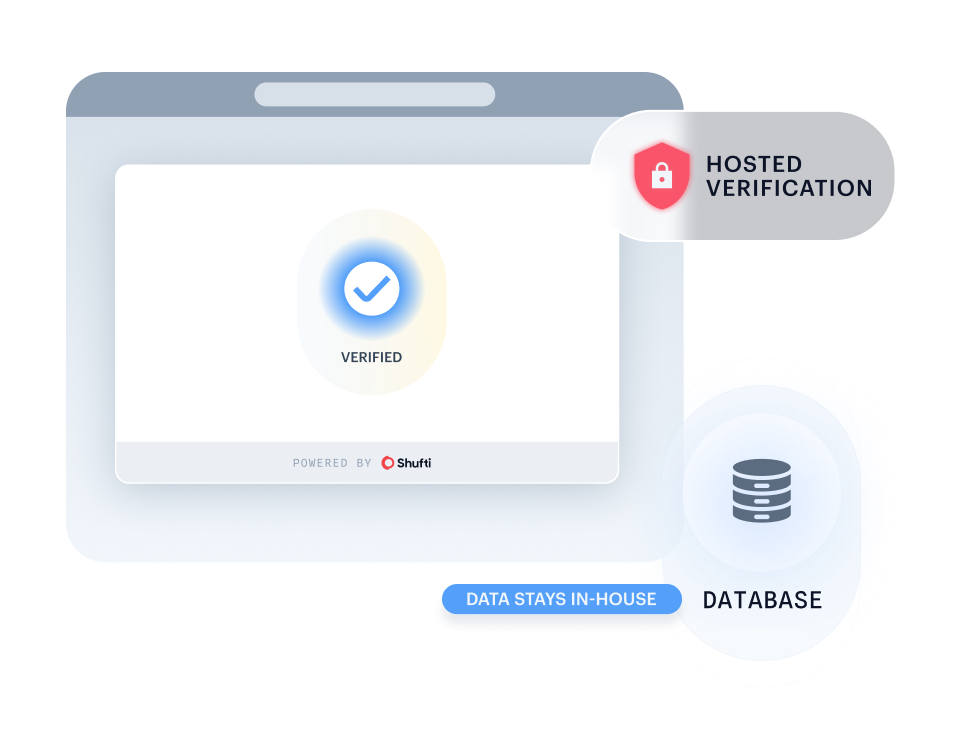
Run Shufti within your own identical-capability infrastructure for maximum data control and privacy.
- Keep all sensitive information in-house to meet strict governance and data residency requirements.
- Keep sensitive information fully private and secure in-house.
- Deploy in highly regulated sectors without compromising compliance.
INDUSTRIES WE SERVE
Risk Scoring Across Regulated Sectors
Vet High-Volume Sellers, Not Casual Ones
An occasional low-value seller and a high-volume power seller carry very different risk, but manual vetting often treats them the same. Shufti scores seller activity automatically, keeping casual sellers on a light path while routing high-volume or high-risk sellers to the Due Diligence Form.




Don’t just take our word for it, hear from our customers
The Confidence Our Clients Share

The future of digital identity is defined by trust, interoperability, and regulatory alignment, so our partnership with Shufti reinforces DevCode Identity’s commitment to supporting our global customers with the most secure, best-in-class, compliant identity verification solutions available today.
Combining our Conversion Driven Compliance Orchestration Platform with Shufti’s global KYC and IDV capabilities allows our customers not only to navigate complex regulatory demands but also to maintain a seamless customer onboarding experience with the highest achievable conversion rates.
We’re proud to continue our partnership with Shufti as we expand into new jurisdictions.
Shufti’s verification technology not only strengthens our compliance framework but also ensures our players enjoy a smooth, secure onboarding experience.
We aim to offer our clients and their traders the very best tools with which to do their jobs, we’re excited to be able to work with Shufti.
They’re a leading company, and we’re looking forward to offering their solutions to our clients through our CRM.
The relationship with Shufti was born out of frustration with an existing provider, so we started our discussion with Shufti.
The response time was excellent, from the start of speaking to sales to getting up and running with the demo.
Everything you need to know in one place
Frequently Asked Questions
How does User Risk Assessment work?
The system analyses multiple risk signals and assigns a risk score or level to each user. Based on the result, businesses can approve, flag, reject, or trigger additional checks.
What factors are considered in User Risk Assessment?
Risk can be assessed using factors such as identity information, IP and velocity signals, and AML screening results when connected to Shufti's AML Screening. The exact factors and their weighting are configured per business, without needing a developer.
Can I create custom risk rules?
Yes. Businesses can define risk rules, thresholds, and risk bands based on their specific compliance and fraud requirements. This allows different actions to be applied to different risk levels.
What happens when a user is identified as high risk?
High-risk users can be flagged for additional verification or Enhanced Due Diligence (EDD). This helps businesses apply stronger controls where the customer presents greater risk.
Can User Risk Assessment automate decisions?
Yes. Risk-based workflows can automatically determine whether a user should be approved, flagged for review, or sent for additional verification, reducing unnecessary manual intervention.
Does User Risk Assessment support ongoing monitoring?
Yes, when paired with Shufti's Ongoing Monitoring and the Due Diligence Form, flagged or high-risk users can be reassessed as new information becomes available, supporting the ongoing due diligence that AML regulation increasingly expects beyond onboarding.
How does User Risk Assessment support AMLR?
User Risk Assessment supports the risk-based approach to customer due diligence (CDD) that AMLR requires, helping businesses identify higher-risk customers and apply due diligence in proportion to that risk, including triggering enhanced due diligence (EDD) where a customer's profile calls for it. AMLR becomes directly applicable across the EU from July 2027, so treat this as regulatory context, not a compliance guarantee.
Can User Risk Assessment work with KYC and AML screening?
Yes, when connected to Shufti's identity verification and AML Screening products. Risk assessment can then combine their results into a broader customer risk profile for more informed verification and compliance decisions.
Why is User Risk Assessment important for businesses?
It helps businesses identify risky customers earlier, reduce fraud exposure, and apply appropriate verification controls. At the same time, lower-risk users can experience a smoother onboarding journey.
Assess Risk, Make Smarter Decisions
Configure risk scoring around your own rules, and keep every risk decision
explainable on its own terms.
Your Go-To for KYC/AML & Fraud
Resources

11 August, 2026
Shufti's 2026 Context Gap in AML Risk Assessment
False positives climb when alerts reach analysts without context. Shufti's 2026 report shows what customer and risk context teams need to decide cases much faster.
Guide