AMLR Solutions
 AMLR Consultation
 EUDI Wallet
 Onboarding
 Ongoing Monitoring
 FRAML
 KYC
 KYB
 KYI
 Age Assurance
 Workforce IAM
 Candidate Verification
 Account Takeover
 Bonus/ Promotion Abuse
 Chargeback Fraud
 Deepfake
 Document Fraud
 Fraud Networks
 Impersonation Fraud
 Money Mule Activity
 Multi-Accounting
 Party Fraud
 Regulatory & Compliance Risks
 Synthetic Identity Fraud
 Adult Content
 Banking
 Crypto
 Fintech
 Forex
 Compliance
 Fraud prevention
 Trust & safety
 Global expansion
 Compliance Officers
 Developers
 Fraud Analysts
 Product Managers
 Journey Builder
 Global Trust Platform
 Customer Profiles
 Vendor Comparison
 IDV Case Management
 AML Case Management
 Regulatory Reporting
 Agentic Rule Builder
 AI Compliance Co-Pilot
 Fraud Analytics
 Fraud Hub
 OCR
 Shufti AI
 Bank Account Verification
 Biometric Duplication
 Database Checks
 Document Intelligence
 Government ID
 Mobile Driver's License
 NFC
 Selfie Liveness
 Brand Personalisation
 Deployment Options
 Identity Methods
 IDV Modes
 Multi-tenancy
 On-Premise IDV
 Secure Capture
 Shufti MCP













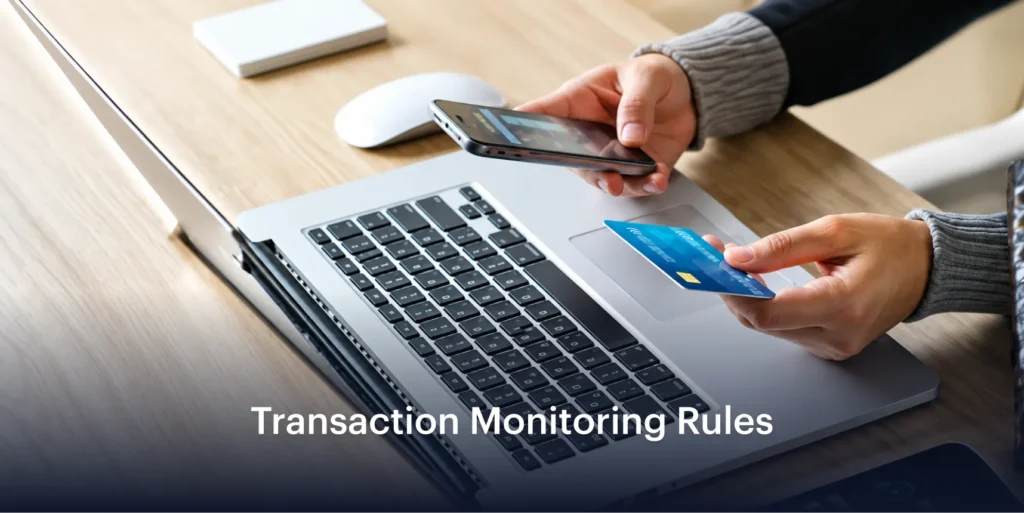

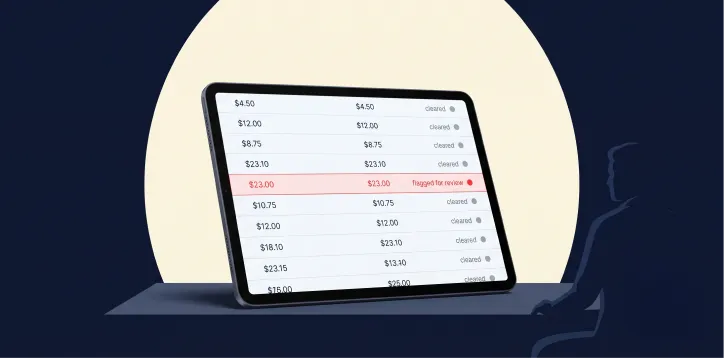
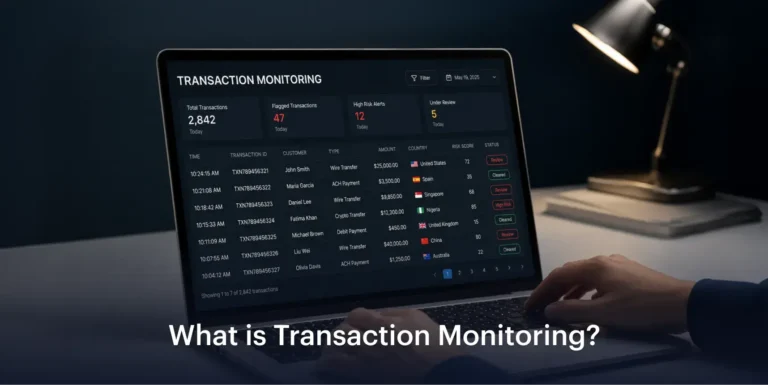
Transaction monitoring rules are predefined conditions used to identify unusual or potentially suspicious transaction activity. In an Anti-Money Laundering (AML) context, these rules help organisations detect transaction patterns that may indicate risks such as money laundering or terrorist financing. A transaction monitoring rule compares customer activity against specific conditions, including transaction amount, frequency, location, customer profile, or changes in expected behaviour. When activity matches a defined condition, the system generates an alert for further review.
An alert does not confirm that financial crime has occurred, instead, it highlights activity that requires additional assessment using customer information, transaction history, and other available risk indicators. The FATF Recommendations identify ongoing monitoring, customer information, and risk-based controls as important elements of an effective AML framework.
What Are AML Transaction Monitoring Rules?
AML transaction monitoring rules are specific criteria used to identify transaction activity that may require further investigation. These rules help organizations compare actual customer activity against expected behaviour and identify unusual patterns.
Common factors considered in AML transaction monitoring rules include:
- Transaction amount
- Transaction frequency
- Customer risk profile
- Geographical location
- Source and destination of funds
- Changes in normal account behaviour
For example, a customer who usually makes low-value domestic payments may trigger an alert after suddenly making high-value international transfers within a short period of time. The rule itself does not determine whether the activity is suspicious. It helps compliance teams identify transactions that require additional review.
How Do Transaction Monitoring Rules Work?
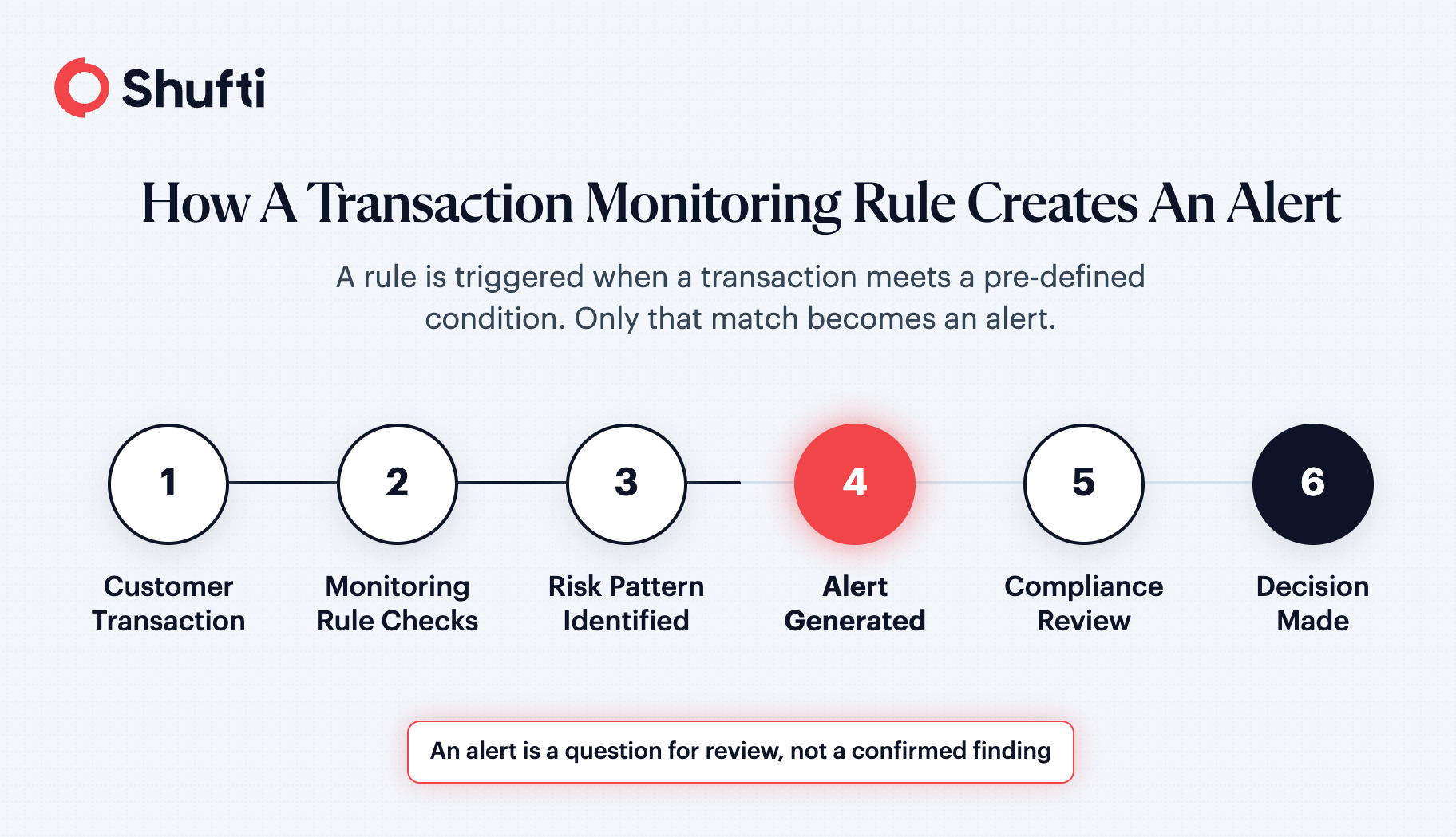
Transaction monitoring rules automatically check customer activity against predefined risk conditions. The process usually works as follows:
- A transaction enters the monitoring system: The system receives information such as the amount, currency, payment time, location, sender, beneficiary, and payment channel.
- The relevant rules assess the transaction: Each rule checks whether the activity meets its conditions. For example, a velocity rule may look for several payments made within a short period while a geographic rule may check whether funds are moving to an unexpected jurisdiction.
- The activity is compared with the customer’s profile: The system considers factors such as customer’s risk level, expected account activity, and previous transaction behaviour. This helps distinguish unusual activity from transactions that are normal for that customer.
- An alert is created when the conditions are met: The alert records which rule was triggered and the transactions or risk signals that caused it. A rule match does not automatically mean that the activity is suspicious.
- A compliance analyst reviews the alert: The reviewer examines the customer’s history, beneficiaries, counterparties, source or purpose of funds, and any supporting information.
- The alert is closed or escalated: If the activity has a reasonable explanation, the reviewer closes the alert and records the rationale. If concerns remain, the case is escalated for further investigation. A SAR, STR, or equivalent report is considered only when the findings meet the applicable reporting requirements.
For example, a customer who normally receives one monthly salary suddenly receives payments from several unrelated accounts and sends most of the funds to a new beneficiary within two hours. The monitoring system may generate an alert because the activity matches a fund-velocity rule and differs from the customer’s usual behaviour. The compliance team must then determine whether there is a legitimate explanation or whether the activity requires further investigation.
The FFIEC BSA/AML Manual states that monitoring criteria and thresholds should reflect the institution’s risk profile. It also expects alerts, investigations, and escalation decisions to be handled through documented procedures.
Types of Transaction Monitoring Rules
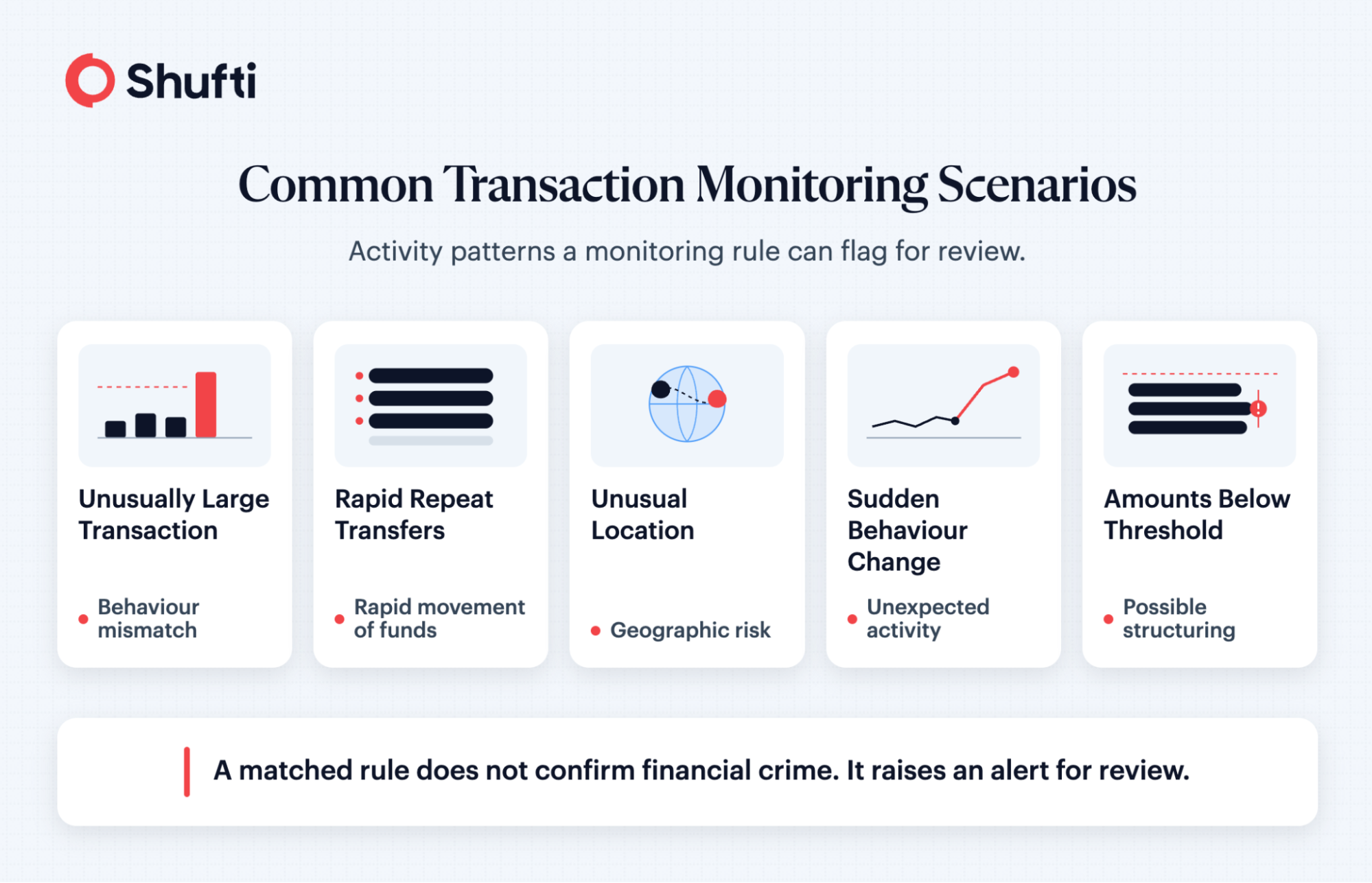
Organisations use different rules depending on their customers, products, and financial crime exposure. These categories may also work together within the same monitoring scenario.
| Rule Type | What It Identifies |
| Transaction Amount Rules | Transactions that exceed expected values or predefined thresholds. |
| Transaction Frequency Rules | An unusually high number of transactions within a set period. |
| Funds Velocity Rules | Money received and transferred out again within a short time. |
| Geographic Rules | Activity involving the unexpected or higher-risk locations. |
| Behaviour-Based Rules | Transactions that differ from a customer’s normal transaction pattern. |
| Structuring Rules | Multiple smaller transactions that may indicate attempts to avoid reporting requirements. |
For example, a personal salary account normally receives one monthly salary payment and is used for everyday expenses. If it suddenly receives funds from several unrelated people and sends more than 90% of that money to a new beneficiary within two hours, a fund velocity rule may generate an alert. The rapid movement could indicate that the account is being used to pass money onwards, although a family collection or payment for a shared purchase may provide a legitimate explanation.
Transaction Monitoring Rules and False Positives
A false positive occurs when a legitimate activity meets the conditions of a monitoring rule.
For example, a customer who usually makes modest monthly payments suddenly sends a much larger transfer. The payment triggers an amount rule because it falls outside the customer’s normal activity. After reviewing the transaction, the aml compliance team confirms that it relates to a genuine property purchase and is supported by the sale agreement and source of funds evidence. The alert is therefore closed as a false positive.
Occasional false positives are expected. However, poorly calibrated rules can fill investigation queues with routine activity and make higher risk cases harder to prioritize. Organizations can improve accuracy by using current customer information, customer specific risk thresholds, historical transaction behaviour, and regular rule testing.
The FIFEC BSA/AML Manual states that monitoring criteria and thresholds should reflect the institution’s risk profile, be reviewed before implementation, and tested periodically to confirm that they remain effective.
How Shufti Supports Transaction Monitoring
Shufti Transaction Monitoring software helps organizations monitor transaction activity by combining transaction analysis with identity and risk information.
By connecting customer identity information with transaction behaviour, businesses can gain additional context when reviewing potential risks and assessing alerts.
Frequently Asked Questions
What data is needed to create effective transaction monitoring rules?
Businesses need accurate customer details, risk ratings, expected account activity, transaction history, payment amounts, beneficiaries, locations, and payment channels. The data must be current and linked to the correct account otherwise rules may miss genuine risks or create avoidable alerts.
How should businesses handle rule changes after a new financial crime risk emerges?
Document the new risk, identify the affected customers or transactions, and update the relevant rule or threshold. Test the change against historical data, approve and record the new version then monitor its performance after deployment.
What should compliance teams do after a transaction monitoring rule alert?
Review why the alert triggered, compare the activity with the customer’s profile and examine the relevant transactions, beneficiaries, and supporting evidence. Close the alert with a recorded explanation when the activity is legitimate or escalate it when concerns remain. Regulatory reporting depends on the investigation findings and applicable requirements.