AMLR Solutions
  AMLR Consultation
 EUDI Wallet
 Onboarding
 Ongoing Monitoring
 FRAML
FRAML KYC
KYC KYB
KYB KYI
KYI Age Assurance
 Workforce IAM
 Candidate Verification
 Account Takeover
 Bonus/ Promotion Abuse
 Chargeback Fraud
 Deepfake
 Document Fraud
 Fraud Networks
 Impersonation Fraud
 Money Mule Activity
 Multi-Accounting
 Party Fraud
 Regulatory & Compliance Risks
 Synthetic Identity Fraud
 Adult Content
 Banking
 Crypto
 Fintech
 Forex
Forex Compliance
 Fraud prevention
 Trust & safety
 Global expansion
 Compliance Officers
 Developers
 Fraud Analysts
 Product Managers
 Journey Builder
  Global Trust Platform
 Customer Profiles
 Vendor Comparison
 IDV Case Management
 AML Case Management
 Regulatory Reporting
 Agentic Rule Builder
  AI Compliance Co-Pilot
  Fraud Analytics
 Fraud Hub
  OCR
OCR Shufti AI
 Bank Account Verification
  Biometric Duplication
 Database Checks
 Document Intelligence
 Government ID
 Mobile Driver's License
 NFC
NFC Selfie Liveness
 Brand Personalisation
 Deployment Options
 Identity Methods
 IDV Modes
 Multi-tenancy
 On-Premise IDV
 Secure Capture
 Shufti MCP












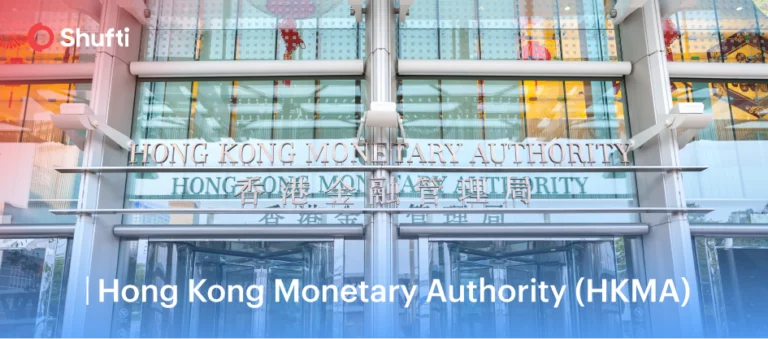
The Hong Kong Monetary Authority (HKMA) has updated its guidance on remote customer onboarding and told every authorized institution (AI) and stored value facility (SVF) licensee in the territory to review how they verify individual customers online. The circular, issued on 3 September 2026 and signed by Executive Director (Enforcement and AML) Raymond Chan, supersedes the HKMA’s February 2019 guidance on remote onboarding of individual customers and its May 2021 circular on remote onboarding and iAM Smart.
Two earlier circulars remain in force and should be read alongside the new letter. The September 2020 guidance on “Remote onboarding of corporate customers” and the June 2020 “Feedback from thematic reviews of Anti-Money Laundering and Counter-Financing of Terrorism (AML/CFT) control measures for remote onboarding initiatives” both continue to be applicable. In particular, the HKMA points to artificial intelligence-driven automation and sophisticated tactics, including the use of deepfake technology, which have increased the potential for impersonation, online fraud and associated mule-account networks at much greater scale.
The two principles every remote onboarding flow must now satisfy
The circular sets out two core principles, ‘identity identification’ and ‘identity matching’ that remote onboarding solutions must remain effective and compliant with.
- Identity Authentication: The individual customer identity, obtained through the electronic channels by the AIs and SVF licensees, needs to ensure the reliability of the data, information, or document that is obtained for the purpose of verifying the identity of the customer.
- Identity Matching: AIs and SVF licensees should use appropriate technology to link the customer incontrovertibly to the identity provided.
In practice, the first principle, identity authentication, asks whether the identity evidence is real, and the second, identity matching, asks whether the person presenting it is the one it belongs to. A genuine document that is held by an impostor satisfies authentication but fails at matching, which is why the circular considers them as separate requirements rather than a single check.
Beyond the two core principles, AIs and SVF licensees are expected to adopt a risk-based approach in the design of their products and services, proportionate to the customer’s assessed ML/TF risk profile. For instance, a tiered approach, where account features, functionality and transaction limits are scaled dynamically and adjusted according to actual usage and ongoing customer behaviour, and says that combining this with remote onboarding solutions and active senior management oversight can significantly strengthen AML/CFT controls. The HKMA has been working with the industry and the Hong Kong Police Force to share the latest tactics and modus operandi, and firms are expected to use that intelligence to ensure their systems and processes mitigate both existing and evolving ML/TF risks on an ongoing basis.