


 AMLR Solutions
 AMLR Consultation
 EUDI Wallet
 Onboarding
 Ongoing Monitoring
 FRAML
 KYC
 KYB
 KYI
 Age Assurance
 Workforce IAM
 Candidate Verification
 Account Takeover
 Bonus/ Promotion Abuse
 Chargeback Fraud
 Deepfake
 Document Fraud
 Fraud Networks
 Impersonation Fraud
 Money Mule Activity
 Multi-Accounting
 Party Fraud
 Regulatory & Compliance Risks
 Synthetic Identity Fraud
 Adult Content
 Banking
 Crypto
 Fintech
 Forex
 Compliance
 Fraud prevention
 Trust & safety
 Global expansion
 Compliance Officers
 Developers
 Fraud Analysts
 Product Managers
 Journey Builder
 Global Trust Platform
 Customer Profiles
 Vendor Comparison
 IDV Case Management
 AML Case Management
 Regulatory Reporting
 Agentic Rule Builder
 AI Compliance Co-Pilot
 Fraud Analytics
 Fraud Hub
 OCR
 Shufti AI
 Bank Account Verification
 Biometric Duplication
 Database Checks
 Document Intelligence
 Government ID
 Mobile Driver's License
 NFC
 Selfie Liveness
 Brand Personalisation
 Deployment Options
 Identity Methods
 IDV Modes
 Multi-tenancy
 On-Premise IDV
 Secure Capture
 Shufti MCP













Choose AML Transaction Monitoring vendor That cuts false positives And flags risks
To choose the right transaction monitoring vendor that reduces false alerts and identifies real risks, evaluate vendors on areas like risk-based detection, payment data coverage, fraud and AML signals, AI-assisted alert triage, case management and FIU reporting.
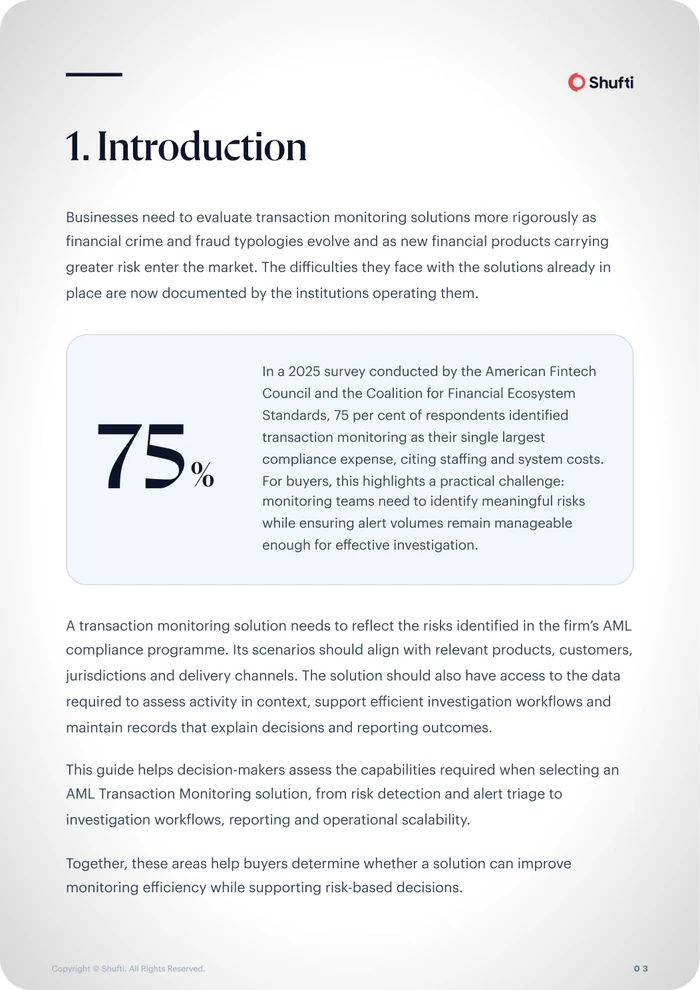
Schedule a Demoof survey respondents named transaction monitoring their single largest compliance expense (AFC and CFES, 2025)
What decision-makers need from transaction monitoring
Transaction monitoring is often the most expensive control in an AML programme, and the institutions that run it now document that strain themselves. In a 2025 survey by the American Fintech Council and the Coalition for Financial Ecosystem Standards, 75% of respondents named transaction monitoring as their single largest compliance expense, with staffing and system costs behind the spend (AFC and CFES). Monitoring teams therefore face a practical test. They have to catch meaningful risk while they keep alert volumes small enough for proper investigation.
Regulated firms now need to evaluate monitoring tools more rigorously, because financial crime typologies keep changing and riskier financial products keep reaching the market. However, a solution earns its cost only when it reflects the risks in the firm's AML compliance programme. Its scenarios have to match the firm's products, customers, jurisdictions and delivery channels, and it needs the data to read activity in context. Beyond detection, the right tool supports efficient investigations and keeps records that explain every decision and report.
Decision-makers should therefore assess AML transaction monitoring tools on five capabilities, namely risk detection, alert triage, investigation workflows, FIU reporting and operational scale. As a result, they can judge whether a vendor will make monitoring more efficient and still support risk-based decisions.
Four outcomes the right tool should deliver
The right AML transaction monitoring vendor must be capable of improving risk detection, reducing operational burden and supporting better compliance decisions. Compliance and procurement teams should therefore evaluate every vendor on the four outcomes below, with the assessment listed for each one.
Better risk detection through context
Whether the platform combines transaction, customer, identity, fraud and behavioural indicators into a fuller picture of risk
Faster alert review
Whether better triage, prioritisation and access to case information cut unnecessary manual review
Confident, explainable decisions
Whether compliance teams can see the evidence behind each alert and the risk factors that raised it
Monitoring that scales
Whether the platform absorbs higher transaction volumes, new products, new customer segments and new jurisdictions without extra operational complexity
The four assessments carry the most weight when organisations apply them to their own monitoring environment. For that reason, each organisation should define its current risks, operational challenges and growth plans before it looks at any vendor.
Assess your business’s transaction monitoring needs
Effective transaction monitoring starts with an institution's own requirements, not with a vendor's feature list. A bank operating across several jurisdictions, a payment service provider processing high volumes and a marketplace managing seller payouts each face different financial crime risks and operational challenges. Those requirements also shift as the institution enters new markets, launches products or serves new customer segments. Before they select AML transaction monitoring tools, firms should assess their needs across the seven areas below.
AML Alert Volumes and Review Workload
How many alerts does the firm generate today, how many need manual review, and which alert types consume the most investigation time?
What to consider
Alert volume by product and customer segment, the share of alerts closed without further investigation, analyst review time, expected growth in alerts
New Products and Payment Methods
How will changes in business activity affect monitoring?
What to consider
New products or payment methods, shifts in customer behaviour, new transaction patterns, added operational complexity
Cross-Border and Jurisdictional Expansion
How will new markets change the firm's monitoring requirements?
What to consider
New customer and transaction risk profiles, different regulatory expectations, new payment corridors and counterparties, extra reporting obligations
Customer Risk Segmentation
How do different customer groups change monitoring needs?
What to consider
Expected behaviour by segment, different risk across retail, business and institutional customers, whether current processes still fit
Sector-Specific Financial Crime Risk
Which financial crime risks matter most in the sector?
What to consider
Payment providers watch rapid fund movement, scam activity and linked beneficiaries. Remittance firms watch corridor risk, repeat sender-beneficiary pairs and structuring. Marketplaces watch seller payouts, linked accounts and unusual account activity.
SAR Investigation Challenges
Where do investigations slow down today?
What to consider
Time spent pulling data from separate systems, missing customer and behavioural context, false-positive workload, documentation time, difficulty telling which alerts need review
Transaction Monitoring Scalability
How will monitoring change as the organisation grows?
What to consider
Higher transaction volumes, more products and payment flows, new customer segments, more jurisdictions, heavier investigation workload, rising alert volumes
With these requirements documented, decision-makers can see which monitoring capabilities they need to fix today's problems and support future growth. The six evaluation areas below then turn those needs into transaction monitoring vendor evaluation criteria for scenarios, payment data, fraud, AI, case management and FIU reporting.
1. Risk-based scenarios and rule governance
Strong transaction monitoring rules start from the firm's AML compliance programme, not from a vendor's default library. When detection logic drifts away from the risks the programme identifies, AML compliance officers spend hours on activity that needs no investigation while real risks compete for attention. A solution should therefore translate the firm's risk assessment into practical scenarios, and compliance teams should understand what risk each scenario covers and how it works.
For example, a remittance provider may watch repeat sender-beneficiary relationships, corridor risk and structuring. A marketplace may track seller payouts, linked accounts and unusual account activity, while a payment provider looks for rapid fund movement and suspicious payment relationships.
Capabilities to assess
 Prebuilt scenarios that match the firm's products, customers and markets
- The ability to create additional scenarios
- Configurable thresholds, velocity rules and customer segmentation
- Detection of patterns across multiple transactions and linked accounts
- Historical testing before deployment
- Scenario approval workflows and version history
- A clear map between each scenario and the risk it covers
Questions for vendors
- 1.Which AML risks and typologies do the existing scenarios cover?
- 2.Can the compliance team configure new scenarios for new products, customers, jurisdictions or emerging risks?
- 3.Can the compliance team test scenarios against historical transaction data before deployment?
- 4.How does the vendor review, approve and record scenario changes?
- 5.Does the platform support both prebuilt scenarios and organisation-specific rules?
Scenario alignment benchmarks
Scenario coverage
Typologies mapped to the firm's risk assessment
The vendor supplies prebuilt scenarios for structuring, smurfing, money mule activity, corridor risk and beneficiary risk, and maps each one to the firm's enterprise-wide risk assessment
Rules written without engineering
The compliance team writes no-code, manual and AI-drafted rules and approves each one before activation
Every parameter under compliance control
The compliance team sets thresholds, weights, filters, velocity windows and escalation outcomes
Velocity windows from minutes to months
Configurable time windows catch both short bursts and long-running patterns
Rule governance
Backtesting on at least 90 days of history
The compliance team tests new or amended rules against historical transaction and customer data before deployment and records alert volume and precision for MLRO approval
Rules written without engineering
The compliance team writes no-code, manual and AI-drafted rules and approves each one before activation
Recalibration as the business changes
The compliance team re-tests rules whenever products, customer segments or typologies change
Every rule version on record
The system records the approver and timestamp for each version and keeps them for at least 5 years
Scenario alignment sets what the platform should detect. The next area tests whether it receives the information it needs to do that.
2. Payment data coverage and ingestion
Payment transaction monitoring reads the detail inside each payment, including the parties, references, origin and destination, and uses it to spot suspicious patterns. However, a well-designed scenario still produces limited insight when payment fields arrive missing, inconsistent or disconnected from customer records. AML compliance officers then spend extra time gathering information before they can even understand the activity in front of them. The evaluation should therefore check whether a solution can interpret payment information and messaging, not only whether it can ingest transaction data.
Capabilities to assess
- Support for the institution's payment flows and transaction data fields
- Ingestion of payment messages for the institution's operating markets and payment schemes
- Support for structured payment messaging formats where they apply
- Field mapping from payment data and messages into scenarios and risk assessments
- Links between transactions, customers, accounts, beneficiaries and related entities
- Clear handling of missing, incomplete or inconsistent payment information
- The option to add payment sources, message types and data feeds as needs change
- Capacity for higher transaction volumes and new payment flows
Questions for vendors
- 1.Which transaction data fields and payment messaging formats can the platform ingest and analyse?
- 2.Can it link transaction activity with customer, account, beneficiary and related entity information?
- 3.How does it use payment message information within risk assessment and monitoring scenarios?
- 4.How does it handle missing, incomplete or inconsistent payment data?
- 5.Can the firm add payment sources, schemes or message formats as requirements change?
Payment data ingestion benchmarks
Transaction data
Deep enrichment on every transaction
Rules and scoring draw on payment, device, behavioural, merchant and identity data points
Payment identifiers captured in full
The platform captures IBAN, BIC, routing number, card BIN, merchant category code (MCC) and payment method with each transaction
Non-payment events in the same view
The platform ingests device, login, account signup and merchant metadata alongside each transaction
Business context behind each payment
The tool captures company name, merchant ID, industry, MCC, average sales price, currency and sub-merchant data
Full originator and beneficiary data
The platform captures name, account, bank identifier and country, and scores country corridors (FATF Recommendation 16)
Instant payment rails
Instant rails monitored through one API
One API monitors SEPA Instant, FedNow and UK Faster Payments transfers and maps payer, payee and payment fields from ISO 20022 pacs.008 messages wherever the scheme uses them (Regulation (EU) 2024/886)
Crypto and data quality
Travel Rule data on every crypto transfer
The tool sends and receives IVMS 101 messages through TRP, CODE, Binance GTR or direct VASP-to-VASP routes (FATF Recommendation 16, EU Transfer of Funds Regulation, MiCA)
Incomplete data never treated as low risk
The platform flags payer and payee information that is missing or incomplete as "not assessable"
A decision on every transaction
The tool returns approve, decline or route-to-review for each transaction
Integration
One API, real time or batch
One response returns the decision, risk score, rule hits and evidence, and the API, webhooks and machine-readable exports connect it to core banking, CRM and case management
Historical review in batches
Teams can submit past transactions in batches for periodic review
Monitoring that never pauses
Monitoring runs continuously, 24/7
Payment data forms the foundation of risk assessment. The next area asks whether fraud and AML signals feed the same risk view.
3. Connected fraud and AML (FRAML) signals
Fraud is a predicate offence for money laundering under the FATF Recommendations, so the proceeds of scams, account takeovers and mule schemes often end up in the flows that AML monitoring watches. Fraud indicators, however, frequently sit apart from AML monitoring data. When AML compliance officers cannot see how an account change, device activity and a later movement of funds relate, they assess the transaction with less context. A connected fraud and AML assessment gives investigators one risk view across identity, transaction, behavioural and fraud indicators, so they can tell an isolated event from a wider pattern involving the customer, account or related entities.
The overlap matters most for payment businesses exposed to both scams and suspicious fund movement. In the UK, the Payment Systems Regulator's reimbursement requirement for in-scope Faster Payments authorised push payment (APP) scams applies from 7 October 2024, with a maximum reimbursement of £85,000 per claim (Payment Systems Regulator, PS24/7). Payment providers therefore need visibility across both fraud and AML indicators, although the precise obligations depend on the firm and payment type. Buyers should test how each signal feeds the overall risk assessment and how the vendor splits responsibilities between fraud and AML teams.
Capabilities to assess
- One risk view that combines AML, fraud, identity and behavioural indicators
- Identity, customer, device and transaction context during review
- Links between customers, accounts, beneficiaries and related entities
- A clear explanation of which signals raised an alert or changed a risk assessment
- Defined routes for fraud review, AML investigation and escalation
- Integration with existing fraud, KYC and AML systems
- Pattern detection across connected entities and transactions
Questions for vendors
- 1.Which fraud and AML indicators feed the same risk assessment?
- 2.Can investigators see identity, device, behavioural and transaction context together?
- 3.How does the platform identify relationships between accounts, entities, beneficiaries or transactions?
- 4.Can the firm configure different investigation or response workflows by type of risk?
- 5.How does the tool separate fraud indicators from AML conclusions while it lets both inform the overall assessment?
Connected screening, fraud and AML benchmarks
Fraud and AML signals
One score for fraud and AML
One platform resolves KYC outcome, AML screening, fraud signals and transaction monitoring into one composite risk score
Linked accounts surfaced automatically
Shared email, phone, IP, device, payment identifiers or beneficiaries flag mule behaviour that doesn't fit the verified identity
Device and location risk in every score
The score weighs device mismatch, account takeover behaviour, velocity spikes and new-recipient risk alongside IP geolocation and VPN, TOR and proxy detection
Every alert tied to the verified identity
Each alert links to the customer's KYC outcome, screening status and risk rating (FATF Recommendation 10)
Sanctions screening
Every major regime, every entity type
Screening covers OFAC SDN, UN Security Council, EU Consolidated, UK, DFAT and SECO lists across individuals, entities, vessels, aircraft and crypto wallets, and resolves the OFAC 50 Percent Rule and its EU and UK equivalents
Lists refreshed within minutes, not daily
The platform re-screens enrolled customers each refresh cycle, well inside the daily screening that the EU Instant Payments Regulation requires for SEPA Instant (Article 5d, Regulation (EU) 260/2012 as amended by Regulation (EU) 2024/886)
Both parties screened in one request
One transaction request screens customer and beneficiary against sanctions, PEP and adverse media filters
PEP, watchlist and crypto screening
PEP coverage down to local officials
The tool tiers PEPs in line with FATF guidance, includes local and municipal officials, and links relatives and close associates at the PEP's tier (FATF Recommendation 12)
Global watchlists and multilingual adverse media
Screening covers thousands of watchlists, monitors adverse media across languages and risk categories, and applies the same matching logic to internal lists
Results in seconds, every decision explained
Fuzzy, phonetic and transliteration matching runs at a configurable threshold, and AI-assisted Level-1 triage gives a reason for each decision
Counterparty VASPs checked before data leaves
The platform risk-scores each VASP and checks KYB status and MiCA authorisation before it sends Travel Rule data, and verifies unhosted wallet ownership by Satoshi test, signature proof, visual proof or self-declaration
Connected signals give reviewers more context. The next area looks at how a platform uses that context to prioritise alerts and support AML compliance decisions.
4. Agentic AI alert triage
Effective AI transaction monitoring relies on agentic AI that triages alerts with full customer, transaction, identity, fraud and behavioural context, so compliance teams can prioritise real risk and cut repetitive review work. Many solutions, however, use AI in name only. They may reduce alert counts, yet some do it by suppressing alerts and ignoring the right indicators, which hides activity the compliance team should see.
The right solution resolves low-risk activity through better contextual assessment, explains every triage decision and leaves the final approval with compliance. Decision-makers should therefore check how it decides which alerts it resolves, which need further review and which it escalates, and whether each outcome follows the firm's AML compliance programme.
Capabilities to assess
- Risk scores built on transaction, customer and behavioural indicators
- Contextual alert assessment that draws on identity, AML, fraud and other risk signals
- Alert prioritisation by risk exposure and compliance rules
- AI-assisted alert summaries and investigation support
- Visibility into the evidence and factors behind each risk assessment
- Defined criteria for resolution, further review and escalation
- Human review controls wherever the compliance programme requires them
- An audit history of decisions, overrides and workflow changes
- Risk assessment that scales with transaction volumes, products and jurisdictions
Questions for vendors
- 1.How does the platform determine an alert's risk level?
- 2.Which data points feed the risk assessment?
- 3.Can AML compliance officers see why the system prioritised, resolved or escalated an alert?
- 4.How does it separate alerts the team can resolve quickly from those that need further investigation?
- 5.How does the workflow handle missing, conflicting or insufficient information?
- 6.Can the compliance team review, challenge and approve recommendations before final action?
- 7.How does it record decisions, overrides and changes for future review?
- 8.How does it keep risk assessment consistent as transaction volumes and business requirements grow?
Risk scoring and agentic AI benchmarks
Risk scoring
One composite risk score per transaction
The platform routes alerts to L1, L2 or MLRO by risk level
Crypto wallets rated by risk
The tool classifies wallets as Low, Medium or High against sanctions lists, watchlists and frozen-address lists, produces an audit-ready report and links each wallet hit to a verified identity
Every risk factor visible
The platform shows each contributing signal and marks it as raising, lowering or neutral to risk
Customer context in every score
KYC status, account age, risk rating, source of wealth, screening outcome and prior decisions feed each transaction score
Behaviour compared with the customer's own baseline
The platform compares amount, frequency, timing, device and transaction type against each customer's own recent history
Alert quality
Fewer false positives, proven on the buyer's own data
The vendor demonstrates a measurable reduction in false positives against the buyer's current baseline, on its own data
Suppression with an audit trail
The platform suppresses repeat low-risk patterns only under documented conditions, and every suppressed decision stays auditable
Low friction for good customers
The tool approves low-risk transactions in real time, and recurring safe patterns do not trigger repeat reviews
AI governance
Every score explained and reproducible
Each alert shows the rules it triggered and the signals behind it
AI tested for bias
The vendor tests AI models for bias, and hybrid AI and human review lets the compliance team check automated outcomes before they become final
Compliance keeps the final say
AI drafts and recommends, the compliance team approves, and the system logs every override
Prioritisation creates value when it helps AML compliance officers reach and document better decisions. The next area tests how well those decisions move into investigation workflows.
5. L1, L2 and L3 case management
L1, L2 and L3 describe the review tiers an alert passes through. First-line analysts at L1 handle initial alert review, L2 investigators take escalated cases, and the third tier, usually the MLRO, makes the final call on reporting. However, the tiers only work when each reviewer sees the full picture. An alert may carry a risk score yet still leave AML compliance officers searching several systems for customer information, transaction history, previous alerts and related risk indicators.
The search adds review effort and makes a complete understanding of the activity harder to build. A strong case management workflow therefore brings customer context, transaction activity, risk indicators, investigation history and previous decisions into one view. As a result, investigators spend less time rebuilding information and more time on the judgement each case needs.
Capabilities to assess
- One investigation view that combines alert details, customer information, transaction history and risk indicators
- Access to the scenarios and factors that triggered the alert
- Visibility of related accounts, beneficiaries and linked activity
- Identity, fraud, behavioural and transaction context inside the case
- Investigation notes and evidence kept with the case
- Configurable review, escalation and approval workflows that fit the firm's operating model
- Recorded decisions, overrides, approvals and timestamps
- A searchable audit history that supports quality assurance reviews
- Capacity for higher investigation volumes across teams, products and jurisdictions
Questions for vendors
- 1.Can investigators see the complete context behind an alert in one place?
- 2.Which customer, transaction, identity, fraud and behavioural signals are available during investigation?
- 3.Can investigators see related activity, accounts or entities connected to the case?
- 4.Can teams assign, track and manage cases according to internal processes?
- 5.Can reviewers escalate a case when it needs further review or approval?
- 6.Can reviewers see what information the team considered, what actions it took and why it reached a decision?
- 7.Does the system record investigation notes, decisions, approvals and changes for audit?
- 8.Can the case history support regulatory reviews, internal quality checks and future investigations?
- 9.Can the workflow absorb higher investigation volumes as the organisation expands?
Case management and investigation benchmarks
Alert handling
Alerts routed by risk and context
The system routes alerts by risk score, typology, jurisdiction, customer tier and data completeness
A clear escalation path
Cases move from L1 to L2 to MLRO, with four-eyes review and SLA tracking
Evidence assembled before review
The system gathers the rule trigger, score explanation, linked accounts, behavioural deviation and adverse media before an analyst opens the case
Investigation checks run in parallel
Investigation agents check pattern history, screening context, device and IP, receiver networks and prior cases at the same time
Records and exports
Cases exported in machine-readable formats
The system exports narrative, linked entities, decision history, analyst notes, rule metadata and score explanations for audit, regulator requests and downstream compliance systems
Records kept for at least 5 years
The system keeps actions, decisions and closure rationale on record (31 CFR 1010.430, UK MLRs 2017 reg. 40)
A complete investigation record also supports reporting decisions. The next area checks whether that record flows into the FIU reporting process that applies to the firm.
6. SAR and FIU reporting
The MLRO or designated reporting officer decides when a SAR is needed, so the right transaction monitoring vendor must hand that officer a filing-ready case. It should pre-fill reports from case evidence, support each FIU's format from FinCEN BSA XML to goAML, require MLRO approval, track deadlines and keep an audit trail of every filing.
Capabilities to assess
- Support for relevant FIU formats, fields and reporting workflows
- Transfer of case facts and evidence into report preparation
- Review and amendment of structured fields and narrative
- Support for references, codes or alert terms where regulators require them
- Internal review and approval workflows
- Submission status, amendment and audit tracking
- Reporting records linked to the underlying investigation
Questions for vendors
- 1.Which FIU formats and reporting workflows does the platform support for the jurisdictions where the firm operates?
- 2.Can investigation information flow into report preparation without a manual rebuild of the case?
- 3.Can the compliance team review, edit and approve reports before submission?
- 4.Can the platform apply reporting instructions, codes or references where regulators require them?
- 5.Does the system record reporting decisions, approvals, submissions and amendments?
- 6.How does the vendor update reporting requirements when regulatory expectations change?
FIU reporting benchmarks
Filing
Direct FinCEN e-filing
The system submits through the BSA E-Filing System in BSA XML 2.0 and captures the acknowledgement (accepted, accepted with warnings or rejected)
SARs filed on time
The compliance team files FinCEN SARs within 30 calendar days of initial detection, or 60 where it cannot identify a suspect, and a deadline tracker escalates before the window closes (31 CFR Chapter X)
CTRs batched automatically
The system batches cash transactions over USD 10,000 per business day, files within 15 days and logs every pause with a reason (31 CFR 1010.311, 1010.306)
goAML filing across FIUs
The system submits native goAML XML, tracks validation receipts and adds further goAML FIUs largely by configuration
Reports pre-filled from the evidence
The system drafts the narrative and suspicious indicators from the fired rule and linked evidence, and locks subject identity to the verified KYC record
Oversight and records
No SAR files without the MLRO
The MLRO approves every SAR and STR before submission, every return needs a recorded reason, and only CTRs file automatically
A plain-English view of every filing
Each filing displays in plain English, with the exact submitted XML one click away
FIU follow-up tracked
The system tracks information requests with due dates and lets the team correct and re-file rejected filings on the same record
Filings kept for 5 years
The system keeps filings, approvals and FIU responses, with the submitted XML retrievable (31 CFR 1020.320(d))
The six evaluation areas give buyers a structured way to assess AML transaction monitoring tools.
How to calculate efficiency of transaction monitoring vendor
Two calculations turn a vendor's efficiency claims into numbers that compliance teams can check against their own alert data. The first measures how many manual review hours a new tool saves by cutting false-positive reviews, and the second measures how much of that freed capacity moves to alerts that carry real risk.
A lower alert count alone proves nothing about monitoring quality, so buyers should run both calculations on their own figures before they sign.
Operational Efficiency Improvement
Operational efficiency improvement measures the drop in manual review effort that comes from fewer false-positive reviews.
Operational Efficiency Improvement (%) =
Reduced False Positive Review Hours =
False Positive Alerts ReducedxAverage Review Time per AlertCurrent Total Manual Review Hours =
Total Alerts ReviewedxAverage Review Time per AlertRelevant Risk Detection Improvement
Relevant risk detection improvement measures how much of the freed review capacity moves to alerts that require investigation.
Relevant Risk Detection Improvement (%) =
Additional Relevant Risk Alerts Reviewed =
Reduced False Positive Alerts Available for Risk ReviewxRelevant Risk Identification RateCurrent Relevant Risk Alerts Reviewed =
Current Alerts ReviewedxCurrent Relevant Risk Identification RateThe calculation needs three inputs. Gather the total alerts reviewed each year, the average review time per alert and the number of false-positive alerts the new tool removes.
How Shufti's transaction monitoring helps ensure effective compliance
Firms use dedicated AML transaction monitoring tools that score activity against rules, customer context and typologies, then route alerts into investigation and reporting. Shufti Transaction Trust Monitoring is one of them, and the table below shows how it addresses each evaluation area, with each decision anchored to the customer's verified identity. Financial crime risks evolve as an organisation grows, because new products, payment flows, customer segments and jurisdictions bring new monitoring requirements while the compliance team still manages alert volumes and investigation complexity. Transaction Trust Monitoring starts compliance teams with pre-built risk scenarios and lets them configure rules for their own products, customers and risk exposure.

Identity context
Shufti scores every transaction against fraud and AML rules tied to the verified identity behind the account. KYC outcome, screening status, customer risk rating, source of wealth, device context and transaction behaviour resolve into one composite FRAML risk score, and reports carry verified identity and liveness-backed onboarding context.

Scenario alignment and rule builder
A no-code rule builder starts teams from typology rules for structuring, smurfing, mule activity, corridor risk and beneficiary risk, or drafts rules with the AI wizard. The compliance team sets thresholds, weights, filters, velocity windows and escalation outcomes, then tests each rule against 90 days of customer and transaction history before deployment, with full version history.

Payment data ingestion
1,600+ enriched data points per transaction, one REST API for real-time and batch monitoring, and continuous 24/7 coverage.

Case management
L1 to L2 to MLRO escalation with four-eyes review and SLA tracking, parallel investigation agents, and records kept for 5 years.

Crypto and Travel Rule
Shufti sends and receives Travel Rule data on IVMS 101 through TRP, CODE and Binance GTR, scores counterparty VASPs from 1 to 100 before any data leaves, and screens wallets against global sanctioned wallet lists on the same 15-minute refresh as fiat AML.

FIU reporting
Shufti files directly to US FinCEN in BSA XML 2.0 and runs live goAML connections to Nigeria's NFIU and Iraq's CBI, with further goAML FIUs added largely by configuration. Report-ready case bundles carry subject details, transaction chronology, triggered typologies and analyst rationale, and the MLRO approves every SAR and STR before submission.

Screening, fraud and AML
215+ sanctions regimes refreshed every 15 minutes, 2.6M PEP profiles in four tiers, 4,000+ watchlists from 100,000+ sources, adverse media in 80+ languages across 415+ risk categories, and results in under 3 seconds on average.

Deployment and security
SOC 2 Type II, ISO 27001, PCI DSS AoC and Cyber Essentials Plus. SaaS, private cloud or on-premise deployment, processing regions in the EU, UK, US, APAC and MENA, sandbox access within 24 hours and API integration in 2 to 5 business days.

Risk scoring and agentic AI
Up to 60% fewer false positives, a 90-day behavioural memory, and an MLRO AI agent that clears up to 60% of Level-1 triage in AML screening.
To reduce false alerts and improve risk detection in transaction monitoring
Request a demoRelated reading: A Guide to Risk-Aligned Transaction Monitoring


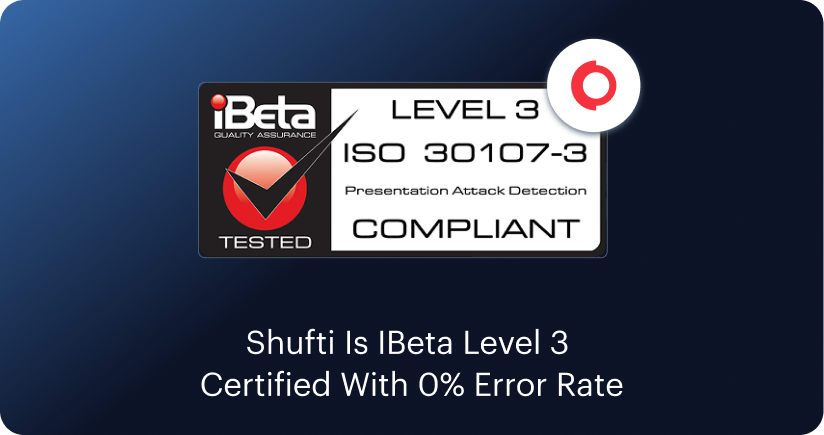
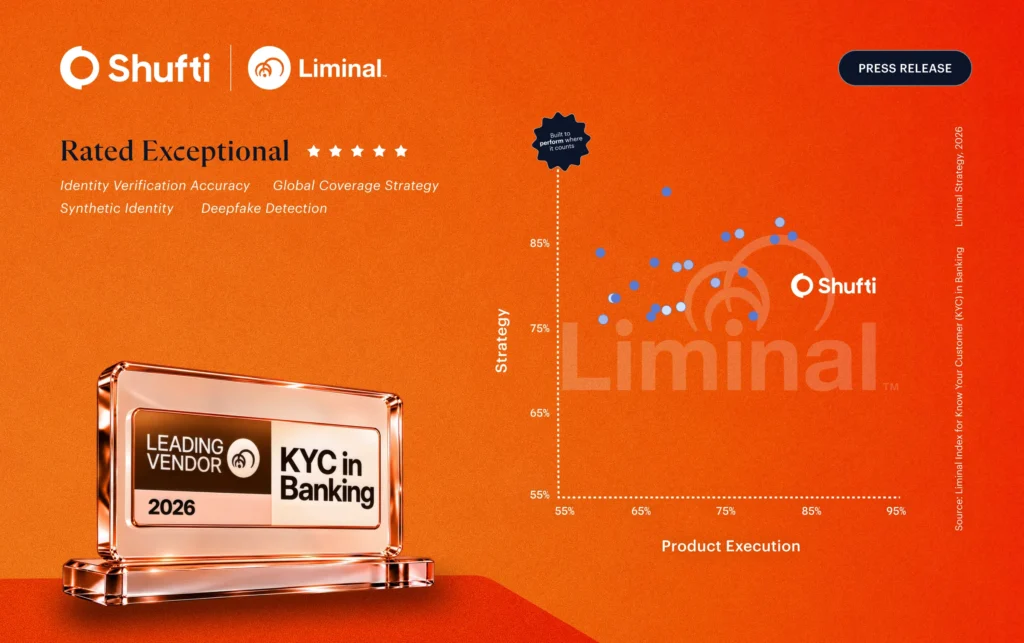
Certifications
Independently audited and certified for enterprise-grade security and data protection.





Frequently asked questions
Businesses should evaluate transaction monitoring solutions across key areas, including risk coverage, data requirements, rule configuration, investigation workflows, explainability and integration. The right solution should match their transaction volumes, customer risk profiles and operational requirements.
In order to assess a transaction monitoring vendor’s ability to reduce false positives, businesses should test the solution using representative historical transaction data and previously investigated cases. Comparing alert volumes, detection coverage and investigation workload helps establish whether fewer alerts reflect better accuracy or missed suspicious activity.
An effective evaluation of a transaction monitoring vendor requires representative transaction records, customer profiles, relevant KYC information and historical investigation outcomes where available. The dataset should contain the fields needed to test priority monitoring scenarios, with any gaps identified before performance is assessed.
When assessing AI capabilities in a transaction monitoring platform, evaluation teams should ask vendors to demonstrate specific functions using relevant business scenarios. Key considerations include measurable performance, explainable outputs, human oversight and controls governing changes to rules or models.
Running a new transaction monitoring platform alongside an existing system can help businesses compare performance before making a migration decision. Where technically feasible, both platforms should process comparable data over the same evaluation period, allowing teams to assess alert quality, risks identified and investigation effort.
A transaction monitoring platform’s audit capabilities should provide a traceable record of why alerts were generated and how they were handled. Businesses should check for applicable rule versions, supporting data, investigation decisions, approvals and configuration changes, alongside suitable record retention and access controls.

Form submitted successfully!
Thank you for your interest — your report is loading now.
Give Compliance Teams Fewer Alerts to Review
Bring customer context into every transaction risk assessment. Shufti Transaction Trust Monitoring combines transaction data, customer identity and AML signals in one integrated FRAML view, and Shufti reports up to 60% fewer false positives. Agentic AI then powers alert triage, with parallel investigation agents that gather case evidence and help prioritise investigations, so compliance teams can focus on unusual transaction behaviour and connected activity that need a human decision.