








 AMLR Solutions
  AMLR Consultation
 EUDI Wallet
 Onboarding
 Ongoing Monitoring
 FRAML
FRAML KYC
KYC KYB
KYB KYI
KYI Age Assurance
 Workforce IAM
 Candidate Verification
 Account Takeover
 Bonus/ Promotion Abuse
 Chargeback Fraud
 Deepfake
 Document Fraud
 Fraud Networks
 Impersonation Fraud
 Money Mule Activity
 Multi-Accounting
 Party Fraud
 Regulatory & Compliance Risks
 Synthetic Identity Fraud
 Adult Content
 Banking
 Crypto
 Fintech
 Forex
Forex Compliance
 Fraud prevention
 Trust & safety
 Global expansion
 Compliance Officers
 Developers
 Fraud Analysts
 Product Managers
 Journey Builder
  Global Trust Platform
 Customer Profiles
 Vendor Comparison
 IDV Case Management
 AML Case Management
 Regulatory Reporting
 Agentic Rule Builder
  AI Compliance Co-Pilot
  Fraud Analytics
 Fraud Hub
  OCR
OCR Shufti AI
 Bank Account Verification
  Biometric Duplication
 Database Checks
 Document Intelligence
 Government ID
 Mobile Driver's License
 NFC
NFC Selfie Liveness
 Brand Personalisation
 Deployment Options
 Identity Methods
 IDV Modes
 Multi-tenancy
 On-Premise IDV
 Secure Capture
 Shufti MCP


Biometric Face Authentication
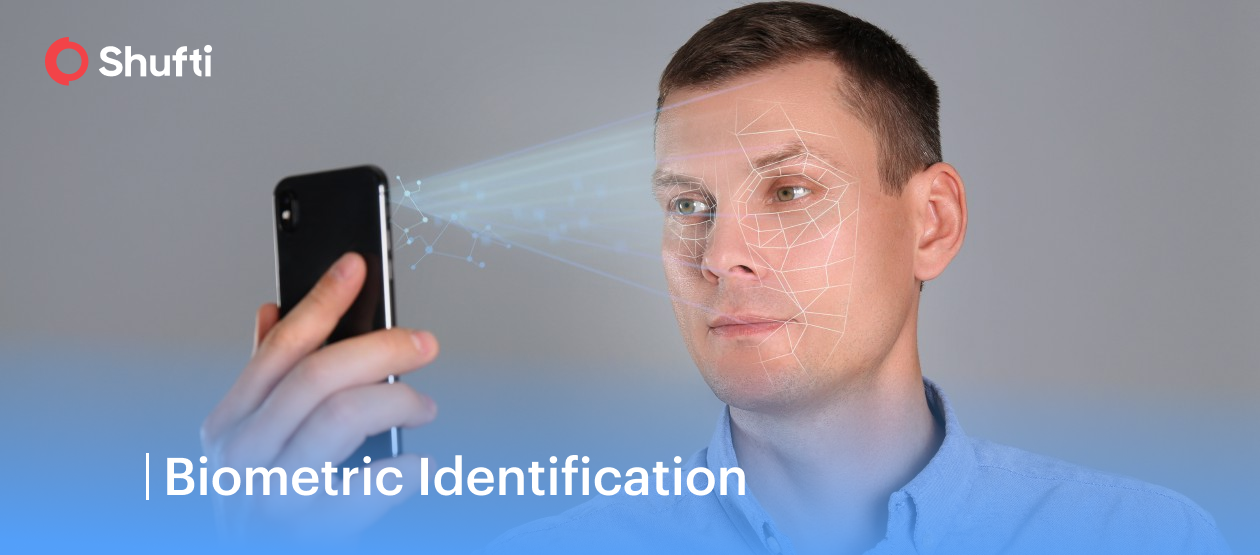
Biometric Face Authentication Verifies the Real User Behind Every Action
Passwords confirm what a user knows. OTPs confirm what they have. Neither confirms who they are. Biometric face authentication matches a live face against the identity enrolled at onboarding, at login, at payment, at every moment that matters.

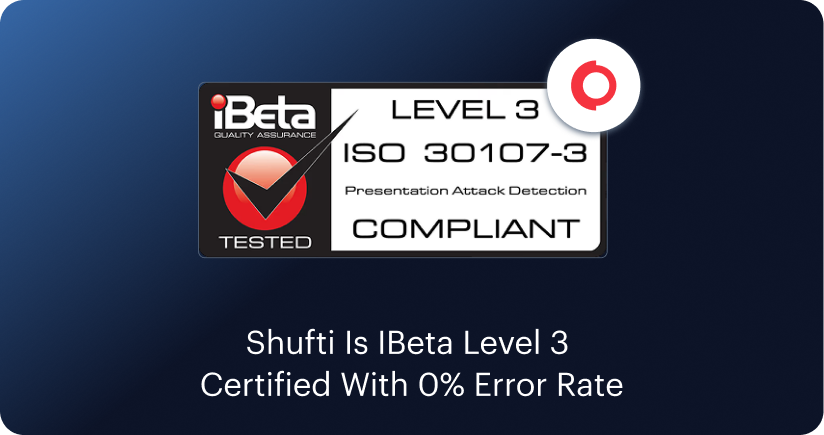
Independently Validated Results







Secure Every Lifecycle Gap with biometric face Verification
The biometric face matching Architecture Advantage
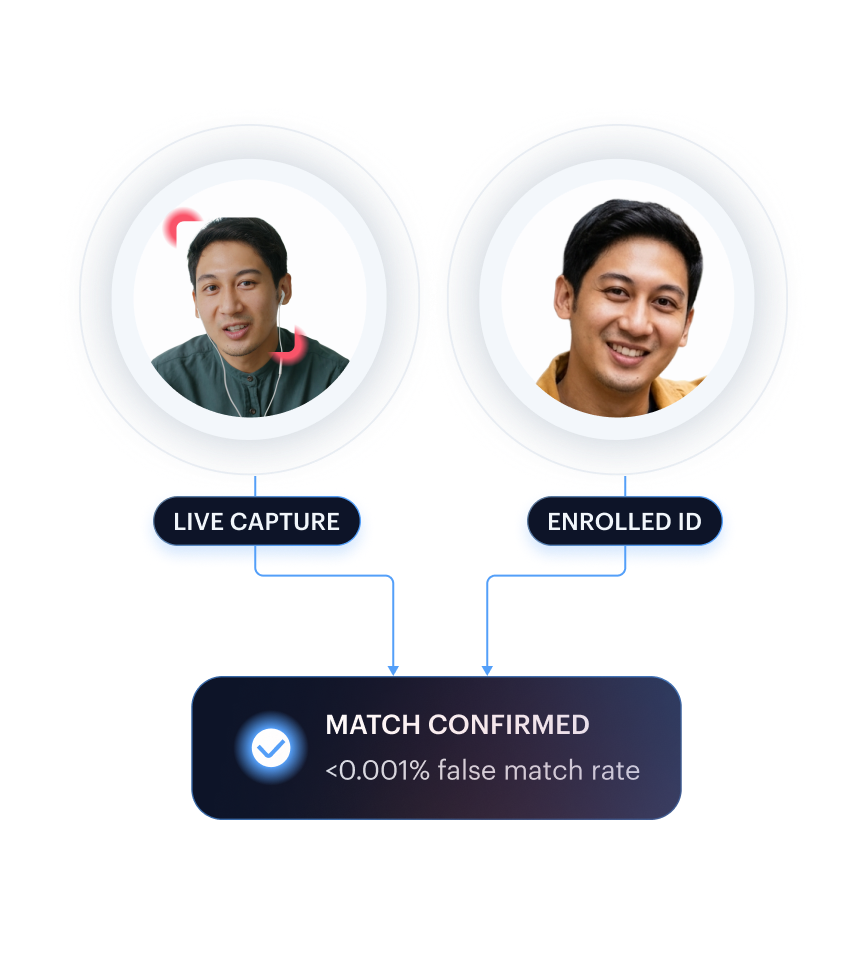
1:N searches scale errors with database size. Shufti checks the live face against just one photo on file per user, so accuracy stays sharp whether you have a thousand users or a million.
Passwords, OTPs, and authenticator codes pile friction onto every login. Shufti replaces them with a single passive selfie. No prompts, no codes, no documents.
Defence Before the Match
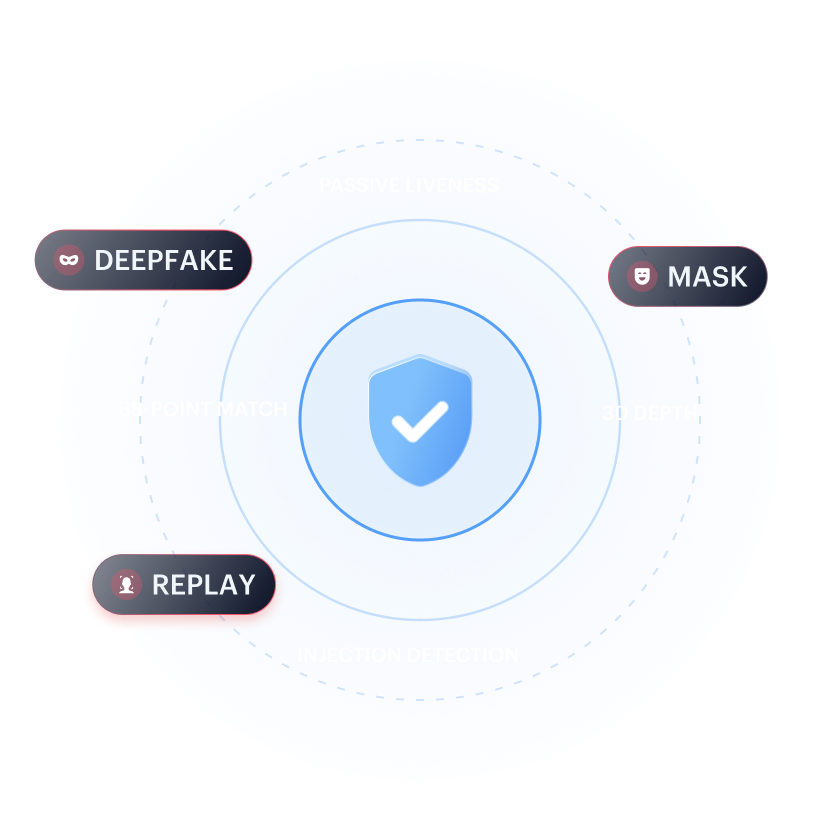
Photos, screen replays, and 2D/3D masks defeat single-layer liveness. Shufti runs proprietary multi-stream passive liveness on every capture, with 3D depth rejecting flat-surface attacks. Active liveness available for high-risk events.
Virtual cameras, emulators, and deepfake streams bypass post-capture liveness. Shufti intelligently blocks injection at source through sensor-noise fingerprinting, metadata inspection, and camera-driver analysis. The biometric face match only runs on a real, real-time feed.
Surface matching breaks under aging, facial hair, and weight change. Shufti uses proprietary 68-point landmark comparison with aging-awareness, plus duplicate account detection.
Identity Continuity Across the Lifecycle
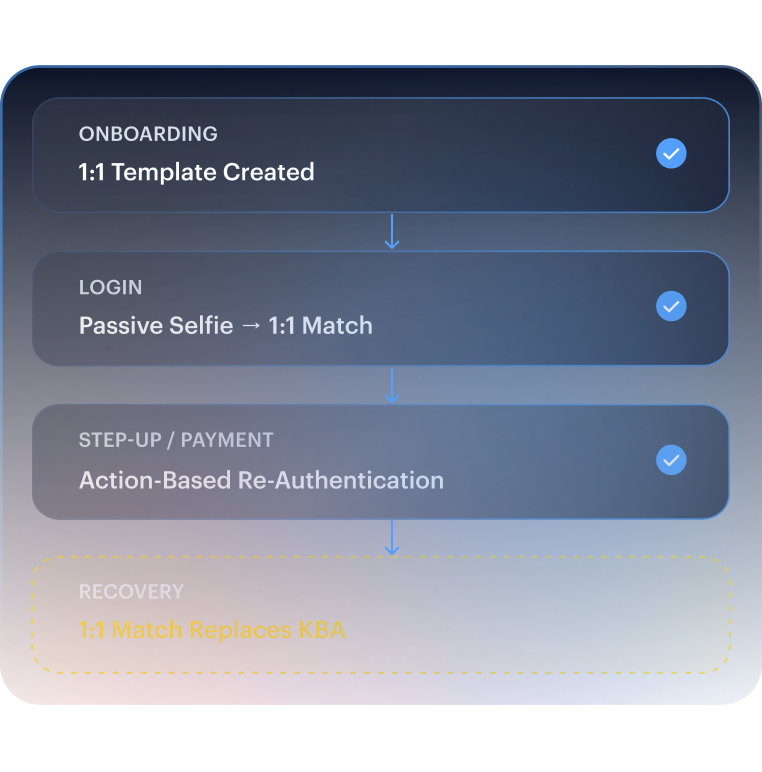
Most stacks treat onboarding and authentication as separate enrollments. Shufti creates one biometric face template per customer identifier at onboarding. Universal Applicant ID auto-enrolls existing Shufti KYC users.
After login, credentials stand in for the person. Shufti runs a biometric face match at login, step-up, and action-based events. Every event resolves against the same enrolled template.
Recovery flows are where authentication stacks collapse. Shufti replaced KBA and reset links with a biometric face match. Bulk CSV migration onboards entire legacy user bases in one operation.
Deploy Anywhere, Own Everything
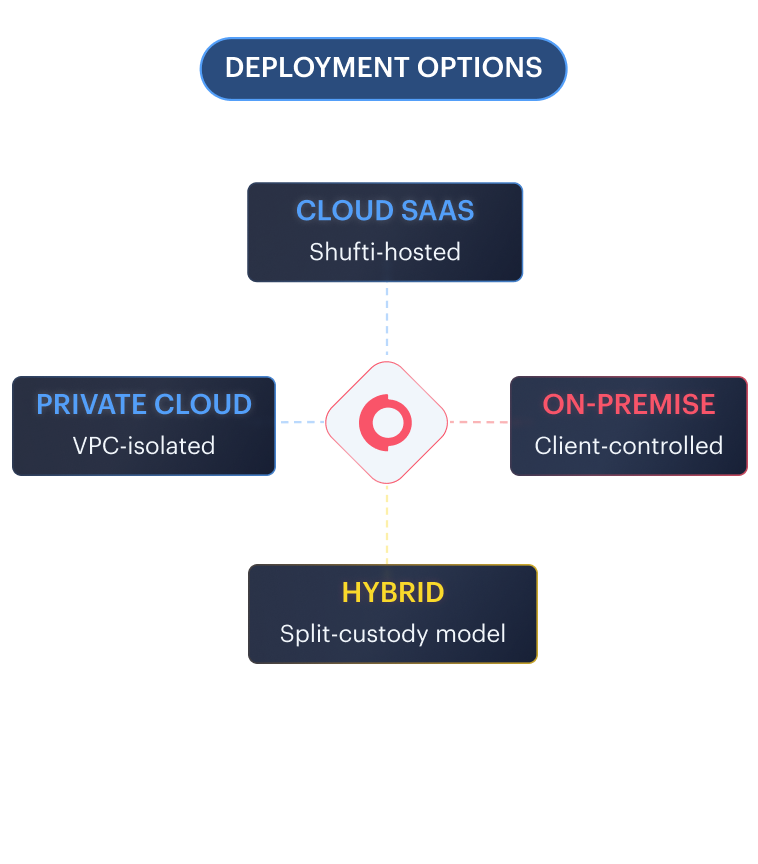
Cloud-only architectures disqualify regulated buyers at architecture review. Shufti deploys Cloud, On-Premises, Hybrid, or Private Cloud on the same biometric face architecture.
Aggregated stacks ship updates on someone else's release cycle. Shufti owns liveness, matching, template generation, storage, and pre-match defence in-house. Defences ship the same week a new threat surfaces.
Adding authentication usually forces a second enrollment per user. Shufti reuses the onboarding selfie as the biometric face reference, with no re-registration required.

Shufti Is A Top Solution Serving Global Clients
Shufti delivers the widest global coverage with its own technology, ensuring flexibility, innovation, and stronger Extended IDV capabilities than regional or orchestrated competitors.
Download Full Report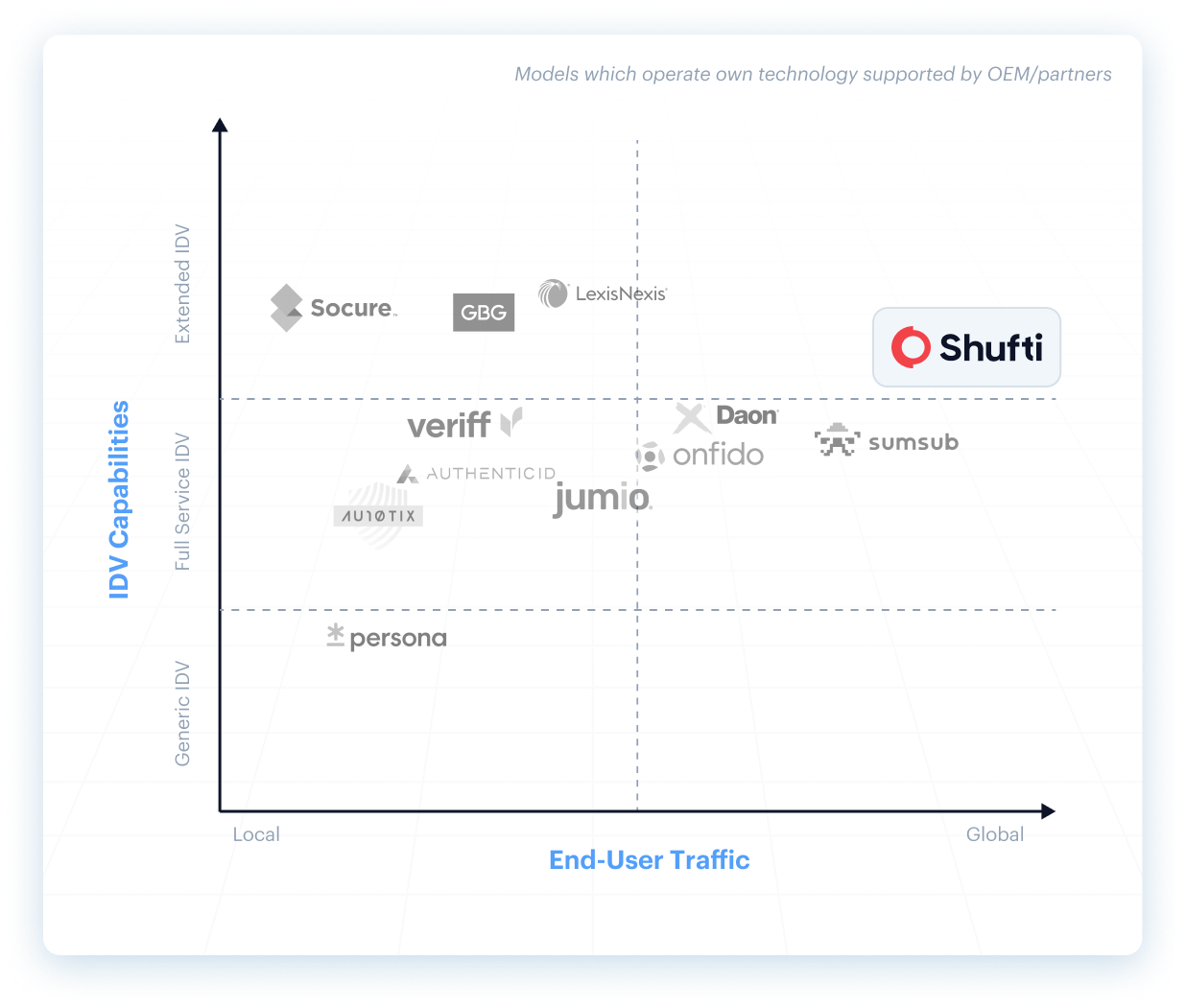
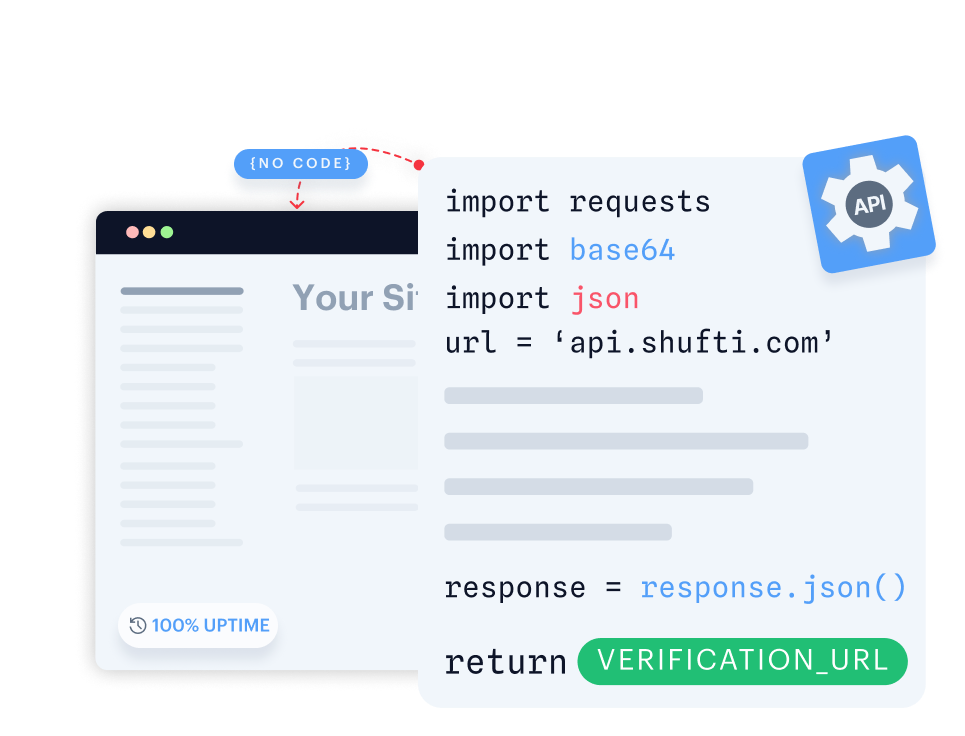
Single API, Seamless Integration
Build fully customisable verification flows with seamless backend integration.
- Gain full control by customising verification flows end-to-end.
- Integrate seamlessly with your backend for quick implementation.
- Design flexible verification journeys tailored to your users.
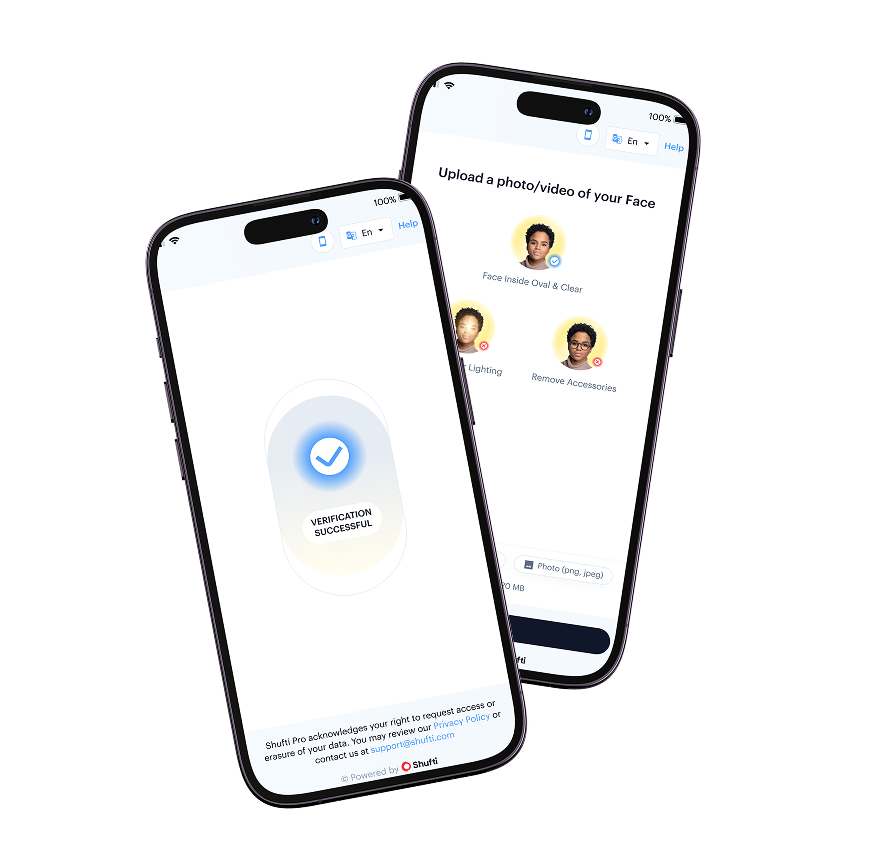
Launch a native verification experience in your mobile app within minutes.
- Launch native verification within minutes on iOS or Android.
- Use ready-made UI with camera, capture, and real-time feedback.
- Customise flows to fit seamlessly into your mobile app.
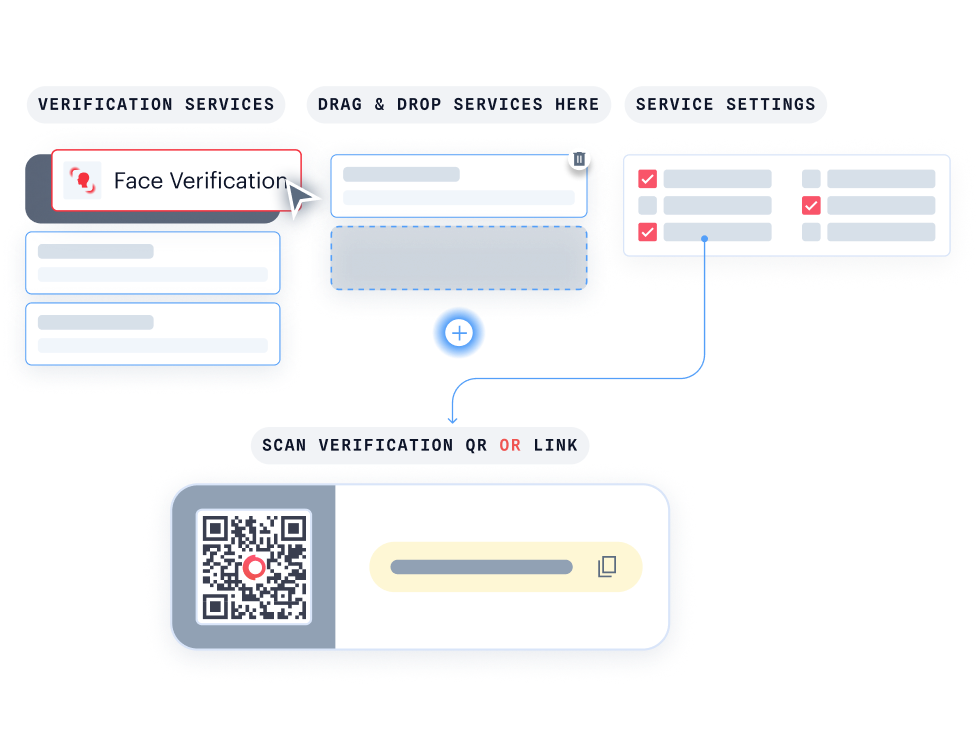
With KYC Journey Builder, create personalised verification journeys without writing a single line of code.
- Customise your journey effortlessly with drag-and-drop functionality.
- Instantly see how your verification flow looks for your users.
- Easily connect with Hosted Verification for a consistent, branded experience.
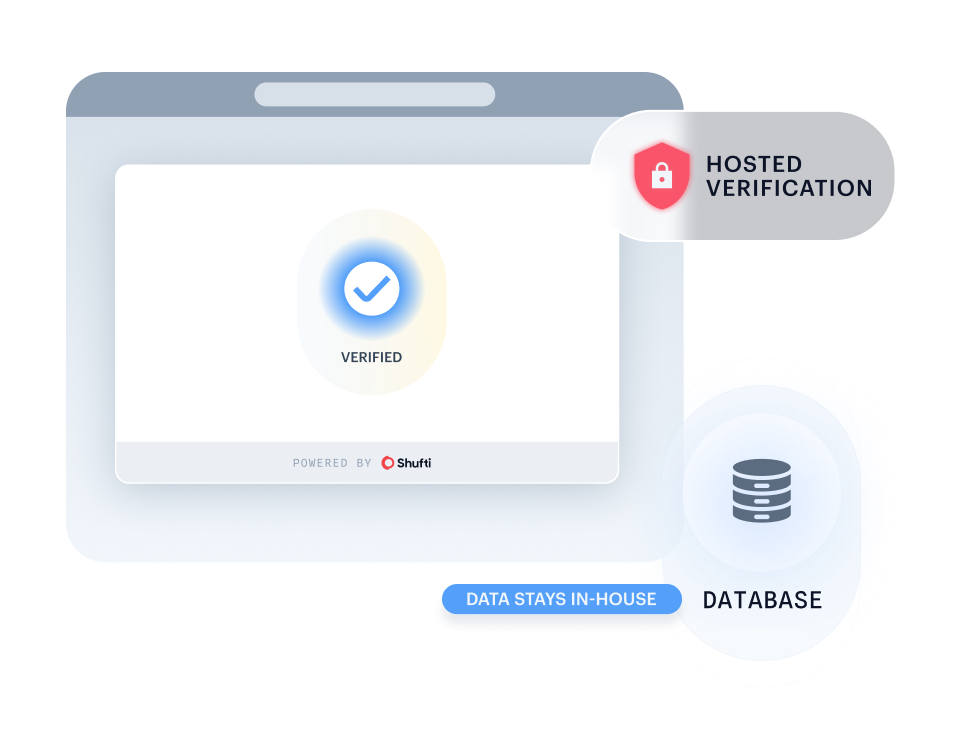
Run Shufti within your own identical-capability infrastructure for maximum data control and privacy.
- Keep all sensitive information in-house to meet strict governance and data residency requirements.
- Keep sensitive information fully private and secure in-house.
- Deploy in highly regulated sectors without compromising compliance.
WHERE biometric face authentication FITS
Built for Regulated and High-Risk Industries
Step-Up Assurance for High-Risk Transactions
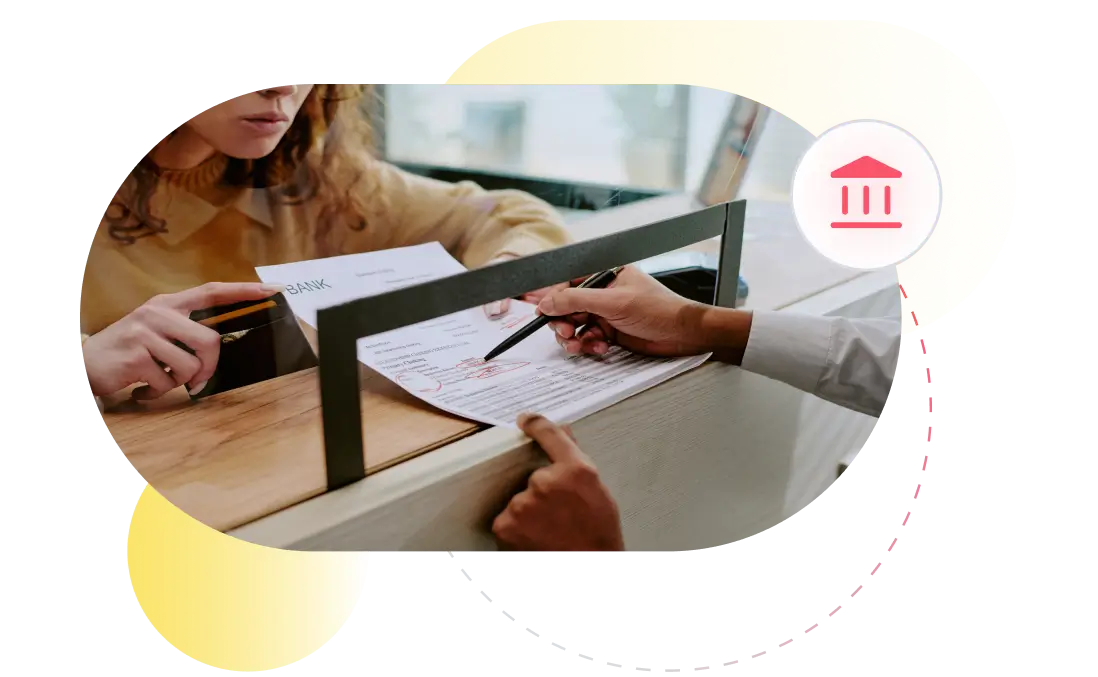
Banks need stronger identity checks at the moments that matter most, not just at login. Shufti’s Biometric Face Authentication confirms the enrolled customer during payment approval, beneficiary changes, limit increases, and recovery flows, giving banks a true inherence factor with an audit-ready decision trail.
Don’t just take our word for it, hear from our customers
The Confidence Our Clients Share

The future of digital identity is defined by trust, interoperability, and regulatory alignment, so our partnership with Shufti reinforces DevCode Identity’s commitment to supporting our global customers with the most secure, best-in-class, compliant identity verification solutions available today.
Combining our Conversion Driven Compliance Orchestration Platform with Shufti’s global KYC and IDV capabilities allows our customers not only to navigate complex regulatory demands but also to maintain a seamless customer onboarding experience with the highest achievable conversion rates.
We’re proud to continue our partnership with Shufti as we expand into new jurisdictions.
Shufti’s verification technology not only strengthens our compliance framework but also ensures our players enjoy a smooth, secure onboarding experience.
We aim to offer our clients and their traders the very best tools with which to do their jobs, we’re excited to be able to work with Shufti.
They’re a leading company, and we’re looking forward to offering their solutions to our clients through our CRM.
The relationship with Shufti was born out of frustration with an existing provider, so we started our discussion with Shufti.
The response time was excellent, from the start of speaking to sales to getting up and running with the demo.
Everything you need to know in one place
Frequently Asked Questions
What is biometric face authentication and how does it differ from 1:N identification?
Biometric face authentication matches one live capture against one stored template tied to a specific user. Constant-time lookup regardless of database size. Lower false match risk. 1:N searches an entire database to identify an unknown person slower, higher exposure, and suited to identification rather than returning-user authentication.
How does the system handle changes in a user's appearance over time?
The 68-landmark matching engine targets structural features , bone structure, eye spacing, nasal bridge that remain stable across years. Time-decay models account for facial hair, weight fluctuation, ageing, and accessories like glasses without weakening match precision.
How are biometric templates stored and protected against misuse?
Templates are encrypted, non-reversible mathematical representations of facial geometry. They cannot be reconstructed into a facial image or reverse-engineered. Storage options include cloud, private cloud, or on-premise environments depending on the client's data residency requirements.
Does Shufti own the full biometric stack or rely on third-party components?
Fully proprietary. Liveness detection, facial matching, template generation, and storage are all built and maintained in-house. No third-party SDKs, no outsourced biometric engines, no aggregated dependencies in the pipeline.
How does Shufti detect deepfakes and injection attacks during authentication?
Four layers run before any match is attempted: passive liveness analyses texture and depth cues silently, active liveness triggers guided capture for high-risk moments, 3D depth analysis blocks flat-surface attacks, and injection detection identifies virtual cameras, emulators, deepfakes, and manipulated video streams in real time.
What deployment options are available for organisations with data residency requirements?
SaaS, private cloud, on-premise, or on-device biometric processing. The full technology stack is owned by Shufti with no third-party dependencies enabling compliance with GDPR, LGPD, and sector-specific sovereignty mandates without architectural trade-offs.
How long does integration take, and what technical resources are required?
Two API calls cover the full lifecycle , one for enrolment, one for authentication. Available via REST API (onsite and offsite) and native mobile SDKs for iOS and Android. Webhook callbacks deliver results in real time.
Stop Authenticating Credentials. Start Verifying People
Your onboarding verifies the person. Your authentication should too. Evaluate whether your current stack confirms identity , or just confirms a credential.
Your Go-To for KYC/AML & Fraud
Resources
3 June, 2026
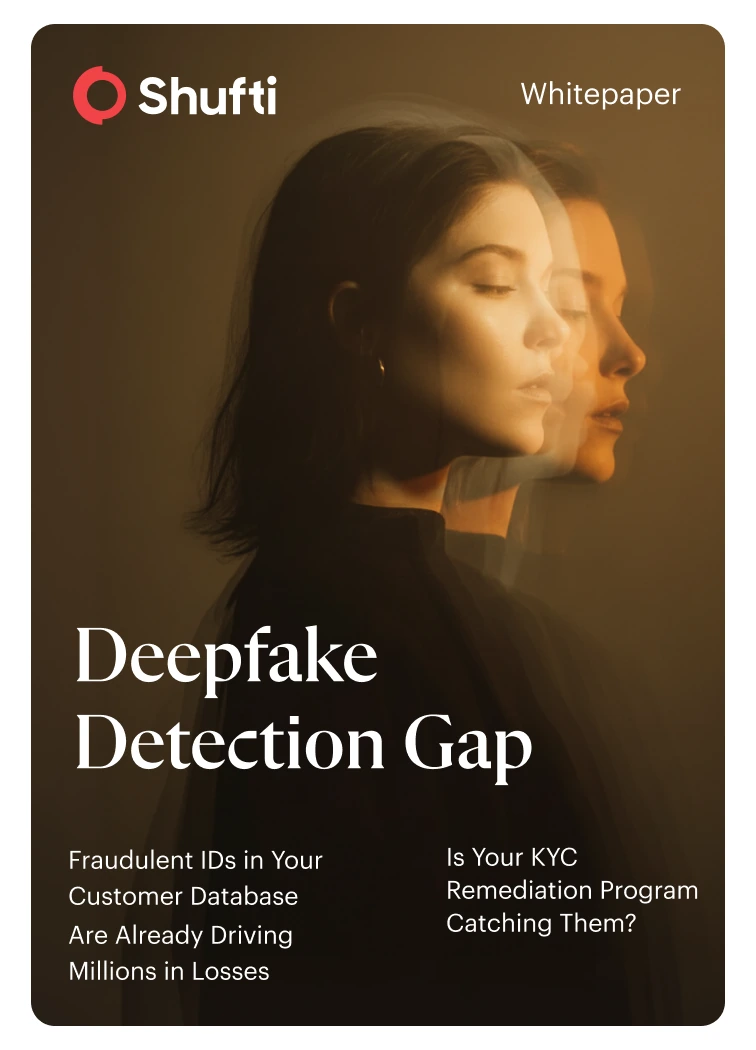
The Deepfake Detection Gap
How many of your verified customers never existed. Shows how synthetic and deepfake identities pass KYC, and how the Blind Spot Audit finds the ones that did pass.
Report