AMLR Solutions
  AMLR Consultation
 EUDI Wallet
 Onboarding
 Ongoing Monitoring
 FRAML
FRAML KYC
KYC KYB
KYB KYI
KYI Age Assurance
 Workforce IAM
 Candidate Verification
 Account Takeover
 Bonus/ Promotion Abuse
 Chargeback Fraud
 Deepfake
 Document Fraud
 Fraud Networks
 Impersonation Fraud
 Money Mule Activity
 Multi-Accounting
 Party Fraud
 Regulatory & Compliance Risks
 Synthetic Identity Fraud
 Adult Content
 Banking
 Crypto
 Fintech
 Forex
Forex Compliance
 Fraud prevention
 Trust & safety
 Global expansion
 Compliance Officers
 Developers
 Fraud Analysts
 Product Managers
 Journey Builder
  Global Trust Platform
 Customer Profiles
 Vendor Comparison
 IDV Case Management
 AML Case Management
 Regulatory Reporting
 Agentic Rule Builder
  AI Compliance Co-Pilot
  Fraud Analytics
 Fraud Hub
  OCR
OCR Shufti AI
 Bank Account Verification
  Biometric Duplication
 Database Checks
 Document Intelligence
 Government ID
 Mobile Driver's License
 NFC
NFC Selfie Liveness
 Brand Personalisation
 Deployment Options
 Identity Methods
 IDV Modes
 Multi-tenancy
 On-Premise IDV
 Secure Capture
 Shufti MCP














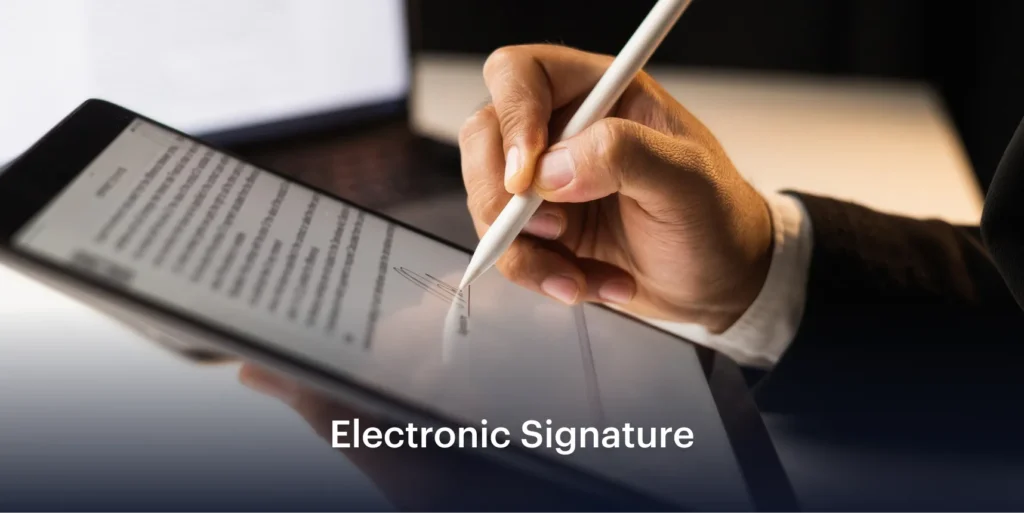

Signing a document no longer has to mean printing it, signing it by hand and sending it back. An electronic signature lets a person show their agreement with a document through an electronic process.
The electronic signature meaning is broader than simply adding a typed name or an image of a handwritten signature. Under the eIDAS Regulation, an electronic signature is electronic data attached to or associated with other electronic data and used by a signatory to sign. The European Commission also explains that it represents the signatory’s intention to agree to the content of a document or data.
Electronic signatures are used for contracts, approvals, consent forms, employment documents, financial agreements and other situations where someone needs to confirm their agreement electronically. The legal effect of an electronic signature depends on the jurisdiction and the type of signature used. In the EU, eIDAS provides the main legal framework for electronic signatures and trust services
How Does Electronic Signature Technology Work?
Electronic signature technology brings together the document, the signer and the records needed to complete a digital signing process.
A typical process looks like this:
| Stage | What happens |
| Document preparation | The document is uploaded and the required signing fields are added. |
| Signer authentication | The signer may be asked to verify their identity using an authentication method. |
| Electronic signing | The signer reviews the document and provides their electronic signature. |
| Record creation | Information about the signing event is recorded, helping establish what was signed and when. |
The technology behind an electronic signature can vary. More advanced signatures may use digital certificates, cryptographic keys, authentication and trusted service providers. For example, the European Commission explains that advanced electronic signatures commonly use public-key infrastructure (PKI), certificates and cryptographic keys.
Types of Electronic Signatures
Under the EU’s eIDAS framework, electronic signatures have three levels. Each level adds requirements for stronger assurance.
| Type | Description |
| Simple Electronic Signature (SES) | A basic electronic signature used to show a person’s intention to sign such as entering a name electronically. |
| Advanced Electronic Signature (AES) | A signature that is linked to and identifies the signer, remains under the signer’s control and can show whether the signed data has been changed. |
| Qualified Electronic Signature (QES) | An advanced electronic signature that additionally uses a qualified certificate and a qualified signature creation device. |
A QES has the same legal effect as a handwritten signature under eIDAS.
The detailed requirements for SES, AES and QES depend on the applicable legal framework and are covered separately.
Common Uses of Electronic Signatures
Electronic signatures are useful wherever a person or organisation needs to approve a document without handling physical paperwork.
Common examples include:
- Banking and financial agreements
- Insurance documents
- Employment contracts
- Legal agreements
- Customer consent forms
- Business contracts
- Government and administrative documents
Businesses often use electronic signature software to prepare documents, send them to the right signers, track completion and keep records of signed documents. An electronic signature solution can bring these activities into one digital workflow, which is particularly useful when many documents need to be signed. An e-signature solution can also be connected with other business systems so that signing becomes part of an existing customer, employee or document workflow.
Benefits of Electronic Signatures
Electronic signatures make it easier to complete documents without relying on physical paperwork.
Electronic signature helps in:
- Complete agreements faster
- Support remote signing
- Reduce paper-based administration
- Track signing activity
- Keep electronic records
- Reduce manual handling of documents
The European Commission notes that electronic signatures support paperless processes and can be used across areas such as contracts, e-commerce, online banking and administrative procedures.
Legal Validity of Electronic Signatures
Electronic signatures can have legal validity, but the requirements differ between jurisdictions and documents.
In the EU, the eIDAS Regulation provides the legal framework for electronic signatures. It also states that an electronic signature cannot be denied legal effect or admissibility as evidence simply because it is electronic or is not a qualified electronic signature. A QES has the equivalent legal effect of a handwritten signature.
In the United States, electronic signatures are also recognised under federal and state laws, including the Electronic Signatures in Global and National Commerce (ESIGN) Act and the Uniform Electronic Transactions Act (UETA).
When assessing an electronic signature, factors such as signer identification, consent, document integrity and records of the signing process can be important depending on the applicable law and transaction.
Frequently Asked Questions
What is an electronic signature?
An electronic signature is electronic data used by a person to show their intention to sign or approve a document or other electronic information.
What is the meaning of an electronic signature?
Electronic signature meaning refers to using an electronic method to show a person's intention to agree to or sign a document.
What is electronic signature software?
Electronic signature software allows organisations to prepare, send, sign, track, and manage documents electronically.
What is an electronic signature solution?
An electronic signature solution is a system that helps in managing digital signing workflows, from preparing documents through to collecting signatures and keeping signing records.
Are electronic signatures legally valid?
Yes. Electronic signatures can have legal effect, although the applicable requirements and legal consequences depend on the jurisdiction and type of signature. Under eIDAS, an electronic signature cannot be rejected as evidence solely because it is electronic.
Are electronic signatures secure?
Their security depends on the technology and signing method used. More advanced signatures can use authentication, certificates, cryptographic technology and other safeguards to provide greater assurance.