AMLR Solutions
  AMLR Consultation
 EUDI Wallet
 Onboarding
 Ongoing Monitoring
 FRAML
FRAML KYC
KYC KYB
KYB KYI
KYI Age Assurance
 Workforce IAM
 Candidate Verification
 Account Takeover
 Bonus/ Promotion Abuse
 Chargeback Fraud
 Deepfake
 Document Fraud
 Fraud Networks
 Impersonation Fraud
 Money Mule Activity
 Multi-Accounting
 Party Fraud
 Regulatory & Compliance Risks
 Synthetic Identity Fraud
 Adult Content
 Banking
 Crypto
 Fintech
 Forex
Forex Compliance
 Fraud prevention
 Trust & safety
 Global expansion
 Compliance Officers
 Developers
 Fraud Analysts
 Product Managers
 Journey Builder
  Global Trust Platform
 Customer Profiles
 Vendor Comparison
 IDV Case Management
 AML Case Management
 Regulatory Reporting
 Agentic Rule Builder
  AI Compliance Co-Pilot
  Fraud Analytics
 Fraud Hub
  OCR
OCR Shufti AI
 Bank Account Verification
  Biometric Duplication
 Database Checks
 Document Intelligence
 Government ID
 Mobile Driver's License
 NFC
NFC Selfie Liveness
 Brand Personalisation
 Deployment Options
 Identity Methods
 IDV Modes
 Multi-tenancy
 On-Premise IDV
 Secure Capture
 Shufti MCP













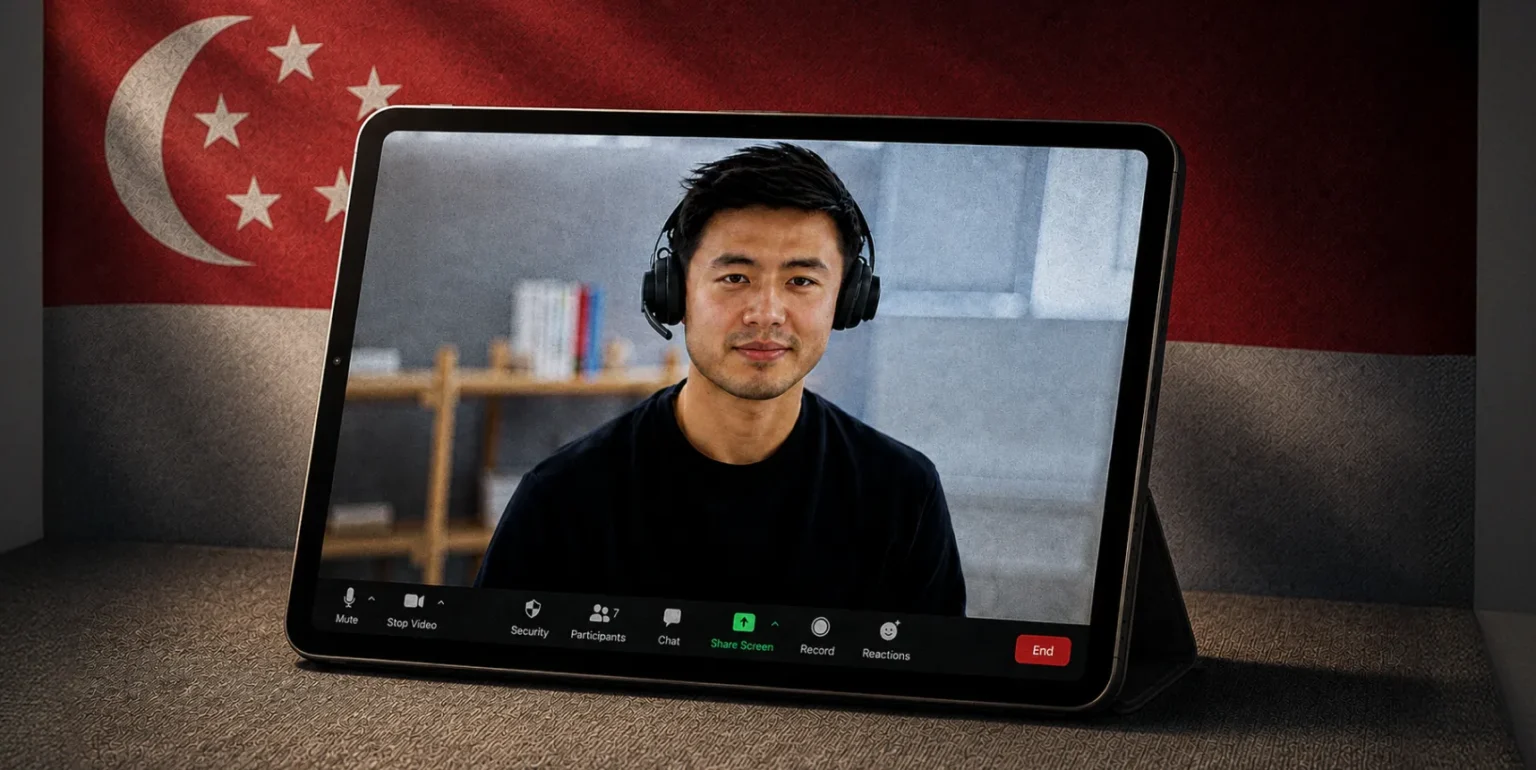

Singapore police have released footage of a sophisticated deepfake scam in which fraudsters used AI-generated video to impersonate Prime Minister Lawrence Wong, President Tharman Shanmugaratnam, and other senior officials during a fabricated Zoom meeting. In one confirmed case, a business professional transferred at least SGD 4.9 million, approximately USD 3.8 million, before realising the deception. The Singapore Police Force published an advisory on 16 May 2026, warning that scammers appear to be specifically targeting professionals who have had prior interactions with government officials.
The modus operandi involved an initial WhatsApp message from a scammer impersonating Singapore’s Secretary to the Cabinet, instructing the victim to attend a virtual meeting with the Prime Minister. The victim was asked to sign a non-disclosure agreement and submit identity documents before joining the Zoom call. The fabricated conference featured deepfake versions of multiple officials delivering a briefing on the geopolitical situation in the Strait of Hormuz, with a personalised deepfake video of PM Wong closing the session by acknowledging the victim’s attendance by name. A scammer posing as a lawyer then contacted the victim and directed the funds transfer, assuring reimbursement within 15 business days.
Police investigators identified multiple technical indicators of manipulation in the released footage, including lip-sync failures and audio layered over pre-recorded video. The advisory noted that deepfake AI fabrications have become sufficiently sophisticated that it can be difficult for individuals to distinguish authentic from inauthentic content in real time. The case follows a pattern of escalating AI-enabled impersonation fraud across Southeast Asia, with discussions about deepfakes on cybercriminal forums in the region rising 600 per cent in the first half of 2024, according to INTERPOL data.
The Identity Verification Imperative
Deepfake-based social engineering of this nature, combining fabricated video, forged documentation, and synthetic voice, represents precisely the threat that layered identity controls are built to address. Deepfake detection technology that analyses multi-stream RGB and frequency-domain signals can identify manipulation artefacts that survive compression, re-encoding, and platform distribution. Shufti’s identity verification platform combines document forensics, biometric liveness detection, and deepfake analysis within a single verification flow, helping organisations detect synthetic media before it enables financial loss.
Defend against deepfake fraud. Contact Shufti to learn how our deepfake detection and identity verification solutions protect your organisation and customers.